Quick summary
Linaria vulgaris Mill. / Common Toadflax, also known as yellow toadflax, butter-and-eggs or wild snapdragon, is a perennial herbaceous plant of the Plantaginaceae family (formerly placed in Scrophulariaceae), described by the botanist Philip Miller. Native to Europe and Asia, the species has spread to many regions of…
Main caution: The plant contains peganine (vasicine) and iridoid glycosides, and internal use, whether as a diuretic, a laxative or a “liver” remedy, is a European traditional record with no clinical trial and scarce…
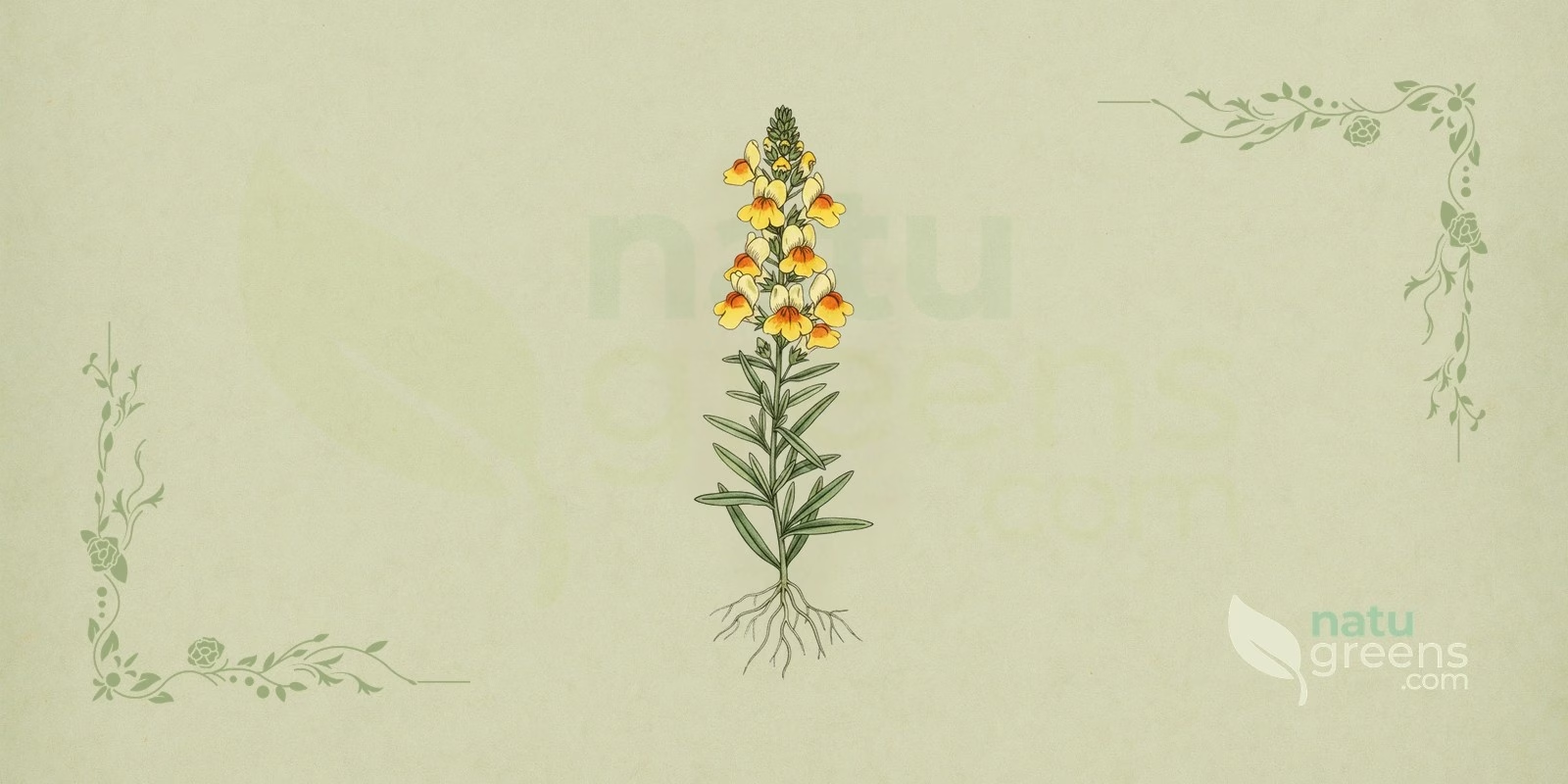
Linaria vulgaris Mill. / Common Toadflax, also known as yellow toadflax, butter-and-eggs or wild snapdragon, is a perennial herbaceous plant of the Plantaginaceae family (formerly placed in Scrophulariaceae), described by the botanist Philip Miller. Native to Europe and Asia, the species has spread to many regions of the world and is now considered invasive in some places, especially in North America. Toadflax is easy to recognize by its showy flowers, which resemble small snapdragons, with yellow petals, an orange throat and a long spur, a feature that explains many of its common names.
In traditional European medicine, Linaria vulgaris was used mainly as a diuretic and laxative and, externally, in compresses and ointments for hemorrhoids and skin complaints, always as a traditional record that has never undergone a clinical trial. Modern scientific research has focused on the plant’s phytochemical profile, which includes flavonoids such as linarin, iridoid glycosides such as antirrhinoside and quinazoline alkaloids such as peganine (vasicine), compounds that attract interest in the laboratory but whose safety in human use remains poorly documented. For this reason, any internal use should be seen as a traditional record, still under study, and not as a recommendation for use.
Popular and International Names of Common Toadflax
- English: brideweed, butter-and-eggs, common toadflax, wild snapdragon, yellow toadflax.
- French: linaire commune, linaire vulgaire.
- German: Echtes Leinkraut, Gelbes Leinkraut, Gemeines Leinkraut.
- Italian: erba di lino, linaria comune.
- Portuguese: boca-de-leão-amarela, linária, linária-comum, manteiga-e-ovos.
- Spanish: linaria común, lino montesino, pajarita.
Botanical Synonyms of Linaria vulgaris
The taxonomy of Linaria vulgaris has gone through several reclassifications over time, at the level of both the species and the family. Although Linaria vulgaris Mill. is now the accepted name, a number of botanical synonyms have circulated in the literature, and knowing them helps with historical research and with reading older works in which the plant appears under other names. For a long time the genus was included in the Scrophulariaceae family, an older classification still found in floras and handbooks published before the phylogenetic revisions.
- Antirrhinum linaria L.
- Chamaelinaria vulgaris (Mill.) Raf.
- Linaria elongata Dumort.
- Linaria gebleri Besser ex Chav.
- Linaria hians Spreng.
- Linaria linaria (L.) Karst.
- Linaria linarioides Steud.
- Linaria linifolia (L.) Chaz.
- Linaria prostrata (L.) Mill.
Botanical Family: Plantaginaceae
Linaria vulgaris belongs to the Plantaginaceae family, a diverse group of about 100 genera and more than 1,800 species. Toadflax used to be classified in the Scrophulariaceae family, and the change reflects advances in molecular phylogenetics in understanding the evolutionary relationships between plants. Species in this family are widely distributed across the globe and produce a range of bioactive compounds, many of them studied for their medicinal interest.
The Plantaginaceae family covers very varied growth forms, from annual herbs to small shrubs, and includes well-known plants such as the plantains (Plantago), foxglove (Digitalis) and the garden snapdragon itself (Antirrhinum). Many of these species appear in traditional medicine, and iridoids, flavonoids and other phenolic compounds are common in the group, which gives the family a prominent place in phytochemical and pharmacological research.
Parts of Common Toadflax Used
- Aerial parts (leaves, flowers, stems)
- Flowers
- Leaves
- Whole plant
Ethnobotanical and Traditional Uses
The uses listed below come from European folk tradition and old herbals. None of them has been confirmed by a clinical trial, and safety data on internal use are scarce, so the list documents the traditional record, still under study, and does not indicate effectiveness.
- Conjunctivitis (eye washes, old record)
- Dermatomycosis (external use)
- Digestive disorders
- Edema (swelling)
- Enteritis
- Gallbladder complaints (traditional record)
- Hemorrhoids (compresses and ointments)
- Intestinal colic
- Intestinal worms
- Liver complaints and jaundice (European traditional record, unproven)
- Periodontitis
- Scrofula (glandular tuberculosis, historical record)
- Scurvy (old antiscorbutic use)
- Skin problems (external use)
- Sore throat (recorded in old texts as “angina”)
- Tonic
- Urinary tract disorders
Therapeutic Properties of Common Toadflax
- Anti-inflammatory (activity observed in preliminary studies)
- Antimicrobial (activity against microorganisms in laboratory studies)
- Antioxidant (antioxidant capacity of the infusion measured in the laboratory)
- Antiscorbutic (historical record of use against scurvy)
- Astringent (tightens tissues and blood vessels, traditional record)
- Detergent (old term for cleansing wounds and skin, traditional record)
- Diuretic (increased urine output, traditional record, under study)
- Hepatoprotective (effect of flavonoids observed in mice, no human data)
- Laxative (stimulates bowel movements, traditional record, under study)
Detailed Phytochemical Profile of Common Toadflax
- Flavonoids (linarin and other flavone glycosides)
- Glycosides
- Hydrophilic substances
- Iridoids (antirrhinoside and related glycosides)
- Lipophilic substances
- Phenolic acids
- Phenolic compounds
- Quinazoline alkaloids (peganine, also called vasicine, and pyrroloquinazoline derivatives)
- Sterols
Among the constituents of toadflax, three groups draw most of the researchers’ attention. Iridoid glycosides such as antirrhinoside serve as chemotaxonomic markers of the genus, while linarin, a flavone glycoside first identified in this plant, is studied for its antioxidant activity and for effects observed in animal models. The quinazoline alkaloids, above all peganine (vasicine), have their own pharmacological action, including a documented uterotonic effect, and are one of the reasons why internal use of the plant calls for caution.
Preparation and Administration Forms of Common Toadflax
- Compresses
- Extracts
- Ointments
- Tea/Infusion
- Topical washes
Of the forms above, traditional topical use, in compresses and ointments for hemorrhoids and skin conditions, is the most defensible, provided it is preceded by a patch test on a small area. The infusion for internal use belongs to the European traditional record and, since safety data are lacking, should be limited to short, occasional use, always under the guidance of a health professional.
Synergy with Other Medicinal Plants
Traditional Combination with Diuretic Plants
In herbal tradition, Linaria vulgaris appears alongside other plants known as diuretics, such as field horsetail (Equisetum arvense) and dandelion (Taraxacum officinale), in preparations meant to promote fluid excretion. This kind of combination adds up effects on water and electrolyte loss, so it should not be done on your own, and toadflax should not be used together with diuretics or laxatives, whether medicines or other plants, without professional supervision.
Traditional Pairing with Liver and Digestive Plants
Old European herbals also brought toadflax together with plants regarded as liver and digestive remedies, such as milk thistle (Silybum marianum) and artichoke (Cynara scolymus). Milk thistle is a source of silymarin and artichoke of cynarin, compounds widely studied for their relationship with liver function and bile secretion, while the role of toadflax in this pairing remains only a traditional record, still under study, with no proof of any effect on liver disease.
Combined Topical Use for the Skin
In external applications, toadflax is often combined with calendula (Calendula officinalis) and German chamomile (Matricaria chamomilla), two plants traditionally used for their soothing effect on the skin. In these compresses and ointments, tradition seeks to add the astringency attributed to toadflax to the calming properties of the other two species, and the prior patch test applies to the whole mixture, since people sensitive to plants of the Asteraceae family may react to calendula and chamomile.
Recipes and Usage Protocols of Common Toadflax
Traditional Toadflax Infusion
An infusion of the dried leaves and flowers of Linaria vulgaris is the preparation that European tradition records for internal use, traditionally taken to stimulate fluid excretion and bowel function. Because the plant contains peganine and iridoid glycosides and safety data are scarce, this article gives no dosage: the amount, duration and appropriateness of use should be decided with a health professional, and any use should be short and occasional, never as a routine laxative.
In the traditional preparation, the dried herb is covered with freshly boiled water, left to steep for 10 to 15 minutes and strained before being drunk warm. Stop using it if diarrhea, cramps, dizziness or any sign of dehydration appears.
Toadflax Compress for the Skin
The compress is the most defensible traditional use of toadflax, traditionally applied to hemorrhoids and skin conditions. Prepare a stronger infusion with 2 tablespoons of dried leaves and flowers to 250 ml of boiling water, let it steep for 20 minutes and strain.
Once it has cooled, first do a patch test on a small area of the forearm and wait 24 hours. If there is no reaction, soak a clean cloth or gauze in the infusion and apply it to the affected area for 15 to 20 minutes, two to three times a day. Do not apply it to open or deep wounds or to the eyes, and stop using it if redness, itching or burning occurs.
The preparations above follow traditional records and do not replace professional guidance. Before any internal use, check the contraindications and interactions described in this article.
Associated Therapies
Herbal Medicine
In European herbal medicine, Linaria vulgaris was remembered for the diuretic, laxative, astringent and anti-inflammatory properties that herbals attributed to it, and it appeared in infusions, liquid extracts and tinctures recommended by tradition for edema, digestive complaints and skin conditions. This use rests on the plant’s phytochemical makeup, rich in flavonoids, iridoids and alkaloids, but current herbal medicine still lacks clinical trials to validate these uses and sufficient safety data, which is why toadflax plays a marginal role today and topical use is regarded as the most prudent.
Homeopathy
In homeopathy, Linaria vulgaris is used in highly diluted preparations, although it is a much less common remedy than other plant-based ones. This use follows the principle of similars, according to which a substance capable of causing symptoms in healthy people is given in minimal doses for similar symptoms, and it is usually associated with urinary or digestive complaints. Prescription is a matter for a qualified practitioner, and the effectiveness of homeopathic preparations has no scientific proof.
Contraindications and Side Effects of Common Toadflax
The plant contains peganine (vasicine) and iridoid glycosides, and internal use, whether as a diuretic, a laxative or a “liver” remedy, is a European traditional record with no clinical trial and scarce safety data. It should therefore always be regarded as a traditional record, still under study, and limited to short, occasional use under the guidance of a health professional.
Toxicity
Toadflax is considered mildly toxic in quantity, with reports of poisoning in livestock that grazed large amounts of the plant. This does not make it a poisonous plant in topical use or in occasional preparations, but it reinforces that it should not be consumed in large amounts or for long periods.
Side Effects
Laxatives and diuretics at high doses lead to fluid and electrolyte loss, which can cause dehydration, weakness, cramps and heart rhythm disturbances in predisposed people. For this reason, toadflax should not be used as a routine laxative. Nausea, diarrhea and other gastrointestinal disorders may also occur, and allergic reactions, although rare, are possible in people sensitive to plants of the Plantaginaceae family.
Pregnancy, Breastfeeding and Children
Use is contraindicated during pregnancy and breastfeeding, because vasicine has a documented uterotonic effect and there are no safety data for mother and baby. Toadflax should not be used in children either.
Drug Interactions
Toadflax should not be used together with diuretics or laxatives, because the combined effects raise the risk of dehydration and electrolyte imbalance, which in turn can alter the action of heart medicines such as digitalis glycosides. People being treated for liver or kidney disease and those taking anticoagulants should avoid the plant without medical advice, since studies on interactions are lacking. Before combining toadflax with any medication, consult a doctor or pharmacist.
Topical Use
Traditional topical use, as a compress or ointment for hemorrhoids and skin conditions, is the most defensible, provided it is preceded by a patch test on a small area of skin. Do not apply it to sensitive mucous membranes or extensive lesions without professional assessment.
Historical Notes and Interesting Facts
Curious Common Names
Linaria vulgaris has collected a series of curious names, such as “butter-and-eggs” and “wild snapdragon”, which reflect the shape and colors of its flowers, pale yellow on the petals and orange at the throat. These names show how everyday observation and folk creativity linked the plant to the kitchen and the landscape over the centuries, and the genus name itself comes from the Latin linum, flax, because its narrow leaves resemble those of that plant.
Linnaeus’s Peloria
In the 18th century, Carl Linnaeus described a form of toadflax with radially symmetrical flowers, which he called Peloria, from the Greek word for “monster”, and the find surprised him because it contradicted the idea that species were immutable. Recent genetic studies have shown that this form results from an epigenetic change in the cycloidea gene, not from a mutation in the DNA sequence, which turned toadflax into a classic example in plant genetics.
Historical Use as a Dye
Besides its medicinal use, Linaria vulgaris historically served as a source of yellow dye, and the flowers were used to color fabrics, especially wool, giving them a bright and lasting shade. This use shows how the plant occupied different places in everyday life in the past.
Invasive Plant and Biological Control
Native to Europe and Asia, Linaria vulgaris has become invasive in several parts of the world, including North America, where it competes with native flora and with crops. In response, biological control programs began using specific insects that feed on the plant as a way to contain its spread and reduce its environmental impact.
Frequently Asked Questions about Common Toadflax
Can Toadflax Be Used for Weight Loss?
No. Tradition attributes a diuretic and laxative effect to Linaria vulgaris, but fluid loss and bowel emptying are not the same as fat loss, and using it for this purpose raises the risk of dehydration and electrolyte imbalance. Healthy weight loss depends on a balanced diet and regular physical activity, with professional support.
What Is the Difference between Toadflax and Snapdragon?
Although Linaria vulgaris is called “wild snapdragon” because of its similar flowers, it is not the same plant as the common snapdragon (Antirrhinum majus). Both belong to the Plantaginaceae family, but they are distinct species: toadflax is a wild plant with spurred yellow flowers, while snapdragon is grown as an ornamental and has spurless flowers in a wider range of colors.
Is It Safe to Use Toadflax during Pregnancy?
No. Use is contraindicated during pregnancy and breastfeeding, because the vasicine in the plant has a documented uterotonic effect and there are no safety data for mother and baby. Toadflax should not be given to children either.
Can I Drink Toadflax Tea Every Day?
It is not advisable. Internal use of toadflax is a European traditional record, still under study, with no clinical trial and scarce safety data, so it should be short and occasional and under professional guidance. The plant should not be used as a routine laxative or together with diuretics or laxatives, because of the fluid and electrolyte loss it can cause.
Is Toadflax Toxic?
Toadflax is considered mildly toxic in quantity, with reports of poisoning in livestock that ate large amounts of the plant. This does not make it a poisonous plant in occasional use, but it is one more reason to avoid high doses and prolonged use, especially internally.
How Is Toadflax Used on the Skin?
European tradition uses toadflax in compresses and ointments on hemorrhoids and skin conditions, and this topical use is considered the most defensible. Before the first application, do a patch test on a small area and stop using it if redness, itching or burning occurs.
Notice: this content is for informational purposes and does not replace professional medical advice. Consult a physician or herbal practitioner before using medicinal plants, especially during pregnancy, breastfeeding, or alongside medication.
How to cite this article
NATUGREENS. Common Toadflax (Linaria vulgaris): Properties and Benefits. Natugreens, 4 Nov. 2026. Disponível em: https://natugreens.com/common-toadflax-linaria-vulgaris/. Accessed: Nov. 4, 2026.
Natugreens. (2026). Common Toadflax (Linaria vulgaris): Properties and Benefits. Natugreens. https://natugreens.com/common-toadflax-linaria-vulgaris/
References and Scientific Studies
- PMC2007 Guiso M, et al. Chemotaxonomy of iridoids in Linaria vulgaris. Nat Prod Res. 2007.
- PMC2002 Hua H, et al. A new pyrroloquinazoline alkaloid from Linaria vulgaris. Chem Pharm Bull (Tokyo). 2002.
- PMC2018 Kuang W, et al. Flavonoids extracted from Linaria vulgaris protect against hyperlipidemia and hepatic steatosis induced by western-type diet in mice. Arch Pharm Res. 2018.
- PMC2018 Ma C, et al. Allergy-preventive effects of linarinic acid and its tetrahydropyrrolo[2,1-b]quinazoline derivatives isolated from Linaria vulgaris. J Nat Med. 2018.
- PMC2008 Vrchovská V, et al. Assessing the antioxidative properties and chemical composition of Linaria vulgaris infusion. Nat Prod Res. 2008.