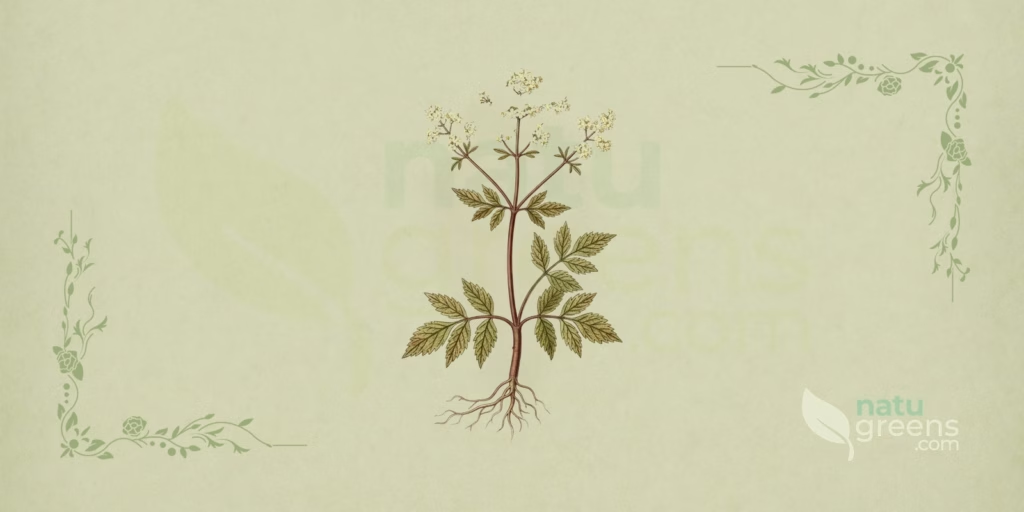
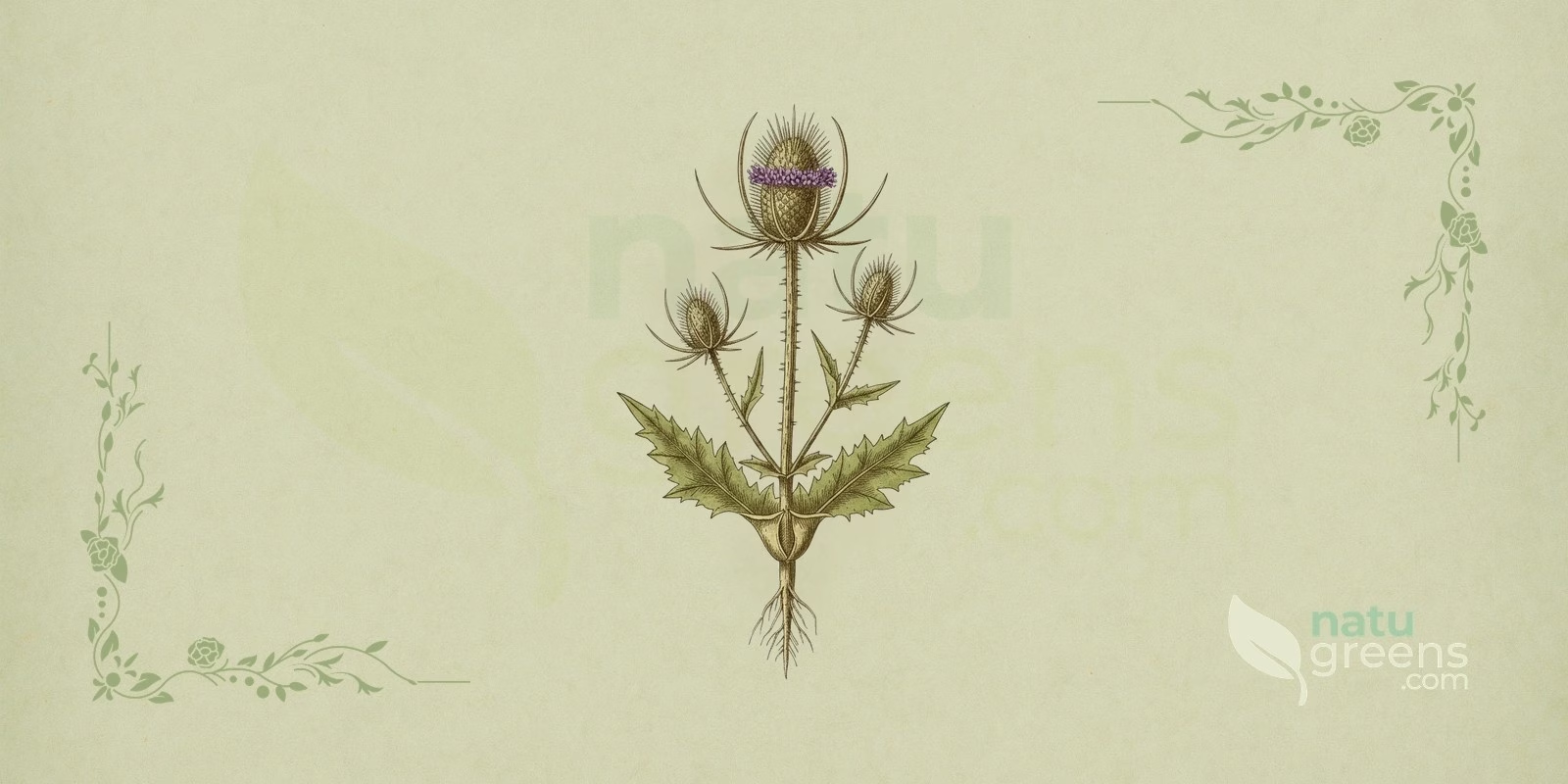
Dipsacus fullonum L. / Wild Teasel, commonly known as wild teasel, fuller’s teasel or common teasel, is a biennial herbaceous plant of the Caprifoliaceae family described by Linnaeus. Native to Eurasia and North Africa, the species has spread to many parts of the world and is remembered both for its place in folk medicine and for its historical role in the textile industry. The plant produces unmistakable inflorescences, in which small lavender flowers open over conical heads surrounded by spiny bracts. The leaves are lanceolate, with small prickles along the midrib.
In traditional medicine, wild teasel has been used for a variety of complaints, from skin problems to internal disorders. Its phytochemical composition, rich in iridoids and phenolic compounds, is associated with anti-inflammatory, antioxidant and antimicrobial activities observed mainly in laboratory assays. Recent research has been examining some of these ethnobotanical uses, but the results have not yet been confirmed by controlled clinical studies in humans. The root is the part most valued for medicinal purposes, harvested and prepared in various ways to extract its bioactive compounds. It is precisely the root that has recently gained fame as a supposed remedy for Lyme disease, a claim without clinical evidence that this article approaches with the necessary caution.
Popular and International Names of Wild Teasel
- English: common teasel, fuller’s teasel, wild teasel.
- French: cardère à foulon, cardère sauvage.
- German: Weberkarde, Wilde Karde.
- Italian: cardo selvatico, scardaccione selvatico.
- Portuguese: cardo-penteador, cardo-silvestre, dipsaco.
- Spanish: cardencha, cardo de cardar, cardo silvestre.
Botanical Synonyms of Dipsacus fullonum
Dipsacus sylvestris Huds. is the most frequently cited botanical synonym for Dipsacus fullonum L. The coexistence of the two names reflects changes in taxonomic classification over time, although Dipsacus fullonum L. is today the name accepted by most botanical authorities. Other synonyms appear in older literature, but Dipsacus sylvestris remains the most common, including in some of the laboratory studies on the plant’s root.
Botanical Family: Caprifoliaceae
The Caprifoliaceae family, to which Dipsacus fullonum belongs, is a diverse group of flowering plants that brings together shrubs, climbers and herbs, among them the honeysuckles (Lonicera) and valerian (Valeriana). The genus Dipsacus was long classified in the family Dipsacaceae. Phylogenetic studies, however, led to its inclusion in Caprifoliaceae, a reclassification that reflects a deeper understanding of the evolutionary relationships among plants. The family contains several species of ornamental and medicinal value, generally with showy flowers and fruits of varied shapes.
Parts of Wild Teasel Used
- Leaves
- Roots
Ethnobotanical and Traditional Uses
The uses listed below belong to the traditional and folk record of the plant and have not been confirmed by controlled clinical studies.
- Acne, psoriasis, warts and other skin complaints, in traditional topical application.
- Bones and tendons, a use that in the Chinese tradition refers mainly to the related species Dipsacus asper.
- Detoxification of the body, a notion specific to folk herbalism.
- Infections, including Lyme disease in recent folk use, without support from controlled clinical studies.
- Jaundice, in the traditional European record, today a sign that requires medical evaluation.
- Joint and muscle pain, according to the folk record.
- Liver and kidney function, as support in traditional European herbalism.
- Wound healing, in traditional external use.
Therapeutic Properties of Wild Teasel
- Anti-acetylcholinesterase (enzyme inhibition observed in vitro, stronger in root extracts)
- Anti-inflammatory (traditional record, with indications from laboratory studies)
- Antimicrobial (activity observed in the laboratory, mainly against Staphylococcus aureus and Escherichia coli)
- Antioxidant (free radical scavenging in laboratory assays, stronger in leaf extracts)
- Diaphoretic (traditional record of stimulating perspiration)
- Diuretic (traditional record of increased urine production)
- Hypotensive (traditional record of lowering blood pressure, without clinical evidence)
- Immunomodulatory (traditional record of action on the immune system, without clinical evidence)
- Neuroprotective (hypothesis based on laboratory assays, without clinical evidence)
- Sedative (traditional record of a relaxing effect, without clinical evidence)
- Stomachic (traditional use as a bitter for digestion and appetite)
Most of these activities were described in extracts tested in the laboratory. In vitro assays have also evaluated root and leaf extracts against Borrelia burgdorferi, the bacterium that causes Lyme disease, a result that is not equivalent to proven efficacy in patients.
Detailed Phytochemical Profile of Wild Teasel
- Apigenin (derivatives)
- Caffeoylquinic acids (chlorogenic, cryptochlorogenic, dicaffeoylquinic and neochlorogenic)
- Cantleyoside
- Flavones
- Iridoids
- Loganic acid
- Loganin
- Luteolin (derivatives)
- Sweroside
- Sylvestroside III
Preparation and Administration Forms of Wild Teasel
- Decoction (root)
- Dry extract
- Fluid extract
- Infusion (leaves)
- Poultice
- Tincture
The forms for internal use, such as the decoction, extracts and tincture, have no standardized doses backed by safety studies and should be guided by a qualified professional, whereas the leaf infusion and the poultice appear in tradition mainly as applications to the skin.
Synergy with Other Medicinal Plants
Popular Combinations Associated with Lyme Disease
In some folk protocols linked to Lyme disease, wild teasel appears combined with kalmegh (Andrographis paniculata) and cat’s claw (Uncaria tomentosa). The stated intention is to add up the anti-inflammatory and immunomodulatory effects attributed to the three plants. This is a traditional and folk record, without support from controlled clinical studies, and none of these combinations should replace or delay the antibiotic therapy prescribed by a doctor. Each of these plants has its own contraindications, including during pregnancy, which underlines the need for professional guidance before any combination.
Traditional Combinations for the Joints
In herbal medicine focused on the joints, wild teasel is paired with devil’s claw (Harpagophytum procumbens) and white willow (Salix alba), a combination traditionally used in conditions such as arthritis and rheumatic pain. The proposed logic is to bring together the iridoids of wild teasel, the iridoid glycosides of devil’s claw and the salicylates of willow in a broader approach to pain and inflammation. This sum of effects, however, has never been tested in clinical studies. Because it contains salicylates, white willow calls for caution in people taking anticoagulants or allergic to acetylsalicylic acid, and devil’s claw is not recommended in cases of gastric ulcer.
Recipes and Usage Protocols of Wild Teasel
Root Decoction for Internal Use
Ingredients: dried, chopped wild teasel root and filtered water, in the proportion advised by a health professional.
Preparation: Place the root in cold water, bring it to a boil, then lower the heat and keep it at a gentle simmer for 10 to 15 minutes before straining. The decoction is traditionally used as a digestive bitter, to stimulate the appetite and for liver complaints, including jaundice, a record from European herbalism that today calls for caution, since jaundice is a sign of disease and requires immediate medical evaluation. As there are no robust safety data for internal use, the amount and frequency should be set case by case: consult a health professional.
Leaf Infusion for Topical Use
Ingredients: 1 tablespoon of dried wild teasel leaves and 250 ml of boiling water.
Preparation: Place the leaves in a cup, pour the boiling water over them, cover and let steep for 10 minutes, then strain and allow to cool. The liquid is traditionally used as a wash for skin with acne or mild irritation and as a compress on psoriasis plaques and small superficial wounds, applied 2 to 3 times a day to the affected area. Do a patch test on a small area of skin first, and do not apply it to deep or infected wounds, which call for professional evaluation.
Wild Teasel Tincture
Ingredients: 1 part fresh chopped wild teasel root and 2 parts 70% grain alcohol (or good-quality vodka).
Preparation: Place the root in a glass jar, cover it completely with the alcohol, seal tightly and leave it to macerate for 4 to 6 weeks in a cool, dark place, shaking the jar daily, then strain and store the tincture in a dark glass bottle. In folk herbalism, the tincture is traditionally used as general support, especially for joint complaints and so-called detoxification, but the dose for internal use has no standardization backed by safety studies and should be set by a health professional, as should its dilution in water. Because it contains alcohol, the preparation is not suitable for children, pregnant or breastfeeding women and people who avoid alcoholic drinks.
The preparations above follow traditional records and do not replace professional guidance. Before any internal use, check the contraindications and interactions described in this article.
Associated Therapies
Western Herbal Medicine
In contemporary Western herbal medicine, wild teasel is valued for its supposed support of the immune system and for the anti-inflammatory action described in tradition and observed in laboratory assays. Some herbalists mention it for chronic conditions with an inflammatory component, such as arthritis and fibromyalgia, although this use has not been evaluated in clinical trials. When standardized root extracts are used, the aim is to keep the active compounds, especially the iridoids, consistent from batch to batch. Part of this school has included the plant in folk protocols for Lyme disease, a claim that has no support from controlled clinical studies and should never serve as an alternative to antibiotic treatment. The available research is limited to in vitro assays with root and leaf extracts against Borrelia burgdorferi. Within this tradition, the plant is described as a general tonic that would help the body regain balance and function.
Traditional Chinese Medicine (TCM)
In Traditional Chinese Medicine, the herbal drug known as Xu Duan does not correspond to Dipsacus fullonum: it comes from the root of Dipsacus asper (also cited as Dipsacus asperoides), an Asian species of the same genus. The records below concern that species, with no proven extrapolation to the European wild teasel. Chinese materia medica classifies Xu Duan as a liver and kidney tonic and uses it to fortify bones and tendons, for lower back pain and weak knees, and in the healing of fractures. Tradition also credits it with the ability to move the blood and relieve pain. Classical texts further mention it for uterine bleeding and in pregnancies at risk of miscarriage, always within prescriptions by practitioners of the tradition, a record that does not authorize the use of any plant of the genus during pregnancy without medical guidance. Its nature is considered bitter and slightly warm, with an affinity for the liver and kidney meridians, and tradition places it among the Yang tonics of these organs.
Contraindications and Side Effects of Wild Teasel
Wild teasel lacks robust safety studies in humans, so any use calls for prudence and professional supervision. People with pre-existing conditions or who are taking medication should consult a health professional before starting any preparation, to avoid adverse interactions or the worsening of existing conditions.
Lyme Disease Warning
Fuller’s teasel or teasel (Dipsacus fullonum) has gained recent popularity in alternative medicine as a supposed treatment for Lyme disease, a claim that has no support from controlled clinical studies and should be treated as an unproven traditional/folk use, never as an alternative to medical antibiotic treatment of Lyme disease. Lyme disease is a serious bacterial infection that requires medical diagnosis and treatment (usually antibiotics), and the use of teasel should never replace or delay this treatment.
Specific Contraindications
Do not use during pregnancy and breastfeeding without medical guidance; since conclusive studies on the plant’s safety during these periods are lacking, the most prudent course is to avoid it. Due to the lack of robust safety studies, use only under the guidance of a qualified professional. The same rule applies to children, in whom use has never been evaluated and for whom alcoholic tinctures are unsuitable. As a precaution, people with severe kidney stones, bile duct obstruction or large gallstones should avoid wild teasel, as the plant may worsen these conditions. The possible diuretic effect may also be problematic in some clinical situations. Anyone with a known allergy to plants of the Caprifoliaceae family, or of the former Dipsacaceae group in which the genus was classified, should be cautious.
Potential Side Effects
The side effects reported for wild teasel tend to be mild, but the scarcity of studies makes it impossible to reliably estimate how often they occur. Gastrointestinal discomfort, such as nausea or diarrhea, may occur, especially at high doses, as well as dizziness or allergic reactions such as skin rashes, and, with topical use, local irritation. If any adverse effect appears, stop using the plant and seek a health professional, since monitoring matters, especially at the beginning.
Drug Interactions
Because of its possible diuretic effect, wild teasel may potentiate pharmaceutical diuretics and promote electrolyte imbalance. Since it is not known how the plant affects the liver enzymes that metabolize drugs, caution extends to medications metabolized by the liver, whose efficacy or toxicity could be altered. People taking anticoagulants should be cautious, as the plant may, in theory, influence blood clotting. The same applies to users of antihypertensives and sedatives, since tradition attributes hypotensive and calming action to the plant, with a theoretical risk of additive effects. Always talk to a doctor or pharmacist before combining wild teasel with any ongoing treatment.
Historical Notes and Interesting Facts
Historical Textile Use
The plant’s common names recall its historical use in the textile industry. The dried flower heads, with their stiff bracts, were mounted on frames and drawn across woolen cloth to comb the surface and raise the nap, a finish that made the fabric softer and more even. This step was essential in producing high-quality cloth before metal devices took over the task. Both the epithet fullonum and the name fuller’s teasel refer to fullers, craftsmen who pounded wool to thicken it and often handled this finishing as well. For textile work, the cultivated form with recurved bracts was preferred, which many botanists treat as Dipsacus sativus.
Insect Trap
The sessile leaves of wild teasel are fused in pairs at the base, forming a kind of cup that collects rainwater around the stem. This feature gave rise to the genus name Dipsacus, from the Greek dipsa, meaning thirst. The cup can act as a trap for small insects, which end up drowning in the collected water. Although it is debated whether the plant is truly carnivorous, an experiment published in 2011, which fed plants with insects and tracked their growth and seed production, suggested that it might take up nutrients from decomposing insects, which would give it an advantage in poor soils.
Frequently Asked Questions about Wild Teasel
Is Wild Teasel Effective for Lyme Disease?
There is no clinical evidence: the use of wild teasel for Lyme disease is popular in some schools of herbal medicine, but the claim is not supported by controlled clinical studies. The available research is limited to in vitro assays with root and leaf extracts against the bacterium Borrelia burgdorferi. Lyme disease is a serious bacterial infection that requires medical diagnosis and treatment, usually with antibiotics, and teasel should never replace or delay this treatment.
How Is Wild Teasel Root Prepared?
The root is usually prepared as a decoction or tincture, forms that concentrate the plant’s bioactive compounds. For the decoction, the dried root is boiled in water for 10 to 15 minutes to extract its compounds, and for the tincture the fresh or dried root is macerated in grain alcohol for several weeks. As there are no robust safety data for internal use, the amount and frequency should be set by a health professional.
Can Wild Teasel Be Used During Pregnancy and Breastfeeding?
Do not use during pregnancy and breastfeeding without medical guidance, since conclusive studies on the plant’s safety during these periods are lacking and the most prudent course is to avoid it. The Chinese medicine record that mentions Xu Duan in pregnancy concerns another species, Dipsacus asper, and does not authorize the use of wild teasel by pregnant women.
Are Wild Teasel and Chinese Xu Duan the Same Plant?
No, although they belong to the same genus: the Xu Duan of Traditional Chinese Medicine is the root of Dipsacus asper, an Asian species, while wild teasel (Dipsacus fullonum) is native to Eurasia and North Africa. For this reason, the traditional uses of Xu Duan cannot be automatically transferred to wild teasel.
Is Wild Teasel Related to Milk Thistle?
Despite the spiny flower heads they share, they are two distinct plants: milk thistle (Silybum marianum) belongs to the Asteraceae family, while wild teasel (Dipsacus fullonum) belongs to the Caprifoliaceae. In some languages, such as Portuguese and Spanish, teasel even carries a popular name built on the word for thistle (cardo), which is also applied to other spiny plants, so checking the scientific name avoids confusing species and preparations.
Is Wild Teasel Considered an Invasive Plant?
Yes, in many regions outside its native range, such as North America, wild teasel is considered an invasive species. The plant forms dense stands capable of displacing native vegetation and altering local ecosystems. Controlling its spread is a challenge in many protected areas.
Notice: this content is for informational purposes and does not replace professional medical advice. Consult a physician or herbal practitioner before using medicinal plants, especially during pregnancy, breastfeeding, or alongside medication.
References and Scientific Studies
- PMC2020 Oszmiański J, et al. Roots and Leaf Extracts of Dipsacus fullonum L. and Their Biological Activities. Plants (Basel). 2020.
- PMC2023 Skała E, Szopa A. Dipsacus and Scabiosa Species-The Source of Specialized Metabolites with High Biological Relevance: A Review. Molecules. 2023.
- PMC2011 Liebold T, et al. Growth inhibiting activity of lipophilic extracts from Dipsacus sylvestris Huds. roots against Borrelia burgdorferi s. s. in vitro. Pharmazie. 2011.
- PMC2022 Saar-Reismaa P, et al. Extraction and Fractionation of Bioactives from Dipsacus fullonum L. Leaves and Evaluation of Their Anti-Borrelia Activity. Pharmaceuticals (Basel). 2022.
- PMC2011 Shaw PJ, Shackleton K. Carnivory in the teasel Dipsacus fullonum: the effect of experimental feeding on growth and seed set. PLoS One. 2011.