Cinnamomum verum J. Presl / Ceylon Cinnamon, also known as true cinnamon, is a small evergreen tree belonging to the Lauraceae family. Native to Sri Lanka, this spice has been valued for millennia for its aromatic and medicinal properties. The tree’s inner bark is the source of cinnamon, a spice widely used in cooking and traditional medicine across many cultures around the world. Ceylon cinnamon is distinguished from other cinnamon varieties, such as cassia, by its milder flavor and distinct phytochemical profile, which gives it a lower coumarin content, making it safer for regular consumption.
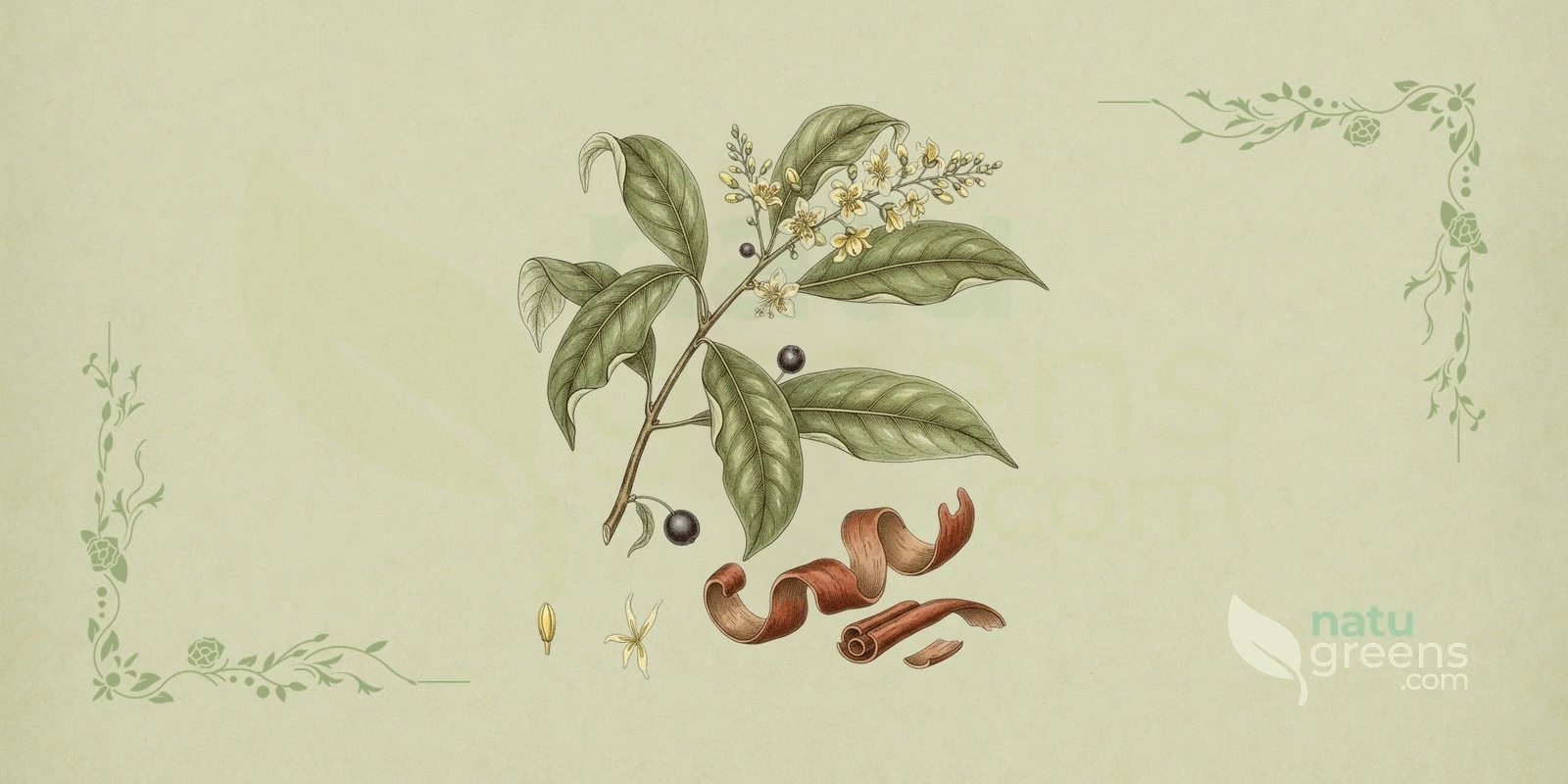
Historically, cinnamon has been used in rituals, such as in the Egyptian mummification process, and as a valuable trade commodity. Its medicinal importance is recognized in traditional systems such as Ayurveda, where it is used to address a variety of ailments. Modern scientific research has validated many of these applications, highlighting its anti-inflammatory, antioxidant, antimicrobial, and antidiabetic actions. The richness of its volatile compounds, such as cinnamaldehyde and eugenol, is central to its therapeutic effects and to the characteristic aroma that makes it one of the most prized spices in the world.
Popular and International Names of Ceylon Cinnamon
- English: true cinnamon, Ceylon cinnamon.
- Spanish: canela, canela de Ceylán.
- Portuguese: canela, canela-do-ceilão, canela-verdadeira, caneleira, caneleira-do-ceilão.
- French: cannelle, cannelle de Ceylan.
- Italian: cannella, cannella di Ceylon.
- German: Ceylon-Zimt, Echter Zimt.
Botanical Synonyms of Cinnamomum verum
The botanical synonym most frequently found in contemporary scientific literature for Cinnamomum verum J. Presl is Cinnamomum zeylanicum J. Presl. This name is widely used in pharmacological and phytochemical publications. Other synonyms include Laurus cinnamomum L., Cinnamomum alexei Kosterm., Cinnamomum aromaticum J.Graham, Cinnamomum barthii Lukman., Cinnamomum bengalense Lukman., Cinnamomum biafranum Lukman., Cinnamomum bonplandii Lukman., Cinnamomum boutonii Lukman., Cinnamomum capense Lukman., Cinnamomum cayennense Lukman., Cinnamomum cinnamomum (L.) H.Karst. nom. inval., Cinnamomum commersonii Lukman., Cinnamomum cordifolium Lukman., Cinnamomum decandollei Lukman., Cinnamomum delessertii Lukman., Cinnamomum ellipticum Lukman., Cinnamomum erectum Lukman., Cinnamomum humboldtii Lukman., Cinnamomum iners Wight nom. illeg., Cinnamomum karrouwa Lukman., Cinnamomum leptopus A.C.Sm., Cinnamomum leschenaultii Lukman., Cinnamomum madrassicum Lukman., Cinnamomum maheanum Lukman., Cinnamomum mauritianum Lukman., Cinnamomum meissneri Lukman., Cinnamomum ovatum Lukman., Cinnamomum pallasii Lukman., Cinnamomum pleei Lukman., Cinnamomum pourretii Lukman., Cinnamomum regelii Lukman., Cinnamomum roxburghii Lukman., Cinnamomum sieberi Lukman., Cinnamomum sonneratii Lukman., Cinnamomum vaillantii Lukman., Cinnamomum variabile Lukman., Cinnamomum wolkensteinii Lukman., Cinnamomum zeylanicum Blume, and Cinnamomum zollingeri Lukman.
Botanical Family: Lauraceae
Cinnamomum verum belongs to the botanical family Lauraceae, which includes several other aromatic and medicinal plant species, such as bay laurel and avocado. This family is known for the presence of essential oils in its leaves, stems, and fruits, which give its members distinctive characteristics and therapeutic properties.
Parts of Ceylon Cinnamon Used
- Bark (mainly the dried inner bark)
- Buds
- Fruits
- Leaves
- Stalks
Ethnobotanical and Traditional Uses
Ceylon cinnamon has a rich history of ethnobotanical and traditional use across many cultures. It is widely used as a condiment and spice, especially the inner bark, to enhance the flavor of sweet and savory dishes. In cooking, it is a popular flavoring in confections, chewing gum, mouthwashes, and toothpaste.
In Ayurvedic medicine, it is used as an antiemetic, antidiarrheal, and carminative, and tradition also credits it with antitubercular and expectorant properties. Historically, the Egyptians employed it in the mummification process, and it has traditionally been used for the relief of sore throat, flu, the common cold, and headaches.
Beyond this, tradition attributes to Ceylon cinnamon a supportive role in managing rheumatoid arthritis and in the relief of menstrual pain; studies indicate that daily consumption of warm cinnamon water may reduce menstrual discomfort. Research also links its use to lowering cholesterol and to supporting cardiac muscle function.
In other applications, cinnamon tree wood is used to make decorations, furniture, cabinets, and plywood. The species C. politum has its bark added to hot beverages to support muscle strength and reduce discomfort. Crushed leaves and bark of C. crassinervium are recommended for headaches, while the leaves of C. rhynchophyllum and C. soegengii are used for stomach discomfort and food poisoning. The mucilage of C. iners is used in the production of mosquito coils, incense, and formica. In Ayurvedic philosophy, Ceylon cinnamon is valued for balancing the Vata and Pitta energies in the body.
Therapeutic Properties of Ceylon Cinnamon
- Antibacterial (activity studied against various bacteria)
- Antidepressant (effect studied on mood, associated with reduced depressive symptoms in research)
- Antidiabetic (effect studied on blood glucose levels)
- Anti-HIV (activity studied in the laboratory against the HIV virus, without proven clinical efficacy)
- Anti-inflammatory (effect studied in reducing inflammatory processes in the body)
- Antioxidant (effect studied in protecting cells against damage from free radicals)
- Antiparkinsonian (shows protective effects in models of Parkinson’s disease)
- Antiproliferative (activity observed in laboratory studies, without clinical confirmation)
- Antispasmodic (traditional use to relieve spasms and cramps)
- Anxiolytic (effect studied in reducing anxiety)
- Cardiovascular (effect studied on vasodilation and heart function)
- Hypolipidemic (effect studied on blood lipid levels)
- Neuroprotective (protective effect studied on the nervous system)
- Wound healing (effect studied on the healing process of skin lesions)
Detailed Phytochemical Profile of Ceylon Cinnamon
The richness of the therapeutic properties of Cinnamomum verum is attributed to its complex phytochemical composition, which includes a wide range of bioactive compounds. These phytochemicals act synergistically, giving the plant its medicinal effects.
- 1,4-Cineole
- 1,8-Cineole
- 2-Methyl-3-phenylpropanal
- Alpha-bisabolol
- Alpha-cubebene
- Alpha-phellandrene
- Alpha-terpinene
- Alpha-terpineol
- Alpha-thujene
- Benzaldehyde
- Benzenepropanal
- Benzyl benzoate
- Beta-caryophyllene
- Beta-pinene
- Bornyl acetate
- Caffeic acid
- Camphene
- Camphor
- Caryophyllene oxide
- Cinnamaldehyde
- Cinnamaldehyde diethyl acetal
- Cinnamate
- Cinnamic acid
- Cinnamyl acetate
- Cinnamyl alcohol
- Cinzeylamine
- Cinzeylanol
- Citronellal
- Cuminaldehyde
- D-glucan
- D-xylose
- Eugenol
- Ferulic acid
- Gallic acid
- Hydrocinnamic acid
- Hydrocinnamyl acetate
- L-arabino-D-xylose
- L-borneol
- Limonene
- Linalool
- Mannitol
- Methoxycinnamaldehyde
- Methyl cinnamate
- Mucilages
- Nerolidol
- Oleic acid
- Oligomeric proanthocyanidins
- p-Cymene
- p-Hydroxybenzoic acid
- Terpinolene
Preparation and Administration Forms of Ceylon Cinnamon
Cinnamomum verum can be used in several ways to take advantage of its medicinal and aromatic properties. The most common preparations include teas, tinctures, and extracts, each with its own particularities of use and concentration of active compounds.
Tea (Infusion or Decoction)
Cinnamon tea is one of the most popular forms of consumption. It can be prepared by infusion, using powdered bark or small pieces, or by decoction, especially for larger pieces of bark, in order to better extract its components. It is widely consumed to support digestion, relieve colds, and as a general tonic.
Tincture
Cinnamon tincture is an alcoholic preparation that concentrates the plant’s active compounds. It is obtained by macerating the bark in an alcohol and water solution. Tinctures are more potent than teas and are generally used in smaller doses, under the guidance of a healthcare professional, for specific conditions such as digestive issues and metabolic imbalances.
Extract
Cinnamon extracts are concentrated forms of the plant’s bioactive compounds, which can be obtained by different extraction methods (aqueous, alcoholic, supercritical). They can be found in capsules, liquids, or powders, offering a standardized and convenient dosage for therapeutic use. They are frequently used in supplements for glycemic control and antioxidant support.
Synergy with Other Medicinal Plants
Because of its broad medicinal properties, Ceylon cinnamon can be synergistically combined with other plants to enhance specific therapeutic effects or to create more balanced formulations. Combining medicinal plants is a common practice in herbal medicine, aiming to optimize results and, at times, mitigate potential adverse effects.
With Ginger (Zingiber officinale)
The combination of cinnamon with ginger is traditionally used to support the digestive and respiratory systems. Both have anti-inflammatory and warming properties, making them useful in cases of colds, flu, nausea, and to stimulate circulation. Together, they can contribute to more consistent relief from muscle and joint pain.
With Turmeric (Curcuma longa)
The synergy between cinnamon and turmeric is notable for its potent anti-inflammatory and antioxidant actions. Curcumin, turmeric’s main active compound, and cinnamon’s cinnamaldehydes act on different inflammatory pathways, providing a broader effect. This combination is particularly interesting for supporting joint health and for protecting cells against oxidative stress.
With Green Tea (Camellia sinensis)
Cinnamon can be added to green tea to support glycemic control and increase the beverage’s antioxidant potential. Green tea is rich in catechins, and cinnamon complements its effects on glucose metabolism, making this combination beneficial for individuals with insulin resistance or type 2 diabetes, as well as promoting cardiovascular health.
With Cardamom (Elettaria cardamomum)
The combination of cinnamon with cardamom is often used in culinary and medicinal preparations to support digestion and relieve bloating. Both have carminative and digestive properties, helping to reduce gas and gastrointestinal discomfort. This synergy can also be useful for freshening breath and as a general tonic.
With Clove (Syzygium aromaticum)
Cinnamon and clove form a pair with studied antimicrobial and analgesic properties. This combination is traditionally used against infections, to relieve toothache and sore throat, and as a natural expectorant. Their essential oils work in a complementary way, with activity studied against several pathogens.
Recipes and Usage Protocols of Ceylon Cinnamon
Cinnamomum verum can be incorporated into daily routines in several ways, whether for culinary or therapeutic purposes. It is essential to follow the recommended dosages and, in case of doubt or specific health conditions, to consult a healthcare professional.
Mouth Rinse for Oral Health
To help support oral hygiene, prepare a weak cinnamon tea (1 teaspoon of ground cinnamon or 1 cinnamon stick to 200 ml of hot water, infuse for 10 minutes and strain). Use the warm liquid as a mouth rinse for 30 seconds, two to three times a day. Do not swallow.
Tea for Menstrual Relief
To help relieve menstrual cramps and discomfort, prepare a tea with 1 cinnamon stick (about 2-3 grams) or 1 teaspoon of ground cinnamon to 250 ml of water. Boil for 5 minutes, remove from heat, and let steep for another 5 minutes. Strain and drink warm, up to twice a day, preferably during the menstrual period.
Tea for Glycemic Control
To help support healthy blood sugar levels, prepare a tea with 1 teaspoon of ground cinnamon or 1 cinnamon stick to 200 ml of water. Boil for 5 minutes, strain, and drink warm, once a day, preferably before a main meal. It is important to monitor blood glucose and not replace prescribed medications without medical guidance.
Infusion for Colds and Flu
For colds, flu, and sore throat, prepare an infusion with 1 teaspoon of ground cinnamon or 1 cinnamon stick in 250 ml of hot water. Let steep for 10 minutes, strain, and add honey and lemon to taste. Drink warm, up to three times a day, to help relieve symptoms and promote well-being.
Culinary and Aromatic Use
Ceylon cinnamon is an excellent spice for many preparations. It can be added to desserts, fruit, yogurt, cereal, coffee, and tea. Besides enhancing flavor, it contributes its antioxidant and digestive properties. Use to taste, but in moderation, especially the powdered form, to avoid excess.
The preparations above follow traditional records and do not replace professional guidance. Before any internal use, consult the contraindications and interactions described in this article.
The preparations above follow traditional records and do not replace professional guidance. Before any internal use, check the contraindications and interactions described in this article.
Associated Therapies
Cinnamomum verum, beyond its direct uses in herbal medicine, can be integrated with or complement several other therapies, enhancing its effects or providing support within holistic health approaches. It is essential that combining it with other therapies be done under the guidance of qualified professionals.
Aromatherapy
Cinnamon essential oil, extracted from the bark or leaves, is widely used in aromatherapy. Its stimulating and warming properties are used to relieve mental fatigue, support concentration, and promote a sense of well-being. It can be diffused into the air or used in massage diluted in a carrier oil, always with caution due to its potentially irritating nature.
Homeopathy
In homeopathy, cinnamon (Cinnamomum) is used in diluted and dynamized preparations that, according to the principles of this approach, are indicated for specific conditions such as uterine hemorrhage, diarrhea, and flatulence. The choice of homeopathic remedy and its dosage are individualized, based on the patient’s symptoms and overall clinical picture, under the supervision of a homeopathic physician.
Traditional Chinese Herbal Medicine
In Traditional Chinese Medicine (TCM), cinnamon (known as Rou Gui or Gui Zhi, depending on the part used) is valued for its warming properties and its ability to tonify the Yang of the Kidney and Spleen. It is traditionally used to address Yang deficiencies, such as lower back pain, fatigue, impotence, chronic diarrhea, and colds, according to this traditional medicine. It is also used to warm the meridians and disperse cold.
Ayurvedic Herbal Medicine
In Ayurveda, cinnamon (Dalchini) is considered a spice that balances the Vata and Kapha doshas, while it may increase Pitta in excess. It is traditionally used, according to Ayurveda, to support digestion, strengthen agni (digestive fire), address colds, coughs, and congestion, and support blood sugar control. It is frequently combined with other herbs for specific formulations.
Flower Essence Therapy
Although not a traditional Bach flower remedy, cinnamon flower essence can be used in contemporary flower essence systems to work with issues related to vitality, passion, and connection to one’s own essence. It may support individuals who feel apathetic, low in energy, or disconnected from their desires, promoting an awakening of inner strength and creativity.
Contraindications and Side Effects of Ceylon Cinnamon
Although Ceylon cinnamon is generally safe when consumed in moderate amounts, it is important to be aware of its contraindications and potential side effects. Consuming high doses, especially of bark oil (above 0.2 grams per day) or the crude drug (15-20 grams per day), can cause irritation. Individuals with a known allergy to plants of the Lauraceae family should avoid using cinnamon. In addition, due to its antidiabetic and anticoagulant properties, cinnamon may interact with diabetes medications and anticoagulants, making it essential to consult a healthcare professional before starting therapeutic use, especially for people with pre-existing medical conditions or who take other medications.
Historical Notes and Interesting Facts
Beyond its medicinal and culinary applications, Ceylon cinnamon holds a rich tapestry of curiosities and historical facts that make it one of the most fascinating spices in the world. Its history is intertwined with ancient civilizations and trade routes that shaped the world.
Antiquity and Trade Value
Since antiquity, cinnamon has been a luxury item and a valuable trade commodity. The Egyptians used it not only as a spice but also in embalming rituals, demonstrating its high value and cultural significance. Cinnamon trade routes were closely guarded secrets, and its origin was often shrouded in mystery to keep its price high. During the 16th and 17th centuries, Portuguese traders were the first to bring cinnamon from Ceylon (present-day Sri Lanka) to Europe, establishing a monopoly that would later be contested by the Dutch and the British.
Legends and Myths
Several legends surround cinnamon. One of them, told by Herodotus, the Greek historian, described cinnamon as being gathered by giant birds that built their nests with cinnamon sticks on inaccessible mountains. Cinnamon collectors would supposedly use meat as bait to lure the birds, which would carry the meat back to their nests, causing the nests to collapse and allowing the spice to be collected. Though fanciful, this story illustrates the fascination and mystery that cinnamon evoked.
Difference between Ceylon Cinnamon and Cassia
It is an important point of curiosity to distinguish Cinnamomum verum (Ceylon cinnamon or true cinnamon) from Cinnamomum cassia (cassia or Chinese cinnamon). Although both are called cinnamon, Ceylon cinnamon is thinner, lighter in color, and has a more delicate, sweeter flavor. Cassia, in turn, is thicker, darker in color, and has a stronger, spicier flavor. The main difference lies in the coumarin content, a compound that can be hepatotoxic in large amounts. Ceylon cinnamon has very low coumarin levels, making it the preferred choice for therapeutic use and regular consumption.
Use in World Cuisine
Cinnamon is a versatile ingredient in global cuisine. In India, it is an essential component of many masalas and curries. In the Middle East, it is used in meat and rice dishes. In Europe and the Americas, it is popular in desserts, hot beverages, and baked goods. Its ability to enhance both sweet and savory flavors makes it an indispensable spice in kitchens around the world.
Frequently Asked Questions about Ceylon Cinnamon
Ceylon cinnamon tea is a popular beverage, appreciated both for its flavor and for its potential health benefits. Below, we answer some of the most common questions about its consumption and properties.
What Is the Difference between Ceylon Cinnamon and Cassia Cinnamon?
The main difference lies in the plant species and the coumarin content. Ceylon cinnamon (Cinnamomum verum) is considered true cinnamon, with a milder flavor and low coumarin content. Cassia cinnamon (Cinnamomum cassia), on the other hand, has a stronger flavor and a high coumarin content, which can be harmful to the liver in large amounts. Ceylon cinnamon is the preferred choice for medicinal use.
Does Cinnamon Tea Help with Weight Loss?
Cinnamon tea may indirectly support the weight-loss process. Its thermogenic properties and its ability to support insulin sensitivity may contribute to regulating metabolism and reducing fat accumulation. However, it is not a miracle solution and should be combined with a balanced diet and physical exercise.
Who Should Not Drink Cinnamon Tea?
Pregnant or breastfeeding individuals, those with liver problems, gastric ulcers, or who use anticoagulant or diabetes medications should avoid consuming cinnamon tea without medical guidance. Individuals with an allergy to plants of the Lauraceae family should also abstain. The coumarin present in cassia cinnamon, in high doses, can be toxic to the liver.
What Is the Best Way to Prepare Cinnamon Tea?
To prepare the tea, use 1 cinnamon stick (about 2-3 grams) or 1 teaspoon of ground cinnamon to 250 ml of water. If using a stick, boil for 5 minutes; if using powder, add it to hot water and let steep for 10 minutes. Strain before drinking. For a stronger flavor, the cinnamon stick can be left to steep for longer.
Can Cinnamon Tea Be Consumed Daily?
Yes, Ceylon cinnamon tea can be consumed daily in moderate amounts. One to two cups per day is recommended for most people. It is important to observe your body’s response and, in case of any discomfort, reduce the frequency or consult a healthcare professional. Avoid excessive consumption, especially if it is cassia cinnamon.
Notice: this content is for informational purposes and does not replace professional medical advice. Consult a physician or herbal practitioner before using medicinal plants, especially during pregnancy, breastfeeding, or alongside medication.
References and Scientific Studies
Peer-Reviewed Scientific Studies (3)
- PMC2026 Edziri H, et al. Antibacterial and Antibiofilm Activity of a Chemically Characterized Cinnamomum verum Bark Methanolic Extract Against Multidrug-Resistant Bacteria: Preliminary Antibiotic-Interaction Screening and Exploratory Molecular Docking. Chemistry & Biodiversity. 2026.
- PMC2026 Gajewska S, et al. Comparative study of antioxidant activity and chemical composition of alcoholic extracts and essential oils from Cinnamomum verum and Cinnamomum cassia. Food Chemistry. 2026.
- PMC2026 Baishya D, Choudhury A. In Vivo Antidiabetic Efficacy of Ethyl Acetate Fractions Cinnamomum tamala (Buch.-Ham.) T. Nees & C. H. Eberm. and Cinnamomum verum J. Presl in Streptozotocin-Induced Diabetic Rats. Journal of Pharmacopuncture. 2026.
Supplementary Readings (1)
- 2021 Pathak, R., & Sharma, H. (2021). A Review on Medicinal Uses of Cinnamomum verum (Cinnamon). Journal of Drug Delivery and Therapeutics, 11(6-S), 161-166. Disponível em: https://jddtonline.info/index.php/jddt/article/view/5145