Vaccinium vitis-idaea L. / Lingonberry, also known as cowberry or mountain cranberry, is a small evergreen shrub of the Ericaceae family described by Carl Linnaeus in 1753. Native to the boreal regions of Europe, Asia and North America, it is prized for its edible red berries and its long history of folk use, and it thrives in mountain woodlands, heaths and acidic soils, where it adapts well to cold and harsh environments. Throughout history, many cultures have turned to it both in cooking and in traditional medicine, largely because of its wealth of bioactive compounds.
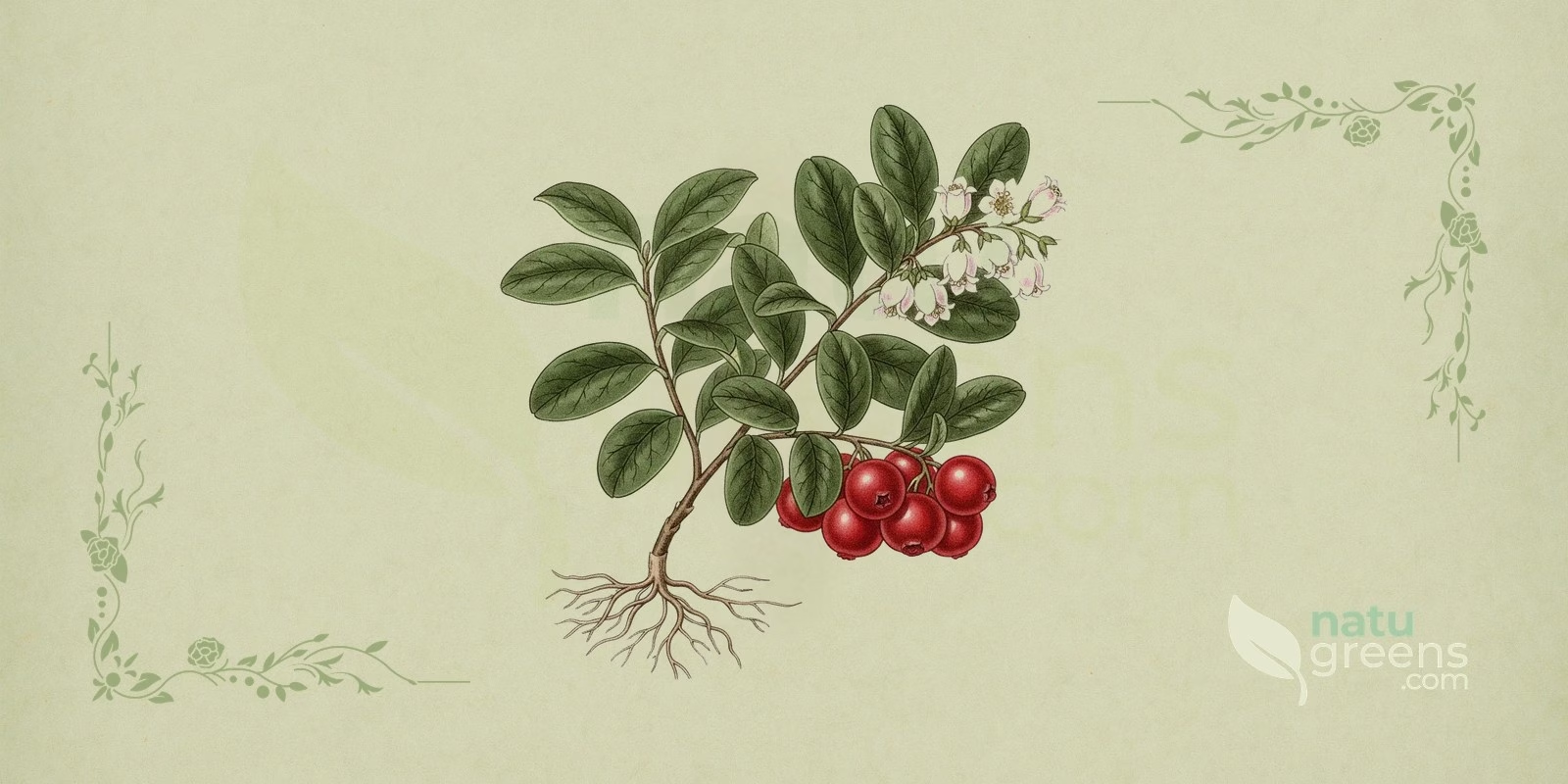
In traditional medicine, lingonberry is valued for the antiseptic and diuretic action attributed to its leaves, and its best-known use is as support for urinary tract complaints. The sweet-tart berries are eaten fresh, dried or made into jams and sauces, while the leaves are used to prepare infusions. Modern scientific research has been investigating several of these ethnobotanical uses, with particular attention to the antioxidant, anti-inflammatory and antimicrobial activity observed in laboratory studies, and the plant remains a subject of study for the potential it shows in the field of health and wellbeing, although clinical data are still limited.
Popular and International Names of Lingonberry
In English, lingonberry is by far the most widely used name for the plant and the one that usually appears on jam and juice labels, although cowberry, mountain cranberry and partridgeberry are also heard in regional usage. In Portuguese, the plant is mainly called arando-vermelho, airela-vermelha or mirtilo-vermelho. In other languages, the popular names often refer to the color of the berries or to the cold, mountainous environment where the plant grows.
- English: cowberry, lingonberry, mountain cranberry, partridgeberry.
- Spanish: arándano encarnado, arándano rojo.
- Portuguese: airela-vermelha, arando-vermelho, mirtilo-vermelho.
- French: airelle rouge, airelle vigne d’Ida.
- Italian: mirtillo rosso.
- German: Kronsbeere, Preiselbeere.
Botanical Synonyms of Vaccinium vitis-idaea
Although Vaccinium vitis-idaea L. is the widely accepted scientific name, the plant has gathered a few botanical synonyms over the history of taxonomy, reflecting different classifications or attempts to move the species into other genera. Most botanical authorities recognize Vaccinium vitis-idaea as the correct name for this species, and the names below should be read only as historical equivalents.
- Rhodococcum vitis-idaea (L.) Avrorin
- Vaccinium punctatum Lam.
- Vitis-idaea punctata (Lam.) Moench
- Vitis-idaea vitis-idaea (L.) Britton
Botanical Family: Ericaceae
Vaccinium vitis-idaea belongs to the Ericaceae, a diverse family that brings together shrubs and trees, many of them known for thriving in acidic soils and in mountainous or boreal environments. The family is characterized by flowers that are usually bell-shaped or urn-shaped and by fruits that are often berries, as in lingonberry, blueberries and cranberries, and its distribution is global, with a notable concentration in temperate and arctic regions.
Many species in the family are valued for their traditional uses and nutritional value, since they tend to be rich in antioxidants and other phytochemicals. The adaptation of these plants to specific soil conditions, together with their ability to produce nutritious fruits, gives them ecological and economic importance, and compounds such as anthocyanins and flavonoids, common throughout the family, lie behind much of the scientific interest in eating their fruits.
Parts of Lingonberry Used
Two parts of the plant account for most traditional use: the leaves, harvested and dried to prepare infusions and extracts, and the berries, eaten fresh, dried or in the form of juice, jam and sauce. Because the leaves contain arbutin, their medicinal use calls for much more caution than eating the berries as food, as detailed in the Contraindications section.
- Fruits (berries)
- Leaves
Ethnobotanical and Traditional Uses
Lingonberry has a long history of ethnobotanical and traditional use in many cultures, above all in the regions where it is native, and both the Indigenous peoples of North America and the communities of the Nordic countries and other parts of Europe turned to the plant for food and medicinal purposes. The nutrient-rich berries were eaten fresh, dried or put up as preserves that ensured a supply of food through the long winters, while the leaves formed the basis of medicinal preparations.
According to the traditional record, lingonberry was used for a variety of complaints, such as urinary problems, diarrhea, fevers and inflammation, and the role attributed to the leaves as a urinary antiseptic was particularly valued. The plant also had non-medicinal uses, such as the production of natural dyes from the leaves and berries, which shows how culturally and practically important lingonberry was to the communities that lived alongside it.
Therapeutic Properties of Lingonberry
The properties listed below bring together what tradition attributes to the plant and what laboratory studies have begun to investigate, and none of them replaces an assessment by a health professional.
- Anti-inflammatory (activity observed in laboratory studies, not clinically proven)
- Antimicrobial (activity against pathogenic microorganisms observed in laboratory studies)
- Antioxidant (ability to neutralize free radicals observed in experimental studies)
- Astringent (traditional record of a tissue-tightening action attributed to the tannins)
- Diuretic (traditional record of an increase in urine volume)
- Refrigerant (traditional record of use to lower body temperature in feverish states)
- Urinary Antiseptic (traditional record attributed to the arbutin in the leaves, not a substitute for medical care in urinary infections)
Detailed Phytochemical Profile of Lingonberry
Lingonberry contains a range of phytochemical compounds to which the properties described by tradition and investigated in the laboratory are attributed. The complexity of this chemical profile helps explain the scientific interest in the plant and its reputation as a superfood, and these compounds occur in both the berries and the leaves, although in different concentrations and proportions, with arbutin associated mainly with the leaves.
- Anthocyanins
- Arbutin
- Flavonoids (myricetin, quercetin)
- Phenolic acids (caffeic acid, ellagic acid, ferulic acid)
- Proanthocyanidins (PACs)
- Resveratrol
- Tannins
Preparation and Administration Forms of Lingonberry
The dried leaves are usually prepared as an infusion or decoction and also serve as raw material for extracts, tinctures and capsules, while the berries are eaten fresh or taken as juice. Concentrated forms such as extracts, tinctures and capsules should be used only under the guidance of a health professional, since they may concentrate the arbutin from the leaves.
- Capsules
- Decoction
- Dry extract
- Fluid extract
- Infusion
- Juice
- Tincture
Synergy with Other Medicinal Plants
Urinary Health
Combining lingonberry with bearberry (Arctostaphylos uva-ursi) and horsetail (Equisetum arvense) has a traditional record in formulas aimed at the urinary tract. Laboratory studies are investigating the ability of lingonberry proanthocyanidins to hinder the adhesion of bacteria to the bladder wall, tradition attributes a urinary antiseptic action to the arbutin in bearberry, and horsetail is added to the blend for the diuretic effect that folk use ascribes to it. Because bearberry also contains arbutin, this combination adds to the overall exposure to the compound and should therefore not be used for long periods or without the guidance of a health professional, with all the restrictions described under Contraindications applying to it.
Antioxidant Action
In food tradition, lingonberry can be combined with elderberries (Sambucus nigra) and açaí (Euterpe oleracea), fruits that are equally rich in pigments and phenolic compounds. Each of them shows antioxidant capacity in laboratory assays, and the combination serves to diversify the intake of anthocyanins and flavonoids in the diet, with no clinical proof of a synergistic effect on oxidative stress in the body. Elderberries should only be eaten cooked, never raw.
Recipes and Usage Protocols of Lingonberry
Traditional Leaf Infusion
An infusion of dried lingonberry leaves is traditionally used for its diuretic action, to increase the output of fluids from the body. To prepare it, place a small amount of dried leaves in a cup of boiling water, cover, leave to infuse for about 10 minutes, strain and drink it warm, always bearing in mind that, because of the arbutin present in the leaves, how often and for how long it is used should not be decided on your own: consult a health professional, avoid prolonged use or high doses, and do not use the tea during pregnancy, while breastfeeding, in young children or, without a medical assessment, in cases of kidney disease.
Berry Juice for Urinary Health
Fresh lingonberry juice is traditionally used as support for urinary tract health, and studies are investigating whether the proanthocyanidins present in the berries make it harder for bacteria to attach to the walls of the urinary tract. As a food, the usual amount is 50 to 100 ml of pure juice a day, with no added sugar, and for a more pleasant taste it can be diluted with water or mixed with other fruit juices.
The juice does not replace a medical assessment or the antibiotics prescribed for a urinary infection that has already set in, and anyone taking anticoagulants such as warfarin should talk to their doctor before making it part of their routine.
The preparations above follow traditional records and do not replace professional guidance. Before any internal use, check the contraindications and interactions described in this article.
Associated Therapies
Herbal Medicine
In herbal medicine, lingonberry is valued for the antiseptic, diuretic and anti-inflammatory action that tradition attributes to it. The leaves are usually used in infusions as support for urinary complaints and as an astringent, always for short periods, while the berries are included in the diet as a source of antioxidants, and the plant often appears in herbal formulations aimed at kidney function and urinary tract health, which should be used under professional guidance.
Functional Nutrition
In the field of functional nutrition, lingonberry is often presented as a superfood because of its nutritional and phytochemical profile, which includes vitamins, minerals and, above all, antioxidants such as anthocyanins and proanthocyanidins. The berries are included in the diet as a source of these compounds, and preliminary studies are investigating their relationship with the immune system, oxidative stress and cardiovascular health, although there is so far no clinical proof of protection against chronic diseases or of any effect on longevity.
Contraindications and Side Effects of Lingonberry
Although lingonberry is generally considered safe for most people when the berries are eaten in food amounts, medicinal use, especially of the leaves, involves contraindications and possible side effects that need to be taken into account. Because of the tannins, excessive consumption can cause gastrointestinal upset, such as nausea, vomiting and diarrhea, in sensitive people.
The leaves contain arbutin, a compound to which tradition attributes a urinary antiseptic action. Prolonged use or high doses of arbutin-containing leaves are not recommended because of the risk of effects on the liver and kidneys. Medicinal use of lingonberry (leaves, teas, extracts, tinctures, capsules and concentrated juices) is contraindicated during pregnancy and breastfeeding; do not use in young children; people with kidney disease should consult their doctor before use.
When symptoms of a urinary infection appear, such as burning, fever or lower back pain, the plant does not replace medical diagnosis and treatment, and anyone with a pre-existing health condition should seek professional advice before starting to use it.
Drug Interactions
Lingonberry may interact with some medications, and there are reports that fruit products from the genus Vaccinium alter the effect of anticoagulants such as warfarin, so anyone taking medications that reduce blood clotting should consult a doctor before using concentrated juices, extracts or capsules of the plant. The diuretic action attributed to the leaves may also add to that of diuretic drugs and contribute to an electrolyte imbalance, which is why medical advice is essential before starting to use any medicinal plant, especially for people who already take other medications.
Historical Notes and Interesting Facts
The Berry of Immortality
In some cultures of northern Europe, lingonberry is affectionately called the “berry of immortality” because of its remarkable ability to survive and thrive in extreme climatic conditions. This hardiness, together with the long keeping quality of the berries after harvest and their reputation as a healthy food, helped turn the plant into a symbol of vitality and longevity, an association reinforced over the centuries by its constant presence in the landscape and in the diet of northern populations.
Use in Nordic Cuisine
Lingonberry is a fundamental ingredient in the cuisine of the Nordic countries, especially Sweden, Finland and Norway, where it is traditionally used in jams, sauces, juices and desserts. Lingonberry sauce is a classic accompaniment to meat dishes such as meatballs and game, and its characteristic tartness balances stronger flavors, a versatility that has made it an indispensable part of the regional cuisine.
Frequently Asked Questions about Lingonberry
Is Lingonberry Tea Safe for Pregnant Women?
Medicinal use of lingonberry, including tea made from the leaves, is contraindicated during pregnancy and breastfeeding, and the safety of these preparations at those stages has not been established by robust scientific studies. The berries eaten as food, in usual amounts, are generally considered safe, but pregnant and breastfeeding women should consult a health professional before using any concentrated product made from the plant.
Are Lingonberry and Cranberry the Same Plant?
Although both are red berries of the genus Vaccinium and share some characteristics, lingonberry (Vaccinium vitis-idaea) and cranberry (Vaccinium macrocarpon or Vaccinium oxycoccos) are distinct species. Lingonberry tends to be smaller and more sweet-tart and to grow in colder climates, while cranberry is larger and more acidic, and the phytochemical composition of the two shows subtle differences, although both are rich in proanthocyanidins studied for their relationship with the urinary tract.
Can Lingonberry Be Used for Urinary Tract Infections?
Lingonberry is traditionally used as support for urinary tract health, and studies are investigating whether the proanthocyanidins (PACs) in the berries hinder the adhesion of bacteria, especially Escherichia coli, to the walls of the urinary tract. When a urinary infection is already established, however, it is essential to see a doctor for proper diagnosis and treatment, because the plant can at most be a complement, never a substitute for prescribed medication.
Is Long-Term Use of the Leaf Tea Safe?
The leaves contain arbutin, and prolonged use or high doses of arbutin-containing leaves are not recommended because of the risk of effects on the liver and kidneys. For this reason, the tea should be limited to short periods and used only under the guidance of a health professional, who will assess whether it is needed and for how long.
Can Children and People with Kidney Disease Use Lingonberry?
Lingonberry should not be used medicinally in young children, and people with kidney disease should consult their doctor before use, since the arbutin in the leaves is associated with a risk of effects on the liver and kidneys. In both cases, professional guidance must come before any tea, extract or capsule made from the plant.
Does Lingonberry Interact with Medications?
Fruit products from the genus Vaccinium have been reported to alter the effect of anticoagulants such as warfarin, and the diuretic action attributed to the leaves may add to that of diuretic drugs, with a risk of electrolyte imbalance. Anyone taking these or other medications should seek medical advice before using the plant in any concentrated form.
Notice: this content is for informational purposes and does not replace professional medical advice. Consult a physician or herbal practitioner before using medicinal plants, especially during pregnancy, breastfeeding, or alongside medication.
References and Scientific Studies
- PMC2018 Bujor OC, et al. Phenolic compounds and antioxidant activity of lingonberry (Vaccinium vitis-idaea L.) leaf, stem and fruit at different harvest periods. Food Chem. 2018.
- PMC2021 Kowalska K, et al. Lingonberry (Vaccinium vitis-idaea L.) Fruit as a Source of Bioactive Compounds with Health-Promoting Effects – A Review. Int J Mol Sci. 2021.
- PMC2024 Pärnänen P, et al. Lingonberry (Vaccinium vitis-idaea L.) Fruit Phenolic Bioactivities – A Review of In Vitro and In Vivo Human Studies. Microorganisms. 2024.
- PMC2023 Xu J, et al. Comprehensive phytochemical analysis of lingonberry (Vaccinium vitis-idaea L.) from different regions of China and their potential antioxidant and antiproliferative activities. RSC Adv. 2023.