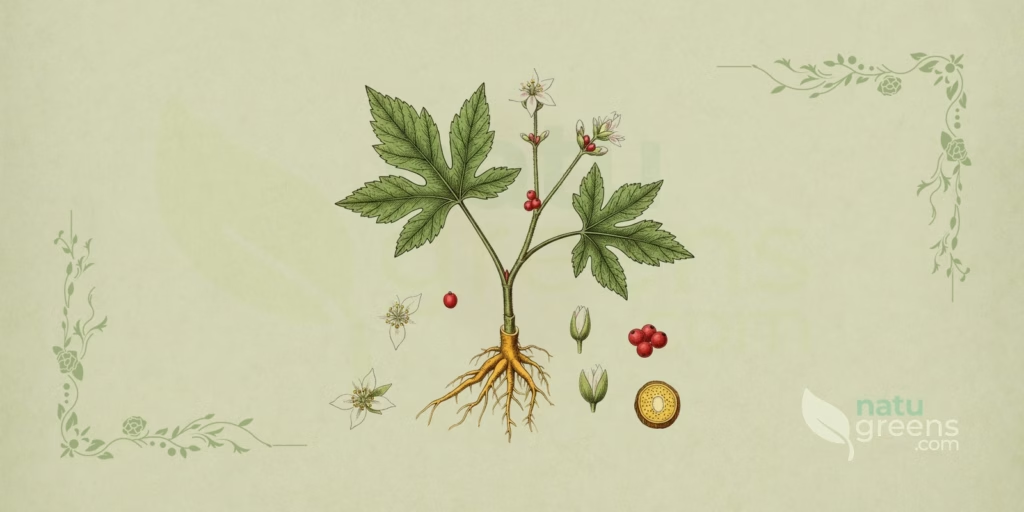
Chimaphila umbellata (L.) W.P.C.Barton / Pipsissewa, also known as prince’s pine, is a small perennial herbaceous plant of the Ericaceae family, native to dry forests and sandy soils across the temperate Northern Hemisphere and long valued for its traditional uses. The plant reaches up to 35 cm in height and forms a simple stem with evergreen, glossy, toothed leaves arranged in opposite pairs or in whorls. Its flowers, which range from white to pink, appear clustered in a small umbel of 4 to 8 blooms.
Over the course of history, pipsissewa has been used by a number of cultures, among them Indigenous peoples of the Columbia Plateau in the North American Northwest, who prepared decoctions of the plant in cases of tuberculosis, according to ethnographic records. Its relevance extends to use as a flavoring in candies and beverages such as root beer, and as an ingredient in teas. Modern research has been describing the phytochemical profile of the species and has found compounds with biological activity in laboratory assays, but clinical studies confirming these uses in people are still lacking. The presence of arbutin, which releases hydroquinone in the body, also calls for caution regarding how long the plant is consumed.
Popular and International Names of Pipsissewa
Several of the plant’s names refer to winter, since the leaves stay green all year round, as seen in the German forms built on Winterlieb and Wintergrün and in the English name umbellate wintergreen, all gathered in the list below.
- English: pipsissewa, prince’s pine, umbellate wintergreen.
- French: chimaphile à ombelles, herbe à peigne.
- German: Dolden-Winterlieb, Doldiges Wintergrün, Doldiges Winterlieb.
- Italian: chimafila, piroletta.
- Portuguese: erva-de-inverno, pinheiro-do-príncipe, pipsissewa, quimafila.
- Spanish: pírola umbelada, quimafila.
Botanical Synonyms of Chimaphila umbellata
Chimaphila umbellata has accumulated a few botanical synonyms over the history of plant taxonomy. Although Chimaphila umbellata (L.) W.P.C.Barton is today the accepted scientific name, other names still appear in older literature or in different classification systems. These synonyms reflect the taxonomic revisions made as new knowledge was incorporated, starting with the basionym itself, Pyrola umbellata, the name under which Linnaeus described the species within the genus Pyrola.
- Chimaphila corymbosa Pursh
- Chimaphila cymosa W.P.C.Barton
- Pyrola umbellata L.
Botanical Family: Ericaceae
Chimaphila umbellata belongs to the Ericaceae family, a diverse group that includes shrubs, trees and herbs, many of them known for their ornamental flowers and edible fruits. The family is cosmopolitan, with species adapted to a wide range of habitats that runs from temperate forests to arctic and alpine regions. It is usually associated with acidic, nutrient-poor soils, where the partnership with mycorrhizal fungi helps the roots absorb what the ground offers only sparingly.
Within the Ericaceae, pipsissewa belongs to the tribe Pyroleae, a group that older classifications regarded as a separate family, the Pyrolaceae. The species stands out for its perennial habit and for its mixotrophy, that is, its ability to obtain part of its carbon and nutrients from soil fungi in addition to what it produces through photosynthesis, a phenomenon documented in stable isotope studies. The family is also rich in secondary compounds such as flavonoids and tannins, which account for much of the pharmacological interest in many of its species, pipsissewa among them.
Parts of Pipsissewa Used
The leaves account for most of the preparations described in this article, such as infusions and tinctures, and the roots also appear among the plant parts employed in traditional practice.
- Leaves
- Roots
Ethnobotanical and Traditional Uses
The items below gather historical and folk records of the plant’s use and are not equivalent to proven indications, especially in the case of serious diseases, which always call for medical diagnosis and follow-up.
- Anxiety and epilepsy (folk record, without scientific evidence).
- Bladder and kidney complaints (traditional record; the plant is contraindicated in kidney disease).
- Chronic rheumatism (traditional record).
- Decoction used in cases of tuberculosis by Indigenous peoples of the Columbia Plateau (historical record).
- Diuretic and diaphoretic (traditional record).
- Flavoring for candies and beverages, such as root beer.
- Fluid retention (traditional record).
- Heart problems (folk record, without scientific evidence).
- Spasms (folk record).
- Urinary tract infections (traditional record, not a substitute for medical evaluation).
Therapeutic Properties of Pipsissewa
The activities listed combine traditional use with results from studies that are mostly preclinical, carried out on cells and microorganisms, and should therefore not be read as treatment indications proven in humans.
- Antibacterial (activity observed in vitro, without clinical confirmation)
- Antifungal (activity observed in laboratory assays)
- Anti-inflammatory (traditional record and preliminary studies)
- Antioxidant (activity measured in laboratory assays)
- Antiproliferative (activity observed in laboratory studies, without clinical evidence)
- Astringent (causes tissues to contract, an effect associated with tannins)
- Diaphoretic (traditional record of inducing perspiration)
- Diuretic (traditional record of increasing urine output)
The antiproliferative effect was described in human breast cancer cell lines grown in the laboratory, through a cell death mechanism called necroptosis. This finding, however, does not justify using the plant to prevent or treat cancer.
Detailed Phytochemical Profile of Pipsissewa
The chemical profile of pipsissewa combines phenolic glycosides, naphthoquinones, flavonoids and triterpenes. Arbutin deserves special attention because, once metabolized, it releases hydroquinone, a substance linked both to the plant’s traditional use for the urinary tract and to the safety restrictions described under Contraindications.
- Arbutin (phenolic glycoside that releases hydroquinone in the body)
- Avicularin
- Benzohydroquinones
- Chimaphilin (naphthoquinone characteristic of the genus)
- Flavonoids (quercetin, kaempferol)
- Hyperoside
- Isohomoarbutin
- Methyl salicylate
- Polyphenols
- Quinones
- Renifolin
- Sitosterol
- Tannins
- Taraxerol
- Toluquinol
- Triterpenes
- Ursolic acid
In 2015, researchers isolated from the plant a new naphthalene glycoside that inhibited RANKL-stimulated osteoclast differentiation in cultured cells, a result that broadens interest in the chemistry of the species but remains confined to the laboratory.
Preparation and Administration Forms of Pipsissewa
Tradition relies on several forms of preparation, always for short periods, and any internal use should be agreed upon with a health professional because of the hydroquinone released by the arbutin present in the leaves.
- Decoction (boiling the plant in water)
- Extract (concentrated form, usually from a commercial source)
- Infusion (tea made from dried leaves)
- Syrup
- Tincture (extraction in alcohol)
Synergy with Other Medicinal Plants
Traditional Combination for the Urinary Tract
In traditional herbal medicine, pipsissewa is often combined with other herbs associated with the urinary tract, such as bearberry (Arctostaphylos uva-ursi), juniper (Juniperus communis) and buchu (Agathosma betulina). According to traditional accounts, the idea behind this synergy is to add up diuretic and antiseptic effects in urinary complaints, bladder stones and fluid retention, drawing on the complementary characteristics of each plant. No clinical study, however, has evaluated the safety or the effect of these blends in people.
These combinations call for extra care, because bearberry also contains arbutin and using the two plants together increases exposure to hydroquinone, while juniper has its own restrictions in kidney disease and pregnancy. Any blend with pipsissewa should respect the short-term limit described under Contraindications and be guided by a health professional.
Recipes and Usage Protocols of Pipsissewa
Traditional Pipsissewa Leaf Infusion
Ingredients: dried pipsissewa leaves, in an amount set with a health professional, and 250 ml of hot water.
Preparation: Pour the hot water over the dried leaves in a cup, cover and let steep for 10 to 15 minutes before straining. Traditional accounts associate this infusion with a mild diuretic effect and with support for minor urinary complaints. Consult a health professional to determine the amount of leaves, the number of cups per day and the length of use, which should not exceed 1 to 2 continuous weeks without guidance. The taste is slightly astringent and can be softened with a little honey or lemon, if desired.
Pipsissewa Tincture in Traditional Use
Ingredients: pipsissewa tincture, either commercial or prepared by an herbalist, and a little water for dilution.
Preparation: Tincture is a concentrated form of the plant’s compounds and, in traditional use, it is usually diluted in a little water before being taken. Consult a health professional to determine the dose and frequency, since concentration varies between manufacturers and exposure to hydroquinone grows with the amount and duration of use, which makes continuous use in chronic conditions without supervision inappropriate.
The preparations above follow traditional records and do not replace professional guidance. Before any internal use, check the contraindications and interactions described in this article.
Associated Therapies
Homeopathy
In homeopathy, Chimaphila umbellata appears as a remedy aimed at urinary tract complaints, prepared from the fresh plant. The homeopathic materia medica links the remedy to symptoms such as painful urination, obstructed urinary flow, a feeling of heaviness in the bladder and cloudy urine, and mentions it in cases of prostatic hypertrophy and chronic cystitis. The effectiveness of homeopathy is not supported by robust scientific evidence, and persistent urinary or prostate symptoms require a medical diagnosis before any complementary approach.
Herbal Medicine
In Japan, pipsissewa extract is part of Eviprostat, an herbal formulation made up of several plant extracts and investigated in studies on benign prostatic hyperplasia. The published results refer to the blend as a whole, with antioxidant and anti-inflammatory activity described for its components in the laboratory, and do not allow conclusions about using the plant on its own in homemade teas or tinctures.
Contraindications and Side Effects of Pipsissewa
Contraindications and Risk Groups
Pipsissewa (Chimaphila umbellata) is traditionally used as a diuretic and urinary tonic, as it contains arbutin/hydroquinone, and for this reason its use has clear limits, summarized in the list below.
- Contraindicated in kidney or liver disease, due to the potential toxicity of hydroquinone with prolonged use.
- Do not use during pregnancy and breastfeeding.
- Do not use for more than 1-2 consecutive weeks without professional guidance.
- Do not use in children.
- Persistent urinary symptoms (pain, blood in the urine, fever) require medical evaluation, not just herbal medicine.
People with a known sensitivity to plants of the Ericaceae family should also avoid pipsissewa, and the lack of safety studies in pregnant women, breastfeeding women and children reinforces the recommendation not to use the plant at these stages of life.
Drug Interactions
Few interactions are well documented for pipsissewa, but the diuretic effect attributed to the plant warrants caution in people taking diuretic drugs or blood pressure medications, since the combined effects may alter the body’s balance of fluids and minerals. Anyone who regularly takes medication should talk to a health professional before starting, bearing in mind that combining it with other arbutin-rich plants, such as bearberry, increases exposure to hydroquinone.
Side Effects
When taken internally, pipsissewa may cause mild gastrointestinal discomfort in some people, and topical application of preparations made from the plant may cause skin irritation. Excessive doses increase urine output, which can be a problem in certain health conditions. Prolonged use also raises exposure to hydroquinone, so any adverse reaction should lead to stopping use and seeking professional advice.
When to Seek Medical Evaluation
Persistent urinary symptoms (pain, blood in the urine, fever) require medical evaluation, not just herbal medicine, because they may point to infections that need antibiotics, to stones or to other kidney and bladder diseases. The same rule applies to anyone already diagnosed with kidney or liver disease, a group in which the plant is contraindicated and in which any self-medication with diuretic herbs should be avoided.
Historical Notes and Interesting Facts
The genus name comes from the Greek cheima, winter, and philos, friend, an allusion to the leaves that stay green through the cold season, an idea that reappears in the German name Winterlieb. The common name pipsissewa, in turn, is usually linked to a Cree term translated as “it breaks into small pieces”, and one of the proposed explanations connects this meaning to the way the leaves of the plant fragment when crushed.
Several Indigenous peoples of North America valued pipsissewa for its medicinal applications and turned to it for a variety of complaints, rheumatism among them. The plant also made its way into the kitchen as a flavoring in root beer recipes, which shows how its distinctive taste came to be recognized.
From an ecological standpoint, pipsissewa is notable for being partially mycoheterotrophic, meaning that it obtains part of the carbon and nutrients it needs from the soil through fungi associated with its roots. It is not a hemiparasite, as is sometimes claimed, since it does not take resources directly from other plants. Studies using stable carbon and nitrogen isotopes in species of the tribe Pyroleae have helped clarify this way of life, which sits between full photosynthesis and total dependence on fungi.
Frequently Asked Questions about Pipsissewa
Is Pipsissewa Safe for Everyone?
No, because the plant is contraindicated in kidney or liver disease, due to the potential toxicity of hydroquinone with prolonged use, and should not be used during pregnancy, during breastfeeding or in children. People allergic to plants of the Ericaceae family should also avoid it, and other adults should use it only under the guidance of a health professional.
How Long Can Pipsissewa Be Used?
Pipsissewa should not be used for more than 1-2 consecutive weeks without professional guidance, because the arbutin present in the leaves releases hydroquinone, a substance with potential toxicity with prolonged use. If the symptoms that prompted its use continue after this period, the right step is to seek medical evaluation rather than extend consumption.
What Is Pipsissewa Traditionally Used For?
Traditional records describe pipsissewa as a diuretic and urinary tonic, used for bladder complaints, fluid retention and rheumatism, as well as a flavoring in candies and beverages. Laboratory studies are investigating the antibacterial, antifungal and antioxidant activities of its compounds, but these findings have not yet been confirmed in clinical trials.
How Is Pipsissewa Tea Prepared?
In the traditional method, the dried leaves are steeped in hot water for 10 to 15 minutes and then strained, and a little honey or lemon can be added to soften the taste. The amount of leaves and the number of cups per day should be set with a health professional, respecting the limit of 1 to 2 weeks of continuous use.
Does Pipsissewa Interact with Medications?
Few interactions are well documented, but the diuretic effect attributed to the plant calls for caution in people taking diuretics or blood pressure medications. Anyone on regular medication should consult a health professional before use, and combining it with other arbutin-rich plants, such as bearberry, increases exposure to hydroquinone.
Can Pipsissewa Replace Treatment for a Urinary Tract Infection?
No, and persistent urinary symptoms (pain, blood in the urine, fever) require medical evaluation, not just herbal medicine. Urinary infections can reach the kidneys when they are not properly treated, and pipsissewa itself is contraindicated in kidney disease, which makes a professional diagnosis even more important.
Notice: this content is for informational purposes and does not replace professional medical advice. Consult a physician or herbal practitioner before using medicinal plants, especially during pregnancy, breastfeeding, or alongside medication.
References and Scientific Studies
View All 14 Cited References
Peer-Reviewed Scientific Studies (9)
- PMC2023 Ali U, et al. Chimaphila umbellata; a biotechnological perspective on the coming-of-age prince’s pine. Phytochemical Reviews. 2023.
- PEER2021 Das N, et al. Chimaphila umbellata extract exerts anti-proliferative effect on human breast cancer cells via RIP1K/RIP3K-mediated necroptosis. Phytomedicine Plus. 2021.
- PMC2008 Galván IJ, et al. Antifungal and antioxidant activities of the phytomedicine pipsissewa, Chimaphila umbellata. Phytochemistry. 2008.
- PMC2009 Hynson NA, et al. Isotopic evidence of full and partial myco-heterotrophy in the plant tribe Pyroleae (Ericaceae). New Phytologist. 2009.
- PEER2024 NatureServe. Chimaphila umbellata. NatureServe Explorer. 2024.
- PMC2007 Oka M, et al. Relevance of anti-reactive oxygen species activity to anti-inflammatory activity of components of eviprostat, a phytotherapeutic agent for benign prostatic hyperplasia. Phytomedicine. 2007.
- PMC2015 Shin BK, et al. A new naphthalene glycoside from Chimaphila umbellata inhibits the RANKL-stimulated osteoclast differentiation. Archives of Pharmacal Research. 2015.
- PMC2007 Tedersoo L, et al. Parallel evolutionary paths to mycoheterotrophy in understorey Ericaceae and Orchidaceae: ecological evidence for mixotrophy in Pyroleae. Oecologia. 2007.
- PMC2015 Vandal J, et al. Antimicrobial activity of natural products from the flora of Northern Ontario, Canada. Pharmaceutical Biology. 2015.
Institutional Sources (3)
- GOV Jepson WL. A Flora of California. University of California, Berkeley. pp. 47-48.
- GOV1985 Patterson PA, et al. Field Guide to the Forest Plants of Northern Idaho. USDA Forest Service. 1985.
- GOV USDA Forest Service. Chimaphila umbellata. Fire Effects Information System (FEIS).
Supplementary Readings (2)
- 1978 Green E. A Modern Appalachian Folk Healer. Appalachian Journal. 1978.
- 1990 Hunn ES. Nch’i-Wana, The Big River: Mid-Columbia Indians and Their Land. University of Washington Press. 1990.