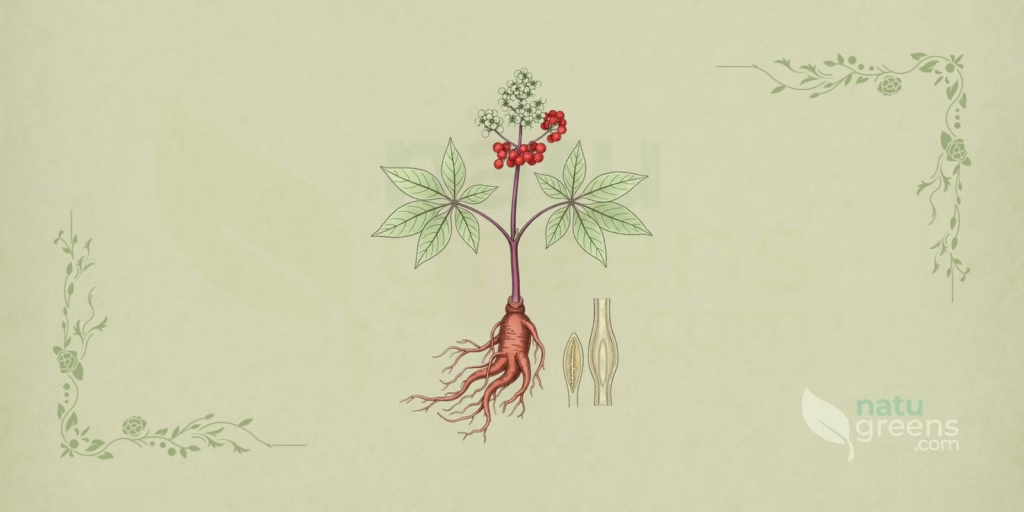
Pfaffia paniculata (Mart.) Kuntze / Brazilian Ginseng, popularly known as Suma or False Ginseng, is a climbing vine belonging to the Amaranthaceae family, whose botanical name now considered accepted by taxonomy is Hebanthe erianthos (Poir.) Pedersen. Native to the tropical forests of the Amazon Basin, this species is widely distributed across countries such as Brazil, Ecuador, Peru, and Venezuela, and its robust, extensive root is the most valued part in traditional South American medicine, where it has been used for centuries as a general tonic and adaptogen. Nicknamed “para tudo” (“for everything”), its reputation stems from a vast range of traditional applications, from fighting fatigue to supporting the immune system.
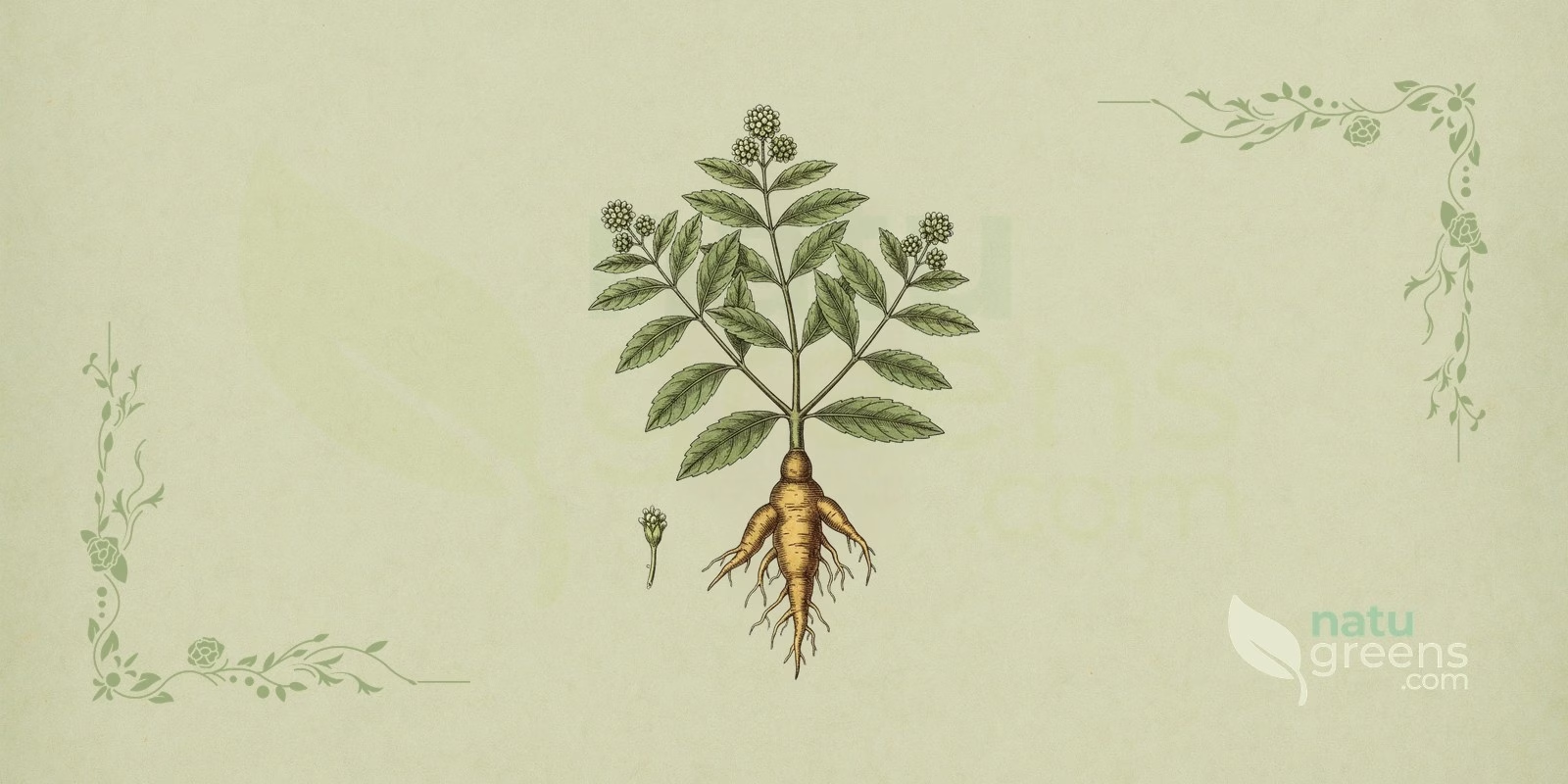
In Brazilian ethnobotany, Brazilian ginseng is revered for its revitalizing and anti-inflammatory properties, and its complex phytochemical composition, rich in saponins (pfaffosides), ecdysteroids, and germanium, has attracted considerable scientific interest. Modern studies seek to validate its traditional uses, investigating its effects on the endocrine system, the immune response, and the fight against inflammatory processes, and this convergence between traditional knowledge and scientific research establishes Brazilian ginseng as one of the most promising medicinal plants of the South American flora.
Popular and International Names of Brazilian Ginseng
- English: brazilian ginseng, suma root.
- Spanish: ginseng de brasil, suma.
- Portuguese: corango-acu, ginseng-brasileiro, ginseng-do-brasil, paratudo, suma.
- French: ginseng brésilien, suma.
- Italian: ginseng brasiliano, suma.
- German: Brasilianischer Ginseng, Suma-Wurzel.
Botanical Synonyms of Pfaffia paniculata
Pfaffia paniculata (Mart.) Kuntze is the best known botanical synonym and the one most widely used in commercial contexts and older literature, although the taxonomic classification currently accepted is Hebanthe erianthos (Poir.) Pedersen. Other synonyms include Iresine erianthos Poir., Hebanthe paniculata Mart., and Gomphrena paniculata (Mart.) Moq., reflecting the complex taxonomic history of this species.
Botanical Family: Amaranthaceae
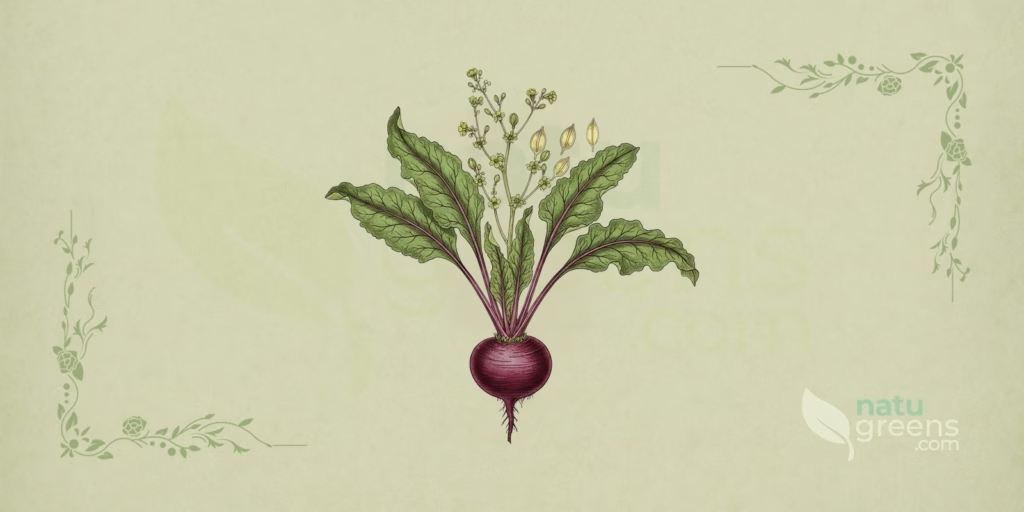
The Amaranthaceae family comprises around 175 genera and more than 2,500 species, distributed worldwide, with the greatest diversity in tropical and subtropical regions, and includes herbs, shrubs, and a few trees often characterized by small, inconspicuous flowers grouped into dense inflorescences. Many species are adapted to saline soils and arid conditions, and the family is notable for including plants of economic and food importance, such as amaranth (Amaranthus), quinoa (Chenopodium quinoa), and beet (Beta vulgaris).
Parts of Brazilian Ginseng Used
- Root
Ethnobotanical and Traditional Uses
- Combat of fatigue and stress
- General and revitalizing tonic
- Improvement of digestion
- Increase in libido and fertility
- Strengthening of the immune system
- Treatment of inflammation
Therapeutic Properties of Brazilian Ginseng
- Adaptogenic (effect studied on resistance to stress)
- Anti-inflammatory (effect studied in reducing inflammation)
- Antimicrobial (activity studied against microorganisms)
- Antioxidant (activity studied against free radicals)
- Antiproliferative (activity observed in laboratory studies, without clinical proof)
- Hypocholesterolemic (effect studied on cholesterol)
- Immunostimulant (effect studied on the immune system)
- Revitalizing (activity studied against physical and mental fatigue)
Detailed Phytochemical Profile of Brazilian Ginseng
- Alkaloids
- Allantoin
- Amino acids
- Beta-ecdysone
- Ecdysteroids
- Flavonoids
- Germanium
- Minerals (iron, magnesium, zinc)
- Pfaffic acid
- Pfaffosides (saponins)
- Polyphenols
- Saponins
- Sitosterol
- Stigmasterol
- Vitamins (A, B1, B2, E, K)
Preparation and Administration Forms of Brazilian Ginseng
- Capsules
- Decoction
- Dried extract
- Fluid extract
- Powder
- Tincture
Synergy with Other Medicinal Plants
Energy and Vitality
The combination of Brazilian ginseng with guarana (Paullinia cupana) and Peruvian maca (Lepidium meyenii) is traditionally used to support energy levels, address chronic fatigue, and aid physical and mental performance. Brazilian ginseng acts as an adaptogen, balancing bodily functions, while guarana provides sustained energetic stimulation and maca contributes its dense nutritional profile and hormone-regulating properties.
Immune Function
For immune system support, Brazilian ginseng can be combined with echinacea (Echinacea purpurea) and astragalus (Astragalus membranaceus). This combination is traditionally used to strengthen the body’s immune response, boosting the production of defense cells and resistance to infections, since Brazilian ginseng modulates the stress response, which can suppress immune function, while echinacea and astragalus provide direct immunostimulant properties.
Hormonal Health
The pairing of Brazilian ginseng with vitex (Vitex agnus-castus) for women and tribulus (Tribulus terrestris) for men is traditionally used to support balance in the endocrine system, since Brazilian ginseng contains plant sterols that serve as hormonal precursors, while vitex acts on progesterone levels and tribulus may favor testosterone production. This synergy is traditionally used for relief of menopause symptoms, fertility support, and increased libido.
Recipes and Usage Protocols of Brazilian Ginseng
Revitalizing Decoction
Ingredients: 1 tablespoon of powdered Brazilian ginseng root, 500 ml of water.
Preparation: Add the powdered root to cold water in a pot. Bring to a boil and let simmer for 15-20 minutes. Strain and drink one to two cups a day. This decoction is traditionally used to support energy levels, physical and mental endurance, and immune system support.
Powder Extract for Smoothies
Ingredients: 1-2 teaspoons of Brazilian ginseng powdered extract, 1 banana, 200 ml of plant-based milk, 1 tablespoon of chia seeds.
Preparation: Combine all ingredients in a blender and mix until smooth. Consume in the morning for an energy and nutrient boost. This is a practical way to incorporate Brazilian ginseng into the daily diet, taking advantage of its adaptogenic and nutritional properties.
Tincture for Adaptogenic Support
Ingredients: 100 g of dried Brazilian ginseng root, 500 ml of 60% grain alcohol.
Preparation: Place the root in a glass jar and cover with the alcohol. Seal tightly and let macerate for 4-6 weeks in a dark place, shaking daily. Strain and store in a dark glass bottle. Take 30-60 drops diluted in water, two to three times a day, to help the body adapt to stress and maintain balance.
The preparations above follow traditional records and do not replace professional guidance. Before any internal use, check the contraindications and interactions described in this article.
Associated Therapies
Clinical Phytotherapy
In clinical phytotherapy, Brazilian ginseng is valued as a first-line adaptogen, used to mitigate the effects of chronic stress on the body, and is prescribed in the form of standardized extracts in capsules or tinctures to ensure precise dosing of active compounds such as pfaffosides. Its applications include traditional use in supporting adrenal fatigue, strengthening the immune system in patients with recurrent infections, and nutritional support during convalescence.
Sports Medicine
Due to its ecdysteroid content, natural analogues of anabolic steroids, Brazilian ginseng is used in sports medicine to support muscle mass and physical endurance, without the side effects of synthetic steroids, and is often included in supplements for athletes aiming to optimize performance, post-workout recovery, and protein synthesis.
Contraindications and Side Effects of Brazilian Ginseng
Consumption of Brazilian ginseng is generally considered safe for most people when used in appropriate doses, but due to a lack of in-depth studies, pregnant or breastfeeding women should avoid its use. People with autoimmune diseases, such as lupus or rheumatoid arthritis, should consult a healthcare professional before consuming it, as its immunostimulant properties may worsen symptoms, and, due to its potential effect on hormone levels, individuals with hormone-sensitive cancers should avoid its consumption.
Frequently Asked Questions about Brazilian Ginseng
Is Brazilian Ginseng the Same as Korean Ginseng?
No, they are different plants. Although both are called “ginseng” and share adaptogenic properties, Brazilian ginseng (Hebanthe erianthos) belongs to the Amaranthaceae family, while Korean ginseng (Panax ginseng) belongs to the Araliaceae family, with distinct phytochemical compositions and mechanisms of action.
Can I Take Brazilian Ginseng Every Day?
Yes, Brazilian ginseng is often used as a daily tonic to promote overall health and well-being. However, it is advisable to take periodic breaks (for example, using it for 3 months and pausing for 1 month) to allow the body to reset and to assess its continued effectiveness, and consulting a healthcare professional is always recommended for long-term use.
How Long Does It Take to Feel the Effects of Brazilian Ginseng?
The effects of Brazilian ginseng can vary from person to person: some individuals may notice increased energy and well-being within a few days, while for others the adaptogenic and hormone-balancing benefits may take several weeks of consistent use to fully manifest. Consistency in use is key to achieving the best results.
What Are the Contraindications of Brazilian Ginseng?
Due to a lack of in-depth studies, use should be avoided by pregnant or breastfeeding women. People with autoimmune diseases, such as lupus or rheumatoid arthritis, should consult a healthcare professional before consuming it, since its immunostimulant properties may worsen symptoms, and individuals with hormone-sensitive cancers should avoid its consumption due to its potential effect on hormone levels.
How to Prepare Brazilian Ginseng as a Decoction?
The traditional method is decoction: add one tablespoon of the powdered root to 500 ml of cold water, bring to a boil, and let simmer for 15 to 20 minutes. Once strained, the preparation can be consumed in one to two cups a day, and is traditionally associated with support for energy and the immune system.
What Are the Ways to Consume Brazilian Ginseng?
Besides decoction, Brazilian ginseng root can be found in capsules, fluid extract, dried extract, powder for smoothies, and tincture. The choice of form depends on the desired convenience and should, whenever possible, be guided by a healthcare professional, especially in cases of prolonged use.
Notice: this content is for informational purposes and does not replace professional medical advice. Consult a physician or herbal practitioner before using medicinal plants, especially during pregnancy, breastfeeding, or alongside medication.
References and Scientific Studies
- PMC2015 Costa, C. A., Tanimoto, A., Quaglio, A. E., Almeida, L. D. Jr., Severi, J. A., & Di Stasi, L. C. (2015). Anti-inflammatory effects of Brazilian ginseng (Pfaffia paniculata) on TNBS-induced intestinal inflammation: Experimental evidence. International Immunopharmacology, 28(1), 459-469.
- PMC2010 da Silva, T. C., Cogliati, B., da Silva, A. P., Fukumasu, H., Akisue, G., Nagamine, M. K., Matsuzaki, P., Haraguchi, M., Górniak, S. L., & Dagli, M. L. (2010). Pfaffia paniculata (Brazilian ginseng) roots decrease proliferation and increase apoptosis but do not affect cell communication in murine hepatocarcinogenesis. Experimental and Toxicologic Pathology, 62(2), 145-155.
- PMC2024 Miranda, D. G., et al. Pfaffia paniculata Extract, a Potential Antimicrobial Agent against Candida spp., Pseudomonas aeruginosa, and Streptococcus mutans Biofilms. Microorganisms. 2024.