Echinacea purpurea (L.) Moench / Echinacea. Echinacea purpurea, popularly known as purple coneflower, is a perennial herbaceous plant of the Asteraceae family, native to North America. Recognized for its vibrant, cone-shaped purple flowers, this species has been used for centuries in traditional medicine, especially by Indigenous peoples, to treat a variety of conditions. The plant’s extract has antibacterial, antiviral, anti-inflammatory, and immunostimulant properties, making it a valuable resource in modern herbal medicine. Its global spread is due to its therapeutic properties and its ornamental value.
In the herbal tradition, echinacea is widely employed to strengthen the immune system and fight infections. Modern scientific studies have validated many of its traditional uses, consolidating its reputation as one of the most studied medicinal plants. The richness of its phytochemical composition, including compounds such as alkamides, chicoric acid, and polysaccharides, contributes to its many beneficial health effects. Ongoing research explores its potential across several areas of health, from immune support to anticancer properties.
Popular and International Names of Echinacea
- English: purple coneflower, echinacea, eastern purple coneflower.
- Spanish: equinácea, flor cónica púrpura, echinacea púrpura.
- Portuguese: equinácea, equinácea-roxa, flor-de-cone.
- French: échinacée pourpre, rudbeckie pourpre.
- Italian: echinacea, echinacea purpurea.
- German: Purpursonnenhut, Roter Sonnenhut, Echinacea.
Botanical Synonyms of Echinacea
- Brauneria purpurea (L.) Britton
- Echinacea intermedia Lindl.
- Echinacea serotina (Sweet) DC.
- Rudbeckia purpurea L.
Botanical Family: Asteraceae
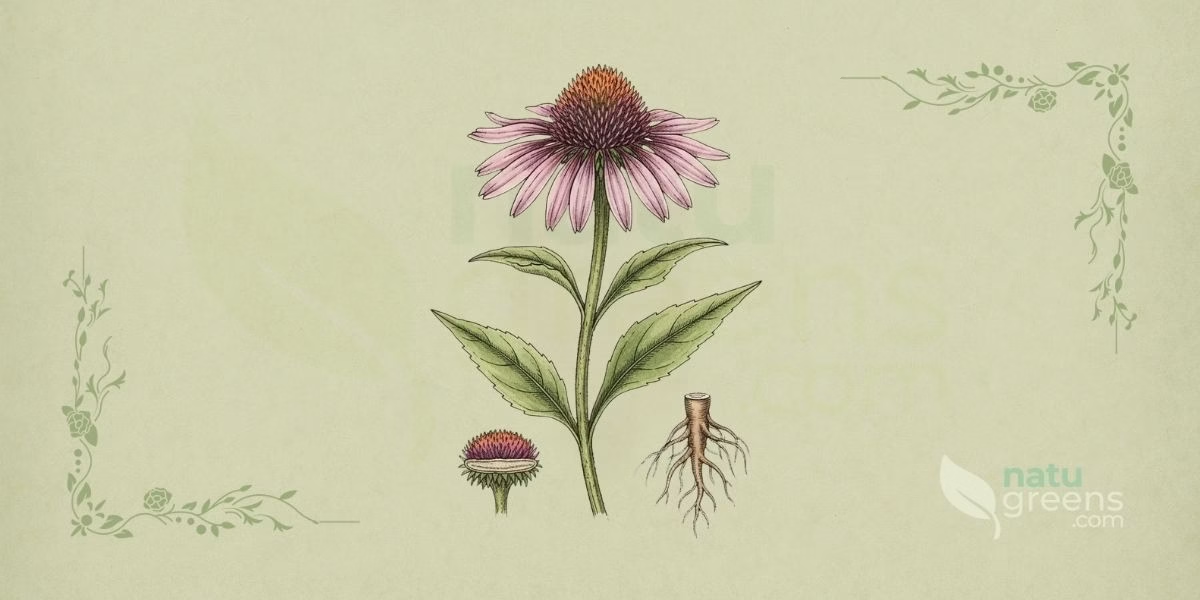
Botanical illustration of Echinacea purpurea (L.) Moench (purple coneflower, echinacea, eastern purple coneflower), a perennial herbaceous plant of the Asteraceae family, described by Carl Linnaeus in 1753 and reclassified by Conrad Moench in 1794, native to North America, showing the complete plant with vibrant purple cone-shaped flowers, lanceolate leaves, and an erect stem, in 19th-century botanical encyclopedia style.
The Asteraceae family, also known as Compositae, is one of the largest families of flowering plants, encompassing about 1,900 genera and more than 32,000 species. It is characterized by its capitulum inflorescence, in which small flowers cluster to form a structure resembling a single flower. This family includes many plants of great economic, food, and medicinal importance, such as lettuce, sunflower, and calendula.
Echinacea purpurea shares the morphological features typical of the family, with flower heads composed of tubular florets in the central disc and ligulate flowers at the margins. The Asteraceae are notable for producing bioactive compounds such as sesquiterpene lactones, flavonoids, and essential oils, which confer medicinal properties on many of their species. The chemical diversity of this family has been the subject of intense pharmacological research, contributing to the development of phytomedicines and supplements.
Parts of Echinacea Used
- Flowers
- Leaves
- Rhizomes
- Roots
- Seeds
Ethnobotanical and Traditional Uses of Echinacea
- Antiseptic
- Candidiasis
- Central nervous system stimulant
- Flu and colds
- Historical use for rheumatism
- Historical use for snakebites
- Immune system strengthening
- Inflammation
- Respiratory infections
- Toothache and gum pain relief
- Urinary tract infections
Therapeutic Properties of Echinacea
- Analgesic (relieves pain)
- Antiallergic (reduces allergic reactions)
- Antibacterial (fights bacteria); traditional use, without established clinical efficacy
- Anticancer (helps prevent cancer)
- Antifungal (fights fungi)
- Anti-inflammatory (reduces inflammation)
- Antioxidant (fights free radicals)
- Antiviral (fights viruses); traditional use, without established clinical efficacy
- Immunomodulatory (modulates the immune system); traditional use, without established clinical efficacy
- Wound healing (promotes healing)
Detailed Phytochemical Profile of Echinacea
- Alkamides
- Caffeic acid
- Chicoric acid
- Flavonoids
- Polyacetylenes
- Polysaccharides
- Rosmarinic acid
Preparation and Administration Forms of Echinacea
- Capsules
- Fluid extracts
- Tablets
- Tea (infusion/decoction)
- Tinctures
Synergy with Other Medicinal Plants
Respiratory Symptom Relief
For relief of respiratory infection symptoms, echinacea can be paired with plants such as thyme (Thymus vulgaris) and linden (Tilia cordata). Thyme has antiseptic and expectorant properties, while linden acts as a mild sedative and anti-inflammatory. Together, these plants can help calm coughing, reduce airway inflammation, and fight pathogens.
Immune Support
Echinacea can be combined with other immunostimulant plants, such as elderberry (Sambucus nigra) and astragalus (Astragalus membranaceus), for broader immune support. Elderberry is known for its antiviral properties, while astragalus is an adaptogen that strengthens the body’s resistance to stress and disease. This synergy can be particularly useful during flu and cold season, helping prevent infections and speed up recovery.
Recipes and Usage Protocols of Echinacea
Immune-Strengthening Infusion
Ingredients: 1 teaspoon of dried echinacea root (or 2 teaspoons of dried leaves and flowers), 200 ml of boiling water.
Preparation: Place the echinacea in a cup and add the boiling water. Cover and steep for 10-15 minutes. Strain and drink. For a preventive effect, drink 1 cup a day during periods of higher infection risk. If flu or cold symptoms appear, this can be increased to 2-3 cups a day, for a maximum of 7-10 days. Do not exceed this period without professional guidance.
Tincture for Acute Use
Ingredients: 50 g of dried echinacea root, 250 ml of 70% grain alcohol.
Preparation: Finely chop the echinacea root and place it in a dark glass jar. Cover with the alcohol, making sure the plant material is completely submerged. Close tightly and let macerate for 2-4 weeks in a cool, dark place, shaking daily. Strain and store the tincture in a dark bottle. For acute use, take 2-4 ml (approximately 40-80 drops) diluted in a little water, 3 times a day, for a maximum of 7 days. This preparation is ideal for rapid immune support at the onset of an infection.
Associated Therapies
Clinical Phytotherapy
In clinical phytotherapy, echinacea is frequently prescribed as standardized extracts, capsules, or tablets, ensuring consistent dosing of its active compounds. It is widely used to modulate the immune system and to prevent and treat upper respiratory tract infections such as flu and colds. Prescription is individualized, considering the patient’s condition, symptom severity, and possible drug interactions. Echinacea is valued for its ability to stimulate macrophage activity and cytokine production, strengthening the body’s natural defenses.
Homeopathy
In homeopathic tradition, Echinacea angustifolia is cited for infectious states with inflammation and pain, particularly when a feeling of prostration and weakness is present, while Echinacea purpurea appears less often, within the same principles of stimulating the body’s defenses. The homeopathic preparation is obtained through successive dilutions of the mother tincture, according to the homeopathic method. There are no clinical studies demonstrating the effectiveness of these preparations. Sepsis and systemic infections are medical emergencies that progress rapidly and require immediate hospital care, which must never be replaced or delayed by any homeopathic preparation.
Contraindications and Side Effects of Echinacea
General Contraindications
Echinacea is contraindicated for individuals with a known allergy to plants of the Asteraceae family, such as daisies, chrysanthemums, and ragweed, because of the risk of allergic reactions. People with progressive autoimmune diseases, such as multiple sclerosis, systemic lupus erythematosus, or rheumatoid arthritis, or with diseases such as AIDS or tuberculosis, should avoid echinacea, since its immunostimulant action can worsen these conditions. Pregnant or breastfeeding women should consult a health professional before using echinacea, given the lack of conclusive safety studies in these groups. Children under 1 year of age should also avoid it.
Common Side Effects
Side effects of echinacea are generally mild and infrequent. They can include gastrointestinal upsets such as nausea, vomiting, diarrhea, or abdominal pain. Allergic skin reactions, such as rashes or itching, can occur in sensitive individuals. In rare cases, more severe allergic reactions such as anaphylaxis can occur, especially in people with a history of allergy to Asteraceae plants. Topical application of echinacea products can occasionally cause skin irritation.
Drug Interactions
Echinacea can interact with immunosuppressant medications, such as corticosteroids or ciclosporin, reducing their efficacy. It can also interfere with the liver metabolism of certain drugs, affecting their blood concentration. Individuals taking medication for autoimmune diseases, organ transplants, or any other chronic condition should seek medical advice before starting echinacea. Use for more than eight weeks has been suggested to carry a risk of hepatotoxicity, so it should not be used with other known hepatotoxic drugs, such as amiodarone, methotrexate, and ketoconazole.
Interesting Facts about Echinacea
Origin of the Name
The name Echinacea derives from the Greek echinos, meaning hedgehog or sea urchin, referring to the spiny center of its flowers. The name was given by the botanist Conrad Moench in 1794 when he classified the plant. The flower’s unique appearance is one of its most distinctive and recognizable features, contributing to its popularity in ornamental gardens as well as in herbal medicine.
Historical Use by Native Americans
Native Americans were the first to discover and use the medicinal properties of echinacea. Tribes such as the Sioux, Cheyenne, and Comanche used the plant to treat a wide range of ailments, including toothaches, snakebites, infections, and colds. They applied the chewed root directly to wounds or made teas for internal use. Knowledge of echinacea was passed on to European settlers, who quickly incorporated it into their medical practices, solidifying its place in Western herbal medicine.
Popularity in the 19th and 20th Centuries
In the 19th century, echinacea became one of the most popular herbal remedies in the United States, widely used by Eclectic physicians to treat infections and inflammation. Its popularity declined with the advent of synthetic antibiotics in the 20th century, but resurged in the late 20th and early 21st centuries, driven by growing interest in natural therapies and by the scientific validation of many of its properties. Today it is one of the best-selling herbal supplements worldwide, especially for immune support.
Frequently Asked Questions about Echinacea
Can Echinacea Be Used to Prevent Flu and Colds?
Yes, echinacea is widely used to prevent and to reduce the duration and severity of flu and colds. Studies suggest it can strengthen the immune system, making the body more resistant to viral infections. However, efficacy can vary between individuals and products, so choosing standardized, good-quality extracts matters. Continuous long-term use is not recommended without professional guidance.
What Is the Best Way to Take Echinacea?
Echinacea can be taken in several forms, including teas (infusions or decoctions), tinctures, fluid extracts, capsules, and tablets. The choice depends on personal preference and the condition being treated. Tinctures and extracts are generally more concentrated and can act faster, while capsules and tablets offer convenience and standardized dosing. Teas are ideal for daily, preventive use.
Are There Side Effects to Using Echinacea?
Side effects of echinacea are generally mild and rare, and can include gastrointestinal upsets, such as nausea, or allergic skin reactions. In very rare cases, more severe allergic reactions can occur, especially in people allergic to Asteraceae plants. Consulting a health professional before using echinacea is important, especially with pre-existing medical conditions or other medications.
Does Echinacea Interact with Other Medications?
Yes, echinacea can interact with certain medications, such as immunosuppressants (reducing their efficacy) and drugs metabolized by the liver. People taking anticoagulants, medication for autoimmune diseases, or any other chronic medication should seek medical advice before using echinacea to avoid unwanted interactions. Prolonged use (more than 8 weeks) may also be associated with hepatotoxicity and is not advised alongside other hepatotoxic drugs.
Notice: this content is for informational purposes and does not replace professional medical advice. Consult a physician or herbal practitioner before using medicinal plants, especially during pregnancy, breastfeeding, or alongside medication.
References and Scientific Studies
View All 8 Cited References
Institutional Sources (1)
- GOV2023 NCCIH. (2023). Echinacea: Usefulness and Safety. National Center for Complementary and Integrative Health.
Supplementary Readings (7)
- 2003 Barrett, B. (2003). Medicinal properties of Echinacea: a review. Phytomedicine, 10(1), 66-86.
- 2012 Hudson, J. B. (2012). Applications of the phytomedicine Echinacea purpurea (Echinacea) in infectious diseases. Journal of Biomedicine and Biotechnology, 2012, 769896.
- 2014 Karsch-Völk, M., et al. (2014). Echinacea for preventing and treating the common cold. Cochrane Database of Systematic Reviews, (2).
- 2015 Manayi, A., et al. (2015). Echinacea purpurea: Pharmacology, phytochemistry and analysis methods. Pharmacognosy Reviews, 9(17), 63-72.
- 1994 Melchart, D., et al. (1994). Immunomodulation with Echinacea—a systematic review of controlled clinical trials. Phytomedicine, 1(3), 245-254.
- 2007 Shah, S. A., et al. (2007). Evaluation of echinacea for the prevention and treatment of the common cold: a meta-analysis. The Lancet Infectious Diseases, 7(7), 473-480.
- 2004 Woelkart, K., & Bauer, R. (2004). The state of the art of chemical, analytical and pharmacological investigations of Echinacea. Planta Medica, 70(8), 689-700.