Eucalyptus globulus Labill. / Eucalyptus, popularly known as blue gum or Tasmanian blue gum, is a perennial tree of the Myrtaceae family, described by Jacques Labillardière in 1800. Native to southeastern Australia, this species has spread globally thanks to its fast growth and the traditional properties for which it is recognized, and its leaves are widely used in traditional medicine for infusions, essential oils, and other herbal products, with a focus on easing respiratory conditions.
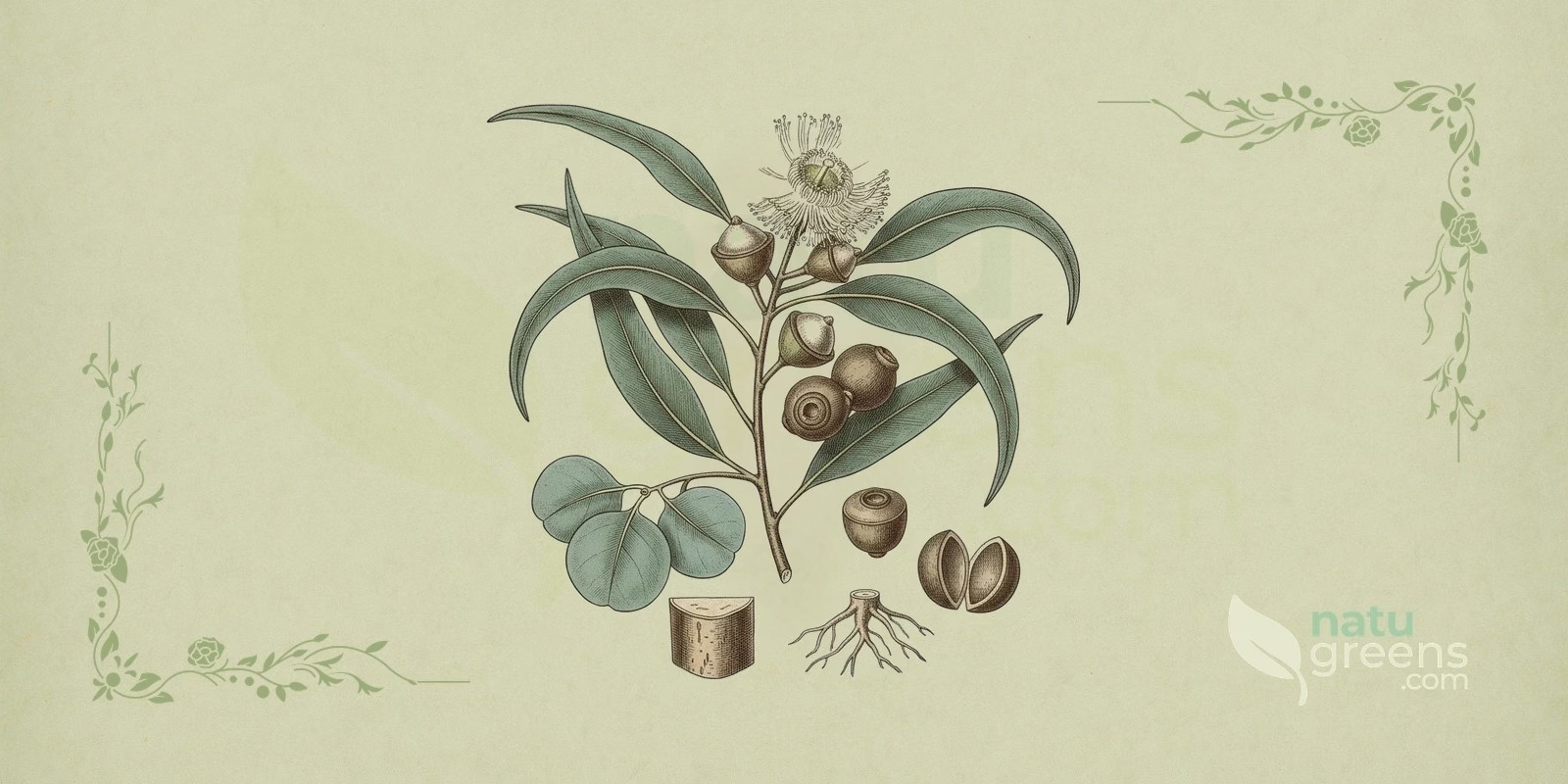
In herbal medicine tradition, eucalyptus is valued for its antiseptic, anti-inflammatory, and expectorant properties, while modern scientific research continues to investigate many of its traditional uses, cementing its position as one of the most studied and widely used medicinal plants worldwide, particularly with regard to respiratory and muscular complaints.
Popular and International Names of Eucalyptus
- English: blue gum, common eucalyptus, eurabbie, Maiden’s gum, southern blue gum, Tasmanian blue gum, Victorian blue gum.
- Spanish: calipes, calipse, calipto, calipto blanco, calisto, calisto blanco, calistro, carlisto, encalistro, eucalihto, eucalipto, eucalipto azul, eucalipto glóbulo, eucaliptu, eucaliptus, eucalito, eucálito, garlito, gomero azulado, l-ucalipto, nogalito, ocalipto, ocálito, ocalito, quinino, ucalihto, ucalito, ucalitu, ucáritu.
- Portuguese: eucalipto, eucalipto-azul, eucalipto-comum, eucalipto-da-febre, eucalipto-da-Tasmânia, gameiro-azul, gomeiro-azul, mogno-branco.
- French: arbre à fièvre, Eucalyptus bleu, Eucalyptus commun, Gommier bleu, Gommier bleu de Tasmanie, kinimpotsy, kininimpotsy.
- Italian: eucalipto.
- German: Blauer Eukalyptus, Fieberbaum, Gewöhnlicher Eukalyptus, Tasmanischer Blaugummibaum.
Botanical Synonyms of Eucalyptus Globulus
Eucalyptus globulus has several botanical synonyms and subspecies that reflect its wide distribution and morphological variation. Among the most recognized are Eucalyptus gigantea Dehnh. and Eucalyptus globulosus St.-Lag., as well as Eucalyptus cordata Miq. and the subspecies Eucalyptus globulus subsp. bicostata, Eucalyptus globulus subsp. globulus, Eucalyptus globulus subsp. maidenii, and Eucalyptus globulus subsp. pseudoglobulus, often considered taxonomic variations of the main species.
Botanical Family: Myrtaceae
The Myrtaceae family is a vast and diverse family of flowering plants, comprising around 5,900 species distributed across 130 genera, found predominantly in tropical and subtropical regions and characterized by trees and shrubs with evergreen, generally aromatic leaves and flowers with numerous stamens. Besides eucalyptus, this family includes plants such as guava, jaboticaba, Brazilian cherry, and clove, many of which hold significant economic, culinary, and medicinal importance.
Eucalyptus shares morphological traits typical of the family, such as the presence of oil glands in the leaves, responsible for its characteristic aroma. The Myrtaceae family is known for producing bioactive compounds, especially essential oils rich in monoterpenes and sesquiterpenes, which give traditional properties to many of its species, and the chemical diversity of this family has been the subject of intense pharmacological research, contributing to the development of phytopharmaceuticals and dietary supplements.
Parts of Eucalyptus Used
- Essential Oil
- Leaves (Fresh or Dried)
Ethnobotanical and Traditional Uses
- Antiseptic for the Upper Airways
- Fever Reduction
- Nasal and Bronchial Decongestant
- Relief from Flu and Colds
- Relief of Muscular and Rheumatic Pain
- Treatment of Cough and Pulmonary Congestion
Therapeutic Properties of Eucalyptus
- Analgesic (traditional use for pain relief)
- Antibacterial (studied activity against bacteria)
- Antifungal (studied activity against fungi)
- Anti-inflammatory (studied effect in reducing inflammation)
- Antioxidant (studied activity against free radicals)
- Antiseptic (studied for infection prevention)
- Antiviral (studied activity against viruses)
- Decongestant (traditional use for relieving congestion)
- Expectorant (facilitates mucus expulsion)
- Febrifuge (studied effect in reducing fever)
- Hypoglycemic (studied effect in reducing blood sugar)
- Immunostimulant (studied effect on the immune system)
- Insect Repellent (repels insects)
- Mucolytic (breaks down mucus)
- Wound-Healing (studied effect on wound healing)
Detailed Phytochemical Profile of Eucalyptus
- 1,8-Cineole (Eucalyptol)
- Alkaloids
- Alpha-Limonene
- Alpha-Pinene
- Betulinic, Betulonic, Oleanolic, and Ursolic Acids (Triterpenes)
- Bis(hexahydroxydiphenyl) Glucose
- Caffeic Acid
- Catechin
- Digalloyl Glucose
- Dihydroxyphenylacetic Acid
- Flavonoids
- Gallic Acid
- Galloyl-bis(HHDP)-Glucose
- Galloyl-HHDP-Glucose
- Isorhamnetin Hexoside
- Isorhamnetin Rhamnoside
- Luteolin
- Mearnsetin
- Mearnsetin Hexoside
- Methyl Ellagic Acid (EA)-Pentose Conjugate
- Myricetin Rhamnoside
- p-Cymene
- Phloridzin
- Propanoids
- Quinic Acid
- Tannins
- Tricetin
Preparation and Administration Forms of Eucalyptus
- Balms
- Baths
- Compresses
- Essential Oil
- Extracts
- Lotions
- Massage (Diluted Essential Oil)
- Ointments
- Steam Inhalation with Essential Oil
- Tea (Leaf Infusion)
- Tinctures
Synergy with Other Medicinal Plants
Respiratory Conditions
Eucalyptus can be combined with plants such as thyme (Thymus vulgaris) and peppermint (Mentha × piperita) to enhance the traditional expectorant and decongestant effects, a synergy particularly used to support bronchitis, sinusitis, and colds. Eucalyptus’s 1,8-cineole works together with thyme’s thymol and peppermint’s menthol, contributing to more complete relief of respiratory symptoms and facilitating mucus elimination, according to traditional use.
Muscular and Joint Pain
For the relief of muscular and joint pain, eucalyptus can be paired with plants that have analgesic and anti-inflammatory properties, such as arnica (Arnica montana) or white willow (Salix alba). Topical application of oils or balms containing this combination is traditionally used to reduce inflammation and provide pain relief, employed in cases of rheumatism, arthritis, and bruises, always as complementary support rather than a substitute for medical treatment.
Recipes and Usage Protocols of Eucalyptus
Tea for Respiratory Symptom Relief
Add 1 tablespoon of dried eucalyptus leaves to 250 ml of boiling water, cover and let steep for 10 minutes, strain, and drink up to 3 times a day. This tea is traditionally used to help relieve cough, nasal congestion, and sore throat associated with flu and colds; do not exceed the recommended dose and consult a healthcare professional if symptoms persist.
Inhalation to Decongest the Airways
Add 5 to 10 drops of eucalyptus essential oil to a bowl of hot, not boiling, water, cover your head with a towel, and inhale the steam for 5 to 10 minutes. This method helps decongest the airways and ease sinusitis and cough, and it is important to keep your eyes closed during inhalation to avoid irritation.
Balm for Muscle Pain
Mix 10 drops of eucalyptus essential oil with 30 ml of a carrier vegetable oil, such as sweet almond oil or olive oil, and gently massage the affected area with this mixture to help relieve muscle pain, tension, and inflammation. It can be applied 2 to 3 times a day as needed, avoiding areas of broken or irritated skin.
The preparations above follow traditional records and do not replace professional guidance. Before any internal use, check the contraindications and interactions described in this article.
Associated Therapies
Aromatherapy
Eucalyptus essential oil is widely used in aromatherapy for its stimulating and purifying properties, and inhaling its aroma through diffusers or vaporizers helps promote mental clarity, ease fatigue, and clear the respiratory passages. It is also used to create an invigorating atmosphere and to support concentration.
Herbal Medicine
In herbal medicine, eucalyptus is a versatile medicinal plant, used in the form of infusions, tinctures, extracts, and ointments, with traditional applications ranging from support for respiratory infections and inflammation to relief of muscle pain and skin care. Its safety, when used appropriately, is supported by extensive scientific literature and centuries of traditional use.
Homeopathy
In homeopathy, the remedy Eucalyptus globulus is prepared from a tincture of the plant, and it is often indicated for acute respiratory conditions such as flu, colds, and bronchitis, characterized by nasal congestion, productive cough, and fever. The Eucalyptus globulus patient profile can include a sensation of heaviness in the head and difficulty breathing.
Contraindications and Side Effects of Eucalyptus
Eucalyptus is generally considered safe when used correctly, but pure essential oil is toxic and should never be ingested. Individuals with an allergy to plants in the Myrtaceae family should exercise caution, and concentrated extracts should be avoided during pregnancy due to a potential uterotonic effect. In young children, direct application of the essential oil to the face or nose should be avoided, as it can cause bronchospasm, and at high doses the essential oil can cause itchy rashes, nausea, vomiting, and diarrhea. Eucalyptus can potentiate the effect of sedative medications and anticoagulants, so patients taking this type of medication should consult a healthcare professional before using eucalyptus regularly; individuals with asthma or other chronic respiratory conditions should also use eucalyptus products under medical supervision.
Historical Notes and Interesting Facts
- The word “eucalyptus” derives from the Greek “eu-kalyptos,” meaning “well covered,” referring to the operculum that covers the flower before it opens.
- Eucalyptus globulus is one of the most widely planted trees in the world, valued for its fast growth and adaptability to a variety of climates.
- Tasmania, its region of origin, declared Eucalyptus globulus its floral emblem in 1962, recognizing its ecological and cultural importance.
- Eucalyptus essential oil is known for its natural insecticidal properties and is used in various products to repel insects.
Frequently Asked Questions about Eucalyptus
Can Eucalyptus Tea Be Consumed Daily?
Daily consumption of eucalyptus tea is generally considered safe for most people, provided it is in moderate amounts. It is recommended not to exceed 3 to 4 cups per day, to avoid potential mild adverse effects such as drowsiness or gastrointestinal discomfort, and a healthcare professional should be consulted in case of doubt.
Does Eucalyptus Interact with Medications?
Yes, eucalyptus can interact with certain medications, potentially potentiating the effect of sedatives and anticoagulants and increasing the risk of side effects. For this reason, anyone taking medication, especially for chronic conditions, should consult their doctor or pharmacist before starting regular use of eucalyptus, whether as tea or essential oil.
What Is the Difference between Eucalyptus Globulus and Other Eucalyptus Species?
There are hundreds of eucalyptus species, each with slightly different characteristics and chemical compositions. Eucalyptus globulus is particularly known for its high content of 1,8-cineole (eucalyptol), which gives it the expectorant and decongestant properties associated with traditional use, while other species, such as Eucalyptus radiata or Eucalyptus citriodora, may have distinct chemical profiles and, consequently, slightly different traditional uses, with a greater focus on antiseptic properties or insect-repellent properties, respectively.
Can Eucalyptus Essential Oil Be Used on Children?
Direct application of eucalyptus essential oil to the face or nose of young children should be avoided, as it can cause bronchospasm. Any use in children, whether by inhalation, diluted topical application, or another route, should be done only under the guidance of a healthcare professional, given the sensitivity of children’s airways.
Can Eucalyptus Be Used during Pregnancy?
Concentrated extracts and eucalyptus essential oil should be avoided during pregnancy, due to a potential uterotonic effect and the lack of conclusive data on its safety during this period. Pregnant women who wish to use any eucalyptus preparation should first consult a physician or healthcare professional.
How Is Eucalyptus Used in Aromatherapy?
In aromatherapy, eucalyptus essential oil is commonly diffused into the air or used in vaporizers, taking advantage of its stimulating and purifying properties to help promote mental clarity, ease fatigue, and clear the respiratory passages. The pure oil should never be ingested or applied to the skin without proper dilution.
Notice: this content is for informational purposes and does not replace professional medical advice. Consult a physician or herbal practitioner before using medicinal plants, especially during pregnancy, breastfeeding, or alongside medication.
References and Scientific Studies
- PMC2023 PMC. (2023). Chemical Composition and Biological Activities of Eucalyptus globulus Essential Oil.
- PMC2024 PMC. (2024). Therapeutic applications of eucalyptus essential oils.
- PMC2008 Cermelli C, et al. Effect of Eucalyptus Essential Oil on Respiratory Bacteria and Viruses. Current Microbiology. 2008.