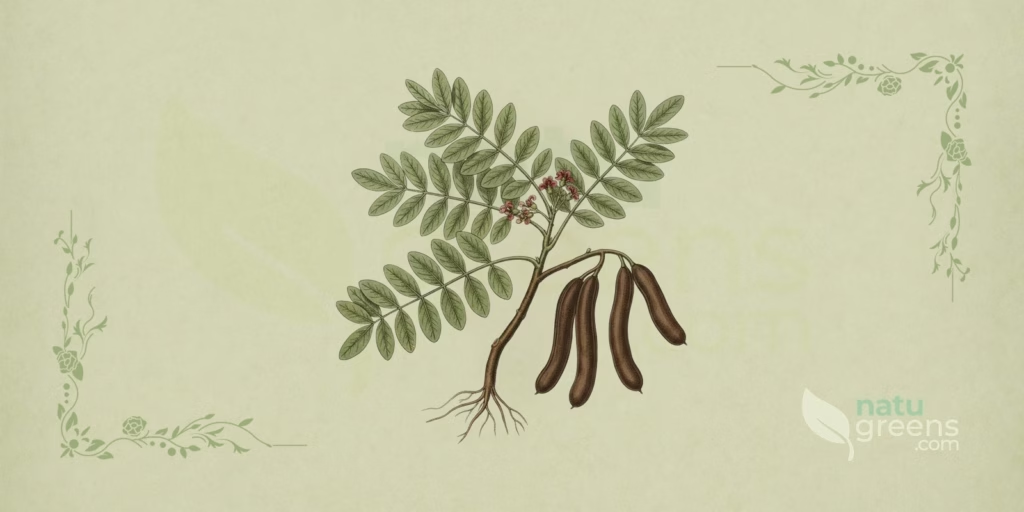
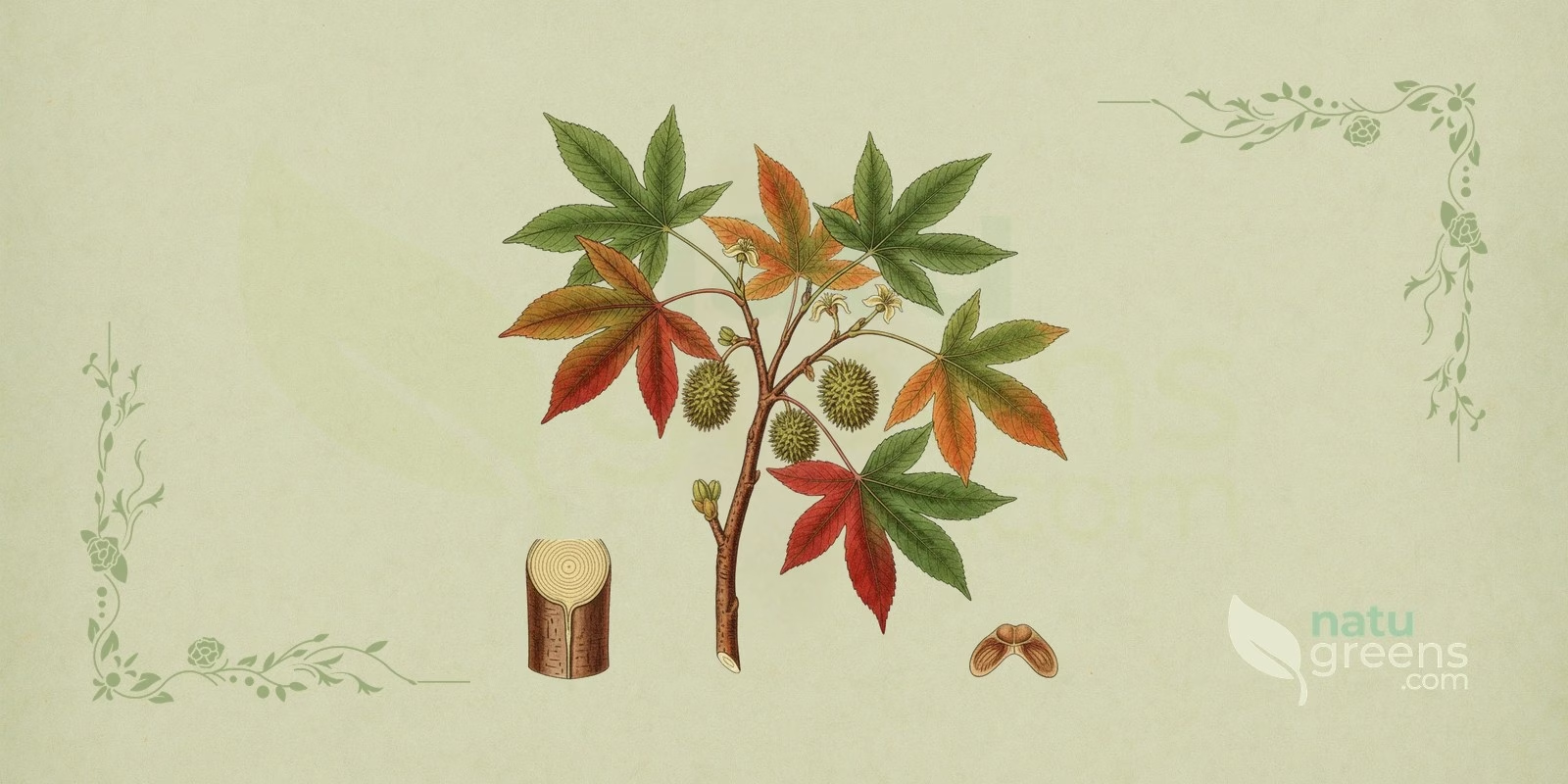
Liquidambar orientalis Mill. / Oriental Sweetgum is a deciduous tree of the Altingiaceae family, native to the Eastern Mediterranean, with populations concentrated in southwestern Turkey and on the Greek island of Rhodes. Known for the aromatic resin called storax, the species has been used for millennia in traditional medicine, perfumery and ritual, and it also played a prominent role in the trade and culture of several ancient civilizations. Today the resin is attracting the interest of researchers as well, who are investigating its antimicrobial, anti-inflammatory and wound-healing activities in the laboratory, still without confirmation from clinical studies.
Popular and International Names of Oriental Sweetgum
- English: Oriental sweetgum, storax, Turkish sweetgum.
- French: liquidambar d’Orient, storax d’Orient.
- German: Orientalischer Amberbaum, Storaxbaum, Türkischer Amberbaum.
- Italian: liquidambar orientale, storace orientale.
- Portuguese: estoraque oriental, estoraque-turco, liquidâmbar-oriental.
- Spanish: estoraque oriental, liquidámbar oriental.
- Turkish: sığla.
Botanical Synonyms of Liquidambar orientalis
Liquidambar orientalis Mill. is the accepted scientific name, and the literature consulted records no botanical synonyms in current use that are worth highlighting. Turkish studies frequently use the form Liquidambar orientalis var. orientalis, which designates the typical variety of the species. Older works, for their part, place the plant in the Hamamelidaceae family, a classification that is now outdated. Nor should Styrax liquidus, the pharmaceutical name given to the balsam extracted from the trunk, be confused with the botanical genus Styrax of the Styracaceae family, the source of benzoin and other similar resins.
Botanical Family: Altingiaceae
The Altingiaceae family brings together large trees, deciduous or evergreen, that were long classified within the Hamamelidaceae family. Today it forms a group of its own, centered on the genus Liquidambar and on the Asian species of the genus Altingia, which some recent classifications fold into Liquidambar itself. The production of aromatic resins is a hallmark of the family. In the genus Liquidambar, the lobed leaves often take on intense colors in autumn, which explains the ornamental value of these trees alongside their medicinal and industrial uses.
Parts of Oriental Sweetgum Used
The resin extracted from the trunk is the most prized part of the tree, but traditional records and laboratory studies also involve other parts of the plant.
- Fruits
- Leaves
- Resin (storax)
- Roots
- Stem bark
Ethnobotanical and Traditional Uses
The uses listed below come from folk tradition in the Eastern Mediterranean, from traditional Chinese medicine and from historical records, and they lack clinical proof, so none of them replaces medical diagnosis or follow-up care.
- Anxiety and insomnia
- Bronchial and lung complaints (asthma, bronchitis, cough, pulmonary catarrh)
- Childhood convulsions, stroke and coma, in traditional Chinese medicine records (emergencies that require immediate medical care)
- Digestive disorders (gastritis, indigestion)
- Diphtheria, in historical records (a serious, vaccine-preventable disease that requires medical care)
- Heart disease, in traditional Chinese medicine records now investigated only in animal models
- Hemorrhoids
- Intestinal parasites
- Leukorrhea
- Menstrual irregularity
- Rheumatism
- Skin conditions (psoriasis, scabies, ulcers)
- Wounds
Therapeutic Properties of Oriental Sweetgum
The properties below combine traditional records with activities observed in the laboratory or in animals. The descriptions in parentheses indicate the level of evidence behind each one, since most still lack confirmation from clinical studies.
- Antibacterial (inhibited bacteria in laboratory tests)
- Anticonvulsant (traditional medicine record, without clinical confirmation)
- Anti-inflammatory (compounds from the resin reduced inflammatory markers in the laboratory)
- Antimicrobial (inhibited microorganisms in laboratory tests)
- Antioxidant (neutralized free radicals in laboratory assays)
- Antiparasitic (traditional use against intestinal parasites and scabies)
- Antiproliferative (activity observed in laboratory studies, without clinical evidence)
- Antiviral (activity mentioned in the ethnopharmacological literature, still little studied)
- Aperitive (traditional record of appetite stimulation)
- Aphrodisiac (traditional reputation for stimulating sexual desire, without scientific confirmation)
- Astringent (contracts tissues and small blood vessels)
- Deodorant (reduces body odors)
- Emmenagogue (traditional record of stimulating menstrual flow)
- Expectorant (traditionally used to help bring up mucus)
- Fumigant (used in fumigation and incense)
- Pectoral (traditional use in respiratory complaints)
- Stimulant (increases functional activity, according to tradition)
- Vulnerary (traditionally applied to wounds)
- Wound-healing (promoted the regeneration of skin cells in the laboratory)
Detailed Phytochemical Profile of Oriental Sweetgum
The resin of Oriental sweetgum is dominated by cinnamic acid and its esters, such as benzyl cinnamate and cinnamyl cinnamate. Alongside them are styrene and vanillin, the substances responsible for the product’s characteristic balsamic aroma. Analyses of plant extracts have also identified flavonoids, phenolic acids and triterpenes, and some of these compounds are being investigated as possible contributors to the activities observed in the laboratory. The constituents cited in the literature include the following:
- 3-Epioleanolic acid
- Alpha-bisabolol
- Alpha-sitosterol
- Apigenin 7-O-glucoside
- Benzyl alcohol
- Benzyl cinnamate
- Caffeic acid
- Chamazulene
- Chlorogenic acid
- Cinnamic acid
- Cinnamyl cinnamate (styracin)
- Epigallocatechin gallate
- Ethanol
- Ethyl cinnamate
- Gallic acid
- Genistin
- Kaempferol
- Luteolin
- Monotropein
- Oleanolic acid
- Phenylpropyl alcohol
- Phenylpropyl cinnamate
- Pyrogallol
- Shikimic acid
- Storesin
- Storesin cinnamate
- Styrene (phenylethylene)
- Tannins
- Vanillin
Preparation and Administration Forms of Oriental Sweetgum
The resin is the raw material for almost all Oriental sweetgum preparations, which tradition reserves mainly for external use and inhalation. Given the lack of safety data on ingestion, none of them should be taken orally without professional guidance.
- Balsam or Resin: taken from the trunk bark, the resin goes into a range of preparations and is usually kept under water, which helps preserve its soft consistency and aroma.
- Essential Oil: obtained by steam distillation of the resin, it is used in aromatherapy and, always diluted in a carrier oil, in applications to the skin.
- Extracts: extracts of the leaves, fruits and roots appear in traditional preparations and in laboratory studies, although their composition differs from that of the resin.
- Fumigation: the dried resin is burned over embers as incense, an ancient practice in rituals and for scenting rooms, which should be done in a ventilated place and only briefly.
- Ointments and Salves: resin worked into a fatty base, such as vegetable oil or wax, is the traditional way of applying it to the skin, always preceded by a test on a small area.
Synergy with Other Medicinal Plants
Oriental Sweetgum and Witch Hazel
In traditional records, storax resin is combined with witch hazel (Hamamelis virginiana) and rose water to make a skin lotion. The blend is traditionally used because it brings together the astringent action of both plants and the anti-inflammatory effect attributed to them. Since storax can sensitize delicate skin, the lotion should first be tested on a small area and kept away from open wounds.
Recipes and Usage Protocols of Oriental Sweetgum
Traditional Topical Use for Skin Conditions
In folk tradition, storax resin is mixed with a vegetable oil, such as olive oil, and applied to the skin in cases of scabies, wounds or ulcers, a use recorded for centuries for these conditions. The ratio of resin to oil should be adjusted with guidance from a professional to avoid irritation, and the mixture must first be tested on a small patch of skin.
Extensive wounds, ulcers that do not heal and lesions showing signs of infection call for medical assessment, and the mixture should not be spread over large areas of the body, since there are reports of absorption through the skin with a risk to the kidneys.
Traditional Inhalation for Respiratory Complaints
Storax is one of the ingredients of “Friar’s Balsam”, a compound tincture traditionally used in steam inhalations with hot water to loosen phlegm and encourage a productive cough, an old entry in folk pharmacy.
Inhalation should be done with caution and under professional guidance, for a few minutes only and in a ventilated room, avoiding prolonged exposure to steam or smoke in enclosed spaces, and young children or people with asthma should only use it with medical approval.
The preparations above follow traditional records and do not replace professional guidance. Before any internal use, check the contraindications and interactions described in this article.
Associated Therapies
Aromatherapy
In aromatherapy, Oriental sweetgum essential oil is valued for the calming and purifying properties that tradition attributes to it. It is usually diffused into the room to encourage relaxation or applied to the skin in massage, always diluted in a carrier oil. Diffusion should take place in a ventilated room and for short periods, a precaution that applies to any aromatic resin.
Herbal Medicine
In traditional herbal medicine, Oriental sweetgum appears in preparations aimed at a variety of complaints, from respiratory to skin problems, and the resin is by far the most widely used part. Current research focuses on its antimicrobial, anti-inflammatory and wound-healing activities, studied in the laboratory and in animals, still without clinical trials confirming these effects in people.
Traditional Medicine
Oriental sweetgum has a long history in traditional medicine, with records ranging from gastrointestinal complaints to neurological conditions and, according to historical sources, with use dating back to the Hippocratic period. The ancient Egyptians also used the resin in embalming. In traditional Chinese medicine, the balsam, known as su he xiang, is part of classical formulas whose effects on the heart are currently being investigated only in animal studies.
Contraindications and Side Effects of Oriental Sweetgum
Oriental sweetgum yields a resin (balsam) traditionally used topically and by inhalation, in fumigations and ointments. For this reason, the main precautions concern the skin, the airways and the scarcity of data on ingestion.
Contraindications
- Allergy to Balsams and Resins: people with a known sensitivity to balsams or resins, such as Peru balsam, may develop allergic reactions and should avoid storax.
- Anticoagulants and Antiplatelet Drugs: animal studies have pointed to antithrombotic activity of storax, so anyone taking blood-thinning medication should consult a doctor before any use.
- Children: do not use in children without medical advice, especially orally or by inhalation; convulsions, fainting and other neurological conditions mentioned in traditional records require immediate medical care.
- External Use on Sensitive Skin: external use may cause contact dermatitis or sensitization in sensitive skin, and a test on a small area is recommended before wider use.
- Inhalation in Enclosed Spaces: avoid prolonged inhalation of smoke from fumigation in enclosed spaces, preferring ventilated places and short exposures.
- Oral Use: do not use orally without professional guidance, given the scarcity of safety data on ingestion; in high doses, ingestion may be toxic.
- Pregnancy and Breastfeeding: do not use during pregnancy and breastfeeding without medical advice, as safety in these stages has not been established and tradition attributes an emmenagogue action to the plant.
Side Effects
- Allergic Skin Reactions: these may occur in sensitive skin, in the form of irritation or rashes, and call for stopping use immediately.
- Gastrointestinal Disorders: high oral doses may cause diarrhea, nausea and vomiting.
- Kidney Problems: application over large areas of skin may lead to transdermal absorption of the resin’s components, with a risk of kidney damage.
Historical Notes and Interesting Facts
Origin of the Name
The genus name, Liquidambar, combines the Latin liquidus, meaning liquid, with the Arabic ambar, amber, in reference to the aromatic resin that oozes from the trunk. The epithet orientalis, in turn, points to the eastern origin of the species. The name storax, for its part, comes from the Greek styrax, the term the ancients used for this fragrant resin.
Historical Use
Oriental sweetgum resin was highly prized in antiquity, and historical accounts say that Queen Cleopatra used it as a perfume. The product also played an important role in Mediterranean trade, as shown by the oil-filled amphorae found in sunken Phoenician ships, concrete evidence of its commercial weight at the time.
Conservation
Liquidambar orientalis forests are under threat and have been in significant decline since the 1940s, although the protection measures put in place have helped stabilize the loss of area. Nature reserves dedicated to preserving the species exist, mainly in Turkey. Recent studies using distribution models are also assessing how climate change may shift its range in the Eastern Mediterranean.
Frequently Asked Questions about Oriental Sweetgum
What Is Oriental Sweetgum?
It is a deciduous tree native to the Eastern Mediterranean, mainly southwestern Turkey and the island of Rhodes, that produces an aromatic resin known as storax. This resin has been used for millennia in traditional medicine, perfumery and fumigation.
What Are the Main Traditional Uses of Oriental Sweetgum?
Tradition uses the resin for respiratory complaints, skin conditions and gastrointestinal disorders, mainly externally and by inhalation, and the plant has a reputation as a natural expectorant. Laboratory studies are investigating its anti-inflammatory and antimicrobial activities, but these effects have not yet been confirmed in people.
How Is Oriental Sweetgum Resin Obtained?
The resin is extracted from the trunk bark between June and September, when about a quarter of the trunk is gradually stripped of its bark so that the sap can ooze out and be collected. The material is then boiled and pressed, and the resulting storax is kept under water to preserve its consistency and aroma.
Can Oriental Sweetgum Be Taken Orally?
Not without professional guidance, given the scarcity of safety data on ingestion, and high doses can be toxic and cause nausea, vomiting and diarrhea. Tradition reserves the resin mainly for external use and inhalation, and any internal use should first be discussed with a health professional.
Is It Safe to Use Oriental Sweetgum for Fumigation?
Fumigation is an ancient use of the resin, but it is best to avoid prolonged inhalation of the smoke in enclosed spaces and to choose well-ventilated places and short sessions. Pregnant or breastfeeding women, children and people with asthma or an allergy to resins should talk to a health professional before exposing themselves to the smoke.
Does Oriental Sweetgum Have Side Effects?
Yes, external use can cause contact dermatitis or sensitization in sensitive skin, which is why a test on a small area is recommended before wider use. High doses can be toxic, and applying the resin over large areas of skin can affect the kidneys, so it is essential to use it with caution.
Notice: this content is for informational purposes and does not replace professional medical advice. Consult a physician or herbal practitioner before using medicinal plants, especially during pregnancy, breastfeeding, or alongside medication.
References and Scientific Studies
View All 8 Cited References
- PMC2023 Cengiz Baloglu M, et al. Evaluation of the Potential Therapeutic Properties of Liquidambar orientalis Oil. Chem Biodivers. 2023.
- PMC2022 Çetinkaya S, et al. The Phytochemical Profile and Biological Activity of Liquidambar orientalis Mill. var. orientalis via NF-κB and Apoptotic Pathways in Human Colorectal Cancer. Nutr Cancer. 2022.
- PMC2025 Chen H, et al. Five anti-inflammatory compounds from the resins of Liquidambar orientalis. J Asian Nat Prod Res. 2025.
- PMC2024 Huang S, et al. Effects of grafting on chemical constituents, toxicological properties, antithrombotic activity, and myocardial infarction protection of styrax secreted from the trunk of Liquidambar orientalis Mill. PLoS One. 2024.
- PMC2025 Koç DE, et al. Assessing climate-driven shifts in Liquidambar orientalis using ensemble species distribution models in the Eastern Mediterranean Region. BMC Plant Biol. 2025.
- PMC2014 Okmen G, et al. The antimicrobial activity of Liquidambar orientalis mill. against food pathogens and antioxidant capacity of leaf extracts. Afr J Tradit Complement Altern Med. 2014.
- PMC2005 Sağdiç O, et al. A study on inhibitory effects of Siğla tree (Liquidambar orientalis Mill. var. orientalis) storax against several bacteria. Phytother Res. 2005.
- PMC2025 Yusuf M, et al. Wound healing activity of Sweetgum oil (Liquidambar orientalis L. balsam): characterization of its mechanism of action on HaCaT human keratinocyte cells and possible responsible active constituents. BMC Complement Med Ther. 2025.