Thymus vulgaris L. / Thyme, popularly known as common thyme or garden thyme, is a perennial aromatic subshrub of the Lamiaceae family. Native to southern Europe, particularly the region stretching from the western Mediterranean to southern Italy, this plant is valued for its culinary and medicinal properties. Thyme has been used for millennia across diverse cultures, from Ancient Egypt, where it was employed in embalming rituals, to ancient Greece and Rome, where it was used in baths and as incense, and its leaves and flowers are rich in essential oils that give rise to its well-known traditional actions.
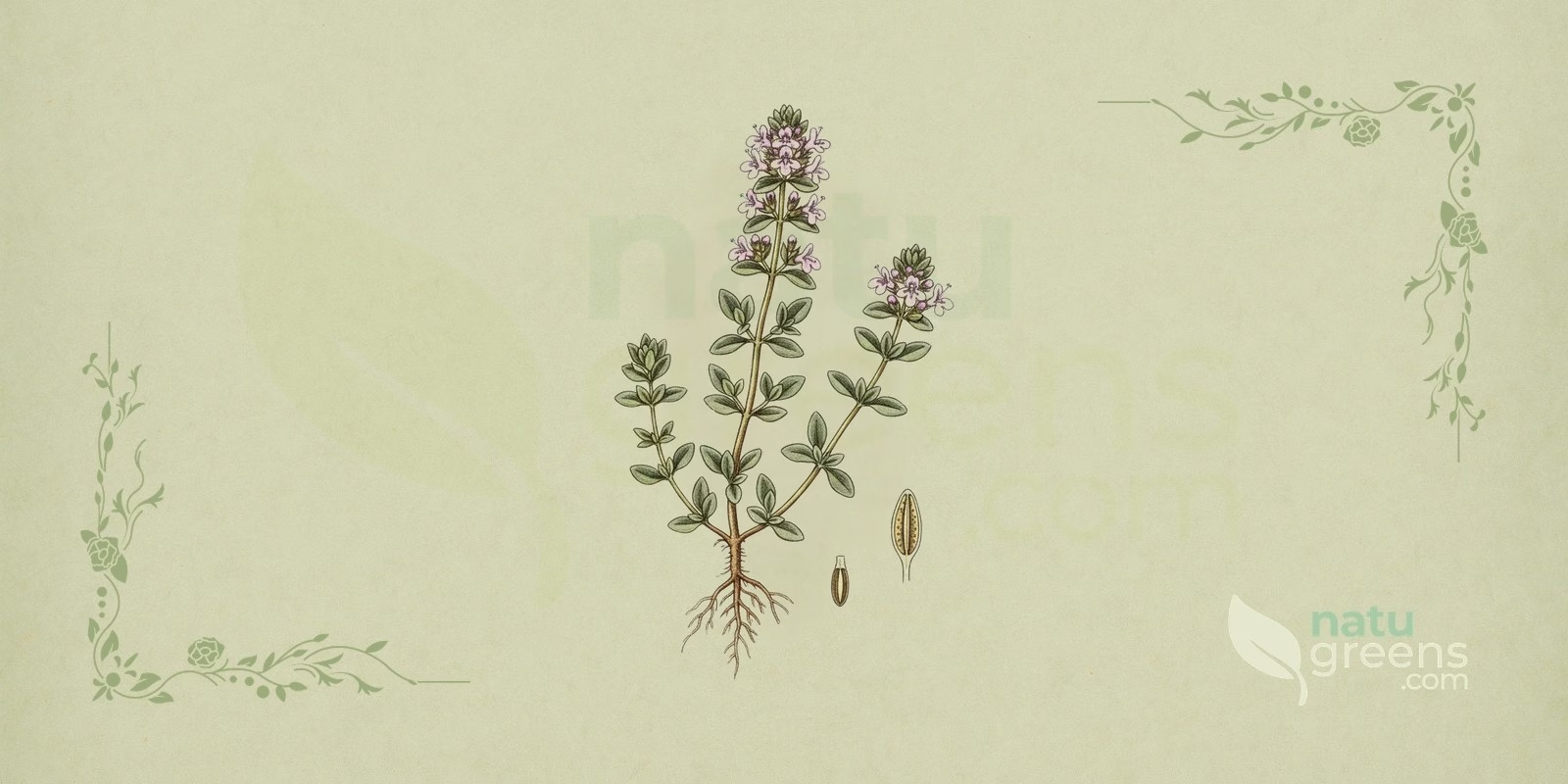
In traditional medicine, thyme is widely used for a variety of conditions, with particular emphasis on respiratory and digestive complaints, while modern science has been investigating many of these uses by identifying bioactive compounds such as thymol and carvacrol, associated with antiseptic, anti-inflammatory, and antioxidant properties observed in laboratory studies. This versatile plant remains a subject of ongoing research, reinforcing its standing as one of the most studied and widely used medicinal herbs worldwide.
Popular and International Names of Thyme
- English: common thyme, English thyme, garden thyme, German thyme, thyme.
- Spanish: tomillo, tomillo común.
- Portuguese: timo, tomilho, tomilho-comum, tomilho-vulgar.
- French: thym, thym commun.
- Italian: timo.
- German: Echter Thymian, Thymian.
Botanical Synonyms of Thymus vulgaris
The botanical name Thymus vulgaris L. is the most widely accepted and used in the scientific literature, although some sources may list synonyms used historically or in specific contexts, since plant taxonomy can vary slightly between different classification systems. Even so, Thymus vulgaris L. remains the standard designation for this species, with no widely recognized botanical synonyms that are frequently used in contemporary literature.
Botanical Family: Lamiaceae
Thyme belongs to the Lamiaceae family, also known as the mint family, one of the largest families of flowering plants, characterized by square stems, opposite leaves, and bilabiate flowers. The Lamiaceae family includes many important aromatic and medicinal herbs, such as mint, oregano, sage, and rosemary, all known for producing essential oils rich in terpenes and other volatile compounds that give them their aromatic and traditional properties. The chemical diversity within Lamiaceae has been the subject of intense pharmacological research, contributing to the development of phytopharmaceuticals and dietary supplements.
Parts of Thyme Used
- Aerial Parts
- Essential Oil
- Flowers
- Leaves (Fresh or Dried)
Ethnobotanical and Traditional Uses
- Cheese and Alcoholic Beverage Production (Romans)
- Improvement of Acne
- Mummification (Ancient Egypt)
- Relief of Insect Bites
- Relief of Rheumatic Pain
- Respiratory Conditions (Asthma, Bronchitis, Hay Fever, Cough)
- Revitalizing and Tonic Use
- Treatment of Fungal Infections
- Treatment of Parasites
- Treatment of Throat and Lung Infections
- Use in Baths (Greeks and Romans)
Therapeutic Properties of Thyme
- Analgesic (traditional use for pain relief)
- Antiallergic (studied effect in reducing allergic reactions)
- Antibacterial (studied activity against bacteria)
- Antidiabetic (studied effect on blood sugar)
- Anti-inflammatory (studied effect in reducing inflammation)
- Antioxidant (studied activity against free radicals)
- Antiseptic (studied for infection prevention)
- Antispasmodic (traditional use for relieving spasms)
- Antitussive (traditional use for relieving cough)
- Antiviral (studied activity against viruses)
- Cardioprotective (studied protective effect on the heart)
- Expectorant (helps eliminate mucus)
- Immunomodulatory (studied effect on the immune system)
- Sedative (studied effect on relaxation)
- Tonic (revitalizes the body)
- Vermifuge (studied activity against worms)
Detailed Phytochemical Profile of Thyme
- Carvacrol
- Essential Oils (Thymol, Carvacrol, γ-Terpinene)
- Flavonoids
- Minerals
- Phenolic Acids
- Saponins
- Tannins
- Vitamins
Preparation and Administration Forms of Thyme
- Culinary Use (Seasoning)
- Essential Oil
- Flavoring Agent
- Immersion Baths
- Infusion (Tea)
- Marinades
- Syrups
- Tinctures
Synergy with Other Medicinal Plants
Respiratory System
Thyme, especially its essential oil, can be combined with ivy (Hedera helix) to enhance traditional use for respiratory conditions such as bronchitis, since thyme’s expectorant and antispasmodic action, together with ivy’s mucolytic properties, offers traditional support for cough and congestion, facilitating the expulsion of mucus.
Antimicrobial Activity
The antibacterial synergy of thyme essential oil is notable when combined with anise essential oil (Pimpinella anisum) and clove essential oil (Syzygium aromaticum), a combination that preliminary studies associate with greater activity against a wide range of microorganisms, including gram-positive and gram-negative bacteria, suggesting potential for infection-focused formulations. In addition, thyme has demonstrated synergy with fluconazole, an antifungal agent, against Candida species in laboratory studies, pointing to a potential yet to be confirmed for the treatment of fungal infections.
Recipes and Usage Protocols of Thyme
Thyme Tea for Cough and Colds
To prepare a thyme infusion, add 1 teaspoon of dried thyme leaves and flowers to 200 ml of boiling water, cover and let steep for 5 to 10 minutes, strain and drink up to 3 times a day, sweetening with honey if desired. This infusion is traditionally used to help ease coughing, congestion, and sore throat, drawing on thyme’s expectorant and antiseptic properties; if symptoms persist, consult a healthcare professional.
Thyme-Infused Honey
Place a few dried thyme sprigs in a small glass jar and cover with pure honey, letting the mixture sit in a cool, dark place for at least 1 week so the honey absorbs the flavor and properties of the thyme. This infused honey can be used to sweeten teas, soothe the throat, or serve as a general tonic traditionally associated with overall well-being.
Culinary Use as a Seasoning
Fresh or dried thyme is a versatile seasoning that can be used in a wide range of culinary preparations, excellent for enhancing the flavor of meats, fish, poultry, roasted vegetables, soups, sauces, and pasta dishes, and pairing particularly well with recipes featuring lemon and white wine. To use, strip the leaves from the stems and add them during cooking to release their characteristic aroma and flavor.
The preparations above follow traditional records and do not replace professional guidance. Before any internal use, check the contraindications and interactions described in this article.
Associated Therapies
Aromatherapy
Thyme essential oil is valued in aromatherapy for its calming and relaxing properties, and inhaling its aroma can help ease nervous exhaustion, stress, fatigue, and insomnia, promoting a sense of calm and well-being. It can be diffused into the air, added to a warm bath, or applied topically, always diluted in a carrier vegetable oil, to pulse points for a relaxing effect.
Herbal Medicine
In herbal medicine, thyme is a fundamental resource, used in various traditional forms for a wide range of conditions, from simple infusions for digestive and respiratory complaints to standardized extracts in more complex formulations. Modern herbal medicine seeks to integrate traditional knowledge with scientific research to investigate and optimize the use of thyme.
Flower Essence Therapy
The flower essence of thyme is used in flower essence therapy to support a healthier perception of the flow of time, recommended for individuals who feel overwhelmed by a lack of time or who need to adjust their life’s pace. This essence is believed to help restore balance and allow for a more harmonious management of time, fostering a sense of tranquility and control.
Contraindications and Side Effects of Thyme
Although thyme is generally considered safe when used in appropriate doses, it is important to be aware of its contraindications and potential side effects, since individual sensitivity and the manner of use can influence the occurrence of adverse reactions.
Hypersensitivity and Allergic Reactions
Individuals sensitive to thyme or to other plants in the Lamiaceae family (such as mint or oregano) may experience allergic reactions, with symptoms that can include skin rashes, hives, swelling, and, in more severe cases, anaphylaxis. It is crucial to perform a sensitivity test before topical or oral use, especially for people with a history of plant allergies.
Use During Pregnancy and Breastfeeding
The use of thyme, especially its essential oil, is contraindicated during pregnancy and breastfeeding due to the lack of conclusive studies on its safety. Although thyme tea may be used with caution in some situations, it is essential to consult a physician or healthcare professional before any use during these periods, to avoid potential risks to the mother and baby.
Drug Interactions and Other Conditions
Thyme may interact with certain medications, such as anticoagulants (for example, warfarin), increasing the risk of bleeding, and it may also influence thyroid gland function and interact with thyroid medications. Because of its hypoglycemic effect observed in studies, thyme can also potentiate antidiabetic medications, requiring blood sugar monitoring, and its sedative effect observed in studies suggests caution in those already taking sedative medications, due to the risk of potentiation. Patients with heart failure should avoid using thyme, and at very high doses thyme can be toxic and adversely affect the heart and lungs; topical use of the essential oil can cause burning, irritation, or redness on the skin if not properly diluted.
Historical Notes and Interesting Facts
Thyme has a rich history and numerous curiosities that span cultures and eras: its name, Thymus, derives from Greek, meaning to offer through burning, possibly a reference to its use as incense, while the epithet vulgaris indicates its frequent or common presence, highlighting its wide distribution and use.
In Ancient Egypt, thyme was valued for its antiseptic properties and used in embalming rituals, and the ancient Greeks used it in baths and burned it as incense in their temples, associating it with courage. The Romans likewise used it in immersion baths to revitalize the body, burned sprigs in their traditions, and incorporated it into the production of cheeses and alcoholic beverages. During the Middle Ages, thyme was regarded as a remedy for poisoning, an analgesic, and even a home for fairies, reflecting the belief in its protective properties.
Frequently Asked Questions about Thyme
Does Thyme Tea Help with Digestion?
Yes, thyme tea is traditionally used to support digestion, as its antispasmodic and carminative properties may help ease cramps, flatulence, and other gastrointestinal discomforts. Thyme’s active compounds stimulate the production of digestive enzymes and support healthy digestive tract function, making it a useful traditional resource for mild digestive discomfort.
Is Thyme Used for Respiratory Problems?
Yes, thyme is traditionally recognized as an aid for respiratory problems, and its expectorant, antiseptic, and antitussive properties make it useful in supporting relief from cough, bronchitis, asthma, and nasal congestion. Thymol and carvacrol, present in the essential oil, help loosen mucus and ease breathing, contributing, according to preliminary studies, to the fight against airway infections.
What Are the Main Benefits of Thyme Essential Oil?
Thyme essential oil is highly concentrated and has antibacterial, antifungal, antiviral, and anti-inflammatory properties studied in laboratory settings. It is used in aromatherapy to help relieve stress, fatigue, and insomnia, promoting relaxation, and in herbal medicine it can be applied topically, always diluted, to help with acne and other skin concerns, in addition to having studied potential for the immune system and antioxidant activity. Its use should be undertaken with caution and under professional guidance due to its potency.
How Is Thyme Tea Prepared?
The traditional preparation consists of adding 1 teaspoon of dried thyme leaves and flowers to 200 ml of boiling water, covering and letting it steep for 5 to 10 minutes before straining. The drink can be sweetened with honey and taken up to 3 times a day, making it the most common way to take advantage of the expectorant and antiseptic properties attributed to the plant.
Can Thyme Be Used During Pregnancy and Breastfeeding?
It is not recommended, since the use of thyme, particularly in essential oil form, is contraindicated during pregnancy and breastfeeding due to the lack of conclusive studies on its safety during these periods. Although the tea may be considered with caution in some situations, it is always best to consult a physician or healthcare professional before any use during these stages.
What Precautions Should Be Taken When Using Thyme Essential Oil?
Thyme essential oil is highly concentrated and should always be diluted in a carrier vegetable oil before topical use, to avoid burning, irritation, or redness on the skin. People with a history of allergies to plants in the Lamiaceae family, pregnant or breastfeeding women, and patients with heart failure or taking anticoagulants, thyroid medications, antidiabetic drugs, or sedatives should avoid its use or seek professional guidance before using it.
Notice: this content is for informational purposes and does not replace professional medical advice. Consult a physician or herbal practitioner before using medicinal plants, especially during pregnancy, breastfeeding, or alongside medication.
References and Scientific Studies
View All 11 Cited References
Peer-Reviewed Scientific Studies (7)
- PMC2022 Halat, D. H., & Al-Amri, A. M. (2022). A Focused Insight into Thyme: Biological, Chemical, and Therapeutic Properties. Molecules, 27(10), 3204.
- PMC2022 Pandur, E., et al. (2022). Antioxidant and Anti-Inflammatory Effects of Thyme (Thymus vulgaris L.) Essential Oil. Antioxidants, 11(7), 1330.
- PEER2021 Patil, S. M., et al. (2021). A systematic review on ethnopharmacology, phytochemistry, and pharmacological activities of Thymus vulgaris L. Journal of Ethnopharmacology, 274, 114001.
- PEER2021 Silva, A. S., et al. (2021). The evidence of health benefits and food applications of thyme (Thymus vulgaris L.). Food Research International, 149, 110695.
- PEER2018 Salehi, B., et al. (2018). Thymol, thyme, and other plant sources: Health and potential uses. Phytotherapy Research, 32(9), 1688-1706.
- PEER2020 Escobar, A., et al. (2020). Thymol bioactivity: A review focusing on practical applications. Industrial Crops and Products, 154, 112690.
- PEER2021 Khazdair, M. R., et al. (2021). Immuno-modulatory and anti-inflammatory effects of Thymus vulgaris L. Journal of Herbal Medicine, 26, 100418.
Supplementary Readings (4)
- 2025 Jilani, S., et al. (2025). The synergistic effect of Thymus vulgaris essential oil and imipenem against multidrug-resistant bacteria. Frontiers in Pharmacology, 15, 1582102.
- 2022 Rodrigues, A. C., et al. (2022). Aspectos botânicos, fitoquímicos e antimicrobianos de Thymus vulgaris: uma breve revisão de literatura. Diversitas Journal, 7(2), 1045-1055.
- 2023 Vassiliou, E., et al. (2023). Anti-Inflammatory and Antimicrobial Properties of Thyme (Thymus vulgaris L.) Essential Oil. International Journal of Molecular Sciences, 24(8), 6936.
- 2019 Almanea, A., et al. (2019). The Potential Gastrointestinal Health Benefits of Thymus vulgaris Essential Oil: A Review. Biomedicine & Pharmacotherapy, 12(4), 1-10.