Ocimum basilicum L. / Basil, popularly known as basil, sweet basil, or common basil, is an annual herbaceous plant of the family Lamiaceae, described by Carl Linnaeus in 1753. Native to Asia and Africa, this species has spread across every continent thanks to its recognized traditional properties and culinary use. Basil has been used for millennia in traditional medicine, valued for its aromatic leaves and flowers. Its leaves, vivid green in color with a distinctive aroma, are harvested for the preparation of infusions, extracts, and other herbal products.
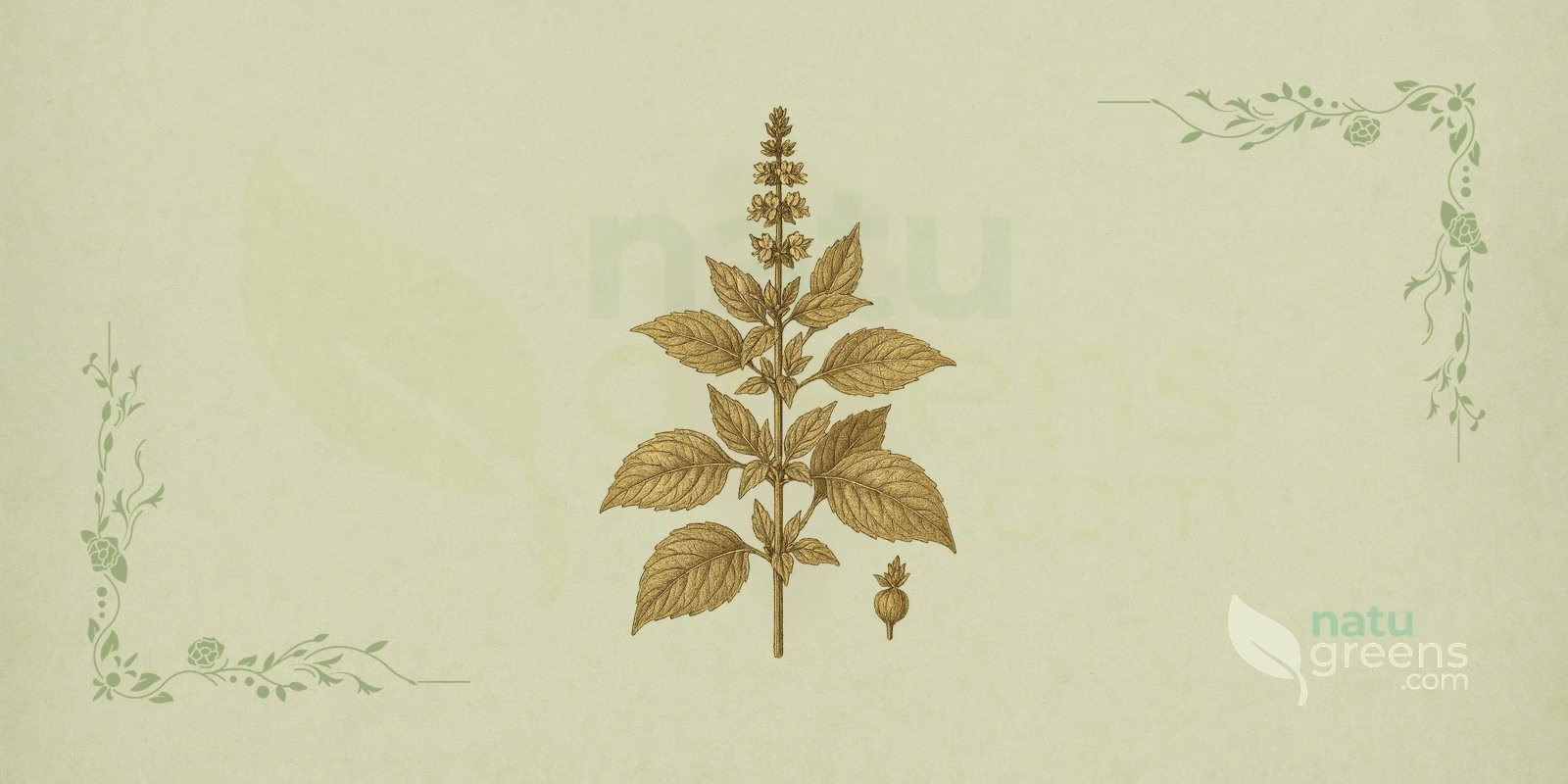
In global herbal tradition, basil holds a prominent place as an aromatic and medicinal plant, with applications ranging from the treatment of gastrointestinal disorders to the relief of anxiety and nervousness. The plant is recognized for its rich phytochemical composition, especially in essential oils such as linalool, eugenol, and estragole, which give it its studied anti-inflammatory, antioxidant, and antimicrobial properties. Modern scientific research has investigated many of basil’s traditional uses, cementing its position as one of the most studied and widely used medicinal plants in the world.
Popular and International Names of Basil
- English: basil, common basil, garden basil, sweet basil.
- Spanish: albahaca, alfábega, basílico.
- Portuguese: alfavaca, basílico, manjericão.
- French: basilic, herbe royale.
- Italian: basilico.
- German: Basilikum, Königskraut.
Botanical Synonyms of Ocimum basilicum
Ocimum album L., Ocimum americanum L., Ocimum anisatum Benth., Ocimum caryophyllatum Roxb., Ocimum citratum Backer, Ocimum dichotomum Hochst. ex Benth., Ocimum medium L., Ocimum minimum L., Ocimum pilosum Willd., Ocimum thyrsiflorum L.
Botanical Family: Lamiaceae
The family Lamiaceae, also known as Labiatae, is a vast family of flowering plants comprising about 236 genera and more than 7,000 species distributed worldwide, characterized by square stems, opposite leaves, and bilabiate flowers, often grouped into whorled inflorescences. Lamiaceae includes many plants of great economic, culinary, and medicinal importance, such as mint, thyme, sage, rosemary, and lavender.
Basil shares morphological features typical of the family, including the presence of essential oils that give it its distinctive aroma and flavor. The family Lamiaceae is known for producing a wide range of bioactive compounds, especially terpenoids, flavonoids, and phenolic acids, which contribute to the medicinal properties of many of its species, and the chemical diversity of this family has been the subject of intense pharmacological research, contributing to the development of herbal drugs and dietary supplements.
Parts of Basil Used
- Essential oil
- Flowers
- Leaves
- Seeds
Ethnobotanical and Traditional Uses
- Anxiety and nervousness
- Back pain
- Chronic fungal infections
- Cough
- Digestive disorders
- Dysmenorrhea (menstrual cramps)
- Fever
- Flu and colds
- Headaches
- Insomnia
- Peptic ulcers
- Reduction of body odor
- Relief of intestinal cramps and flatulence
- Respiratory problems
- Traditional use as complementary support in cancer cases (in some traditions)
- Traditional use as complementary support in tumors (in some traditions)
- Urinary problems
Therapeutic Properties of Basil
- Antibacterial (activity studied against Gram-positive and Gram-negative bacteria)
- Antidiabetic (studied effect on blood sugar levels)
- Antifungal (activity studied against various pathogenic fungal species)
- Antioxidant (activity studied against free radicals and oxidative stress)
- Antiproliferative (activity observed in laboratory studies against various cancer cell lines, without clinical evidence)
- Antiviral (in vitro activity studied against DNA and RNA viruses, including SARS-CoV-2 and HIV)
- Neuroprotective (protective effect studied on the nervous system and cognitive functions)
Detailed Phytochemical Profile of Basil
- 1,8-Cineole
- 3,4-Dihydroxyphenylacetic acid
- Alpha-bergamotene (trans-α-bergamotene)
- Alpha-guaiene
- Apigenin
- Campesterol
- Carvacrol
- Carvone
- Estragole
- Eugenol
- Flavonoids
- Geranial
- Inositol
- Linalool
- Menthofuran
- Methyl chavicol
- Methyl cinnamate (trans-methyl cinnamate)
- Phenolic acids
- Pulegone
- Quercetin
- Rutoside (rutin)
- Sitosterol
- Stigmasterol
- Tannins
- Terpenes
- Ursolic acid
Preparation and Administration Forms of Basil
- Compresses
- Cream
- Decoction
- Dry extract
- Essential oil
- Fluid extract
- Infusion
- Poultice
- Tincture
Synergy with Other Medicinal Plants
Digestive Relief
The combination of basil with peppermint (Mentha piperita) and lemon balm (Melissa officinalis) can enhance relief of digestive disorders, such as dyspepsia, flatulence, and intestinal cramps, since basil’s essential oils, rich in linalool and eugenol, act synergistically with peppermint’s menthol and lemon balm’s phenolic compounds, providing antispasmodic, carminative, and anti-inflammatory effects studied in the gastrointestinal tract.
Stress and Anxiety Reduction
The combination of basil with chamomile (Matricaria chamomilla) and valerian (Valeriana officinalis) may optimize the calming and anxiolytic effects observed traditionally. Basil, with its neuroprotective properties, complements chamomile’s apigenin and valerian’s valerenic acid, which act on GABA receptors, promoting relaxation and improving sleep quality, with a side-effect profile traditionally considered milder than that of some synthetic sedatives.
Immune Support
To strengthen the immune system, basil can be combined with echinacea (Echinacea purpurea) and ginger (Zingiber officinale), since basil’s antiviral and antibacterial properties, together with echinacea’s immunostimulant compounds and ginger’s gingerols, create a synergy that may traditionally help prevent and fight infections, especially during periods of increased vulnerability.
Recipes and Usage Protocols of Basil
Compress for Pain Relief
Ingredients: 2 tablespoons of fresh or dried basil leaves, 250 ml of boiling water.
Preparation: Prepare a concentrated infusion by letting the leaves steep for 10 minutes, straining carefully, and letting it cool to room temperature. Soak sterile gauze compresses in the infusion and apply to the affected area (sore muscles, inflamed joints) for 15-20 minutes, 2-3 times a day. This preparation helps reduce inflammation and relieve localized pain.
Calming and Digestive Infusion
Ingredients: 1 teaspoon of dried basil leaves (or 2-3 fresh leaves), 200 ml of boiling water, honey (optional).
Preparation: Place the leaves in a cup and add freshly boiled water, covering and letting it steep for 5-7 minutes. Strain and sweeten with honey if desired. Drink 1 cup after main meals to aid digestion and relieve flatulence, or 30 minutes before bed to promote relaxation and improve sleep quality.
Anti-Inflammatory Massage Oil
Ingredients: 5 drops of basil essential oil, 30 ml of sweet almond or jojoba vegetable oil.
Preparation: Mix the essential oil with the base vegetable oil in a dark glass bottle and apply to clean skin, gently massaging the areas affected by inflammation, muscle pain, or joint pain. This preparation is traditionally used as support for relieving rheumatic pain, bruises, and muscle tension. Avoid sun exposure after application.
Tincture for Anxiety
Ingredients: 200 g of dried basil leaves, 1 liter of 70% alcohol.
Preparation: Place the leaves in a glass jar and cover with the alcohol, sealing tightly and letting it macerate for 14 days, shaking daily. Filter through a fine cloth and store in a dark glass bottle. Due to the presence of estragole, whose concentrated internal use calls for caution, take the tincture only in a small amount diluted in water and always under the guidance of a healthcare professional, for relief of anxiety and nervousness. This tincture concentrates basil’s bioactive compounds and may, according to traditional use, provide more pronounced anxiolytic effects.
Facial Steam for Inflamed Skin
Ingredients: 3 tablespoons of dried basil leaves, 1 liter of boiling water.
Preparation: Place the leaves in a large bowl and add the boiling water, lean your face over the bowl at a safe distance, and cover your head with a towel to retain the steam. Stay for 10-15 minutes, breathing deeply. This traditional treatment helps clear pores, reduce skin inflammation, and relieve symptoms of sinusitis and nasal congestion.
The preparations above follow traditional records and do not replace professional guidance. Before any internal use, check the contraindications and interactions described in this article.
Associated Therapies
Aromatherapy
Basil essential oil is widely used in aromatherapy for its calming, anti-inflammatory, and stimulating effects. Inhaling the oil, whether through diffusers, vaporizers, or diluted topical application, promotes relaxation of the nervous system, reduces anxiety, and improves mental clarity, and in therapeutic massages, basil essential oil is often combined with base vegetable oils for support with muscle pain, tension, and skin inflammation. Aromatherapy with basil is particularly indicated, traditionally, for relieving stress and promoting emotional well-being.
Clinical Phytotherapy
In modern clinical phytotherapy, basil is prescribed in various pharmaceutical forms, including standardized extracts, capsules, and tablets, with extracts often titrated for active compounds such as linalool and eugenol to ensure consistency of the preparations. Clinical phytotherapy uses basil as an adjunct for functional gastrointestinal disorders, mild to moderate anxiety, and inflammatory processes. Prescription is individualized, taking into account each patient’s specific needs and possible interactions with other medications.
Contraindications and Side Effects of Basil
Common Side Effects
When consumed orally in larger amounts as a medicine, basil is possibly unsafe, since both the herb and basil oil contain estragole, a chemical that may increase the risk of liver cancer. When applied to the skin, basil essential oil is possibly safe at concentrations of up to 6% for up to 12 weeks. There is not enough reliable information about the safety of basil when inhaled.
Special Precautions and Warnings
- Pregnancy and Breastfeeding: Basil is commonly consumed in food, but it is possibly unsafe when taken orally in larger medicinal amounts during pregnancy and breastfeeding, due to estragole, which may increase the risk of liver cancer.
- Children: It is possibly unsafe for children when taken orally in larger medicinal amounts, also due to estragole.
- Bleeding Disorders: Basil oils and extracts may slow blood clotting and increase the risk of bleeding in people with bleeding disorders.
- Surgery: Basil oils and extracts may slow blood clotting, which could increase the risk of bleeding during and after surgery. It is recommended to stop using basil at least 2 weeks before scheduled surgery.
Interactions
- Blood Pressure Medications: Basil extract may lower blood pressure. Taking basil extract together with medications that also lower blood pressure might cause blood pressure to drop too low. Monitor your blood pressure closely.
- Anticoagulant Medications: Basil oils and extracts may slow blood clotting. Taking these oils and extracts together with medications that also slow blood clotting may increase the risk of bruising and bleeding.
Historical Notes and Interesting Facts
Basil has a rich and multifaceted history, steeped in symbolism and diverse uses across different cultures around the world. In ancient India, basil was associated with religious rituals, medicine, and folklore, considered a sacred plant in Hinduism, and it is believed that Alexander the Great carried it from India to ancient Greece, from where it spread to other parts of the world.
For the ancient Egyptians, basil was used in the embalming process, serving as a “passport” to help the deceased enter paradise. Curiously, in ancient Greece, basil was sometimes seen as a symbol of poverty, hatred, and misfortune, with the belief that it only grew where there had been abuse, yet the name “basil” comes from the Greek word “basilikon,” meaning “royal” or “regal,” suggesting a connotation of nobility.
African legends claim that the plant repels scorpions, while in some Greek Orthodox Christian traditions, basil is used to bless water, as legend has it that it grew around the tomb of Jesus Christ after his resurrection. In Portugal, basil is known as the “Lovers’ Herb,” a tradition in which young men would give small pots of basil to their girlfriends during the festivities of Saint Anthony.
Frequently Asked Questions about Basil
What Is Basil Tea Used For?
Basil tea is widely used for its traditional properties, including antioxidant, anti-inflammatory, digestive, and calming actions, helping relieve stomach discomfort, reduce stress, improve sleep quality, and support the body during flu and colds. It may also contribute to oral health and, according to preliminary studies, to balancing blood sugar levels, without replacing medical follow-up for people with diabetes.
Can You Drink Basil Tea to Sleep?
Yes, basil tea can be taken to help with sleep, since its calming and neuroprotective properties contribute to relaxation of the nervous system, which can improve sleep quality and relieve anxiety and nervousness. It is recommended to drink one cup 30 minutes before bed.
What Are the Contraindications of Basil Tea?
Basil tea, especially in high medicinal doses, is contraindicated for pregnant and breastfeeding women, children, and people with bleeding disorders, and caution should be exercised when combining it with blood pressure medications or anticoagulants, as it may interact with them. People allergic to plants in the Lamiaceae family should also avoid consumption.
Does Basil Tea Help You Lose Weight?
There is no direct scientific evidence proving that basil tea causes weight loss, and although it may aid digestion and help manage some metabolic symptoms, it should not be considered a solution for weight loss. Healthy weight loss generally involves a balanced diet and physical exercise.
Notice: this content is for informational purposes and does not replace professional medical advice. Consult a physician or herbal practitioner before using medicinal plants, especially during pregnancy, breastfeeding, or alongside medication.
References and Scientific Studies
- PMC2020 Zhan Y, et al. Basil polysaccharides: A review on extraction, bioactivities and pharmacological applications. Bioorganic & medicinal chemistry. 2020.
- PMC2026 Gupta D, et al. Basil (Ocimum basilicum): A Natural Approach to Skin Care and its Cosmeceutical Potential. Current drug discovery technologies. 2026.
- PMC2018 Sestili P, et al. The potential effects of Ocimum basilicum on health: a review of pharmacological and toxicological studies. Expert opinion on drug metabolism & toxicology. 2018.