Glycyrrhiza glabra L. / Licorice, popularly known as licorice, is a perennial herbaceous plant of the family Fabaceae, described by Carl Linnaeus. Native to Europe and parts of Asia, this species has spread across many regions thanks to its recognized therapeutic properties and its use as a natural sweetener. Licorice has been used in traditional medicine for millennia, valued for its sweet root and for its applications across many cultures, and its roots, rich in glycyrrhizin, are harvested for the preparation of infusions, extracts and other herbal products.
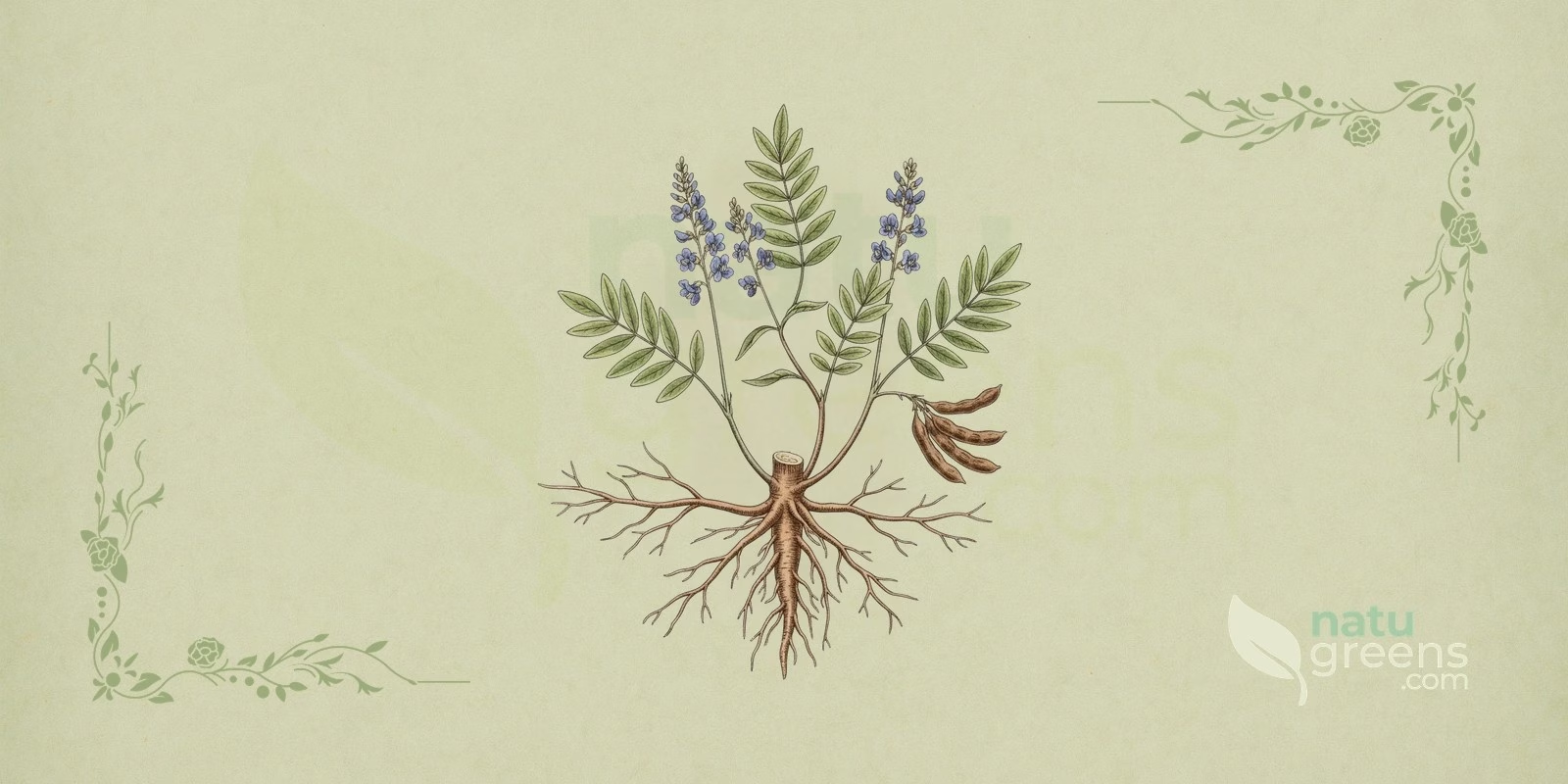
In European and Asian herbal tradition, licorice holds a prominent place as a plant associated with anti-inflammatory and expectorant properties, with applications ranging from the relief of respiratory disorders to support for gastrointestinal issues. The plant is recognized for its rich phytochemical composition, especially in glycyrrhizin and flavonoids, to which its traditional properties are attributed, and modern scientific research has investigated many of licorice’s traditional uses, cementing its position as one of the most studied and widely used medicinal plants in the world.
Popular and International Names of Licorice
- English: licorice, liquorice, sweet root.
- Spanish: palodulce, regaliz.
- Portuguese: alcaçuz, regaliz (BR).
- French: bois doux, réglisse.
- Italian: liquirizia.
- German: Süßholz.
Botanical Synonyms of Glycyrrhiza glabra
Glycyrrhiza glabra L. has a few less common botanical synonyms that can nonetheless be found across various sources of literature, including Glycyrrhiza glandulifera Waldst. & Kit., Glycyrrhiza hirsuta Pall. and Liquiritia officinalis Mönch. These names reflect historical and regional taxonomic variation, although Glycyrrhiza glabra is the name accepted by most botanical authorities and widely used in scientific and pharmacological publications.
Botanical Family: Fabaceae
The family Fabaceae, also known as Leguminosae, is one of the largest families of flowering plants, comprising roughly 765 genera and more than 19,500 species distributed around the world, characterized by pod-bearing fruits and by the ability of many of its species to fix atmospheric nitrogen through symbiosis with bacteria. The Fabaceae include plants of great economic, nutritional and medicinal importance, such as beans, peas, soybeans and peanuts.
Licorice shares morphological traits typical of the family, including pinnate leaves and flowers with a papilionaceous structure, and the Fabaceae family is known for producing bioactive compounds, especially flavonoids, saponins and alkaloids, which give many of its species medicinal properties. The chemical diversity of this family has been the subject of intense pharmacological research, contributing to the development of herbal drugs and dietary supplements.
Parts of Licorice Used
- Rhizome
- Root
Ethnobotanical and Traditional Uses
- Anti-inflammatory use
- Expectorant (helps eliminate excess mucus)
- Natural sweetener
- Relief of gastrointestinal problems (heartburn, indigestion, ulcers)
- Treatment of hyperdipsia (excessive thirst)
- Treatment of respiratory disorders (cough, bronchitis)
- Use in Ayurveda to balance doshas
- Use in Traditional Chinese Medicine (gancao) to harmonize formulas
Therapeutic Properties of Licorice
- Adaptogenic (helps the body adapt to stress)
- Antibacterial (studied activity against bacteria)
- Antidiabetic (studied effect on blood sugar)
- Antifungal (studied activity against fungi)
- Anti-inflammatory (studied effect in reducing inflammation)
- Antioxidant (studied activity against free radicals)
- Antispasmodic (traditional use for relieving muscle spasms)
- Antiviral (studied activity against viruses)
- Demulcent (soothes and protects mucous membranes)
- Expectorant (facilitates mucus elimination)
- Hepatoprotective (studied protective effect on the liver)
- Immunomodulatory (studied effect on the immune system)
Detailed Phytochemical Profile of Licorice
- 18β-glycyrrhetinic acid (enoxolone)
- Anethole
- Coumarins
- Essential oils
- Flavonoids (glabridin, glabrene, isoliquiritin, liquiritin)
- Glycyrrhizin
- Phenolic acids
- Polyphenols
- Polysaccharides
- Triterpenoids
Preparation and Administration Forms of Licorice
- Capsules
- Decoction
- Dried extract
- Fluid extract
- Infusion
- Ointments
- Syrup
- Tincture
Synergy with Other Medicinal Plants
Traditional Chinese Medicine Formulas
Licorice (gancao) is a fundamental component in many Traditional Chinese Medicine formulas, where it is valued for its ability to harmonize the effects of other ingredients, since its sweet, neutral nature allows it to be combined with a wide range of herbs to reinforce their effects, especially in formulas aimed at the spleen and stomach, fatigue and respiratory problems. This synergy is considered, in Chinese tradition, fundamental to the effectiveness of many complex prescriptions.
Combination with Other Anti-Inflammatory Plants
The combination of licorice with other plants traditionally used for their anti-inflammatory properties, such as turmeric (Curcuma longa) or ginger (Zingiber officinale), is used in herbal tradition for a broader approach to managing inflammatory discomfort, since the glycyrrhizin in licorice would act, according to this tradition, in a complementary way to the curcuminoids in turmeric and the gingerols in ginger. This combination is particularly cited in formulations aimed at joint and muscle pain, without replacing medical evaluation and follow-up in cases of persistent inflammation.
Digestive Support
For digestive support, licorice can be combined with herbs such as chamomile (Matricaria chamomilla) or peppermint (Mentha × piperita), since licorice’s demulcent action, which soothes mucous membranes, complements the antispasmodic and carminative properties traditionally attributed to these other plants. This combination is traditionally used for the relief of heartburn, indigestion, cramps and other mild gastrointestinal discomfort, always with professional follow-up in case of persistent symptoms.
Recipes and Usage Protocols of Licorice
Licorice Tea for Cough and Sore Throat
Ingredients: a small amount of dried, chopped licorice root, boiling water, honey (optional).
Preparation: add the licorice root to the boiling water, cover and let steep for 10 to 15 minutes, strain and drink warm. It can be sweetened with honey for a more pleasant taste and to reinforce the soothing effect on the throat, and it is traditionally consumed throughout the day to help relieve coughing and throat irritation, thanks to the demulcent and expectorant properties attributed to licorice. Because it contains compounds that, with frequent or prolonged use, may raise blood pressure and lower blood potassium, consult a healthcare professional before regular consumption, especially in cases of hypertension or heart or kidney disease.
Licorice Decoction for Digestive Problems
Ingredients: a small amount of dried, chopped licorice root, water.
Preparation: place the licorice root in the water and bring to a boil, simmer gently for about 20 minutes, strain and let cool slightly before drinking, preferably before meals, as traditional support for digestion and relief of heartburn and indigestion symptoms, since the decoction allows for greater extraction of the root’s active compounds. Consult a healthcare professional before using this preparation regularly, especially in cases of hypertension or kidney or heart problems.
Licorice Syrup for Bronchitis
Ingredients: dried licorice root, water, honey.
Preparation: boil the licorice root in the water for about 30 minutes, strain and discard the root, add the honey to the strained liquid and warm gently in a double boiler until the honey fully dissolves and the mixture reaches a syrupy consistency, storing the result in a sterilized dark glass bottle. It is traditionally taken in small doses throughout the day as support for relieving bronchitis symptoms and facilitating expectoration, but it should not be given to infants under 1 year of age due to the presence of honey, and the amount and frequency of use should be guided by a healthcare professional.
The preparations above follow traditional records and do not replace professional guidance. Before any internal use, check the contraindications and interactions described in this article.
Associated Therapies
Ayurveda
In Ayurvedic medicine, licorice, known as Yashtimadhu, is widely used to balance the Vata and Pitta doshas, valued for properties traditionally described as rejuvenating, anti-inflammatory and demulcent. It is often employed to support respiratory and digestive issues, and is also considered a tonic for the voice and skin, since its sweet, cooling nature would help, according to this tradition, calm the nervous system and promote mental clarity, making it a common ingredient in formulations aimed at general health and well-being.
Clinical Herbal Medicine
In modern clinical herbal medicine, licorice is used in various pharmaceutical forms, including standardized extracts, capsules and tablets, with extracts often titrated for glycyrrhizin content for greater standardization. Clinical herbal medicine investigates the use of licorice as support for gastric ulcers, liver disorders, inflammatory conditions and adrenal support, always under individualized prescription that takes into account each patient’s specific needs and possible interactions with other medications, given its potential for drug interaction.
Traditional Chinese Medicine (TCM)
In Traditional Chinese Medicine, licorice, or Gancao (甘草), is one of the most important and frequently used herbs, considered a harmonizer capable of moderating the properties of other herbs in a formula, as well as tonifying the Qi of the spleen and stomach, clearing heat and supporting detoxification according to this tradition. It is used to address, from the traditional perspective, fatigue, palpitations, cough with abundant phlegm and pain, and its ability to harmonize and enhance the effects of other herbs makes it indispensable in many classic TCM formulations.
Contraindications and Side Effects of Licorice
General Contraindications
Licorice is contraindicated in individuals with a known allergy to plants of the family Fabaceae. Pregnant women should avoid consuming licorice in high doses due to its potential emmenagogue effect, which may stimulate uterine contractions and lead to premature labor, and individuals with high blood pressure, hypokalemia (low blood potassium levels), heart disease or kidney disease should avoid consuming licorice, as glycyrrhizin may worsen these conditions. Children under 1 year of age should not consume licorice due to the risk of botulism when combined with honey.
Common Side Effects
Side effects of licorice are generally mild and are associated with excessive or prolonged consumption, which may include sodium and water retention, leading to edema and weight gain. Other common effects are headaches, fatigue and muscle weakness, often symptoms of licorice-induced hypokalemia, and topical application of licorice preparations may occasionally result in contact dermatitis in sensitive individuals, making it important to monitor intake to avoid these effects.
Drug Interactions
Licorice may interact with several medications, altering their effectiveness or increasing the risk of adverse effects. Glycyrrhizin can potentiate the effects of anticoagulants such as warfarin, increasing the risk of bleeding, and it may also interact with diuretics, corticosteroids and blood pressure medications, altering electrolyte levels and blood pressure. Individuals taking medication for diabetes should carefully monitor their glucose levels, as licorice may have a hypoglycemic effect. Always consult a healthcare professional before combining licorice with other medications.
Historical Notes and Interesting Facts
Origin of the Name
The scientific name Glycyrrhiza glabra has Greek origins, where “glykys” means sweet and “rhiza” means root, translating literally as “sweet root,” a name that reflects the plant’s most striking feature: the intensely sweet taste of its root, attributed to glycyrrhizin. The word “glabra” means “smooth,” referring to its smooth pods, and the etymology of the name highlights the historical and cultural importance of licorice as a sweetener and medicinal plant.
Ancient and Historical Use
Licorice has a history of use going back thousands of years, having been found in the tombs of Egyptian pharaohs, including that of Tutankhamun, which points to its value in antiquity. Greeks, Romans and the Chinese also used licorice for medicinal and culinary purposes, and in Traditional Chinese Medicine it is considered one of the 50 fundamental herbs, a presence that, across many ancient cultures, underscores its importance and the wide range of applications attributed to it throughout history.
Natural Sweetener
Glycyrrhizin, the main active compound in licorice, is roughly 30 to 50 times sweeter than cane sugar, a trait that makes licorice a valuable natural sweetener, widely used in the food and beverage industry. Beyond its sweetening power, glycyrrhizin gives licorice a unique, complex flavor enjoyed in candies, teas and other preparations, and its long-lasting sweetness, combined with the properties traditionally attributed to the plant, makes it an interesting alternative to refined sugar.
Frequently Asked Questions about Licorice
Is Licorice Tea Safe for Everyone?
No, licorice tea is not safe for everyone. It is contraindicated for pregnant women, people with high blood pressure, hypokalemia (low blood potassium levels) and heart or kidney disease, and it may also interact with certain medications, such as anticoagulants, diuretics and corticosteroids. Children under 1 year of age should also avoid consuming it. It is essential to consult a healthcare professional before starting to drink licorice tea, especially if there is a preexisting health condition or medication use.
What Is the Recommended Dose of Licorice?
The dose of glycyrrhizin, the main active component of licorice, generally considered safe for healthy people is up to 10 mg per day, and excessive consumption, above 0.2 mg per kg of body weight per day, can lead to significant adverse effects, such as increased blood pressure and hypokalemia. Doses vary depending on the form of preparation (infusion, extract, tincture) and the purpose of use, so it is essential to follow the recommendations of a healthcare professional or the specific instructions on the product to avoid complications.
Can Licorice Help with Digestion?
Yes, licorice is traditionally used as support for digestion and for the relief of various gastrointestinal discomforts. Its demulcent properties help soothe and protect the mucous membranes of the digestive tract, and it is traditionally associated with conditions such as heartburn, indigestion, gastritis and gastric ulcers, while its anti-inflammatory properties may help reduce irritation in the digestive system. Drinking licorice tea or decoction is a traditional way of seeking this relief, but it does not replace medical evaluation in persistent cases.
Is Licorice Good for Coughs?
Licorice is widely recognized, in herbal tradition, for properties beneficial to the respiratory system, and it is traditionally used for cough relief. Its expectorant properties help thin mucus and facilitate its elimination, while its demulcent properties soothe irritation in the throat and airways, and it is frequently used in syrups and infusions aimed at dry and productive coughs, bronchitis and other mild respiratory conditions, always with professional follow-up when symptoms persist.
Are “Licorice” and “Liquorice” the Same Plant?
Yes: “liquorice” is simply the British English spelling of the same word used in American English as “licorice,” both referring to the same species, Glycyrrhiza glabra, with no botanical difference between them. In other languages the plant carries names such as réglisse (French), liquirizia (Italian) and Süßholz (German), all referring to the same sweet root used for millennia in traditional medicine and as a natural sweetener.
What Are the Main Ways to Take Licorice?
Licorice can be prepared as an infusion, decoction, syrup, tincture, or fluid or dried extract, and it is also available in capsules and topical ointments. The choice of preparation usually depends on the traditional purpose of use, whether it is relief of cough and sore throat, digestive support, or support for Traditional Chinese Medicine and Ayurvedic formulas, always respecting the contraindications and the guidance of a healthcare professional.
Notice: this content is for informational purposes and does not replace professional medical advice. Consult a physician or herbal practitioner before using medicinal plants, especially during pregnancy, breastfeeding, or alongside medication.
References and Scientific Studies
View All 11 Cited References
Peer-Reviewed Scientific Studies (6)
- DOI2021 Plummer, J. & Chadburn, H. 2021. Glycyrrhiza glabra. The IUCN Red List of Threatened Species 2021. Acessado em 11 de outubro de 2025.
- PEER2012 Omar HR, Komarova I, El-Ghonemi M, Fathy A, Rashad R, Abdelmalak HD, Yerramadha MR, Ali Y, Helal E, Camporesi EM (August 2012). “Licorice abuse: time to send a warning message“. Therapeutic Advances in Endocrinology and Metabolism. 3 (4): 125 a 38.
- PEER2019 Mamedov NA, Egamberdieva D (2019). “Phytochemical Constituents and Pharmacological Effects of Licorice: A Review“. Plant and Human Health, Volume 3. Cham: Springer Publishing. pp. 1 a 21.
- PEER2017 Yu JJ, Zhang CS, Coyle ME, Du Y, Zhang AL, Guo X, Xue CC, Lu C (2017). “Compound glycyrrhizin plus conventional therapy for psoriasis vulgaris: A systematic review and meta-analysis of randomized controlled trials“. Current Medical Research and Opinion. 33 (2): 279 a 287.
- PMC2004 Somjen D, Katzburg S, Vaya J, Kaye AM, Hendel D, Posner GH, Tamir S (2004). “Estrogenic activity of glabridin and glabrene from licorice roots on human osteoblasts and prepubertal rat skeletal tissues“. The Journal of Steroid Biochemistry and Molecular Biology. 91 (4 a 5): 241 a 246.
- PMC2001 Tamir S, Eizenberg M, Somjen D, Izrael S, Vaya J (2001). “Estrogen-like activity of glabrene and other constituents isolated from licorice root“. The Journal of Steroid Biochemistry and Molecular Biology. 78 (3): 291 a 298.
Institutional Sources (4)
- GOV2025 “Glycyrrhiza glabra“. Germplasm Resources Information Network. Agricultural Research Service, United States Department of Agriculture. Acessado em 11 de outubro de 2025.
- GOV2021 Wahab, S., et al. (2021). “Glycyrrhiza glabra (Licorice): A Comprehensive Review on Its Phytochemistry, Pharmacology, and Clinical Applications“. Molecules, 26(24), 7578.
- GOV2020 Batiha, G. E. S., et al. (2020). “Traditional Uses, Bioactive Chemical Constituents, and Pharmacological Activities of Glycyrrhiza glabra L. (Licorice)“. Evidence-Based Complementary and Alternative Medicine, 2020.
- GOV2020 “Licorice Root“. National Center for Complementary and Integrative Health, US National Institutes of Health. August 2020. Acessado em 11 de outubro de 2025.
Supplementary Readings (1)
- 2025 “Licorice“. Drugs.com. 21 de janeiro de 2025. Acessado em 11 de outubro de 2025.