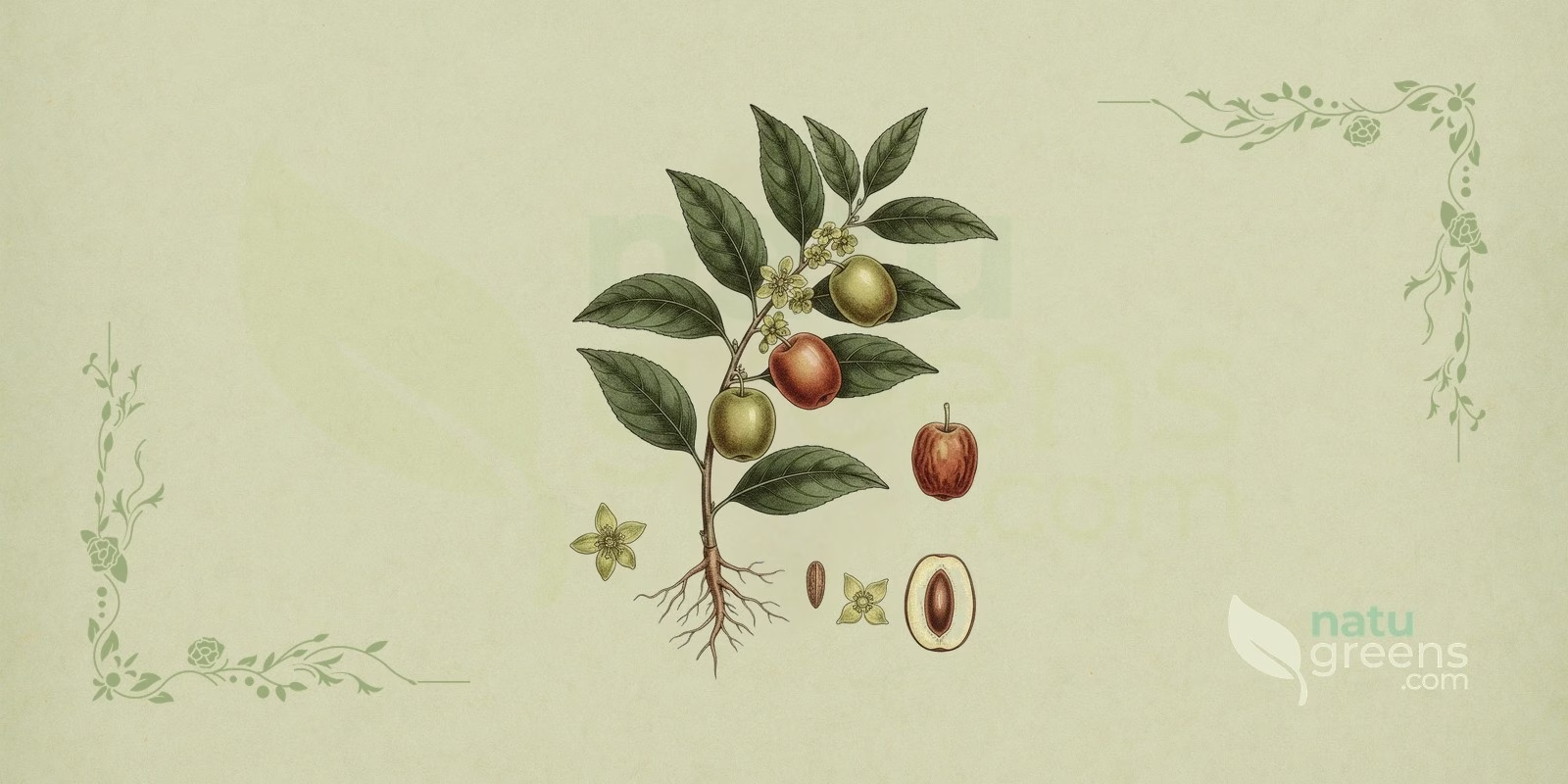
Ziziphus jujuba Mill. / Jujube, commonly known as jujube, Chinese date or Chinese apple, is an ancient plant of the Rhamnaceae family, with a cultivation history spanning more than 4,000 years. Native to southwestern Asia, this species has adapted to a vast range of climates, from temperate to tropical, becoming a dietary staple and a traditional remedy in many cultures. Its resilience and its nutritional and medicinal properties have contributed to its spread around the world. The fruits, which resemble small dates when dried, are valued both in cooking and in herbal medicine.
In traditional medicine, jujube is recognized for its ability to calm the mind, relieve stress and support sleep. The plant is rich in bioactive compounds, such as polysaccharides, flavonoids and saponins, which contribute to its anxiolytic, antioxidant and anti-inflammatory effects. Modern scientific research has been investigating many of the traditional uses of jujube, reinforcing its relevance as a versatile medicinal plant, although not all of its effects have been proven clinically.
Popular and International Names of Jujube
- English: Chinese date, Chinese jujube, jujube, red date.
- Spanish: azufaifo, jinjol, ponsere.
- Portuguese: açofeifa, data-chinesa, jujuba, maçã-chinesa.
- French: datte chinoise, jujubier.
- Italian: giuggiolo, zizzolo.
- German: Chinesische Dattel, Jujube.
Botanical Synonyms of Ziziphus jujuba
Ziziphus jujuba Mill. is the accepted scientific name for this species. However, throughout botanical history, several other names have been used to refer to the same plant or to closely related varieties, and these synonyms reflect the complexity of plant taxonomy and the different classification approaches used over time, making their understanding essential for research and for accurately identifying the plant across scientific and historical sources.
Paliurus zizyphus (L.) Christ, Rhamnus zizyphus L., Ziziphus sativa Gaertn., Ziziphus sinensis Lam., Ziziphus vulgaris Lam., Ziziphus zizyphus (L.) H.Karst.
Botanical Family: Rhamnaceae
The Rhamnaceae family is a diverse group of flowering plants that includes trees, shrubs and lianas, distributed mainly across tropical and subtropical regions of the world. It is known for its ecological and economic importance, with several species used in traditional medicine, as a source of timber or as ornamental plants. Ziziphus jujuba is a prominent example within this family, standing out for its medicinal properties and edible fruits.
Plants in the Rhamnaceae family are characterized by simple leaves, stipules often modified into spines and small flowers, frequently grouped into inflorescences, along with the common presence of secondary compounds such as alkaloids, flavonoids and saponins, which give these species a range of biological activities. Phytochemical research continues to explore the potential of these plants, revealing new uses and applications for human health.
Parts of Jujube Used
- Bark
- Fruits (fresh or dried)
- Leaves
- Seeds
Ethnobotanical and Traditional Uses
- Improvement of sleep quality, and relief of stress and anxiety in Traditional Chinese Medicine.
- Relief of digestive disorders, such as diarrhea and loss of appetite.
- Topical application for skin inflammation and wound healing.
- Use of the seeds as a natural sedative.
Therapeutic Properties of Jujube
- Anti-inflammatory (studied activity against inflammation)
- Antioxidant (studied protective effect on cells against damage)
- Anxiolytic (studied effect in reducing anxiety)
- Hepatoprotective (studied protective effect on the liver)
- Immunostimulant (studied effect on the immune system)
- Neuroprotective (studied protective effect on the nervous system)
- Sedative (studied effect on relaxation and sleep)
Detailed Phytochemical Profile of Jujube
- Adenosine
- Apigenin
- Flavonoids (quercetin)
- Guanosine
- Nucleosides
- Polysaccharides
- Triterpenoid saponins (jujuboside acids)
- Vitamin C
- Zizyphin
Preparation and Administration Forms of Jujube
- Culinary use of the fruit (fresh, dried, in preserves, etc.)
- Decoction of the seeds
- Extracts (liquid or dried)
- Infusion (tea) of dried fruits
Synergy with Other Medicinal Plants
Sleep and Anxiety: Combined Action
Jujube can be combined with valerian (Valeriana officinalis) and passionflower (Passiflora incarnata) to enhance its sedative and anxiolytic effects, a synergy that is particularly useful for people who suffer from insomnia and states of nervousness. The active compounds in jujube, such as polysaccharides and flavonoids, work together with the valerenic acids in valerian and the alkaloids in passionflower, promoting deeper relaxation and more restorative sleep without the side effects of synthetic medications.
Digestive Support
For digestive problems, jujube can be paired with ginger (Zingiber officinale) and peppermint (Mentha × piperita). This combination helps relieve nausea, flatulence and cramps, thanks to the carminative and antispasmodic properties of ginger and peppermint, complemented by the calming and protective effects of jujube on the gastrointestinal tract, which can support digestion and reduce abdominal discomfort.
Recipes and Usage Protocols of Jujube
Infusion for Relaxation and Sleep
To prepare a relaxing infusion, use 10 to 15 grams of dried jujube fruits for every 250 ml of water. Bring the water to a boil, add the fruits, and let steep for about 10 to 15 minutes. Strain and drink warm, preferably 30 minutes before bed. This infusion can be consumed up to twice a day to promote relaxation and support sleep.
Decoction for Digestive Support
To prepare a decoction that supports digestion, use 5 to 10 grams of crushed jujube seeds for 500 ml of water. Bring the mixture to a boil and let it simmer for 20 minutes. Strain and drink one cup after main meals. This preparation is traditionally used to relieve issues such as diarrhea and stimulate appetite, acting gently on the gastrointestinal system.
The preparations above follow traditional records and do not replace professional guidance. Before any internal use, check the contraindications and interactions described in this article.
Associated Therapies
Aromatherapy
Although jujube is not typically used in aromatherapy in the form of an essential oil, its extracts can be incorporated into bath or massage products aimed at promoting relaxation and general well-being, complementing the plant’s internal effects. Topical application of jujube extracts in carrier oils may help soothe the skin and calm the mind.
Western Herbal Medicine
In Western herbal medicine, jujube is valued for its adaptogenic and sedative properties, and it is often recommended for people experiencing chronic stress, anxiety and sleep disturbances. Standardized jujube extracts are used in supplements to support neurological health and immune function, and its gentle action makes it suitable for long-term use under the guidance of a healthcare professional.
Traditional Chinese Medicine (TCM)
In TCM, jujube (Dazao) is a fundamental ingredient, classified as a tonic herb that nourishes the blood and calms the spirit, traditionally used for insomnia, palpitations, fatigue and loss of appetite. It is believed to harmonize other herbs in complex formulas and to strengthen the spleen and stomach according to this tradition. Jujube is often included in soups, teas and decoctions to promote vitality and the body’s energetic balance.
Contraindications and Side Effects of Jujube
Common Side Effects
Jujube is generally considered safe for most people when consumed in moderate amounts, but in some cases it can cause bloating, flatulence or abdominal discomfort, especially when consumed in large quantities or by individuals with digestive sensitivity. These effects are usually mild and temporary, decreasing with a lower dose or discontinued use.
Drug Interactions
Due to its sedative properties, jujube may enhance the effects of sedative, anxiolytic and antidepressant medications, so individuals taking these medications should consult a healthcare professional before using jujube. In addition, jujube may interact with diabetes medications, since it can influence blood sugar levels, so careful monitoring is recommended in these cases.
Pregnancy and Breastfeeding
There are not enough studies on the safety of jujube during pregnancy and breastfeeding, so as a precaution, pregnant or breastfeeding women are advised to avoid its use unless under medical guidance. The lack of robust data justifies caution to protect the health of both mother and baby.
Historical Notes and Interesting Facts
Longevity and Resilience
Jujube is known for its remarkable longevity and its ability to survive in harsh climate conditions, including droughts and severe winters, and some jujube trees in China are more than a thousand years old, a testament to their robustness and adaptability. This trait makes it a valuable crop for agriculture in regions with limited water resources.
Cultural Symbol
In Chinese culture, jujube is a symbol of fertility, prosperity and good fortune, and it is often used in wedding ceremonies and festive celebrations. The fruits are given as gifts and incorporated into traditional dishes, reflecting their cultural and symbolic importance over the centuries, and their presence in rituals and festivities underscores their value beyond their medicinal properties.
Frequently Asked Questions about Jujube
Can Jujube Help You Sleep?
Yes, jujube is traditionally used and studied for its sedative and anxiolytic properties, which may help improve sleep quality and relieve insomnia. Compounds such as polysaccharides and flavonoids found in the plant act on the central nervous system, promoting relaxation. Drinking a jujube infusion before bed may be helpful for those looking for a natural sleep aid.
What Are the Main Health Benefits of Jujube?
The main benefits of jujube include improved sleep, reduced anxiety and stress, digestive support, liver protection and antioxidant properties. The plant is rich in vitamin C and other bioactive compounds that strengthen the immune system and protect cells against oxidative damage, covering several areas of health and making jujube a versatile medicinal plant.
Are There Side Effects to Eating Jujube?
Jujube is generally safe, but in some people it can cause bloating, flatulence or abdominal discomfort, especially at high doses, and it may also interact with sedative, anxiolytic, antidepressant and diabetes medications, enhancing their effects. Pregnant or breastfeeding women should avoid its use, and it is always advisable to consult a healthcare professional before starting any treatment with medicinal plants.
What Is the Difference Between Fresh and Dried Jujube Fruit?
Fresh jujube fruits have a crisp texture and a mild flavor, resembling a small apple, while dried fruits become wrinkled and sweet, resembling a date in both appearance and taste. Both forms are used in cooking, but dried fruits are more commonly used to prepare infusions and decoctions, as they contain a higher concentration of the plant’s active compounds.
How Is Jujube Used in Traditional Chinese Medicine?
In Traditional Chinese Medicine, jujube, known as Dazao, is considered a tonic herb that nourishes the blood and calms the spirit, and it is included in formulas for insomnia, fatigue and loss of appetite. It is also used to harmonize other herbs within more complex preparations, and it is incorporated into everyday soups and teas.
Who Should Avoid Using Jujube?
People taking sedative, anxiolytic, antidepressant or diabetes medications should consult a healthcare professional before consuming jujube, since the plant may enhance or interfere with these treatments. Pregnant and breastfeeding women should also avoid its use as a precaution, given the lack of sufficient studies on its safety during these periods.
Notice: this content is for informational purposes and does not replace professional medical advice. Consult a physician or herbal practitioner before using medicinal plants, especially during pregnancy, breastfeeding, or alongside medication.
References and Scientific Studies
Peer-Reviewed Scientific Studies (2)
- PMC2017 Chen, J., et al. (2017). A Review of Dietary Ziziphus jujuba Fruit (Jujube). Evidence-Based Complementary and Alternative Medicine, 2017, 3019568.
- PMC2026 Keles H, et al. Effects of Hot-Air Drying Temperature on Biochemical Quality, Drying Kinetics, and Predictive Modeling of Ziziphus jujuba Fruits. Molecules. 2026.
Supplementary Readings (1)
- Missouri Botanical Garden. (n.d.). Ziziphus jujuba. Recuperado de Missouri Botanical Garden