Mentha × piperita / Peppermint. Peppermint, scientifically known as Mentha × piperita, is an aromatic hybrid plant widely valued for its medicinal, culinary, and industrial properties. The result of a cross between watermint (Mentha aquatica) and spearmint (Mentha spicata), this perennial herb is cultivated worldwide, especially in temperate regions. Its importance lies in the richness of its essential oils and phenolic compounds, which deliver a wide range of therapeutic benefits.
Since antiquity, peppermint has been a pillar of traditional medicine, used to relieve a variety of ailments, from digestive complaints to inflammation and pain. Modern science continues to explore and confirm the traditional uses of this versatile plant, consolidating its place as one of the most studied and most widely applied medicinal plants in the world.
Popular and International Names of Peppermint
- English: peppermint.
- Spanish: menta piperita, menta inglesa.
- Portuguese: hortelã-pimenta, menta-inglesa, menta-piperita.
- French: menthe poivrée.
- Italian: menta piperita.
- German: Pfefferminze.
Botanical Synonyms of Peppermint
The accepted name is Mentha × piperita L. Recorded synonyms include Mentha balsamea Willd., Mentha nigricans Mill. and Mentha × piperita var. officinalis Sole.
Botanical Family: Lamiaceae
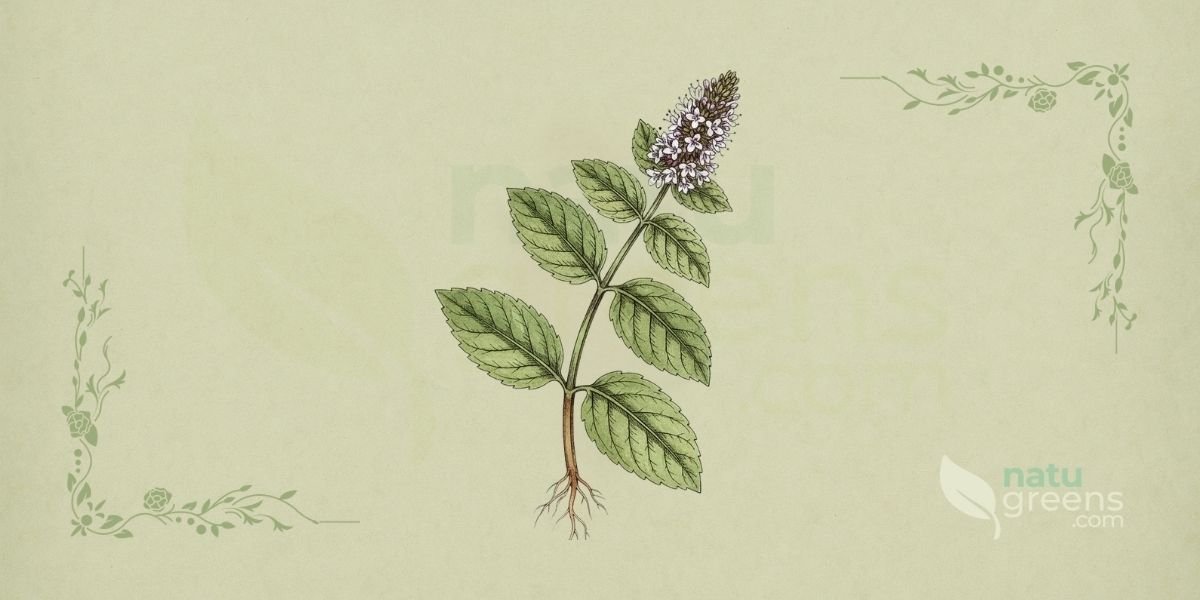
Detailed botanical illustration of Mentha × piperita L. (peppermint), a perennial hybrid herb of the Lamiaceae family, the result of a cross between Mentha aquatica and Mentha spicata, showing the complete plant with serrated, oval-lanceolate dark green leaves, reddish stems, and terminal spikes of small pink to lavender flowers, in 19th-century botanical encyclopedia style on an aged herbarium paper background.
Peppermint belongs to the Lamiaceae family, the mint family, one of the most important families of aromatic plants. The Lamiaceae are characterized by square stems, opposite leaves, and glandular hairs rich in essential oils, and include many culinary and medicinal herbs such as basil, lavender, rosemary, sage, and thyme. The abundance of volatile compounds in this family accounts for the intense aromas and the wide therapeutic use of its species.
Parts of Peppermint Used
- Aerial parts
- Essential oil
- Leaves
Ethnobotanical and Traditional Uses of Peppermint
- Antiseptic
- Antispasmodic
- Antiviral and antifungal
- Astringent
- Expectorant
- Fever and cold relief
- Headache and migraine relief
- Nasal decongestant
- Nausea and vomiting relief
- Relief of intestinal cramps and flatulence
- Relief of oral mucosa and throat inflammation
- Rubefacient
- Treatment of indigestion and irritable bowel syndrome (IBS)
Therapeutic Properties of Peppermint
- Analgesic (relieves pain)
- Anti-inflammatory (reduces inflammation)
- Antimicrobial (fights microorganisms); traditional use, without established clinical efficacy
- Antioxidant (fights free radicals)
- Antispasmodic (relieves muscle spasms)
- Antiviral activity under study (observed in laboratory assays, not confirmed in human use)
- Carminative (reduces intestinal gas)
- Choleretic (stimulates bile production)
- Decongestant (relieves nasal congestion)
- Digestive tonic (improves digestive function)
- Expectorant (helps clear mucus)
Detailed Phytochemical Profile of Peppermint
- Essential oils (volatile compounds)
- Flavonoids
- Hydroxycinnamic acids (including caffeic, p-coumaric, ferulic, and rosmarinic acids)
- Lignans
- Menthofuran
- Menthol
- Menthone
- Menthyl acetate
- Monoterpenes
- Polyphenols
- Terpenes
Preparation and Administration Forms of Peppermint
- Essential oil
- Essential oil capsules
- Facial steam
- Teas and infusions
- Tinctures
Synergy with Other Medicinal Plants
Blends for Teas and Infusions
Peppermint can be combined with several herbs to create blends with multiple benefits. A popular after-dinner combination, both calming and digestive, includes fennel seeds, chamomile (Matricaria chamomilla), and lemon balm with peppermint. Other suggested tea combinations include peppermint with cinnamon and clove for a wintry chai touch; with fennel or star anise for a licorice-mint fusion; and with nutmeg and vanilla for a creamy, minty flavor.
Companion Plants in the Garden
In cultivation, plants such as chamomile, nasturtium, dill, and lavender are considered excellent companions for peppermint, as they attract beneficial insects and can even improve soil quality. Nettle, for example, helps plants resist slugs and snails, strengthens mint growth, and enhances the aromatic quality of herbs such as peppermint.
Recipes and Usage Protocols of Peppermint
Peppermint Tea for Digestion and Colds
Ingredients: 1 tablespoon of fresh peppermint leaves or 1 teaspoon of dried leaves, 200 ml of boiling water.
Preparation: Place the leaves in a cup and add the boiling water. Cover and steep for 5 to 7 minutes. Strain and drink. This tea is traditionally used to relieve digestive discomfort, nausea, and cold symptoms. The most consistent clinical studies were carried out with enteric-coated essential oil capsules, not with an infusion of the leaves.
Steam Inhalation for Nasal Congestion
Ingredients: 3-4 drops of peppermint essential oil, 1 liter of hot water.
Preparation: Add the drops of essential oil to the hot water in a large bowl. Lean your face over the bowl at a safe distance and cover your head with a towel to trap the steam. Breathe deeply for 5 to 10 minutes. This method is intended for adults: it must not be used on children, because of the risk of glottal spasm associated with menthol, nor by people with asthma, in whom mentholated steam can trigger bronchospasm. This method helps decongest the airways and relieve coughing.
Massage Oil for Muscle Pain
Ingredients: 5 drops of peppermint essential oil, 30 ml of a carrier oil (sweet almond, jojoba, or coconut).
Preparation: Mix the essential oil with the carrier oil in a dark glass bottle. Apply to clean skin, gently massaging areas affected by muscle pain or tension. Do a patch test on a small area of skin before full application to check for possible allergic reactions.
Associated Therapies
Aromatherapy
Peppermint essential oil is widely used in aromatherapy to promote relaxation, relieve stress, improve mood, and stimulate concentration. It can be inhaled directly from the bottle, used in diffusers, or by adding a few drops to a handkerchief.
Herbal Medicine
In herbal medicine, peppermint is employed in various formulations, such as tinctures, fluid extracts, and capsules, to treat a variety of conditions, including gastrointestinal disorders, headaches, and respiratory complaints. The plant is valued for its carminative, antispasmodic, and anti-inflammatory properties.
Contraindications and Side Effects of Peppermint
Contraindications
Peppermint is generally safe when used at the recommended doses; however, there are some important contraindications. It is not recommended for people with gastroesophageal reflux disease (GERD), as it can relax the lower esophageal sphincter and worsen symptoms. Individuals with gallstones or bile duct obstruction should avoid it, since peppermint can stimulate bile production.
Young children, especially babies, should not use menthol-containing products such as essential oils, because of the risk of glottal spasm. Pregnant and breastfeeding women should consult a health professional before use, given the lack of conclusive safety studies in these groups. People with known hypersensitivity to peppermint or other members of the Lamiaceae family should also avoid it.
Side Effects
Side effects are generally mild and rare but can include heartburn, allergic reactions (such as rashes or hives), and gastrointestinal irritation in sensitive people. At high doses, the essential oil can be toxic and cause nausea, vomiting, abdominal pain, and, in extreme cases, seizures. Topical application of undiluted essential oil can cause skin irritation. Following the recommended doses is essential; in case of doubt, seek guidance from a doctor or qualified herbal practitioner.
Interesting Facts about Peppermint
Origin and Hybridization
Peppermint is a fascinating plant because of its natural hybrid origin. It arose from a spontaneous cross between watermint (Mentha aquatica) and spearmint (Mentha spicata), probably in Europe. This hybridization produced a plant with unique characteristics and a distinctive phytochemical profile that sets it apart from its parent plants.
Historical Use
Historical records show that peppermint has been used for millennia. Records of mints in Egyptian tombs from around 1000 BC and Greco-Roman accounts refer to other species of the genus Mentha. Peppermint itself was only identified as a distinct hybrid in 1696, in England, and described by Linnaeus in 1753. Its use spread across many cultures, making it a popular remedy in much of the world.
Menthol: The Key Component
Menthol is the main active component responsible for the aroma and therapeutic properties of peppermint. It is a terpene alcohol that produces the plant’s characteristic sensation of freshness and cooling. Beyond its medicinal applications, menthol is widely used in the food, cosmetics, and oral hygiene industries, in products such as toothpaste and mouthwash.
Frequently Asked Questions about Peppermint Tea
Does Peppermint Tea Help with Digestion?
Yes, peppermint tea is widely known for its carminative and antispasmodic properties, which help relieve indigestion, gas, bloating, and cramps. The menthol in the plant relaxes the muscles of the gastrointestinal tract, easing the passage of food and gas.
Is It Safe to Drink Peppermint Tea Every Day?
For most healthy people, moderate daily consumption of peppermint tea is safe. However, people with specific conditions, such as GERD, gallstones, or gastric sensitivity, should avoid regular consumption or consult a doctor. Excessive use can lead to heartburn or gastrointestinal irritation.
Does Peppermint Tea Help Relieve Headaches?
The available studies evaluated the topical application of a menthol solution to the forehead and temples for tension-type headache, not the infusion taken as a drink. For migraine there is no evidence of benefit from the tea. Menthol has analgesic and muscle-relaxing properties that can contribute to pain reduction. Inhaling the tea’s steam can also help relieve nasal congestion associated with headaches.
Can I Use Peppermint During Pregnancy?
Although some pregnant women report nausea relief with peppermint, the safety of its use during pregnancy and breastfeeding is not fully established. It is crucial that pregnant and breastfeeding women consult a health professional before consuming any peppermint product, including teas and essential oils.
What Is the Difference Between Peppermint and Common Mint?
Peppermint (Mentha × piperita) is a specific hybrid with a more intense flavor and aroma due to its high menthol content. Common mint can refer to several species of the genus Mentha, such as spearmint (Mentha spicata), which has a milder, less mentholated flavor. Peppermint is more often used for medicinal purposes and in products requiring a strong mint flavor.
Notice: this content is for informational purposes and does not replace professional medical advice. Consult a physician or herbal practitioner before using medicinal plants, especially during pregnancy, breastfeeding, or alongside medication.
References and Scientific Studies
Peer-Reviewed Scientific Studies (3)
- PMC2020 Mahendran, G., & Rahman, L. U. (2020). Ethnomedicinal, phytochemical and pharmacological updates on Peppermint (Mentha × piperita L.) – A review. Phytotherapy Research, 34(9), 2088-2139.
- PMC2006 McKay, D. L., & Blumberg, J. B. (2006). A review of the bioactivity and potential health benefits of peppermint tea (Mentha piperita L.). Phytotherapy Research, 20(8), 619-633.
- PMC2018 Chumpitazi, B. P., Kearns, G. L., & Shulman, R. J. (2018). Review article: the physiological effects and safety of peppermint oil and its efficacy in irritable bowel syndrome and other functional disorders. Alimentary Pharmacology & Therapeutics, 47(6), 738-752.
Supplementary Readings (1)
- 2017 Brazilian Ministry of Health. (2017). Monograph of the species Mentha × piperita L.