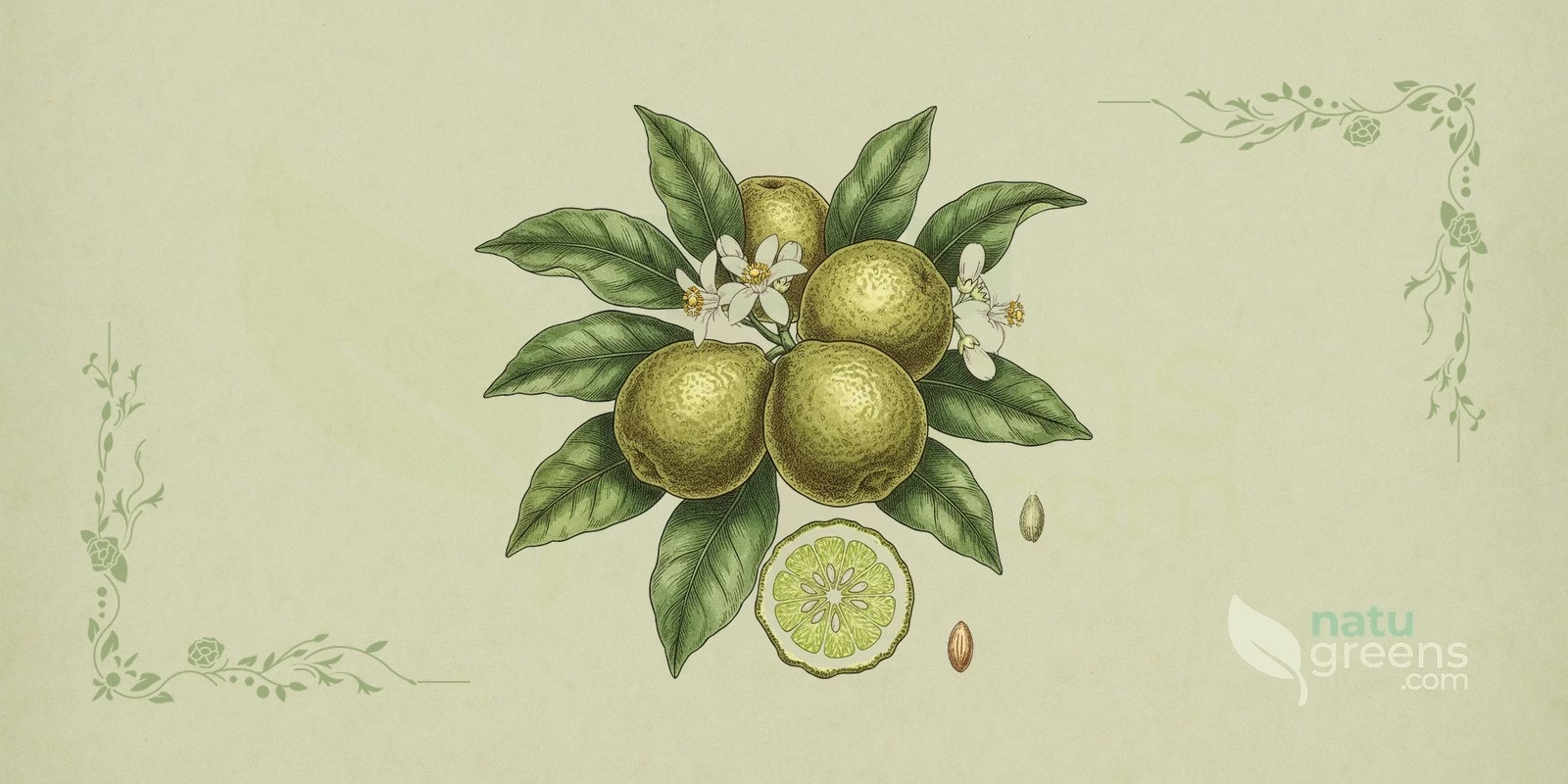
Citrus bergamia Risso / Bergamot Orange, popularly known as bergamot, is an aromatic citrus fruit resulting from a hybrid between lemon and bitter orange, native to the Mediterranean region, especially Calabria, in Italy, where about 95% of world production is concentrated. Bergamot is valued both for its medicinal properties and for the essential oil extracted from the peel of the fruit.
Popular and International Names of Bergamot Orange
- English: bergamot orange.
- Spanish: bergamota, naranja bergamota.
- Portuguese: bergamota, laranja-bergamota.
- French: bergamote, bigaradier bergamote.
- Italian: bergamotto.
- German: Bergamotte, Bergamotte-Orange.
Botanical Synonyms of Citrus bergamia
Citrus bergamia Risso et Poiteau is the most widely accepted scientific name. Other synonyms include Citrus aurantium subsp. bergamia (Risso & Poit.) Wight & Arn. ex Engl. and Citrus aurantium var. bergamia Loisel. The plant is often confused with other Citrus species due to its complex hybrid origin.
Botanical Family: Rutaceae
The Rutaceae family is a family of dicotyledonous plants that includes many species of trees and shrubs, notably the citrus fruits. It is characterized by the presence of oil glands in the leaves and fruits, responsible for its distinctive aromas. The family is widely distributed in tropical and temperate regions, with great economic and medicinal importance.
Parts of Bergamot Orange Used
- Essential oil
- Fruit (juice)
- Leaves
- Peel of the fruit
Ethnobotanical and Traditional Uses
- Flavoring in teas (Earl Grey), sweets, and snus
- Ingredient in perfumes and cosmetics
- Relief of anxiety and stress
- Treatment of wounds, burns, and varicose veins in folk medicine
Therapeutic Properties of Bergamot Orange
- Anti-inflammatory (effect studied in reducing inflammation)
- Antibacterial (activity studied against bacteria)
- Antidiabetic (effect studied on blood sugar levels)
- Antioxidant (activity studied against free radicals)
- Antiproliferative (activity observed in laboratory studies, without clinical proof)
- Antiviral (activity studied against viruses)
- Hypocholesterolemic (effect studied in reducing cholesterol)
- Neuroprotective (protective effect studied on the nervous system)
Detailed Phytochemical Profile of Bergamot Orange
- Bergamottin
- Brutieridin
- Flavonoids (neoeriocitrin, naringin, neohesperidin, melitidin)
- Indole alkaloids (N,N,N-trimethyltryptamine in the leaves)
- Polyphenols
Preparation and Administration Forms of Bergamot Orange
- Aromatherapy (essential oil)
- Extracts (supplements)
- Juice (as a flavoring)
- Tea (infusion of the peel or leaves)
- Topical use (diluted oil for skin and hair)
Synergy with Other Medicinal Plants
Relief of Stress and Anxiety
Bergamot can be combined with Lavandula angustifolia (lavender) and Matricaria chamomilla (chamomile) to enhance their relaxing effects. This synergy is beneficial for reducing stress and anxiety, promoting a state of calm. The volatile compounds of bergamot, together with those of the other plants, act on the central nervous system.
Digestive Support
For digestive complaints, bergamot can be used together with Mentha piperita (peppermint) and Zingiber officinale (ginger). This combination helps reduce nausea, cramps, and indigestion. The essential oils of these plants work together to soothe the gastrointestinal tract and improve digestion.
Recipes and Usage Protocols of Bergamot Orange
Traditional Infusion for Relaxation
Ingredients: 1 teaspoon of dried bergamot peel (or leaves), 200 ml of boiling water.
Preparation: Add the peel or leaves to the boiling water. Cover and let steep for 5 to 7 minutes. Strain and drink. This infusion is traditionally used during moments of stress, contributing to relaxation and a more restful night’s sleep. It can be consumed 2 to 3 times a day.
Massage Oil for Muscle Pain
Ingredients: 5 drops of bergamot essential oil, 30 ml of a base vegetable oil (sweet almond or jojoba).
Preparation: Mix the essential oil with the base vegetable oil in a dark bottle. Apply to areas affected by muscle pain or inflammation. Massage gently until absorbed. This oil is traditionally used to relieve tension and discomfort. Avoid sun exposure after application due to photosensitivity.
Purifying Facial Steam
Ingredients: 3 drops of bergamot essential oil, 1 liter of boiling water.
Preparation: Add the essential oil to the boiling water in a large bowl. Lean your face over the bowl at a safe distance and cover your head with a towel. Breathe deeply for 5 to 10 minutes. This steam helps cleanse the pores and refresh the skin. It is also helpful for relieving nasal congestion.
The preparations above follow traditional records and do not replace professional guidance. Before any internal use, consult the contraindications and interactions described in this article.
The preparations above follow traditional records and do not replace professional guidance. Before any internal use, check the contraindications and interactions described in this article.
Associated Therapies
Aromatherapy
Bergamot essential oil is widely used in aromatherapy for its anxiolytic and antidepressant properties, being inhaled through diffusers or vaporizers to improve mood and reduce stress levels. By creating a relaxing environment and promoting emotional well-being, it has become a key component in many essential oil blends.
Herbalism
In herbal medicine, bergamot is valued for its flavonoid-rich extracts, used to support cardiovascular and metabolic health, and standardized supplements from the fruit have been investigated for their ability to modulate cholesterol and glucose. Like grapefruit, the concentrated oral extract can inhibit the liver enzyme CYP3A4, which calls for caution in people who use statins and other medications metabolized through this pathway.
Contraindications and Side Effects of Bergamot Orange
General Contraindications
Bergamot is contraindicated for individuals with a known allergy to citrus fruits, and its essential oil, because it contains bergapten and other phototoxic furocoumarins, can increase the skin’s photosensitivity when applied topically, making the area more susceptible to burns and phytophotodermatitis after sun exposure. For this reason, pregnant and breastfeeding women should avoid using the essential oil on the skin, and children, especially those under 6 months of age, should not consume it or come into contact with it without medical supervision, given the risk of serious adverse effects.
Drug Interactions
Standardized bergamot extract or juice, taken orally, can interact with anticoagulant medications, such as warfarin, increasing the risk of bleeding, and can also enhance the effects of sedatives and cause excessive drowsiness; diabetics should monitor their glucose levels, since the fruit may have a mild hypoglycemic effect. Because it inhibits the same CYP3A4 enzyme affected by grapefruit, the concentrated oral extract can also raise blood levels of statins and other drugs metabolized through this pathway, so it is essential to consult a doctor before using bergamot supplements together with any medication.
Historical Notes and Interesting Facts
Origin of the Name
The name bergamot may originate from the Turkish word ‘beg-a-mudi’, meaning ‘prince’s pear’, due to its resemblance to the bergamot pear. Another theory suggests the name derives from the Italian city of Bergamo, where bergamot oil was first sold commercially. The exact origin of the fruit is still uncertain, but its history is linked to various cultures and uses over time.
Earl Grey Tea
Bergamot is world famous for being the main ingredient that gives Earl Grey tea its characteristic flavor and aroma. The essential oil from the peel of the bergamot is used to flavor black tea leaves, creating a distinctive and globally beloved beverage. This association with tea has made bergamot one of the most recognized and widely used citrus fruits in cooking and the beverage industry.
Frequently Asked Questions about Bergamot Orange
What Is Bergamot Orange?
Bergamot is a citrus fruit, Citrus bergamia, that resembles a round lemon but with a yellow or green color. It is a hybrid of lemon and bitter orange, grown mainly in Calabria, Italy. Although too sour for direct consumption, its juice and essential oil are widely used as flavorings and in health products. It is the essence that gives Earl Grey tea its characteristic flavor.
What Are the Benefits of Bergamot Tea?
Bergamot tea is traditionally associated with supporting digestion and overall well-being, and bergamot also has antioxidant and anti-inflammatory properties. Preliminary studies suggest it may help reduce stress and anxiety. However, more research is needed to fully confirm these benefits, and the use of the concentrated oral extract requires attention to the drug interactions described in the Contraindications section.
Does Bergamot Have Side Effects?
Yes, bergamot can have side effects. The essential oil, when applied to the skin, can increase sensitivity to sunlight, causing burns. In some people, consumption can cause dizziness, muscle cramps, and heartburn. It is contraindicated for those allergic to citrus fruits and should be used with caution by pregnant women, breastfeeding women, and children. It interacts with anticoagulants and sedatives.
How Do You Use Bergamot Essential Oil?
Bergamot essential oil can be used in aromatherapy by adding a few drops to a diffuser. For topical use, it should be diluted in a carrier vegetable oil, such as sweet almond or jojoba oil, before applying to the skin or hair. Never apply pure essential oil directly to the skin. Always follow dilution instructions and avoid sun exposure after topical use.
Notice: this content is for informational purposes and does not replace professional medical advice. Consult a physician or herbal practitioner before using medicinal plants, especially during pregnancy, breastfeeding, or alongside medication.
References and Scientific Studies
Peer-Reviewed Scientific Studies (1)
- PMC2023 Adorisio, S., Muscari, I., Fierabracci, A., Thuy, T. T., Marchetti, M. C., Ayroldi, E., & Delfino, D. V. (2023). Biological effects of bergamot and its potential therapeutic use as an anti-inflammatory, antioxidant, and anticancer agent. Pharmaceutical Biology, 61(1), 639-646. PMC PubMed Central.
Supplementary Readings (4)
- 2015 Cappello, A. R., Dolce, V., Iacopetta, D., Martello, M., Fiorillo, M., Curcio, R., Muto, L., & Dhanyalayam, D. (2015). Bergamot (Citrus bergamia Risso) Flavonoids and Their Potential Benefits in Human Hyperlipidemia and Atherosclerosis: an Overview. Mini-Reviews in Medicinal Chemistry, 16(8), 1-11.
- 2002 Dugo, G., & Di Giacomo, A. (2002). Citrus: The Genus Citrus. Taylor & Francis.
- 2017 Mannucci, C., Navarra, M., Calapai, F., Squeri, R., Gangemi, S., & Calapai, G. (2017). Clinical pharmacology of Citrus bergamia: A systematic review. Phytotherapy Research, 31(1), 27-39.
- 2015 Navarra, M., Mannucci, C., Delbò, M., & Calapai, G. (2015). Citrus bergamia essential oil: from basic research to clinical application. Frontiers in Pharmacology, 6, 36.