Lavandula angustifolia Mill. / Lavender, also known as true lavender or English lavender, is a perennial aromatic shrub of the Lamiaceae family, native to the mountainous regions of the Mediterranean, especially the Maritime Alps and Provence, France. The genus name, Lavandula, derives from the Latin lavare, meaning “to wash,” an allusion to its ancient use in baths and washes thanks to its pleasant aroma and purifying properties. The species name angustifolia refers to its narrow leaves. Cultivated worldwide, lavender is one of the most important medicinal and aromatic plants, and its essential oil is among the most used in aromatherapy and phytotherapy, recognized for its anxiolytic, sedative, and anti-inflammatory properties.
The use of lavenders in perfumes and baths is documented in Mediterranean antiquity, above all among the Romans, who gave the plant its name. The species antiquity knew in the eastern Mediterranean was mainly Lavandula stoechas; large-scale cultivation of true lavender, Lavandula angustifolia, came much later, tied to medieval monasteries, which grew it for medicinal purposes and as protection against disease, and later to Provence. Its traditional use for relieving stress, anxiety, and insomnia has been widely validated by modern science, with official monographs such as that of the European Medicines Agency (EMA) recognizing its use for the relief of mild symptoms of mental stress and to aid sleep. Its complex phytochemical composition, dominated by linalool and linalyl acetate, gives it a therapeutic versatility that keeps it at the top of the most studied and most valued medicinal plants in the world.
Popular and International Names of Lavender
- English: lavender, true lavender, English lavender, common lavender, garden lavender, narrow-leaved lavender.
- Spanish: alhucema, lavanda, lavanda común, lavanda verdadera.
- Portuguese: alfazema, lavanda, lavanda-verdadeira, lavanda-inglesa.
- French: lavande vraie, lavande fine, lavande officinale, lavande anglaise.
- Italian: lavanda officinale, lavanda vera.
- German: Echter Lavendel, Schmalblättriger Lavendel, Gewöhnlicher Lavendel.
Botanical Synonyms of Lavandula angustifolia
The taxonomy of lavender has been the subject of some confusion over the centuries, resulting in several botanical synonyms. The currently accepted name is Lavandula angustifolia Mill., but other names are frequently found in the literature, especially in older texts and pharmacopoeial monographs. The most common synonym is Lavandula officinalis Chaix, which was widely used to describe the cultivated species. Other synonyms include Lavandula vera DC. and Lavandula spica L., although the latter is sometimes erroneously applied to Lavandula latifolia (spike lavender).
- Lavandula officinalis Chaix
- Lavandula vera DC.
- Lavandula spica L. (rejected usage)
Botanical Family: Lamiaceae
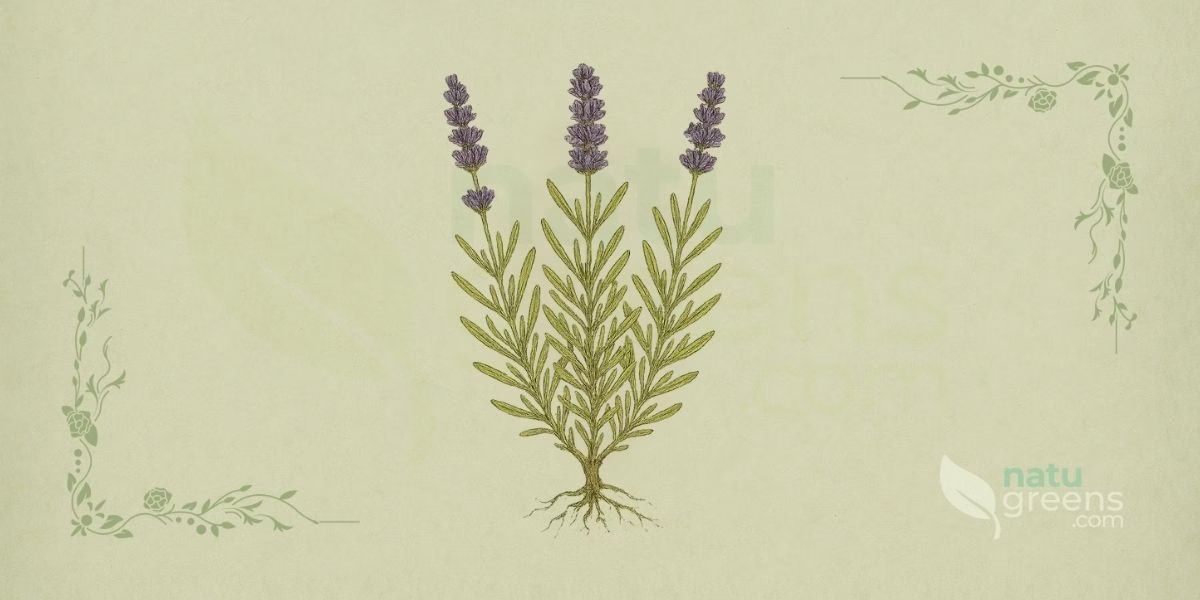
Botanical illustration of Lavandula angustifolia, true lavender, presenting its shrubby habit, linear leaves, and the characteristic violet flower spikes. This 19th-century encyclopedia-style representation highlights the complete habit of the plant, including the root system.
Lavandula angustifolia belongs to the Lamiaceae family, formerly known as Labiatae, the mint family. This is one of the largest and most important families of flowering plants, comprising about 236 genera and more than 7,000 species, many of which are rich in essential oils and widely used as aromatic herbs, spices, and medicinal plants. Notable examples include rosemary, thyme, mint, sage, and basil.
Plants of the Lamiaceae family are typically characterized by square stems, opposite leaves, and bilabiate (two-lipped) flowers. Lavender shares these features, and its medicinal importance derives from the high concentration of volatile terpenes, especially in the essential oil produced in the glandular trichomes of its flowers. The family is recognized for producing compounds such as monoterpenes, sesquiterpenes, flavonoids, and phenolic acids, which account for its therapeutic properties, including anti-inflammatory, antioxidant, and antimicrobial actions.
Parts of Lavender Used
The most used part of Lavandula angustifolia is the flower, or more precisely the flowering tops, from which the essential oil is extracted. However, other parts of the plant are also employed in herbal medicine.
- Essential oil (extracted from the flowering tops)
- Flowers (dried or fresh)
- Leaves (less common, but used in infusions and cooking)
Ethnobotanical and Traditional Uses of Lavender
The use of lavender in traditional medicine is vast and goes back to ancient civilizations. The Romans used it to perfume baths and clothing, and its name is intrinsically linked to practices of hygiene and purification. In medieval Europe, it was used as a strengthening herb and as a folk remedy for headaches, insomnia, and nervousness. Its topical application to small wounds and bites is a well-documented traditional use; for a burn, current first aid is to cool the area with running water rather than apply oil.
- Anxiety, nervousness, and agitation
- Colic and digestive complaints (flatulence, dyspepsia)
- Insect bites and repellent use
- Insomnia and sleep disorders
- Relief of headaches and migraines
- Rheumatism and muscle pain (topical use)
- Stress and mental exhaustion
- Wound healing and antiseptic for minor wounds and burns
Therapeutic Properties of Lavender
Lavandula angustifolia is recognized for a wide range of medicinal properties, attributed to its complex phytochemical composition. These properties make it a valuable plant in phytotherapy and traditional medicine. Its active constituents act on several body systems, delivering benefits that range from pain relief to protection against pathogens. Scientific research continues to explore and confirm the efficacy of these properties.
- Analgesic (relieves pain)
- Antibacterial (fights bacteria); traditional use, without established clinical efficacy
- Antifungal (fights fungi)
- Anti-inflammatory (reduces inflammation)
- Antioxidant (fights free radicals)
- Antiseptic (fights microorganisms); traditional use, without established clinical efficacy
- Antispasmodic (relieves muscle spasms)
- Antiviral (activity seen only in laboratory assays, not confirmed in people)
- Anxiolytic (reduces anxiety); traditional use, without established clinical efficacy
- Carminative (helps expel gas)
- Central nervous system depressant (reduces brain activity)
- Hypnotic (induces sleep)
- Neuroprotective (protects the nervous system); traditional use, without established clinical efficacy
- Sedative (calms and relaxes)
- Wound healing (promotes wound healing)
Detailed Phytochemical Profile of Lavandula angustifolia
The phytochemical profile of Lavandula angustifolia is complex and varies slightly depending on geographic origin, growing conditions, and extraction method. The essential oil, however, is chiefly responsible for its therapeutic properties, dominated by monoterpenes and their esters.
- Coumarins: herniarin, umbelliferone.
- Essential oils
- Flavonoids: apigenin, luteolin.
- Glucosides
- Phenolic acids: caffeic acid, rosmarinic acid.
- Saponins
- Tannins
- Triterpenes
Essential Oil
The two major components of the essential oil are linalool and linalyl acetate, which together typically represent between 60% and 80% of the composition of true lavender essential oil. Linalool is a monoterpene alcohol known for its sedative and anxiolytic properties, while linalyl acetate is an ester that contributes to the soft aroma and has a calming action. The ratio between these two compounds is a quality indicator for true lavender essential oil.
- Caryophyllene
- Caryophyllene oxide
- Cineole (1,8-cineole or eucalyptol)
- Coumarins
- Flavonoids (luteolin, apigenin)
- Lavandulol
- Lavandulyl acetate
- Linalool (25-38%)
- Linalyl acetate (25-45%)
- Terpinen-4-ol
The mechanism of action of linalool and linalyl acetate on the central nervous system is multifaceted. Studies suggest that linalool acts as a positive allosteric modulator of GABA-A receptors, in a manner similar to benzodiazepines, increasing neuronal inhibition and promoting relaxation.
In addition, linalool has been shown to inhibit acetylcholine release and modulate calcium channels, contributing to its sedative and antispasmodic effects. Linalyl acetate, in turn, is rapidly hydrolyzed into linalool in the body, potentiating the action of the monoterpene alcohol. These compounds also exhibit anti-inflammatory action by inhibiting the production of inflammatory mediators such as prostaglandins and cytokines.
Preparation and Administration Forms of Lavender
Lavender can be prepared and administered in many ways, allowing treatment to be adapted to individual needs and the condition being treated. The choice of preparation influences the concentration of active principles and the absorption route, optimizing therapeutic effects. Following preparation guidelines is essential for safety and efficacy.
- Aromatherapy (essential oil inhalation)
- Bath (bath additive with flowers or essential oil)
- Capsules (with essential oil or dry extract)
- Compresses (with concentrated infusion)
- Creams, balms, ointments
- Culinary use
- Essential oil (aromatherapy, massage, diluted topical use)
- Fluid extract
- Infusion (tea)
- Sachets (dried flowers)
- Tincture
Synergy with Other Medicinal Plants
Lavender can be combined with other medicinal plants to enhance its therapeutic effects, creating synergies that address specific conditions more comprehensively. The choice of complementary plants is based on their individual properties and how they interact to produce a superior combined effect. These combinations are frequently used in phytotherapy to optimize results and provide more holistic treatment.
Anxiety and Insomnia
Combining Lavandula angustifolia with valerian (Valeriana officinalis) and passionflower (Passiflora incarnata) is a classic protocol for treating anxiety and insomnia. While lavender’s linalool modulates GABA-A receptors, valerian’s valerenic acids and passionflower’s C-glycosyl flavonoids, such as vitexin, complement the sedative and anxiolytic action, providing a deeper, longer-lasting calming effect. This synergy is particularly useful for individuals who have difficulty falling asleep because of mental agitation.
Skin Care and Wound Healing
In dermatological applications, lavender shows synergy with calendula (Calendula officinalis) and chamomile (Matricaria chamomilla). Lavender’s healing and anti-inflammatory effect is enhanced by calendula’s triterpenes and chamomile’s chamazulene. This combination is used for dermatitis, insect bites, and the care of skin that has already healed.
Digestive Disorders
For digestive complaints, lavender can be paired with peppermint (Mentha × piperita) and lemon balm (Melissa officinalis). This combination is effective for relieving cramps, flatulence, and indigestion. Lavender’s carminative and antispasmodic properties, together with the digestive effects of peppermint and lemon balm, provide significant relief of gastrointestinal discomfort, promoting healthy digestion.
Headaches and Migraines
For the relief of tension headaches, lavender can be combined with peppermint (Mentha × piperita) and marjoram (Origanum majorana). Lavender essential oil, applied topically to the temples and neck, acts as a muscle relaxant and analgesic. Peppermint’s menthol provides a refreshing, vasoconstrictive effect, while marjoram contributes analgesic and antispasmodic properties, relieving the muscle tension that frequently accompanies headaches.
Skin Inflammation
For skin inflammation, lavender can be used in synergy with calendula (Calendula officinalis) and St. John’s wort (Hypericum perforatum). This combination is used for insect bites and other skin irritations. Lavender’s anti-inflammatory and healing properties are complemented by calendula’s regenerating effects and St. John’s wort’s anti-inflammatory actions, speeding up skin recovery and reducing irritation. St. John’s wort is photosensitizing: skin treated with St. John’s wort preparations should not be exposed to the sun in the hours that follow. Dressing a surgical wound is the responsibility of the team that performed the surgery.
Recipes and Usage Protocols
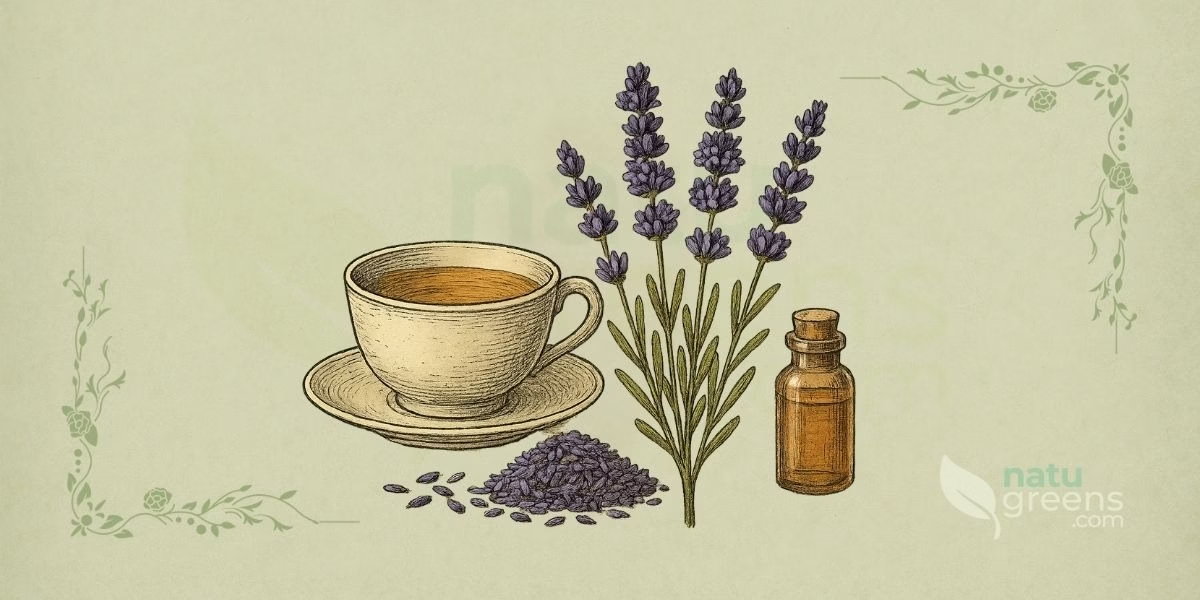
Illustrative composition of the most common forms of lavender use, including tea prepared from the dried flowers, the essential oil in a bottle, and a pile of dried flowers ready for infusion or sachets. This image demonstrates the versatility of Lavandula angustifolia in traditional and modern medicine.
Lavender can be incorporated into a variety of wellness and treatment protocols, from aromatherapy to controlled ingestion.
Relaxing Bath with Lavender Flowers
Ingredients: 100 g of dried Lavandula angustifolia flowers, 1 liter of boiling water, 1 cup of Epsom salt.
Preparation: Prepare a concentrated infusion with the flowers and the water, letting it rest for 15 minutes. Strain and add the liquid to the bath along with the Epsom salt. The water temperature should be 35°C to 38°C (95-100°F). Stay in the bath for 15 to 20 minutes. This protocol is recommended for the relief of mental stress and exhaustion and to induce relaxation before sleep, in line with the traditional use recognized by the EMA.
Capsules for Chronic Stress
Protocol: Ingestion of capsules containing 80 mg of lavender essential oil (standardized preparation), once a day. This protocol follows the dose studied in clinical trials with specific preparations such as Silexan, whose results in anxiety and chronic stress are still preliminary. The EMA monograph recognizes lavender only for mild symptoms of mental stress and as a sleep aid, and persistent anxiety needs professional assessment. The daily dose recommended by the EMA for oral use is 20 to 80 mg of essential oil.
Calming Infusion
To prepare a calming infusion, use 1 teaspoon of dried lavender flowers per 200 ml of boiling water. Steep for 5 to 10 minutes, strain, and drink. Up to 3 cups a day are recommended, one of them before bed to promote relaxation and improve sleep quality. This infusion is ideal for relieving anxiety and nervous tension, providing a sense of tranquility.
Inhalation for Acute Anxiety
Ingredients: 3 to 5 drops of Lavandula angustifolia essential oil (therapeutic grade).
Preparation: Apply the drops to a room diffuser, a tissue, or directly to the palms of the hands, inhaling deeply for 5 minutes. This method is traditionally used to ease mild nervous tension and moments of stress. Intense episodes with chest pain, shortness of breath, palpitations, or tingling need immediate medical evaluation, because the symptoms can be confused with cardiac and respiratory emergencies, and panic disorder follow-up is handled by a mental health professional. Linalool is quickly absorbed through the nasal and pulmonary mucosa, acting directly on the limbic system and promoting an immediate anxiolytic effect.
Infusion for Digestive Complaints
Ingredients: 1 teaspoon (about 2 g) of dried Lavandula angustifolia flowers, 200 ml of boiling water.
Preparation: Place the flowers in a cup and add the water. Cover and steep for 5 to 10 minutes. Strain and drink after meals to promote digestion and relieve flatulence and cramps. Lavender’s carminative and antispasmodic action benefits the gastrointestinal tract.
Massage Oil for Muscle Pain
Ingredients: 10 drops of Lavandula angustifolia essential oil, 30 ml of sweet almond or jojoba oil.
Preparation: Mix the essential oil into the carrier oil. Apply to areas affected by muscle pain, tension, or rheumatism, massaging gently. A concentration of 1% to 3% is safe for topical use in adults. The anti-inflammatory and analgesic effect of linalool and linalyl acetate helps reduce local pain and inflammation.
Purifying Facial Steam
For a purifying facial steam, place 3 tablespoons of dried lavender flowers in 1 liter of boiling water. Lean your face over the bowl at a safe distance and cover your head with a towel to trap the steam. Stay for 10 to 15 minutes, breathing deeply. This method helps cleanse the pores, relieve nasal congestion, and reduce skin inflammation, leaving a feeling of freshness and well-being.
Associated Therapies
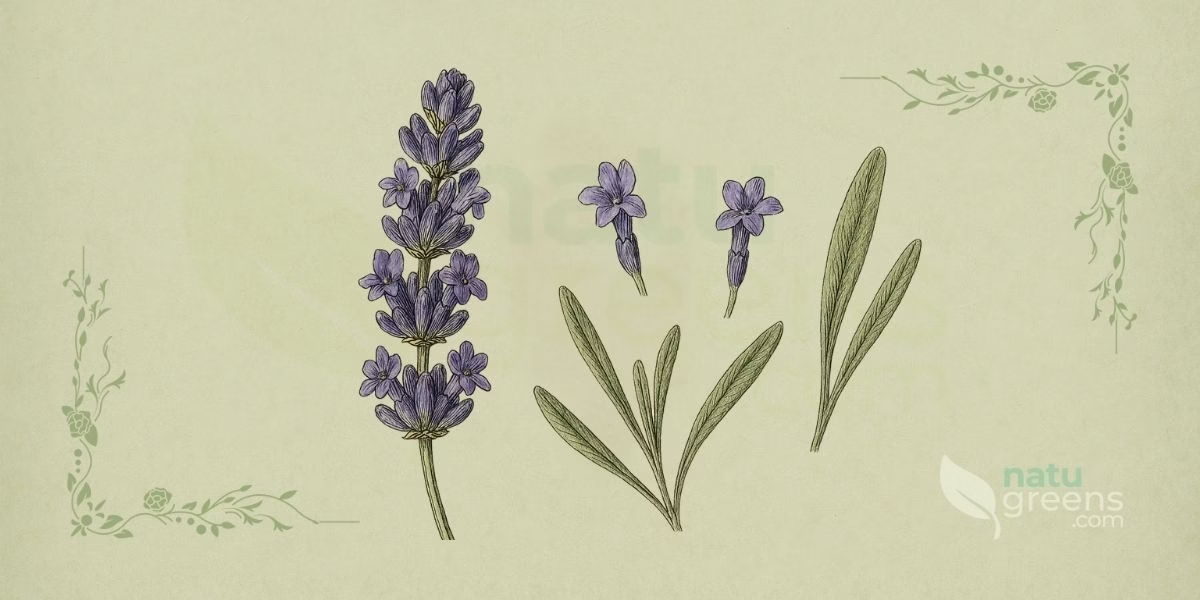
Close-up detail of the inflorescence and leaves of Lavandula angustifolia. The illustration emphasizes the structure of the small flowers, which are the main source of the essential oils used in phytotherapy and aromatherapy, and the narrow, elongated shape of the leaves.
Lavender is a versatile plant that integrates well with various complementary therapies, expanding its potential for healing and well-being. Its use alongside other therapeutic approaches can provide additional benefits, addressing physical, mental, and emotional aspects of health.
Clinical Aromatherapy
Lavandula angustifolia is the queen of aromatherapy, its essential oil being the most studied and most used. In clinical aromatherapy, it is employed to modulate mood, reduce pain perception, and improve sleep quality. Inhalation of the essential oil has proven effective in hospital settings for reducing preoperative anxiety and stress in intensive care patients. The mechanism of action via inhalation involves the rapid passage of monoterpenes into the bloodstream and central nervous system through the olfactory and pulmonary epithelium.
Clinical Phytotherapy
In clinical phytotherapy, lavender is used in standardized extracts, capsules, and tablets to treat gastrointestinal disorders and anxiety. Extracts are formulated to guarantee consistent dosing of active principles such as linalool and linalyl acetate. Clinical phytotherapy integrates lavender into individualized treatment plans, considering the patient’s condition and possible interactions with other medications, ensuring a safe and effective approach.
Homeopathy
Although chamomile (Chamomilla) is better known in homeopathy for irritability and hypersensitivity, lavender also has its place in this practice. In homeopathy, lavender can be used for conditions related to the nervous system, such as insomnia, anxiety, and agitation. The homeopathic remedy is prepared from the fresh plant, following the principles of dilution and dynamization, aiming to stimulate the body’s self-healing capacity and restore balance and well-being.
Psychotherapy and Mindfulness
Lavender is frequently integrated into psychotherapy and mindfulness protocols as a sensory aid. Its aroma is used as an olfactory anchor to induce a state of deep relaxation during meditation or cognitive-behavioral therapy sessions. Associating the aroma with a state of calm helps reinforce the neural pathways of relaxation, making lavender a valuable tool in stress and anxiety management.
Contraindications and Side Effects
Although lavender is generally considered safe for most people, there are some contraindications and potential side effects to consider. Consulting a health professional is always recommended before starting any treatment with medicinal plants, especially with pre-existing conditions or other medications.
General Contraindications
Lavender is contraindicated for individuals with a known allergy to plants of the Lamiaceae family. Internal use is not recommended during pregnancy and breastfeeding because there are no safety studies in these populations, not because any uterine effect has been demonstrated; this applies to any oral dose. Oral use of lavender essential oil is not recommended under the age of 12, for lack of safety data. In infants and small children, essential oils should not be applied to the face, the chest, or near the airways, because of the risk of laryngeal spasm, and the use of a diffuser or a bath at that age should be discussed with a paediatrician. Anyone taking medication that acts on the central nervous system should talk to a doctor before starting lavender, since the sedative effects add up.
Common Side Effects
Side effects of lavender are rare and usually mild. In some people, lavender infusions can cause nausea, vomiting, or allergic skin reactions such as contact dermatitis. Topical application of lavender essential oil without proper dilution can cause skin irritation and sensitization. It is important to do a sensitivity test on a small area of skin before applying the oil to larger surfaces.
Drug Interactions
The interaction that matters with lavender is the additive effect with central nervous system depressants: sedatives, anxiolytics, hypnotics, sedating antihistamines, and alcohol, a combination that increases drowsiness. Tell your doctor about lavender use if you are being treated with any medication that acts on the nervous system.
Recommended Dosages
Dosages vary with the form of administration and the therapeutic indication. Recommendations are based on official monographs and clinical studies.
Oral Use (Essential Oil in Capsules)
For the relief of anxiety and mental stress, the recommended daily dose for adolescents (from 12 years), adults, and the elderly is 20 to 80 mg of essential oil, taken once a day. This dosage is the most studied in randomized clinical trials.
Topical Use (Essential Oil)
For massage or localized application, the recommended dilution is 1% to 3% (2 to 6 drops of essential oil per 10 ml of carrier oil). For a burn, the first step is to cool the area with room-temperature running water for about 20 minutes and never apply oil, butter, or paste to the wound. Lavender preparations should only be used once the skin is intact and healed, always diluted. Burns with blistering, that are extensive, or on the face, hands, or joints require medical care.
Bath Use
As a bath additive, use 1 to 3 g of essential oil or about 100 g of dried flowers per full bath, once a day. The two quantities are not interchangeable: the first is for the oil, the second for the flower. The bath should last 10 to 20 minutes, with water between 35°C and 38°C.
Infusion (Tea)
To aid sleep and relieve stress, the infusion can be prepared with 1 to 2 teaspoons (about 2 to 4 g) of dried flowers per 200 ml of boiling water, steeped for 5 to 10 minutes. Drink 1 to 4 cups a day.
Cultivation and Harvesting of Lavender
Lavandula angustifolia is a hardy, easy-to-grow plant that prefers temperate, sunny climates typical of the Mediterranean region. It thrives in poor, dry, well-drained soils and is sensitive to excess moisture and waterlogging.
Growing Conditions
Lavender requires full sun (a minimum of 6 hours of direct sunlight per day). The ideal soil is light, sandy, or stony, with a neutral to slightly alkaline pH (6.5 to 7.5). Drainage is crucial; in clay soils, adding sand or gravel is essential to prevent root rot. Watering should be moderate, especially once the plant is established, since lavender is drought-tolerant.
Propagation and Maintenance
Propagation is most often done by semi-hardwood cuttings in spring or autumn, ensuring genetic fidelity of the variety. Sowing is possible, but germination can be slow and the chemical profile of the resulting plant can vary. Pruning is fundamental and should be done after flowering to keep the shrub compact and stimulate new flower production the following year. Avoid cutting into old wood, as the plant may not regenerate.
Harvesting and Drying
Flowers for essential oil extraction or drying should be harvested at the peak of flowering, usually in early summer, when the flowers are fully open but before the petals begin to fall. The ideal time is in the morning, after the dew has dried, when essential oil concentration is highest. Flower stems are cut, bundled, and hung upside down in a cool, dry, well-ventilated place away from direct sunlight to dry. Slow, shaded drying preserves the color and the essential oil content.
Scientific Research and Clinical Studies
Lavandula angustifolia is one of the most studied medicinal plants, with a growing body of evidence supporting its traditional uses, especially in the field of mental health and sleep.
Anxiolytic and Antidepressant Effects
Numerous randomized controlled clinical trials have demonstrated the efficacy of lavender essential oil (administered orally in capsules) in the treatment of anxiety disorders. A 2010 trial published in Phytomedicine compared the standardized oral preparation Silexan with lorazepam over six weeks in 77 participants and found a similar reduction in anxiety scores, with no placebo arm and no statistical power to conclude equivalence. The result is promising and insufficient: generalized anxiety disorder is a diagnosis that requires professional follow-up, and the EMA monograph recognizes lavender only for mild symptoms of mental stress and as a sleep aid. Other meta-analyses and systematic reviews confirm lavender’s anxiolytic effect, suggesting that its efficacy is mediated by modulation of voltage-gated calcium channels and interaction with GABA-A receptors.
Improvement of Sleep Quality
Lavender is widely used to improve sleep quality and treat insomnia. Aromatherapy studies, such as one published in the Journal of Alternative and Complementary Medicine in 2015, demonstrated that inhaling lavender essential oil significantly improved sleep quality in college students and in patients with ischemic heart disease. The hypnotic and sedative effect is attributed to linalool, which has been shown to reduce sleep latency and increase slow-wave sleep duration.
Anti-Inflammatory and Analgesic Activity
In vitro and in vivo research supports lavender’s anti-inflammatory and analgesic properties. Linalool and linalyl acetate have been shown to inhibit the production of inflammatory mediators, such as nitric oxide and prostaglandins, in macrophages. A 2020 study published in the Journal of Ethnopharmacology investigated the effect of lavender oil and its main components (linalool and linalyl acetate) on postoperative pain, concluding that inhalation of the essential oil significantly reduced the need for analgesics in patients undergoing cardiac surgery.
Official Monographs
The European Medicines Agency (EMA) has published monographs for the essential oil (Lavandulae aetheroleum) and the flower (Lavandulae flos) of Lavandula angustifolia. The essential oil monograph recognizes its traditional use for the relief of mild symptoms of mental stress and exhaustion and to aid sleep. The World Health Organization lists lavender flower in its monographs among the uses described in pharmacopoeias and in traditional medicine for restlessness, insomnia, and nervous dyspepsia, a category the WHO itself keeps separate from uses supported by clinical data.
Interesting Facts about Lavender
Lavender and the Perfume Industry
The Provence region of France is world-famous for its lavender fields and is the center of production of fine or true lavender. The essential oil of Lavandula angustifolia is one of the most valuable ingredients in fine perfumery, distinguished from lavandin oil (Lavandula × intermedia), a more productive hybrid with an inferior chemical and aromatic profile.
Lavender and the Endocrine System
Case series of prepubertal gynecomastia linked to products containing lavender oil, together with in vitro assays pointing to estrogenic and antiandrogenic activity in several of its components, keep the question open. No agency has declared the matter settled. As a precaution, continued use of products containing lavender essential oil in prepubertal children should be discussed with a paediatrician.
Popular Names That Belong to Another Species
In Spanish, espliego, and in Italian, spigo, usually refer to Lavandula latifolia, spike lavender, whose chemical profile is quite different and rich in camphor and cineole.
Culinary Use of Lavender
Lavender flowers are used in cooking, especially in Mediterranean cuisine, and are a component of the famous French seasoning herbes de Provence. The dried flowers can be used to flavor sugars, cookies, ice creams, and even savory dishes, adding a floral, slightly peppery flavor.
Frequently Asked Questions about Lavender
What Is Lavandula Angustifolia?
Lavandula angustifolia, known as lavender or true lavender, is a perennial plant of the Lamiaceae family. It is famous for its aromatic flowers and its extensive medicinal properties, being one of the most valued and most studied lavender species. It is widely used in phytotherapy, aromatherapy, and cooking, thanks to its bioactive compounds.
What Are the Main Benefits of Lavender?
Lavender is widely used for its calming, anxiolytic, anti-inflammatory, and antiseptic properties. It is effective in relieving anxiety, insomnia, muscle pain, and inflammation. It also promotes relaxation, improves mood, and supports the healing of small wounds and insect bites, making it a versatile natural remedy.
How Do I Use Lavender Essential Oil?
Lavender essential oil can be used in several ways. In aromatherapy, it can be diffused into the environment to promote relaxation and sleep. For topical use, it should be diluted in a carrier oil (such as sweet almond or jojoba) and applied in massage to relieve pain or inflammation. It should never be applied pure to the skin over large areas or ingested without professional guidance.
Can Lavender Essential Oil Be Applied Directly to the Skin?
Lavandula angustifolia essential oil is one of the few essential oils that can be applied neat to small areas of skin (such as insect bites), thanks to its low irritation potential; it should not be applied to burns, even minor ones, since the oily vehicle traps heat in the tissue and can worsen the injury. However, for massage or use on larger areas, dilution in a carrier oil (1% to 3%) is always recommended to avoid skin sensitization.
Can Lavender Be Used in Cooking?
Yes, lavender flowers are used in cooking, especially in the French blend herbes de Provence. They can flavor desserts, drinks, meats, and sauces, adding a floral, slightly sweet taste. It is important to use culinary lavender, grown without pesticides and safe for human consumption.
Does Lavender Cause Drowsiness?
Yes, Lavandula angustifolia has sedative and anxiolytic properties, mainly due to linalool. Its use, especially at therapeutic doses (such as essential oil capsules) or in concentrated inhalation, can induce drowsiness and is frequently used to improve sleep quality. Caution is advised when operating machinery or driving after use.
What Is the Difference Between Lavender and Lavandin?
Lavender (Lavandula angustifolia) is the true species, with a more balanced, softer chemical profile, ideal for therapeutic purposes. Lavandin (Lavandula × intermedia) is a sterile hybrid between L. angustifolia and L. latifolia (spike lavender). Lavandin oil is more abundant and cheaper but contains more camphor, making it more stimulating and less suited to relaxation and sleep.
Is Lavender Safe for Children?
Topical use and inhalation of lavender essential oil are generally considered safe for children, at appropriate dilutions. However, oral use of the essential oil is not recommended for children under 12 because of the lack of safety data. Use in baths and diffusers is common for calming children and aiding sleep.
Does Lavender Interact with Antidepressants?
Because of its anxiolytic and sedative effects, lavender can potentiate the action of medications acting on the central nervous system, including antidepressants and anxiolytics. Individuals on medication should consult a health professional before starting therapeutic use of lavender.
Are There Contraindications for Lavender?
Yes. Lavender is contraindicated for people allergic to Lamiaceae plants. Internal use is not recommended during pregnancy and breastfeeding, at any oral dose, because safety data are lacking. Oral use of the essential oil is not recommended under the age of 12, and in infants and small children essential oils should not be applied to the face, the chest, or near the airways, because of the risk of laryngeal spasm. Anyone taking sedatives, anxiolytics, hypnotics, or sedating antihistamines should be cautious, since lavender adds to the depressant effect on the nervous system.
Notice: this content is for informational purposes and does not replace professional medical advice. Consult a physician or herbal practitioner before using medicinal plants, especially during pregnancy, breastfeeding, or alongside medication.
References and Scientific Studies
View All 10 Cited References
Peer-Reviewed Scientific Studies (8)
- PMC2010 Woelk, H., & Schläfke, S. (2010). A multi-center, double-blind, randomised study of the Lavender oil preparation Silexan in comparison to Lorazepam for generalized anxiety disorder. Phytomedicine.
- PMC2015 Lillehei, A. S., et al. (2015). Effect of Inhaled Lavender and Sleep Hygiene on Self-Reported Sleep Issues: A Randomized Controlled Trial. Journal of Alternative and Complementary Medicine.
- PMC2020 Rai, V. K., et al. (2020). Anti-psoriatic effect of Lavandula angustifolia essential oil and its major components linalool and linalyl acetate. Journal of Ethnopharmacology.
- PMC2017 López, V., et al. (2017). Exploring Pharmacological Mechanisms of Lavender (Lavandula angustifolia) Essential Oil on Central Nervous System Targets. Frontiers in Pharmacology.
- PMC2002 Cavanagh, H. M. A., & Wilkinson, J. M. (2002). Biological activities of lavender essential oil. Phytotherapy Research.
- PMC2022 Mijatović, S., et al. (2022). Antifungal Activity of Lavandula angustifolia Essential Oil against Candida albicans: Time-Kill Study on Pediatric Sputum Isolates. Molecules.
- PMC2013 Koulivand, P. H., et al. (2013). Lavender and the Nervous System. Evidence-Based Complementary and Alternative Medicine.
- PMC2013 Schuwald, A. M., et al. (2013). Lavender oil-potent anxiolytic properties via modulating voltage dependent calcium channels. PLoS One.
Institutional Sources (1)
- GOV2007 World Health Organization (WHO). (2007). WHO monographs on selected medicinal plants, Volume 3.
Supplementary Readings (1)
- 2012 European Medicines Agency (EMA). (2012). Final Community herbal monograph on Lavandula angustifolia Miller, aetheroleum. EMA/HMPC/143181/2010.