Nepeta cataria L. / Catnip, also known popularly as catmint, catswort, or catwort, is a perennial herbaceous plant in the Lamiaceae family, first described by Carl Linnaeus in 1753. Native to southern and eastern Europe, the northern Middle East, and Central Asia, this species has spread across many continents thanks to its well-known therapeutic properties and its peculiar effect on cats. Catnip has long been used in traditional medicine for a range of ailments, from digestive disorders to nervous conditions, and is valued for its calming and antispasmodic effects. The plant has square stems, grayish leaves, and small whitish to pink flowers arranged in spikes, giving off a characteristic scent that draws in many cats.
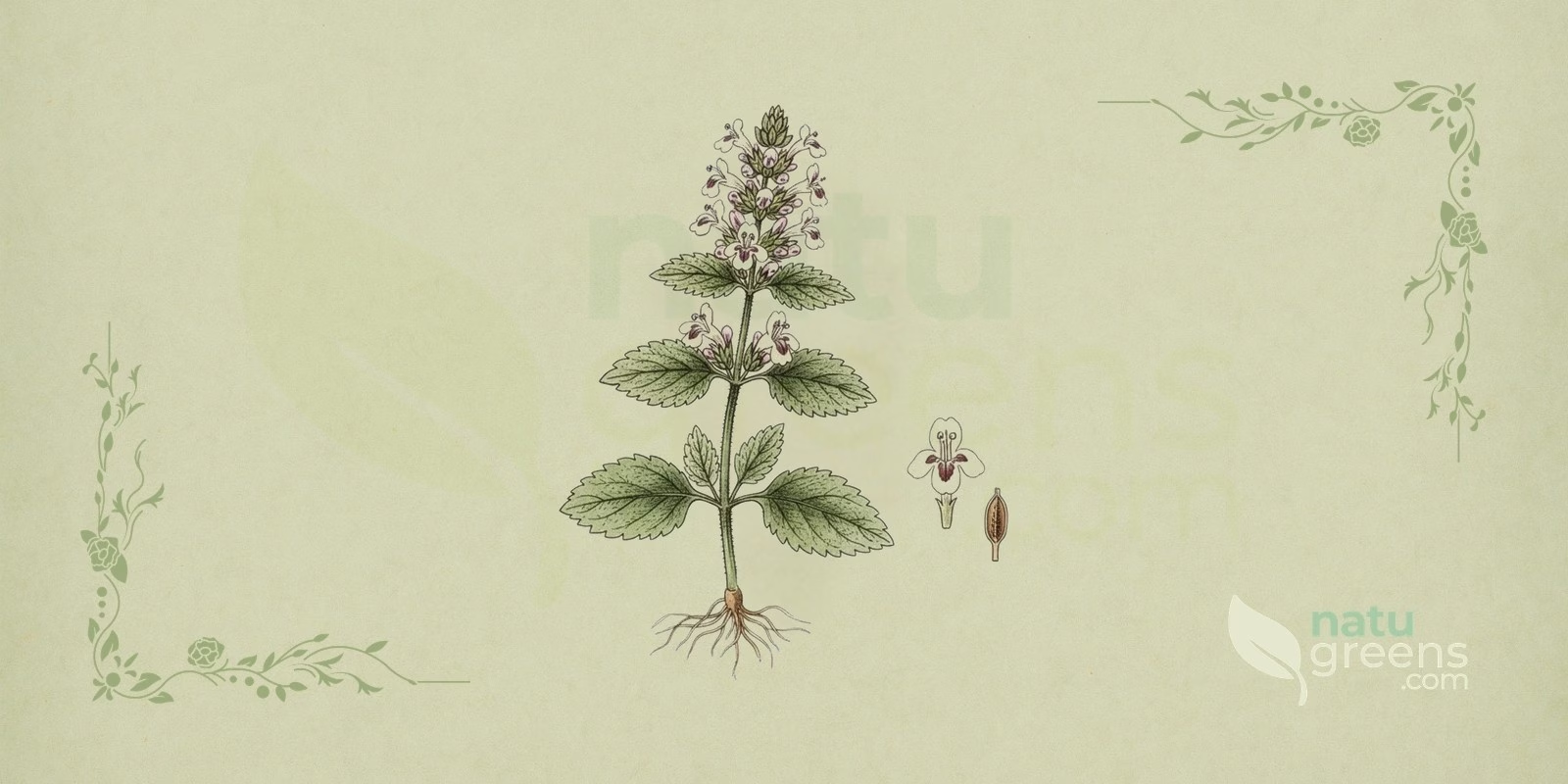
The phytochemical composition of Nepeta cataria is rich, with nepetalactone standing out as the iridoid responsible for its effect on cats and for its insect-repellent properties. In humans, however, catnip is prized for its sedative and relaxing qualities and is frequently consumed as an herbal tea to ease anxiety, promote sleep, and support digestion. Modern scientific research has been validating many of the plant’s traditional uses, reinforcing its importance in herbal medicine. The versatility of catnip also extends to cultivation, since it is a drought-tolerant plant that adapts easily to different soil types, as long as drainage is adequate.
Popular and International Names of Catnip
- English: catmint, catnip, catswort, catwort.
- Spanish: cataria, gataria, hierba gatera, menta de gato.
- Portuguese: catnip (BR), erva-dos-gatos, erva-gateira, catária (PT).
- French: cataire, herbe aux chats, menthe aux chats.
- Italian: erba gatta, menta dei gatti.
- German: Echte Katzenminze, Katzenminze.
Botanical Synonyms of Nepeta cataria
Nepeta cataria L. has several botanical synonyms that have been used throughout the history of plant taxonomy. These include Cataria vulgaris, Glechoma cataria, and Nepeta vulgaris. Although Nepeta cataria is the name accepted by most botanical authorities, understanding these synonyms is essential for research and accurate identification of the species across different historical and scientific contexts, since the variation in nomenclature reflects the evolution of botanical knowledge and the different taxonomic approaches used over time, ensuring the correct classification of this medicinal plant.
Botanical Family: Lamiaceae
Nepeta cataria belongs to the Lamiaceae family, widely known as the mint family, one of the largest and most important families of flowering plants, characterized by square stems, opposite leaves, and bilabiate flowers that are often aromatic. Lamiaceae includes many species of great medicinal, culinary, and ornamental value, such as mint, rosemary, thyme, and lavender, and the presence of essential oils rich in volatile compounds is a distinctive feature of this family, giving its members their therapeutic and aromatic properties.
The Lamiaceae family is known for its phytochemical diversity, producing a wide range of secondary metabolites, including terpenes, flavonoids, and phenolic acids, compounds responsible for the anti-inflammatory, antimicrobial, antioxidant, and sedative actions observed in many of its species. Catnip, as a member of this family, shares these characteristics, standing as a notable example of the botanical and pharmacological richness that Lamiaceae offers to traditional and modern medicine, with applications ranging from easing digestive disorders to supporting emotional well-being.
Parts of Catnip Used
- Flowering tops
- Flowers
- Leaves
Ethnobotanical and Traditional Uses
- Anxiety and nervousness
- Asthma and bronchial congestion
- Digestive disorders and indigestion
- Fevers
- Hives
- Insomnia and sleep disorders
- Nervous conditions
- Relief of stomach cramps and flatulence
- Restlessness
Therapeutic Properties of Catnip
- Anti-inflammatory (effect studied for reducing inflammation)
- Antiasthmatic (traditional use to relieve asthma symptoms)
- Antidepressant (traditional use associated with mood improvement)
- Antidiabetic (effect studied on blood sugar control)
- Antimicrobial (activity studied against microorganisms)
- Antinociceptive (traditional use for pain relief)
- Antiseptic (studied for infection prevention)
- Antispasmodic (traditional use to relieve spasms and cramps)
- Antitussive (traditional use to relieve coughing)
- Appetite stimulant (effect studied on appetite)
- Calming (effect studied on relaxation)
- Carminative (helps expel gas)
- Diaphoretic (induces sweating)
- Diuretic (effect studied on fluid elimination)
- Emmenagogue (effect studied on menstrual flow)
- Expectorant (helps expel mucus)
- Hepatoprotective (protective effect studied on the liver)
- Sedative (induces sleep and relaxation)
Detailed Phytochemical Profile of Catnip
- Coumarin
- Essential oils (beta-citronellol, geraniol, neral, nerol)
- Eucalyptol
- Flavonoids
- Iridoids (nepetalactone, nepetalactol)
- Nepetalactone
- Phenolic acids
- Polyphenols
Preparation and Administration Forms of Catnip
- Essential oil
- Fluid extract
- Herbal tea (infusion)
- Juice
- Poultice
- Dry extract
- Tincture
Synergy with Other Medicinal Plants
For Anxiety and Nervousness
Catnip can be combined with other plants that have anxiolytic and sedative properties to enhance its effects. Pairing it with milky oats (Avena sativa), lemon balm (Melissa officinalis), skullcap (Scutellaria lateriflora), passionflower (Passiflora incarnata), or blue vervain (Verbena hastata) can make up a nerve tonic traditionally used to promote relaxation, reduce tension, and support sleep quality, offering a complementary approach to managing stress and anxiety.
For Insomnia
For sleep disorders, catnip can be an excellent complement to other herbs traditionally associated with sedative effects. Combining it with chamomile (Matricaria chamomilla) and lavender (Lavandula angustifolia) in infusions can intensify relaxation and support deeper, more restorative sleep, since the synergy between the active compounds of these plants helps calm the nervous system, easing the mental and physical agitation that can otherwise interfere with falling asleep.
For Cats (Alternative/Complementary Effect)
Although the main focus here is human use, it is worth noting that for cats that do not respond to catnip, or to enhance the effect, valerian (Valeriana officinalis) and silver vine (Actinidia polygama) are known alternatives or complements. These plants contain compounds that can also trigger behavioral reactions in cats, providing an experience similar to that of catnip, useful for environmental enrichment and animal well-being.
Recipes and Usage Protocols of Catnip
Traditional Calming and Digestive Infusion
Ingredients: 1 to 2 teaspoons of dried catnip leaves and flowers, 200 to 250 ml of boiling water.
Preparation: Place the catnip in a container and add the boiling water. Cover and let steep for 5 to 10 minutes. Strain and drink. It can be sweetened with honey or paired with a slice of lemon to enhance the flavor. This infusion is traditionally used to support relaxation before bedtime and to aid digestion after meals. A recommended amount is 1 cup, 1 to 3 times a day, as needed.
Catnip Tincture
Ingredients: Dried or fresh catnip, grain alcohol (vodka, gin, brandy) at 40-60%.
Preparation: Fill a glass jar with dried catnip (about 1/3 of the jar) or fresh catnip (up to the top, without packing it down). Cover completely with the alcohol. Seal tightly and let macerate for 4 to 6 weeks in a cool, dark place, shaking daily. After the maceration period, strain the tincture through a fine cloth and store it in a dark glass bottle. The tincture concentrates the plant’s active compounds, making it a potent form of administration.
Dosage: For adults, a suggested amount is 1 to 5 ml (20 to 100 drops) of the tincture, 1 to 3 times a day, diluted in a little water. For children, there is no fixed recommended dose: use should occur only under the guidance and supervision of a healthcare professional, who will assess suitability and adjust the amount according to age, weight, and clinical condition. Fresh tincture is traditionally associated with a more pronounced gastrointestinal antispasmodic effect, while the dried herb may lose part of this property.
The preparations above follow traditional records and do not replace professional guidance. Before any internal use, check the contraindications and interactions described in this article.
Associated Therapies
Aromatherapy
Catnip essential oil, rich in nepetalactone, is valued in aromatherapy for its calming and relaxing effects. Inhaling the oil, through diffusers or vaporizers, can help relieve stress, reduce anxiety, and promote a sense of calm. When diluted in a carrier oil, it can be used in massage to ease muscle tension and promote overall well-being, and nepetalactone also gives it insect-repellent properties, making it useful in natural formulations for personal and environmental protection.
Clinical Herbal Medicine
In contemporary clinical herbal medicine, catnip is used in various formulations, including standardized extracts, capsules, and tablets, applied in the traditional management of conditions such as mild to moderate anxiety and functional gastrointestinal disorders, in addition to serving as a sleep aid. Standardization of extracts ensures the concentration of active compounds, such as nepetalactone, contributing to consistency of effect, but prescribing and dosage should be individualized, taking into account the patient’s profile and possible interactions with other medications, always under the guidance of a qualified healthcare professional.
Homeopathy
Although Chamomilla (Matricaria chamomilla) is the best-known homeopathic remedy for irritability and hypersensitivity to pain, catnip (Nepeta cataria) may be considered in similar contexts, especially for states of agitation and discomfort in children. The homeopathic principle of “similia similibus curantur” (like cures like) suggests that the plant, which causes excitement in cats, may have a calming effect on humans when prepared homeopathically, and it is often used for infant colic, insomnia associated with irritability, and acute pains, with the choice of potency and dosage determined by a homeopath.
Contraindications and Side Effects of Catnip
General Contraindications
Catnip is contraindicated for individuals with known hypersensitivity or allergy to plants in the Lamiaceae family, to which it belongs, since allergic reactions can appear as contact dermatitis, hives, or, in more severe cases, anaphylaxis. Pregnant women should avoid consuming catnip in high therapeutic doses because of its potential emmenagogue effect, which may stimulate uterine contractions; although mild infusions may be considered safe, caution and medical consultation are advised before any use during pregnancy. Breastfeeding women should also consult a healthcare professional before consuming the plant, since there is insufficient safety data on its passage into breast milk. Catnip should not be given to children under 6 months without medical supervision, and there is a theoretical risk of contamination by Clostridium botulinum spores in honey-based preparations for infants.
Drug Interactions and Precautions
Individuals taking anticoagulant medications, such as warfarin, should be cautious when consuming catnip, since the coumarins present in the plant may enhance anticoagulant effects, increasing the risk of bleeding. Combining catnip with benzodiazepines, antidepressants, or other sedatives may intensify the depressant effects on the central nervous system, resulting in excessive drowsiness and sedation. Diabetic patients or those using hypoglycemic medications should carefully monitor their glucose levels, since catnip may have mild hypoglycemic effects. It is essential to consult a healthcare professional before starting to use catnip, especially if taking other medications or living with preexisting health conditions.
Common Side Effects
Side effects of catnip are generally rare and mild in nature. In some people, consuming infusions may cause nausea, vomiting, or gastrointestinal discomfort, and topical application of catnip preparations may occasionally cause contact dermatitis in sensitive individuals. The essential oil, if applied directly to the skin without proper dilution, can cause irritation and skin sensitization. It is important to observe individual response and discontinue use if adverse reactions occur.
Historical Notes and Interesting Facts
The Feline Fascination
Catnip is world-famous for its peculiar effect on felines, including domestic cats and big cats such as leopards, cougars, and lynxes. About two-thirds of cats are intensely attracted to the plant because of nepetalactone, an iridoid present in its essential oil that acts as a pheromone, triggering playful behavior, euphoria, rolling on the ground, rubbing, and licking the plant. Interestingly, about a third of cats are unaffected by catnip, a trait believed to be hereditary, and kittens under six months of age may also fail to show this behavioral response.
Natural Insect Repellent
Besides its effect on cats, the nepetalactone in catnip is a powerful natural insect repellent. Studies have shown its activity against mosquitoes, cockroaches, termites, aphids, and squash bugs, and catnip essential oil has been investigated as a natural alternative to synthetic repellents such as DEET, showing promise in some applications. This property makes the plant valuable not only for animal well-being but also for protecting people against disease-carrying insects, highlighting its versatility and ecological importance.
Nomenclature and History
The scientific name Nepeta cataria was assigned by Carl Linnaeus in 1753. The term “cataria” comes from the medieval Latin “herba catti” or “herba cattaria,” meaning “cats’ herb,” reflecting its long association with these animals. In medieval England, it was known by several names, including “cat-wort” and “nep.” Catnip has a rich history of use in traditional medicine, having been consumed as tea, juice, tincture, or poultice for a variety of ailments, although its medicinal use has declined with the advance of modern medicine.
Frequently Asked Questions about Catnip
Is Catnip Safe for Humans?
Yes, catnip is generally considered safe for human consumption in appropriate doses, especially as tea or infusion, and it has been used in traditional medicine for centuries to relieve a variety of ailments, such as anxiety, insomnia, and digestive problems. However, as with any medicinal plant, it is important to respect recommended dosages and be aware of possible contraindications and drug interactions, especially for sensitive groups such as pregnant women, breastfeeding women, and people with preexisting health conditions.
What Are the Benefits of Catnip Tea?
Catnip tea is traditionally used for its calming and relaxing effects, helping to relieve anxiety, nervousness, and insomnia. It also has antispasmodic properties, which can help relieve stomach cramps, flatulence, and indigestion, and it acts as a diaphoretic (induces sweating) and emmenagogue (stimulates menstrual flow), making it useful for fevers and for regulating the menstrual cycle. Its traditional uses also extend to relieving coughs and bronchial congestion.
Does Catnip Cause Hallucinations in Humans?
No, catnip does not cause hallucinations in humans. Although it is known to induce a state of euphoria and playful behavior in cats because of nepetalactone, its effects in humans are sedative and relaxing in nature, and there is no scientific evidence to suggest that consuming catnip in traditional doses causes hallucinogenic or psychotropic effects in people. Its effects are more comparable to those of other calming herbs, such as chamomile or valerian.
How Does Catnip Affect Cats?
Catnip affects cats in a unique way because of nepetalactone, a compound that binds to olfactory receptors in felines. This interaction triggers a series of behaviors, such as rolling, rubbing, licking, chewing, meowing, and jumping, which generally last between 5 and 15 minutes. These effects are playful and euphoric for most cats, but about a third of them are not genetically susceptible to this response, and very young kittens, under six months old, may also not react to the plant.
Can I Grow Catnip at Home?
Yes, catnip is an easy-to-grow plant and can be cultivated at home, both in gardens and in pots. It is a perennial that prefers full sun and well-drained soil, although it is fairly tolerant of different soil types, drought-resistant, and, once established, requires little maintenance. Growing it at home gives access to fresh leaves and flowers for preparing teas and other formulations, and it also makes an interesting addition to the garden, attracting butterflies and, of course, the neighborhood cats.
Are There Side Effects or Contraindications for Catnip?
Yes, although generally safe, catnip has some contraindications and can cause side effects. It is contraindicated for people allergic to plants in the Lamiaceae family, and pregnant women should avoid high doses due to its potential emmenagogue effect. It can interact with anticoagulant and sedative medications, enhancing their effects, and it may cause a slight reduction in glucose levels in diabetics. Common side effects are mild and include nausea, vomiting, or contact dermatitis in cases of sensitivity. Medical consultation is always recommended before use.
What Is the Difference Between Catnip and Catmint?
“Catnip” refers specifically to Nepeta cataria, while “catmint” is a broader term that can be used to refer to other species in the genus Nepeta, such as Nepeta mussinii, which has blue flowers and a more sprawling growth habit. Although both plants belong to the same genus and family, Nepeta cataria is the one best known for its effects on cats and for its specific medicinal properties. The distinction matters for making sure the intended plant is the one actually used.
Notice: this content is for informational purposes and does not replace professional medical advice. Consult a physician or herbal practitioner before using medicinal plants, especially during pregnancy, breastfeeding, or alongside medication.
References and Scientific Studies
View All 20 Cited References
Peer-Reviewed Scientific Studies (4)
- PMC2022 Nadeem, A. (2022). Phytochemical profiling of antimicrobial and potential therapeutic compounds from Nepeta cataria. PMC, NCBI.
- PEER2009 Gilani, A. H., et al. (2009). Chemical composition and mechanisms underlying the spasmolytic and bronchodilatory properties of the essential oil of Nepeta cataria L. Journal of Ethnopharmacology, 121(3), 405-411.
- PMC2012 Zomorodian, K., et al. (2012). Chemical Composition and Antimicrobial Activities of Essential Oils from Nepeta cataria L. against Common Causes of Food-Borne Infections. ISRN Pharmaceutics, 2012, 591953.
- PMC2022 Vukić, M. D., et al. (2022). Chemical Composition of Various Nepeta cataria Plant Organs’ Methanol Extracts Associated with In Vivo Hepatoprotective and Antigenotoxic Features as well as Molecular Modeling Investigations. Plants, 11(16).
Institutional Sources (1)
- GOV2017 Bol, S., et al. (2017). Responsiveness of cats (Felidae) to silver vine (Actinidia polygama), Tatarian honeysuckle (Lonicera tatarica), valerian (Valeriana officinalis) and catnip (Nepeta cataria). BMC Veterinary Research, 13(1), 70.
Supplementary Readings (15)
- 2025 Plants of the World Online. Nepeta cataria L. Royal Botanic Gardens, Kew. Accessed October 11, 2025.
- 2025 LearningHerbs. Catnip Uses and Plant Monograph. Accessed October 11, 2025.
- 2025 ResearchGate. Nepeta cataria – Cultivation, Chemical Composition and Biological Activity. Accessed October 11, 2025.
- 2025 Zhi Herbals. How to Make Catnip Tea 5 Different Ways. Accessed October 11, 2025.
- 2025 DIY Natural. My Three Favorite Ways to Use Catnip on Humans. Accessed October 11, 2025.
- 2025 Mountain Rose Herbs. Beneficial Herb for Humans and Cats + DIY Cat Toy Ideas. Accessed October 11, 2025.
- 2025 ResearchGate. Pharmacology and Toxicology of Nepeta cataria (Catmint) Species of Genus Nepeta: A Review. Accessed October 11, 2025.
- 2022 Nadeem, A. (2022). Phytochemical profiling of antimicrobial and potential therapeutic compounds from Nepeta cataria. Frontiers in Plant Science.
- 2024 Gomes, E. N. (2024). Implications of the Propagation Method for the Phytochemical Profile and Biological Activities of Nepeta cataria L. Molecules, 29(9), 2001.
- 2025 Southern Cross University. Nepeta cataria. Accessed October 11, 2025.
- 2023 Mollova, S., et al. (2023). Chemical Composition of Essential Oils from Nepeta transcaucasica Grossh. and Nepeta cataria L. Cultivated in Bulgaria and Their Antimicrobial and Antioxidant Activity. ACS Omega, 8(17), 15441-15449.
- 2025 ScienceDaily. Catnip Sends Mozzies Flying. Accessed October 11, 2025.
- 2025 Vox. How catnip gets your cat high. Accessed October 11, 2025.
- 2025 Humane Society. Crazy for catnip. Accessed October 11, 2025.
- 2025 The Spruce. How to Grow Catnip Plants. Accessed October 11, 2025.