Aloe vera (L.) Burm. f. / Aloe Vera, popularly known as aloe, true aloe, or burn plant, is a perennial succulent plant of the Asphodelaceae family, described by Carl Linnaeus in 1753. Native to the Arabian Peninsula, this species has spread globally thanks to its well-known therapeutic properties. Aloe vera has been used for millennia in traditional medicine, valued for its applications in health and beauty.
For taxonomy, morphology and cultivation of this plant, see the Botanical Profile of Aloe vera.
The transparent gel extracted from its leaves is the most used part, rich in polysaccharides such as acemannan. This compound gives the plant its anti-inflammatory, wound-healing, and moisturizing actions. Modern scientific research validates many of aloe vera’s traditional uses, consolidating its importance as a medicinal plant. Its versatility allows many forms of preparation and administration.
Popular and International Names of Aloe Vera
- English: aloe vera, burn plant, medicine plant, true aloe.
- Spanish: sábila, aloe vera, aloe de Barbados, penca sábila.
- Portuguese: babosa, aloé-vera, aloés, azebre.
- French: aloès, aloès des Barbades, aloès vulgaire.
- Italian: aloe vera, aloe delle Barbados, aloe medicinale.
- German: Echte Aloe, Wahre Aloe, Curacao-Aloe.
Botanical Synonyms of Aloe Vera
Aloe barbadensis Mill. is the most widely recognized and most used botanical synonym for Aloe vera. This denomination was established by Philip Miller in 1768, referring to its presence on the islands of Barbados. Although Aloe vera (L.) Burm. f. is the name currently accepted by most botanical authorities, such as World Flora Online, Miller’s designation is still common in scientific and commercial contexts.
Other synonyms include Aloe indica Royle, Aloe perfoliata L. var. vera, and Aloe vulgaris Lam. These variations reflect the taxonomic complexity and wide distribution of the species throughout botanical history.
Botanical Family: Asphodelaceae

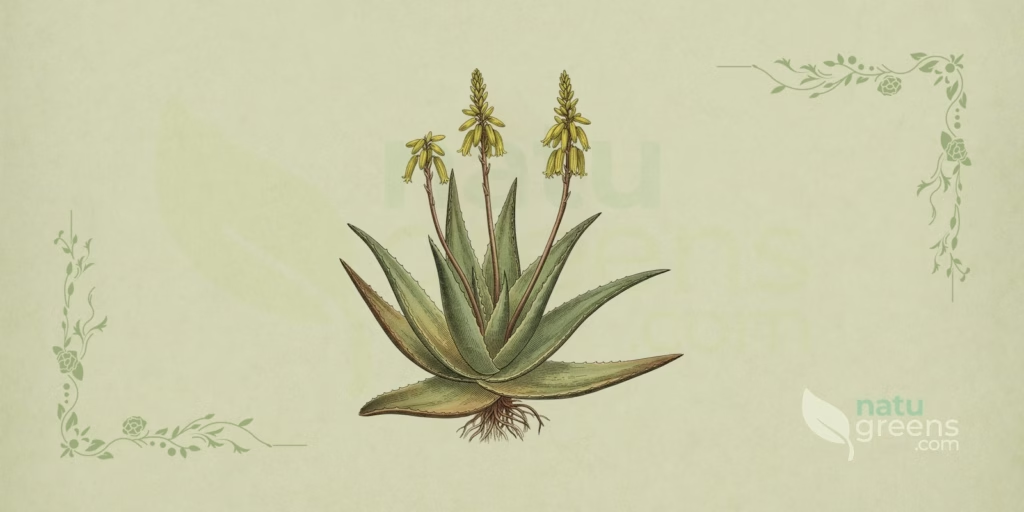
Botanical illustration of Aloe vera (L.) Burm. f. (aloe vera, true aloe), a perennial succulent plant of the Asphodelaceae family, native to the Arabian Peninsula, showing a fleshy, thick, grayish-green leaf with serrated margins and small white teeth, cut open to reveal the transparent, mucilaginous gel inside, in 19th-century botanical encyclopedia style on an aged herbarium paper background.
Aloe vera belongs to the Asphodelaceae family, part of the order Asparagales. This vast, diverse family encompasses about 40 genera and more than 900 species, distributed mainly in tropical and temperate regions of the Old World. Aloe vera was formerly classified in the Liliaceae family, but recent phylogenetic studies led to its reclassification into the Asphodelaceae, together with genera such as Asphodelus and Kniphofia.
The Asphodelaceae are known for including many succulent plants, characterized by their ability to store water in their leaves, stems, or roots, an adaptation that allows them to thrive in arid environments. The family is rich in bioactive compounds, such as anthraquinones, polysaccharides, and flavonoids, which confer medicinal properties on several of its species, including Aloe vera.
Parts Used of Aloe Vera
- Transparent leaf gel (inner pulp)
- Whole leaves (for gel and latex extraction)
- Yellowish latex (exudate from the leaf rind)
Ethnobotanical and Traditional Uses of Aloe Vera
- Fighting fungi and bacteria on the skin
- Healing of wounds and skin abrasions
- Reduction of heartburn and digestive complaints
- Relief of skin irritation and insect bites
- Relief of sunburn and minor burns
- Skin hydration and regeneration
- Stimulation of collagen production
- Treatment of acne and psoriasis
- Treatment of hemorrhoids and rheumatic pain
- Use as a natural laxative (latex, for no more than one week at a time)
- Use in beauty rituals and hair care
Therapeutic Properties of Aloe Vera
- Antibacterial (fights bacterial growth); traditional use, without established clinical efficacy
- Antifungal (inhibits the development of fungi)
- Anti-inflammatory (reduces inflammation and swelling)
- Antioxidant (protects cells from oxidative damage)
- Antiviral (fights viral replication); traditional use, without established clinical efficacy
- Cardioprotective (contributes to cardiovascular health)
- Hypoglycemic (helps lower blood sugar levels); traditional use, without established clinical efficacy
- Immunomodulatory (regulates the immune system response); traditional use, without established clinical efficacy
- Laxative (occasional use only, for no more than one week at a time; contraindicated in intestinal obstruction, appendicitis, inflammatory bowel disease, undiagnosed abdominal pain, pregnancy, breastfeeding, and children under 12)
- Neuroprotective (protects nerve cells); traditional use, without established clinical efficacy
- Wound healing (speeds up the recovery of injured tissue)
Detailed Phytochemical Profile of Aloe Vera
- Acemannan (mucilaginous polysaccharide)
- Aloe-emodin (hydroxyanthracene derivative from the latex, with demonstrated genotoxicity; the European Union has banned its use in food supplements, and whole-leaf extract is classified as possibly carcinogenic by IARC)
- Aloesin (phenolic compound, tyrosinase inhibitor)
- Aloin, or barbaloin (a C-glycosidic anthrone from the latex, responsible for the laxative effect)
- Anthraquinones (aloe-emodin, chrysophanol, emodin)
- Enzymes (bradykinase, catalase, cellulase, lipase, oxidase)
- Fatty acids and sterols (β-sitosterol, campesterol, lupeol)
- Flavonoids (catechin, quercetin)
- Glucomannan (polysaccharide)
- Lignans (phenolic compounds)
- Minerals (calcium, chromium, copper, magnesium, manganese, potassium, selenium, sodium, zinc)
- Saponins (glycosides with cleansing properties)
- Vitamins (A, folic acid, B1, B2, B3, B6, C, E). Aloe vera is not a source of vitamin B12: cobalamin is not produced by plants, and anyone following a strict vegetarian diet needs specific supplementation.
Preparation and Administration Forms of Aloe Vera

Transparent aloe vera gel extracted from the fresh leaf, the most used part of the plant in topical and oral preparations, rich in acemannan and mucilaginous polysaccharides.
- Capsules and tablets (oral supplement)
- Creams and lotions (topical use)
- Fluid and dry extracts (oral or topical use)
- Fresh gel (direct topical application)
- Juice (oral beverage)
- Ointments (topical use)
- Soaps and cosmetics (topical use)
- Tinctures (alcoholic extract)
Synergy with Other Medicinal Plants
Turmeric (Curcuma longa)
Combining aloe vera with turmeric (Curcuma longa) is notable for its synergistic anti-inflammatory and antioxidant effects. This synergy is particularly beneficial for skin health, helping in the treatment of conditions such as acne, eczema, and rosacea. Turmeric’s curcumin, together with aloe’s polysaccharides, promotes tissue repair and reduces pigmentation, enhancing healing and skin tone uniformity.
Ginger (Zingiber officinale)
Aloe vera and ginger (Zingiber officinale) form a well-known pairing in digestive care. Ginger, valued for its antiemetic and anti-inflammatory properties, complements aloe’s calming, digestive action. Together, they can help ease mild gastrointestinal discomfort such as nausea and indigestion.
Honey
Although honey is not a plant, its combination with aloe vera is widely used and valued. This synergy is excellent for the healing of wounds and burns and for treating skin problems, thanks to its antibacterial and moisturizing properties. Honey acts as a natural humectant, while aloe offers its bioactive compounds for cell regeneration. The mixture is also popular in face and hair masks, promoting intensive hydration and nourishment.
Recipes and Usage Protocols of Aloe Vera
Aloe Gel for Sunburn
Ingredients: 1 large fresh aloe vera leaf.
Preparation: Wash the leaf well and cut off the spiny edges. With a knife, remove the green rind from one side and scrape out the transparent gel with a spoon. Apply the gel directly to the sunburned area. Repeat several times a day to relieve pain, reduce redness, and promote skin healing. Aloe gel provides a refreshing, soothing sensation.
Moisturizing Aloe Hair Mask
Ingredients: 2 tablespoons of fresh aloe vera gel, 1 tablespoon of coconut oil, 1 teaspoon of honey.
Preparation: Mix all the ingredients into a smooth paste. Apply the mask to damp hair, from scalp to ends, massaging gently. Leave on for 30 minutes, then wash with shampoo and conditioner. This mask deeply hydrates, strengthens the strands, and adds shine, being ideal for dry, damaged hair.
Aloe Juice for Digestive Health
Ingredients: 2 tablespoons of fresh aloe vera gel, 200 ml of water or natural fruit juice (orange, apple).
Preparation: Cut the leaf and let it drain upright for 15 to 20 minutes, until the yellowish latex stops running. Remove all the green rind, rinse the gel under running water until no yellow film remains, and only then blend it with the water or juice. The latex must not be ingested in this preparation. Drink immediately. Start with a small amount (1-2 tablespoons of gel) and increase gradually if needed. This juice can aid digestion, relieve heartburn, and act as a mild laxative. Consulting a health professional before starting regular consumption is recommended.
Purifying Aloe Facial Toner
Ingredients: 1 tablespoon of fresh aloe vera gel, 50 ml of rose water.
Preparation: Mix the aloe gel with the rose water in a spray bottle. Shake well before use. Apply to clean skin with a cotton pad or spray directly. This toner helps balance the skin’s pH, reduce oiliness, and calm irritation, leaving the skin fresh and purified. It can be used daily, morning and night.
Associated Therapies

Aloe vera plant with its rosette of thick, fleshy, grayish-green leaves with serrated margins, a perennial succulent of the Asphodelaceae family used for millennia in traditional medicine and cosmetics.
Cosmetology and Dermatology
Aloe vera is a fundamental ingredient in cosmetic and dermatological products thanks to its moisturizing, healing, and anti-inflammatory properties. It is incorporated into lotions, creams, gels, soaps, and hair products. In dermatology, it is used to treat acne, psoriasis, and lichen planus and to speed up recovery from skin damage. In cosmetology, it contributes to deep hydration, stimulates collagen production, and promotes healthy, radiant skin.
Clinical Phytotherapy
In modern clinical phytotherapy, aloe vera is widely used in various pharmaceutical forms, such as standardized extracts, capsules, and tablets. Extracts are frequently titrated to guarantee the concentration of active compounds such as acemannan and anthraquinones. Aloe is employed in the treatment of gastrointestinal disorders, such as irritable bowel syndrome, and in dermatological conditions, including burns and wounds. Its application is individualized, considering the patient’s condition and possible drug interactions.
Homeopathy
In homeopathy there is a preparation called Aloe socotrina, made from the dried latex of Aloe perryi, the Socotrine aloe, a species close to aloe vera, following the principles of dilution and dynamization. The homeopathic tradition indicates it for digestive complaints such as diarrhea, loose stools, and irritable bowel syndrome, and for conditions affecting the rectum with a constant urge to evacuate. Controlled clinical trials have not shown homeopathy to perform better than placebo in these conditions, and persistent digestive symptoms call for medical assessment.
Contraindications and Side Effects of Aloe Vera
General Contraindications
Aloe vera is contraindicated for individuals with a known allergy to the plant itself or to other species of the genus Aloe. Allergic reactions can manifest as contact dermatitis, hives, or, in more severe cases, anaphylaxis. Oral use of aloe vera is contraindicated in pregnancy, at any dose, because the latex compounds stimulate the uterus. Topical use of the gel is usually regarded as low risk, but even then it is worth checking with the obstetrician before any regular application during pregnancy. While breastfeeding, oral use should also be avoided, as there are no adequate safety data on whether the anthracene derivatives pass into breast milk.
Aloe vera should not be used orally in children under 12 years of age. Honey should not be offered to anyone under 1 year of age in any preparation, given the proven, not theoretical, risk of infant botulism from Clostridium botulinum spores; topical use of the gel on infants should have pediatric guidance. Individuals with bleeding disorders or taking anticoagulants should use aloe with caution, since prolonged use of the latex can cause potassium loss and potentiate the effects of anticoagulants such as warfarin.
Common Side Effects
Side effects of aloe vera are rare and usually mild. In some people, oral consumption can cause nausea, vomiting, or allergic skin reactions. Topical application of aloe preparations can occasionally result in contact dermatitis, especially in sensitive individuals. The latex, present in the leaf rind, contains aloin, a potent laxative that can cause cramps and diarrhea when consumed in excess.
Drug Interactions
Aloe vera can interact with several medications. Its action on the cytochrome P450 system can alter drug metabolism, including anticoagulants such as warfarin, increasing the risk of bleeding. Prolonged use of aloe latex can cause potassium loss, potentiating the effects of digitalis drugs such as digoxin and of diuretics, with a risk of cardiac arrhythmias. Individuals taking diabetes medication should carefully monitor their glucose levels, since aloe can have mild hypoglycemic effects.
Recommended Dosages of Aloe Vera
Aloe vera dosages can vary significantly depending on the form of presentation and the purpose of use. It is crucial to start with low doses and adjust according to individual response, always under the guidance of a health professional.
Oral Use (Juice/Gel)
- Aloe juice: Start with 30 ml per day and do not exceed 90 ml daily, for short periods only. Prolonged use should be avoided.
- Concentrated extracts: For more concentrated extracts, follow the label dosage strictly, always in the milliliters stated by the manufacturer, never in cupfuls or glassfuls.
- Capsules: Typically 1 capsule per day before lunch, or as indicated by the manufacturer and a health professional.
Topical Use (Gel)
- Fresh gel: Apply directly to the affected skin 2 to 3 times a day, or as needed.
- Creams and lotions: Follow the manufacturer’s instructions for topical application.
Important Considerations
Aloe vera should not be given orally to children under 12 years of age. For topical use, applying the gel to babies and young children calls for prior pediatric guidance. Pregnant women and individuals with pre-existing health conditions or taking other medications should consult a health professional before using aloe, especially orally, because of potential interactions and adverse effects.
Curiosities and Historical Facts of Aloe Vera
The history of aloe vera goes back more than 4,000 years, with the earliest records of its use found in Sumerian cuneiform records engraved on clay tablets of the Mesopotamian civilization around 2200 BC. Ancient civilizations, including the Greeks, Romans, Babylonians, Chinese, and Egyptians, used the plant to treat a wide range of conditions. The name Aloe derives from the Arabic word alloeh, meaning “shining bitter substance”, or from the Hebrew ahalim, while vera means “true” in Latin.
In Ancient Egypt, aloe was known as the “plant of immortality” and was an integral part of the beauty rituals of figures such as Cleopatra. Dioscorides, one of the fathers of herbal medicine, mentioned aloe in his writings in 78 AD. The plant was introduced to China and various parts of southern Europe in the 17th century, consolidating its global presence. Its ability to survive in arid climates and its longevity, with some wild specimens living up to 100 years, are remarkable traits.
Frequently Asked Questions about Aloe Vera
What Is Aloe Vera?
Aloe vera, scientifically known as Aloe vera, is a perennial succulent plant of the Asphodelaceae family. It is widely recognized for its fleshy leaves containing a transparent gel. This gel is rich in bioactive compounds and has been used for millennia in traditional medicine and cosmetic products thanks to its therapeutic properties.
What Are the Main Benefits of Aloe Vera?
The main benefits of aloe vera include its anti-inflammatory, wound-healing, moisturizing, and antibacterial action. Topically, the gel is traditionally applied to mild sunburn, minor wounds, skin irritation, and acne-prone skin. The available clinical trials are small and heterogeneous, and the response varies from person to person. Orally, it can aid digestion, relieve heartburn, and act as a mild laxative. The plant also has antioxidant and immunomodulatory properties.
How Do I Use Aloe Vera on the Skin?
For topical use, fresh aloe gel can be applied directly to the affected skin. It is ideal for sunburn, insect bites, and hydration. It can also be incorporated into homemade face masks, lotions, and creams. Be sure to remove the yellowish latex from the leaf before using the gel to avoid irritation.
Is It Safe to Consume Aloe Vera Orally?
It depends on what is being consumed. Purified, latex-free gel is usually tolerated in moderate doses and over short periods. The latex from the leaf rind is another matter: it contains aloin, a potent laxative that causes cramps and diarrhea, and the aloe-emodin alongside it has demonstrated genotoxicity. The European Union has banned hydroxyanthracene derivatives in food supplements, and IARC classifies whole-leaf extract as possibly carcinogenic. Oral use is contraindicated in pregnancy, while breastfeeding, and in children under 12. Talk to a health professional before starting.
Does Aloe Vera Have Contraindications or Side Effects?
Yes. Aloe vera is contraindicated for anyone with a known allergy to the plant itself or to other species of the genus Aloe. In pregnancy, oral use is contraindicated at any dose because of the uterine-stimulating effect of the latex compounds, and the same ban applies while breastfeeding and to children under 12. Excessive consumption can cause gastrointestinal problems. Interactions with anticoagulants and diabetes medication are also possible, which calls for caution.
Notice: this content is for informational purposes and does not replace professional medical advice. Consult a physician or herbal practitioner before using medicinal plants, especially during pregnancy, breastfeeding, or alongside medication.
References and Scientific Studies
View All 10 Cited References
Peer-Reviewed Scientific Studies (7)
- PMC2008 Surjushe, A., Vasani, R., & Saple, D. G. (2008). Aloe vera: A short review. Indian Journal of Dermatology, 53(4), 163-166.
- PEER2022 Martínez-Burgos, W. J., et al. (2022). Aloe vera: From ancient knowledge to the patent and innovation landscape – A review. South African Journal of Botany, 147, 993-1006.
- PMC2020 Sánchez, M., et al. (2020). Pharmacological Update Properties of Aloe Vera and its Pharmaceutical Applications. Molecules, 25(6), 1324.
- PMC2021 Nalimu, F., et al. (2021). Review on the phytochemistry and toxicological profiles of Aloe vera and Aloe ferox. Future Journal of Pharmaceutical Sciences, 7, 145.
- PEER2021 Bendjedid, S., et al. (2021). Analysis of phytochemical constituents, antibacterial, antioxidant, photoprotective activities and cytotoxic effect of leaves extracts and fractions of Aloe vera. Biocatalysis and Agricultural Biotechnology, 33, 101991.
- PMC2019 Singh, V., et al. (2019). Use of Aloe Vera and Turmeric Paste as a Supplementary Medicine in Oral Submucosal Fibrosis: A Pilot Study. Indian Journal of Otolaryngology and Head & Neck Surgery, 71(S1), 883-886.
- PMC2021 Badooei, F., et al. (2021). Comparison of the effect of ginger and aloe vera mouthwashes on xerostomia and oral health in patients with type 2 diabetes: A randomized clinical trial. Journal of Oral Health and Oral Epidemiology.
Institutional Sources (1)
- GOV National Center for Complementary and Integrative Health (NCCIH). Aloe Vera: Usefulness and Safety.
Supplementary Readings (2)
- 2025 Mayo Clinic. (2025). Aloe.
- 2025 Matei, C. E., et al. (2025). Aloe Vera Polysaccharides as Therapeutic Agents: Benefits Versus Side Effects in Biomedical Applications. Polysaccharides, 6(2), 36.