Carum carvi L. / Caraway, popularly known as caraway or meridian fennel, is a biennial herbaceous plant belonging to the Apiaceae family, described by Carl Linnaeus. Originating from the region spanning central Europe to Asia, this species has spread globally thanks to its well-known culinary uses and medicinal properties. Caraway has been used for millennia, with records of use by the Romans and its introduction to the Iberian Peninsula by the Arabs. Its fruits, often called seeds, are the most valued part, harvested in the plant’s second year of growth for the preparation of spices, essential oils, and herbal extracts.
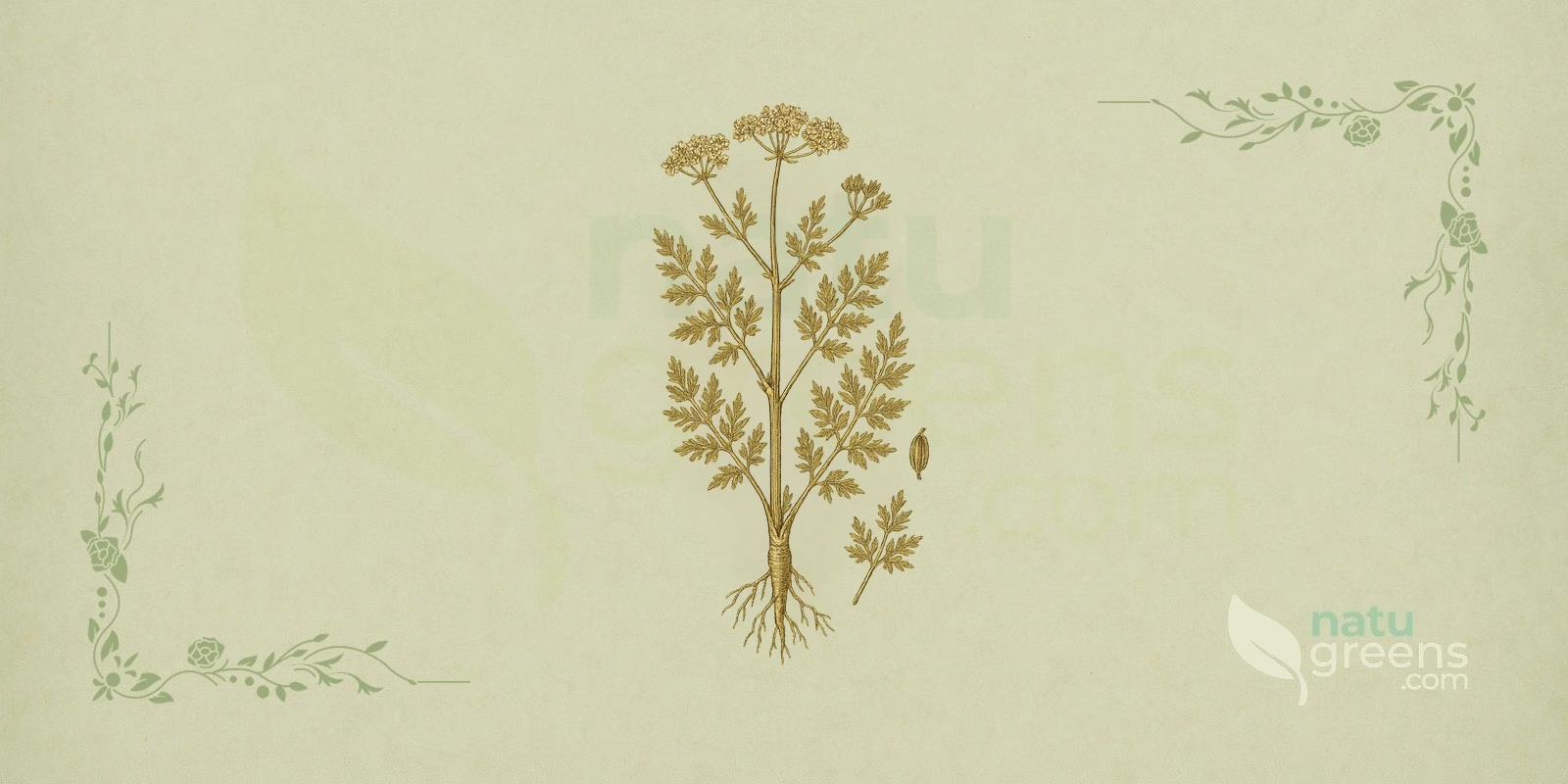
In European herbal tradition, caraway holds a prominent place as a digestive and carminative plant. Its applications range from treating gastrointestinal disturbances to relieving colic and flatulence. The plant is recognized for its rich phytochemical composition, especially essential oils such as carvone and limonene, which give it antispasmodic and antimicrobial properties. Modern scientific research has validated many of the traditional uses of caraway, cementing its position as one of the most studied and widely used medicinal plants in the world.
Popular and International Names of Caraway
- English: caraway, meridian fennel, Persian cumin.
- Spanish: alcaravea, comino de prado.
- Portuguese: alcarávea, alcaravia, alcaróvea, alquirévia, cariz, cominho, cominho-armênio, cominho-de-montanha (PT), cominho-dos-prados, cominho-romano, cúmel (BR); alcarávia, cuminho.
- French: carvi, cumin des prés.
- Italian: carvi, cumino dei prati.
- German: Kümmel, Wiesenkümmel.
Botanical Synonyms of Carum carvi
Although Carum carvi L. is the accepted botanical name, some sources may refer to less common or historical synonyms. Taxonomy may vary slightly across different botanical databases, but the designation by Linnaeus remains the most widely recognized.
Botanical Family: Apiaceae
The Apiaceae family, formerly known as Umbelliferae, is a vast family of flowering plants that includes around 3,700 species distributed across more than 430 genera. It is characterized by umbel inflorescences, in which small flowers cluster together forming a structure resembling an umbrella. This family is notable for including many plants of economic, culinary, and medicinal importance, such as carrot, parsley, celery, and coriander.
Caraway shares morphological characteristics typical of the Apiaceae family, including finely divided leaves and the production of bioactive compounds, especially essential oils. The chemical diversity of this family has been the subject of intense pharmacological research, contributing to the development of phytopharmaceuticals and dietary supplements. Many Apiaceae species are known for their carminative, digestive, and antispasmodic properties, characteristics also present in caraway.
Parts of Caraway Used
- Fruits (popularly called seeds)
- Leaves
- Roots
Ethnobotanical and Traditional Uses
- Appetite stimulant
- Back pain and rheumatism relief (steam from the seeds)
- Breath freshening
- Diarrhea
- Digestive disorders
- Improving menstruation
- Intestinal colic and flatulence relief
- Lactation support (galactagogue)
- Pneumonia
- Relief of abdominal pain
Therapeutic Properties of Caraway
- Analgesic (traditional use to relieve pain)
- Antidiabetic (effect studied on blood sugar)
- Antimicrobial (activity studied against bacteria and fungi)
- Anti-inflammatory (effect studied in reducing inflammation)
- Antioxidant (activity studied against free radicals)
- Antispasmodic (effect studied in reducing muscle spasms)
- Carminative (helps expel gas)
- Digestive (aids digestion)
- Diuretic (effect studied on urine production)
- Hepatoprotective (protective effect studied on the liver)
- Hypolipidemic (effect studied in reducing blood fat levels)
Detailed Phytochemical Profile of Caraway
- Carvacrol
- Carvone
- Coumarins
- Digestive enzymes
- Essential oils
- Flavonoids (kaempferol 3-glucoside, isoquercitrin, quercetin 3-glucuronide, quercetin 3-O-caffeoylglucoside)
- Glycosides
- Limonene
- Linalool
- Monoterpenoids
- Mucilage
- Nucleosides
- Phenolic compounds
- Saponins
- Tannins
- Triterpenes
Preparation and Administration Forms of Caraway
- Boiling (roots)
- Essential oil
- Fluid extract
- Seeds (whole or ground)
- Tincture
Synergy with Other Medicinal Plants
Digestive Disorders
Combining caraway with peppermint (Mentha × piperita) is traditionally associated with relieving functional dyspepsia, helping reduce gas production, ease intestinal colic, and soothe the gastrointestinal tract. Caraway’s essential oil, rich in carvone and limonene, acts synergistically with peppermint’s menthol, providing antispasmodic and carminative effects. This synergy is particularly useful for relieving symptoms of irritable bowel syndrome (IBS).
Immune System Support
Preliminary studies suggest that combining caraway with green cumin, dill, and anise, together with chelated minerals, may contribute to supporting the immune system.
Recipes and Usage Protocols of Caraway
Digestive Caraway Infusion
Ingredients: 1 to 2 teaspoons of crushed caraway seeds, 200 ml of boiling water.
Preparation: Add the caraway seeds to the boiling water. Cover and let steep for 10 to 15 minutes. Strain and drink. It can be sweetened with honey, if desired. This infusion is traditionally used to relieve indigestion, flatulence, and colic.
Massage Oil for Muscle Pain
Ingredients: 5 drops of caraway essential oil, 30 ml of base vegetable oil (sweet almond or jojoba).
Preparation: Mix the caraway essential oil with the base vegetable oil. Apply to clean skin, gently massaging the areas affected by muscle pain or rheumatism. Avoid sun exposure after application.
The preparations above follow traditional records and do not replace professional guidance. Before any internal use, review the contraindications and interactions described in this article.
The preparations above follow traditional records and do not replace professional guidance. Before any internal use, check the contraindications and interactions described in this article.
Associated Therapies
Aromatherapy
Caraway essential oil is used in aromatherapy for its calming and digestive properties. Inhaling the oil, through diffusers or vaporizers, may help relieve stress and promote well-being. In therapeutic massage, diluted in vegetable oil, it is used to relieve muscle pain and tension.
Clinical Herbal Medicine
In clinical herbal medicine, caraway is prescribed in various forms, such as standardized extracts, capsules, and tinctures. It is used to treat functional gastrointestinal disorders, such as dyspepsia and IBS, and as an adjunct in inflammatory conditions. Dosage and form of administration are individualized, taking into account the patient’s needs and possible drug interactions.
Contraindications and Side Effects of Caraway
General Contraindications
Caraway is generally considered safe when consumed in food amounts. However, at high therapeutic doses, it may be contraindicated for individuals with a known allergy to plants of the Apiaceae family, such as parsley, celery, or fennel. Allergic reactions may present as contact dermatitis or hives. Pregnant and breastfeeding women should use caraway with caution and under medical guidance, especially the essential oil, due to a lack of conclusive data on its safety in these conditions.
Individuals with bleeding disorders or taking anticoagulant medications should exercise caution, as caraway may have a mild anticoagulant effect. Use in young children should be supervised by a healthcare professional.
Common Side Effects
Side effects from caraway are rare and generally mild. They may include gastrointestinal discomfort, such as nausea or heartburn, especially when consumed in large amounts. Undiluted topical application of the essential oil may cause skin irritation.
Drug Interactions
Caraway may interact with anticoagulant medications, increasing the risk of bleeding. It may also enhance the effect of sedatives and diabetes medications, requiring careful monitoring of glucose levels. It is always advisable to consult a doctor or pharmacist before using caraway alongside other medications.
Historical Notes and Interesting Facts
Millennia-Old History
Caraway is one of the oldest and most popular spices in Europe, with evidence of use dating back more than 5,000 years. It was used by the Romans and introduced to the Iberian Peninsula by the Arabs, who valued its culinary and medicinal properties.
Kümmel and Aquavit
Oil from caraway seeds is a key ingredient in the production of liqueurs such as Kümmel and the Scandinavian spirit Aquavit, giving them their characteristic flavor and distinctive aroma.
Use in Cheeses
In Nordic cuisine, caraway is often used to flavor cheeses, such as German Tilsit, adding a spicy, slightly sweet touch.
Frequently Asked Questions about Caraway
What Is Caraway Used For?
Caraway is used to aid digestion, relieve gas, colic, bloating, and other gastrointestinal discomforts. It also has anti-inflammatory, antimicrobial, and antioxidant properties, and is used in traditional medicine for various conditions.
How Do You Use Caraway for Digestion?
For digestive problems, the most common way to use caraway is as an infusion of the seeds. One to two teaspoons of crushed seeds in 200 ml of boiling water, steeped for 10 to 15 minutes, can be consumed after meals.
Does Caraway Have Side Effects?
In general, caraway is well tolerated. However, at high doses, it may cause nausea or heartburn. People allergic to plants of the Apiaceae family should avoid its use. Pregnant and breastfeeding women should consult a doctor before using it.
What Is the Difference between Caraway and Cumin?
Although both belong to the Apiaceae family and share similar common names in some regions, caraway (Carum carvi) and cumin (Cuminum cyminum) are distinct plants with different flavor and phytochemical profiles. Caraway has a spicier, sweeter flavor, while cumin is more earthy and pungent.
Notice: this content is for informational purposes and does not replace professional medical advice. Consult a physician or herbal practitioner before using medicinal plants, especially during pregnancy, breastfeeding, or alongside medication.
References and Scientific Studies
Peer-Reviewed Scientific Studies (2)
- PMC2018 Mahboubi, M. (2018). Caraway as Important Medicinal Plants in Management of Diseases. Natural Product Research, 29(1), 1-11.
- PEER2020 Seddighfar, M., Mirghazanfari, S. M., & Dadpay, M. (2020). Analgesic and anti-inflammatory properties of hydroalcoholic extracts of Malva sylvestris, Carum carvi or Medicago sativa, and their combination in a rat model. Journal of Integrative Medicine, 18(2), 181-188.
Supplementary Readings (4)
- 2023 Liu, C., Cheng, F., Aisa, H. A., & Maiwulanjiang, M. (2023). Comprehensive Study of Components and Antimicrobial Properties of Essential Oil Extracted from Carum carvi L. Seeds. Antibiotics, 12(3), 591.
- PeaceHealth. (n.d.). Caraway, Health Information Library. Retrieved from PeaceHealth.
- Plantura Garden. (n.d.). Growing caraway: when, where & plant care. Retrieved from Plantura Garden.
- 2021 West Coast Seeds. (2021). How to Grow Caraway from Seed. Retrieved from West Coast Seeds.