Illicium verum Hook.f. / Star Anise, popularly known as star anise, Chinese star anise and badian, is a medium-sized evergreen tree of the Schisandraceae family, native to southern China and northeastern Vietnam. The spice is valued both in cooking and in traditional medicine. Its star-shaped fruits, harvested before they ripen and then dried, concentrate the aromatic compounds that made the plant famous. Its use spans millennia, above all in Traditional Chinese Medicine, which employs it for its aromatic and digestive qualities.
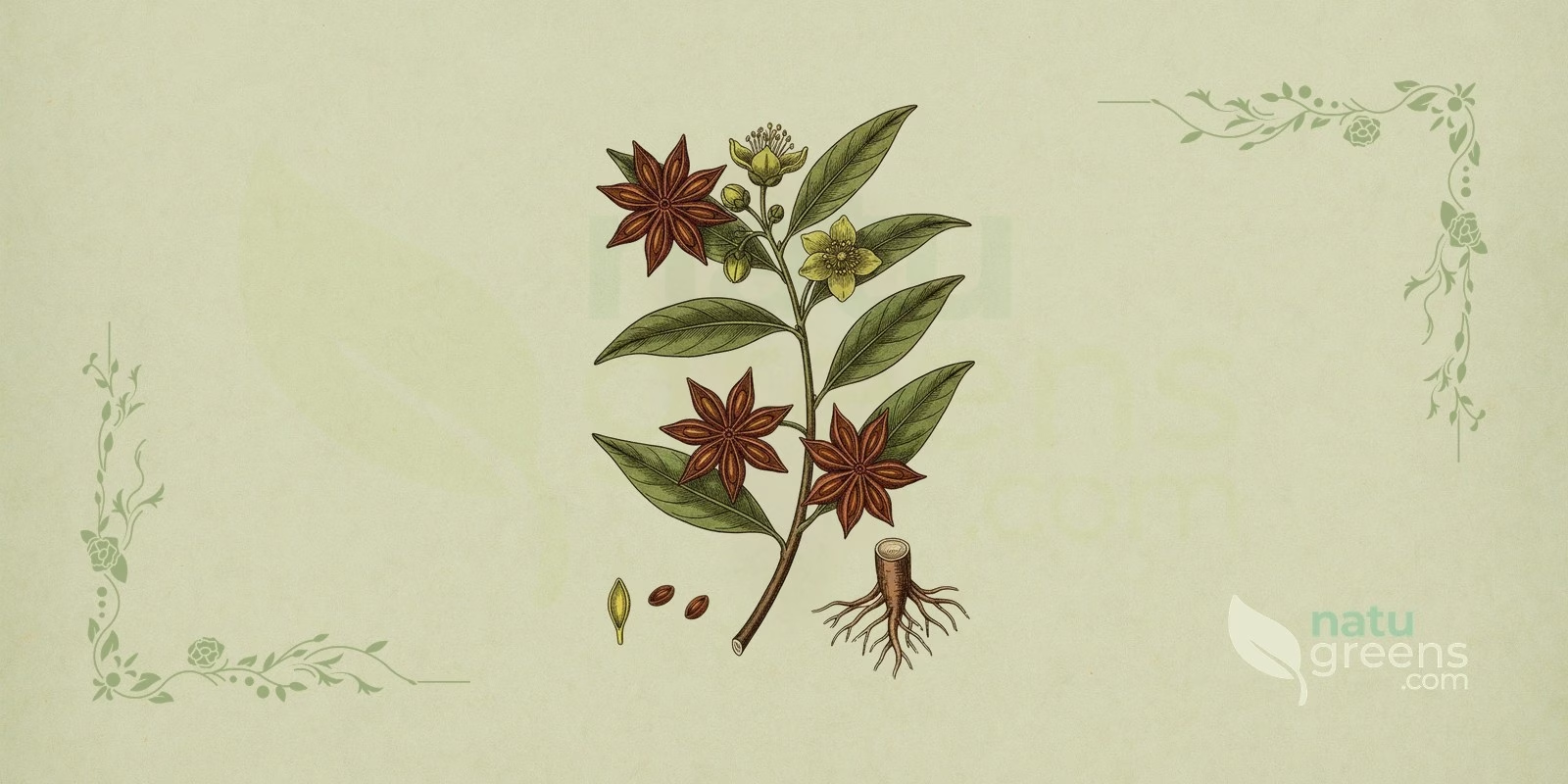
Illicium verum stands out for its phytochemical profile, which includes anethole, responsible for its characteristic flavor and aroma, and shikimic acid, an industrial raw material used in the synthesis of the antiviral drug oseltamivir. Beyond the kitchen, the plant is the subject of laboratory studies investigating antibacterial, antifungal, antioxidant and anti-inflammatory activities, although these findings have not yet been confirmed in robust clinical trials. The combination of long tradition and growing research explains the global interest in star anise. That same interest makes it all the more important to know where it comes from and what risks it carries.
Popular and International Names of Star Anise
- English: badian, Chinese star anise, star anise, star anise seed, star aniseed, star of anise, staranise.
- French: anis étoilé, badiane, badiane de Chine, badianier de Chine.
- German: Chinesischer Sternanis, Sternanis.
- Italian: anice stellato, badiana.
- Portuguese: anis-da-china, anis-da-sibéria, anis-estrelado, badiana, badiana-de-cheiro, estrela-de-anis.
- Spanish: anís estrella, anís estrellado, anís estrellado chino, badián, badiana, badiana de China.
The Portuguese names anis-verdadeiro and funcho-da-china, which sometimes appear associated with the spice, refer to other plants and do not apply to this species.
Botanical Synonyms of Illicium verum
The main botanical synonym of Illicium verum is Illicium san-ki Perr., a name adopted in some historical classifications. Today, however, the accepted name, widely recognized by the international botanical community, is Illicium verum Hook.f. Precise nomenclature carries practical weight in this case, because the genus Illicium includes toxic species that look very much like star anise, and a mixed-up name can lead someone to consume a dangerous plant.
Botanical Family: Schisandraceae
Illicium verum belongs to the Schisandraceae family, a small group of flowering plants comprising three genera and about 92 species. The genus Illicium was formerly placed in the family Illiciaceae, but phylogenetic studies moved it to Schisandraceae. This family is made up of woody plants, often climbers, with a predominantly tropical and subtropical distribution and a strong presence in East Asia.
The Schisandraceae are known for their richness in essential oils, and several of their species appear in the traditional medicine of different cultures. The taxonomic reclassification reflects a deeper understanding of the evolutionary relationships among these plants and places Illicium verum alongside relatives with similar phytochemical traits and ethnobotanical uses.
Parts of Star Anise Used
- Essential oil extracted from the fruits
- Fruits harvested before ripening and dried (pericarp and seeds)
Whole or ground stars go into cooking and home preparations, while the essential oil, which is far more concentrated, is reserved for perfumery, the flavor industry and aromatherapy, always diluted.
Ethnobotanical and Traditional Uses
The ethnobotanical record of star anise blends cooking, folk medicine and industry, and the uses below reflect that tradition, although most of them have not been confirmed in clinical studies.
- Culinary use (breads, broths, cakes, fish, marinades, seafood and soups)
- Digestive aid after meals, in folk use
- Expectorant in folk tradition
- Flavoring for alcoholic beverages such as Galliano and sambuca
- Folk use linked to the body’s defenses, without clinical evidence
- Perfumery and personal care products (mouthwashes, soaps and toothpastes)
- Relief of intestinal cramps and flatulence, according to folk use
- Spice in sweet and savory dishes
- Traditional Chinese Medicine (TCM), which uses it to warm Yang and regulate Qi
- Traditional use for digestive complaints (colic, indigestion, nausea and vomiting)
- Traditional use for respiratory complaints such as cough and colds
Therapeutic Properties of Star Anise
- Antibacterial (activity against various bacteria observed in laboratory studies)
- Antifungal (action on certain fungi observed in vitro, without clinical evidence)
- Anti-inflammatory (effect investigated in preliminary studies)
- Antioxidant (ability to neutralize free radicals measured in the laboratory)
- Antiviral (activity of extracts observed only in the laboratory, with no evidence for the tea)
- Carminative (traditional record of relief from gas)
- Digestive (traditional use for stomach discomfort)
- Immunostimulant (attribution from folk tradition, without clinical evidence)
- Stomachic (traditional record of digestive support)
The activities listed are based mostly on laboratory assays with extracts and essential oil, carried out at concentrations that are not equivalent to drinking a homemade tea.
Detailed Phytochemical Profile of Star Anise
- Anethole
- Calcium
- Copper
- Flavonoids
- Iron
- Magnesium
- Monoterpenoids
- Neolignans
- Phenylpropanoids
- Sesquiterpenoids
- Shikimic Acid
- Veranisatins (trace amounts)
- Vitamin C
Anethole, the main component of the essential oil, accounts for the sweet aroma that star anise shares with common anise (Pimpinella anisum), while shikimic acid is of interest mainly to the pharmaceutical industry as a raw material. Among the sesquiterpenoids are the veranisatins, present only in trace amounts in Illicium verum but relevant from a toxicological standpoint, because they belong to the same chemical group as the anisatin found in Japanese star anise.
Preparation and Administration Forms of Star Anise
- Decoction
- Essential oil, only diluted and for external or aromatic use
- Extracts
- Tea (infusion)
- Tinctures
In cooking, the stars are used in small amounts, and this is the form of consumption considered safe for adults. Teas, decoctions, extracts and tinctures concentrate more compounds and therefore should not be used in medicinal doses without guidance from a healthcare professional, nor by pregnant or breastfeeding women, babies or young children. In any preparation, only fruits of controlled origin should be used, bought from suppliers who guarantee the identification of the species. The caution stems from the visual similarity to Japanese star anise, which makes a substitution hard to spot with the naked eye.
Synergy with Other Medicinal Plants
Traditional Digestive Blend
In folk tradition, star anise appears combined with ginger (Zingiber officinale) and peppermint (Mentha × piperita) in infusions traditionally used for nausea, bloating and cramps. The reasoning behind the blend is that the anethole in star anise, the gingerols in ginger and the menthol in peppermint would act in complementary ways on the gastrointestinal muscles and on the release of gas. This hypothesis rests mainly on traditional use and on separate studies of each plant, not on clinical trials of the combination.
Traditional Respiratory Blend
For respiratory comfort, the traditional record pairs star anise with thyme (Thymus vulgaris) and eucalyptus (Eucalyptus globulus), a blend used for flu, colds and bronchitis because of these plants’ reputation as expectorants and antiseptics. Tradition credits the thymol in thyme, the eucalyptol in eucalyptus and the aromatic compounds of star anise with a joint role in the feeling of clearer airways. Even so, the combination does not replace a medical evaluation of respiratory conditions, especially when there is persistent fever or shortness of breath.
Recipes and Usage Protocols of Star Anise
Star Anise Digestive Tea
Ingredients: a small amount of dried star anise, similar to what is used in cooking, and one cup of boiling water.
Preparation: Place the stars in the cup, cover them with the boiling water, put a lid on and let them steep for 5 to 10 minutes before straining. The tea is traditionally drunk warm, after meals, as a digestive and for discomfort caused by gas. Those who prefer a milder flavor can reduce the number of stars even further. Consumption should be occasional, without prolonged use, by adults only and with a product of controlled origin; for any use beyond cooking, consult a healthcare professional.
Traditional Decoction for Coughs and Colds
Ingredients: a few star anise pods, in an amount close to culinary use, and filtered water.
Preparation: Put the stars on the stove with the water and let them simmer over low heat for 10 to 15 minutes, then strain and drink warm, sweetened with honey if desired. The decoction is traditionally used to ease coughs and the nasal congestion of flu and colds. Because it extracts more compounds than a simple infusion, how often it is taken should be decided with a healthcare professional. This preparation should not be given to babies or young children.
Aromatic Massage Oil
Ingredients: 5 to 7 star anise pods and 100 ml of vegetable oil (jojoba, olive or sweet almond).
Preparation: Lightly crush the stars, place them in a clean glass jar, cover them with the vegetable oil and close the jar tightly. Leave to macerate in a cool, dark place for 2 to 4 weeks, shaking the jar every day, then strain and store in a dark bottle. The oil is traditionally used for massages on the chest and back during respiratory congestion, or on the abdomen for digestive discomfort. First do a sensitivity test on a small patch of skin, and never apply it to babies or young children.
Star Anise Tincture
Ingredients: 50 g of dried star anise fruits and 250 ml of 70% grain alcohol.
Preparation: Grind the fruits, place them in a dark glass jar, cover them with the grain alcohol and seal the jar airtight. Leave to macerate for 2 to 4 weeks in a cool, dark place, shaking it every day, then strain and store in a dropper bottle. The tincture is traditionally used, diluted in water, as digestive or respiratory support. Because it is a concentrated form, the amount and frequency should be set by a healthcare professional, and its use is contraindicated during pregnancy, breastfeeding and in children.
The preparations above follow traditional records and do not replace professional guidance. Before any internal use, check the contraindications and interactions described in this article.
Associated Therapies
Aromatherapy
In aromatherapy, star anise essential oil is valued for a profile described as both relaxing and stimulating. Inhaling the vapor, with the oil diluted in a diffuser or in hot water, is traditionally used in moments of stress, tension and anxiety and in cases of nasal congestion. Its sweet, spicy aroma is often chosen to create a cozy atmosphere. For massage, the essential oil should always be diluted in a carrier oil before being applied to areas of pain and muscle tension, and its use near babies and young children should be avoided.
Clinical Phytotherapy
In clinical phytotherapy, star anise appears in formulations aimed at gastrointestinal complaints such as dyspepsia and flatulence, and as an adjunct in mild respiratory conditions, always under professional guidance. Standardized extracts of Illicium verum serve to ensure a known concentration of active compounds such as anethole. The shikimic acid extracted from the fruits matters industrially as a raw material for oseltamivir, but this fact gives no antiviral action to the tea or to other homemade preparations, which do not replace the treatment for flu and colds prescribed by a doctor.
Contraindications and Side Effects of Star Anise
Illicium verum is considered safe in culinary amounts, but medicinal use calls for more care than is usual for a spice. The main concern is adulteration with toxic species of the same genus, especially Illicium anisatum, known as Japanese star anise, whose fruits look very similar to those of the true species and must not be mistaken for them.
Adulteration and Toxicity Risk
Adulteration and contamination with Illicium anisatum (Japanese star anise, which contains neurotoxic anisatin) have caused seizures in infants and adults. Anisatin can cause serious neurological effects, and poisoning cases attributed to star anise usually involve contamination or accidental substitution with this species. For this reason, adults should only use a product of controlled origin, purchased from suppliers who guarantee its botanical identification. Even pure Illicium verum contains anethole and traces of veranisatins, so high doses can cause nausea and neurological effects.
Pregnancy, Breastfeeding and Childhood
Never give star anise tea to babies and young children, a recommendation in line with the warnings issued by the FDA and European authorities after cases of poisoning in infants. Culinary amounts are safe, but medicinal doses should be avoided during pregnancy and breastfeeding because of a lack of data. People with hormone-sensitive conditions also need to be cautious, since anethole has a possible estrogenic effect.
Common Side Effects
In some people, consuming star anise can cause allergic reactions, such as skin rashes, or mild gastrointestinal discomfort. People allergic to common anise (Pimpinella anisum) may have a cross-reaction, and essential oil applied undiluted to the skin can cause irritation, which is why it should never be used neat.
Drug Interactions
Star anise may interact with anticoagulants, because of possible effects on blood clotting, and with glucose-lowering drugs used in the management of diabetes, since it may influence blood sugar levels. Before any medicinal use, consult a healthcare professional, especially if you are taking other medications or have pre-existing health conditions.
Historical Notes and Interesting Facts
Illicium verum has a long history, cultivated for millennia in southern China and present for a long time in Asian cooking and medicine. The genus name, Illicium, comes from the Latin illicio, meaning to attract or entice, in reference to the plant’s striking aroma. The epithet verum, in turn, means true or genuine and sets the species apart from less authentic or toxic relatives. The distinction is still relevant today, because Japanese star anise (Illicium anisatum) is almost identical in appearance, and the two species must not be confused when buying.
One of the best-known curiosities is the role of star anise in producing the antiviral oseltamivir, sold commercially as Tamiflu. Until 2012, the pharmaceutical company Roche used up to 90% of the world’s star anise harvest to extract shikimic acid, an essential raw material in the synthesis of the drug. Demand for the medicine during the 2009 influenza A (H1N1) pandemic pushed the price of the spice up considerably on the global market. This industrial link, however, does not mean that the tea has the same action as the medicine. The name badian probably comes from the Persian bādiyān, which designates fennel, whereas in Chinese the spice is called bājiǎo, or eight horns, in allusion to the shape of the fruits.
Frequently Asked Questions about Star Anise
Is Star Anise Tea Safe for Children?
No, star anise tea should never be given to babies and young children, in line with the warnings from the FDA and European authorities. The main concern is adulteration with Japanese star anise (Illicium anisatum), which contains neurotoxic anisatin and has already caused seizures in infants. Even true star anise lacks safety data for this age group. For colic or other discomfort in children, the right step is to see a pediatrician.
Are Star Anise and Common Anise the Same Plant?
No, even though both have a similar flavor because of anethole, star anise (Illicium verum) and common anise (Pimpinella anisum) are botanically distinct plants. Star anise is the fruit of a tree in the Schisandraceae family, while common anise is an herb of the Apiaceae family, and the former has a stronger, spicier flavor and is used more often in Asian cooking.
Can Star Anise Help with Weight Loss?
There is no robust scientific evidence that star anise, on its own, causes significant weight loss. Its traditional use as a digestive may bring a feeling of lightness and less bloating, but the spice does not replace a balanced diet or physical activity. Any weight loss promise should be viewed with skepticism and discussed with a healthcare professional.
How Should Star Anise Be Stored?
To preserve its flavor and aroma, store star anise in an airtight container in a cool, dry place away from light, conditions in which the stars keep their potency for up to a year. Ground star anise loses its flavor more quickly, so it is better to grind the whole fruits only when you are about to use them.
Can Star Anise Be Confused with Toxic Species?
Yes, the main risk is confusion with Japanese star anise (Illicium anisatum), whose fruits look very similar and contain anisatin, a neurotoxin. Since the average consumer cannot reliably tell the difference with the naked eye, the recommendation is to buy only products of controlled origin, from suppliers who guarantee the identification of the species.
There is no evidence that star anise tea has antiviral action in people. The shikimic acid in the fruits is used by industry as a raw material in the synthesis of oseltamivir, but turning it into a medicine involves several chemical steps, and drinking the tea is not the same as taking the drug. Flu and colds should be followed up by a healthcare professional.
Notice: this content is for informational purposes and does not replace professional medical advice. Consult a physician or herbal practitioner before using medicinal plants, especially during pregnancy, breastfeeding, or alongside medication.
References and Scientific Studies
- PMC2020 Patra JK, et al. Star anise (Illicium verum): Chemical compounds, antiviral properties, and clinical relevance. Phytother Res. 2020.
- PMC2022 Sharafan M, et al. Illicium verum (Star Anise) and Trans-Anethole as Valuable Raw Materials for Medicinal and Cosmetic Applications. Molecules. 2022.
- PMC2011 Wang GW, et al. Illicium verum: a review on its botany, traditional use, chemistry and pharmacology. J Ethnopharmacol. 2011.