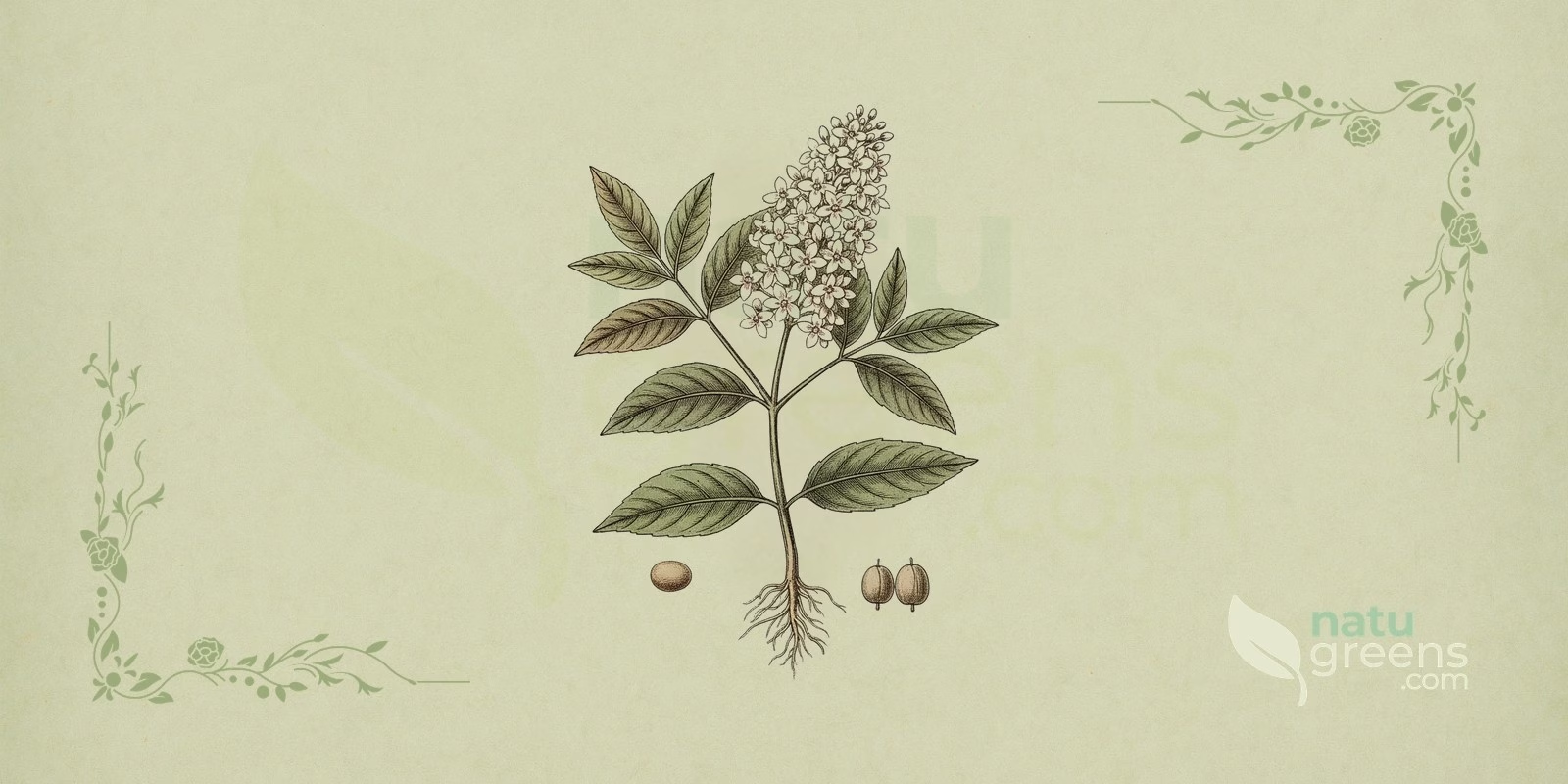
Popularly known as henna, Lawsonia inermis L. is a shrub of the Lythraceae family described by Carl Linnaeus. Native to tropical northeast Africa, the Arabian Peninsula and southern Pakistan, the species is now widely cultivated in warm regions on several continents. Prized for millennia as a natural dye for hair, nails and skin, henna also holds a prominent place in traditional medicine systems, which attribute a wide range of uses to it. Modern research, for its part, investigates the bioactive compounds in its leaves, especially lawsone, with results that still come largely from laboratory and animal studies.
Popular and International Names of Henna
- English: Egyptian privet, henna, henna tree, mignonette tree.
- French: henné.
- German: Henna, Henna-Strauch.
- Italian: hennè.
- Portuguese: hena, henna.
- Spanish: alheña, arjeña, henna.
Botanical Synonyms of Lawsonia inermis
Botanical synonyms of Lawsonia inermis L. include Alcanna spinosa (L.) Gaertn., Casearia multiflora Spreng., Lawsonia alba Lam. nom. illeg., Lawsonia speciosa L., Lawsonia spinosa L. and Rotantha combretoides Baker. These names reflect the taxonomic complexity of the species and the different classifications adopted throughout the history of botany. Despite this variety of names, Lawsonia inermis L. is the name currently accepted by most scientific authorities and the only one that should be used to identify the plant on labels and in publications.
Botanical Family: Lythraceae
Lawsonia inermis belongs to the Lythraceae family, which comprises about 30 genera and 600 species distributed mainly in tropical and subtropical regions. The family is known for including plants with showy flowers and capsular fruits. Many species in this family have economic and medicinal importance in various cultures around the world, and henna stands out among them for its uses as a dye and for the place it holds in the folk medicine of many peoples.
Parts of Henna Used
- Bark
- Flowers
- Leaves
- Roots
- Seeds
The dried, ground leaves make up the henna powder used as a dye and in preparations for external use. The bark, flowers, roots and seeds appear mainly in records of traditional medicine, many of them linked to internal use that is no longer recommended today.
Ethnobotanical and Traditional Uses
Ethnobotanical records attribute to henna the folk uses listed below, which reflect tradition and do not replace medical diagnosis or treatment. Some of them involve internal use, a practice that is not recommended today owing to the lack of safety data.
- Antiseptic and antifungal for external use
- Bronchitis
- Eye conditions
- Hair loss
- Headache relief (hemicrania)
- Jaundice
- Leucoderma
- Lower back pain relief (lumbago)
- Scabies
- Ulcers
Therapeutic Properties of Henna
The activities below derive from traditional records and from laboratory or animal studies, without confirmation in robust clinical trials, and therefore point to lines of research, not guaranteed effects.
- Analgesic (pain relief described in traditional use and in experimental models)
- Antibacterial (activity against bacteria observed in laboratory studies)
- Antifungal (activity against fungi observed in laboratory studies)
- Anti-inflammatory (reduction of inflammatory processes observed in experimental studies)
- Antioxidant (neutralization of free radicals in laboratory assays)
- Antiparasitic (activity against parasites described in preliminary studies)
- Antiproliferative (activity observed in laboratory studies, without clinical proof)
- Hepatoprotective (effect observed in animal studies, without clinical proof)
- Hypoglycemic (glucose reduction observed in animal studies, without clinical proof)
- Wound-healing (traditional record and preliminary studies in animal models)
Detailed Phytochemical Profile of Henna
- Alkaloids
- Carbohydrates
- Coumarins
- Epicatechin
- Flavonoids
- Glycosides
- Lawsone (hennotannic acid)
- Leucocyanidin
- Polyphenols
- Proteins
- Quercetin
- Quinones
- Saponins
- Tannins
- Triterpenoids
- Xanthones
Lawsone, a naphthoquinone concentrated in the leaves, is the pigment responsible for the orange color that henna leaves on skin and hair, since it binds to keratin. It is also the most studied compound in research on the plant, partly because of the role it plays in the hemolysis described in people with G6PD deficiency.
Preparation and Administration Forms of Henna
- Decoction
- Extract
- Infusion
- Oil
- Poultice
- Powder
- Tincture
Powder, poultice and oil are the forms for external use, which are the most widespread and the only ones with a safe tradition of use. Even so, they should be made with pure henna and preceded by a sensitivity test on a small area of skin. Decoction, infusion, extract and tincture appear in traditional records of internal use, which is not recommended today because safety data are lacking and there are reports of toxicity. Anyone interested in these forms should first consult a health professional.
Synergy with Other Medicinal Plants
Hair Care with Amla and Shikakai
Combined with Phyllanthus emblica (amla, syn. Emblica officinalis) and Acacia concinna (shikakai), henna is part of a blend traditionally used in hair care, including in cases of hair loss. Amla, rich in vitamin C and antioxidants, is valued by tradition for nourishing the scalp, and shikakai acts as a gentle cleansing agent, while henna gives the hair color and shine. There are, however, no clinical studies assessing the effect of this combination.
Anti-Inflammatory Combination with Boswellia and Turmeric
Pairing henna with Boswellia serrata (Indian frankincense) and Curcuma longa (turmeric) appears in traditional formulations aimed at inflammatory discomfort and persistent pain. Boswellia is known for its boswellic acids, studied as inhibitors of inflammatory mediators, and turmeric for curcumin, also investigated for its anti-inflammatory action. In theory, the three plants would act through different pathways, a hypothesis that has not yet been confirmed in studies of the combination. Since internal use of henna is not recommended, this combination only makes sense in preparations for external use and under the guidance of a health professional.
Skin Health with Aloe Vera and Neem
For the skin, henna is traditionally used alongside Aloe vera and Azadirachta indica (neem) in topical preparations. Aloe vera is known for the moisturizing, soothing and regenerating properties attributed to its gel, and neem for its antiseptic and antibacterial actions, which add to the antifungal and wound-healing activity described for henna. This combination appears in traditional records of care for minor burns, cuts and skin irritations, without replacing medical care for extensive, deep or infected wounds.
Recipes and Usage Protocols of Henna
Traditional Poultice for Skin Irritations
Ingredients: 2 tablespoons of pure henna powder and enough warm water to form a paste.
Preparation: Mix the henna powder with the warm water until you get a smooth paste and apply it directly to the area of skin, leaving it on for 30 minutes to 1 hour before rinsing with water. This poultice is traditionally used for skin inflammation, minor burns and small wounds, because of the antiseptic and wound-healing action attributed to henna. It should not be applied to babies or to people with G6PD deficiency, and it is best to test it first on a small area of skin.
Decoction and Infusion in Traditional Records
Ingredients: dried henna bark for the decoction, or dried henna leaves for the infusion, plus water in proportions that vary from one tradition to another.
Preparation: In traditional records, the bark was simmered over low heat and then strained, and the drink was associated with jaundice and other liver complaints. The leaves, in turn, were steeped in boiling water to make an infusion used for headaches and lower back pain. These preparations for internal use are not recommended today, because there are no safety data and there are reports of toxicity. For this reason, this article gives no amounts or frequency of use: consult a health professional before considering any internal use of the plant.
Henna Hair Oil with Coconut or Olive Oil
Ingredients: 50 g of pure henna powder and 250 ml of coconut oil or olive oil.
Preparation: Mix the henna powder with the oil in a glass container and heat it gently in a double boiler for 30 minutes, without letting it boil. Once it has cooled, strain the oil, discard the solid residue and store the infused oil in a dark bottle. Apply it to the hair and scalp with a gentle massage once or twice a week, a use traditionally aimed at hair care and dandruff. The oil may leave a subtle reddish tint, and a strand test and a sensitivity test before the first application are always advisable.
Henna Paste for Hair Dye and Body Art
Ingredients: pure henna powder, warm water and, optionally, lemon juice and essential oils.
Preparation: Mix the powder with warm water to form a thick paste. To intensify the color and make it last longer, tradition adds a little lemon juice and a few drops of essential oils such as lavender or tea tree (melaleuca). Let the paste rest for 6 to 12 hours so that the pigment is released, then apply it to clean hair to dye it, or to the skin for temporary designs. Leave the paste on for 2 to 4 hours on the hair or 1 to 6 hours on the skin, depending on the color intensity you want, and rinse thoroughly at the end. This method is widely used to color hair naturally and in traditional body art, provided that pure henna powder is used, never black henna, and that it is not applied to babies or to people with G6PD deficiency.
The preparations above follow traditional records and do not replace professional guidance. Before any internal use, check the contraindications and interactions described in this article.
Associated Therapies
Ayurveda
In Ayurvedic medicine, henna is known as mehendi and is widely used for the cooling and purifying properties that tradition attributes to it, applied topically to inflammations, burns and skin problems. Ayurvedic texts also mention internal use for liver disorders and fevers and its use as a hair tonic, although ingesting the plant is not recommended today owing to the lack of safety data. Henna is considered to balance the Pitta and Kapha doshas since, according to this logic, it reduces excess heat and moisture in the body, and it often appears in formulations with other herbs aimed at harmony and general well-being.
Clinical Phytotherapy
In modern clinical phytotherapy, standardized extracts of Lawsonia inermis are being investigated for their antioxidant, anti-inflammatory and hepatoprotective activity. Lawsone, the main active compound, is studied for its antimicrobial action and for the antiproliferative activity observed in the laboratory, without clinical proof. Practical use centers on external application, as an adjunct in skin care and in mild skin infections, always under professional guidance, while liver support and other internal applications remain confined to research. Phytochemical studies continue to explore possible applications and the development of plant-based phytopharmaceuticals, but most of the available evidence still comes from preclinical studies.
Unani Medicine
In Unani medicine, henna is classified as an herb of cold and dry nature and used to balance the sanguine and bilious humors, with traditional records of use in fevers, jaundice, skin diseases and inflammation. Externally, it is applied as a paste for headaches and inflammation. Internally, it appeared in decoctions and infusions intended to purify the blood and support liver function, an internal use that is not recommended today. Unani medicine values henna above all for the ability to cool the body that this tradition attributes to it.
Contraindications and Side Effects of Henna
G6PD Deficiency and Babies
Lawsone can cause hemolysis in people with G6PD (glucose-6-phosphate dehydrogenase) deficiency, including newborns exposed through the skin, and henna is therefore contraindicated for anyone with G6PD deficiency and for babies. Case reports describe severe hemolysis and marked jaundice in babies and children with this deficiency after the paste was simply applied to the skin, a condition that may require hospitalization.
Black Henna Is Not Henna
So-called black henna is not henna: it contains para-phenylenediamine (PPD), which causes severe dermatitis, permanent sensitization and scarring. A person sensitized to PPD may later react to hair dyes and other products containing the same compound. For this reason, black temporary tattoos and powders that promise a dark color should be refused, especially for children.
General Contraindications
Internal use of henna is not recommended, as there are no safety data and there are reports of toxicity, so accepted use is limited to external application of pure henna. In pregnancy, topical use is traditional in many cultures, but there are no data on internal use, which should be avoided. Pregnant and breastfeeding women should seek the advice of a health professional before any application. People with a known allergy to henna, to other plants of the Lythraceae family or to any component of the product should also avoid the plant. Older children should only receive it topically, with henna proven to be pure and only if they do not have G6PD deficiency.
Common Side Effects
In its pure form and applied externally, henna usually causes rare and mild side effects, such as skin irritation, redness or itching in sensitive people. A patch test on a small area of skin before full application helps check individual sensitivity. In records of internal use, high doses have been associated with gastrointestinal discomfort, such as nausea and diarrhea. Serious reactions are usually linked to contamination with chemical additives, above all PPD, or to hemolysis in people with G6PD deficiency.
Drug Interactions
There are no well-documented drug interactions for pure henna applied to the skin. As animal studies suggest a hypoglycemic effect, people taking diabetes medication should not use henna internally. The presence of coumarins also raises the theoretical possibility of interaction with anticoagulants, although the clinical relevance is uncertain. In any case, anyone taking other medications should consult a health professional before using the plant, to avoid interactions or adverse effects.
Historical Notes and Interesting Facts
Ancient Origins and Rituals
Henna has a history spanning millennia, with evidence of use dating back more than 5,000 years in hot regions of North Africa, the Middle East and South Asia. The ancient Egyptians used it to dye hair and nails and in the embalming of mummies, as they believed in its protective and rejuvenating properties. In India, Pakistan and many Arab cultures, applying henna (mehndi) is part of celebrations, weddings and festivals as a symbol of good luck, fertility and beauty. The intricate designs applied to the hands and feet on these occasions are true works of ephemeral art, which fade gradually over the following weeks.
Henna in Traditional Medicine
Beyond its cosmetic use, henna was widely used in traditional medicine, and Ayurvedic and Unani medicine attribute anti-inflammatory, antiseptic and fever-reducing actions to it. The leaves were used for headaches, muscle pain, wounds, burns and skin diseases. Decoctions and infusions were prepared for liver problems, for jaundice and as a general tonic, internal-use practices that are not recommended today. Research identifies lawsone, the main active compound, as responsible for much of the activity described, including the antimicrobial and antioxidant effects observed in the laboratory.
Henna and Popular Culture
Henna has outgrown its geographic and cultural origins to become a global phenomenon, with artists traveling the world to share this age-old art. In Western culture, it gained popularity as a natural, temporary alternative to permanent tattoos and found its way into many natural hair products for the color and shine it gives the hair. In this way, it keeps alive an ancestral tradition that continues to fascinate people around the world.
Confusion with Other Common Names
In Brazil, the names resedá and rosedá, which some texts attribute to henna, actually refer to Lagerstroemia indica (crepe myrtle), an ornamental shrub of the same Lythraceae family. Bogari, in turn, corresponds to Jasminum sambac, a jasmine of the Oleaceae family. None of these names, therefore, identifies Lawsonia inermis, and anyone looking for henna powder or leaves should always check the scientific name on the label.
Frequently Asked Questions about Henna
Is Pure Henna Safe for Hair?
For most people, pure henna (Lawsonia inermis) is well tolerated on the hair and traditionally used to add shine and to care for dandruff-prone scalps. The powder must be 100% pure, free of chemical additives such as PPD, which can cause severe allergic reactions, and its use is contraindicated for people with G6PD deficiency. Before full application, always do a strand test and a skin sensitivity test.
What Is the Difference between Pure Henna and Black Henna?
Pure henna (Lawsonia inermis) produces shades ranging from orange to reddish brown and does not turn the skin black. So-called black henna is not henna: it contains para-phenylenediamine (PPD), which causes severe dermatitis, permanent sensitization and scarring. For this reason, check the ingredient list and refuse any product or temporary tattoo that contains PPD.
Can Henna Be Used on Babies and Children?
Henna is contraindicated for babies, because lawsone can cause hemolysis in people with G6PD deficiency, including newborns exposed only through the skin. For older children, many cultures apply it during celebrations and rituals, but only with 100% natural henna, with no known allergy and no G6PD deficiency, and never with black henna, because of the risks linked to PPD. Always consult a pediatrician before any application.
Does Henna Cover Gray Hair?
Yes, pure henna can cover gray hair, but the result is a reddish or coppery tone that depends on the natural color of the hair and how long the paste is left on. For darker shades, it is often combined with other plants, such as indigo. Since it does not lighten hair and only deposits color on it, henna creates a natural highlight effect.
How Long Does Henna Color Last on Hair?
Henna color on hair is considered permanent, because the pigment binds to the keratin of the hair shaft, although its intensity may fade slightly with washing and sun exposure. On average, the shade stays vibrant for 4 to 6 weeks, depending on how often the hair is washed and the products used, and new growth calls for root touch-ups.
Can Henna Be Used during Pregnancy?
In pregnancy, topical use of pure henna is traditional in many cultures, but there are no data on internal use, which should be avoided. As with any plant-based product, pregnant and breastfeeding women should consult a doctor or health professional before use. After birth, the paste should never be applied to the baby, because of the risk of hemolysis in cases of G6PD deficiency.
Notice: this content is for informational purposes and does not replace professional medical advice. Consult a physician or herbal practitioner before using medicinal plants, especially during pregnancy, breastfeeding, or alongside medication.
References and Scientific Studies
- PMC2024 Batiha GE, et al. Therapeutic potential of Lawsonia inermis Linn: a comprehensive overview. Naunyn Schmiedebergs Arch Pharmacol. 2024.
- PMC2014 Badoni Semwal R, et al. Lawsonia inermis L. (henna): ethnobotanical, phytochemical and pharmacological aspects. J Ethnopharmacol. 2014.
- PMC2013 Li Q, et al. [Advances in studies on chemical constituents and biological activities of Lawsonia inermis]. Zhongguo Zhong yao za zhi = Zhongguo zhongyao zazhi = China journal of Chinese materia medica. 2013.