Terminalia bellirica / Beleric Myrobalan
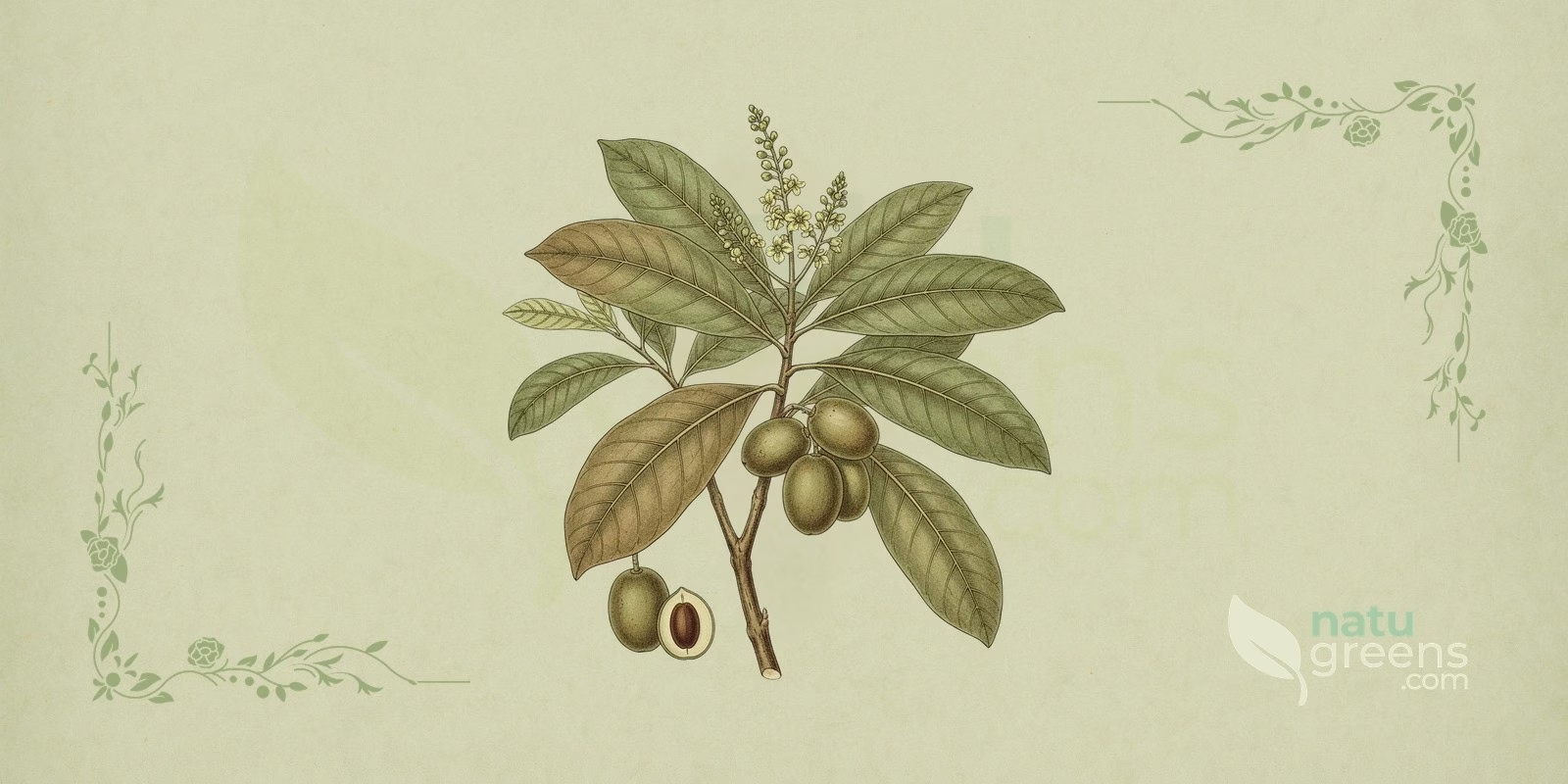
Terminalia bellirica, commonly known as beleric myrobalan or beleric, is a large deciduous tree belonging to the family Combretaceae. This species is highly valued in traditional medicine, especially in Ayurveda, for its diverse therapeutic properties and its use in preparations such as Triphala. It is commonly found on plains and lower hills across South and Southeast Asia, where it is also cultivated as an avenue tree.
Popular and International Names of Beleric Myrobalan
- English: bastard myrobalan, beach almond, bedda nut tree, beleric, beleric myrobalan, belleric myrobalan.
- Portuguese: biborala (Brazil), mirabolano belérico (Portugal).
- Assamese: bhoira.
- Bengali: baheda, bahera.
- Burmese: thitsein.
- Gujarati: baheda.
- Hindi: bahera, kalk.
- Indonesian: jaha, ketapang, sana, ulu belu.
- Javanese: jaha kebo, jaha sapi.
- Kannada: tare mara.
- Khasi: dieng rinyn.
- Lao: heen, nam kieng dam.
- Malay: jelawai, mentalun, simar kulihap.
- Malayalam: thanni.
- Manipuri: bahera.
- Marathi: kalidruma.
- Oriya: bahada.
- Sanskrit: bahuvirya, bibhitakah.
- Tamil: semmaram.
- Telugu: tadi.
- Thai: haen, haen-khao, haen-ton, samo-phiphek.
- Urdu: bahera.
- Vietnamese: bang hoi, bang moc, nhut.
Botanical Synonyms of Terminalia bellirica
- Buceras bellirica (Gaertn.) Lyons
- Myrobalanus bellirica Gaertn.
- Myrobalanus laurinoides (Teijsm. & Binn.) Kuntze
- Myrobalanus punctata (Roth) Kuntze
- Terminalia attenuata Edgew.
- Terminalia belirica Wall.
- Terminalia biticaria Roxb.
- Terminalia eglandulosa Roxb. ex C.B.Clarke
- Terminalia gella Dalzell
- Terminalia laurinoides Teijsm. & Binn.
- Terminalia moluccana Roxb.
- Terminalia punctata Roth
Botanical Family: Combretaceae
Terminalia bellirica belongs to the family Combretaceae, a group of flowering plants that includes trees and shrubs widely distributed across tropical and subtropical regions. This family is known for species rich in bioactive compounds, especially tannins, which give them medicinal and industrial properties.
Parts of Beleric Myrobalan Used
- Fruit (pulp)
- Seeds (kernels)
Ethnobotanical and Traditional Uses
- Anthelmintic
- Antipyretic
- Antiseptic
- Asthma
- Ayurveda (part of Triphala)
- Brain tonic
- Bronchitis
- Constipation
- Cough
- Digestive disorders
- Eye and hair problems
- Hoarseness
- Laxative use
- Liver protection
- Respiratory problems
- Skin conditions
- Sore throat
- Throat and chest infections
- Worm infestation
- Wound healing
Therapeutic Properties of Beleric Myrobalan
- Anthelmintic (fights intestinal worms); traditional use, without established clinical efficacy
- Antidepressant (property traditionally associated with the relief of mild depressive symptoms)
- Antipyretic (reduces fever)
- Antiseptic (prevents the growth of microorganisms); traditional use, without established clinical efficacy
- Astringent (contracts tissues and blood vessels)
- Ayurvedic (used in traditional Indian Ayurvedic medicine)
- Brain Tonic (supports cognitive function)
- Bronchodilator (dilates the bronchi, easing breathing)
- Digestive (aids digestion)
- Expectorant (facilitates the clearance of respiratory secretions)
- Hepatoprotective (protects the liver); traditional use, without established clinical efficacy
- Laxative (facilitates bowel movement)
- Wound-Healing (promotes the healing of wounds)
Detailed Phytochemical Profile of Beleric Myrobalan
Terminalia bellirica is rich in a variety of phytochemical compounds that contribute to its medicinal properties. Among the main constituents found in fruit extracts are the following:
- Anthraquinones
- Flavonoids
- Glycosides
- Phenols
- Saponins
- Tannins
Preparation and Administration Forms of Beleric Myrobalan
Terminalia bellirica can be used in various preparations to take advantage of its therapeutic properties. The most common forms include teas (infusions and decoctions), tinctures, and extracts.
Fruit Infusion
To prepare an infusion, use 1 to 2 grams of dried beleric myrobalan fruit pulp for every 200 ml of hot water. Let it steep for about 10 to 15 minutes, strain, and drink. This preparation is often used for digestive complaints and as a gentle laxative.
Bark Decoction
The bark decoction can be prepared by boiling 5 grams of dried bark in 500 ml of water for 15 to 20 minutes. After straining, the liquid can be consumed. It is traditionally used for respiratory and inflammatory conditions.
Tincture
Beleric myrobalan tincture is an alcoholic preparation that concentrates the plant’s active compounds. It is generally made by macerating the fruit in grain alcohol for several weeks. Dosage and use should be guided by a qualified healthcare professional.
Dry Extract
Dry extracts are concentrated forms of the plant obtained through extraction and drying processes. They are often found in capsules or tablets and offer a standardized dose of active compounds. Always consult a specialist before use.
Synergy with Other Medicinal Plants
Terminalia bellirica is often used in synergy with other medicinal plants to enhance its therapeutic effects, especially in Ayurvedic medicine. The best-known combination is Triphala, a traditional formulation made of three fruits:
- Terminalia bellirica (Beleric Myrobalan)
- Terminalia chebula (Haritaki)
- Emblica officinalis (Amalaki or Amla)
Triphala is valued for its laxative, digestive, and rejuvenating properties, with beleric myrobalan contributing its astringent and laxative actions. Beyond Triphala, beleric myrobalan can be combined with other herbs such as Pippali (long pepper) to enhance its cleansing and balancing effects on the body.
Recipes and Usage Protocols of Beleric Myrobalan
Terminalia bellirica can be incorporated into various preparations for therapeutic purposes. It is essential to follow the recommended dosages and, whenever possible, seek guidance from a healthcare professional.
Oral Rinse for Mouth Health
For an oral rinse, prepare a gentle decoction with 1 gram of dried fruit pulp in 150 ml of water. Boil for 5 minutes, let it cool, and strain. Use this liquid to rinse the mouth two to three times a day, contributing to oral hygiene and easing throat inflammation.
Dry Extract Capsules
Dry beleric myrobalan extracts are available in capsules, offering a convenient and standardized way to use the plant. The usual dosage ranges from 250 to 500 mg, once or twice a day, according to the manufacturer’s recommendation or a healthcare professional’s guidance. These are often used for digestive and liver support.
Infusion for Digestive Complaints
Prepare an infusion with 1 to 2 grams of dried beleric myrobalan fruit pulp in 200 ml of boiling water. Let it stand for 10 to 15 minutes, strain, and drink. This infusion is traditionally used to ease constipation and support digestion, preferably taken before bedtime.
Topical Paste for the Skin
For external use, the fruit pulp can be ground and mixed with a little water to form a paste. Apply directly to the skin for wounds, irritations, or dermatological conditions, leaving it on for 20 to 30 minutes before rinsing off. It has wound-healing and antiseptic properties.
Syrup for Cough and Sore Throat
A syrup can be prepared from the fruit decoction, adding honey and other expectorant herbs. Boil 5 grams of fruit in 250 ml of water until reduced by half, strain, and add honey to taste. Take one teaspoon three times a day to ease cough and sore throat.
The preparations above follow traditional records and do not replace professional guidance. Before any internal use, review the contraindications and interactions described in this article.
The preparations above follow traditional records and do not replace professional guidance. Before any internal use, check the contraindications and interactions described in this article.
Associated Therapies
Beyond traditional use and herbal preparations, Terminalia bellirica is employed in other therapeutic approaches:
Ayurveda
In Ayurvedic medicine, beleric myrobalan is an essential component of Triphala, a polyherbal formulation aimed at balancing the three doshas (Vata, Pitta, and Kapha). It is valued for its astringent and laxative properties, supporting the body’s detoxification and rejuvenation, and is used for a wide range of conditions, from digestive issues to respiratory and eye ailments.
Homeopathy
Terminalia bellirica is also found as a homeopathic mother tincture. In homeopathy, it is used to support the body’s natural healing response and restore balance, being indicated for various health concerns, although specific applications depend on the individual patient and the homeopathic prescription.
Contraindications and Side Effects of Beleric Myrobalan
Although Terminalia bellirica is widely used in traditional medicine, it is important to be aware of its contraindications and possible side effects, since the safety and effectiveness of its use depend on dosage and each person’s individual condition.
Specific Contraindications
Beleric myrobalan is possibly unsafe when taken orally during pregnancy, so pregnant or breastfeeding women should avoid its use. There is not enough information on its safety during breastfeeding, so it is advisable to consult a doctor before using the plant during these periods.
Drug Interactions
Beleric myrobalan may interact with certain medications. Patients taking anticoagulants, diabetes medications, or other drugs that affect blood clotting should exercise caution, and it is recommended to stop using beleric myrobalan at least 2 weeks before any scheduled surgery. Always inform your doctor about all supplements you are taking.
Common Side Effects
Excessive use of beleric myrobalan can cause some side effects, among which dry mouth, nausea, and diarrhea are the most frequently reported. It is crucial to follow the recommended dosages to minimize the risk of these symptoms, and if any adverse effect persists, medical guidance should be sought.
Historical Notes and Interesting Facts
Terminalia bellirica has a rich history of use and several curiosities that make it a fascinating plant:
- Origin and Distribution: It is native to vast regions of South and Southeast Asia, including countries such as India, Pakistan, Nepal, Bangladesh, Sri Lanka, and Vietnam. It is common on plains and lower hills, and is also cultivated as an avenue tree because of its imposing size.
- Name and Meaning: In Sanskrit, the plant is known as bibhītaka (बिभीतक), and its popular name bibhitaki reflects this origin. The genus name ‘Terminalia’ comes from the Latin word ‘terminus’ or ‘terminalis’ (end), referring to the habit of the leaves clustering at the tips of the shoots.
- Part of Triphala: Beleric myrobalan is one of the three fruits that make up the famous Triphala, one of the most revered formulations in Ayurvedic medicine. This combination has been used for millennia to support digestive health, detoxification, and rejuvenation.
- Diverse Traditional Uses: Historically, the tree’s bark has been used for chest pain and heart conditions, while the dried, powdered fruit is known for its cough-suppressing, aphrodisiac, and laxative properties. The seed oil was used for rheumatism.
- Non-Medicinal Applications: Beyond its medicinal uses, the wood of Terminalia bellirica is used in construction and furniture-making. The fruit is also a source of tannins and dyes used in the leather and textile industries.
Frequently Asked Questions about Beleric Myrobalan
What Is Beleric Myrobalan?
Beleric myrobalan, scientifically known as Terminalia bellirica, is a large deciduous tree native to South and Southeast Asia, widely used in traditional medicine, especially in Ayurveda, for its therapeutic properties, and is one of the components of the famous Triphala.
What Is Beleric Myrobalan Used For?
Beleric myrobalan is traditionally used as a laxative, astringent, antipyretic, and anthelmintic, and is also employed for respiratory problems such as asthma and bronchitis, sore throat, digestive issues, liver protection, and for skin and hair health.
Does Beleric Myrobalan Have Side Effects?
Yes, excessive use of beleric myrobalan can cause dry mouth, nausea, and diarrhea. It is contraindicated for pregnant or breastfeeding women and may interact with anticoagulant and diabetes medications, so a healthcare professional should always be consulted before use.
How Can I Prepare Beleric Myrobalan Tea?
To prepare an infusion, use 1 to 2 grams of dried beleric myrobalan fruit pulp for every 200 ml of hot water. Let it steep for 10 to 15 minutes, strain, and drink. For decoctions, boil the bark for a longer time, and since dosages can vary, it is important to follow a specialist’s recommendations.
What Role Does Beleric Myrobalan Play in Triphala?
Beleric myrobalan is one of the three fruits that make up Triphala, an Ayurvedic formulation to which it contributes its astringent and laxative properties, supporting detoxification and dosha balance and enhancing the blend’s digestive and rejuvenating effects.
Notice: this content is for informational purposes and does not replace professional medical advice. Consult a physician or herbal practitioner before using medicinal plants, especially during pregnancy, breastfeeding, or alongside medication.
References and Scientific Studies
View All 9 Cited References
Peer-Reviewed Scientific Studies (2)
- PEER Terminalia bellirica (Gaertn.) roxb. (Bahera) in health and … – ScienceDirect.
- PEER Baheda: Benefits, Uses, Ayurvedic Indications, Dosage … – Netmeds.
Supplementary Readings (7)
- Terminalia bellirica Combretaceae (Gaertner) Roxb. – World Agroforestry.
- Terminalia bellirica, Beleric Myrobalan – IUCN Red List.
- Phytochemical Analysis and Antimicrobial Activity of … – MDPI.
- Terminalia Bellirica: Precautions, Side Effects And Benefits … – The Health Site.
- Triphala (Combination of Terminalia bellirica, … – Restorative Medicine.
- Terminalia belerica (Bahera) – Greenspace Herbs.
- Terminalia Bellirica Mother Tincture Q-Homeopathic … – Bahola.