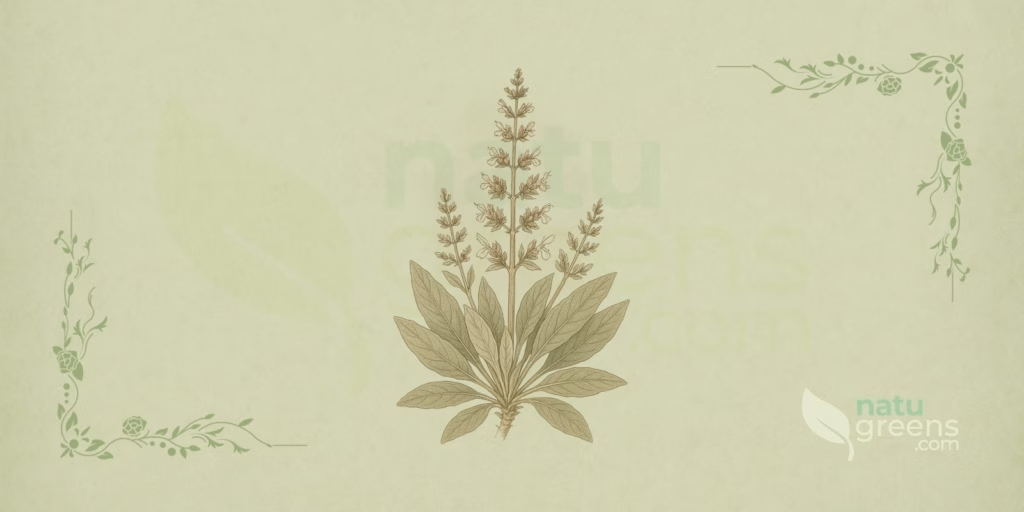
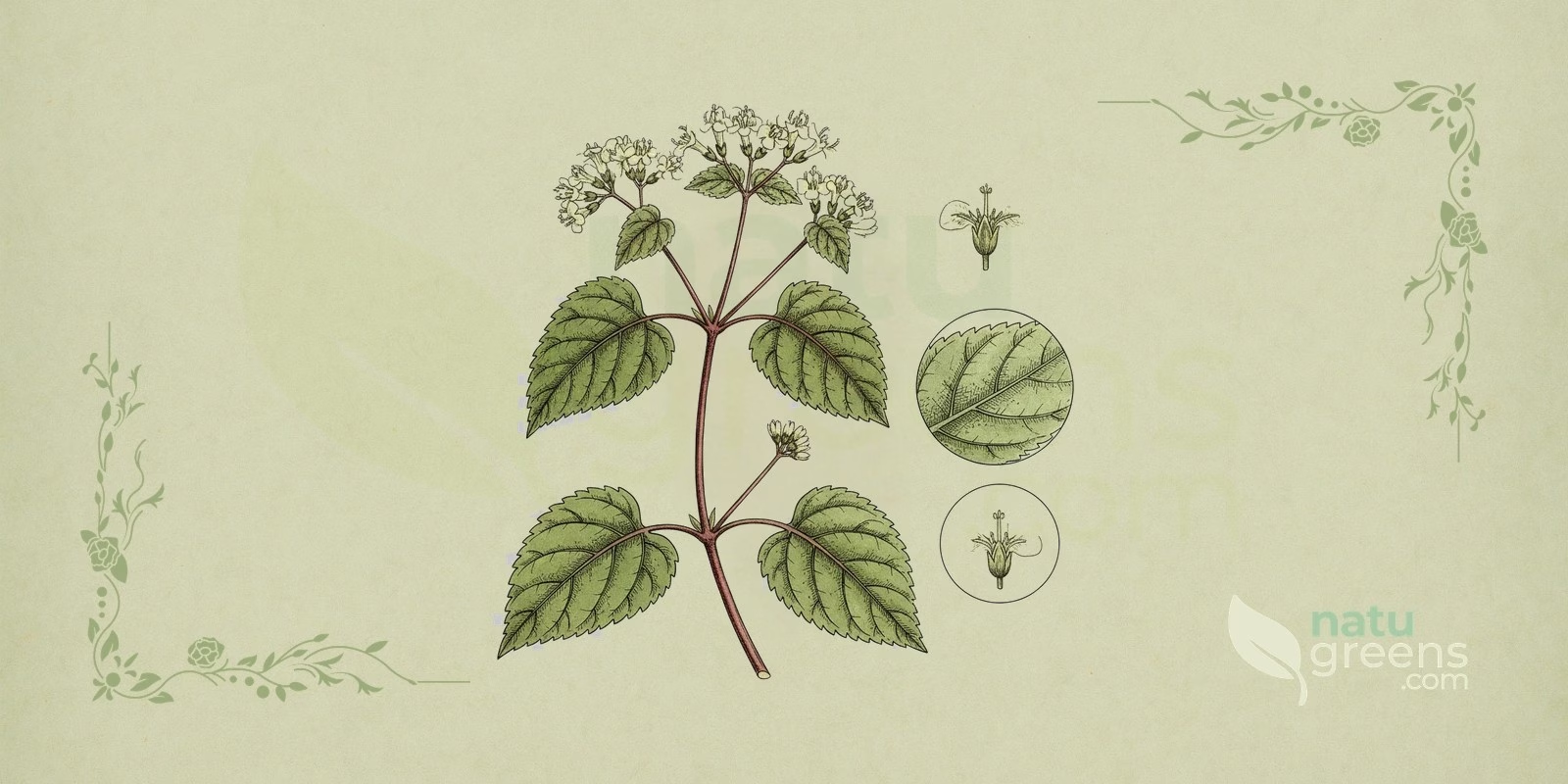
Mikania glomerata Spreng. / Guaco is a climbing plant native to Brazil, belonging to the Asteraceae family and used for centuries in Brazilian folk medicine. It stands out above all in the traditional care of respiratory conditions, with the leaves being the part used in the preparation of teas and syrups. The phytochemical compounds identified in the plant support, according to preliminary studies, properties traditionally described as expectorant, bronchodilator, and anti-inflammatory, which has cemented guaco’s role in Brazilian phytotherapy.
Preliminary scientific studies have investigated the ethnobotanical uses of guaco, providing part of the basis for its inclusion in Brazil’s National List of Medicinal Plants of Interest to the Unified Health System (RENISUS). The species’ wide geographic distribution and its long tradition of use reinforce the importance of the popular knowledge surrounding guaco. Modern research seeks to deepen this knowledge, always with attention to the contraindications and drug interactions detailed later in this article.
Popular and International Names of Guaco
- English: climbing hempvine, guaco.
- Spanish: guaco, guaco de olor, guaco trepador.
- Portuguese: chá-porreta (BR); guaco (PT), cipó-almecega, cipó-caatinga, coração-de-jesus, erva-de-cobra, guaco, guaco-cheiroso, guaco-de-cheiro, guaco-liso, guaco-trepador.
- French: guaco, liane à miel.
- Italian: guaco, mikania.
- German: Guaco, Kletterhanf.
Botanical Synonyms of Mikania glomerata
The botanical nomenclature of Mikania glomerata Spreng. includes several synonyms that reflect the taxonomic complexity and the evolving research on the genus, among them Mikania hatschbachii G.M.Barroso, Willoughbya glomerata (Spreng.) Kuntze, Mikania glomerata var. montana Hassl., Mikania scansoria DC., and Cacalia trilobata Vell. These names appear mainly in older or regional literature, but Mikania glomerata Spreng. remains the accepted and most widely used binomial worldwide.
Botanical Family: Asteraceae
Mikania glomerata belongs to the Asteraceae family, also known as Compositae, one of the largest families among flowering plants, with around 1,900 genera and more than 32,000 species distributed across every continent. Asteraceae are characterized by capitulum-type inflorescences, in which small flowers cluster together to form a single floral structure, and the family includes plants of great economic and food importance, such as lettuce, sunflower, and marigold.
Within this family, Mikania glomerata stands out for its wealth of bioactive compounds, among them sesquiterpene lactones, flavonoids, and essential oils associated with several of its medicinal properties. The chemical diversity of the Asteraceae is widely studied and contributes to the development of phytopharmaceuticals and supplements, which makes knowledge of guaco’s family essential for understanding its morphological and phytochemical characteristics.
Parts of Guaco Used
- Leaves
Ethnobotanical and Traditional Uses
- Cipó-almecega
- Cipó-caatinga
- Coração-de-jesus
- Cough with expectoration
- Erva-de-cobra
- Guaco-de-cheiro
- Guaco-liso
- Guaco-trepador
- Hoarseness
- Persistent cough
- Respiratory tract conditions
Therapeutic Properties of Guaco
- Analgesic (traditional use to relieve pain)
- Antiallergic (effect studied in reducing allergic reactions)
- Anti-inflammatory (activity studied against inflammation)
- Antimicrobial (inhibitory effect studied on the growth of microorganisms)
- Antiophidic (activity studied against the effects of snake venom)
- Antipyretic (effect studied in reducing fever)
- Antispasmodic (effect studied in reducing muscle spasms)
- Antiulcerogenic (studied for ulcer prevention)
- Bronchodilator (traditional use; bronchodilator effect studied in preliminary research)
- Expectorant (traditional use to facilitate mucus elimination, supported by preliminary studies)
Detailed Phytochemical Profile of Guaco
- Coumarins
- Essential oils
- Flavonoid glycosides
- Hydrolyzable tannins
- Stigmasterol
- Triterpenes/steroids
Preparation and Administration Forms of Guaco
- Infusion (tea)
- Syrup
Synergy with Other Medicinal Plants
Relief of Respiratory Symptoms
Guaco is traditionally combined with eucalyptus (Eucalyptus globulus) and pennyroyal (Mentha pulegium) in preparations aimed at persistent coughs and bronchitis, a pairing that tradition describes as enhancing the expectorant and bronchodilator effects attributed to these plants. In this combination, guaco is thought to act by thinning mucus, while eucalyptus and pennyroyal would complement it with actions traditionally described as antiseptic and decongestant, the volatile compounds of these plants adding to guaco’s coumarins.
Enhanced Anti-Inflammatory Action
In herbal tradition, guaco is combined with cat’s claw (Uncaria tomentosa) or turmeric (Curcuma longa) in pursuit of a more comprehensive anti-inflammatory effect, a pairing in which guaco’s triterpenes add to cat’s claw’s alkaloids and turmeric’s curcuminoids. Preliminary studies suggest that this combination may help modulate the inflammatory response, although use for chronic inflammatory conditions should always be supervised by a healthcare professional.
Recipes and Usage Protocols of Guaco
Homemade Guaco Syrup for Cough
Prepare a homemade syrup with 10 fresh guaco leaves, 1 cup of water, and 1 cup of brown sugar or honey. Wash and roughly chop the leaves, add the water and leaves to a pot, and cook over low heat for 10 minutes, without boiling. Strain the infusion, discarding the leaves, return the liquid to the pot, add the sugar or honey while stirring constantly, and cook until it reaches a syrupy consistency. Store in a sterilized jar in the refrigerator, where it keeps for up to a week. Take one tablespoon, three times a day; a traditional use for the relief of cough and expectoration.
Guaco Infusion for Respiratory Conditions
Prepare a simple infusion with 2 to 3 fresh leaves or 1 teaspoon of dried guaco leaves for each cup of boiling water. Pour the water over the leaves, cover and let steep for 5 to 10 minutes, strain, and drink warm, consuming this infusion up to three times a day. Traditionally used for the relief of hoarseness, cough, and cold and flu symptoms; for a more pleasant flavor, add honey and a few drops of lemon.
The preparations above follow traditional records and do not replace professional guidance. Before any internal use, check the contraindications and interactions described in this article.
Associated Therapies
Phytotherapy
In phytotherapy, guaco is traditionally used for various conditions, mainly respiratory ones, with its extracts used in folk tradition for bronchitis, asthma, and colds and flu, to which expectorant, bronchodilator, and anti-inflammatory actions still under study are attributed. Preliminary studies have identified active compounds and possible mechanisms of action that help explain this traditional use, making guaco a relevant resource for new phytotherapeutic formulations.
Homeopathy
Guaco is also used in homeopathy, although less widely, in preparations intended for respiratory conditions such as cough and congestion, following the homeopathic principle of similars and using the plant in specific dilutions. According to this approach, the goal is to stimulate the body’s natural response and address symptoms in a holistic and individualized way, with the choice of preparation depending on the totality of symptoms presented by the patient.
Flower Essence
Guaco is not a traditionally recognized flower essence, but its vibrational essence could, in theory, be developed and associated with releasing emotional blockages that manifest as respiratory problems, such as feelings of oppression or difficulty expressing oneself. From this hypothetical perspective, a guaco flower essence would assist with emotional clarity and personal expression, always as a complement and never as a substitute for conventional physical treatment.
Contraindications and Side Effects of Guaco
The use of Mikania glomerata may offer traditional benefits, but it requires caution, as there are contraindications and potential side effects to consider. The plant is contraindicated for pregnant women, breastfeeding women, and children under one year of age, since conclusive studies on its safety in these groups are lacking. Patients with severe liver or kidney disease should also avoid use without medical guidance, since the metabolism and excretion of guaco may be impaired under these conditions.
Drug Interactions
Guaco can interact with anticoagulant medications, such as warfarin, potentiating their effects and increasing the risk of bleeding, since the coumarins present in the plant have their own anticoagulant activity. For this reason, patients taking anticoagulants should avoid guaco or use it only under medical supervision, and the same caution applies to those taking diabetes medications, since guaco may influence blood glucose levels.
Common Side Effects
High doses of guaco can cause nausea, vomiting, and diarrhea, as well as rare allergic reactions that manifest as skin rashes, itching, or swelling. For this reason, it is important to follow the recommended dosages, watch for any adverse reactions, and seek professional guidance in case of doubt.
Historical Notes and Interesting Facts
The popular name guaco comes from the Tupi-Guarani word wa’ko, meaning “that which heals” or “healing herb,” reflecting its long history in Brazilian folk medicine. This importance led to guaco’s inclusion in Brazil’s National List of Medicinal Plants of Interest to the Unified Health System (RENISUS), reinforcing its official recognition. Beyond the medicinal properties traditionally attributed to it, guaco is a climbing vine that forms dense cover over other plants, which gave rise to the popular name guaco-trepador (“climbing guaco”). Popular tradition holds that the discovery of its expectorant properties came from observing animals that sought out the plant’s leaves to relieve respiratory problems.
Frequently Asked Questions about Guaco
Is Guaco Tea Safe for Children?
Guaco tea is not recommended for children under one year of age, and for older children it should be used only with caution and under medical guidance. This is because the coumarins present in the plant can interact with medications and cause adverse effects at high doses, so it is advisable to consult a pediatrician before giving any herbal remedy to children.
What Is the Recommended Dosage of Guaco Tea?
For adults, the traditional dosage is one cup (200 ml) of infusion prepared with 2 to 3 fresh leaves or 1 teaspoon of dried leaves, consumed up to three times a day. It is important not to exceed this amount, to observe the body’s response, to follow the manufacturer’s instructions in the case of commercial syrups, and to seek professional guidance in case of prolonged use.
Can Guaco Be Used During Pregnancy?
No, guaco is contraindicated for pregnant women, as the coumarins present in the plant have a potential anticoagulant effect and may pose a risk to pregnancy. For this reason, pregnant women should avoid consuming guaco and seek medical guidance before starting any herbal treatment.
Are There Interactions Between Guaco and Other Medications?
Yes, guaco interacts with anticoagulant medications, such as warfarin, increasing the risk of bleeding, and it also calls for caution in those taking diabetes medications, since it may influence blood glucose levels. For this reason, it is essential to inform your doctor or pharmacist about all medications and supplements you are taking before starting to use guaco.
Notice: this content is for informational purposes and does not replace professional medical advice. Consult a physician or herbal practitioner before using medicinal plants, especially during pregnancy, breastfeeding, or alongside medication.
References and Scientific Studies
Peer-Reviewed Scientific Studies (2)
- PMC2025 Garcia TP, et al. Biological Activities of Mikania glomerata and Mikania laevigata: A Scoping Review and Evidence Gap Mapping. Pharmaceuticals (Basel, Switzerland). 2025.
- PMC2014 Santana LC, et al. Mikania glomerata: Phytochemical, Pharmacological, and Neurochemical Study. Evidence-based complementary and alternative medicine : eCAM. 2014.
Supplementary Readings (1)
- 2016 Ministério da Saúde. Monografia da Espécie Mikania glomerata (Guaco). Brasília, 2016.