Crataegus laevigata is the hawthorn of Europe’s ancient woodlands, a small tree that holds the shaded interior of mature forest while its better known relative takes over the hedgerows and the open margins. It belongs to the Rosaceae, the family that gathers the apple, the pear, the rose and the strawberry, and sits within it in the tribe Maleae, the group of pome-bearing plants. In Britain, where it received one of the most detailed ecological accounts ever devoted to a European woody species, it works as an ancient woodland indicator, a standing that allows the history of a forest to be read from what grows in it.
Few European plants carry so tangled a nomenclatural record. For more than two centuries this species and Crataegus monogyna were taken for a single plant under the name Crataegus oxyacantha, a binomial that was eventually rejected for ambiguity precisely because nobody could establish which of the two Linnaeus had in front of him. The trail of that confusion survives in older literature, in nursery catalogs and on commercial labels, and it forces anyone reading pre-twentieth-century sources to examine the material described before accepting the name printed above it.
This page gathers the botanical profile of the species: formal classification, field characters, distribution and environment, cultivation requirements, reproductive calendar, close relatives that are mistaken for it, descriptive chemical composition, historical and ethnographic record, and conservation status.
Taxonomy
The position of the species in current botanical classification is as follows:
- Kingdom: Plantae
- Division: Tracheophyta (Magnoliophyta, angiosperms)
- Class: Magnoliopsida (eudicots)
- Order: Rosales
- Family: Rosaceae
- Subfamily: Amygdaloideae
- Tribe: Maleae
- Genus: Crataegus L., 1753
- Species: Crataegus laevigata (Poir.) DC., 1825
The basionym is Mespilus laevigata Poir., published in 1798 in the Encyclopédie Méthodique, and the transfer to Crataegus was made by Augustin Pyramus de Candolle in the second volume of the Prodromus Systematis Naturalis Regni Vegetabilis, of 1825. The IPNI record confirms the authorship and the page of original publication.
The genus is one of the most difficult in the family. Depending on the treatment adopted, the number of accepted species swings between roughly 140 and more than a thousand, a range that reflects not the ignorance of specialists but the biology of the group: extensive hybridization, apomixis and polyploidy produce intermediate populations that resist sharp boundaries.
Accepted Synonyms
- Crataegus coriacea Gand.
- Crataegus helvetica Walo Koch
- Crataegus oxyacantha f. laevigata (Poir.) Beck
- Crataegus oxyacanthoides Thuill.
- Crataegus palmstruchii Lindm.
- Crataegus subinermis Gand.
- Mespilus digyna Gray
- Mespilus intermedia Poir.
- Mespilus laevigata Poir.
- Mespilus oxyacanthoides (Thuill.) DC.
- Oxyacantha obtusata (DC.) Roem.
- Oxyacantha vulgaris (DC.) Roem.
The Rejection of the Name Crataegus oxyacantha
Linnaeus brought together under Crataegus oxyacantha what is now recognized as two distinct species, and regional authors across almost the whole of Europe went on using the binomial as an aggregate term. The first British flora to separate C. laevigata from C. monogyna was Babington’s, in 1843, which treated them as varieties while already suggesting that they might stand as species in their own right. The ambiguity was only settled formally when Byatt, in 1974, showed that the Linnaean name could not be applied with confidence to either plant, which led to its rejection.
There is also a minor dispute over the spelling of the epithet. Gutermann argued in 2011 that the correct form should be levigata, based on his reading of De Candolle’s publication, but the close examination of the original carried out by Christensen and Talent in 2012 confirmed laevigata as the valid spelling.
Subspecies
Sell and Murrell’s treatment recognizes two infraspecific entities, handled by other authors as varieties. The subsp. laevigata prevails in the west of the range and in the lowlands, and is the dominant form in Britain, with leaves of 15 to 35 millimeters, nearly glabrous and lacking tufts of hair in the vein axils of the lower surface. The subsp. palmstruchii is more frequent in mountains and in the east, with leaves of 30 to 50 millimeters, more densely pubescent veins beneath, axillary hair tufts present, a hairy hypanthium and larger ellipsoid fruits, of 10 to 14 millimeters by 13 to 15 millimeters.
Etymology
The generic name Crataegus comes from the Greek krataigos, derived from kratys, strength or hardness. The second half of the compound allows more than one reading: some authors tie it to akis, a sharp point, in reference to the thorns, while others connect it to aix, goat, suggesting the living fence able to hold a flock. All three readings converge on the same attributes of the plant, the hardness of the wood and the armature of the branches. The epithet laevigata comes from the Latin laevigare, to smooth or to polish, and describes the glabrous, glossy surface of the foliage, a character that also earned the species the name smooth hawthorn.
Morphological Description
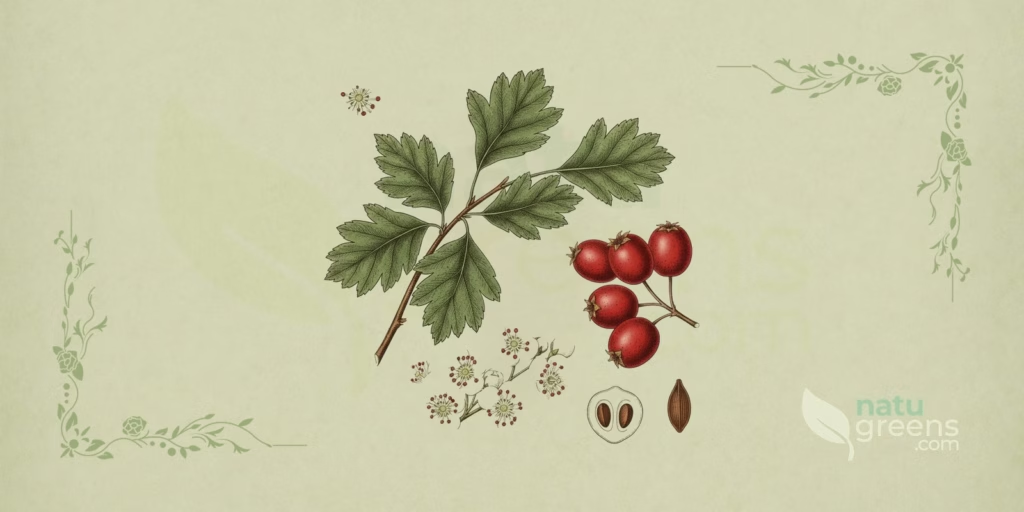
A small deciduous tree that reaches 8 meters in height with some regularity and exceptionally 12 meters, though it appears just as often as a multi-stemmed shrub of untidy habit. The crown is dense, broad and rounded, and the trunk does not carry far into it, branching early. The branches are spreading or ascending, generally less rigid than those of C. monogyna, and tend to droop at the tips. The buds are ovoid to subglobose with a rounded apex, measuring between 1.1 and 2.1 millimeters long by 1.2 to 1.9 millimeters wide, with dark brown scales.
Leaves
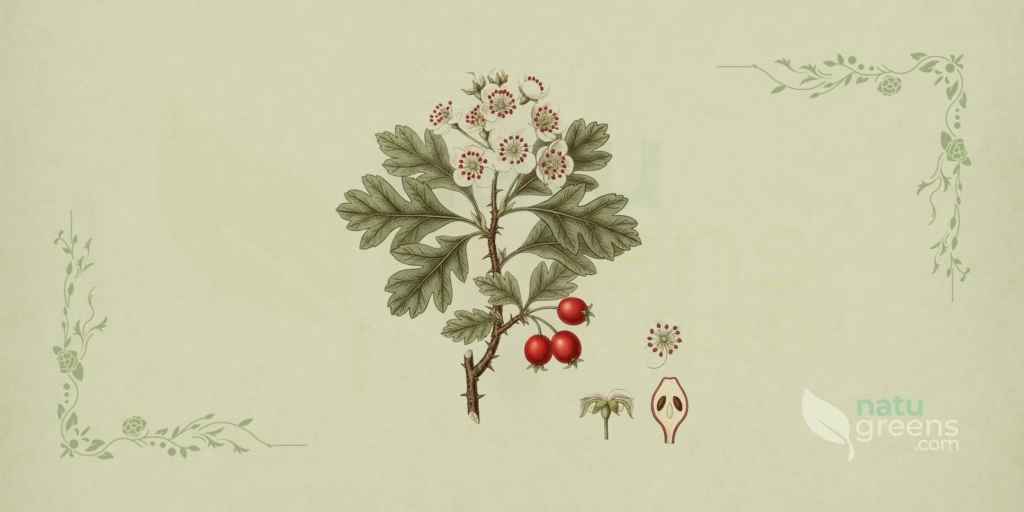
The leaves are alternate, often leathery, dark green and glossy above and pale green beneath. They are glabrous except for scattered hairs along the main veins on both surfaces when young, and characteristically lack the tufts of hair in the vein axils that are common in C. monogyna in Britain. The outline runs from obovate to almost rounded, with one to three pairs of blunt, shallow lobes that rarely reach halfway to the midrib. The lobes are rounded in outline and broader than long, with a crenate-serrate margin except in the sinuses, and the basal lobe carries 6 to 15 teeth.
Size varies with position on the branch, and that variation has practical value for anyone collecting herbarium material. The leaves of long shoots are the largest and the most deeply lobed, measuring 1.9 to 7.2 centimeters by 1.8 to 5.1 centimeters. Those of short shoots fall between 2.0 and 6.0 centimeters by 1.5 to 3.2 centimeters, and those of flowering shoots are smaller still, with one or two pairs of lobes or none at all. The main veins are straight or curve forward toward the leaf apex, unlike C. monogyna, where they curve backward. The base is cuneate or rounded, the apex acuminate, the petiole measures 6 to 20 millimeters and the stipules are conspicuous and leaf-like on long shoots.
Flowers
The flowers are borne mostly on short shoots, gathered in lax corymbs of 3 to 11 units, 2.5 to 5.0 centimeters across. The pedicels measure 6 to 30 millimeters and are glabrous or rarely villous, a character that helps separate the species from C. monogyna, whose pedicels are pubescent. Each flower is hermaphrodite and measures 15 to 18 millimeters in diameter. The sepals, five in number, are broadly triangular, as wide as they are long, with an entire margin and an acute apex. The five petals are white or pale pink, with striate papillae, measuring 5 to 10 millimeters by 5 to 9 millimeters. The hypanthium is 3 to 4 millimeters and glabrous.
The stamens number 17 to 22, with pale filaments and pink anthers, rarely purplish. The styles are usually two, ranging from one to five in isolated flowers, and the stigmas are yellow. The number of styles is the most reliable diagnostic character in the group, because it translates directly into the number of stones in the fruit and stays legible even in dried material.
Fruits and Seeds
The fruit is a subglobose to ellipsoid pome, dark red at maturity, 8 to 10 millimeters across in most specimens and with a recorded range of 6 to 14 millimeters, by 6 to 12 millimeters long. Mean volume, around 1.60 cubic centimeters, is more than twice that measured in C. monogyna, about 0.73 cubic centimeters. The surface is generally glabrous and free of basal protuberances, and the apex bears the crown of persistent sepals, recurved or spreading. The flesh is yellowish, with a moisture content between 68 and 77 percent.
The stones, or pyrenes, are usually two and follow the number of styles in the flower that produced them. They measure about 5 to 6 millimeters, with dorsal and ventro-lateral excavations, and differ subtly from those of C. monogyna in their blunter tip, against the pointed apex of the sister species. Each fruit holds an average of 2.1 to 2.8 seeds, with an individual mass of 60 to 68 milligrams, therefore smaller than those of C. monogyna, which fall between 97 and 130 milligrams. Dispersal ecology studies classify the fruits as non-toxic, with no risk to the animals that eat them, humans included.
Bark and Twigs
The bark is grayish brown to orange brown and becomes cracked and fissured with age. The twigs are a dull grayish brown, densely set, and appear shiny and glabrous when young. The thorns are fewer and shorter than in C. monogyna, measuring 6 to 15 millimeters, a difference consistent with the woodland habit of the species, less exposed to browsing than hedgerow populations.
Distribution and Habitat
The species is native to western and central Europe. Its natural range runs from the British Isles east to Czechia and Hungary, with an almost certainly native presence in Romania and Ukraine. Northward it reaches southern Sweden, Latvia and Estonia, and southward it extends to the Spanish Pyrenees and to Italy, most probably including Sicily. Taxonomic databases also record it in Austria, Belarus, Belgium, Corsica, Denmark, France, Germany, the Netherlands, Norway, Poland, European Russia, Slovakia and Switzerland. It is most widespread in the north-central portion of that area and becomes scarce at the edges, as in Belgium, and it is absent from Greece.
In the British Isles the distribution is far more restricted than that of C. monogyna. The species is concentrated in southern and eastern England, reaching naturally as far as the Midlands, which is where its English vernacular name came from. It is largely absent as a spontaneous plant from Scotland and Wales, and Scottish records almost always correspond to planted specimens. Whether or not it is native to Ireland remains under discussion: mature specimens occur in several counties and there is a herbarium record of the hybrid dating from 1895, but the most widely accepted hypothesis puts its presence down to English nursery stock brought in during the parliamentary enclosures.
Beyond the natural range the species has been carried to a number of temperate regions. It has naturalized in the Gulf Islands of Washington State, in Canada and in the eastern United States, and it was introduced to Tasmania and other parts of Australia in the nineteenth century for hedging, where it now counts as a noxious weed in several states. There are also records from Japan, New Zealand, Tanzania and West Africa, besides the temperate Himalaya of India, between 1,800 and 3,000 meters of altitude.
The typical habitat defines the species as much as its morphology does. This is a plant of ancient woodland, shade tolerant, found inside mature forest, along woodland edges, in old hedges and on boundary banks over clay soils. It prefers heavy-textured soils, from loam to clay, and consistently avoids chalk, limestone, oolitic soils and clay-with-flints, a restriction that explains its concentration in the English Midlands and in the Weald of the southeast. The Ellenberg indicator value for pH in Britain is 7, matching weakly acid to weakly basic conditions. In altitude it runs from sea level in the west up to 810 meters in the Polish Sudetes, 956 meters in Slovenia, 1,281 meters in the Tatra Mountains and 1,560 meters at Piano Ruggio, in Italy.
Cultivation
The species is subatlantic and prefers a cool temperate climate. Averages recorded in Britain sit at 3.5 degrees Celsius for January and 16.2 degrees for July, with annual rainfall of about 674 millimeters, therefore in settings slightly warmer and drier than those occupied by C. monogyna. It withstands the winters of central and northern Europe well and has no thermal requirement that would restrict it within the temperate zones.
As for soil, it grows across a wide range of substrates, siliceous and moderately acid ones included, and tolerates considerable variation in moisture. Within that range, however, it performs best on loam and clay soils, above all the heavy ones. Shade tolerance is the agronomic trait that sets it apart: it flowers readily even under a closed canopy and dominates the understory of grown-out coppice, a situation in which C. monogyna fails to establish. Where light increases through disturbance or felling, the relationship reverses and the species loses ground.
Propagation from Seed
The seeds show double dormancy, a hard seed coat combined with a physiological chilling requirement. Without prior treatment, germination may not occur before 18 months, or even before the third growing season after the seed was produced. The protocol established in Polish trials consists of warm stratification in a moist medium, with temperature alternating between 20 and 30 degrees Celsius for 16 to 20 weeks, followed by a cold phase at 3 degrees for 16 to 18 weeks, at the end of which the radicles are already emerging. That treatment raises germination from 2 to 4 percent up to 87 to 94 percent, and the seedlings emerge four to six weeks after sowing.
Chemical scarification in concentrated sulfuric acid for two to three hours, followed by soaking in water for 24 hours, shortens the warm phase from 16 to 20 weeks down to just four, with equivalent germination rates. The seeds are orthodox and can be dried to 9 to 13 percent moisture without loss of viability, tolerating storage at minus 3 degrees Celsius for 12 months with a modest drop in germination. Germination is epigeal and the radicle develops into a taproot with fine, short laterals.
Vegetative Propagation and Plant Health
Ornamental cultivars are multiplied by grafting, a practice that also preserves floral characters which do not come true from seed. The species responds well to cutting and forms large stools under a coppice regime, which favors its persistence in managed woodland. It has also been assessed as a dwarfing rootstock for pears, with compatibility reported for clones of Pyrus communis and other Maleae.
The sensitive point in cultivation is plant health. European hawthorns, this species among them, are highly susceptible to fire blight caused by Erwinia amylovora, and the cultivars ‘Paul’s Scarlet’ and ‘Rosea Flore Pleno’ are among the worst affected. Plantings can act as a reservoir of inoculum for neighboring apple and pear trees, though the risk attached to C. laevigata is lower than that of C. monogyna given its more woodland occurrence, further from orchards. To these are added the powdery mildew Podosphaera clandestina, the rusts of the genus Gymnosporangium, which require an alternate host in Juniperus, and the leaf spot caused by Entomosporium thuemenii and Diplocarpon mespili.
Phenology
Flowering runs from April to June, shifting toward the end of that window at the northern extreme of the range, in Sweden. In southeastern England the coincidence with the liturgical calendar earned the plant the local name of Whitsun rose. Long-run Dutch data document a marked advance: mean onset of flowering moved from 17 May, in the 1940 to 1968 series, to 1 May in the 2001 to 2010 series. The flowers open before the leaves are fully developed, and earlier on shrubs than on trees.
The species comes into leaf before C. monogyna and flowers some 8 to 14 days ahead of it. That head start is not enough to constitute a reproductive barrier, because the overlap between the flowering periods of the two species reaches 40 percent, which sustains the continuous formation of the hybrid. Under controlled conditions, individual plants stayed in flower for 12 days, with single flowers lasting 8 days.
The flowers are protogynous. The anthers of the outermost stamens release pollen one or two days after the flower opens, and the filaments curve inward on warm days, an arrangement that would make self-pollination mechanically feasible. The species is, however, largely self-incompatible: crossing trials obtained fruit set in 30 to 59 percent of flowers under cross-pollination, against only 2 percent under self-pollination. Pollination is entomophilous, mainly by hymenopterans and dipterans drawn by the nectar and by the scent of the flowers, which comes from the release of trimethylamine. Pollen viability is high, at 96 to 98 percent.
The fruits develop over about 106 days, against 89 days in C. monogyna, and ripen between June and November, with late ripening in northern populations. A ripe fruit persists on the plant for around 64 days, and the tree holds ripe fruit for an average of 82 days, against 150 days in C. monogyna. Dispersal falls mainly to frugivorous birds, notably the blackbird, the fieldfare, the redwing and the song thrush, and the seeds either pass through the gut or are regurgitated. There is no persistent seed bank in the soil, a feature that makes regeneration dependent on recent seed rain.
Related Species and Confusions
Identifying Crataegus in the field is acknowledged to be difficult, and the material examined should include ripe fruit and leaves from short lateral shoots to allow a secure determination. A specimen judged only by the leaves of vigorous shoots leads to error easily.
Distinguishing Crataegus monogyna
This is the central confusion of the group and the reason the name C. oxyacantha was rejected. The characters that separate the two species are the following:
- Fruit stones: C. laevigata generally has two pyrenes, occasionally three; C. monogyna has a single pyrene, occasionally two.
- Flower size: above 15 millimeters in diameter in C. laevigata, up to 15 millimeters in C. monogyna.
- Leaf lobes: one to three pairs of shallow, rounded lobes that rarely reach halfway to the midrib in C. laevigata, against five to seven deep, acute lobes that pass two thirds of that distance in C. monogyna.
- Main veins: straight or curved forward in C. laevigata, curved backward in C. monogyna.
- Pedicels and hair tufts: glabrous pedicels and vein axils without hair tufts in C. laevigata, against pubescent pedicels and axillary tufts present in C. monogyna in Britain.
- Styles: usually two in C. laevigata, varying from one to five; a single one in C. monogyna.
- Thorns: fewer and shorter in C. laevigata, at 6 to 15 millimeters, and longer and more frequent in C. monogyna.
The complication is that the two species are interfertile and produce the hybrid Crataegus × media Bechst., intermediate in morphology, with one to two styles and the same number of stones. The only relevant barrier to hybridization is the spatial separation of their habitats, and where woodland fragmentation has brought the populations together the hybrid has become frequent, in several British regions more common than C. laevigata itself. A specimen with two styles is therefore not automatically C. laevigata, and the diagnosis gains reliability when several characters point the same way.
Distinguishing Crataegus mexicana
Separation from the tejocote is immediate and does not depend on subtle characters. The Mexican species produces pomes of 1.5 to 3 centimeters in diameter, golden yellow to orange at maturity, against the dark red fruits of 8 to 10 millimeters of the European species. The leaves of C. mexicana are rhombic-elliptic to ovate-lanceolate, with a serrate margin and no marked lobing, while those of C. laevigata are obovate and lobed. The Mexican inflorescence gathers 2 to 6 flowers in an umbel, against the corymbs of 3 to 11 flowers of the European plant. To these are added the wholly disjunct distribution, with C. mexicana confined to the mountains of Mexico and Guatemala, and the more persistent, more leathery foliage of the neotropical species.
Other Species and the Ambiguity of Common Names
Besides C. monogyna, the species hybridizes with C. rhipidophylla, giving C. × macrocarpa, and with C. lindmanii, forming C. × calycina. There is also the intergeneric hybrid with the medlar, Mespilus germanica, named × Crataemespilus grandiflora, alongside the graft chimeras known as Crataegomespilus, obtained by grafting medlar onto hawthorn.
A word of caution about vernacular naming is in order. English is one of the few languages that separates the two European species by name, since Midland hawthorn belongs to C. laevigata and common hawthorn to C. monogyna, but the older and far more widespread terms may, mayblossom, whitethorn and quickthorn are applied to both without distinction, and so is hawthorn on its own. The name English hawthorn adds a further trap, because in North American horticultural usage it has attached itself to C. laevigata while in Britain it reads as a loose label for the genus. Faced with any text that gives only the common name, identifying the species depends on checking the binomial cited and, where possible, the characters described.
Phytochemistry
This section describes the chemical composition documented for the species. It is analytical characterization, with no bearing on effects in people.
Total phenolic content measured in C. laevigata reaches 1,288 milligrams per 100 grams of fresh mass, with total phenolic acids at 964 milligrams per 100 grams, values close to those of C. monogyna and higher than those of seven other shrubs analyzed in the same study. In the flowering parts of wild European samples, total phenolic content varied from 3 to 19 grams per kilogram of dry mass, averaging 12 grams per kilogram.
Characterization by chromatography coupled to mass spectrometry identified 54 compounds in the leaves and 47 in the flowers of the species, against 38 and 41 in C. monogyna. The classes represented include chlorogenic acids and other phenolic acids, proanthocyanidins, flavonoid glycosides and flavonoid aglycones. Among the flavonoids described are apigenin, catechin, epicatechin, hyperoside, isoquercitrin, isovitexin, procyanidin B-2, quercetin, rutin and vitexin. Proanthocyanidins reach 40.6 grams per kilogram in Slovenian material, and the total flavonoid content of the flowers proved the highest among ten species of Crataegus compared.
The composition carries taxonomic interest. Vitexin and its derivatives occur at higher concentration in the leaves of the European species of the genus, whereas rutin is markedly concentrated in the North American ones. The absence of isoorientin, orientin, 8-methoxykaempferol-3-O-glucoside and 4”-acetyl-vitexin-2”-O-rhamnoside in C. laevigata has been proposed as an auxiliary chemical criterion for separating it from C. monogyna, which gives phytochemistry a supporting role in species delimitation.
Among the triterpenes, oleanolic and ursolic acids are the prominent components. Analyses of volatile organic compounds detected the sesquiterpenes caryophyllene and humulene in floral emissions, with farnesene and the monoterpene limonene appearing after flowering. Neither alkaloids nor true saponins were detected in the species, although the pseudo-saponoside tormentoside has been identified. Oxalic acid crystals occur in every part of the plant and account for 0.065 percent of leaf dry mass.
The concentration of metabolites responds to environmental conditions. Seedlings subjected to ten days of drought showed a rise in epicatechin and hyperoside with a fall in vitexin and acetylvitexin, while cold stress at 4 degrees Celsius raised vitexin, epicatechin, hyperoside, quercetin and acetylvitexin. The species also accumulates heavy metals in roots and leaves when grown on contaminated soil.
History and Ethnobotany
The evolutionary split between C. laevigata and C. monogyna has been dated by chloroplast DNA analysis at about ten million years, which makes the morphological likeness between them a case of form conserved across a considerable span. The fossil record, however, does not tell the two apart: wood and charcoal macrofossils are indistinguishable, and as a rule the same holds for the seeds. Pollen grains can be separated statistically, since those of C. laevigata are predominantly spheroidal, 28 to 40 micrometers with low-relief striation, against elongate grains of 30 to 44 micrometers with high relief in C. monogyna, but the criterion has never been put to work in paleobotanical practice.
Hawthorn has been a common plant in European woodland since the Mesolithic, and every cultural period from the Neolithic to Norman times left records of the genus. Most of the prehistoric material identified corresponds to C. monogyna, the more effective pioneer in a landscape that was opening up, though the possibility that C. laevigata was underestimated through difficulty of identification remains open.
The historical uses recorded for the wood and for the plant are varied. The wood, dense and even grained, was worked into tool handles and walking sticks. Bark and roots yielded a yellow or brown dye, and the bark was used in tanning, a practice documented in Algiers. The fruits were eaten fresh and turned into juices, jellies and spirits in several European regions, and they were dried for winter use; the roasted stones served as a coffee substitute. In Italy, hawthorn was regularly planted to enclose farm plots, a function lost with mechanization and the need to move machinery through, which led to the near-complete disappearance of those hedges.
In the field of the old materia medica, the record goes back to Dioscorides, in the first century, who named the plant by the Greek word that would give rise to the rejected Linnaean binomial. It was that nomenclatural route, and not any botanical attribute, that fixed Crataegus oxyacantha in European pharmaceutical literature for so long, which is why the binomial keeps appearing in sources that describe one or the other of the two European species indifferently.
Conservation
The species is assessed as Least Concern on the IUCN Red List, a category consistent with its broad European distribution. It also appears on the Red List of the vascular plants of Luxembourg, there likewise in the least concern category, alongside C. monogyna and C. rhipidophylla.
Those figures, however, hide a process that deserves attention. The recorded frequency of C. laevigata in Britain has changed little since 1962, but part of that apparent stability comes from plantings made inside and outside the native range, and another part from the ease with which the species is confused with the hybrid C. × media, which means some new records in fact correspond to the hybrid. Behind that appearance of stability lies strong evidence of decline in the genetically pure populations, most of all in southeastern England.
The mechanism is well understood. Disturbance and fragmentation of woodland open the way for C. monogyna to move into settings once held only by the shade species, and since the two are fully interfertile the consequence is hybridization followed by introgression. The most pessimistic assessment in the literature went so far as to suggest, back in 1975, that pure C. laevigata might disappear altogether as introgression advanced, and an equivalent problem has been identified in Belgium and in Poland. Relatively pure populations survive where woodland blocks are large and little fragmented, as in the extensive forests of northeastern France.
The situation reverses at the edges of the range. In Bulgaria, at the far southeast of the native area, the hybrid C. × media is rare to the point of having been proposed for inclusion in the national red book with a need for legal protection. The absence of a persistent soil seed bank adds a further element of fragility, because the recovery of a population depends entirely on recent dispersal by birds.
Interesting Facts
- Dispersal of the species has been documented from unexpected sources: hawthorn stones have been identified in the droppings of cranes, of bears and of ungulates, and there is an old account of a peregrine falcon whose perch accumulated stones from the crops of the pigeons it had taken.
- De Candolle recorded in 1825 a horticultural technique that consisted of feeding the stones of the plant to turkeys, their passage through the birds’ gut bringing germination forward by about a year compared with untreated seed.
- The scent of the flowers, unpleasant to the human nose, comes from the release of trimethylamine, the same compound associated with the smell of decaying fish, and it is precisely that compound which attracts the flies responsible for part of the pollination.
- Danish glasshouse trials measured how far the species depends on pollinators: plants visited by the leafcutter bee Megachile rotundata produced 269 fruits, against a single fruit on plants kept without insect access.
- The cultivar ‘Paul’s Scarlet’, with double red flowers, arose around 1880 as a branch sport of the cultivar ‘Rosea Flore Pleno’ and holds an ambiguous status: in Britain and North America it is assigned to C. laevigata, while on the European continent it is usually treated as a cultivar of the hybrid C. × media.
- A minute moth, Coleophora coracipennella, bores into the flower buds to feed on pollen and went as far as sterilizing 20 percent of the flowers of a population studied in Oxfordshire, with a direct effect on that year’s fruit crop.
- The Glastonbury Thorn, the legendary hawthorn tied to English tradition by flowering twice a year, does not belong to this species: it is the cultivar ‘Biflora’ of C. monogyna, an attribution frequently swapped in popular writing.
- Southwood’s classic survey counted 149 insect species associated with British hawthorns, a figure that gives the measure of these trees as a support for fauna, even if it falls well short of the 284 species recorded on oaks.
Notice: this content is for informational purposes and does not replace professional medical advice. Consult a physician or herbal practitioner before using medicinal plants, especially during pregnancy, breastfeeding, or alongside medication.
References and Scientific Studies
View All 16 Cited References
Peer-Reviewed Scientific Studies (3)
- DOI2021 Thomas, P. A., Leski, T., La Porta, N., Dering, M., Iszkuło, G. Biological Flora of the British Isles: Crataegus laevigata. Journal of Ecology, 109(1), 572-596. 2021. ↗
- DOI2012 Edwards, J. E., Brown, P. N., Talent, N., Dickinson, T. A., Shipley, P. R. A review of the chemistry of the genus Crataegus. Phytochemistry, 79, 5-26. 2012. ↗
- DOI2021 Fichtner, A., Wissemann, V. Biological Flora of the British Isles: Crataegus monogyna. Journal of Ecology, 109, 541-571. 2021. ↗
Supplementary Readings (13)
- 1992 Christensen, K. I. Revision of Crataegus sect. Crataegus and nothosect. Crataeguineae (Rosaceae-Maloideae) in the Old World. Systematic Botany Monographs, 35, 1-199. 1992.
- 1974 Byatt, J. I. Application of the names Crataegus calycina Peterm. and C. oxyacantha L. Botanical Journal of the Linnean Society, 69, 15-21. 1974.
- 1975 Byatt, J. I. Hybridization between Crataegus monogyna Jacq. and C. laevigata (Poiret) DC. in south-eastern England. Watsonia, 10, 253-264. 1975.
- 2012 Christensen, K. I., Talent, N. Crataegus laevigata or C. levigata (Rosaceae), a paleographic analysis. Phyton (Horn, Austria), 52(2), 195-201. 2012.
- de Candolle, A. P. Prodromus Systematis Naturalis Regni Vegetabilis, pars 2. Paris. 1825.
- Poiret, J. L. M. Mespilus laevigata. In: Encyclopédie Méthodique, Botanique, 4(2), 439. Paris. 1798.
- 2006 Bujarska-Borkowska, B. Seed dormancy breaking in Crataegus laevigata. Dendrobiology, 56, 3-11. 2006.
- 2015 Karar, M. G. E., Kuhnert, N. UPLC-ESI-Q-TOF-MS/MS characterization of phenolics from Crataegus monogyna and Crataegus laevigata leaves, fruits and their derived drops. Journal of Chemical Biology & Therapeutics, 1, e102. 2015.
- 2012 Lo, E. Y. Y., Donoghue, M. J. Expanded phylogenetic and dating analyses of the apples and their relatives (Pyreae, Rosaceae). Molecular Phylogenetics and Evolution, 63, 230-243. 2012.
- 1991 Eriksson, O., Ehrlén, J. Phenological variation in fruit characteristics in vertebrate-dispersed plants. Oecologia, 86, 463-470. 1991.
- 2014 Sell, P., Murrell, G. Flora of Great Britain and Ireland, vol. 2. Cambridge University Press. 2014.
- International Plant Names Index. Crataegus laevigata (Poir.) DC. Royal Botanic Gardens Kew, Harvard University Herbaria and Australian National Herbarium. Record 723644-1. ↗
- Plants of the World Online. Crataegus laevigata (Poir.) DC. Royal Botanic Gardens Kew. ↗