Crataegus mexicana is the hawthorn of the Mexican and Guatemalan highlands, known across nearly its whole range by the Nahuatl name tejocote. It belongs to the Rosaceae, the family that also gathers the apple, the pear, the rose and the strawberry, and sits within it in the tribe Maleae, the group that bears pome fruits. Among the roughly two hundred accepted species of Crataegus, few have won the cultural standing this one holds on the Mexican plateau, where the yellow fruit carries the December festive season and supports an entire production chain.
Anyone hunting for this plant in the horticultural literature will keep running into the name Crataegus pubescens, and that is where one of the most stubborn nomenclatural tangles in the genus begins. The binomial is not valid for the tejocote: it is an illegitimate name, mistakenly applied to the Mexican species for more than a century, and unpicking that history takes up much of the taxonomy section below. The correct name, accepted by current taxonomic databases, is Crataegus mexicana Moc. & Sessé ex DC.
This page gathers the botanical profile of the species: formal classification, field characters for identification, distribution and environment, reproductive behavior, close relatives it gets mistaken for, a descriptive account of its chemistry, the historical and ethnographic record, and its conservation status.
The Mexican hawthorn is known across nearly its whole range by the Nahuatl name tejocote.
Within the Rosaceae, the Mexican hawthorn sits in the tribe Maleae, the group that bears pome fruits.
Taxonomy
The position of the species in current botanical classification is as follows:
- Kingdom: Plantae
- Division: Tracheophyta (Magnoliophyta, angiosperms)
- Class: Magnoliopsida (eudicots)
- Order: Rosales
- Family: Rosaceae
- Subfamily: Amygdaloideae
- Tribe: Maleae
- Genus: Crataegus L., 1753
- Species: Crataegus mexicana Moc. & Sessé ex DC., 1825
The Problem With the Name “Crataegus pubescens”
The species was published by Augustin Pyramus de Candolle in the Prodromus Systematis Naturalis Regni Vegetabilis in 1825, from material attributed to José Mariano Mociño and Martín de Sessé, botanists of the Royal Botanical Expedition to New Spain. In parallel, Carl Sigismund Kunth described Mespilus pubescens on the basis of collections made by Humboldt and Bonpland, a combination that Ernst Gottlieb von Steudel transferred to Crataegus pubescens in 1840.
The trouble is that Crataegus pubescens already existed. Carl Borivoj Presl had published that binomial in 1826, in the Flora Sicula, for a Sicilian plant. Steudel’s name is therefore a later homonym and nomenclaturally illegitimate, a situation recorded explicitly in IPNI. In 1997, while revising the species of northern Mexico, James B. Phipps proposed Crataegus gracilior as a replacement name for the taxon of Kunth and Steudel.
The practical consequence deserves the attention of anyone identifying herbarium material or reading older literature. The name Crataegus pubescens, once correctly resolved, now points to Crataegus gracilior, a species distinct from the commercial tejocote. For decades, though, it was wrongly applied to the large-fruited plant grown in Puebla and Tlaxcala, and that mistaken usage still survives in nursery catalogs, commercial labels and agronomy papers. The two species share the common name tejocote, which helped to cement the error.
Accepted Synonyms
- Crataegus nelsonii Eggl.
- Crataegus quitensis Bosc ex DC.
- Crataegus stipulacea Loudon
- Crataegus stipulosa (Kunth) Steud.
- Mespilus stipulosa Kunth
Etymology
The generic name Crataegus comes from the Greek kratos, strength, joined to akis, sharp point, a double reference to the hardness of the wood and to the thorns borne on the branches. The epithet mexicana records the provenance of the material on which the description rested. The common name tejocote comes from the Nahuatl texocotl, built from tetl, stone, and xocotl, sour fruit, a reading that captures at once the flavor of the fruit and the hardness of the woody stone it holds at its center.
Morphological Description
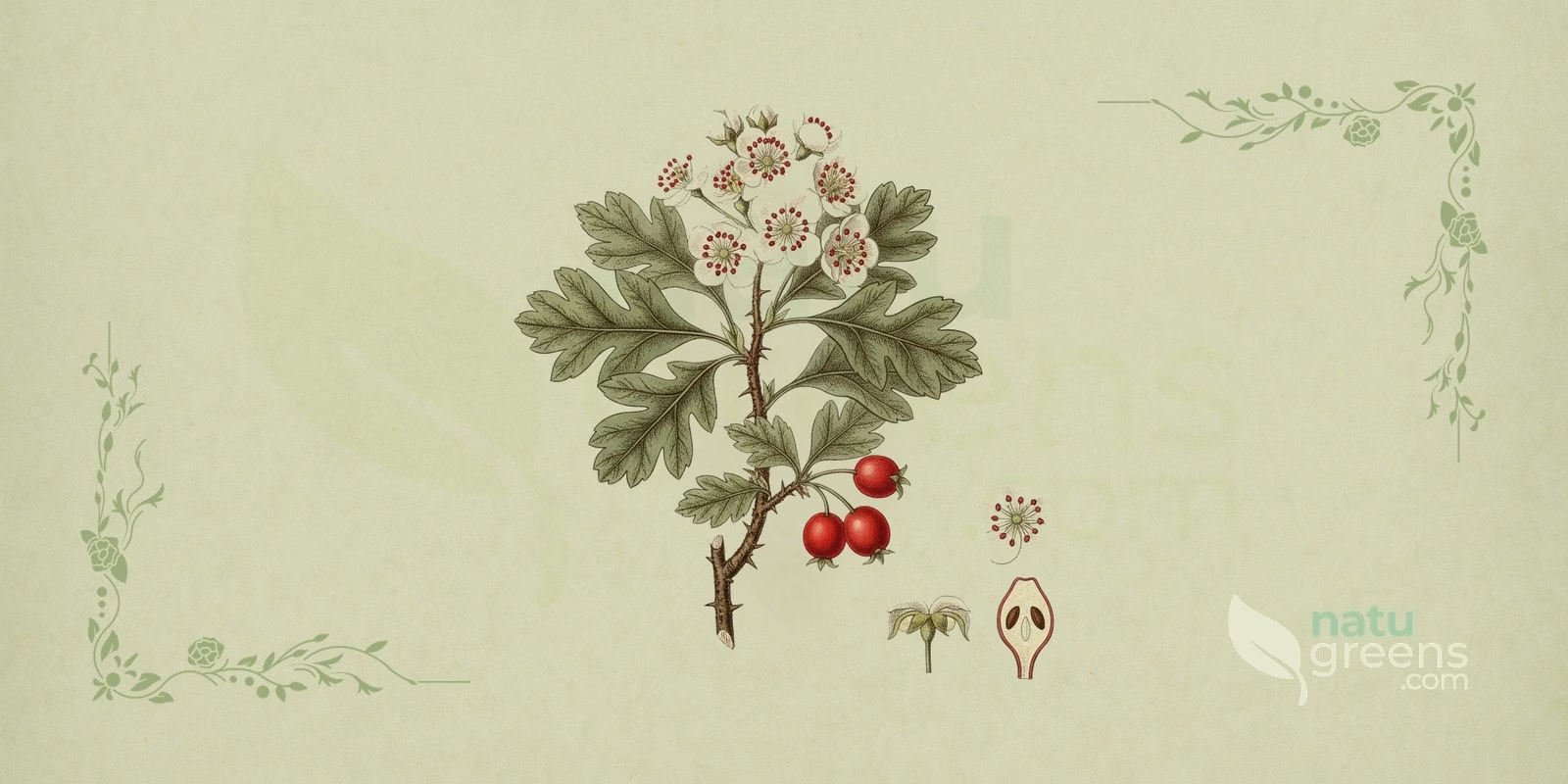
A small tree or large shrub, deciduous, commonly 4 to 10 meters tall and of moderate growth. Orchard specimens live for around forty years. The crown is ovoid and broad, its foliage dense enough to cast closed shade, and the trunk stays straight and comparatively slender at the base before it branches. The branches are stiff and carry stout thorns, a character that sharpens in wild individuals and tends to fade in cultivated selections.
Leaves
The leaves are simple and alternate, ranging in outline from rhombic-elliptic to ovate-lanceolate, with an acute apex and a serrate margin of irregular teeth. Length falls between 4 and 8 centimeters. The upper surface is dark green and glabrous, faintly leathery to the touch, while the lower one is paler and at times pubescent, above all along the veins and on young leaves. That variable pubescence was precisely the character behind the epithet of the illegitimate name discussed above, and it is far too inconstant to stand on its own as a criterion for identification. The petiole is short, and the stipules, when present, are conspicuous and toothed, a detail that gave rise to the synonyms stipulacea and stipulosa.
Flowers
The inflorescence is a terminal umbel gathering 2 to 6 flowers, a low count set against the many-flowered corymbs of the European species of the genus. Each flower measures roughly 2 centimeters across and carries 5 white petals of ovate-orbicular outline, 7 to 10 millimeters long. The stamens number around twenty, with colored anthers that stand out against the pale corolla. The styles vary from 2 to 5, and the hypanthium is clad in sepals that persist on the fruit.
Fruits and Seeds
The fruit is a pome, not a drupe, even though the label appears swapped in part of the popular literature. It is globose to slightly turbinate, 1.5 to 3 centimeters across, which makes it noticeably larger than that of any European Crataegus. The color shifts from yellowish green in the unripe fruit to golden yellow, orange or coppery at maturity, sometimes with one reddened face where the sun strikes. The persistent sepals form a crown at the apex, a useful diagnostic character. The flesh is firm, aromatic and markedly acid, and the fruits cluster along the branches in groups of 2 to 15.
Inside sit the pyrenes, heavily lignified stones that hold one to five white seeds depending on the genotype. A single kilogram gathers roughly five thousand seeds. As in the rest of the Maleae, the apple included, the seeds contain cyanogenic glycosides, and the rigidity of the pyrene is what keeps them from being crushed in ordinary chewing.
Root and Stem
The root system is deep and branched, a trait that anchors the species on steep slopes and accounts for its use in soil retention works. The bark is grayish red and peels from the trunk in longitudinal strips, exposing paler surfaces beneath. The wood is dense and close-grained.
Mexican Hawthorn Distribution and Habitat
The species is native to the highlands of Mexico and Guatemala. Within Mexican territory it occurs across a broad arc running from San Luis Potosí to Jalisco and from Veracruz to Chiapas, with well established records in Guanajuato, Hidalgo, Michoacán, Oaxaca, Puebla, Querétaro and the State of Mexico. The documented altitudinal range runs from 1,200 to 3,000 meters, concentrated in the central and southern portion of the mountain system.
Its typical setting is the hillside with rugged relief, where gradients close to 60 percent do not prevent establishment, along with ravines and the edges of cultivated ground. The species favors acid soils of loamy texture, deep and well drained, and it tolerates volcanic and stony substrates. In the field it turns up often alongside Pinus patula, Pinus teocote and species of Quercus, forming the low tree layer of mixed montane woodland.
The climate that suits it is the subtropical montane one, with mild average temperatures and a defined dry season. The plant withstands light frosts, and observations from cultivation outside its natural range point to cold hardiness down to about minus 18 degrees Celsius, although defoliation sets in well before that. The species was introduced into the Andean region, where it persists in cultivation, and no established record of invasive behavior exists anywhere it has been taken.
Cultivation
Propagation from seed runs into pronounced seed coat dormancy. Untreated seeds may take two to three years to germinate, whereas scarified seeds given cold stratification come up in thirty to forty days at temperatures near 21 degrees Celsius. Germination is epigeal, and the seedlings take transplanting well once they reach about 8 centimeters. The seeds are orthodox in behavior and hold their viability for several years when stored at a moisture content of 6 to 7 percent and a temperature of 0 to 7 degrees Celsius.
For multiplying selected material, grafting onto seedling rootstock is the standard method, since sexual propagation does not preserve the characters of the mother genotype. Mexican large-fruited selections circulate among growers on the plateau, some of them arising from breeding work carried out at agricultural institutions in the country.
The species demands full sun and responds well to deep, well drained soils with a pH in the acid to neutral range. In commercial orchards, spacing usually falls between 5 and 8 meters. Among the organisms recorded as causing damage are the fruit fly Rhagoletis pomonella, the aphid Aphis gossypii, trunk borers, leaf miners, mites and foliar rusts. Trampling and browsing by cattle affect natural regeneration in grazing areas. Harvest takes place once the fruit turns yellow-orange and detaches easily from the pedicel.
One notable agronomic application is the use of the species as a rootstock for apple trees in the Mexican highlands, a role that rests on its tolerance of volcanic soils and high elevations.
Phenology
Flowering concentrates between January and April, varying with altitude and with the local rainfall regime. Pollination is entomophilous and bees account for most of the visits, Apis mellifera included in cultivated areas, which makes the species relevant to montane beekeeping through the dry season.
The fruits set over the course of spring and complete their ripening between November and December, and they may hang on the branches into the start of the following year. That calendar makes the harvest coincide with the Mexican festive season, a coincidence that explains much of the commercial value of the species.
Dispersal is endozoochorous. Birds and mammals eat the flesh and pass the pyrenes intact at a distance from the parent plant, and the trip through the digestive tract helps to wear down the coat that delays germination.
Related Species and Confusions
- Crataegus gracilior J.B.Phipps: the relative most often confused with the tejocote, to the point of sharing its common name. It differs in its rounder and smaller fruit, its longer pedicels and its longer thorns. This is the species that legitimately carries the name Crataegus pubescens in its synonymy.
- Crataegus mollis (Torr. & A.Gray) Scheele: a North American species with large red fruits, broader leaves and persistent pubescence.
- Crataegus monogyna Jacq.: the European hawthorn, introduced across several regions of the Americas. Its fruits are far smaller, 6 to 10 millimeters, with a single pyrene, and its leaves are deeply lobed.
- Malus domestica Borkh.: the apple tree matches it in size and bears fruit that looks superficially alike, but its leaves have an entire to faintly serrate margin, without the irregular teeth of the tejocote.
Commercial Adulteration With a Toxic Species
There is a documented risk that involves no confusion in the field at all, but rather substitution in international trade. Products sold as tejocote root were analyzed by United States health authorities in 2022, and most of the samples contained no Crataegus mexicana: the material corresponded to Cascabela thevetia, a plant of the Apocynaceae family known in English as yellow oleander.
That substitution is dangerous because Cascabela thevetia contains cardenolides, thevetin B among them, compounds that act on heart muscle in a manner analogous to digoxin. Ingestion causes cardiac poisoning, with bradycardia, arrhythmias and electrocardiographic changes, and one case is on record of a small child who required a specific antidote after consuming one of these products. The two plants share no botanical kinship whatsoever, and dried processed plant material offers the consumer no reliable visual distinction.
Phytochemistry
The chemical profile of the species follows the pattern of the genus Crataegus, with the weight falling on phenolic compounds. The account below is strictly compositional.
- Carotenoids: responsible for the yellow to orange color of the skin and of the ripe flesh.
- Cyanogenic glycosides: amygdalin and related compounds concentrate in the seeds held inside the pyrenes, as in other Maleae.
- Flavonoids: vitexin, hyperoside and quercetin appear in leaves, flowers and fruits, at their highest levels in the flowers.
- Pectins: the fruits accumulate pectin at high levels, which underpins industrial extraction from the pomace.
- Phenolic acids: derivatives of chlorogenic acid make up part of the phenolic fraction of the fruits.
- Procyanidins: oligomers present in fruits and leaves, associated with the astringency of the green fruit.
- Triterpenic acids: oleanolic acid and ursolic acid occur in the leaves and in the skin of the fruit.
Comparative studies among Mexican genotypes of Crataegus record that total phenolic content consistently exceeds that of isolated flavonoids, a difference attributed to the contribution of the procyanidins and the phenolic acids.
History and Ethnobotany
Use of the tejocote in Mesoamerica predates the European arrival. The term texocotl figures among the plants recorded in the Nahuatl documentation compiled in the sixteenth century, and the fruit appears in the lists of goods that circulated in the markets of the plateau. Nahua peoples ate the fruit fresh and cooked, and the species formed part of the agricultural calendar of the highlands.
With colonization, the fruit was absorbed into the Christian festive cycle established in Mexico. It became a component of the December posadas, the season in which it goes into the hot drink known as ponche, and it figures among the offerings assembled for the Day of the Dead. The custom of filling piñatas with tejocotes accompanied those celebrations. Records from the colonial period mention the root and the fruit among the materials that chroniclers noted down when describing the indigenous pharmacopoeia of the region.
Material culture drew on the tree as well. The dense wood served in the making of tool handles and household implements and was burned as firewood, while the species did duty as shade and as a living fence on rural properties of the plateau.
Conservation
The species was assessed for the IUCN Red List in 2019, within the work carried out by Botanic Gardens Conservation International together with the Global Tree Specialist Group, and it was placed in the Least Concern category. The assessment reflects its wide distribution, its abundance across its range and the existence of extensive cultivated populations.
The species does not appear in the CITES appendices and is not listed among the plants under special protection in the Mexican standard for species at risk. The pressures identified are localized and relate to the conversion of montane woodland into farmland and to the effect of grazing on natural regeneration, since cattle consume the seedlings before they reach a size that lets them escape.
One factor working in favor of conservation is the economic value of the fruit, which encourages people to keep trees standing in rural areas and in agroforestry systems. The species also takes part in programs to restore degraded slopes in Mexico, where it is employed for its hardiness and for its capacity to hold soil on sloping ground.
Interesting Facts
- The tree reaches around forty years of productive life, a modest longevity by the standard of the genus, which counts century-old European specimens among its ranks.
- The fruit ripens precisely in the December season, and that synchrony between phenology and festive calendar is what sustains the concentrated demand driving Mexican production.
- The Nahuatl name translates the experience of eating the fruit directly: stone and sour fruit, a reference to the woody pit and to the flavor.
- Puebla concentrates the greater part of Mexican national tejocote production, far ahead of the other producing states.
- The species serves as a rootstock for apple trees in the Mexican highlands, a situation in which a native wild tree supports a fruit crop brought over from Eurasia.
Notice: this content is for informational purposes and does not replace professional medical advice. Consult a physician or herbal practitioner before using medicinal plants, especially during pregnancy, breastfeeding, or alongside medication.
References and Scientific Studies
View All 11 Cited References
- Candolle, A. P. de. Prodromus Systematis Naturalis Regni Vegetabilis, vol. 2. Paris. 1825.
- CONABIO. Enciclovida: Crataegus mexicana (tejocote). Comisión Nacional para el Conocimiento y Uso de la Biodiversidad, Mexico. ↗
- IPNI. International Plant Names Index. Royal Botanic Gardens Kew, Harvard University Herbaria and Australian National Botanic Gardens. ↗
- 2019 IUCN. Crataegus mexicana. The IUCN Red List of Threatened Species. 2019 assessment, Botanic Gardens Conservation International and IUCN SSC Global Tree Specialist Group. ↗
- 2007 Nieto-Ángel, R. Frutales nativos, un recurso fitogenético de México. Universidad Autónoma Chapingo. 2007.
- 1997 Phipps, J. B. Monograph of Northern Mexican Crataegus (Rosaceae, subfam. Maloideae). Sida, Botanical Miscellany, 15. BRIT Press. 1997.
- POWO. Plants of the World Online: Crataegus mexicana Moc. & Sessé ex DC. Royal Botanic Gardens Kew. ↗
- Presl, C. B. Flora Sicula, vol. 1. Prague. 1826.
- Pronatura Veracruz and Red de Viveros de Biodiversidad. Ficha de propagación: Tejocote, Crataegus mexicana Moc. & Sessé ex DC. ↗
- Steudel, E. G. Nomenclator Botanicus, ed. 2. Stuttgart. 1840.
- 2022 US Centers for Disease Control and Prevention. Notes from the Field: Online Weight Loss Supplements Labeled as Tejocote (Crataegus mexicana) Root, Substituted with Yellow Oleander (Cascabela thevetia), United States, 2022. Morbidity and Mortality Weekly Report. 2023.