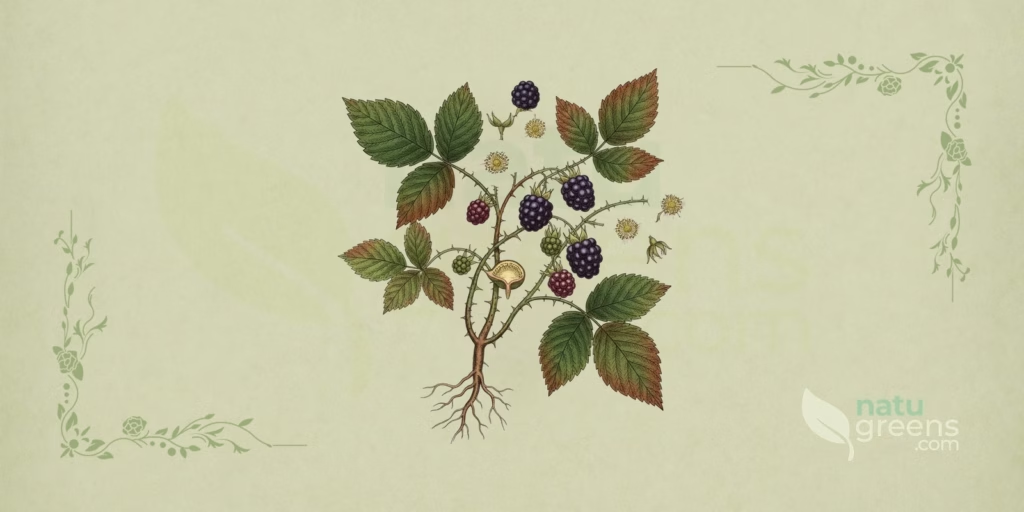
Sambucus nigra L. / Elderberry, commonly known as black elder or European elder, is a deciduous shrub or small tree of the Adoxaceae family. Native to Europe, Western Asia, and North Africa, this species is valued for both its flowers and its fruit. Elder has a long history of use in traditional medicine and cooking, with its berries and flowers employed in a wide range of preparations.
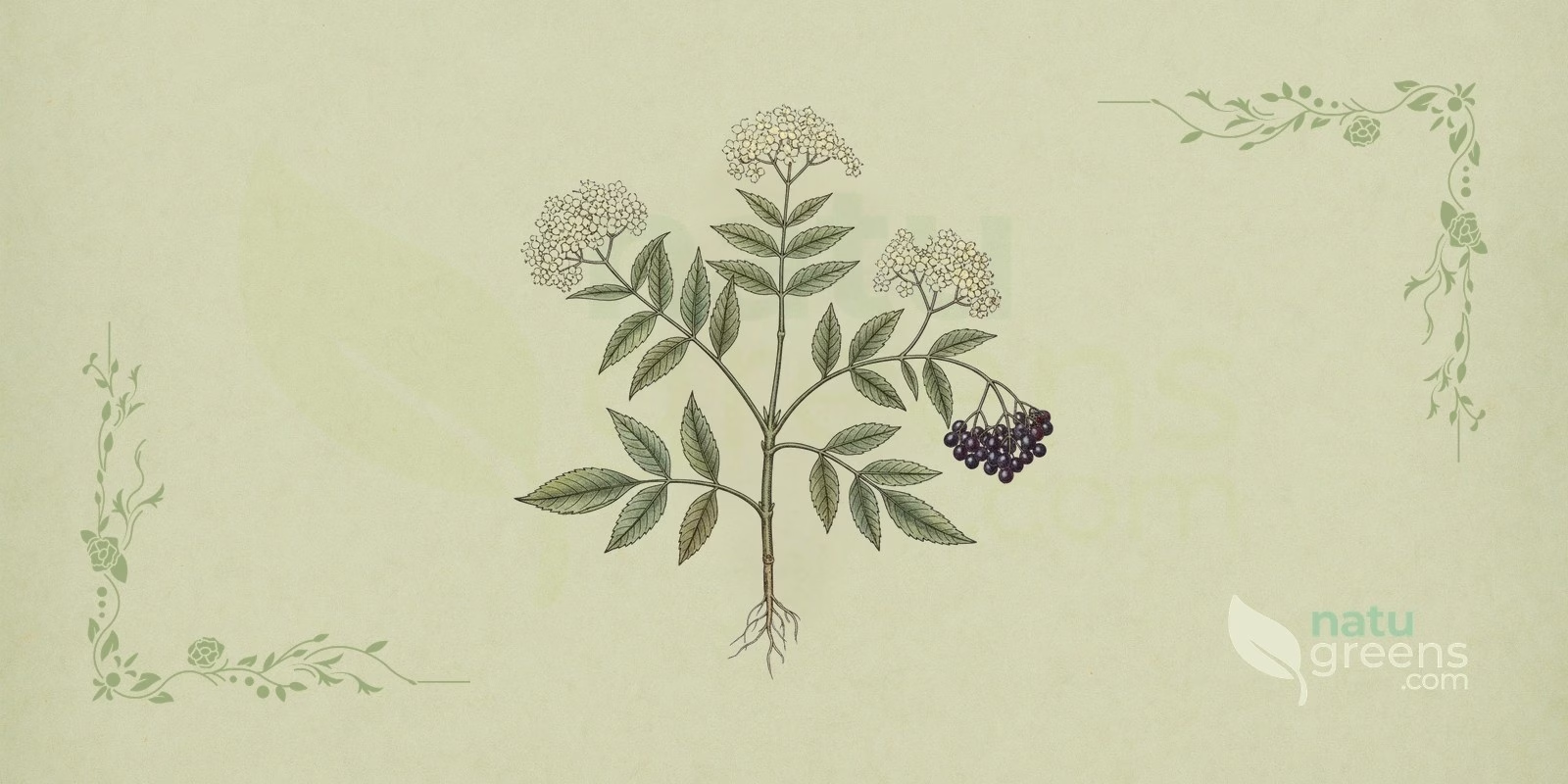
In European tradition, elder is revered for its medicinal properties, especially in easing colds and flu. Its richness in bioactive compounds, such as anthocyanins and flavonoids, gives it antioxidant and anti-inflammatory actions. Modern science has actively investigated the benefits of elder, validating many of its traditional uses and exploring new therapeutic applications.
Popular and International Names of Elderberry
- English: elder, elderberry, black elder, European elder.
- Spanish: saúco, saúco negro, flor de saúco.
- Portuguese: sabugueiro, sabugueiro-negro (BR), sabugueiro-preto (PT); sabugueiro-europeu.
- French: sureau, sureau noir, fleur de sureau.
- Italian: sambuco, sambuco nero, fior di sambuco.
- German: Holunder, Schwarzer Holunder, Holunderbeere.
Botanical Synonyms of Sambucus nigra
Sambucus nigra L. is the most widely accepted botanical name. However, several synonyms have been used throughout history or in different taxonomic contexts. Some of these synonyms include Sambucus canadensis L. and Sambucus cerulea Raf., which are sometimes treated as subspecies of Sambucus nigra, particularly in North American regions. The taxonomic complexity of the species has led to various designations, but Sambucus nigra L. remains the primary reference for European elder.
Botanical Family: Adoxaceae
Sambucus nigra belongs to the Adoxaceae family, which includes about 5 genera and 200 species of herbaceous plants, shrubs, and small trees. The genus Sambucus was previously classified within the Caprifoliaceae family. However, recent phylogenetic studies led to its reclassification into Adoxaceae. This family is known for plants with small flowers, often clustered in inflorescences, and berry- or drupe-type fruits. Adoxaceae includes species of ornamental, medicinal, and culinary importance.
Parts Used of Elderberry
- Bark
- Berries (Fruit)
- Flowers
- Leaves
Ethnobotanical and Traditional Uses
- Anti-inflammatory for Joint Pain
- Diuretic and Mild Laxative
- Febrifuge (Fever Reduction)
- Flu and Cold Relief
- Respiratory Problems (Cough, Nasal Congestion)
- Traditional Use for Wounds and Skin Inflammation (Topical)
Therapeutic Properties of Elderberry
- Antibacterial (studied activity against bacteria)
- Antioxidant (studied activity against free radicals)
- Antiviral (studied activity against viruses)
- Diuretic (studied effect on urine production)
- Expectorant (helps clear mucus from the respiratory tract)
- Immunostimulant (studied effect on the immune system)
- Laxative (studied effect on intestinal evacuation)
Detailed Phytochemical Profile of Elderberry
- Anthocyanins (Cyanidin-3-glucoside, Cyanidin-3-sambubioside)
- Essential Oils
- Flavonoids (Quercetin, Rutin, Isorhamnetin)
- Lectins
- Pectins
- Phenolic Acids (Caffeic Acid, Ferulic Acid, Chlorogenic Acid)
- Tannins
- Triterpenes
Preparation and Administration Forms of Elderberry
- Capsules
- Decoction
- Dry Extract
- Fluid Extract
- Infusion
- Syrup
Synergy with Other Medicinal Plants
Relief from Flu Symptoms
The combination of elder with echinacea (Echinacea purpurea) and linden (Tilia cordata) is widely used to strengthen the immune system and ease flu and cold symptoms. Elder, rich in anthocyanins, offers antiviral and anti-inflammatory properties. Echinacea stimulates the immune response, while linden acts as a diaphoretic and calming agent, promoting sweating and relief from fever. This synergy provides broad support during respiratory infections.
Respiratory Support
For respiratory problems, elder can be combined with thyme (Thymus vulgaris) and ivy (Hedera helix). Elder helps reduce inflammation and congestion, while thyme has antiseptic and expectorant properties. Ivy, in turn, acts as a bronchodilator and mucolytic, easing the elimination of mucus. Together, these extracts help clear the airways and relieve coughing.
Recipes and Usage Protocols of Elderberry
Infusion for Flu and Colds
Ingredients: 1 tablespoon of dried elderflowers, 250 ml of boiling water.
Preparation: Place the flowers in a cup and add the boiling water. Cover and let steep for 10 minutes. Strain and drink hot. It can be sweetened with honey. Drink 2 to 3 times a day to ease flu, cold, fever, and cough symptoms. Elderflowers are diaphoretic, promoting sweating and helping to bring down fever.
Elderberry Syrup
Ingredients: 1 cup of fresh or dried elderberries, 3 cups of water, 1 cup of honey (or brown sugar).
Preparation: Wash the berries well and place them in a pot with the water. Bring to a boil and simmer over low heat for 30-45 minutes, until the liquid reduces by half. Mash the berries and strain the liquid, discarding the solids. Let it cool slightly and add the honey, stirring until fully dissolved. Store in a sterilized jar in the refrigerator. Adults can take about one tablespoon a day, or smaller doses every few hours during flu and colds, to support the immune system; for children, the amount should be much smaller, and internal use should only occur under the guidance of a healthcare professional. Elderberries are rich in anthocyanins, with strong antiviral activity.
The preparations above follow traditional records and do not replace professional guidance. Before any internal use, check the contraindications and interactions described in this article.
Associated Therapies
Phytotherapy
In phytotherapy, elder is valued for its diuretic, diaphoretic, anti-inflammatory, and antiviral properties. It is frequently used as traditional support in cases of upper respiratory infections, such as flu, colds, sinusitis, and bronchitis. Standardized elder extracts are used to modulate the immune response and reduce the duration and severity of symptoms. Modern phytotherapy recognizes elder’s potential as a natural agent for supporting respiratory and immune health.
Homeopathy
In homeopathy, Sambucus nigra is traditionally indicated, according to homeopathic practice, for conditions such as allergic rhinitis, asthma, and spasmodic cough, especially when symptoms worsen at night. It is particularly useful for children with nasal congestion that prevents them from breathing, leading to nighttime awakenings. The homeopathic remedy is prepared from the mother tincture of the fresh plant, following the dilutions and potentization steps specific to homeopathy, aiming to stimulate the body’s self-healing capacity.
Contraindications and Side Effects of Elderberry
Elder is generally safe when used correctly. However, consuming raw berries or uncooked parts of the plant (leaves, stems, bark) can cause nausea, vomiting, and diarrhea due to the presence of cyanogenic glycosides. These compounds are inactivated by heat, making cooked berries safe for consumption. Individuals allergic to plants in the Adoxaceae family should avoid elder. Pregnant or breastfeeding women, young children, and people with autoimmune diseases should consult a healthcare professional before using elder products.
Drug Interactions
Elder may interact with immunosuppressant medications, potentiating their effects. It may also interact with diuretics, increasing fluid elimination. People with diabetes should monitor their blood sugar levels, as elder may have a mild hypoglycemic effect. It is essential to inform your doctor about elder use, especially if you are taking other medications.
Curiosities and Historical Facts of Elderberry
- In Norse mythology, elder was considered the sacred tree of the goddess Freya, associated with fertility and protection.
- Elderflowers are used to make refreshing drinks, such as the famous elderflower cordial, popular throughout Europe.
- Elder wood is hollow, and has traditionally been used to make flutes and other musical instruments.
- In some cultures, elder is believed to ward off evil spirits and protect the home.
Frequently Asked Questions about Elderberry Tea
Does Elderberry Tea Help with the Flu?
Yes, elderberry tea is traditionally used to relieve flu and cold symptoms. The flowers and berries contain compounds that can help reduce fever, nasal congestion, and cough, in addition to having antiviral and immunostimulant properties. It is a comforting beverage that may speed up recovery.
Which Parts of the Elder Can Be Used for Tea?
The flowers and ripe berries of the elder are the parts most commonly used to make tea. Flowers are harvested in spring, and berries in late summer or early autumn. It is important to note that the berries must be cooked before consumption to inactivate potentially toxic compounds present in the raw plant.
Does Elderberry Tea Have Side Effects?
When prepared correctly, elderberry tea is generally safe. However, consuming raw berries or uncooked parts of the plant can cause nausea, vomiting, and diarrhea. People with allergies to plants in the Adoxaceae family should avoid elder. Pregnant or breastfeeding women and young children should consult a healthcare professional before use.
How Do You Prepare a Good Elderberry Tea?
To prepare a good elderberry tea, use 1 tablespoon of dried flowers (or 1-2 teaspoons of dried, cooked berries) per 250 ml of boiling water. Let it steep for 5 to 10 minutes, strain, and drink. Honey or lemon can be added to taste. For berries, it is recommended to boil them for about 15-20 minutes before straining and drinking.
Notice: this content is for informational purposes and does not replace professional medical advice. Consult a physician or herbal practitioner before using medicinal plants, especially during pregnancy, breastfeeding, or alongside medication.
References and Scientific Studies
Peer-Reviewed Scientific Studies (4)
- PEER2015 Sidor, A., & Gramza-Michałowska, A. (2015). Advanced research on the antioxidant and health benefit of elderberry (Sambucus nigra L.) in food, a review. Journal of Functional Foods, 18, 941-958.
- PMC2019 Hawkins J, et al. Black elderberry (Sambucus nigra) supplementation effectively treats upper respiratory symptoms: A meta-analysis of randomized, controlled clinical trials. Complementary therapies in medicine. 2019.
- PMC2001 Barak, V., Halperin, T., & Kalickman, I. (2001). The effect of Sambucol, a black elderberry-based, natural product, on the production of human cytokines: I. Inflammatory cytokines. European Cytokine Network, 12(2), 290-296.
- PMC2011 Krawitz, C., Mraheil, M. A., Stein, M., Imirzalioglu, C., Domann, E., Pleschka, S., & Hain, T. (2011). Inhibitory activity of a standardized elderberry liquid extract against clinically-relevant human respiratory bacterial pathogens and influenza A and B viruses. BMC Complementary and Alternative Medicine, 11(1), 16.
Supplementary Readings (1)
- 2018 European Medicines Agency. (2018). European Union herbal monograph on Sambucus nigra L., flos. EMA.