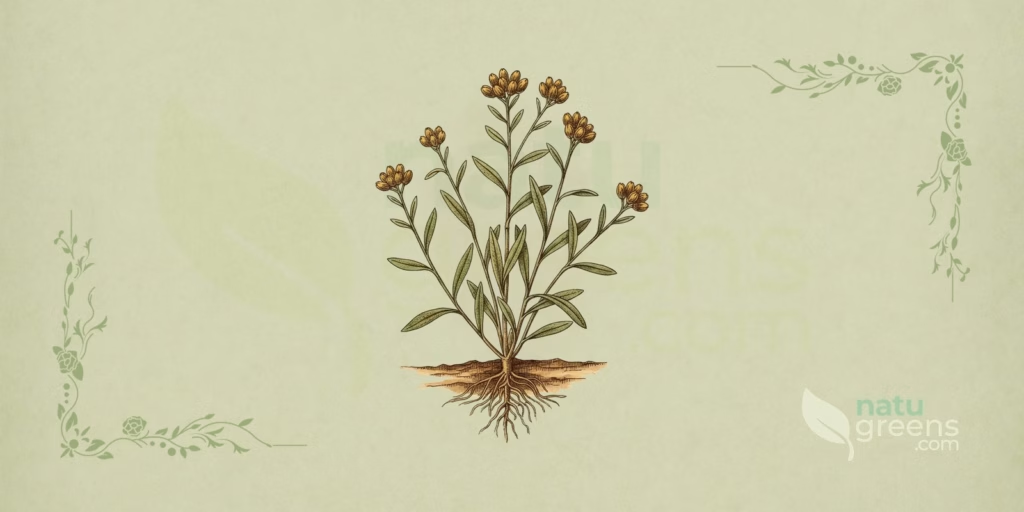
Chamaemelum nobile / Roman Chamomile, popularly known as Roman chamomile, English chamomile, or ground apple, is a perennial herbaceous plant of the Asteraceae family, described by Carl Linnaeus in 1753 and later reclassified by Allioni. Native to Western Europe and Northwest Africa, this species has spread across many regions thanks to its well-known therapeutic properties. Roman chamomile has been used for centuries in traditional medicine, mentioned in texts since the Middle Ages. Its daisy-like flowers, with white petals and a prominent yellow center, are harvested for the preparation of infusions, extracts, and essential oils.

In the European herbal tradition, Roman chamomile holds a prominent place as a calming and digestive plant. Its applications range from the treatment of gastrointestinal disorders to the relief of anxiety and insomnia. The plant is recognized for its rich phytochemical composition, especially esters of angelic and tiglic acids and sesquiterpene lactones such as nobilin, which account for its anti-inflammatory and antispasmodic properties. Modern scientific research has validated many of Roman chamomile’s traditional uses, consolidating its position as one of the most studied and most widely used medicinal plants in the world.
Popular and International Names of Roman Chamomile
- English: Roman chamomile, English chamomile, garden chamomile, ground apple, low chamomile, mother’s daisy, whig plant.
- Spanish: manzanilla romana, camomila romana.
- Portuguese: camomila-romana, camomila-inglesa, camomila-nobre.
- French: camomille romaine.
- Italian: camomilla romana.
- German: Römische Kamille.
Botanical Synonyms of Roman Chamomile
Anthemis nobilis L. is the botanical synonym most frequently found in the historical literature and in some contemporary references. Although Chamaemelum nobile (L.) All. is the name accepted by most botanical authorities, including Plants of the World Online and World Flora Online, Anthemis nobilis was widely used and still appears in many publications, especially older ones. This denomination was assigned by Carl Linnaeus and later reclassified, reflecting the complexity of botanical taxonomy.
Botanical Family: Asteraceae
The Asteraceae family, formerly known as Compositae, is one of the largest families of flowering plants, comprising about 1,900 genera and more than 32,000 species distributed worldwide. This family is characterized by the capitulum inflorescence, in which numerous small flowers are grouped into a structure that mimics a single flower. The Asteraceae include plants of great economic, food, and medicinal importance, such as lettuce, sunflower, artichoke, and calendula.
Roman chamomile shares morphological features typical of the family, including flower heads composed of tubular florets in the central disc and ligulate flowers at the margins. The Asteraceae family is known for producing bioactive compounds, especially sesquiterpene lactones, flavonoids, and essential oils, which confer medicinal properties on many of its species. The chemical diversity of this family has been the subject of intense pharmacological research, contributing to the development of phytomedicines and dietary supplements.
Parts Used of Roman Chamomile
- Flowers (flower heads, fresh or dried)
Ethnobotanical and Traditional Uses of Roman Chamomile
- Anxiety and nervousness
- Digestive disorders and gastritis
- Eczema
- Eye irritation and conjunctivitis
- Hay fever (traditional use; people allergic to ragweed or other Asteraceae should avoid it, because cross-reaction is possible)
- Hemorrhoids
- Insomnia and sleep disorders
- Irritable bowel syndrome
- Irritation of the mouth and respiratory tract (inhalant)
- Neuralgia
- Premenstrual tension and menstrual cramps
- Relief of intestinal cramps and flatulence
- Rheumatism
- Skin inflammation and wounds
- Ulcers
Therapeutic Properties of Roman Chamomile
- Analgesic (relieves pain)
- Antiallergic (reduces allergic reactions)
- Anti-inflammatory (reduces inflammation)
- Antimicrobial (fights bacteria and fungi)
- Antioxidant (fights free radicals)
- Antiproliferative (under study, with effects seen only in laboratory cells and no application in cancer treatment)
- Antispasmodic (relieves muscle spasms)
- Carminative (helps expel gas)
- Hypoglycemic (under study for its effect on blood sugar)
- Immunomodulatory (modulates the immune system)
- Sedative (promotes relaxation and sleep)
Detailed Phytochemical Profile of Roman Chamomile
- Acetylenes
- Apigenin
- Apigenin, luteolin, and quercetin glycosides
- Coumarins (umbelliferone, herniarin)
- Essential oil (0.3-1.5% in the dried flowers)
- Esters of angelic and tiglic acids (the main components of the essential oil)
- Flavonoids (apigenin, quercetin, luteolin)
- Isorhamnetin
- Mucilaginous polysaccharides
- Polyphenols
- Sesquiterpene lactones (nobilin and derivatives)
- Tannins
- Terpenoids
Chamazulene and alpha-bisabolol, the markers of German chamomile, are all but absent from Roman chamomile.
Preparation and Administration Forms of Roman Chamomile
- Aromatherapy (essential oil)
- Capsules
- Compresses
- Cream
- Extracts (fluid, dry)
- Inhalation
- Massage oil
- Tea/Infusion
- Tincture
- Topical use
Synergy with Other Medicinal Plants
Anxiety and Insomnia
Combining Roman chamomile with valerian (Valeriana officinalis) and passionflower (Passiflora incarnata) enhances its sedative and anxiolytic effects. This synergy is particularly effective in the treatment of sleep disorders and states of nervousness. Roman chamomile contributes apigenin, a flavonoid that acts on GABA receptors, while valerian provides valeric acid and passionflower C-glycosyl flavonoids, creating a synergistic calming effect without the side effects of synthetic sedatives.
Digestive Disorders
The association of Roman chamomile with peppermint (Mentha × piperita) and lemon balm (Melissa officinalis) is traditionally used for the relief of dyspepsia, flatulence, and intestinal cramps. Roman chamomile’s essential oil, rich in angelic acid esters, acts synergistically with peppermint’s menthol and lemon balm’s phenolic compounds, providing antispasmodic, carminative, and anti-inflammatory effects on the gastrointestinal tract.
Skin Inflammation
In topical applications, Roman chamomile combines effectively with calendula (Calendula officinalis) and St. John’s wort (Hypericum perforatum) for the treatment of wounds, minor burns, and dermatitis. Roman chamomile’s angelic acid esters, calendula’s triterpenes, and St. John’s wort’s hypericin act synergistically, promoting healing, reducing inflammation, and preventing secondary infections.
Recipes and Usage Protocols of Roman Chamomile
Compress for Conjunctivitis
Ingredients: 2 tablespoons of dried Roman chamomile flowers, 250 ml of boiling water.
Preparation: Prepare a concentrated infusion, steeping the flowers for 10 minutes. Strain carefully and let cool to room temperature. Soak sterile gauze compresses in the infusion and apply over closed eyes for 10-15 minutes, 2-3 times a day.This preparation is traditionally used to relieve eye irritation in mild cases. Caution: homemade preparations are not sterile; apply only over closed eyes, never in cases of purulent discharge, pain, or vision changes, which require medical care, and remember that chamomile itself can cause allergic conjunctivitis in people sensitive to Asteraceae.
Calming and Digestive Infusion
Ingredients: 1 teaspoon of dried Roman chamomile flowers, 200 ml of boiling water, honey (optional).
Preparation: Place the flowers in a cup and add freshly boiled water. Cover and steep for 5-7 minutes. Strain and sweeten with honey, if desired. Drink 1 cup after main meals to ease digestion, or 30 minutes before bed to promote relaxation and improve sleep quality. This infusion is particularly effective for relieving intestinal cramps and flatulence.
Anti-Inflammatory Massage Oil
Ingredients: 5 drops of Roman chamomile essential oil, 30 ml of sweet almond or jojoba carrier oil.
Preparation: Mix the essential oil with the carrier oil in a dark glass bottle. Apply to clean skin, gently massaging areas affected by inflammation, muscle pain, or joint pain. This preparation is especially useful in the treatment of rheumatic pain, bruises, and muscle tension. Do a patch test on a small area before the first application, since the essential oil can sensitize the skin of people allergic to Asteraceae.
Tincture for Anxiety
Ingredients: 200 g of dried Roman chamomile flowers, 1 liter of 45% alcohol (1:5 ratio).
Preparation: Place the flowers in a glass jar and cover with the alcohol. Close tightly and let macerate for 14 days, shaking daily. Filter through a fine cloth and store in a dark glass bottle. Take 2 to 4 ml diluted in water, up to three times a day, for the relief of anxiety and nervousness. This tincture concentrates Roman chamomile’s bioactive compounds, providing more pronounced anxiolytic effects.
Facial Steam for Skin and Airways
This steam is used both for skin care and for relieving nasal congestion.
Ingredients: 3 tablespoons of dried Roman chamomile flowers, 1 liter of boiling water.
Preparation: Place the flowers in a large bowl and add the boiling water. Lean your face over the bowl at a safe distance and cover your head with a towel to trap the steam. Stay for 10-15 minutes, breathing deeply. The steam helps cleanse the pores and soothe skin irritation while moistening the upper airways.
Syrup for Infant Colic
Ingredients: 50 g of dried Roman chamomile flowers, 500 ml of water, 250 g of honey.
Preparation: Prepare a concentrated infusion with the flowers and the water, steeping for 15 minutes. Strain and add the honey, warming gently in a double boiler until completely dissolved. Store in a sterilized glass jar in the refrigerator. Give 1 teaspoon to children over 1 year old, 2-3 times a day, for the relief of intestinal cramps and digestive discomfort. Do not give to infants under 1 year old because of the honey.
Associated Therapies
Aromatherapy
Roman chamomile essential oil is widely used in aromatherapy for its calming and anti-inflammatory effects. Inhaling the oil, whether through diffusers, vaporizers, or diluted topical application, promotes nervous system relaxation, reduces anxiety, and improves sleep quality. In therapeutic massage, Roman chamomile essential oil is frequently combined with carrier oils for the treatment of muscle pain, tension, and skin inflammation. Roman chamomile aromatherapy is particularly effective in clinical settings to reduce preoperative stress and promote emotional well-being.
Clinical Phytotherapy
In modern clinical phytotherapy, Roman chamomile is prescribed in several pharmaceutical forms, including standardized extracts, capsules, and tablets. Roman chamomile extracts are frequently titrated in apigenin to guarantee therapeutic efficacy. Clinical phytotherapy uses Roman chamomile in the treatment of functional gastrointestinal disorders and mild to moderate anxiety, and as an adjuvant in the treatment of skin inflammation. Prescription is individualized, considering each patient’s specific needs and possible interactions with other medications.
Homeopathy
In homeopathy, the remedy Chamomilla is prepared from German chamomile (Matricaria chamomilla) rather than from Roman chamomile, so its homeopathic indications do not transfer to this species. Within homeopathic doctrine, the remedy is cited for infant colic, insomnia arising from irritability, pain experienced as unbearable and teething, usually in low potencies for acute symptoms and in higher potencies for so-called constitutional treatment. There are no clinical studies demonstrating its effectiveness. Fever, persistent crying, refusal to feed or vomiting in an infant should always be assessed by a doctor.
Contraindications and Side Effects of Roman Chamomile
General Contraindications
Roman chamomile is contraindicated in individuals with a known allergy to plants of the Asteraceae family, including chrysanthemums, daisies, ragweed, and calendula. Allergic reactions can manifest as contact dermatitis, hives, or, in more severe cases, anaphylaxis. Pregnant women should avoid Roman chamomile at high therapeutic doses because of its potential emmenagogue effect, which can stimulate uterine contractions. Although occasional light infusions are generally considered safe during pregnancy, prudence recommends medical advice before regular use.
Common Side Effects
Side effects of Roman chamomile are rare and usually mild. In some people, Roman chamomile infusions can cause nausea, vomiting, or allergic skin reactions. Topical application of Roman chamomile preparations can occasionally result in contact dermatitis, especially in sensitive individuals. Roman chamomile essential oil, when applied directly to the skin without proper dilution, can cause irritation and skin sensitization.
Drug Interactions
Roman chamomile can interact with several medications. Its action on the cytochrome P450 system can alter the metabolism of drugs, including anticoagulants such as warfarin, increasing the risk of bleeding. Combining Roman chamomile with benzodiazepines or other sedatives can potentiate central nervous system depressant effects, resulting in excessive drowsiness. Individuals taking diabetes medication should carefully monitor their glucose levels, since Roman chamomile can have mild hypoglycemic effects.
Recommended Dosages of Roman Chamomile
The dosage of Roman chamomile varies with the form of preparation and the therapeutic purpose. For infusions, the usual dose is 1 to 4 cups a day, prepared with 1 teaspoon (2-3 g) of dried flowers per 200 ml of boiling water, steeped for 5 to 10 minutes.
For fluid extracts (1:1), the recommendation is 1 to 4 ml, three times a day, while for dry extracts (4:1) the dose is 300 to 400 mg, also three times a day. The tincture (1:5 in 45% alcohol) can be taken at a dose of 2 to 4 ml, three times a day. The essential oil should be used topically, diluting 2 to 3 drops in 10 ml of a carrier oil, or in aromatherapy, with 3 to 5 drops in a diffuser. For pediatric use, doses must be adjusted and supervised by a health professional.
Cultivation and Harvesting of Roman Chamomile
Roman chamomile is an easy plant to grow, adapting to various soil types, although it prefers light, well-drained, slightly acidic to slightly alkaline soils (pH 5.5 to 7.5). Sowing can be done directly in the final location, in spring or autumn, in rows spaced 20-30 cm apart. The seeds are very small and should be sown superficially, covered only lightly with fine soil. Germination occurs in 7-14 days, and the seedlings should be thinned to a spacing of 10-15 cm between plants.
Roman chamomile requires full sun and moderate watering, avoiding waterlogged soil. The plant is relatively resistant to pests and diseases, although aphids and downy mildew can affect it under excessively humid conditions. The flowers should be harvested when the flower heads are fully open, but before the white petals begin to fall. The ideal time is in the morning, after the dew has dried. The flowers can be dried in the shade, in a well-ventilated place, and stored in airtight containers away from light and moisture, keeping their therapeutic properties for up to a year.
Scientific Research and Clinical Studies of Roman Chamomile
Roman chamomile has well-documented traditional uses, but clinical research devoted to the species itself remains limited, and much of the available evidence is preclinical. Studies show that Roman chamomile extracts have anxiolytic, anti-inflammatory, antispasmodic, and antimicrobial properties. Apigenin, a flavonoid present in the plant, acts as a modulator of GABA-A receptors, contributing to the anxiolytic effects. Esters of angelic and tiglic acids account for part of the anti-inflammatory activity described for the species. Laboratory assays with chamomile extracts show inhibition of bacteria such as Staphylococcus aureus and Escherichia coli, but those results come largely from German chamomile and have not been systematically replicated for Roman chamomile.
Traditional use of Roman chamomile for anxiety, dyspepsia, and colic still lacks trials of its own: the available controlled studies in generalized anxiety were carried out with German chamomile (Matricaria chamomilla). Its ability to inhibit the production of prostaglandins and leukotrienes, inflammatory mediators, underscores its therapeutic potential. Research continues to explore its role as an anticancer agent, with preliminary studies indicating that Roman chamomile extracts can induce apoptosis in cancer cells without affecting normal cells, with apigenin and its glycosides being the main components responsible for these effects.
Curiosities and Historical Facts of Roman Chamomile
Roman chamomile (Chamaemelum nobile) has a rich history of use in traditional medicine since the Middle Ages. Its cultivation in Europe began in England in the 16th century, where it became popular among Elizabethan gardeners for its pleasant aroma and soft leaves. It was listed in the Württemberg pharmacopoeia as a carminative, analgesic, diuretic, and digestive agent. Joachim Camerarius was the first to discover and name Chamaemelum nobile, in 1598, in Rome.
The Egyptian record of ritual chamomile use refers to species of the eastern Mediterranean; Roman chamomile, native to Western Europe, enters the European herbal tradition much later. A remarkable curiosity is its ability to be planted as an aromatic lawn, known as a chamomile lawn, which was popular in Elizabethan England and is still used in gardens today, such as the Queen’s Garden at Kew Gardens.
Frequently Asked Questions about Roman Chamomile
Can Roman Chamomile Be Consumed Every Day?
Yes, Roman chamomile can be consumed daily in moderate doses (1-4 cups of infusion a day) without significant adverse effects for most people. However, individuals with allergies to Asteraceae plants should avoid it.
Does Roman Chamomile Really Help You Sleep Better?
Yes, scientific studies show that Roman chamomile has mild sedative properties, mainly attributed to apigenin, a flavonoid that acts on GABA receptors in the brain. Drinking a Roman chamomile infusion 30 minutes before bed can improve sleep quality and reduce the time needed to fall asleep.
Can Children Consume Roman Chamomile?
Roman chamomile should only be given to children under 1 year old on a pediatrician’s advice. From 1 year onward, light infusions are a traditional remedy for colic and digestive discomfort, in age-adjusted doses. Preparations containing honey should never be given to infants under 1 year old, because of the risk of infant botulism.
Can Roman Chamomile Cause Allergies?
Yes, although rare, Roman chamomile can cause allergic reactions in individuals sensitive to Asteraceae plants. Symptoms can include contact dermatitis, hives, or, in severe cases, anaphylaxis. People with known allergies to chrysanthemums, daisies, or ragweed should avoid Roman chamomile.
Does Roman Chamomile Interact with Medications?
Yes, Roman chamomile can interact with anticoagulants (such as warfarin), benzodiazepines, and other sedatives, potentiating their effects. Individuals on regular medication should consult a health professional before using Roman chamomile at therapeutic doses.
What Is the Difference Between German Chamomile and Roman Chamomile?
German chamomile (Matricaria chamomilla) and Roman chamomile (Chamaemelum nobile) are different species, although both have similar medicinal properties. German chamomile is annual and has a hollow, conical receptacle; Roman chamomile is perennial, with generally larger flower heads and a solid receptacle. German chamomile dominates phytotherapy because of its alpha-bisabolol and chamazulene profile and the sheer volume of studies behind it, not because of essential oil content.
Can Roman Chamomile Be Used During Pregnancy?
Occasional light Roman chamomile infusions are generally considered safe during pregnancy. However, high therapeutic doses should be avoided because of the potential emmenagogue effect, which can stimulate uterine contractions. Pregnant women should consult a health professional before using Roman chamomile regularly.
How Should Dried Roman Chamomile Be Stored to Preserve Its Properties?
Dried Roman chamomile flowers should be stored in airtight glass or metal containers, away from light, heat, and moisture. Properly stored, dried Roman chamomile keeps its therapeutic properties for up to a year. Avoid plastic bags, which can retain moisture and encourage mold.
Notice: this content is for informational purposes and does not replace professional medical advice. Consult a physician or herbal practitioner before using medicinal plants, especially during pregnancy, breastfeeding, or alongside medication.
References and Scientific Studies
View All 8 Cited References
Peer-Reviewed Scientific Studies (3)
- PMC2010 Srivastava, J. K., Shankar, E., & Gupta, S. (2010). Chamomile: A herbal medicine of the past with bright future. Molecular Medicine Reports.
- PMC2022 Sah, A., et al. (2022). A Comprehensive Study of Therapeutic Applications of Chamomile. Pharmaceuticals (Basel).
- PEER2021 Russo, C., et al. (2021). Effects of Salvia officinalis L. and Chamaemelum nobile (L.) extracts on inflammatory responses in two models of human cells. Journal of Ethnopharmacology.
Supplementary Readings (5)
- 2022 Dai, Y. L., et al. (2022). Chamomile: A Review of Its Traditional Uses, Chemical Constituents, and Pharmacological Activities. Molecules.
- 2018 Kazemian, H., et al. (2018). In vivo antibacterial and wound healing activities of Roman chamomile (Chamaemelum nobile). Infectious Disorders – Drug Targets.
- 2025 Polcaro, L. M., Cerulli, A., Masullo, M., & Piacente, S. (2025). Phytochemical Investigation of Chamaemelum nobile L. and Evaluation of Acetylcholinesterase and Tyrosinase Inhibitory Activity. Plants (Basel).
- 2014 Zhao, J., et al. (2014). Octulosonic Acid Derivatives from Roman Chamomile (Chamaemelum nobile) with Activities against Inflammation and Metabolic Disorder. Journal of Natural Products.
- 2010 Bhaskaran, N., Shukla, S., & Gupta, S. (2010). Chamomile: an anti-inflammatory agent inhibits inducible nitric oxide synthase expression by blocking RelA/p65 activity. International Journal of Molecular Medicine.