Salix alba L. / White Willow, commonly known as white willow, cricket-bat willow, or European white willow, is a medium to large deciduous tree belonging to the Salicaceae family. Native to Europe and western and central Asia, this species has spread to many regions of the world, including North America, thanks to its adaptability to moist environments, and the use of white willow in traditional medicine goes back thousands of years, with records dating to Ancient Egypt, Sumer, and Assyria, as well as mentions by Hippocrates in the fifth century BC. Its leaves, paler on the underside due to a thin layer of silky hairs, and its bark are the parts most valued for medicinal purposes.
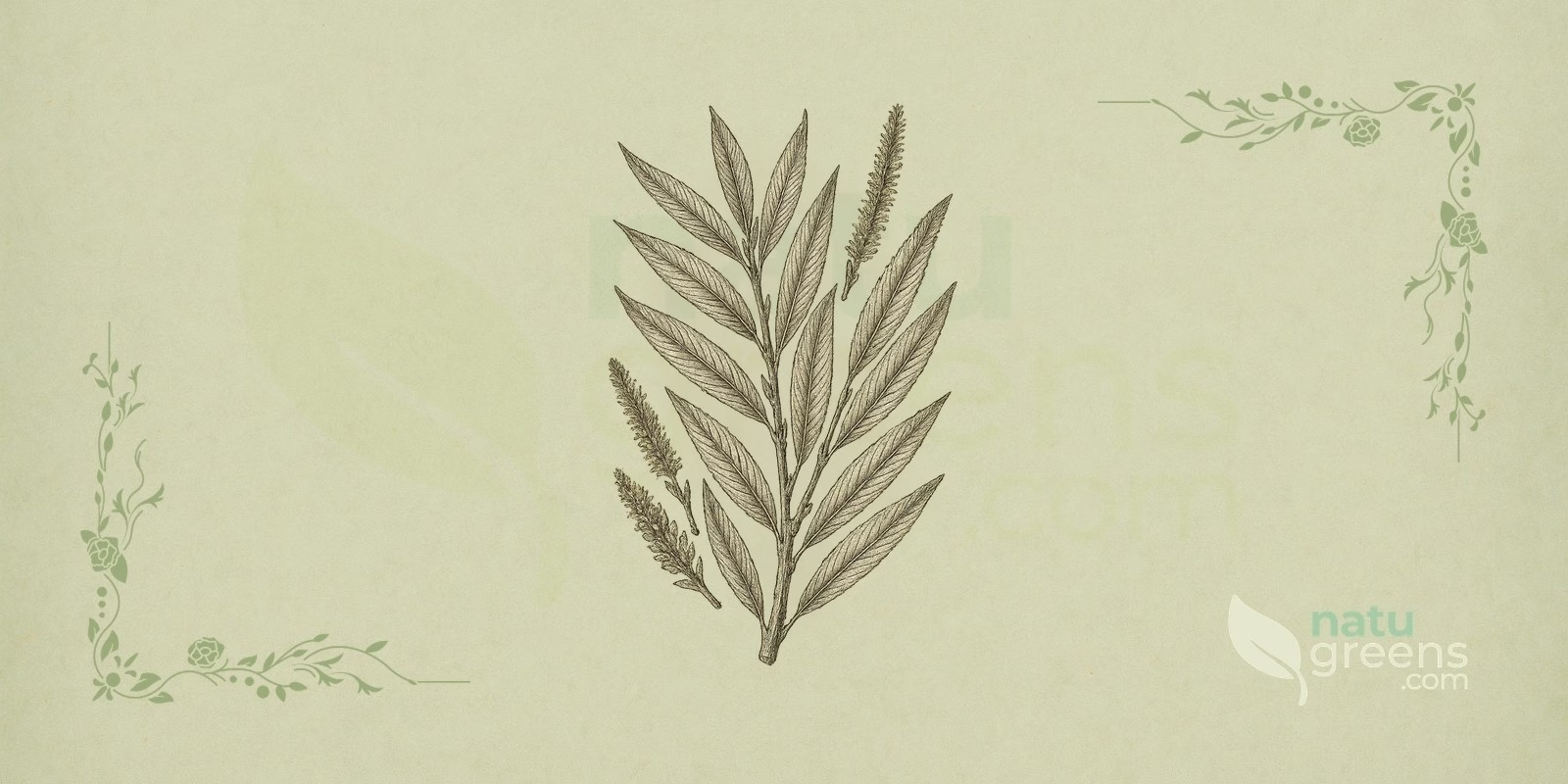
In European herbal tradition and in various Native American cultures, white willow holds a place of prominence as a natural analgesic, anti-inflammatory, and antipyretic, thanks to its phytochemical composition rich in salicylates, especially salicin. Modern scientific research has validated many of its traditional uses, cementing its position as one of the most studied and widely used medicinal plants worldwide, with white willow bark being the main source of these bioactive compounds and traditionally prepared as decoctions for the relief of pain, fever, and inflammation.
Popular and International Names of White Willow
- English: cricket-bat willow, European white willow, golden weeping willow, golden willow, white willow.
- Spanish: salguero, sauce blanco, sauce plateado.
- Portuguese: borrazeira, salgueiro, salgueiro-branco, salgueiro-chorão (BR), salgueiro-dourado, salgueiro-taco-de-críquete, seiceiro (PT); salgueiro-inglês, vimeiro.
- French: saule blanc.
- Italian: salice bianco.
- German: silber-weide, weißweide.
Botanical Synonyms of Salix alba
Salix alba L. has several botanical synonyms and cultivated varieties that are important for its identification and study. Among the most notable are Salix alba var. caerulea (Sm.) Sm., also known as Salix caerulea Sm., and Salix alba var. vitellina (L.) Stokes, as well as hybrids such as Salix × sepulcralis ‘Chrysocoma’ and Salix babylonica, often associated with white willow due to similar morphological features and uses, although they are distinct species or hybrids. The herbal drug “willow bark” (Salicis cortex), as defined by the European Pharmacopoeia, does not correspond to a single species: besides Salix alba, the official monograph also covers the bark of Salix purpurea, Salix daphnoides, and Salix fragilis, all recognized sources of salicylates and often sold under the same popular name.
Botanical Family: Salicaceae
The Salicaceae family is made up of trees and shrubs, found predominantly in temperate and cold regions of the Northern Hemisphere, and includes genera such as Salix (willows) and Populus (poplars and aspens). Species in this family are commonly found in moist environments, such as riverbanks and lakeshores, due to their preference for well-drained soils with good water availability. The Salicaceae family is known for producing phenolic compounds, including salicylates, which give many of its species significant medicinal properties, especially analgesic and anti-inflammatory ones, while also playing an important ecological role in soil stabilization and as a source of food and shelter for wildlife.
Parts of White Willow Used
- Bark (whole or fragmented)
- Leaves
Ethnobotanical and Traditional Uses
- Relief of chills and flu-like symptoms
- Relief of headaches and migraines
- Relief of menstrual cramps and associated pain
- Control of chronic diarrhea and dysentery
- Reduction of fever and feverish states
- Relief of muscle and rheumatic pain
- Treatment of intestinal worms
- Treatment of dyspepsia and digestive disorders
- Use as a tonic and astringent
Therapeutic Properties of White Willow
- Analgesic (traditional use to relieve pain)
- Anthelmintic (studied activity against worms)
- Antiestrogenic (effect studied on estrogenic activity)
- Anti-inflammatory (effect studied in reducing inflammation)
- Antimicrobial (studied activity against microorganisms)
- Antioxidant (studied activity against free radicals)
- Antiproliferative (inhibitory effect studied on cell proliferation)
- Antipyretic (effect studied in reducing fever)
- Antirheumatic (studied activity against rheumatism)
- Antispasmodic (traditional use to relieve spasms)
- Astringent (contracts tissue)
- Tonic (invigorates the body)
Detailed Phytochemical Profile of White Willow
- Flavonoids
- Indole-3-butyric acid (plant hormone)
- Phenolic acids
- Salicin
- Salicylates (salicin derivatives)
- Tannins
Preparation and Administration Forms of White Willow
- Compresses (topical use)
- Decoction (mainly from the bark)
- Dry extracts
- Infusion (for leaves and more delicate parts)
- Liquid extracts
- Poultices (topical use)
- Tinctures
Synergy with Other Medicinal Plants
Anxiety and Nervousness
Preliminary studies and traditional use suggest that combining white willow with Passiflora incarnata (passionflower) and Crataegus oxyacantha (hawthorn) may enhance mild calming effects, since, while white willow supports the reduction of pain and inflammation that can worsen states of anxiety, passionflower and hawthorn contribute direct calming properties on the central nervous system, creating a synergy traditionally associated with relaxation and more restful sleep. Because white willow can interact with anticoagulants and antidepressants and should not be combined with synthetic sedatives without medical guidance, this pairing should always be supervised by a health professional.
Joint Pain and Rheumatism
For the relief of joint and rheumatic pain, white willow can be combined with plants such as devil’s claw (Harpagophytum procumbens) and meadowsweet (Filipendula ulmaria), since white willow’s salicin, with its anti-inflammatory and analgesic properties, works alongside devil’s claw’s iridoids and meadowsweet’s natural salicylates, providing broader support for managing the pain and inflammation associated with conditions such as arthritis and osteoarthritis. Because it brings together three sources of salicylates, this combination requires extra caution in people with salicylate allergy, bleeding disorders, or anticoagulant use.
Recipes and Usage Protocols of White Willow
Decoction for Pain and Fever
Ingredients: 1-3 grams of dried white willow bark, 200 ml of water.
Preparation: Add the white willow bark to the water and bring to a boil, boiling for 5 to 10 minutes; remove from heat, cover, and let it rest for another 10 minutes, then strain and drink. Consume in moderation throughout the day and seek guidance from a health professional before continued use, particularly for children and adolescents with viral febrile illnesses, people with salicylate allergy or aspirin-sensitive asthma, anticoagulant use, or pregnancy. This decoction is traditionally used as support in relieving pain, fever, and mild inflammation, without replacing medical treatment.
Tincture for External Use
Ingredients: 50 grams of dried white willow bark, 250 ml of 70% alcohol.
Preparation: Place the bark in a dark glass jar and cover with the alcohol, letting it macerate for 2 to 4 weeks in a cool, dark place and shaking daily; strain and store the resulting tincture. Use topically in compresses for muscle pain, joint pain, or localized inflammation, always diluting the tincture in water before applying it to avoid skin irritation, and discontinue use if skin sensitivity occurs.
The preparations above follow traditional practices and do not replace professional guidance. Before any internal use, review the contraindications and interactions described in this article.
The preparations above follow traditional records and do not replace professional guidance. Before any internal use, check the contraindications and interactions described in this article.
Associated Therapies
Clinical Phytotherapy
In modern clinical phytotherapy, white willow is widely used in various pharmaceutical forms, such as standardized extracts, capsules, and tablets, often standardized to guarantee a specific concentration of salicin, the main active compound. Clinical phytotherapy uses white willow in the management of chronic inflammatory conditions and musculoskeletal pain, sometimes considered a complementary alternative to nonsteroidal anti-inflammatory drugs, always under the supervision of a health professional to optimize dosage and minimize potential drug interactions; this alternative is not appropriate for people with salicylate allergy or those taking anticoagulants.
Homeopathy
Although not as common a homeopathic remedy as others, white willow (Salix alba) can be used in homeopathic preparations for specific symptoms resembling its medicinal action, such as rheumatic pain, intermittent fevers, and inflammatory states, based on the principle of similars, according to which substances that cause symptoms in healthy individuals are used in minimal doses to treat similar symptoms in sick people. The homeopathic preparation of white willow involves successive dilutions of the mother tincture, aiming to stimulate the body’s capacity for self-regulation.
Contraindications and Side Effects of White Willow
General Contraindications
White willow is contraindicated in individuals with known hypersensitivity to salicylates, including aspirin, or to any component of the plant, since allergic reactions can manifest as skin rashes, hives, angioedema, or, in more severe cases, bronchospasm; for this reason, people with aspirin-sensitive asthma should also avoid its use. It is not recommended for children and adolescents with febrile illnesses, especially viral ones such as influenza or chickenpox, due to the risk of developing Reye’s syndrome, a rare but serious condition associated with salicylate use. Pregnant and breastfeeding women should avoid its use, particularly in the third trimester of pregnancy, due to a lack of adequate safety studies and its potential emmenagogue effect, which may stimulate uterine contractions.
Common Side Effects
Side effects of white willow are generally mild and include gastrointestinal discomfort, such as nausea, vomiting, diarrhea, and gastric irritation, with ringing in the ears and dizziness possible at high doses. Topical application can, in some cases, cause skin irritation or contact dermatitis in sensitive individuals, so it is essential to follow recommended dosages and seek medical guidance in case of any adverse reaction.
Drug Interactions
White willow can interact with several medications, potentiating or altering their effects: combining it with anticoagulants, such as warfarin and heparin, or antiplatelet agents, such as aspirin and clopidogrel, can significantly increase the risk of bleeding, and concurrent use with other nonsteroidal anti-inflammatory drugs can intensify adverse gastrointestinal effects. It can also interact with diabetes medications, potentiating their hypoglycemic effect, and with methotrexate, increasing its toxicity. It is always recommended to consult a health professional before starting white willow, especially for those already taking other medications.
Historical Notes and Interesting Facts
White willow wood is known for its strength, resilience, and lightness, although it has low resistance to decay; it has historically been used in basket-making, thanks to the flexibility of its branches (withies), and the charcoal obtained from its wood was an essential component in the manufacture of gunpowder. The bark, rich in tannins, was used in leather tanning, and white willow wood is still valued today in Great Britain for making cricket bats, thanks to its ability to resist splitting easily. In addition, white willow bark contains indole-3-butyric acid, a plant hormone that stimulates root growth, sometimes used to clone rootstocks; in some traditions, such as the Jewish festival of Sukkot, willow is used for ritual purposes.
Frequently Asked Questions about White Willow Tea
Is White Willow Tea the Same as Natural Aspirin?
Not exactly. Although white willow contains salicin, which is a precursor of salicylic acid, the active ingredient in aspirin, its action in the body is different, since salicin is converted into salicylic acid in the liver, resulting in a slower action with less gastric irritation than synthetic aspirin, even though they share analgesic, anti-inflammatory, and antipyretic properties. Because it contains the same active principles as aspirin, white willow carries the same contraindications as aspirin, and is therefore not a risk-free alternative.
What Are the Main Benefits of White Willow Tea?
The main reported benefits include support in relieving pain, such as headaches, muscle pain, and joint pain, as well as helping to reduce fever and inflammation, and it is traditionally used for conditions such as arthritis, rheumatism, flu, colds, and menstrual cramps.
Are There Side Effects to Using White Willow?
Yes, although generally mild, with the most common side effects being gastrointestinal discomfort, nausea, and diarrhea, and allergic reactions possible in rare cases; it is therefore crucial to respect the dosage and consult a health professional.
Who Should Not Use White Willow?
Individuals with allergy to salicylates or aspirin, aspirin-sensitive asthma, pregnant or breastfeeding women, children and adolescents with viral febrile illnesses due to the risk of Reye’s syndrome, people with bleeding disorders or taking anticoagulants, and those with gastric ulcers should avoid its use; always consult a doctor or herbal practitioner before use.
Notice: this content is for informational purposes and does not replace professional medical advice. Consult a physician or herbal practitioner before using medicinal plants, especially during pregnancy, breastfeeding, or alongside medication.
References and Scientific Studies
Peer-Reviewed Scientific Studies (1)
- PMC2015 Shara M, et al. Efficacy and Safety of White Willow Bark (Salix alba) Extracts. Phytotherapy research : PTR. 2015.
Supplementary Readings (2)
- 2025 Willow, white (Salix alba) – Woodland Trust. Acesso em 11 de outubro de 2025.
- 2025 Aspectos Naturopáticos do Salgueiro-Branco (Salix alba) – Editora Científica. Acesso em 11 de outubro de 2025.