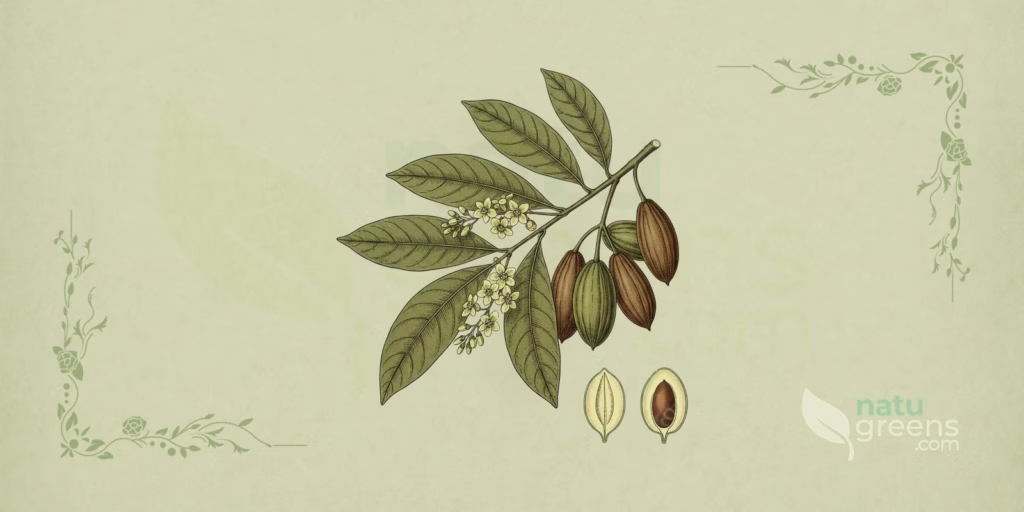
Maytenus ilicifolia Mart. ex Reissek / Espinheira Santa, popularly known as espinheira-santa, is a perennial shrub of the Celastraceae family, described by Carl Friedrich Philipp von Martius and validated by Heinrich Gottlieb Ludwig Reissek. Native to South America, occurring in Brazil, Paraguay, Uruguay, and Argentina, this species is widely recognized for its medicinal properties, especially in treating gastrointestinal disorders. Espinheira-santa has been used for centuries in indigenous and folk traditional medicine, establishing itself as one of the most important phytotherapeutic plants of the South American flora.
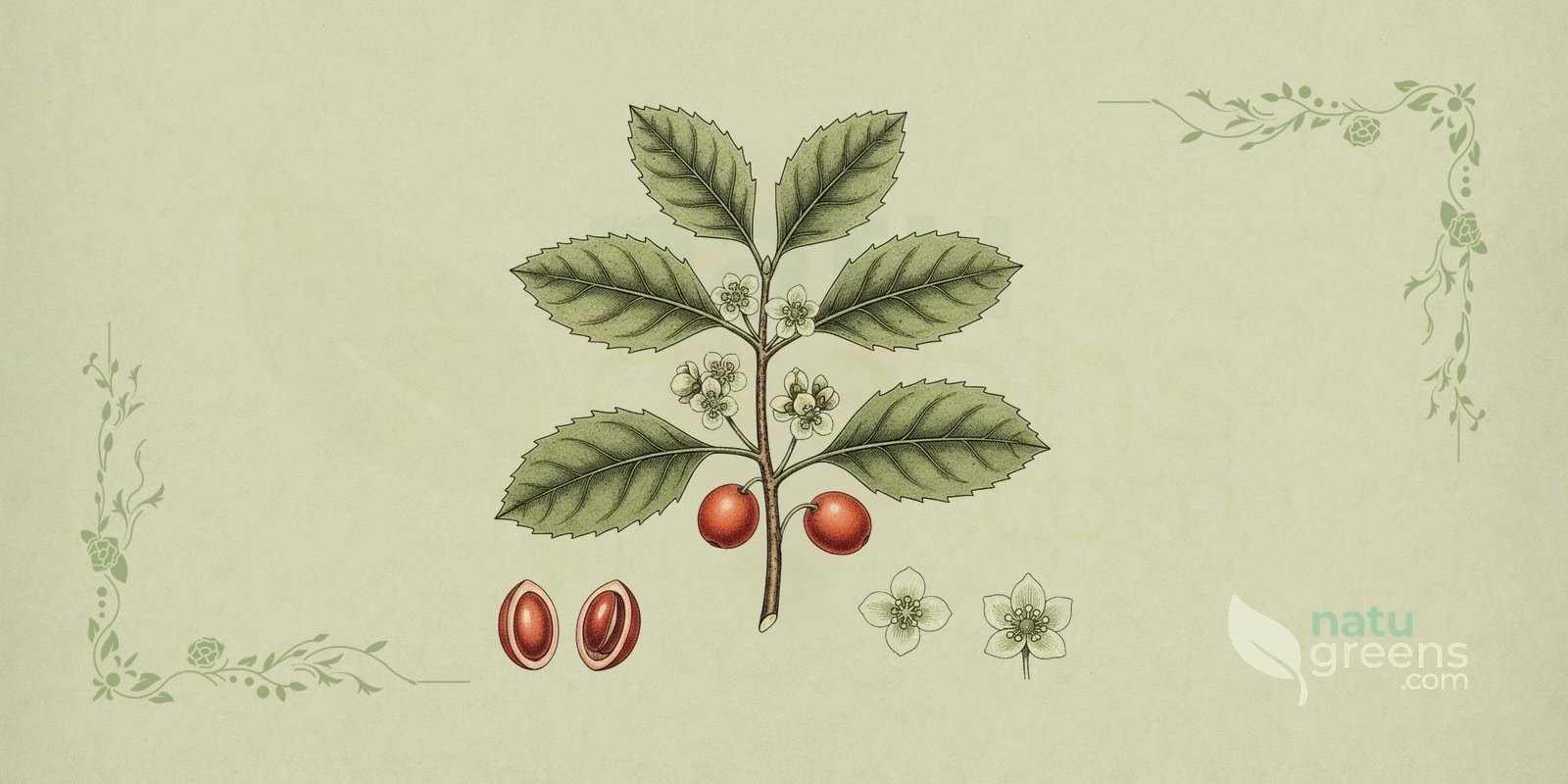
The plant is characterized by its leathery, spiny leaves, which give it its popular name. Its phytochemical composition is rich and complex, including tannins, flavonoids, triterpenes, and alkaloids, which are responsible for its anti-inflammatory, analgesic, and antiulcerogenic effects. Modern scientific research has validated many of the traditional uses of espinheira-santa, highlighting its therapeutic potential in various health conditions. The growing demand for natural alternatives has driven in-depth studies on this remarkable botanical species.
Popular and International Names of Espinheira Santa
- English: cancerosa, espinheira santa, holy thorn.
- Spanish: congorosa, espinheira santa, siempreverde.
- Portuguese: cancerosa, congorça, espinheira-divina, espinheira-santa, maiteno, salva-vidas.
- French: épine sainte, espinheira santa.
- Italian: espinheira santa, spina santa.
- German: Espinheira Santa, Heiliger Dorn.
Botanical Synonyms of Espinheira Santa
The taxonomy of Maytenus ilicifolia has undergone some variation over time. However, the name Maytenus ilicifolia Mart. ex Reissek is the most widely accepted and recognized in the botanical and pharmacological literature. Other synonyms found in various sources include Maytenus aquifolia Mart., Maytenus buxifolia A. Reissek, Maytenus lorentzii Briq., and Maytenus microcarpa Mart. ex Reissek. These names reflect the complexity of botanical classification and the different taxonomic interpretations throughout history.
Botanical Family: Celastraceae
Maytenus ilicifolia belongs to the botanical family Celastraceae, a family of dicotyledonous plants comprising about 90 to 100 genera and approximately 1,300 species. This family is cosmopolitan, with the greatest diversity in the tropical and subtropical regions of the world. Species of the Celastraceae family are morphologically diverse, including trees, shrubs, and lianas, and many are recognized for their economic and medicinal importance.
The Celastraceae family is known for producing a wide range of secondary compounds, including alkaloids, triterpenes, sesquiterpenes, and flavonoids, which give many of its species pharmacological properties. The presence of these bioactive compounds has been the subject of intense research, revealing the therapeutic potential of several plants in this family, including espinheira-santa, which stands out for its applications in traditional and modern medicine.
Parts of Espinheira Santa Used
- Bark
- Leaves
- Roots
Ethnobotanical and Traditional Uses
- Anti-inflammatory
- Antiulcerogenic (gastric protection)
- Asthma and respiratory problems
- Blood purifier
- Chronic gastritis
- Constipation
- Diarrhea
- Digestive disorders (indigestion, dyspepsia, heartburn, reflux)
- Emmenagogue (induces menstruation)
- Liver disorders
- Pain relief (analgesic)
- Treatment of gastric and duodenal ulcers
- Tumors (traditional use, antiproliferative activity studied in the laboratory)
- Urinary tract infections
- Wound healing
Therapeutic Properties of Espinheira Santa
- Analgesic (traditional use to relieve pain)
- Antacid (studied activity against stomach acidity)
- Anti-inflammatory (studied effect in reducing inflammation)
- Antiasthmatic (traditional use to relieve asthma symptoms)
- Antioxidant (studied activity against free radicals)
- Antiproliferative (activity observed in laboratory studies, without clinical proof)
- Antiseptic (studied in infection prevention)
- Antiulcerogenic (studied protective effect against ulcers)
- Carminative (studied effect in reducing intestinal gas)
- Cytoprotective (studied protective effect on cells)
- Depurative (helps eliminate toxins)
- Digestive (aids digestion)
- Diuretic (studied effect on urine production)
- Emmenagogue (studied effect on menstrual flow)
- Laxative (studied effect on intestinal evacuation)
- Sialagogue (studied effect on saliva production)
- Stomachic (tones the stomach)
Detailed Phytochemical Profile of Espinheira Santa
- Alkaloids
- Cangorins
- Coumarins
- Flavonoids (quercetin, rutin, catechins)
- Maytansinoids
- Saponins
- Tannins (epigallocatechin, gallocatechin)
- Triterpenes (friedelin, lupeol, betulinic acid)
Preparation and Administration Forms of Espinheira Santa
- Capsules
- Dry extract
- Fluid extract
- Ointment (topical use)
- Tablets
- Tea (infusion)
- Tincture
Synergy with Other Medicinal Plants
Gastric Protection and Digestion
Espinheira-santa, when combined with chamomile (Matricaria chamomilla) and ginger (Zingiber officinale), offers a remarkable synergy for digestive health. Chamomile complements the anti-inflammatory and calming properties of espinheira-santa, while ginger adds an antiemetic and prokinetic effect, aiding gastric motility. This combination is particularly beneficial for relieving dyspepsia, nausea, and inflammation of the gastrointestinal tract, providing more comprehensive relief from digestive discomfort.
Anti-Inflammatory and Analgesic Action
To enhance the anti-inflammatory and analgesic effects of espinheira-santa, combining it with cat’s claw (Uncaria tomentosa) and devil’s claw (Harpagophytum procumbens) is highly recommended. Cat’s claw is known for its immunomodulatory and anti-inflammatory properties, while devil’s claw is a potent natural analgesic. Together, these plants can offer significant relief in chronic inflammatory conditions, such as arthritis and muscle pain, acting on different pathways of the inflammatory cascade.
Antioxidant Support
Espinheira-santa, rich in flavonoids, can have its antioxidant action amplified when combined with other plants high in antioxidants, such as green tea (Camellia sinensis) and turmeric (Curcuma longa). Green tea, with its catechins, and turmeric, with curcumin, work together to neutralize free radicals and protect cells from oxidative stress. This synergy is valuable for preventing chronic diseases and maintaining overall cellular health.
Recipes and Usage Protocols of Espinheira Santa
Poultice for Skin Inflammation
Ingredients: Fresh espinheira-santa leaves, filtered water.
Preparation: Mash the fresh espinheira-santa leaves until a paste forms. If necessary, add a little water to reach the desired consistency. Apply the paste directly to the affected area of skin, such as wounds, rashes, or inflammation. Cover with clean gauze and leave on for 30 minutes to 1 hour. Repeat twice a day. This poultice helps reduce inflammation and promote healing.
Infusion for Gastritis and Ulcers
Ingredients: 1 teaspoon of dried espinheira-santa leaves, 200 ml of boiling water.
Preparation: Place the leaves in a cup and add freshly boiled water. Cover and let infuse for 10-15 minutes. Strain and drink warm. It is recommended to drink 1 cup, 2 to 3 times a day, preferably 30 minutes before main meals. This infusion helps protect the gastric mucosa, reduce acidity, and relieve symptoms of gastritis and ulcers.
Tincture for Indigestion Relief
Ingredients: 50 g of dried espinheira-santa leaves, 250 ml of 70% grain alcohol.
Preparation: Place the leaves in a dark glass jar and cover with the alcohol. Seal tightly and let macerate for 14 days in a cool, dark place, shaking daily. After this period, strain and store the tincture in a dropper bottle. Take 20-30 drops diluted in a little water, twice a day, after meals. This tincture is traditionally used to support digestion and relieve the sensation of heaviness and discomfort after meals.
The preparations above follow traditional records and do not replace professional guidance. Before any internal use, check the contraindications and interactions described in this article.
Associated Therapies
Phytotherapy
In phytotherapy, espinheira-santa is one of the most studied and widely used plants, especially in Brazil. Its extracts are incorporated into formulations for a wide range of gastrointestinal disorders, including gastritis, peptic ulcers, dyspepsia, and gastroesophageal reflux. Modern phytotherapy values espinheira-santa for its well-established traditional use in Brazil and for pharmacological and toxicological studies investigating its safety and therapeutic potential, and it is frequently recommended as a natural alternative or complement to conventional treatments. Standardization of the extracts contributes to dosage consistency and final product quality.
Homeopathy
In homeopathy, Maytenus ilicifolia is used as a remedy for conditions related to the digestive system, especially those involving gastric pain and inflammation. The homeopathic remedy is prepared from the plant’s mother tincture, following the principles of dilution and dynamization. It is indicated for individuals presenting symptoms such as heartburn, stomach burning, slow digestion, and sensitivity in the epigastric region. The choice of potency and frequency of administration is individualized, based on the totality of the patient’s symptoms.
Traditional Chinese Medicine (TCM)
Although espinheira-santa is not a plant native to China, its active principles and therapeutic actions can be interpreted through the lens of Traditional Chinese Medicine. Its anti-inflammatory and digestive properties suggest a harmonizing action on the Spleen-Pancreas and Stomach, dissipating stagnation of Qi and Blood and calming the Liver. From this perspective, it could be used to address conditions of Stomach Heat, which manifests with symptoms such as heartburn, burning, and thirst. Its cooling nature and ability to move Qi help restore the digestive system’s energetic balance.
Contraindications and Side Effects of Espinheira Santa
General Contraindications
Although considered safe for most adults, espinheira-santa is categorically contraindicated during pregnancy and breastfeeding: folk tradition reports a risk of abortive and uterotonic effects, and animal studies have linked the plant to uterine contractions and possible effects on fertility, so the absence of solid safety data reinforces the need to completely avoid its use during these periods. Pregnant or breastfeeding women, or those trying to conceive, should completely avoid consuming espinheira-santa. People with known hypersensitivity to plants of the Celastraceae family should also avoid its use.
Common Side Effects
Side effects of espinheira-santa are rare and generally mild. At high doses, it may cause nausea and dry mouth. Prolonged and excessive use may lead to gastric discomfort in some individuals. It is always advisable to follow therapeutic doses and consult a healthcare professional before starting the use of any phytotherapeutic product.
Drug Interactions
Espinheira-santa may interact with certain medications. Due to its properties, it can theoretically potentiate the effects of antihypertensive and diuretic medications. People taking these medications should monitor their blood pressure and consult a doctor before using espinheira-santa. There are no reports of significant interactions with other medications, but caution is always advised.
Historical Notes and Interesting Facts
The name “espinheira-santa” (“holy thorn”) derives from the appearance of its leaves, which are spiny and resemble holly (Ilex aquifolium), and from its status as a “miracle plant” in folk medicine for gastric problems. In Brazil, espinheira-santa was one of the first plants to have its effects scientifically evaluated, which led to its inclusion in the list of medicinal plants of the Brazilian Unified Health System (SUS). Its popularity is so great that, in some regions, the wild plant is threatened due to excessive and uncontrolled harvesting.
Frequently Asked Questions about Espinheira Santa
Does Espinheira-Santa Tea Help with Weight Loss?
There is no scientific evidence proving that espinheira-santa tea promotes weight loss. Its main action is on the digestive system, relieving symptoms of gastritis and ulcers. The feeling of gastric well-being may indirectly contribute to a more balanced diet, but the plant does not have direct weight-loss properties.
Can I Drink Espinheira-Santa Tea Every Day?
Continuous use of espinheira-santa tea should be done in moderation and, preferably, under the guidance of a healthcare professional. Although it is safe for most people, prolonged use at high doses may not be suitable for everyone. It is recommended to take breaks from consumption and observe the body’s response.
What Is the Best Time to Drink Espinheira-Santa Tea?
For treating gastric problems, it is best to drink espinheira-santa tea about 30 minutes before main meals. This helps protect the stomach lining and prepare the digestive system for the meal. For other purposes, it can be consumed between meals.
Can Espinheira-Santa Be Used During Pregnancy?
No. Espinheira-santa is categorically contraindicated during pregnancy and breastfeeding, as folk tradition reports a risk of abortive and uterotonic effects, and animal studies have linked the plant to uterine contractions and possible effects on fertility. Pregnant or breastfeeding women, or those trying to conceive, should completely avoid consuming the plant and seek medical guidance for safe alternatives.
How Should Espinheira-Santa Tea Be Prepared?
Espinheira-santa tea is traditionally prepared as an infusion, using one teaspoon of dried leaves per 200 ml of boiling water, left to steep for 10 to 15 minutes before straining. It is recommended to drink the liquid warm, about 30 minutes before main meals, to support protection of the gastric mucosa.
Which Parts of Espinheira-Santa Are Used?
The parts of espinheira-santa used include the leaves, bark, and roots. In the traditional recipes on this page, dried leaves are the most commonly used part, both in the infusion and in the tincture.
Notice: this content is for informational purposes and does not replace professional medical advice. Consult a physician or herbal practitioner before using medicinal plants, especially during pregnancy, breastfeeding, or alongside medication.
References and Scientific Studies
- DOI2004 Jorge, R. M., Leite, J. P. V., Oliveira, A. B., & Tagliati, C. A. (2004). Evaluation of antinociceptive, anti-inflammatory and antiulcerogenic activities of Maytenus ilicifolia. Journal of Ethnopharmacology, 94(1), 93-100. ↗
- DOI2017 Tabach, R., Duarte-Almeida, J. M., & Carlini, E. A. (2017). Pharmacological and Toxicological Study of Maytenus ilicifolia Leaf Extract Part II-Clinical Study (Phase I). Phytotherapy Research, 31(6), 921-926. ↗
- PMC2017 Tabach R, et al. Pharmacological and Toxicological Study of Maytenus ilicifolia Leaf Extract Part II-Clinical Study (Phase I). Phytotherapy research : PTR. 2017.