Foeniculum vulgare Mill. / Fennel, popularly known as fennel or sweet fennel, is a perennial herbaceous plant of the Apiaceae family, described by Philip Miller in 1768. Native to the Mediterranean region, this species has spread across the world thanks to its well-known medicinal and culinary properties. Fennel has been used for millennia in traditional medicine, valued for its seeds, leaves, and bulbs. Its yellow flowers and finely divided leaves give it a delicate appearance, while its anise-like aroma is unmistakable.
In the European and Brazilian herbal traditions, fennel holds a prominent place as a carminative and digestive plant. Its applications range from the treatment of gastrointestinal disorders to the relief of cramps and the promotion of lactation. The plant is recognized for its rich phytochemical composition, especially essential oils such as anethole, which account for its antispasmodic and anti-inflammatory properties. Modern scientific research has validated many of fennel’s traditional uses, consolidating its position as one of the most studied and most widely used medicinal plants in the world.
For the taxonomy, morphology and cultivation of this plant, see the Botanical Profile of Fennel.
Popular and International Names of Fennel
- English: fennel, sweet fennel, wild fennel, Florence fennel, bronze fennel, common fennel, finocchio.
- Spanish: hinojo, hinojo dulce, fonoll, hierba santa.
- Portuguese: funcho, erva-doce, fiolho, funcho-comum, funcho-doce.
- French: fenouil, fenouil commun, fenouil doux.
- Italian: finocchio, finocchio comune, finocchio dolce.
- German: Fenchel, Echter Fenchel, Süßer Fenchel, Fenchelkraut.
- Hindi (Ayurveda): saunf.
Botanical Synonyms of Fennel
The scientific name Foeniculum vulgare Mill. is widely accepted, but the plant has several botanical synonyms used throughout the history of taxonomy. Among the most notable are Anethum foeniculum L., Foeniculum officinale All., and Foeniculum capillaceum Gilib. These denominations reflect different classifications and understandings of the species over time, but Foeniculum vulgare Mill. remains the globally recognized standard nomenclature.
Other synonyms include Foeniculum dulce Mill., Foeniculum foeniculum (L.) H.Karst., and Foeniculum piperitum (Ucria) C.Presl. The variety azoricum, known as Florence fennel, is sometimes classified as Foeniculum vulgare subsp. vulgare var. azoricum (Mill.) Thell. or Foeniculum azoricum Mill., highlighting the diversity within the species.
Botanical Family: Apiaceae

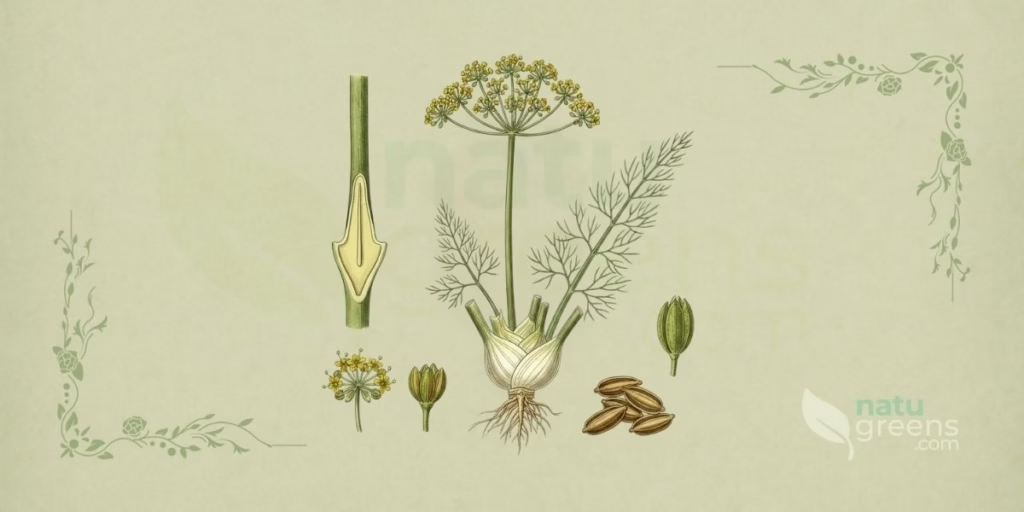
Botanical illustration of Foeniculum vulgare Mill. (fennel, sweet fennel), a perennial herbaceous plant of the Apiaceae family, described by Philip Miller, native to the Mediterranean region, detailing the complete plant with its finely divided yellowish leaves, yellow flowers grouped in terminal umbels, and dry fruits, in 19th-century botanical encyclopedia style on a neutral herbarium paper background.
Fennel belongs to the Apiaceae family, formerly known as Umbelliferae, a vast family of flowering plants that includes about 3,700 species distributed in approximately 434 genera. This family is characterized by umbel inflorescences, in which small flowers are grouped into umbrella-like structures. Notable members of the Apiaceae family include carrot, celery, parsley, coriander, and dill, many of which are valued for their aromatic and culinary properties.
Plants of the Apiaceae family are rich in essential oils, coumarins, and flavonoids, which give them a variety of medicinal and aromatic properties. Fennel, in particular, is recognized for the presence of anethole, estragole, and fenchone, compounds that contribute to its characteristic flavor and aroma as well as to its therapeutic effects. Fennel shares morphological features typical of the family, including hollow stems, alternate leaves, and small flowers, usually white or yellow. The chemical diversity of this family has been the subject of intense pharmacological research, contributing to the development of phytomedicines and dietary supplements.
Parts of Fennel Used
- Bulb
- Essential oil
- Fruits (popularly known as seeds)
- Leaves
- Roots
Ethnobotanical and Traditional Uses of Fennel
This plant has a long history of ethnobotanical and traditional use in many cultures around the world. In traditional medicine, it is employed for a wide range of conditions, especially those related to the digestive system. It is known for its carminative properties, helping relieve gas, bloating, and cramps, and is frequently used to treat dyspepsia and irritable bowel syndrome. Historically, fennel was also valued for its estrogenic qualities, used to promote lactation in nursing mothers, regulate the menstrual cycle, and relieve menopause symptoms.
In Ancient Greece and Rome, fennel was appreciated not only as food and insect repellent but also as medicine; fennel tea was believed to give warriors courage before battle. Greek mythology associates fennel with Prometheus, who is said to have used a hollow stalk of the plant to carry fire from Mount Olympus to Earth. Charlemagne, in the 8th century, required fennel to be grown on all his imperial farms, showing its importance at the time.
In Traditional Chinese Medicine, this herb is used for several medicinal purposes, including the treatment of abdominal pain, indigestion, and kidney complaints. In parts of India, fennel fruits, known as saunf, are eaten raw or roasted as mukhwas, an after-meal digestive and mouth freshener, or candied as confections. It is also an essential ingredient in spice blends such as panch phoron and Chinese five-spice powder. Its versatility and efficacy across different systems of traditional medicine underscore its enduring therapeutic value.
Main Uses of Fennel
- Indigestion and poor digestion
- Infections (bacterial, fungal, viral, mycobacterial)
- Kidney and bladder disorders
- Lactation (increases milk secretion)
- Menopause (symptom relief)
- Promotion of menstruation
- Relief of infant colic
- Relief of intestinal cramps and flatulence
- Relief of menstrual cramps
- Relief of nausea and vomiting
Therapeutic Properties of Fennel
- Analgesic (relieves pain)
- Antiallergic (reduces allergic reactions)
- Anticancer (shows activity against cancer cells)
- Antidiabetic (helps regulate blood sugar levels); traditional use, without established clinical efficacy
- Antifungal (fights fungi)
- Anti-inflammatory (reduces inflammation)
- Antimicrobial (fights microorganisms); traditional use, without established clinical efficacy
- Antioxidant (fights free radicals and protects cells)
- Antispasmodic (relieves spasms and cramps)
- Antiviral (fights viruses); traditional use, without established clinical efficacy
- Anxiolytic (reduces anxiety); traditional use, without established clinical efficacy
- Carminative (helps expel intestinal gas)
- Digestive (aids digestion)
- Diuretic (increases urine production)
- Emmenagogue (promotes menstruation); traditional record, without established clinical efficacy
- Estrogenic (mimics the action of estrogen)
- Expectorant (helps clear mucus from the airways)
- Galactagogue (stimulates breast milk production); traditional record, without established clinical efficacy
- Gastroprotective (protects the stomach)
- Hepatoprotective (protects the liver); traditional use, without established clinical efficacy
- Insecticidal (has insect-killing properties)
- Orexigenic (stimulates appetite)
- Prokinetic (speeds up gastrointestinal transit)
- Vermifuge (eliminates intestinal worms); traditional use, without established clinical efficacy
Detailed Phytochemical Profile of Fennel
The phytochemical profile of this plant is complex and rich in bioactive compounds that contribute to its aromatic and therapeutic properties. The main constituents include volatile oils, flavonoids, phenolic compounds, fatty acids, and amino acids. The exact composition can vary depending on the plant part (seeds, leaves, roots), the variety, and growing conditions.
- Anethole: The main component of the essential oil, responsible for the characteristic anise-like flavor and aroma. It has estrogenic, anti-inflammatory, and antimicrobial properties.
- Coumarins: Compounds with various biological activities, including anti-inflammatory and anticoagulant effects.
- Essential amino acids: leucine, isoleucine, phenylalanine, tryptophan.
- Estragole (methyl chavicol): Another volatile component with an anise-like aroma, present in varying amounts.
- Fatty acids: Present in the seeds, including palmitic acid, contributing to nutritional value.
- Fenchone: Contributes to fennel’s aroma, with notes of mint and camphor. It has antimicrobial and antispasmodic activities.
- Fiber
- Flavonoids: eriodictyol-7-rutinoside, quercetin-3-rutinoside, quercetin-3-glucuronide, isoquercitrin, quercetin-3-arabinoside, kaempferol-3-glucuronide, kaempferol-3-arabinoside, isorhamnetin glycoside, quercetin-3-O-galactoside, kaempferol-3-O-rutinoside, kaempferol-3-O-glucoside.
- Limonene: A monoterpene found in the essential oil, with antioxidant and anti-inflammatory properties.
- Linalool
- Lipids
- Minerals: aluminum, barium, calcium, chromium, cobalt, copper, iron, magnesium, manganese, nickel, strontium, zinc.
- Phenolic compounds: rosmarinic acid, chlorogenic acids, 3-O-caffeoylquinic acid, 4-O-caffeoylquinic acid, 5-O-caffeoylquinic acid, and dicaffeoylquinic acids.
- Polyphenols: Including phenolic acids such as rosmarinic acid and flavonoids such as luteolin, which provide significant antioxidant properties.
- Proteins
- Vitamins: A, E, K, C (ascorbic acid), thiamine, riboflavin, niacin, pyridoxine.
Preparation and Administration Forms of Fennel
Fennel can be prepared in several ways to harness its medicinal and aromatic properties, the most common being teas, tinctures, and extracts. The choice of preparation depends on the purpose and the desired concentration of active compounds.
Tea (Infusion)
Fennel infusion is one of the most popular forms of consumption, ideal for relieving digestive complaints such as gas and bloating. To prepare it, use 1 to 2 teaspoons of lightly crushed fennel seeds per 200 ml of hot (not boiling) water. Steep for 5 to 10 minutes, strain, and drink. It can be consumed up to 3 times a day, preferably after meals. Fresh leaves can also be used for milder infusions.
Tincture
Fennel tincture is an alcoholic preparation that concentrates the plant’s active principles, allowing more precise dosing and a longer shelf life. It is usually made from the seeds, at a common ratio of 1:5 (one part plant to five parts alcohol, usually 40-60% grain alcohol). The seeds are macerated in the alcohol for several weeks in a dark place, with daily shaking. After maceration, the tincture is strained and stored in dark bottles. The typical dosage ranges from 1 to 3 ml, diluted in water, one to three times a day, as directed by a health professional.
Fluid Extract
The fluid extract is a more concentrated form than the tincture, obtained through percolation or maceration with specific solvents, resulting in a high-potency solution. It is frequently used in herbal formulations and should be used under professional supervision because of its concentration. Fennel fluid extracts are valued for their digestive and antispasmodic properties, being effective in small doses.
Essential Oil
Fennel essential oil, extracted mainly from the seeds, is highly concentrated and must be used with extreme caution. It is rich in anethole, fenchone, and estragole. It can be used in aromatherapy to relieve stress and anxiety, or topically, always diluted in a carrier oil, for abdominal massage to relieve cramps and gas. It should never be ingested without guidance from a qualified professional, given its potency and possible adverse effects.
Synergy with Other Medicinal Plants
This herb can be combined with other medicinal plants to enhance its therapeutic effects, especially for digestive health and general well-being. The synergy between different herbs can provide a broader spectrum of action and more effective results.
Fennel and Licorice for Anti-Inflammatory Support
Licorice (Glycyrrhiza glabra) can be added to soften the flavor and contribute anti-inflammatory and gastric-mucosa-protecting properties, being useful for indigestion and ulcers.
Fennel and Chamomile for Infant Colic
For the relief of infant colic, the association of fennel (Foeniculum vulgare) with chamomile (Matricaria chamomilla) is a safe and effective traditional practice. Fennel contributes its carminative properties, reducing gas formation, while chamomile offers calming and antispasmodic effects thanks to apigenin and bisabolol. Together, these plants act synergistically to relax the intestinal muscles and reduce abdominal discomfort in babies and young children.
Fennel, Milk Thistle, and Fenugreek as a Lactation Stimulant
Fennel can be combined with fenugreek (Trigonella foenum-graecum) and milk thistle (Silybum marianum) to enhance the galactagogue effect. This synergy benefits mothers who need to increase breast milk production, with fennel contributing anethole and the other plants phytoestrogens and silymarin, respectively.
Fennel and Lemon Balm for Anxiety
Lemon balm, known for its calming and anxiolytic properties, can be combined with fennel to relieve the stress and anxiety that often accompany digestive complaints. Together, they help relax the gastrointestinal system.
Fennel and Peppermint with Ginger for Digestive Disorders
The association of fennel with peppermint (Mentha × piperita) and ginger (Zingiber officinale) is effective for the relief of dyspepsia, flatulence, and intestinal cramps. Fennel, with its essential oils such as trans-anethole, acts synergistically with the menthol of peppermint and the gingerols of ginger, delivering antispasmodic, carminative, and anti-inflammatory effects on the gastrointestinal tract.
Fennel and Ginger for Nausea and Indigestion
The combination of fennel (Foeniculum vulgare) with ginger (Zingiber officinale) is widely used to relieve nausea, indigestion, and gastrointestinal discomfort. Fennel’s anethole, with its carminative and antispasmodic properties, works together with ginger’s gingerols and shogaols, which have antiemetic and digestive effects. This synergy is particularly effective after heavy meals or in cases of motion sickness, providing fast, natural relief.
Fennel and Cumin for Flatulence
Combining fennel (Foeniculum vulgare) with cumin (Cuminum cyminum) is excellent for fighting flatulence and abdominal bloating. Both are rich in volatile compounds with strong carminative action. Fennel’s anethole and cumin’s cuminaldehyde work together to relax the muscles of the gastrointestinal tract, easing the expulsion of gas and preventing its buildup. This synergy is ideal for those with slow digestion and excess gas.
Recipes and Usage Protocols of Fennel
This plant, with its versatility and pleasant flavor, can be incorporated into your routine in many ways, both culinary and therapeutic. It is important to follow the recommended doses and, in case of doubt or specific health conditions, to consult a health professional.
Culinary Uses
The bulb, leaves, and seeds of fennel are widely used in cooking. The bulb can be eaten raw in salads, roasted, grilled, or sautéed, adding an anise-like, slightly sweet flavor to meat, fish, and vegetable dishes. The fresh leaves are excellent for garnishing dishes and flavoring salads, sauces, and soups. The dried seeds are used as a spice in breads, cakes, and cookies, and in spice blends such as the Indian panch phoron.
Digestive Fennel Tea
Ingredients: 1 teaspoon of crushed fennel seeds, 200 ml of boiling water.
Preparation: Place the fennel seeds in a cup and add the boiling water. Cover and steep for 5 to 10 minutes. Strain and drink warm. It can be consumed after meals to aid digestion and relieve gas. For a more pleasant flavor, add a slice of lemon or a little honey.
Decoction for Respiratory Complaints
Ingredients: 1 tablespoon of fennel seeds, 500 ml of water.
Preparation: Add the fennel seeds to the water and bring to the boil. Simmer for 10-15 minutes. Strain and drink warm. This decoction can help relieve coughs, bronchitis, and nasal congestion thanks to fennel’s expectorant properties.
Digestive and Galactagogue Infusion
Ingredients: 1 teaspoon of lightly crushed fennel seeds, 200 ml of boiling water.
Preparation: Place the seeds in a cup and add freshly boiled water. Cover and steep for 5-10 minutes. Strain and drink. To ease digestion, drink after meals. To stimulate lactation, drink 2-3 cups a day. This infusion is particularly effective for relieving intestinal cramps and flatulence and for increasing breast milk production.
Massage Oil for Gas Relief
Ingredients: 5 drops of fennel essential oil, 30 ml of a carrier oil (sweet almond or jojoba).
Preparation: Mix the fennel essential oil with the carrier oil in a dark glass bottle. Apply a small amount to the abdominal area and massage gently in clockwise circular movements. This massage can help relieve gas and bloating and is especially useful for babies and children (always with professional guidance and appropriate dilution).
Fennel Tincture for Cramps
Ingredients: 50 g of fennel seeds, 250 ml of 70% grain alcohol.
Preparation: Coarsely crush the fennel seeds and place them in a dark glass jar. Cover with the alcohol, making sure the seeds are completely submerged. Close the jar tightly and let macerate for 2 to 4 weeks in a cool, dark place, shaking daily. After maceration, strain the tincture through a fine cloth and store in a dark bottle. Take 20 to 30 drops diluted in water, 2 to 3 times a day, for relief of cramps and digestive discomfort.
Cough Syrup
A homemade fennel syrup can be prepared to relieve coughs and congestion. Boil 1 tablespoon of fennel seeds in 500 ml of water for 10 minutes. Strain and add honey to taste. Take 1 tablespoon of the syrup several times a day. Fennel acts as an expectorant, helping thin mucus and ease its elimination.
Associated Therapies
Aromatherapy
Fennel essential oil is valued in aromatherapy for its calming and digestive properties. Inhaling its anise-like aroma, through diffusers or vaporizers, can help relieve stress and anxiety and promote a sense of well-being. In massage, diluted in a carrier oil, it is used to relieve muscle pain and abdominal cramps, drawing on its antispasmodic properties. Fennel aromatherapy is particularly useful for harmonizing the digestive and nervous systems.
Clinical Phytotherapy
In modern clinical phytotherapy, fennel is prescribed in various forms, such as standardized extracts, capsules, and teas. Extracts are frequently titrated in anethole, the main active component, to guarantee therapeutic efficacy. It is used in the treatment of functional dyspepsia, irritable bowel syndrome, and flatulence, and as a galactagogue for nursing mothers. Prescription is always individualized, considering the patient’s specific needs and possible interactions with other medications, especially because of its potential estrogenic effect.
Homeopathy
In homeopathic tradition, Foeniculum vulgare appears in diluted preparations associated above all with digestive complaints such as cramps, flatulence and indigestion, within the idea of relaxing the smooth muscle of the gastrointestinal tract. The mother tincture of the plant is the starting point for the dilutions and dynamizations that characterize the method. There are no clinical studies demonstrating the effectiveness of these preparations. Digestive symptoms that persist or come with bleeding, fever, vomiting or weight loss call for medical assessment, and no homeopathic preparation replaces the diagnosis and treatment of serious disease.
Contraindications and Side Effects of Fennel
Although fennel is widely used and generally considered safe, there are contraindications and potential side effects to consider. Individuals with pre-existing health conditions or taking medication should consult a health professional before using fennel for medicinal purposes.
Contraindications
Fennel is generally considered safe when consumed in food amounts. However, at high therapeutic doses it is contraindicated for individuals with a known allergy to plants of the Apiaceae family (such as celery, parsley, and carrot). Allergic reactions can manifest as contact dermatitis, hives, or, in more severe cases, anaphylaxis. Because of its potential estrogenic effect, pregnant women, breastfeeding mothers (at high doses), and people with a history of hormone-dependent cancer should use fennel with caution and under medical supervision. Fennel essential oil should not be used by young children or by people with epilepsy.
- Allergies: People allergic to Apiaceae plants (celery, carrot, parsley, dill) can have allergic reactions to fennel.
- Bleeding Disorders: Fennel can have a mild anticoagulant effect and is contraindicated for people with bleeding disorders or before surgery.
- Hormone-Sensitive Conditions: Individuals with hormone-sensitive conditions, such as breast, ovarian, or uterine cancer, endometriosis, or uterine fibroids, should avoid fennel because of its estrogenic effects.
- Pregnancy and Breastfeeding: Because of its estrogenic properties, fennel is contraindicated during pregnancy, as it can stimulate uterine contractions. Although traditionally used to promote lactation, use while breastfeeding should be cautious and under medical guidance.
Common Side Effects
Side effects of fennel are rare and usually mild. In some people, fennel infusions or extracts can cause nausea, vomiting, or allergic skin reactions, especially in sensitive individuals. Topical application of undiluted fennel essential oil can cause skin irritation and sensitization. At very high doses, anethole, the main component of the essential oil, can have neurotoxic effects, although this is rare with traditional preparations.
- Allergic Reactions: Skin reactions such as dermatitis, rashes, and itching can occur, especially in sensitive people. In rare cases, more severe reactions such as breathing problems and throat swelling can occur.
- Gastrointestinal Complaints: Excessive consumption can cause nausea, vomiting, diarrhea, or constipation, especially in individuals with sensitive stomachs.
- Photosensitivity: Fennel can increase the skin’s sensitivity to sunlight, making sunburn more likely.
Drug Interactions
Fennel can interact with several medications. Because of its potential estrogenic effect, it can interfere with hormone therapies, including oral contraceptives and hormone replacement therapy. It can also potentiate the effects of anticoagulants, increasing the risk of bleeding, due to the presence of coumarins. Individuals taking diabetes medication should carefully monitor their glucose levels, since fennel can have mild hypoglycemic effects.
- Anticoagulants: Fennel can potentiate the effects of anticoagulant medications such as warfarin, increasing the risk of bleeding.
- Ciprofloxacin: Animal studies suggest that fennel can reduce the absorption of the antibiotic ciprofloxacin, decreasing its efficacy.
- Oral Contraceptives and Hormone Replacement Therapy: Because of its estrogenic effects, fennel can interfere with the efficacy of oral contraceptives and hormone therapies.
- Tamoxifen: Fennel can interfere with the action of tamoxifen, a medication used in the treatment of certain types of breast cancer.
Historical Notes and Interesting Facts about Fennel
This plant, with its rich history and presence in many cultures, is surrounded by curiosities and historical facts that underscore its importance through the centuries. The Greek name for fennel is marathon (μάραθον), and the site of the famous Battle of Marathon in Greece literally means a plain with fennel, indicating the plant’s abundance in the region. The word is first attested in Mycenaean Linear B form as ma-ra-tu-wo.
Origin of the Name and Ancient Symbolism
The name Foeniculum derives from the Latin foenum, meaning little hay, an allusion to its delicate foliage and characteristic aroma. In antiquity, fennel was considered a symbol of strength and courage: Roman gladiators, for example, ate fennel before battles, believing it gave them vigor and bravery. It was also used in rituals and celebrations, associated with longevity and protection against evil spirits. Its presence in medieval gardens and European monasteries demonstrates its historical importance as a medicinal and culinary plant. Fennel is also one of the nine plants invoked in the pagan Anglo-Saxon Nine Herbs Charm, recorded in the 10th century.
Fennel in Mythology and Folklore
In Greek mythology, fennel was associated with Dionysus, the god of wine and fertility, and was considered a sacred plant. In European folklore, fennel was believed to have magical properties and was used to ward off evil and purify spaces. Hanging fennel branches on doors or windows was a common practice to protect homes from negative influences. Its supposed ability to improve eyesight was also a popular belief, leading to its use in eye elixirs and potions.
Hesiod’s Theogony
In Hesiod’s Theogony, Prometheus steals the ember of fire from the gods in a hollow fennel stalk, giving the plant a place in mythological narratives. In the 15th century, Portuguese settlers on Madeira noticed the abundance of wild fennel and used the Portuguese word funcho and the suffix -al to name the new city of Funchal.
The Goblet of Life (1842)
Henry Wadsworth Longfellow’s 1842 poem “The Goblet of Life” repeatedly refers to the plant and mentions its supposed power to strengthen eyesight:
Above the lower plants, it towers,
The Fennel with its yellow flowers;
And in an earlier age than ours
Was gifted with the wondrous powers
Lost vision to restore.
Culinary Uses Throughout History
Beyond its medicinal applications, fennel has a long culinary history. The ancient Egyptians and Romans used its seeds and leaves to season food and drink. In the Middle Ages, it was a common ingredient in meat and fish dishes as well as breads and cakes. The fennel bulb, especially the Florence variety, became popular in Italian cuisine, eaten raw in salads, roasted, or braised. Fennel seeds are an essential component of spice blends in many cultures, such as the Indian panch phoron and Chinese five-spice powder.
Frequently Asked Questions about Fennel Tea
Which Part of Fennel Is Best for Tea?
Fennel seeds are the most common and most effective part for preparing medicinal teas, especially for digestive complaints. The fresh leaves can also be used for milder, aromatic infusions, ideal for daily consumption.
Can Fennel Be Consumed Every Day?
Yes, fennel can be consumed daily in moderate doses, whether as infusions, in cooking, or as a supplement, without significant adverse effects for most people. However, it is essential to respect the recommended doses and to watch for any individual reaction, especially in cases of allergies or pre-existing health conditions.
Does Fennel Really Help Digestion?
Yes, fennel is widely recognized for its digestive and carminative properties. Its essential oils, such as anethole, relax the smooth muscle of the gastrointestinal tract, helping relieve gas, bloating, cramps, and indigestion. Drinking fennel tea after meals is an effective traditional practice for healthy digestion.
Does Fennel Tea Help with Weight Loss?
Fennel tea can aid digestion and reduce bloating, which can create a feeling of lightness. However, there is no robust scientific evidence that fennel tea alone causes significant weight loss. It can complement a balanced diet and healthy lifestyle.
Can Children Consume Fennel?
Yes, fennel is frequently used to relieve infant colic and digestive discomfort in babies and young children. However, administration must be at very low doses and under the guidance of a health professional, especially for infants. Fennel essential oil is not recommended for young children.
Is Fennel Tea Safe for Babies?
Fennel tea is frequently used to relieve colic and gas in babies. However, it must be given in very small doses and always under the guidance and supervision of a pediatrician or qualified health professional. Excessive or inappropriate use can be harmful.
Can Fennel Cause Allergies?
Although rare, fennel can cause allergic reactions in individuals sensitive to Apiaceae plants, such as celery, parsley, or carrot. Symptoms can include contact dermatitis, hives, or, in more severe cases, anaphylaxis. People with a history of allergy to these plants should be cautious with fennel.
Does Fennel Interact with Medications?
Yes, fennel can interact with certain medications. Because of its potential estrogenic effect, it can influence the efficacy of hormone therapies and oral contraceptives. It can also potentiate the effects of anticoagulants, increasing the risk of bleeding. People on regular medication should consult a health professional before using fennel at therapeutic doses.
What Is the Difference Between Fennel and Anise?
Fennel (Foeniculum vulgare) and true anise (Pimpinella anisum) are different plants, although both share an anise-like flavor and digestive properties. Fennel is a larger plant, with finer leaves and an edible bulb, while anise is smaller and best known for its seeds. Distinguishing between the two is important, especially in medicinal contexts.
How Should Dried Fennel Be Stored to Preserve Its Properties?
Dried fennel seeds should be stored in airtight glass or metal containers, away from light, heat, and moisture. Properly stored, fennel seeds keep their therapeutic properties for up to two years. Avoid plastic bags, which can retain moisture and encourage mold. Fresh leaves and bulbs should be kept in the refrigerator and eaten within a few days.
Are There Contraindications for Fennel Tea?
Yes, fennel tea is contraindicated for pregnant women because of its estrogenic properties. People allergic to Apiaceae plants and individuals with hormone-sensitive conditions (such as certain cancers) should also avoid it. When in doubt, always consult a health professional.
Notice: this content is for informational purposes and does not replace professional medical advice. Consult a physician or herbal practitioner before using medicinal plants, especially during pregnancy, breastfeeding, or alongside medication.
References and Scientific Studies
View All 10 Cited References
Peer-Reviewed Scientific Studies (9)
- PMC2014 Badgujar, S. B., Patel, V. V., & Bandivdekar, A. H. (2014). Foeniculum vulgare Mill: A Review of Its Botany, Phytochemistry, Pharmacology, Contemporary Application, and Toxicology. BioMed Research International, 2014, 842674.
- PEER2016 Rather, M. A., Dar, B. A., Sofi, S. N., Bhat, B. A., & Qurishi, M. A. (2016). Foeniculum vulgare: A comprehensive review of its traditional use, phytochemistry, pharmacology, and safety. Arabian Journal of Chemistry, 9(S2), S1574-S1583.
- PEER2013 Rahimi, R., & Ardekani, M. R. S. (2013). Medicinal properties of Foeniculum vulgare Mill. in traditional Iranian medicine and modern phytotherapy. Chinese Journal of Integrative Medicine, 19(12), 883-889.
- PEER2023 Noreen, S., Tufail, T., Ain, H. B. U., & Ahmed, S. (2023). Pharmacological, nutraceutical, functional and therapeutic properties of fennel (Foeniculum vulgare). Journal of Food Properties, 26(1), 1-20.
- PMC2023 Karadağ, A. E., & Demirci, F. (2023). Binary Synergistic Combinations of Lavender and Fennel Essential Oils with Amoxicillin against Multidrug-Resistant Bacteria. Planta Medica, 89(07), 803-810.
- PEER2004 Choi, E. M., & Hwang, J. K. (2004). Antiinflammatory, analgesic and antioxidant activities of the fruit of Foeniculum vulgare. Fitoterapia, 75(6), 557-565.
- PEER2010 Picon, P. D., et al. (2010). Randomized clinical trial of a phytotherapic compound containing Pimpinella anisum, Foeniculum vulgare, Sambucus nigra, and Cassia augustifolia for chronic constipation. BMC Complementary and Alternative Medicine, 10, 17.
- PMC2019 Mahboubi, M. (2019). Foeniculum vulgare as Valuable Plant in Management of Women’s Health. Journal of Menopausal Medicine, 25(1), 1-14.
- PEER2003 Oktay, M., et al. (2003). Determination of in vitro antioxidant activity of fennel (Foeniculum vulgare) seed extracts. LWT – Food Science and Technology, 36(2), 263-271.
Supplementary Readings (1)
- 2015 Kooti, W., et al. (2015). Therapeutic and pharmacological potential of Foeniculum vulgare Mill: a review. Journal of Herbmed Pharmacology, 4(1), 1-9.