Petasites hybridus (L.) Gaertn., Mey. & Scherb. / Butterbur, also commonly known as bog rhubarb, devil’s hat, pestilence wort, or purple butterbur, is a perennial herbaceous plant of the Asteraceae family. Native to Europe and northern Asia, this species is recognized for its large leaves and for an inflorescence that emerges before the foliage. Historically, butterbur has been used in traditional medicine for various conditions, although modern research focuses mainly on its extracts that are free of pyrrolizidine alkaloids (PAs).
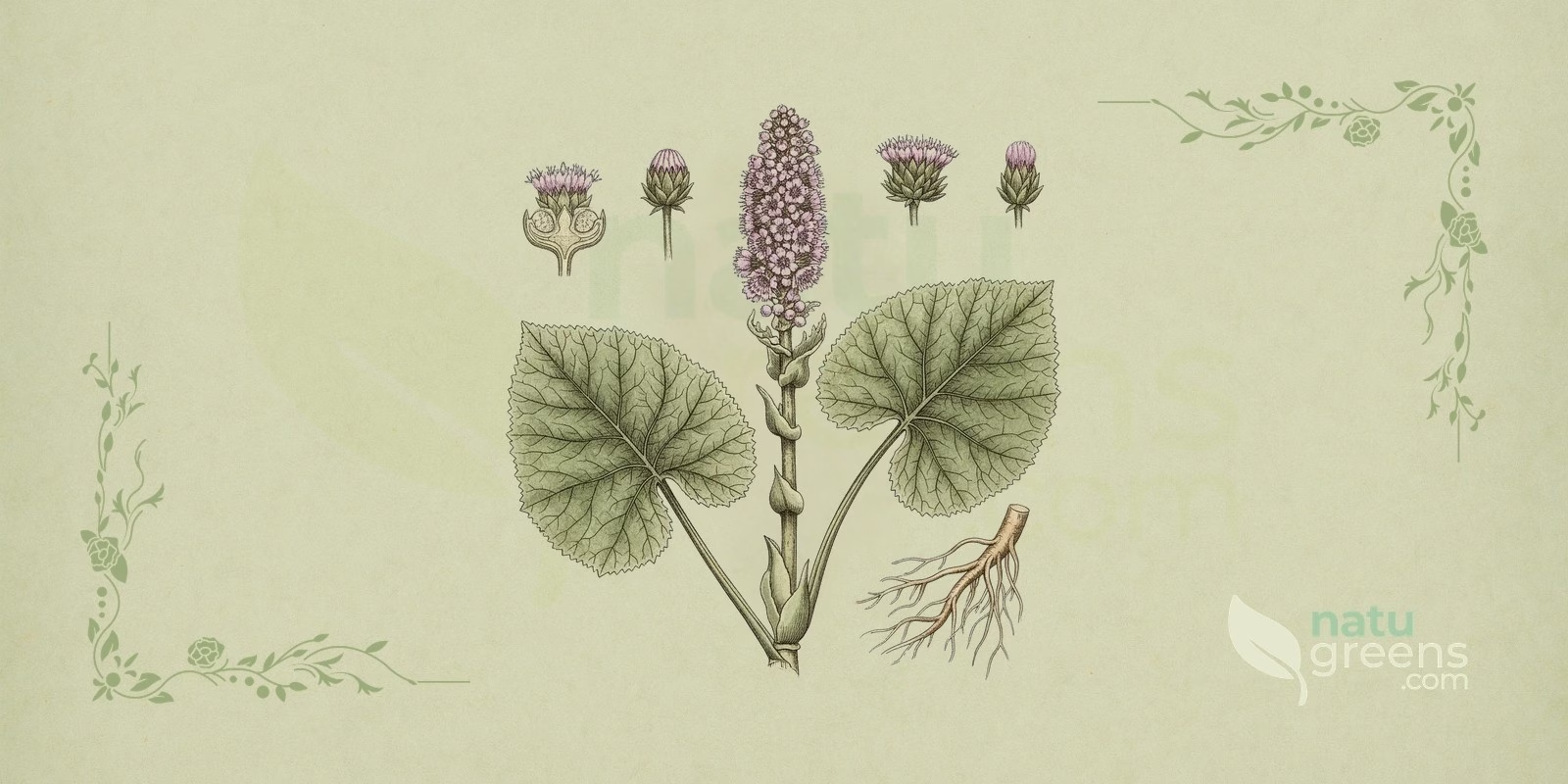
The plant has been studied for its anti-inflammatory and antispasmodic properties, attributed to compounds such as petasin and isopetasin. However, the presence of pyrrolizidine alkaloids (PAs) in the raw plant raises significant concerns about liver toxicity and potential carcinogenicity. For this reason, only butterbur products that have been processed to remove PAs are considered safe for use as a dietary supplement.
Popular and International Names of Butterbur
- English: bog rhubarb, butterbur, devil’s hat, pestilence wort, purple butterbur.
- Spanish: mantecona, pata de caballo, petasites, sombrerera.
- Portuguese: butterbur, chapéu de aba larga, chapéu-de-frade, língua-de-vaca, petasite, petásites.
- French: chapeau du diable, grande bardane, pétasite officinal.
- Italian: farfaraccio, petasite, tussilagine maggiore.
- German: Butterblatt, Huflattich, Pestilenzkraut, Pestwurz.
Botanical Synonyms of Petasites hybridus
In addition to Petasites hybridus (L.) Gaertn., Mey. & Scherb., other botanical synonyms include Petasites officinalis Moench and Tussilago hybrida L. Nomenclature can vary across different contexts and historical periods, but Petasites hybridus is the scientific name most widely accepted today.
Botanical Family: Asteraceae
Petasites hybridus belongs to the Asteraceae family, one of the largest and most diverse families of flowering plants, also known as Compositae. This family includes a vast range of species, from ornamental plants to agricultural crops and medicinal herbs, generally characterized by inflorescences composed of many small flowers. The Asteraceae family is rich in bioactive compounds, such as flavonoids, sesquiterpenes, and alkaloids, which give many of its species their medicinal properties.
Parts of Butterbur Used
- Leaves
- Rhizomes
- Roots
Ethnobotanical and Traditional Uses
- Easing pain caused by kidney or bladder stones.
- External use as compresses for skin inflammation.
- Headache and migraine relief.
- Relief of seasonal allergy symptoms (allergic rhinitis).
- Support for breathing rhythm in cases of chronic bronchitis or asthma.
- Treatment of infections, fever, flu, and colds (traditional Austrian and Czech medicine).
Therapeutic Properties of Butterbur
- Analgesic (traditional use to relieve pain)
- Anti-inflammatory (studied effect in reducing inflammation)
- Antispasmodic (studied in preventing or easing muscle spasms)
- Diuretic (studied effect on urine production)
Detailed Phytochemical Profile of Butterbur
- Flavonoids
- Isopetasin
- Petasin
- Pyrrolizidine Alkaloids (PAs)
- Sesquiterpenes
Preparation and Administration Forms of Butterbur
- Capsules (standardized extracts, free of PAs)
- Compresses (external use)
- Fluid extracts
- Tea (traditionally used, but not recommended due to PA content)
- Tinctures
Synergy with Other Medicinal Plants
Migraine Relief
Butterbur can be combined with other plants known for their analgesic and anti-inflammatory properties, such as ginger (Zingiber officinale) or feverfew (Tanacetum parthenium), to enhance traditional support for migraine relief. This synergy aims for a broader effect in reducing the pain and inflammation associated with attacks, always using extracts certified as free of pyrrolizidine alkaloids.
Respiratory Support
For respiratory conditions such as asthma and bronchitis, butterbur can be used together with bronchodilator and expectorant plants, such as thyme (Thymus vulgaris) or ivy (Hedera helix). This combination has a traditional use supporting lung function and easing cough and congestion, without replacing medical follow-up in chronic respiratory conditions.
Recipes and Usage Protocols of Butterbur
Capsule Use for Migraine
The safest and most common way to use butterbur is through standardized extracts certified as free of pyrrolizidine alkaloids (PAs), generally available in capsules. For migraine prevention in adults, guidance is to follow strictly the dosage indicated on the label of a certified product, respecting the period of use recommended by the manufacturer. It is essential to consult a healthcare professional before starting use, ensuring the choice of a product with proven quality that is free of PAs.
Compresses for Localized Pain
For external use, fresh butterbur leaves can be crushed and applied as compresses on areas with muscle pain or mild inflammation. However, this application should be done with caution due to the presence of PAs in fresh leaves, and it is not recommended for use on broken skin. Topical application of PA-free extracts in creams or ointments is a safer alternative.
The preparations above follow traditional records and do not replace professional guidance. Before any internal use, check the contraindications and interactions described in this article.
Associated Therapies
Western Phytotherapy
In Western phytotherapy, butterbur is valued for its anti-inflammatory and antispasmodic properties, being used mainly as support in the management of migraines and allergic rhinitis. Emphasis is placed on the use of standardized, safe extracts that ensure the absence of pyrrolizidine alkaloids (PAs).
Homeopathy
In homeopathy, butterbur (known as Petasites officinalis) is used for symptoms such as headaches, nasal congestion, and cough, following the homeopathic principles of dilution and dynamization. The choice of homeopathic remedy and dosage are individualized and should be determined by a qualified homeopath.
Contraindications and Side Effects of Butterbur
Contraindications
- Allergy: People with a known allergy to butterbur or to other plants of the Asteraceae family (such as ragweed, chrysanthemums, daisies) should avoid use.
- Hypoglycemia and Hypertension: Medical supervision is advised, as the plant may influence blood sugar levels and blood pressure.
- Kidney Impairment: Caution and medical guidance are recommended for patients with kidney impairment.
- Liver Disease: Individuals with pre-existing liver disease should avoid products not certified as PA-free, due to the risk of hepatotoxicity.
- Pregnancy and Breastfeeding: Contraindicated due to a lack of safety data and the potential risk of harm to the fetus or infant, especially if the product contains PAs.
Side Effects
- Common: Belching, diarrhea, drowsiness, skin rashes, and stomach discomfort.
- Pyrrolizidine Alkaloids (PAs): Products containing PAs can cause damage to the liver and lungs, and are potentially carcinogenic. Topical use on broken skin may also allow absorption of PAs.
- Rare: Rare cases of liver injury have been associated with products declared to be PA-free, highlighting the importance of quality and certification.
Historical Notes and Interesting Facts
Origin of the Name
The common name butterbur is attributed to the traditional use of its large leaves to wrap butter in warm weather, helping to keep it fresh. In other languages, popular names can be translated as “devil’s hat” or “wide-brimmed hat,” referring to the size and shape of its leaves.
Historical Use
Historically, butterbur was used to treat a variety of ailments, including fever, flu, colds, and even the plague, which earned it the name pestilence wort in English. Its application in compresses for inflammation and wounds is also a well-documented ethnobotanical use.
Frequently Asked Questions about Butterbur
Is Butterbur Safe for Everyone?
No. Raw butterbur contains pyrrolizidine alkaloids (PAs) that are toxic to the liver and potentially carcinogenic. Only butterbur extracts that have been processed to remove PAs are considered safe for use, and it is crucial to verify certification that the product is PA-free.
Can Butterbur Be Used During Pregnancy or Breastfeeding?
It is not recommended. Due to the lack of safety data and the potential risk of harm to the fetus or infant, the use of butterbur is contraindicated during pregnancy and breastfeeding, especially if the product is not guaranteed to be PA-free.
What Are the Main Uses of Butterbur?
The main uses of butterbur, in PA-free extracts, include traditional and studied support for migraine prevention and for reducing symptoms of allergic rhinitis, drawing on its anti-inflammatory and antispasmodic properties valued in these applications.
What Are the Common Side Effects of Butterbur?
The most common side effects include belching, diarrhea, drowsiness, skin rashes, and stomach discomfort. In rare cases, even products declared PA-free have been associated with liver injury, which reinforces the importance of choosing certified, quality products.
Why Is PA-Free Certification So Important?
Certification ensures that the extraction process removed the pyrrolizidine alkaloids responsible for the liver toxicity and carcinogenic potential associated with the raw plant. Without this quality assurance, even a product sold as an herbal remedy can pose a real risk to the liver. For this reason, experts recommend purchasing only standardized extracts from manufacturers that provide documented proof of the absence of these compounds.
Can Butterbur Replace Medical Treatment for Migraine?
No. Butterbur is studied as complementary support in preventing attacks, but it does not replace the diagnosis, monitoring, and treatment prescribed by a doctor, especially in cases of frequent or disabling migraine. Its use should always be discussed beforehand with a healthcare professional, particularly by those already taking other medications.
Notice: this content is for informational purposes and does not replace professional medical advice. Consult a physician or herbal practitioner before using medicinal plants, especially during pregnancy, breastfeeding, or alongside medication.
References and Scientific Studies
Peer-Reviewed Scientific Studies (1)
- PMC2024 Tepper SJ, et al. Nutraceuticals and Headache 2024: Riboflavin, Coenzyme Q10, Feverfew, Magnesium, Melatonin, and Butterbur. Current pain and headache reports. 2025.
Institutional Sources (1)
- GOV National Center for Complementary and Integrative Health (NCCIH). Butterbur. NCCIH.
Supplementary Readings (1)
- European Medicines Agency (EMA). Assessment report on Petasites hybridus (L.) Gaertn., Mey. & Scherb. rhizoma. EMA.