Arnica montana L. / Arnica, commonly known as mountain arnica, is a perennial herbaceous plant of the Asteraceae family, described by Carl Linnaeus. Native to the mountainous regions of Europe, this species has spread across various areas thanks to its well-known therapeutic properties. Arnica has been used for centuries in traditional European medicine and is valued for its vibrant yellow flowers. Its flowers, which appear from May to August, are harvested at peak bloom for the preparation of infusions, extracts, and other phytotherapeutic products.
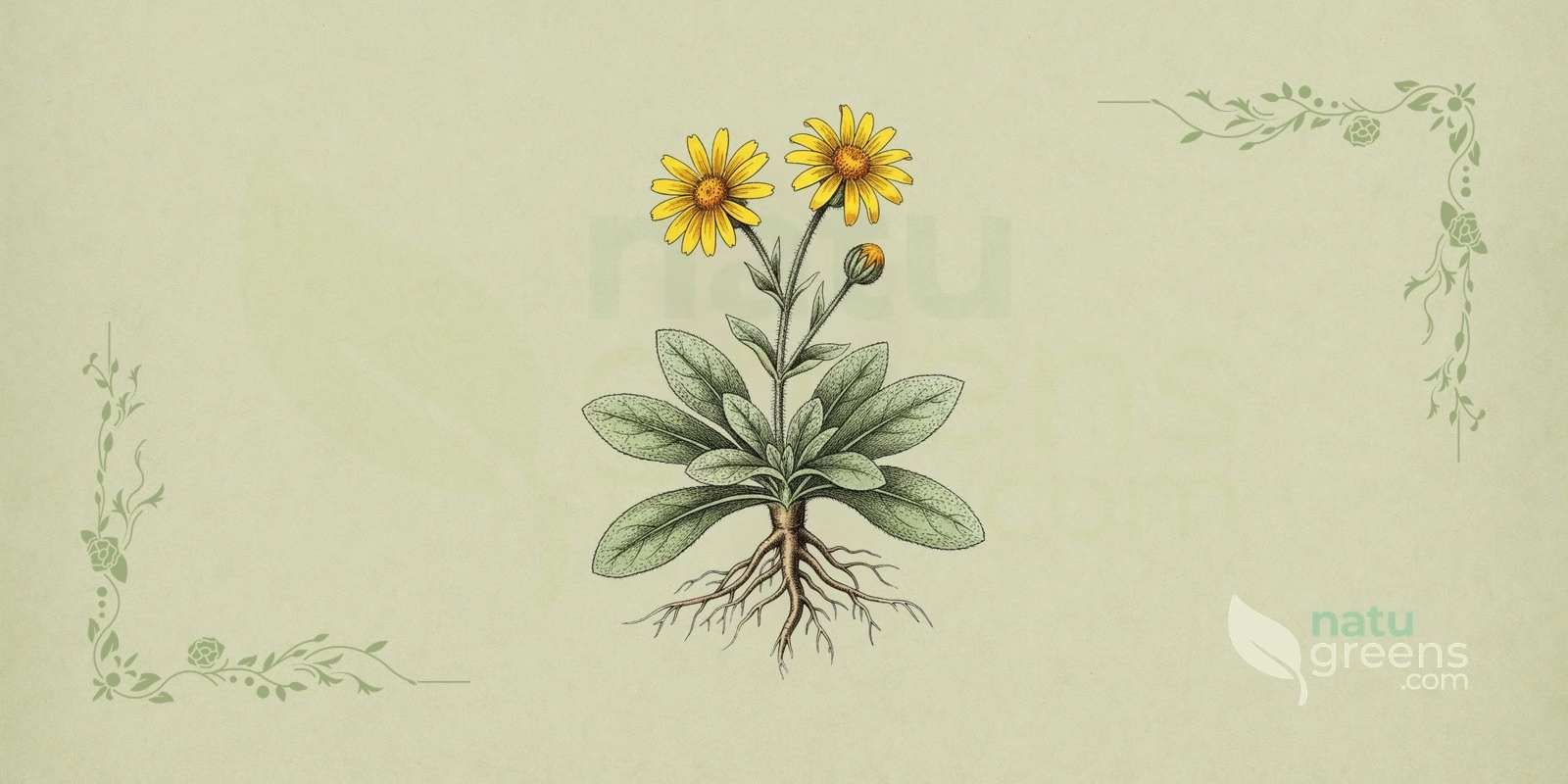
In European herbal tradition, arnica holds a prominent place as an anti-inflammatory and analgesic plant. Its applications range from the treatment of bruises and sprains to the relief of muscle and joint pain. The plant is recognized for its rich phytochemical composition, especially sesquiterpene lactones such as helenalin, which are responsible for its anti-inflammatory and analgesic properties. Modern scientific research has validated many of arnica’s traditional uses, cementing its position as one of the most studied and widely used topical medicinal plants in the world.
Popular and International Names of Arnica
- English: arnica, leopard’s bane, mountain arnica, wolf’s bane.
- Spanish: árnica, árnica de montaña, tabaco de montaña.
- Portuguese: arnica-das-montanhas, arnica-europeia, arnica-verdadeira, quina-dos-pobres.
- French: arnica des montagnes, herbe aux chutes, tabac des Vosges.
- Italian: arnica, arnica montana, tabacco di montagna.
- German: Bergwohlverleih, Echte Arnika, Wolfsblume.
Botanical Synonyms of Arnica Montana
The botanical name Arnica montana L. is widely accepted and recognized around the world. However, throughout the history of botanical taxonomy, some variations and synonyms have been used. Although less common in current literature, it is important to acknowledge the stability of the main name. The designation Arnica montana was established by Carl Linnaeus and remains the standard reference for this species.
Other, less frequent botanical synonyms include Arnica alpina (L.) Olin & Ladau, although this is often considered a distinct species or subspecies. Taxonomic clarity is essential for research and for the correct application of the plant’s properties. Most modern botanical databases retain Arnica montana L. as the accepted name.
Botanical Family: Asteraceae
The Asteraceae family, also known as Compositae, represents one of the largest and most diverse families of flowering plants. It comprises roughly 1,900 genera and more than 32,000 species distributed across every continent. This family is characterized by its distinctive inflorescence, known as a capitulum, in which numerous small flowers cluster together to form a structure resembling a single flower. Asteraceae includes plants of considerable economic, culinary, and medicinal importance, such as sunflower, lettuce, and calendula.
Arnica shares morphological traits typical of this family, including flower heads composed of tubular disc florets at the center and ray florets around the margins. The Asteraceae family is notable for producing a wide array of bioactive compounds, among which sesquiterpene lactones, flavonoids, and essential oils stand out. These compounds are responsible for the medicinal properties of many of its species. The chemical richness of this family has been the subject of intense pharmacological research, contributing significantly to the development of phytopharmaceuticals and natural supplements.
Parts of Arnica Used
- Dried flowers
- Flower heads (flowers)
- Rhizomes (less common)
Ethnobotanical and Traditional Uses
- Acute trauma (homeopathy)
- Bruises and hematomas
- Relief of muscle and joint pain
- Relief of swelling and edema
- Rheumatism and arthritis (symptomatic relief)
- Skin injuries (topical use on unbroken skin)
- Sprains and strains
Therapeutic Properties of Arnica
- Analgesic (traditional use for pain relief)
- Anti-inflammatory (studied effect in reducing inflammation)
- Antioxidant (studied activity against free radicals)
- Antiseptic (studied for infection prevention)
- Healing (supports tissue recovery)
- Immunomodulatory (studied effect on the immune system)
Detailed Phytochemical Profile of Arnica
- Caffeoylquinic acids
- Essential oils (thymol and derivatives)
- Fatty acids
- Flavonoids (quercetin, kaempferol)
- Phenolic acids
- Polysterols
- Sesquiterpene lactones (helenalin and its esters)
Preparation and Administration Forms of Arnica
- Creams
- Gels
- Infused oils
- Infusion (external use only)
- Ointments
- Tinctures (external use)
Synergy with Other Medicinal Plants
Relief of Pain and Inflammation
Arnica is often combined with other plants to enhance its analgesic and anti-inflammatory effects. Pairing it with Aloe vera is valued for its soothing and healing properties, complementing arnica’s action in reducing inflammation and pain. This synergy is traditionally recommended for conditions involving inflammation and skin injuries, supporting a faster and more comfortable recovery. Aloe vera also helps keep the skin hydrated.
Skin Healing and Anti-Inflammatory Action
The combination of arnica with calendula (Calendula officinalis) is a powerful pairing for treating skin injuries. Calendula is known for its anti-inflammatory, antiseptic, and healing properties. Together, they intensify the healing of superficial wounds, the reduction of swelling, and the relief of skin irritation. It is essential that this combination be applied only to unbroken skin, avoiding open wounds to prevent irritation and toxicity.
Reduction of Hematomas and Edema
Witch hazel (Hamamelis virginiana) is a natural astringent and anti-inflammatory, frequently used to reduce swelling and bruises. When combined with arnica, it can enhance the treatment of hematomas and edema, speeding up fluid reabsorption and reducing skin discoloration. This synergy is beneficial for post-traumatic recovery, offering more comprehensive relief of symptoms.
Recipes and Usage Protocols of Arnica
Compress for Bruises
Ingredients: 1 teaspoon of dried arnica flowers, 200 ml of boiling water.
Preparation: Prepare a concentrated infusion by adding the arnica flowers to the boiling water. Cover and let steep for 5-7 minutes. Strain the infusion and let it cool to room temperature. Soak a clean cloth or gauze in the infusion and apply it to the bruised area. Hold the compress in place for 15-20 minutes, 2-3 times a day. This application is traditionally used to help reduce swelling and pain, supporting the recovery of bruises.
Massage Oil for Muscle Pain
Ingredients: 50 ml of sweet almond oil (or another base vegetable oil), 10-15 drops of arnica essential oil (or infused arnica oil).
Preparation: In a dark glass bottle, mix the base vegetable oil with the arnica essential oil. Shake well to combine the ingredients. If using infused arnica oil, it can be used directly. Apply a small amount of the oil to the skin over sore muscles, massaging gently until absorbed. Use 1-2 times a day. This oil is traditionally used to ease muscle tension and post-exercise soreness. Do not apply to injured skin.
Homemade Ointment for Sprains
Ingredients: 50 ml of infused arnica oil, 10 g of beeswax, 5 drops of lavender essential oil (optional).
Preparation: Melt the beeswax in a double boiler. Add the infused arnica oil and mix well until you obtain a smooth, uniform consistency. Remove from heat and, if desired, add the lavender essential oil for an extra calming effect. Pour the mixture into small sterilized jars and let it cool and solidify. Apply a thin layer of the ointment to the sprained area, massaging gently. Use 2-3 times a day. This ointment is traditionally used to help reduce inflammation and pain associated with mild sprains.
Cooling Gel for Post-Trauma Relief
Ingredients: 50 ml of pure Aloe vera gel, 10 drops of arnica tincture (diluted according to manufacturer’s instructions), 3 drops of peppermint essential oil (optional).
Preparation: In a clean container, combine the Aloe vera gel with the diluted arnica tincture. Add the peppermint essential oil, if desired, for a cooling effect. Mix well until all ingredients are fully incorporated. Store in a pump bottle or airtight container. Apply a small amount of the gel to intact skin over the area affected by trauma or swelling. The gel is traditionally used for immediate relief and a cooling sensation. Do not apply to open wounds.
The preparations above follow traditional records and do not replace professional guidance. Before any internal use, review the contraindications and interactions described in this article.
The preparations above follow traditional records and do not replace professional guidance. Before any internal use, check the contraindications and interactions described in this article.
Associated Therapies
Physical Therapy
Arnica is often used as an adjunct in physical therapy treatments, especially in the recovery from muscle injuries, sprains, and bruises. Topical application of arnica gels or creams before or after physical therapy sessions can help reduce pain and inflammation, facilitating mobilization and rehabilitation. Its anti-inflammatory action complements manual techniques and therapeutic exercises, supporting functional recovery and reducing patient discomfort. It is a valuable tool for optimizing the outcomes of physical therapy.
Homeopathy
In homeopathy, Arnica montana is one of the best-known and most widely used remedies for physical and emotional trauma. It is indicated for shock, bruises, muscle pain, post-surgical recovery, and states of exhaustion. The homeopathic remedy is prepared from the fresh plant, following specific dilutions and potentization steps. Arnica montana is frequently prescribed in varying potencies (such as 6CH, 30CH, or 200CH), depending on the intensity and chronicity of symptoms. Its use aims to stimulate the body’s self-healing capacity, gently supporting recovery and pain relief according to homeopathic principles.
Massage Therapy
Massage therapy benefits significantly from the inclusion of arnica preparations. Oils and creams containing arnica extracts are used in therapeutic massage to relieve muscle pain, reduce tension, and promote relaxation. The combination of the mechanical action of massage with arnica’s anti-inflammatory and analgesic properties results in deeper and longer-lasting relief. It is particularly useful for athletes, individuals with chronic pain, or those seeking muscle recovery after intense physical exertion. Massage with arnica may also improve local circulation.
Contraindications and Side Effects of Arnica
General Contraindications
Despite its benefits, arnica has important contraindications. It is contraindicated for individuals with a known allergy to plants in the Asteraceae (Compositae) family, such as daisies, chrysanthemums, ragweed, and calendula. Allergic reactions may manifest as contact dermatitis, hives, or, in more severe cases, anaphylaxis. Pregnant and breastfeeding women should avoid using arnica due to the lack of conclusive studies on its safety in these conditions and the potential risk of toxicity to the fetus or infant. Oral ingestion of arnica in undiluted forms is strictly contraindicated due to its toxicity.
Common Side Effects
Arnica’s side effects are generally mild and occur mainly with topical use. They can include skin irritation, redness, itching, and contact dermatitis, especially in sensitive individuals or with prolonged use. Application to injured skin or open wounds can worsen these effects and lead to systemic absorption of toxic compounds. In case of accidental ingestion, symptoms can be severe, including vomiting, diarrhea, tachycardia, shortness of breath, and, in extreme cases, cardiovascular collapse. Immediate medical attention should be sought in the event of ingestion.
Drug Interactions
Arnica should be used with extreme caution by individuals taking anticoagulant or antiplatelet medications, such as warfarin, heparin, aspirin, and clopidogrel. There is a theoretical risk of increased bleeding and bruising due to arnica’s properties, which may affect blood clotting. Although interaction with topical arnica is less likely than with oral ingestion, caution recommends consulting a healthcare professional before any concomitant use. No significant drug interactions have been reported for homeopathic arnica preparations, owing to their high dilution.
Historical Notes and Interesting Facts
Names and Old Folklore
Arnica carries a rich tapestry of popular names and folklore. Known as “wolf’s bane” and “leopard’s bane,” these names allude to its toxicity if ingested. The term “mountain tobacco” may have arisen from the use of its dried leaves as a tobacco substitute in some regions. In European folklore, arnica was associated with protective and fertility properties, sometimes scattered around properties to ward off pests and bless gardens, possibly linked to ancient agrarian rituals.
Historical Use and Evolution
The medicinal use of Arnica montana dates back to the sixteenth century, when it was a popular folk remedy in Germany for bruises and skin injuries. Historical herbalists, such as Rudolf Weiss, documented its use both internally and externally. However, the plant’s toxicity led to the gradual abandonment of internal use during the twentieth century, with the exception of highly diluted homeopathic preparations. This evolution reflects a greater understanding of the plant’s risks and benefits, steering its use toward topical applications considered safer.
Threats and Conservation
Despite its popularity and medicinal value, Arnica montana faces significant challenges. In some regions, the plant is threatened with extinction due to overharvesting and the destruction of its natural habitat. Conservation efforts and sustainable cultivation are essential to protect this valuable species. Raising awareness about responsible harvesting and promoting alternative cultivation methods are essential steps to ensure that arnica remains available for future generations.
Frequently Asked Questions about Arnica
Can Arnica Be Taken Orally?
No, arnica in its undiluted herbal form is toxic and should not be ingested. Ingestion can cause serious adverse effects, such as vomiting, diarrhea, tachycardia, and respiratory problems. Internal use is limited to highly diluted homeopathic preparations, which are considered safe due to their extreme dilution. Always consult a healthcare professional before considering any form of internal use.
What Are the Main Topical Uses of Arnica?
The main topical uses of arnica include the treatment of bruises, hematomas, sprains, muscle strains, joint pain, and inflammation. It is traditionally used to reduce swelling and relieve pain associated with minor trauma and musculoskeletal conditions. Arnica gels, creams, and ointments are the most common forms of topical application and should be used only on unbroken skin, without open wounds or injuries.
Does Arnica Cause Allergies?
Yes, arnica can cause allergic reactions in sensitive individuals, especially those with allergies to other plants in the Asteraceae family, such as daisies, chrysanthemums, and ragweed. Reactions can range from mild skin irritation to contact dermatitis. It is advisable to perform a patch test on a small area of skin before using arnica products for the first time. In case of an allergic reaction, discontinue use immediately and seek medical guidance.
Does Arnica Interact with Other Medications?
Yes, arnica can interact with anticoagulant and antiplatelet medications, such as warfarin and aspirin, increasing the risk of bleeding and bruising. Although this interaction is more relevant for oral use, caution is recommended even with topical use, especially if such medications are being taken concomitantly. Always inform your doctor or pharmacist about arnica use, especially if you are taking other medications.
Which Part of the Plant Is Most Used?
The flowers (flower heads) of Arnica montana are the most commonly used part for medicinal purposes. They contain the highest concentration of active compounds, such as sesquiterpene lactones, which are responsible for the plant’s anti-inflammatory and analgesic properties. Although the roots and rhizomes can also be used in some traditional preparations, the flowers are the main raw material for most commercially available arnica products.
Notice: this content is for informational purposes and does not replace professional medical advice. Consult a physician or herbal practitioner before using medicinal plants, especially during pregnancy, breastfeeding, or alongside medication.
References and Scientific Studies
- PMC2017 Kriplani, P., et al. (2017). Arnica montana L. – a plant of healing: review. PubMed.
- DOI2022 Gyawali, N., et al. (2022). Arnica montana L.: Traditional Uses, Bioactive Chemical Constituents, and Pharmacological Activities. In: Medicinal Plants and Their Applications. Springer. ↗
- PMC2020 Knackstedt R, et al. Perioperative Homeopathic Arnica and Bromelain: Current Results and Future Directions. Annals of plastic surgery. 2020.