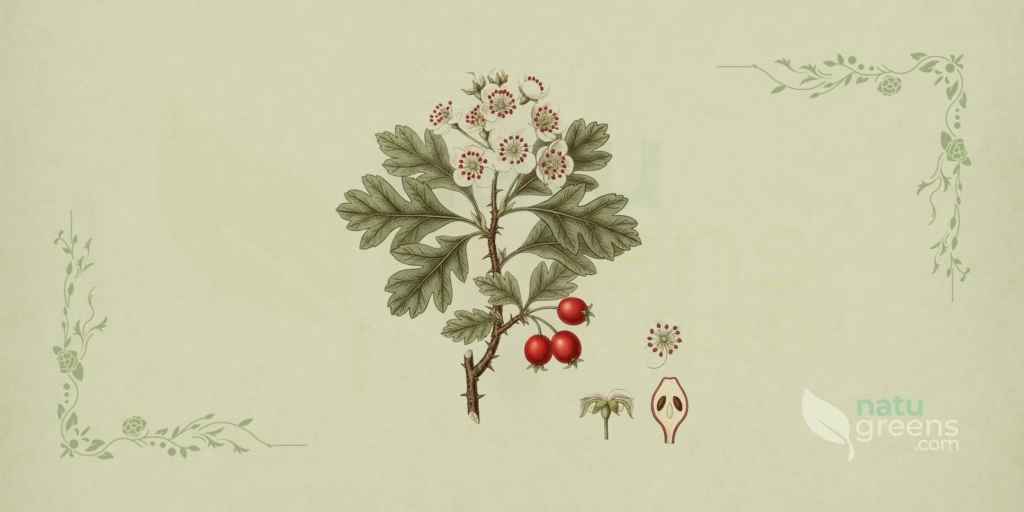
Berberis vulgaris L. / Barberry, popularly known as common barberry or European barberry, is a thorny shrub of the Berberidaceae family, described by Carl Linnaeus in 1753. Native to Europe and Western Asia, this species has a long history of use in traditional medicine across several cultures. The plant is valued not only for its therapeutic properties but also for its edible fruits, used in the preparation of jams and juices. Its roots and bark, with their intense yellow color, are the main source of berberine, an alkaloid with remarkable pharmacological activity.
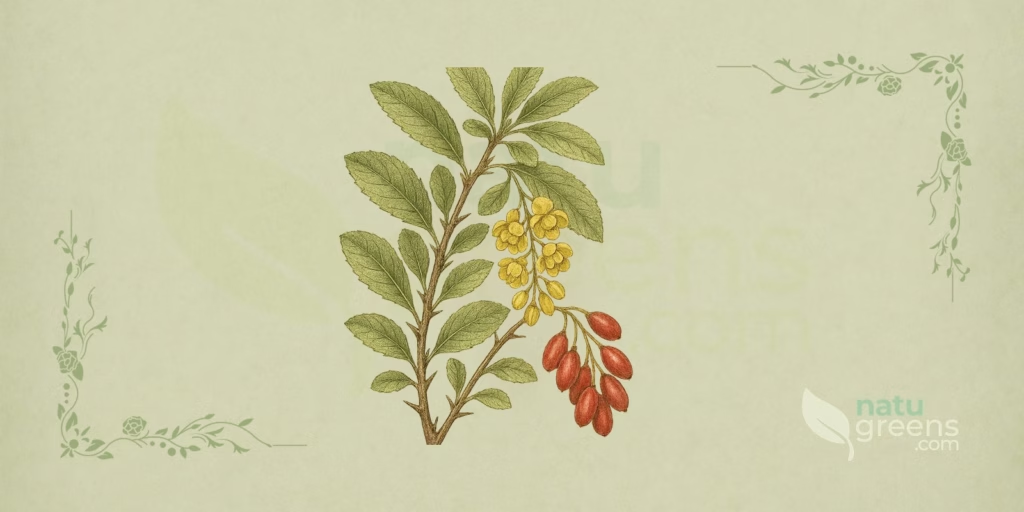
In the European herbal tradition, Berberis vulgaris is recognized for its digestive and hepatoprotective properties. Its use extends to the treatment of infections, inflammation, and metabolic disorders. Modern scientific research has been validating many of its traditional uses, focusing mainly on the effects of berberine. This compound has shown vast therapeutic potential, consolidating the position of Berberis vulgaris as one of the most relevant medicinal plants in the world pharmacopoeia.
Popular and International Names of Barberry
- English: common barberry, European barberry, barberry, pepperidge bush.
- Spanish: agracejo, berberís, bérbero.
- Portuguese: uva-espim, bérberis, espinheiro-vinhedo.
- French: épine-vinette, berbéris commun, vinettier.
- Italian: crespino, berbero, crespino comune.
- German: Gewöhnliche Berberitze, Sauerdorn, Echte Berberitze.
- Sanskrit (Ayurveda): daruharidra (classically Berberis aristata).
Botanical Synonyms of Barberry
The botanical nomenclature of Berberis vulgaris L. has been stable since Linnaeus. Taxonomic databases do record heterotypic synonyms, such as Berberis jacquinii Schult., but none of them replaces the accepted name. Other variations and alternative classifications were proposed over the history of botany without gaining lasting recognition. The Linnaean designation remains the accepted scientific name for this species and serves as the standard reference in all major taxonomic databases, such as Plants of the World Online and World Flora Online.
Botanical Family: Berberidaceae
The Berberidaceae family comprises about 14 genera and approximately 700 species of flowering plants, distributed mostly in the Northern Hemisphere. This family consists of shrubs and perennial herbs, characterized by the presence of alkaloids, such as berberine, which give many of its species medicinal properties. Besides the genus Berberis, the family includes other genera of ornamental and medicinal importance, such as Mahonia and Podophyllum.
Parts of Barberry Used
- Fruits
- Root bark
- Stem bark
Ethnobotanical and Traditional Uses of Barberry
- Abdominal discomfort
- Diarrhea
- Fevers
- Infections
- Inflammation
- Liver and biliary disorders
- Skin diseases
Therapeutic Properties of Barberry
- Anticancer (activity observed only in cells in the laboratory; no efficacy demonstrated in people); traditional use, without established clinical efficacy
- Antidiabetic (helps control blood sugar); traditional use, without established clinical efficacy
- Anti-inflammatory (reduces inflammation)
- Antimicrobial (fights bacteria, fungi, and protozoa); traditional use, without established clinical efficacy
- Antioxidant (fights free radicals)
- Cardioprotective (protects the heart); traditional use, without established clinical efficacy
- Hepatoprotective (protects the liver); traditional use, without established clinical efficacy
- Hypocholesterolemic (lowers cholesterol); traditional use, without established clinical efficacy
- Hypoglycemic (lowers blood sugar); traditional use, without established clinical efficacy
- Immunomodulatory (modulates the immune system); traditional use, without established clinical efficacy
Detailed Phytochemical Profile of Barberry
- Alkaloids (berberine, berbamine, oxyacanthine)
- Anthocyanins (in the fruits)
- Carotenoids
- Other alkaloids (columbamine, jatrorrhizine, magnoflorine, palmatine)
- Phenolic compounds (flavonoids, tannins, phenolic acids)
- Sterols
- Terpenoids
- Triterpenes
- Vitamins (especially vitamin C in the fruits)
Preparation and Administration Forms of Barberry
- Capsules (dry extract)
- Compresses
- Cream
- Drops (liquid extracts)
- Infusion (tea)
- Tincture
Synergy with Other Medicinal Plants
Scientific research on the synergy of Berberis vulgaris with other medicinal plants is still limited. However, berberine, its main active compound, is frequently studied in combination with other substances to enhance its therapeutic effects. For example, in blood sugar control supplements, berberine can be paired with compounds such as chromium or alpha-lipoic acid. In traditional medicine, combining plants with complementary actions is common, but more studies are needed to scientifically validate these synergies for Berberis vulgaris.
Recipes and Usage Protocols of Barberry
Bark Infusion for Digestion
Ingredients: 1 teaspoon of dried barberry root bark, 250 ml of boiling water.
Preparation: Add the root bark to the boiling water. Cover and steep for 10-15 minutes. Strain before drinking. Taking one cup before main meals is recommended to aid digestion and relieve abdominal discomfort. The flavor is bitter because of the alkaloids.
Tincture for Metabolic Support
Ingredients: 50 g of dried barberry root bark, 250 ml of 70% alcohol.
Preparation: Place the root bark in a glass jar and cover with the alcohol. Close tightly and let macerate for 2 to 4 weeks, shaking daily. Filter and store in a dark glass bottle. The usual dose is 20-40 drops, diluted in water, 2 to 3 times a day, to support glucose and lipid metabolism, always under the supervision of a health professional. Do not take the tincture alongside antidiabetic drugs without monitoring, because the combination can push blood sugar down too far. Keep use to cycles of up to eight weeks, with a review at the end of each cycle.
Associated Therapies
Clinical Phytotherapy
In clinical phytotherapy, Berberis vulgaris is used mainly as extracts standardized in berberine, which have been studied as adjuncts in metabolic syndrome and dyslipidemia. They do not replace antidiabetic drugs, antimicrobials, or any prescribed treatment, and medical follow-up is indispensable. The dosage is adjusted to the condition and to the individual characteristics of each person.
Homeopathy
In homeopathy, the remedy Berberis vulgaris is prepared from the fresh root bark. Homeopathic tradition cites it for kidney and urinary tract complaints, such as kidney stones and acute, radiating lower back pain, and also for liver and biliary disorders and for skin conditions such as eczema. There are no clinical studies confirming that the preparation is effective in any of these situations. Renal colic is a condition that calls for medical assessment, and fever or chills, blood in the urine, inability to urinate, persistent vomiting or disabling pain warrant immediate medical attention, given the risk of urinary obstruction or infection. The homeopathic prescription considers the totality of the patient’s symptoms.
Ayurvedic Medicine
In Ayurvedic medicine, the name daruharidra refers classically to Berberis aristata, a closely related species; Berberis vulgaris is employed as a substitute in regions where it is more accessible. It is classified as an herb with a bitter, pungent taste and depurative, detoxifying properties. It is traditionally used to purify the blood and treat skin complaints, fevers, infections, and liver disorders, serving as an important liver tonic.
Contraindications and Side Effects of Barberry
The use of Berberis vulgaris is contraindicated in pregnancy, with greater risk in the third trimester, and in breastfeeding: besides its stimulant effect on the uterus, berberine crosses the placenta and passes into breast milk, displacing bilirubin from the baby’s albumin, with a risk of kernicterus. Barberry and any berberine extract are absolutely contraindicated in newborns and infants: berberine displaces bilirubin from albumin and can trigger kernicterus, an irreversible brain injury, with greater risk in premature and jaundiced babies. Individuals with a known allergy to Berberidaceae plants should avoid its use. The most common side effects, usually associated with high doses, include nausea, vomiting, and gastrointestinal discomfort. It can interact with anticoagulant and antidiabetic medications and other drugs metabolized by the cytochrome P450 system, making the supervision of a health professional essential. Berberine inhibits CYP3A4 and P-glycoprotein, and it raises the blood levels of ciclosporin, tacrolimus, digoxin, and statins. Transplant recipients and anyone taking these medicines should avoid the plant.
Historical Notes and Interesting Facts
In the medieval European pharmacopoeia, the yellow bark of barberry was used against fevers and liver complaints, a use that ran through centuries of herbals. Its wood, of the same intense yellow, was long a valuable source of dye for wool and leather. European settlers took the plant to North America, where it was used to make jams and as a hedge plant. Curiously, the plant is the alternate host of Puccinia graminis, the fungus behind black stem rust of wheat, and it is on the barberry that the sexual stage of the cycle takes place. That is why it was eradicated in several farming regions, and planting it is still restricted by law in cereal-growing areas.
Frequently Asked Questions about Barberry
What Is the Difference Between Berberis Vulgaris and Berberine?
Berberis vulgaris is the name of the plant, while berberine is one of the main chemical compounds (alkaloids) found in this plant. Berberine is the most studied substance and is responsible for many of barberry’s medicinal properties.
Can Barberry Be Eaten Fresh?
The ripe fruits of the barberry are edible and can be eaten fresh, although they are quite acidic. They are most commonly used in jams, syrups, and juices. The other parts of the plant, such as the root and bark, should not be consumed fresh and are used in medicinal preparations.
Is Barberry Tea Effective?
The tea (infusion) of barberry root bark is a traditional form of use for digestive complaints. Berberine, however, has very low oral bioavailability, under 1%, because P-glycoprotein pumps it back into the gut. No home preparation gets around that limit, so the infusion tends to act locally, on digestion, rather than systemically.
Notice: this content is for informational purposes and does not replace professional medical advice. Consult a physician or herbal practitioner before using medicinal plants, especially during pregnancy, breastfeeding, or alongside medication.
References and Scientific Studies
- GOV2017 Rahimi-Madiseh, M., Lorigoini, Z., Zamani-Gharaghoshi, H., & Rafieian-Kopaei, M. (2017). Berberis vulgaris: specifications and traditional uses. Iranian Journal of Basic Medical Sciences, 20(5), 569-587.
- GOV2014 Mokhber-Dezfuli, N., Saeidnia, S., Gohari, A. R., & Kurepaz-Mahmoodabadi, M. (2014). Phytochemistry and pharmacology of Berberis species. Pharmacognosy Reviews, 8(15), 8-15.
- GOV2017 Tabeshpour, J., Imenshahidi, M., & Hosseinzadeh, H. (2017). A review of the effects of Berberis vulgaris and its major component, berberine, in metabolic syndrome. Iranian Journal of Basic Medical Sciences, 20(5), 557-568.