Saccharina japonica (Areschoug) C.E.Lane, C.Mayes, Druehl & G.W.Saunders / Kombu, popularly known as kombu, is a brown marine alga of the Laminariaceae family, widely cultivated and consumed in East Asian countries such as China, Japan, and Korea. This species is valued not only for its fundamental role in Asian cuisine, but also for its recognized therapeutic properties, which have attracted growing interest in modern scientific research. Saccharina japonica is a rich source of bioactive compounds, including polysaccharides, phenolic compounds, and vitamins, which contribute to its many health benefits.
In the Asian tradition, kombu has been used for centuries as an essential ingredient in broths, soups, and other dishes, considered a functional food that promotes well-being. Contemporary scientific research has validated many of its traditional uses, highlighting its antioxidant, anti-inflammatory, and immunomodulatory properties. Fermentation of the alga has been explored as a method to increase the bioavailability of its compounds, consolidating the position of Saccharina japonica as one of the most studied and most widely used marine algae in the world.
Popular and International Names of Kombu
- English: kombu, sweet kelp.
- Spanish: kombu, alga japonesa.
- Portuguese: kombu, alga marinha kombu.
- French: kombu, algue japonaise.
- Italian: kombu, alga giapponese.
- German: Japanischer Blatttang.
- Polish: listownica japońska.
- Japanese: ma-konbu.
- Korean: dasima.
- Chinese (TCM): hai dai.
Botanical Synonyms of Kombu
Saccharina japonica has several botanical synonyms that reflect its taxonomic history. The best known is Laminaria japonica J.E. Areschoug, under which the species was originally described. Other synonyms include Laminaria japonica var. ochotensis (Miyabe) Okamura and Laminaria ochotensis Miyabe. The reclassification into the genus Saccharina took place in 2006, based on molecular studies that reorganized the taxonomy of the brown algae.
Botanical Family: Laminariaceae
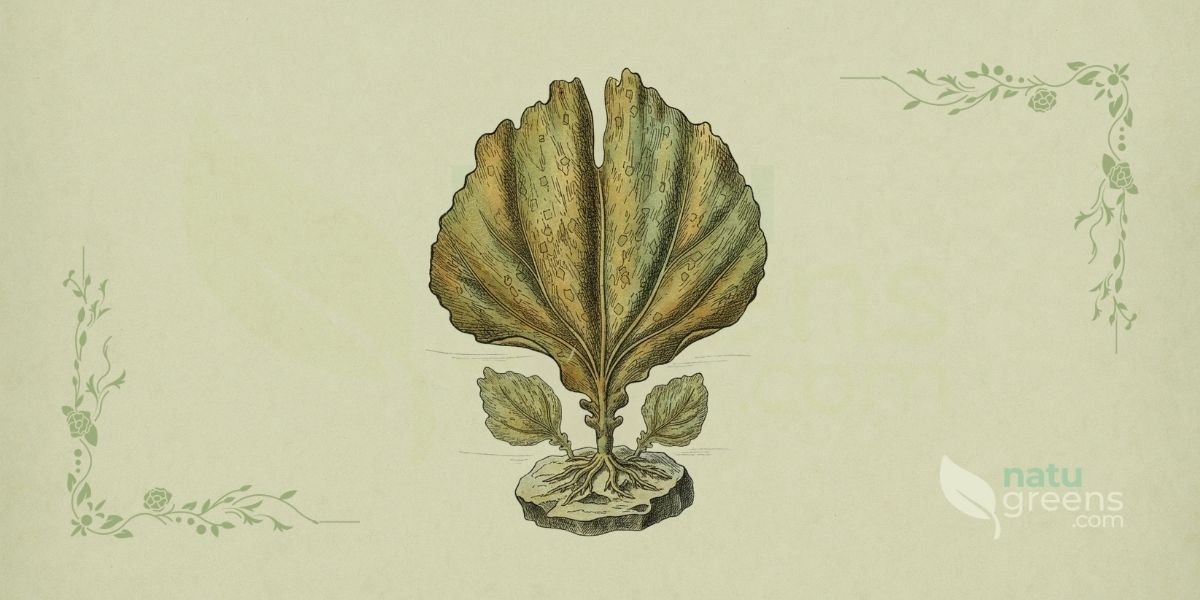
Botanical illustration of Saccharina japonica (Areschoug) C.E.Lane, C.Mayes, Druehl & G.W.Saunders (kombu, sweet kelp, dasima), a brown marine alga of the Laminariaceae family, showing its long, wide blades of brownish-green color, with a smooth surface and undulating edges, attached to a rocky substrate by a holdfast, in its natural underwater environment, in 19th-century botanical encyclopedia style on a herbarium paper background.
Saccharina japonica belongs to the Laminariaceae family, part of the order Laminariales and the class Phaeophyceae, commonly known as the brown algae. This family is characterized by large algae, often called kelp, which form extensive underwater forests in cold coastal regions. The Laminariaceae are ecologically important, providing habitat and food for many marine species, and economically significant, cultivated for food and for the extraction of industrial compounds.
The algae of this family are notable for their capacity to accumulate a wide range of bioactive compounds, including sulfated polysaccharides such as fucoidan, which account for many of the medicinal properties attributed to Saccharina japonica. The robust structure and rapid growth of Laminariaceae species make them ideal for large-scale aquaculture, contributing to their wide availability and global use.
Parts Used of Kombu
- Blades (fronds) of the alga
- Extracts and powders
- Whole alga (fresh or dried)
Ethnobotanical and Traditional Uses of Kombu
- Base for broths (dashi) in Japanese cuisine
- Considered a functional food to promote general health and well-being
- Eaten fried, pickled (jangajji), or raw (ssam) in Korean cuisine
- Ingredient in soups, salads, stews, and rice dishes in East Asia
- Preparation of teas, such as dasima-cha in Korea
- Production of noodles (cheonsa-chae) from alginic acid
- Used in Chinese cuisine as an appetizer with alcoholic beverages
Therapeutic Properties of Kombu
- Anticancer (potential to inhibit the growth of cancer cells and activate immunocytes)
- Anti-inflammatory (modulates inflammatory signaling pathways, such as MAPK and NF-κB)
- Antiobesity (contributes to body weight management)
- Antioxidant (fights free radicals and reduces oxidative stress)
- Hepatoprotective (offers protection and support for liver function); traditional use, without established clinical efficacy
- Hypoglycemic (helps control blood sugar levels); traditional use, without established clinical efficacy
- Immunomodulatory (regulates and strengthens the immune system); traditional use, without established clinical efficacy
- Radionuclide binder (alginates reduce the intestinal absorption of radioactive strontium in experimental studies, which does not replace a radiological emergency protocol)
- Source of GABA in fermented form (an effect on cognition has not yet been demonstrated in people)
Detailed Phytochemical Profile of Kombu
- Alginates
- Carbohydrates (40-70% of dry weight)
- Fucoidan (sulfated galactofucan, rich in fucose and galactose)
- Fucoxanthin
- Gamma-aminobutyric acid (GABA)
- Iodine
- Minerals (various)
- Phenolic compounds
- Pigments
- Polysaccharides
- Proteins (3-21% of dry weight)
- Sterols (fucosterol)
- Vitamins (various)
Preparation and Administration Forms of Kombu
- Aqueous and ethanolic extracts
- Direct consumption (fresh, dried, powdered)
- Fermentation for increased bioavailability
- Infusions and teas
- Tinctures
Synergy with Other Medicinal Plants
Combination Potential
Although specific research on the synergy of Saccharina japonica with other medicinal plants is limited, it is plausible that its bioactive compounds can act together with other herbs to enhance therapeutic effects. For example, combining it with plants rich in anti-inflammatory compounds, such as turmeric (Curcuma longa), or with antioxidant, calming species, such as chamomile (Matricaria chamomilla), could reinforce cellular protection and the reduction of inflammation. However, in-depth studies are needed to validate these interactions and determine the most effective, safest combinations.
Recipes and Usage Protocols of Kombu
Basic Dashi Broth
Dashi is a fundamental broth in Japanese cuisine, serving as the base for soups, sauces, and stews. Saccharina japonica (kombu) is one of its main ingredients, lending a deep umami flavor.
Ingredients:
- 10-15 g of dried kombu (Saccharina japonica)
- 1 liter of cold water
Preparation:
- Wipe the kombu with a damp cloth to remove any excess salt or dirt, without scrubbing too hard so as not to remove the umami.
- Place the kombu and the cold water in a pan.
- Let the kombu soak in the water for at least 30 minutes, or ideally for a few hours in the refrigerator.
- Bring the pan to medium heat and warm slowly. Remove the kombu as soon as the water starts to boil, before the bubbles form vigorously.
- The dashi broth is ready to be used as a base for many culinary preparations.
Kombu Tea (Dasima-cha)
In Korea, kombu tea, known as dasima-cha, is appreciated for its health benefits and mild flavor.
Ingredients:
- 1 g of dried kombu (Saccharina japonica)
- 500 ml of water
Preparation:
- Cut the kombu into small pieces.
- Add the kombu and the water to a pan.
- Bring to the heat and simmer for about 10-15 minutes over low heat.
- Strain the tea and serve hot. It can be sweetened with a little honey, if desired.
Associated Therapies
Herbal Medicine
In herbal medicine, Saccharina japonica is valued for its nutritional and medicinal properties. It is used in several forms, such as extracts, powders, and infusions, to take advantage of its bioactive compounds. Its use mainly targets antioxidant, anti-inflammatory, and immunomodulatory support, in addition to contributing to digestive and metabolic health. Growing research on fucoidan and the alga’s other polysaccharides has boosted its recognition as a natural therapeutic agent.
Contraindications and Side Effects of Kombu
Saccharina japonica is generally considered safe for consumption, especially as food. However, because of its high iodine content, some precautions are necessary:
Excess Iodine and Thyroid Function
Excessive consumption of kombu can lead to a high iodine intake, which can either suppress thyroid function or trigger iodine-induced hyperthyroidism in sensitive individuals or those with pre-existing conditions. People with thyroid disorders, such as hyperthyroidism or hypothyroidism, as well as pregnant and breastfeeding women, should be cautious and consult a health professional before consuming large amounts of Saccharina japonica or its supplements. The recommended daily iodine intake should be respected.
Drug Interactions
The main interaction of kombu comes from iodine: anyone taking levothyroxine, antithyroid drugs such as methimazole and propylthiouracil, lithium, or amiodarone should consult a doctor before consuming the alga regularly, because the extra iodine load alters the response to these medications. In addition, because of its potential hypoglycemic effect, people being treated for diabetes are advised to monitor their glucose levels when consuming the alga regularly. Likewise, because of the presence of polysaccharides that can influence clotting, patients on anticoagulants should exercise caution and seek medical guidance.
Allergic Reactions
Although rare, allergic reactions to marine algae can occur. Individuals with a history of allergies to seafood or other algae should consume Saccharina japonica with caution. Symptoms can include skin rashes, itching, swelling, or breathing difficulties.
Curiosities and Historical Facts of Kombu
The Most Cultivated Alga
Saccharina japonica is the most cultivated brown alga in the world, with global production that has increased exponentially in recent decades. Its economic and cultural importance in East Asia is immense, being a pillar of the local diet and economy.
Umami and Flavor
Kombu is one of the main ingredients responsible for the umami flavor, the fifth basic taste, discovered by the Japanese scientist Kikunae Ikeda in the early 20th century. Glutamic acid, abundant in kombu, is the key compound behind this depth of flavor.
Ancient Use
Archaeological evidence suggests that kombu consumption in Asia goes back thousands of years, with historical records detailing its use in cooking and traditional medicine in ancient civilizations of Japan and Korea.
Frequently Asked Questions about Kombu Tea
Can Kombu Tea Help with Weight Loss?
Saccharina japonica contains dietary fiber and compounds that can contribute to satiety and support metabolism. In addition, some studies suggest antiobesity properties. However, kombu tea should be part of a balanced diet and healthy lifestyle for effective weight loss results.
Is It Safe to Consume Kombu Daily?
Moderate consumption of kombu as part of the diet is generally safe. However, because of its high iodine content, daily consumption in large amounts or as concentrated supplements should be monitored, especially by individuals with thyroid conditions. Consulting a health professional for personalized guidance is always advisable.
What Is the Difference Between Kombu and Other Marine Algae?
Kombu refers specifically to algae of the genus Saccharina, with Saccharina japonica being the most common species. Other marine algae, such as nori, wakame, and hijiki, belong to different genera and species, each with its own nutritional characteristics, flavors, and distinct culinary and medicinal uses.
Is Kombu Suitable for People with Thyroid Problems?
People with hyperthyroidism, hypothyroidism, or other thyroid conditions should be cautious with kombu, since its high iodine content can interfere with gland function. In these cases, consumption, especially of concentrated supplements, should only occur with guidance from a health professional.
Can Kombu Be Reused After Making Dashi?
Yes. In Japanese cuisine, the kombu used in dashi is traditionally repurposed in preparations such as pickles and braised dishes, since it still holds flavor and nutrients. It is a common practice that avoids wasting the ingredient.
How Should Dried Kombu Be Stored?
Dried kombu should be kept in an airtight container, protected from light, heat, and moisture. Well stored, it keeps its qualities for many months. The natural white powder that can appear on the surface is mannitol, associated with the umami flavor, and should not be mistaken for mold.
Notice: this content is for informational purposes and does not replace professional medical advice. Consult a physician or herbal practitioner before using medicinal plants, especially during pregnancy, breastfeeding, or alongside medication.
References and Scientific Studies
Peer-Reviewed Scientific Studies (4)
- PEER2022 Nie, J., Fu, X., Wang, L., Xu, J., & Gao, X. (2022). A systematic review of fermented Saccharina japonica: Fermentation conditions, metabolites, potential health benefits and mechanisms. Trends in Food Science & Technology, 123, 15-27.
- PMC2021 Chen, X., et al. (2021). Molecular mechanism of anti-inflammatory activities of a novel sulfated galactofucan from Saccharina japonica. Marine Drugs, 19(8), 430.
- PEER2025 Yue, Q., et al. (2025). Antioxidant and anticancer properties of fucoidan isolated from Saccharina japonica. Scientific Reports, 15(1).
- PEER2023 Lee, G., et al. (2023). Antioxidant and immunomodulatory properties of aqueous extract from Saccharina japonica. Journal of Functional Foods, 101, 105407.
Supplementary Readings (2)
- 2024 Guiry, M. D., & Guiry, G. M. (2024). AlgaeBase. World-wide electronic publication, National University of Ireland, Galway.
- 2025 Park, M. S., et al. (2025). Polysaccharide fraction isolated from Saccharina japonica exerts anti-cancer effects through immunomodulation. Marine Drugs, 23(1), 38.