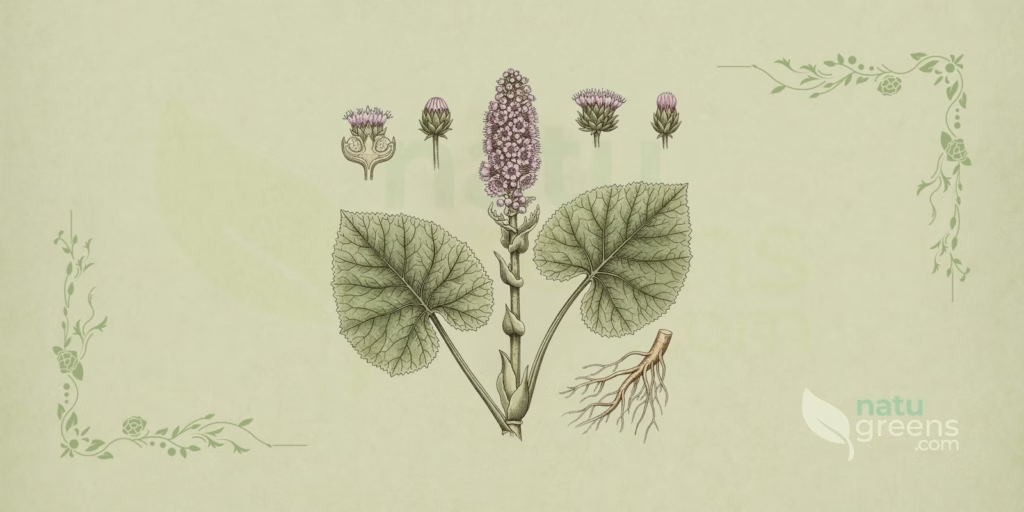
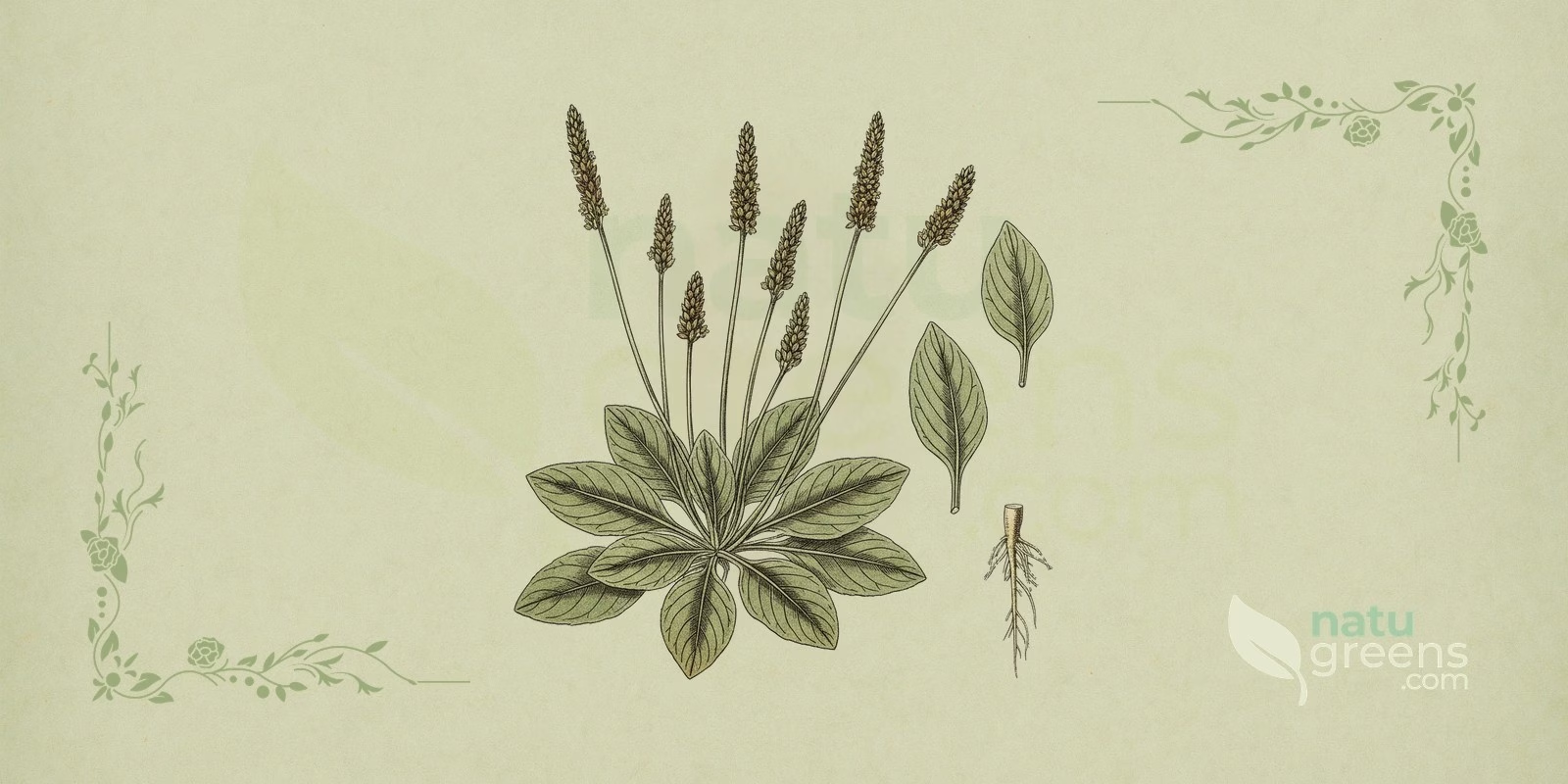
Plantago major L. / Broadleaf Plantain, commonly known as broadleaf plantain, is a perennial herbaceous plant of the Plantaginaceae family, widely recognized for its medicinal properties and its cosmopolitan presence, since, originating in Europe and Asia, it has adapted to diverse climates and soils and is now found frequently in gardens, fields, and roadsides. The species carries a long history of use in the traditional medicine of many cultures, which value its leaves, rich in bioactive compounds, oval in shape with parallel veins, features that make it easy to identify, along with the spikes of small greenish flowers that produce tiny seeds and, together with its natural resilience, favor the plant’s global spread. Broadleaf plantain is a notable example of how common species can gather a wide range of traditional uses, and modern research continues to explore its pharmacological potential, validating many of these ancestral practices.
Popular and International Names of Broadleaf Plantain
- English: broadleaf plantain, cart track plant, common plantain, doorweed, dooryard plantain, Englishman’s-foot, greater plantain, waybread, white man’s foot.
- Spanish: antén, landen, lanté, lantén, llantai, llantén, llantén común, llantén macho, llantén mayor.
- Portuguese: cinco-nervos, corrijó, erva-de-orelha, erva-de-ovelha, erva-pulgueira, orelha-de-veado, plantagem, sete-nervos, tanchagem, tanchagem-das-boticas, tanchagem-maior, tanchás (BR), tansagem, transagem.
- French: grand plantain, plantain des oiseaux, plantain majeur.
- Italian: piantaggine comune, piantaggine maggiore.
- German: Breitwegerich, Großer Wegerich, Wegebreit.
Botanical Synonyms of Plantago Major
Plantago borysthenica (Rogow.) Wissjul., Plantago dregeana Decne., Plantago gigas H.Lév., Plantago latifolia Salisb., Plantago officinarum Crantz, Plantago scopulorum Fries.
Botanical Family: Plantaginaceae
The Plantaginaceae family is a diverse group of flowering plants, gathering close to 100 genera and more than 1,800 species, known for its wide global distribution and for including species of medicinal and ornamental importance, with forms ranging from annual and perennial herbs to shrubs and, occasionally, small trees. Broadleaf plantain, Plantago major, is a prominent member of this family, sharing traits such as the spike-shaped inflorescence and leaves with parallel veins, along with studied phytochemical compounds, including iridoids, flavonoids, and polysaccharides, which contribute to the effects observed in research. Over time, the family has undergone successive taxonomic revisions, reflecting the complexity of its biological diversity and its ecological and economic relevance across different regions of the world.
Parts of Broadleaf Plantain Used
- Leaves
- Roots
- Seeds
Ethnobotanical and Traditional Uses
- Anti-inflammatory for wounds and bruises
- Constipation (seeds)
- Diarrhea (leaves)
- Digestive issues (gastritis, gastric ulcers)
- Insect bite and skin irritation relief
- Respiratory disorders (cough, bronchitis)
- Urinary tract infections
- Wound and cut healing
Therapeutic Properties of Broadleaf Plantain
- Anti-inflammatory (effect studied in reducing inflammation)
- Antibacterial (activity studied against bacteria)
- Antioxidant (activity studied against free radicals)
- Antiseptic (studied for preventing the growth of microorganisms)
- Astringent (contracts tissues and blood vessels)
- Demulcent (protective effect studied on and soothes irritated membranes)
- Diuretic (effect studied on urine production)
- Expectorant (helps expel mucus from the lungs)
- Hemostatic (stops bleeding)
- Laxative (effect studied on bowel movement, seeds)
- Vulnerary (effect studied on wound healing)
Detailed Phytochemical Profile of Broadleaf Plantain
- Aucubin (iridoid glycoside)
- Flavonoids (apigenin, luteolin)
- Mucilages
- Phenolic acids (caffeic acid, ferulic acid)
- Polysaccharides
- Tannins
Preparation and Administration Forms of Broadleaf Plantain
- Compresses
- Decoction
- Dry extract
- Fluid extract
- Infusion
- Poultice
- Tincture
Synergy with Other Medicinal Plants
Respiratory Health
In herbal tradition, broadleaf plantain is combined with thyme (Thymus vulgaris) and elderberry (Sambucus nigra) to enhance expectorant and anti-inflammatory effects, a synergy used in cases of cough and bronchitis. The mucilages of broadleaf plantain work alongside the essential oils of thyme and the flavonoids of elderberry, providing a more complete relief of respiratory symptoms by soothing irritated airways and facilitating the removal of mucus. This combination, more commonly used during the colder months, is regarded as a traditional support for the respiratory system and a preventive resource against common infections.
Topical Wound-Healing and Anti-Inflammatory
For topical use, broadleaf plantain can be paired with calendula (Calendula officinalis) and yarrow (Achillea millefolium), a combination traditionally valued for supporting wound healing, reducing skin inflammation, and easing irritation. The aucubin of broadleaf plantain, the triterpenes of calendula, and the flavonoids of yarrow act synergistically, which, according to traditional use, speeds up tissue regeneration and provides a soothing effect, making this blend suitable for compresses or ointments applied to minor cuts, scrapes, and insect bites. This combination is considered, in folk herbal practice, an ally for skin health in various mild dermatological conditions.
Recipes and Usage Protocols of Broadleaf Plantain
Poultice for Wounds and Insect Bites
Ingredients: Fresh broadleaf plantain leaves.
Preparation: Wash the fresh broadleaf plantain leaves thoroughly and crush or mash them into a paste, which should be applied directly to the wound, insect bite, or inflamed area, covered with a clean cloth, and left in place for 30 minutes to 1 hour, repeating several times a day as needed. This poultice is a traditional remedy used to help reduce inflammation, ease discomfort, and support the healing of minor skin injuries, drawing on the plant’s astringent and antiseptic properties. Due to its simple and accessible application, it is regarded as a useful resource for at-home first aid or outdoor activities, without replacing the assessment of a healthcare professional for more extensive wounds or those that fail to heal.
Infusion for Respiratory and Digestive Complaints
Ingredients: 1 teaspoon of dried broadleaf plantain leaves, 200 ml of boiling water.
Preparation: Place the dried leaves in a cup, add the boiling water, cover, and let steep for 10 to 15 minutes before straining and drinking warm, at a rate of 2 to 3 cups per day. This infusion is traditionally used to ease cough and bronchitis, as well as the discomfort of gastritis and gastric ulcers, since the mucilages of broadleaf plantain form a protective layer that soothes irritated mucous membranes. It is regarded as a gentle, easy-to-prepare remedy, suited for daily use as a preventive measure for respiratory and digestive well-being, always respecting the guidance of a healthcare professional in cases of persistent symptoms.
Broadleaf Plantain Tincture for Internal and External Use
Ingredients: 50g of fresh broadleaf plantain leaves, 250ml of 70% grain alcohol.
Preparation: Chop the fresh leaves and place them in a dark glass jar, cover with the grain alcohol, seal well, and let macerate for 2 to 4 weeks in a cool, dark place, shaking daily; after this period, strain the tincture and store it in a labeled dark bottle. In traditional use, the tincture is taken internally at a range of 20 to 30 drops diluted in water, 2 to 3 times a day, or applied externally, diluted in water, to wounds, inflammation, and bites, concentrating the plant’s active constituents into a practical homemade preparation. Since it is a concentrated extract, prolonged internal use should be supervised by a healthcare professional, who can adjust the dose according to each person’s condition.
The preparations above follow traditional records and do not replace professional guidance. Before any internal use, consult the contraindications and interactions described in this article.
The preparations above follow traditional records and do not replace professional guidance. Before any internal use, check the contraindications and interactions described in this article.
Associated Therapies
Clinical Phytotherapy
In clinical phytotherapy, broadleaf plantain is valued for its anti-inflammatory, wound-healing, and demulcent properties, being commonly used in gastrointestinal conditions, such as gastritis and ulcers, for its attributed ability to protect the mucosa, and in respiratory problems, such as bronchitis and cough, to facilitate expectoration and soothe airway irritation. Topical application of broadleaf plantain preparations is also common for wounds, minor burns, and skin irritations, supporting tissue regeneration, always with dosage and administration form tailored to the patient’s condition and any possible interactions. The plant is today a frequent resource in phytotherapeutic practice, supported by consolidated traditional use and by a growing number of studies, which reinforces its inclusion in integrative approaches to healthcare.
Homeopathy
In homeopathy, Plantago major is a recognized remedy, indicated mainly for toothache and urinary problems, suited to people with dental sensitivity, pain radiating to the ears, and excessive salivation, as well as cases of childhood nighttime enuresis and bladder irritation. The remedy is prepared from the fresh plant, following the dilution and dynamization principles proper to homeopathy, and the choice of potency and frequency of use depends on each patient’s specific symptoms. Like every homeopathic approach, Plantago major is considered a complementary therapeutic option, whose indication and follow-up should be handled by a qualified professional.
Contraindications and Side Effects of Broadleaf Plantain
General Contraindications
Broadleaf plantain is generally considered safe when used at recommended doses, but its use is contraindicated in cases of known allergy to plants of the Plantaginaceae family. Pregnant and breastfeeding women should avoid consuming it, since there are not enough studies confirming its safety for these groups, and people with intestinal obstruction should avoid the seeds, whose high mucilage content can worsen the condition. People with heart or kidney disease should consult a healthcare professional before using broadleaf plantain, because of its diuretic effect, and self-medication should be avoided in any case, with professional supervision essential to ensure safe and appropriate use of the plant.
Drug Interactions
Broadleaf plantain may interact with certain medications: due to its diuretic effect, it can potentiate the action of synthetic diuretics and favor an electrolyte imbalance, and because of its hemostatic properties, it may interfere with blood clotting, which calls for caution in patients taking anticoagulants. The plant may also influence blood sugar levels, which is relevant for those on diabetes medication, making it essential to inform the doctor about the use of any medicinal plant, including broadleaf plantain. Combining phytotherapy with conventional medication requires constant medical supervision, to ensure an integrated and safe treatment plan.
Historical Notes and Interesting Facts
Broadleaf plantain is known as “white man’s foot” by Native Americans, since its seeds were carried in the shoes of European colonizers, sprouting wherever they went. In the Middle Ages, it was considered a sacred plant and used in protective rituals, and tradition holds that Alexander the Great used broadleaf plantain to tend to battle wounds. Its resilience is remarkable, able to grow in compacted soils and high-traffic areas, such as railway tracks and sidewalk cracks, and the seeds, when wet, become sticky, which helps their dispersal by animals and people. It is also an edible plant, whose young leaves can be added to salads or cooked like spinach, and its long history of medicinal use, combined with its global presence, make it one of the best-known and most-studied plants in the field of ethnobotany.
Frequently Asked Questions About Broadleaf Plantain
Can Broadleaf Plantain Be Consumed Daily?
Moderate consumption of broadleaf plantain, such as one to two cups of infusion per day, is generally safe for most people. However, prolonged use or high doses should be supervised by a healthcare professional to avoid possible adverse effects.
What Are the Main Benefits of Broadleaf Plantain for the Skin?
Broadleaf plantain is valued for the skin for its anti-inflammatory, wound-healing, and astringent properties, being traditionally used for wounds, minor burns, insect bites, acne, and other skin irritations, with the potential to support faster tissue recovery.
How Can Broadleaf Plantain Help With Respiratory Problems?
Broadleaf plantain acts as an expectorant and demulcent, helping to loosen mucus and soothe irritated airways, which is useful for traditional relief of cough and bronchitis, supporting respiratory comfort.
What Are the Contraindications of Broadleaf Plantain?
Broadleaf plantain is contraindicated for those with an allergy to plants of the Plantaginaceae family, and pregnant or breastfeeding women should avoid its consumption due to the lack of safety studies for these groups. People with intestinal obstruction should avoid the seeds, and those with heart or kidney disease or who take anticoagulants, diuretics, or diabetes medication should consult a healthcare professional before using it.
What Are the Preparation Forms of Broadleaf Plantain?
Broadleaf plantain can be prepared as an infusion of the dried leaves, a poultice of the fresh leaves for topical use, or a tincture in grain alcohol, in addition to decoction, compresses, and fluid or dry extracts, each form best suited to the purpose of use, internal or external.
What Is the Difference Between Broadleaf Plantain and Other Plantago Species?
Plantago major is the most studied and widely used species of the genus, but it shares the Plantaginaceae family with other Plantago species that also have leaves with parallel veins and similar phytochemical compounds, such as iridoids and mucilages. Even so, each species should be correctly identified before use, since the concentration of active compounds can vary.
Notice: this content is for informational purposes and does not replace professional medical advice. Consult a physician or herbal practitioner before using medicinal plants, especially during pregnancy, breastfeeding, or alongside medication.
References and Scientific Studies
- DOI2018 Najafian, Y., Hamedi, S. S., Farshchi, M. K., & Feyzabadi, Z. (2018). Plantago major in Traditional Persian Medicine and modern phytotherapy: a narrative review. Electronic physician, 10(2), 6390-6399. ↗
- PMC2017 Adom MB, et al. Chemical constituents and medical benefits of Plantago major. Biomedicine & pharmacotherapy = Biomedecine & pharmacotherapie. 2017.
- PMC2025 Mundéné-Timothée JL, et al. Plantain flour: production processes, technological characteristics, and its potential use in traditional African dishes – a review. Journal of the science of food and agriculture. 2025.