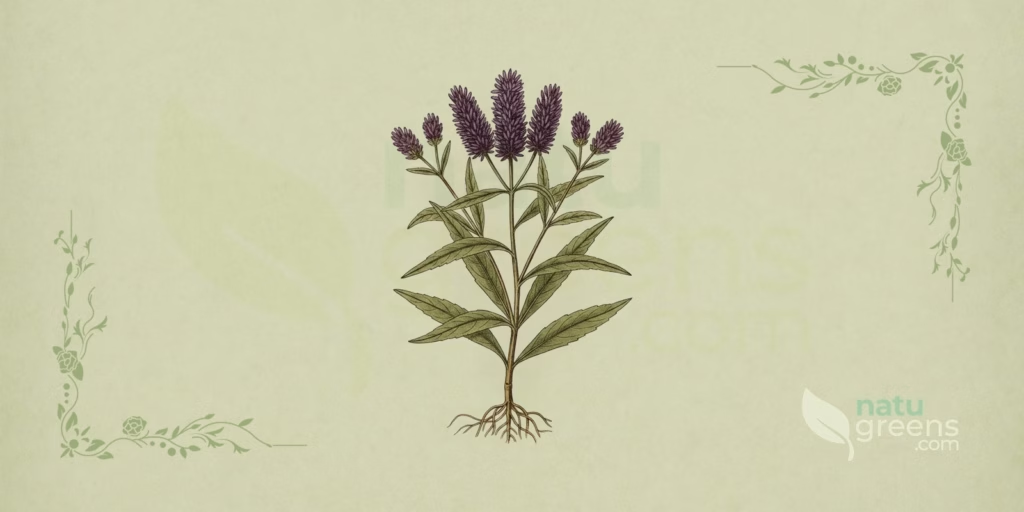
Symphytum officinale L. / Comfrey, commonly known as comfrey, knitbone, or boneset, is a perennial herbaceous plant belonging to the Boraginaceae family. Described by Carl Linnaeus in 1753, this species is native to Europe and Asia and has spread to many regions of the world because of its notable medicinal properties. Comfrey is recognized for its large, hairy leaves and tubular flowers ranging from purple to white, gathered in drooping clusters. Its tuberous root, rich in bioactive compounds, is the part most valued for therapeutic purposes.
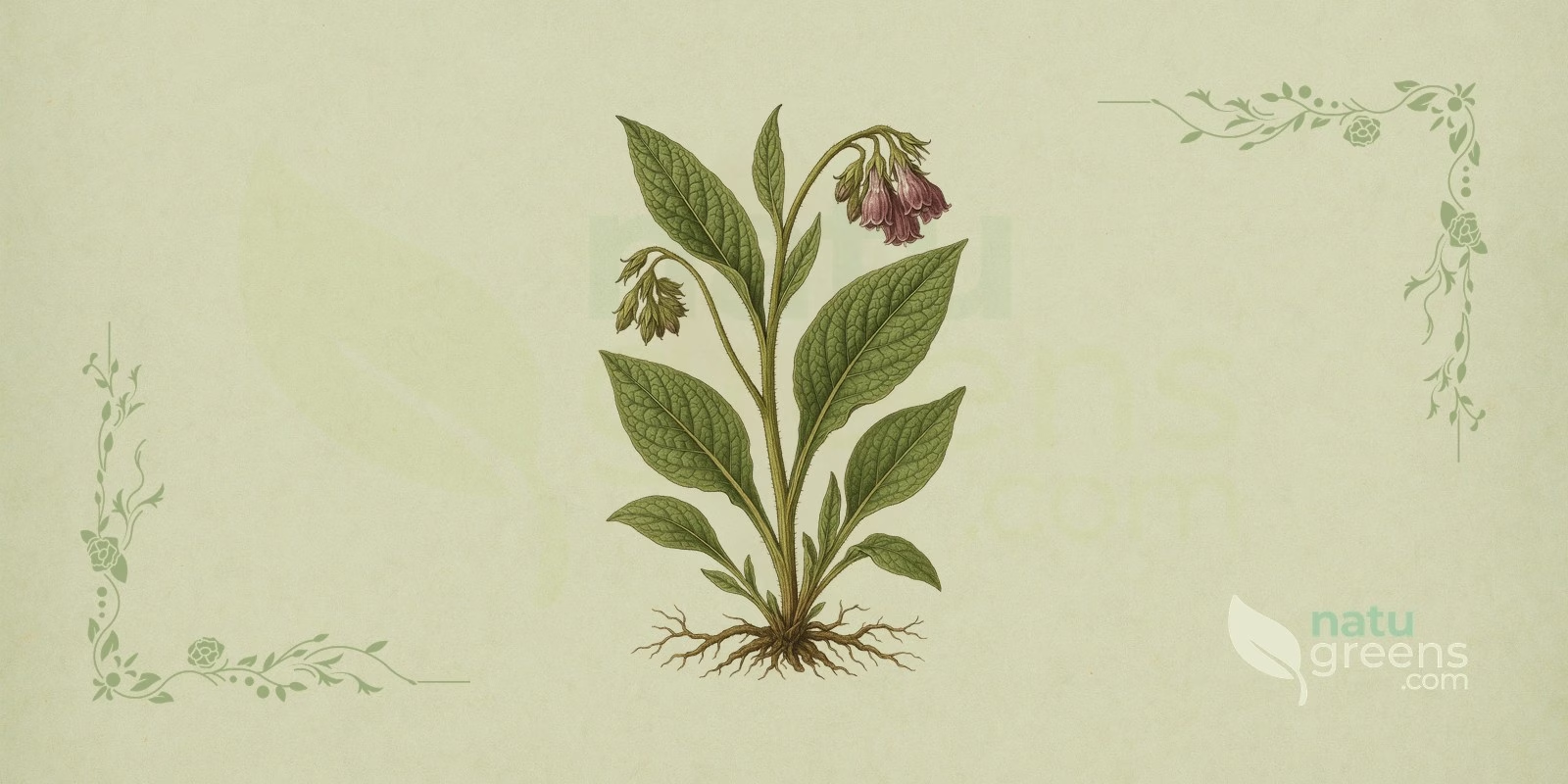
Historically, comfrey has been widely used in traditional European medicine, earning the nickname “knitbone” for its application in treating fractures and bone injuries. The plant is valued for its capacity to promote wound healing and reduce inflammation. However, the presence of pyrrolizidine alkaloids (PAs) in its composition calls for caution, especially with internal use, given the potential for liver toxicity. Modern research continues to explore its benefits, focusing mainly on safe topical applications.
Popular and International Names of Comfrey
- English: black wort, boneset, comfrey, common comfrey, consound, cultivated comfrey, knitbone, Quaker comfrey, slippery-root, true comfrey, wall wort.
- Spanish: consuelda, consuelda mayor, hierba de los cerdos, lengua de buey, oreja de asno.
- Portuguese: capim-roxo-da-rússia, confrei, consolda-maior, consólida, erva-do-cardeal, erva-encanadeira-de-osso, leite-vegetal, língua-de-vaca, orelha-de-asno, orelha-de-burro.
- French: consoude officinale, consyre, grande consoude, grande consyre, herbe aux charpentiers.
- Italian: consolida maggiore, sinfito.
- German: Beinwurz, Comfrey, Echter Beinwell, Wallwurz.
Botanical Synonyms of Symphytum officinale
Although Symphytum officinale L. is the most widely accepted scientific name, the plant has a number of botanical synonyms found in the literature, reflecting taxonomic variations or historical classifications of the species; these synonyms matter for research and for the precise identification of the plant across different botanical and pharmacological contexts. The cultivated plant commonly found in gardens and allotments is actually a hybrid known as Symphytum ×uplandicum (Russian comfrey), resulting from the cross between Symphytum officinale and Symphytum asperum.
- Symphytum officinale ssp. uliginosum (Kern.) Nyman
- Symphytum tanaicense Steven
- Symphytum uliginosum Kern
Botanical Family: Boraginaceae
Comfrey belongs to the Boraginaceae family, a diverse group of flowering plants that includes roughly 2,000 species distributed across about 100 genera and is known for bringing together many plants of ornamental, medicinal, and even culinary importance. Species in the Boraginaceae family are often characterized by rough, hairy leaves and flowers that typically take a tubular or funnel shape, frequently blue or purple.
The Boraginaceae family is recognized for the presence of pyrrolizidine alkaloids (PAs) in many of its species, including comfrey, compounds of pharmacological interest because of their properties, but which also raise safety concerns related to liver toxicity. Ongoing phytochemical research into this family aims to isolate and characterize new compounds, as well as to evaluate their potential for safe topical use and the risks associated with internal consumption.
Parts of Comfrey Used
The parts of comfrey most used for medicinal purposes and in various preparations are the root and the leaves. The root, in particular, is rich in allantoin and other active compounds and is traditionally used in poultices and ointments, while the leaves also contain beneficial phytochemicals, though in lower concentration, and are used in some topical preparations. It is essential to note that internal use is discouraged because of the presence of pyrrolizidine alkaloids.
- Leaves
- Root
Ethnobotanical and Traditional Uses
Comfrey has a long history of use in ethnobotany and traditional medicine, dating back more than 2,000 years, a period in which it was often referred to as “knitbone” for its reputation of aiding the recovery of broken bones. Its traditional applications cover a wide range of conditions, mainly for external use; historical records also mention internal use of the plant, but this practice is now discouraged and banned in several countries because of the risk of liver toxicity.
- Bruises and hematomas
- Bone fractures (topical use)
- Gastrointestinal complaints (historical record of internal use, now discouraged)
- Hemorrhoids (topical use)
- Inflammation (topical use)
- Muscle and joint pain relief
- Respiratory complaints (historical record of internal use, now discouraged)
- Rheumatism
- Sprains and strains
- Wound and skin ulcer healing
Therapeutic Properties of Comfrey
Comfrey’s medicinal properties are attributed to its rich phytochemical composition, which includes allantoin, phenolic acids, and other compounds that give the plant significant potential, especially in topical applications for inflammatory conditions and skin injuries. Allantoin, in particular, is known for its ability to promote cell regeneration and wound healing.
- Analgesic (traditional use for pain relief)
- Anti-apoptotic (inhibitory effect studied on programmed cell death)
- Anti-inflammatory (effect studied for reducing inflammation)
- Antibacterial (activity studied against bacteria such as Staphylococcus aureus and Escherichia coli)
- Antimicrobial (activity studied against microorganisms)
- Antioxidant (activity studied against free radicals)
- Neuroprotective (protective effect studied on the nervous system)
- Wound-healing (effect studied on wound healing)
Detailed Phytochemical Profile of Comfrey
Comfrey’s phytochemical profile is complex and includes a variety of compounds that contribute to its medicinal properties. Among the most studied are allantoin, known for its wound-healing action, and pyrrolizidine alkaloids, which are the main safety concern. The plant also contains various phenolic acids and polysaccharides with antioxidant and anti-inflammatory activity.
- Allantoin
- Caffeic acid
- Chlorogenic acid
- Glycopeptides
- Lignans
- p-Coumaric acid
- p-Hydroxybenzoic acid
- Polysaccharides
- Pyrrolizidine alkaloids (PAs) (echimidine, symphytine)
- Rosmarinic acid
Preparation and Administration Forms of Comfrey
Comfrey can be prepared in a number of ways, always for topical use, to take advantage of its wound-healing and anti-inflammatory properties. The most common preparations include ointments, creams, and poultices, which allow the active compounds to be applied directly to the skin, while extracts and tinctures are also possible but should be used with caution and under professional guidance, always restricted to intact skin and for short periods.
- Cream
- Extract
- Infusion (topical use)
- Ointment
- Poultice
- Tincture (topical use)
Synergy with Other Medicinal Plants
The synergy between comfrey and other medicinal plants can enhance its effects in topical applications, since combining it with plants that have anti-inflammatory or wound-healing properties can optimize outcomes in the care of skin injuries and muscle pain. It is crucial to select plants that complement comfrey’s safety profile, avoiding adverse interactions.
Muscle and Joint Pain
Combining comfrey with arnica (Arnica montana) and white willow (Salix alba) is traditionally used for the relief of muscle and joint pain: comfrey contributes allantoin for tissue regeneration, arnica offers anti-inflammatory and analgesic properties, and white willow, rich in salicin, acts as a natural analgesic. This combination is intended for topical ointments and gels and should be avoided by people taking anticoagulants, given the concurrent use of white willow.
Wounds and Skin Injuries
For the care of wounds and skin injuries, comfrey can be combined with calendula (Calendula officinalis) and aloe vera (Aloe barbadensis miller): comfrey’s allantoin supports healing, calendula has antiseptic and anti-inflammatory action, and aloe vera hydrates and soothes the skin. This combination is suited to creams and lotions aimed at skin recovery, always on intact skin.
Topical Inflammation
Pairing comfrey with chamomile (Matricaria chamomilla) and witch hazel (Hamamelis virginiana) can be beneficial for reducing topical inflammation, since chamomile offers calming and anti-inflammatory effects while witch hazel acts as an astringent and anti-inflammatory. Together, these ingredients can be used in compresses or lotions to relieve skin irritation and swelling.
Recipes and Usage Protocols of Comfrey
Comfrey is traditionally used in various topical preparations to take advantage of its properties. The recipes below are intended exclusively for external use, given the liver toxicity associated with internal consumption of the plant, and should be applied only to intact skin and for short periods. It is essential to follow the instructions carefully and consult a health professional before starting any use.
Poultice for Bruises
Ingredients: Fresh comfrey leaves, hot water.
Preparation: Wash the fresh comfrey leaves thoroughly and chop them finely. Mash the leaves into a paste and, if needed, add a little hot water to reach the desired consistency. Apply the paste directly to the bruise or affected area, on intact skin, covering it with a clean cloth. Leave it in place for 30 to 60 minutes, once or twice a day, as a traditional way of supporting local comfort.
Comfrey Healing Cream
Ingredients: 50 g dried comfrey root powder, 200 ml vegetable oil (almond or olive oil), 30 g beeswax.
Preparation: Infuse the comfrey root powder in the vegetable oil in a double boiler for 2 to 3 hours over low heat, then strain the oil, discarding the root residue. Reheat the infused oil in the double boiler and add the beeswax, stirring until fully melted. Pour the mixture into sterilized jars and let it cool. Apply this cream topically to intact skin, near closed abrasions or skin irritation, never on open wounds.
Infusion for Anti-Inflammatory Compresses
Ingredients: 2 tablespoons dried comfrey leaves, 500 ml boiling water.
Preparation: Place the dried comfrey leaves in a bowl and pour in the boiling water. Cover and let it steep for 15 to 20 minutes, then strain and let it cool to a warm temperature. Soak a clean cloth or gauze in the infusion and apply it as a compress on intact skin over inflamed areas, such as sore joints or tense muscles, repeating several times a day. This infusion is strictly for external use.
Ointment for Rheumatic Pain
Ingredients: 100 g grated fresh comfrey root, 250 ml extra virgin olive oil, 50 g shea butter.
Preparation: Place the grated root and the olive oil in a pan and heat in a double boiler for 3 to 4 hours without boiling, then strain, pressing well to extract all the liquid. Add the shea butter to the infused oil and reheat in the double boiler until melted. Mix well and transfer to a dark glass container. Apply this ointment to intact skin over areas affected by rheumatic or arthritic pain, massaging gently, with regular use limited to a few weeks.
Topical Tincture for Sprains
Ingredients: 50 g dried comfrey root, 250 ml 70% grain alcohol.
Preparation: Chop the dried comfrey root and place it in a dark glass jar, covering it with the grain alcohol and making sure the root is fully submerged. Seal the jar well and let it macerate for 4 to 6 weeks in a cool, dark place, shaking it daily. Strain the tincture and store it in a dropper bottle. Apply a few drops diluted in water to intact skin over sprains or strains, massaging gently. Do not apply to injured skin or open wounds.
The preparations above follow traditional records and do not replace professional guidance. Before any internal use, review the contraindications and interactions described in this article.
The preparations above follow traditional records and do not replace professional guidance. Before any internal use, check the contraindications and interactions described in this article.
Associated Therapies
Because of its properties, comfrey can be integrated into several complementary therapeutic approaches, always with a focus on topical use and under professional guidance, since its anti-inflammatory and wound-healing action makes it a resource considered in therapies aimed at tissue recovery and the relief of localized pain. It is essential that any use be supervised to ensure safety.
Clinical Phytotherapy
In clinical phytotherapy, comfrey is valued for its topical applications in the care of musculoskeletal and dermatological injuries. Standardized comfrey extracts are used in cream and ointment formulations, with controlled dosages to maximize benefits and minimize risks, and modern phytotherapy emphasizes the importance of comfrey products with low pyrrolizidine alkaloid (PA) content for patient safety, especially with prolonged use or over large areas of skin. Its traditional use is recognized for pain relief and support for wound healing.
Homeopathy
In homeopathy, Symphytum officinale is a well-known remedy, often used to support the consolidation of bone fractures and the treatment of periosteal injuries, being indicated for persistent bone and periosteum pain even after fractures have healed, and also for eye injuries resulting from blunt trauma. The homeopathic remedy is prepared from the fresh root of the plant, following the principles of dilution and dynamization, at potencies that vary according to the chronicity and intensity of symptoms.
Anthroposophic Medicine
In anthroposophic medicine, comfrey is used to support tissues, especially bones, cartilage, and skin, and is considered a remedy that helps organize and structure the physical body, used in preparations for external use in cases of fractures, bruises, sprains, and wounds that are slow to heal. The anthroposophic approach values the plant as a whole, integrating its physical and energetic properties into a holistic view of the patient.
Contraindications and Side Effects of Comfrey
Despite its traditional use, comfrey carries important contraindications and potential side effects, mainly because of the presence of pyrrolizidine alkaloids (PAs), hepatotoxic compounds that can cause serious liver damage, including fibrosis, portal hypertension, and veno-occlusive disease. For this reason, internal use of comfrey is banned in many countries, including the United States, Canada, and several European nations, and it is essential to strictly follow topical-use recommendations and avoid self-medication.
Liver Toxicity
The pyrrolizidine alkaloids present in comfrey are the main cause for concern, since ingesting any part of the plant can lead to acute and chronic liver damage, which can be fatal. Even topical use on open wounds can result in systemic absorption of PAs, increasing the risk of toxicity, whose symptoms include jaundice, upper abdominal pain, nausea, and weight gain from fluid retention. Use should be limited to topical preparations on intact skin and for short periods.
Allergic Reactions
Some individuals may develop allergic reactions to comfrey, especially with topical use, manifesting as contact dermatitis, hives, itching, or skin irritation; in rare cases, more severe reactions such as anaphylaxis can occur. A sensitivity test on a small area of skin is recommended before applying comfrey to larger areas.
Drug Interactions
Comfrey can interact with certain medications, intensifying their effects or causing adverse reactions, so concurrent use should be avoided with hepatotoxic drugs, anticoagulants (such as warfarin), and sedatives (including benzodiazepines), as it can increase the risk of bleeding or excessive sedation. Pregnant or breastfeeding women, children under 6 months of age, and people with pre-existing liver disease should avoid using comfrey completely, even topically.
Historical Notes and Interesting Facts
Comfrey, with its rich history, is a plant wrapped in curiosities and interesting facts, having been, since antiquity, the subject of legends and folk practices that reflect its importance in the cultures that used it. Its reputation for aiding tissue regeneration and fracture recovery contributed to its almost mythical status in some traditions.
- Origin of the Name: The name “comfrey” derives from the Latin confervere, meaning “to boil together” or “to grow together,” an allusion to its reputation for knitting bones and tissues together.
- Ancient Use: The ancient Greeks and Romans already used comfrey for wounds, fractures, and respiratory ailments, and Dioscorides, in the first century AD, documented its use as a wound healer.
- Medieval Gardens: It was a common plant in medieval monastery gardens, cultivated for its medicinal reputation and ease of growth.
- “Knitbone”: One of its best-known popular names in English, “knitbone,” reflects the folk belief that the plant could “knit” broken bones back together.
- Animal Feed: In some cultures, comfrey was used as animal fodder, though this practice has declined since the discovery of its toxicity.
- Natural Dye: Comfrey root can be used to produce a natural dye ranging from brown to purple, depending on the extraction method.
Frequently Asked Questions about Comfrey
Because of its popularity and the safety concerns surrounding it, many questions arise about the use of comfrey, especially regarding its tea. It is essential to clarify that, because of the presence of pyrrolizidine alkaloids (PAs), internal consumption of comfrey is discouraged and banned in many countries. The following answers aim to address the most common questions, reinforcing the importance of safe, mindful topical use.
Is Comfrey Tea Safe to Drink?
No, comfrey tea is not considered safe to drink. The plant contains pyrrolizidine alkaloids (PAs), hepatotoxic substances, and drinking comfrey tea can cause serious liver damage, including liver fibrosis, portal hypertension, and veno-occlusive disease, which can be fatal. Health authorities in many countries ban the sale of comfrey products for internal use.
What Are the Traditional Uses of Comfrey?
Historically, comfrey was even used internally for gastrointestinal problems, respiratory ailments, and fractures, but because of the risks of liver toxicity, this use is no longer recommended. Today, its properties are explored exclusively through topical applications on intact skin, such as in ointments and poultices.
Can I Use Comfrey to Treat Open Wounds?
No, using comfrey on open wounds is not recommended, since even topical use on injured skin can allow pyrrolizidine alkaloids (PAs) to be absorbed into the bloodstream, increasing the risk of liver toxicity. Comfrey should be applied only to intact skin and for short periods, following the guidance of a health professional.
Is There a Safe Way to Use Comfrey?
Yes, topical use of comfrey preparations (creams, ointments, gels) on intact skin is generally considered safe, provided it is limited in duration (4 to 6 weeks per year) and supervised. These preparations are traditionally used to relieve muscle pain, bruises, sprains, and inflammation. It is crucial to check the PA content of products and follow the manufacturer’s and health professional’s instructions.
What Are the Side Effects of Comfrey?
The main side effects of comfrey are related to liver toxicity, caused by pyrrolizidine alkaloids (PAs) when ingested, in addition to allergic skin reactions, such as contact dermatitis, itching, and irritation, which can also occur with topical use. It is important to watch for any sign of an adverse reaction and seek medical help immediately if symptoms such as jaundice or abdominal pain occur.
What Is Russian Comfrey?
Symphytum ×uplandicum (Russian comfrey) is a natural hybrid between Symphytum officinale and Symphytum asperum, very common in cultivation for its vigor, and is subject to the same restrictions on internal use and the same liver toxicity warnings as common comfrey.
Notice: this content is for informational purposes and does not replace professional medical advice. Consult a physician or herbal practitioner before using medicinal plants, especially during pregnancy, breastfeeding, or alongside medication.
References and Scientific Studies
- DOI MDPI. (n.d.). Phytochemical Analysis of Symphytum officinale Root Culture Extract. Recuperado de MDPI ↗
- PMC2020 Avila C, et al. A systematic review and quality assessment of case reports of adverse events for borage (Borago officinalis), coltsfoot (Tussilago farfara) and comfrey (Symphytum officinale). Fitoterapia. 2020.
- PMC2012 Tanret I, et al. [Pharmaceutical sheet. Symphytum officinale L., dermal use (Flexagile cream)]. Journal de pharmacie de Belgique. 2012.