Harpagophytum procumbens DC. ex Meisn. / Devil’s Claw, commonly known as devil’s claw, grapple plant, or wood spider, is a perennial herbaceous plant of the Pedaliaceae family, native to southern Africa, particularly the regions of the Kalahari, Namibia, and Botswana. This species is recognized for its distinctive hooked fruits, which give rise to its popular name. Historically, Harpagophytum procumbens has been used in traditional African medicine for centuries, chiefly by the Khoisan peoples, to address a range of health conditions, including menstrual problems, indigestion, fever, and inflammation, since the plant is valued for its secondary tuberous roots, which are the part most used in medicinal preparations such as teas and extracts.
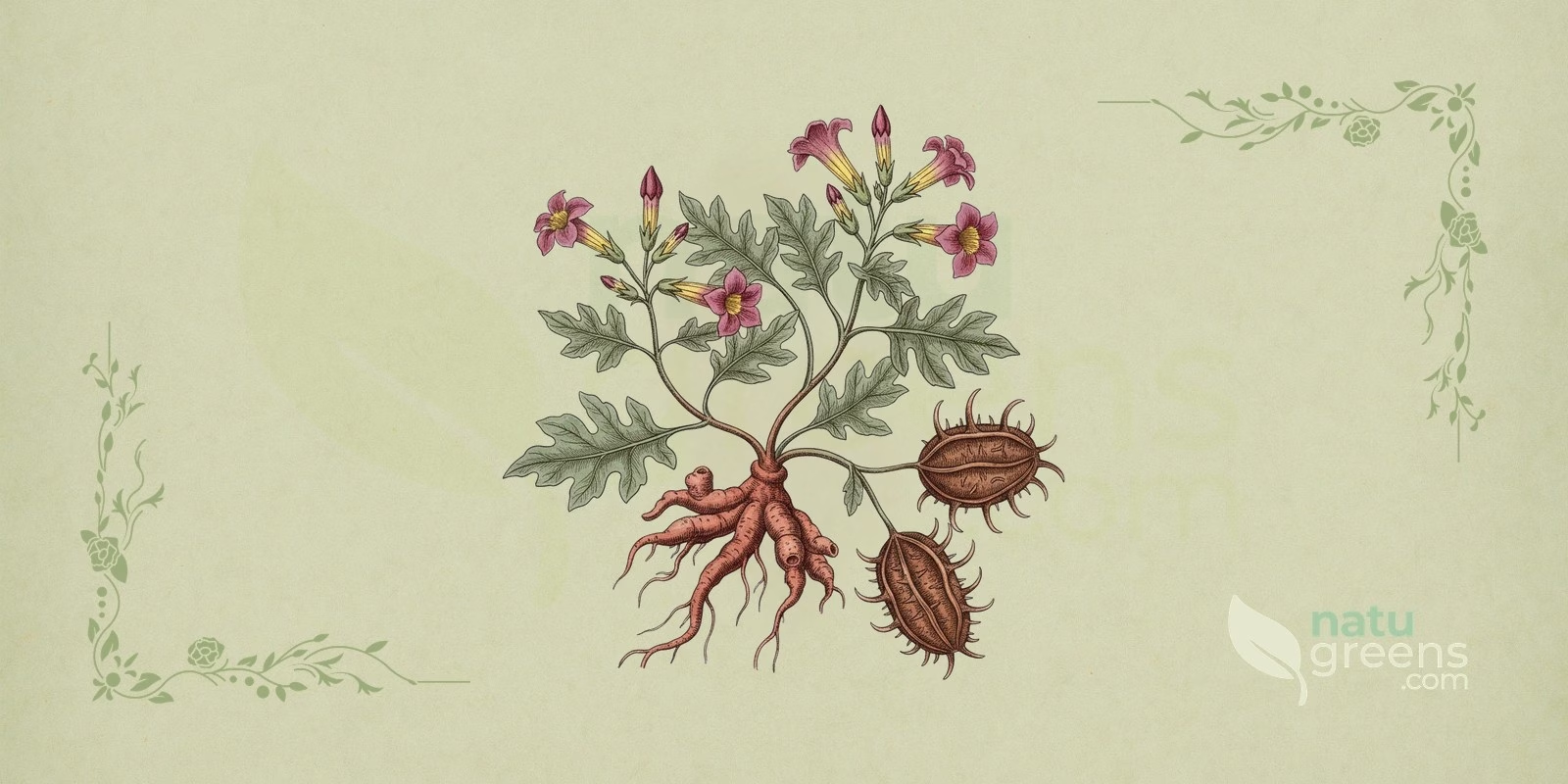
Devil’s claw’s reputation as a medicinal plant has grown worldwide, with its use spreading to Europe, North America, and the Far East, as modern scientific research has come to validate many of its traditional uses and has confirmed anti-inflammatory and analgesic properties associated with the plant. The bioactive compounds present in the plant, such as iridoid glycosides, are identified as responsible for these effects, making it a studied complementary option for the relief of pain and inflammation, especially in rheumatic and degenerative conditions, and a notable example of the rich natural pharmacopeia of the African continent.
Popular and International Names of Devil’s Claw
- English: devil’s claw, grapple plant, wood spider.
- Spanish: garra del diablo, harpago.
- Portuguese: garra do diabo, harpago, unha do diabo.
- French: griffe du diable, harpagophytum.
- Italian: arpagofito, artiglio del diavolo.
- German: Teufelskralle, Trampelklette.
Botanical Synonyms of Harpagophytum procumbens
The accepted scientific name for the plant is Harpagophytum procumbens (Burch.) DC. ex Meisn. There are no widely recognized botanical synonyms used interchangeably in the primary scientific literature, although the subspecies Harpagophytum procumbens subsp. procumbens is frequently mentioned in more detailed studies. The distinction between H. procumbens and H. zeyheri is important, with the former being the more studied and medicinally used species, the two differing mainly in fruit morphology and chemical composition. The sister species Harpagophytum zeyheri is often found mixed into raw material sold internationally, or even substituted for H. procumbens, and is considered a common market adulterant because it generally contains a lower concentration of harpagoside, which underscores the importance of sourcing products from certified, traceable suppliers.
Botanical Family: Pedaliaceae
Harpagophytum procumbens belongs to the Pedaliaceae family, also known as the sesame family, which comprises around 22 genera and 90 species, found predominantly in tropical and subtropical regions of Africa and Asia. Plants in this family are often characterized by glandular hairs and fruits with distinctive structures, such as devil’s claw’s hooks, and many of its species are valued for medicinal properties and edible oils, such as sesame (Sesamum indicum).
Pedaliaceae is known for producing bioactive compounds, including iridoid glycosides, which are abundant in devil’s claw and contribute to its pharmacological actions, reflecting, together with these plants’ adaptation to arid environments such as the Kalahari Desert, their resilience and the complexity of their biochemical mechanisms. Research into this family continues to reveal its potential for applications in medicine and agriculture, highlighting the importance of biodiversity conservation.
Parts of Devil’s Claw Used
- Dried root powder
- Dry extracts
- Liquid extracts
- Secondary tuberous roots
- Tinctures
Ethnobotanical and Traditional Uses
- Appetite stimulant
- Constipation
- Fever
- General anti-inflammatory support
- Gout
- Indigestion (dyspepsia)
- Liver problems
- Lower back pain
- Menstrual cramps
- Relief of joint and rheumatic pain
- Ulcers
- Venereal infections
- Wound and burn healing (topical use)
Therapeutic Properties of Devil’s Claw
- Analgesic (traditional use for mild joint pain and dyspepsia, according to the European Medicines Agency monograph)
- Antibacterial (studied activity against bacteria)
- Antifungal (studied activity against fungi)
- Anti-inflammatory (effect studied in reducing inflammation)
- Antioxidant (studied activity against free radicals)
- Antirheumatic (moderate clinical evidence for lower back pain, with no proof of cure)
- Antiviral (studied activity against viruses)
- Digestive (supports digestion)
- Hypoglycemic (effect studied on blood sugar)
- Laxative (effect studied on bowel movement)
Detailed Phytochemical Profile of Devil’s Claw
- Amino acids (glycine, lysine, L-proline, valine)
- Carbohydrates (turanose, stachyose)
- Flavonoids (kaempferol, luteolin)
- Harpagide
- Harpagoquinones
- Harpagoside
- Iridoid glycosides (procumbide, procumbiside, 8-O-(p-coumaroyl)-harpagide, harpagogenin)
- Phenolic acids (caffeic, cinnamic, chlorogenic)
- Phenolic glycosides (8-feruloylharpagide, verbascoside/acteoside, leucoceptoside, pagoside)
- Phytosterols
- Terpenoids (ursolic acid, oleanolic acid, beta-sitosterol)
Preparation and Administration Forms of Devil’s Claw
- Capsules
- Creams and ointments (topical use)
- Powder
- Standardized extracts
- Tablets
- Teas (infusions and decoctions)
- Tinctures
Synergy with Other Medicinal Plants
Pain and Inflammation Relief
Devil’s claw is often combined with other medicinal plants in an attempt to enhance its analgesic and anti-inflammatory effects, its pairing with ginger (Zingiber officinale) and turmeric (Curcuma longa) being notable, both recognized for anti-inflammatory properties in herbal tradition. This combination is traditionally used as support in conditions such as osteoarthritis and rheumatoid arthritis, when the joint action of the bioactive compounds may offer broader support for managing pain and inflammation, since ginger and turmeric act through distinct mechanisms that complement the action of devil’s claw’s iridoid glycosides. People taking anticoagulants should exercise extra caution with this combination and seek medical guidance, since both devil’s claw and turmeric may increase the risk of bleeding.
Joint Health
For joint health support, devil’s claw can be paired with plants such as boswellia (Boswellia serrata) and white willow (Salix alba), the former known for its boswellic acids, which inhibit pro-inflammatory enzymes, while white willow contains salicin, a precursor of salicylic acid with analgesic effects. This combination aims not only to help reduce inflammation and pain but also to support joint mobility, allowing a more complete approach to the multiple factors involved in degenerative joint disease. Because white willow shares relevant contraindications with anticoagulants and with use in children and adolescents, this combination calls for professional supervision.
Recipes and Usage Protocols of Devil’s Claw
Topical Cream for Muscle Pain
Ingredients: 5 grams of devil’s claw root powder, 50 ml of vegetable oil (sweet almond or jojoba), 5 drops of lavender essential oil (Lavandula angustifolia).
Preparation: Mix the devil’s claw root powder with the vegetable oil until a smooth paste forms, add the lavender essential oil and mix well, then store in a dark glass container. Apply a small amount to the area affected by muscle or joint pain, massaging gently until absorbed, 2 to 3 times a day. This topical preparation is traditionally used for localized relief of muscle discomfort, with lavender associated with a relaxing effect; discontinue use if skin irritation occurs.
Decoction for Arthritis and Rheumatism
Ingredients: 1 tablespoon of dried, chopped devil’s claw root, 500 ml of water.
Preparation: Place the roots and water in a pot and bring to a boil, letting it simmer gently for 10 to 15 minutes; remove from heat, cover, and let it rest for another 10 minutes, then strain and drink warm. It is recommended to consume in moderation throughout the day, preferably before meals, seeking guidance from a health professional before continued use, particularly in cases of gastric or duodenal ulcer, gallstones, use of anticoagulants such as warfarin, or pregnancy. This decoction is traditionally used to relieve pain associated with arthritis, rheumatism, and other chronic inflammatory conditions, acting internally as support for reducing systemic inflammation, without replacing medical treatment.
Infusion for Indigestion and Appetite Stimulation
Ingredients: 1 teaspoon of devil’s claw root powder, 200 ml of boiling water.
Preparation: Place the root powder in a cup, add the boiling water, cover, and let it steep for 5 to 7 minutes, then strain and drink warm. Drink one cup about 30 minutes before meals to support appetite and aid digestion, this infusion being particularly suited to people with reduced appetite or dyspepsia, as it promotes the production of digestive juices and helps ease gastrointestinal discomfort. People with gastric or duodenal ulcer, gallstones, or pregnant women should avoid this preparation and consult a health professional before use.
Tincture for Lower Back Pain
Ingredients: 100 grams of dried devil’s claw root, 500 ml of 70% grain alcohol.
Preparation: Chop the roots and place them in a dark glass jar, covering them with the grain alcohol until fully submerged; seal tightly and let macerate in a cool, dark place for 2 to 4 weeks, shaking daily, then strain and store the tincture in a dark glass bottle. Take a moderate number of drops diluted in water, as directed by a health professional, to support relief of lower back pain and other musculoskeletal pain, avoiding use in cases of gastric or duodenal ulcer, gallstones, use of anticoagulants such as warfarin, or pregnancy. The tincture provides a concentrated form of the plant’s active compounds, with faster absorption than other preparations.
The preparations above follow traditional practices and do not replace professional guidance. Before any internal use, review the contraindications and interactions described in this article.
The preparations above follow traditional records and do not replace professional guidance. Before any internal use, check the contraindications and interactions described in this article.
Associated Therapies
Acupuncture
Acupuncture, an ancient practice of traditional Chinese medicine, can be paired with the use of devil’s claw in managing chronic pain and inflammatory processes, since while devil’s claw acts internally through its anti-inflammatory compounds, acupuncture seeks to restore the body’s energetic balance through the stimulation of specific points. This combination may offer more complete support for conditions such as arthritis and back pain, addressing both the physical and energetic aspects associated with the condition, always as a complement to, and never a substitute for, medical supervision.
Physical Therapy
Physical therapy plays an important role in the rehabilitation and management of musculoskeletal conditions, such as osteoarthritis and lower back pain, and including devil’s claw in the treatment plan may contribute to outcomes, particularly with regard to supporting the reduction of pain and inflammation. Use of the plant may favor greater tolerance for exercise, complementing the manual techniques, therapeutic exercises, and physical modalities applied by the physical therapist, always with the goal of supporting the patient’s function, mobility, and quality of life.
Functional Nutrition
Functional nutrition focuses on identifying and correcting nutritional and biochemical imbalances that contribute to chronic disease, and devil’s claw can be incorporated into this type of plan as support for reducing systemic inflammation and supporting joint health. Anti-inflammatory diets, rich in antioxidants and essential nutrients, combined with the use of devil’s claw under professional guidance, may help create a more favorable internal environment for overall well-being and for preventing the worsening of degenerative diseases, always as part of a supervised, holistic approach.
Contraindications and Side Effects of Devil’s Claw
General Contraindications
Devil’s claw is contraindicated in cases of gastric or duodenal ulcers, due to its potential to increase stomach acid production, and individuals with gallstones should avoid its use, since the plant may stimulate bile production, which could worsen the condition. Pregnant or breastfeeding women should refrain from consuming devil’s claw, since there is not enough data on its safety during these periods and the plant may have an emmenagogue effect, while people with heart disease or circulation problems should exercise caution, since it may affect heart rate and blood pressure. In cases of known allergy to plants of the Pedaliaceae family, use is not advised.
Common Side Effects
Side effects of devil’s claw are generally mild and infrequent, the most common being gastrointestinal disturbances, such as diarrhea, indigestion, nausea, vomiting, and abdominal pain, along with, in some cases, allergic skin reactions such as rashes and itching. Topical application of preparations made from the plant tends to be well tolerated but may cause irritation in sensitive individuals, so following recommended dosages helps minimize the risk of adverse effects.
Drug Interactions
Devil’s claw can interact with several medications: it may potentiate the effect of anticoagulants, such as warfarin, increasing the risk of bleeding and requiring medical monitoring, and it may also interfere with medications metabolized by the liver, altering their effectiveness. The plant may also reduce the effectiveness of medications that lower stomach acidity, such as antacids, H2 blockers (cimetidine, ranitidine), and proton pump inhibitors (omeprazole, lansoprazole), due to its effect of increasing acid secretion, while people with diabetes should monitor their glucose levels, since devil’s claw may have a mild hypoglycemic effect. It is always recommended to consult a health professional before starting devil’s claw, especially for those already taking other medications.
Historical Notes and Interesting Facts
Origin of the Peculiar Name
The popular name “devil’s claw” comes from the unique appearance of its woody fruits, which have long hook-shaped protrusions capable of catching on animals’ skin and hooves, aiding seed dispersal but also causing discomfort. This peculiar morphological feature inspired the native peoples of southern Africa to name the plant so vividly, reflecting their close observation of nature and their gift for descriptive, memorable names.
Discovery and Introduction in the West
Harpagophytum procumbens was introduced to Western medicine in the early twentieth century, when the German farmer G. H. Mehnert observed the Khoisan peoples using the plant to treat various ailments and brought samples back to Germany, where scientific research began to explore its properties. Starting in the 1950s, devil’s claw gained popularity in Europe as an herbal remedy associated with managing rheumatic and inflammatory diseases, cementing its place as one of the most important African medicinal plants on the global market, in a trajectory that illustrates the passage of ethnobotanical knowledge into scientific validation and commercial use.
Cultural and Economic Heritage
For communities in southern Africa, devil’s claw is not just a medicinal plant but also an important economic resource, since the sustainable harvest of its tuberous roots provides income for many families, although growing global demand has raised concerns about overexploitation and species conservation. Efforts have been made to promote sustainable harvesting practices and cultivation of the plant, ensuring that this valuable natural resource remains available for future generations and that local communities benefit from its commercialization, in a link that connects biodiversity, health, and socioeconomic development.
Frequently Asked Questions about Devil’s Claw
Is Devil’s Claw Safe for Long-Term Use?
Devil’s claw is generally considered safe for short- to medium-term use, up to 12 weeks, in most adults, when used at recommended dosages. For long-term use, it is advisable to consult a health professional to monitor possible adverse effects and drug interactions, since, although side effects are rare and mild, medical supervision helps ensure the safety and suitability of treatment, especially in people with preexisting health conditions or who take other medications.
Which Part of the Plant Is Used Medicinally?
The part most used medicinally is the secondary tuberous root, rich in bioactive compounds such as iridoid glycosides, especially harpagoside, to which the plant’s anti-inflammatory and analgesic properties are attributed. The roots are harvested, dried, and processed to produce extracts, powders, tinctures, and other pharmaceutical forms, and the concentration of active compounds can vary depending on the part of the plant, the harvest season, and growing conditions.
Can Devil’s Claw Replace Conventional Anti-Inflammatory Drugs?
In some cases of lower back pain and osteoarthritis, studies suggest that devil’s claw may have efficacy comparable to that of some nonsteroidal anti-inflammatory drugs, with a more favorable gastrointestinal side-effect profile, but this does not mean it should be used as a substitute for prescribed medication without the guidance of a health professional. The decision to replace or supplement conventional medication with devil’s claw should be made in consultation with a doctor, who will assess the individual patient’s condition and possible interactions.
Is There Scientific Evidence for the Uses of Devil’s Claw?
Yes, there are scientific studies, including clinical trials, supporting the use of devil’s claw in managing pain and inflammation, especially in conditions such as osteoarthritis and lower back pain, with the evidence classified as moderate and concentrated on these two conditions. Research has focused on identifying active compounds, such as harpagoside, and their mechanisms of action, but more studies are still needed to explore the plant’s full therapeutic potential and to validate other traditional uses, so devil’s claw should not be seen as a cure but as a complementary resource.
How Should I Store Devil’s Claw Products?
Products made from devil’s claw, such as dried extracts, capsules, or chopped roots, should be stored in airtight containers, protected from light, heat, and moisture, with a cool, dry place being ideal for preserving the integrity of their active compounds and extending their shelf life. Exposure to inadequate conditions can lead to degradation of the active compounds, reducing the product’s effectiveness, so following the manufacturer’s storage instructions is essential to ensure its quality and potency.
Notice: this content is for informational purposes and does not replace professional medical advice. Consult a physician or herbal practitioner before using medicinal plants, especially during pregnancy, breastfeeding, or alongside medication.
References and Scientific Studies
Peer-Reviewed Scientific Studies (3)
- PMC2022 Gxaba, N., & Manganyi, M. C. (2022). The Fight against Infection and Pain: Devil’s Claw (Harpagophytum procumbens) a Rich Source of Anti-Inflammatory Activity: 2011-2022. Molecules, 27(11), 3637.
- PMC2007 Grant, L. (2007). A review of the biological and potential therapeutic actions of Harpagophytum procumbens (Devil’s Claw). Phytotherapy Research, 21(12), 1127-1132.
- PEER2012 Mncwangi, N., et al. (2012). Devil’s Claw, A review of the ethnobotany, phytochemistry and biological activity of Harpagophytum procumbens. Journal of Ethnopharmacology, 143(3), 755-777.
Supplementary Readings (1)
- European Medicines Agency. (n.d.). Harpagophyti radix – herbal medicinal product. Recuperado de EMA.