Hedera helix L. / Common Ivy, popularly known as English ivy or common ivy, is a perennial, woody climbing plant belonging to the Araliaceae family. Native to Europe, Western Asia, and North Africa, this species is widely recognized for its medicinal properties and has been used since antiquity. Ivy adapts to a wide range of environments, growing on trees, walls, and rocks, and can reach considerable heights. Its leaves, which vary in shape between the juvenile and adult stages, are the part most used for medicinal purposes, especially in the form of standardized extracts.
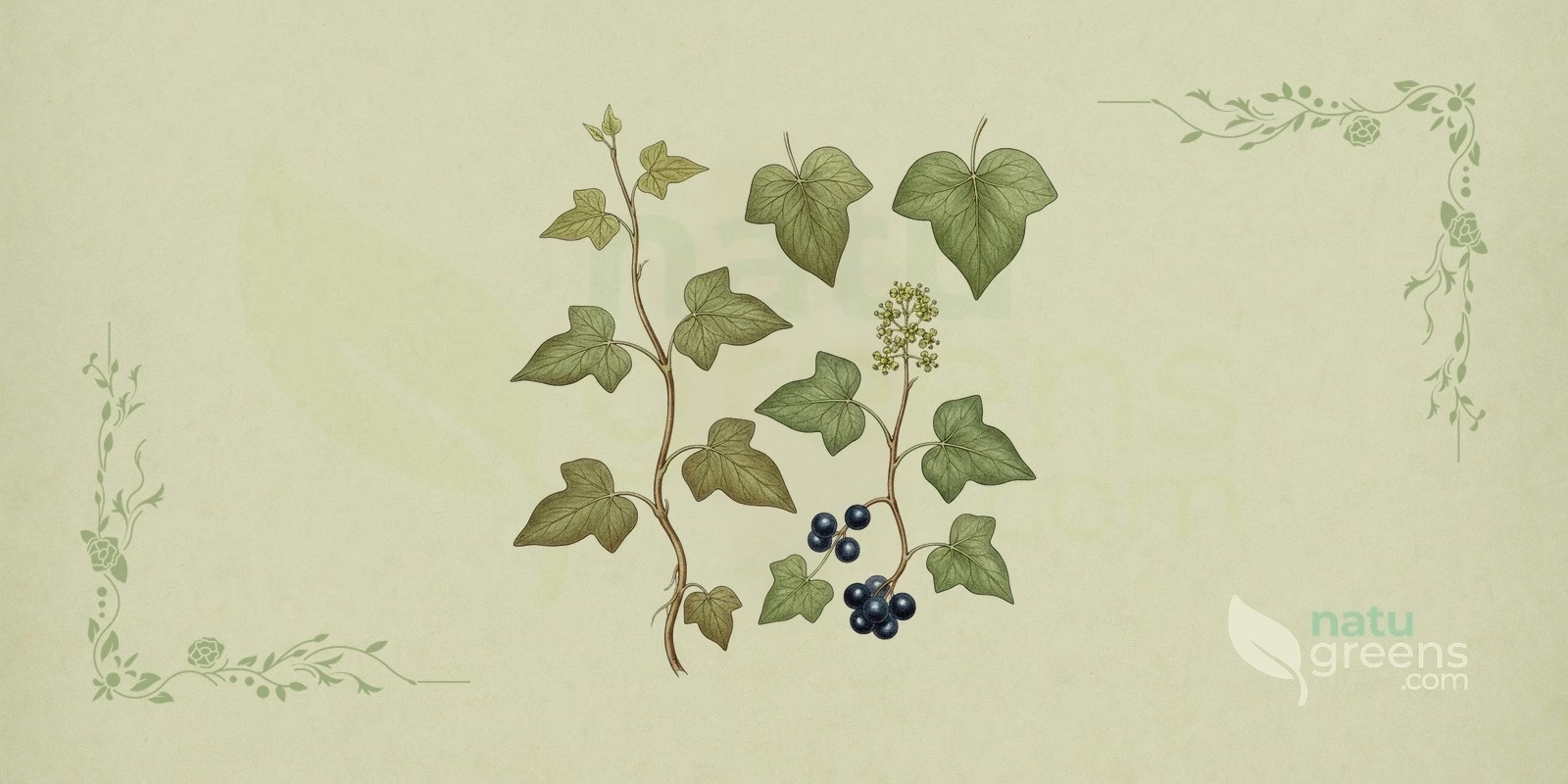
In traditional medicine, ivy has long been valued for its ability to ease respiratory problems such as cough and bronchitis. Modern scientific research has focused on its active compounds, primarily triterpenoid saponins, which give the plant expectorant, mucolytic, and bronchodilator properties. These effects support the traditional use of ivy for relieving respiratory tract conditions, backed by preliminary studies. In addition, Hedera helix has anti-inflammatory and antioxidant activity, reinforcing its role as a medicinal plant of great interest. Its use, however, requires caution due to the toxicity of the fresh plant and its berries.
Popular and International Names of Common Ivy
- English: English ivy, common ivy, ivy, gum ivy, bindwood, lovestone.
- Spanish: hiedra, hiedra común, yedra.
- Portuguese: aradeira, hedra, hera, hera-comum, hera-dos-muros, hera-inglesa, hera-trepadeira, hera-verdadeira.
- French: lierre, lierre commun.
- Italian: edera, edera comune.
- German: Efeu, Gemeiner Efeu, Efeublätter.
Botanical Synonyms of Hedera helix
Hedera helix L. has several botanical synonyms throughout the history of plant taxonomy. Among the most notable are Hedera acuta, Hedera arborea (often referred to as “tree ivy”), Hedera baccifera, and Hedera grandifolia. Another relevant synonym is Hedera hibernica, also known as Atlantic ivy or Irish ivy, which is sometimes considered a subspecies or a distinct species, though with characteristics very similar to Hedera helix. These variations reflect the complexity of botanical classification and the morphological diversity within the genus Hedera.
Botanical Family: Araliaceae
Hedera helix belongs to the Araliaceae family, a diverse group of plants that includes trees, shrubs, lianas, and herbs. This family is known for its cosmopolitan distribution, with many species found in tropical and subtropical regions, as well as in temperate zones. Araliaceae are characterized by generally alternate leaves, often compound, and umbel- or panicle-shaped inflorescences. Notable examples of the family include ginseng (Panax ginseng) and aralia (Aralia spp.), both with recognized medicinal properties.
The Araliaceae family is rich in bioactive compounds, such as saponins, flavonoids, and essential oils, which contribute to its medicinal applications. The presence of triterpenoid saponins in Hedera helix is a clear example of the phytochemical importance of this family. The floral structure and chemical composition of the Araliaceae have been the subject of extensive study, revealing their ecological and pharmacological relevance. Ivy’s adaptability, as a member of this family, allows it to thrive in different ecosystems.
Parts of Common Ivy Used
- Berries (with extreme caution and only under specialized supervision due to toxicity)
- Leaves
Ethnobotanical and Traditional Uses
- Bronchitis
- Contact dermatitis (in some people)
- Cough
- Dysentery
- Expectorant
- Relief of joint pain (arthritis, rheumatism)
- Skin problems (burns, calluses)
- Wash for sore or watery eyes (historical use)
Therapeutic Properties of Common Ivy
- Analgesic (traditional use for pain relief)
- Anti-inflammatory (studied effect in reducing inflammation)
- Antimicrobial (studied activity against microorganisms)
- Antioxidant (studied activity against free radicals)
- Antiproliferative (activity observed in laboratory studies, without clinical evidence)
- Antispasmodic (traditional use for relieving spasms)
- Bronchodilator (dilates the bronchi)
- Expectorant (facilitates mucus clearance)
- Mucolytic (thins mucus)
- Wound-Healing (studied effect on wound healing)
Detailed Phytochemical Profile of Common Ivy
The phytochemical profile of Hedera helix is complex and rich in bioactive compounds, with triterpenoid saponins being its most studied constituents and responsible for most of its pharmacological actions. Among these, hederacoside C, alpha-hederin, and hederagenin stand out. Hederacoside C is considered the main quality marker in ivy extracts, being metabolized in the body into alpha-hederin, which exerts expectorant and bronchodilator effects through stimulation of beta-2 adrenergic receptors.
Besides the saponins, ivy contains a range of flavonoids, such as quercetin, kaempferol, isoquercitrin, and astragalin, which contribute to its antioxidant and anti-inflammatory properties. Phenolic acids, such as chlorogenic acid and caffeic acid, are also present and reinforce the plant’s antioxidant activity. Other compounds include polyacetylenes, such as falcarinol, which, while biologically active, is also responsible for potential allergic skin reactions. The presence of essential oils and sterols rounds out the phytochemical profile of Hedera helix, underscoring its complexity and pharmacological potential.
Preparation and Administration Forms of Common Ivy
- Creams and ointments (topical use)
- Dry extracts (capsules, tablets)
- Fluid extracts
- Infusion (tea, with caution)
- Syrups
- Tinctures
Synergy with Other Medicinal Plants
Relief of Cough and Congestion
Hedera helix can be combined with plants such as thyme (Thymus vulgaris) and elderberry (Sambucus nigra) to enhance relief of cough and respiratory congestion. Thyme, with its essential oils rich in thymol and carvacrol, acts as an antiseptic and expectorant, while elderberry is known for its anti-inflammatory and antiviral properties. This synergy can offer more comprehensive support in respiratory tract infections, helping to thin mucus, soothe cough, and combat pathogens.
Immune Support
To strengthen the immune system, ivy can be paired with echinacea (Echinacea purpurea) and natural vitamin C, found in plants such as acerola (Malpighia emarginata). Echinacea is a recognized immunomodulator, and vitamin C is a potent antioxidant. This combination aims not only to relieve respiratory symptoms but also to strengthen the body’s defenses, making it more resistant to future infections. The synergy between these components can optimize the body’s immune response.
Recipes and Usage Protocols of Common Ivy
Infusion for Productive Cough
Ingredients: 1 teaspoon of dried ivy leaves (standardized), 200 ml of boiling water.
Preparation: Place the dried leaves in a cup and add the boiling water. Cover and let steep for 10 minutes. Strain and drink warm. Take 1 cup, two to three times a day, to help thin bronchial secretions and ease expectoration. It is essential to use dried, standardized leaves, as fresh leaves can be toxic. Consult a healthcare professional before starting use.
Homemade Expectorant Syrup
Ingredients: 50 g of dry Hedera helix extract (standardized), 250 ml of pure honey, 50 ml of distilled water.
Preparation: Gently heat the distilled water and dissolve the dry ivy extract in it. Add the honey and mix well until a smooth consistency is achieved. Store in a sterilized dark glass bottle in a cool place. Give adults 5 ml (one teaspoon), three times a day, to relieve productive cough and congestion. For children, the dosage should be adjusted and always used under medical guidance. This homemade syrup offers a natural option for relieving respiratory symptoms, without replacing the guidance of a healthcare professional.
The preparations above follow traditional records and do not replace professional guidance. Before any internal use, check the contraindications and interactions described in this article.
Associated Therapies
Clinical Herbal Medicine
In clinical herbal medicine, standardized extracts of Hedera helix are widely used in the management of respiratory conditions, such as acute and chronic bronchitis, and cough. Dosage and administration form are carefully controlled to ensure safety and the quality of the observed effect. Healthcare professionals prescribe specific formulations, such as syrups and tablets, containing known concentrations of triterpenoid saponins. Clinical herbal medicine integrates ivy into evidence-based protocols, monitoring the patient’s response and adjusting the approach as needed. Use of ivy in this context is always supervised.
Homeopathy
In homeopathy, Hedera helix is used in diluted preparations to address respiratory conditions, rheumatism, and skin problems. Homeopathic philosophy is based on the principle of similarity, where a substance that causes symptoms in healthy individuals is used in minimal doses to address similar symptoms in sick individuals. Although scientific evidence for homeopathy is limited, many patients report benefits from using homeopathic Hedera helix for persistent cough and other respiratory conditions. The homeopathic preparation of ivy is made from the fresh plant, and dilutions are chosen according to the patient’s individual symptoms.
Contraindications and Side Effects of Common Ivy
General Contraindications
Hedera helix is contraindicated for individuals with known hypersensitivity to any of its components or to other plants in the Araliaceae family. Due to the presence of saponins, ingesting large amounts of the fresh plant or its berries can be toxic, causing gastrointestinal irritation, nausea, vomiting, and diarrhea. Pregnant and breastfeeding women should avoid using ivy preparations due to a lack of conclusive studies on their safety in these groups. Young children should also use ivy-based products only under strict medical supervision and at appropriate pediatric doses.
Common Side Effects
Side effects associated with the use of standardized Hedera helix extracts are generally mild and infrequent. They may include gastrointestinal reactions such as nausea, vomiting, or diarrhea, especially at high doses. In some sensitive individuals, topical contact with the plant can cause allergic contact dermatitis, due to the presence of falcarinol. It is important to watch for any signs of an allergic reaction, such as skin rashes, itching, or swelling, and to discontinue use if these occur.
Drug Interactions
Although rare, drug interactions with Hedera helix can occur. Due to its potential effect on the hepatic metabolism of certain drugs, caution is advised in patients taking medications with a narrow therapeutic window. Patients on anticoagulant therapy should consult a doctor before using ivy-based products, as saponins could theoretically potentiate the anticoagulant effect. Always inform your doctor or pharmacist about all medications and supplements you are taking before starting any use of Hedera helix.
Historical Notes and Interesting Facts
Ancient Symbol and Mythical Uses
Ivy has a rich cultural history, having been a prominent symbol in various ancient civilizations. In ancient Greece, it was associated with Dionysus, the god of wine and fertility, symbolizing immortality and rebirth. The Romans also used it in celebrations and rituals. Its ability to cling to and climb surfaces was seen as a symbol of fidelity and union, and it was often used in bridal wreaths. Ivy was also considered a protective plant, planted around homes to ward off evil spirits.
Natural Air Purifier
Beyond its medicinal and symbolic uses, Hedera helix is recognized for its ability to purify the air. Scientific studies, including those from NASA, have shown that ivy contributes to removing common indoor air pollutants, such as benzene, formaldehyde, and trichloroethylene. This property makes it an excellent indoor plant, helping to improve air quality in homes and offices. Its adaptability and ease of cultivation reinforce its value as a natural air purifier.
Approval by the German Commission E
The use of Hedera helix for respiratory conditions is widely recognized in Europe, having been approved by Germany’s Commission E. This regulatory body, which evaluates the safety and efficacy of herbal medicines, endorsed the use of ivy extracts as an expectorant and as an adjunct in cases of bronchitis. This approval underscores the scientific basis behind the plant’s medicinal uses and its acceptance in modern herbal medicine. Validation by regulatory bodies reinforces confidence in its therapeutic potential.
Frequently Asked Questions about Common Ivy
Is Ivy Safe to Consume?
Hedera helix, in its fresh form or as berries, is toxic and should not be consumed directly. However, standardized extracts formulated specifically for medicinal use, such as syrups and tablets, are considered safe when used as directed and under the supervision of a healthcare professional. These products are processed to remove or reduce potentially toxic substances, concentrating the compounds of therapeutic interest. It is essential to distinguish between the plant in its natural state and the herbal products made from it.
What Are the Main Benefits of Ivy for Respiratory Health?
The main benefits of ivy for respiratory health include its expectorant, mucolytic, and bronchodilator action. The saponins in ivy extracts help thin mucus in the airways, making it easier to clear and relieving productive cough. In addition, they help relax the bronchial muscles, which can improve breathing in conditions such as bronchitis. These combined effects make ivy a traditionally used ally in supporting various respiratory tract conditions, promoting lung well-being.
Can I Use Ivy During Pregnancy or Breastfeeding?
Using Hedera helix during pregnancy or breastfeeding is not recommended. The lack of scientific studies confirming the plant’s safety during these periods prevents its recommendation. Although some extracts may be considered low risk, caution advises avoiding its use to protect the health of both mother and baby. If needed, it is essential to consult a qualified doctor or healthcare professional to assess risks and benefits and consider safe alternatives.
Does Ivy Cause Allergies?
Yes, Hedera helix can cause allergic reactions in some people, especially contact dermatitis. This reaction is generally attributed to the presence of falcarinol, a compound found in the plant. Individuals with sensitivity to plants in the Araliaceae family or to other plants containing falcarinol (such as carrots) should exercise caution. If symptoms such as redness, itching, swelling, or blisters occur after contact with the plant, medical attention should be sought. Wearing gloves when handling ivy can help prevent these reactions.
Notice: this content is for informational purposes and does not replace professional medical advice. Consult a physician or herbal practitioner before using medicinal plants, especially during pregnancy, breastfeeding, or alongside medication.
References and Scientific Studies
Peer-Reviewed Scientific Studies (1)
Supplementary Readings (3)
- European Medicines Agency (EMA). (n.d.). Hederae helicis folium – herbal medicinal product. Recuperado de EMA
- 2023 Menezes, G. M. (2023). Hedera helix L.: uma revisão dos recentes estudos de suas propriedades farmacológicas. Recuperado de ResearchGate
- Bio-norm. (n.d.). Ivy Leaf Extract – Ivy Leaf, also known as Hedera helix. Recuperado de Bio-norm