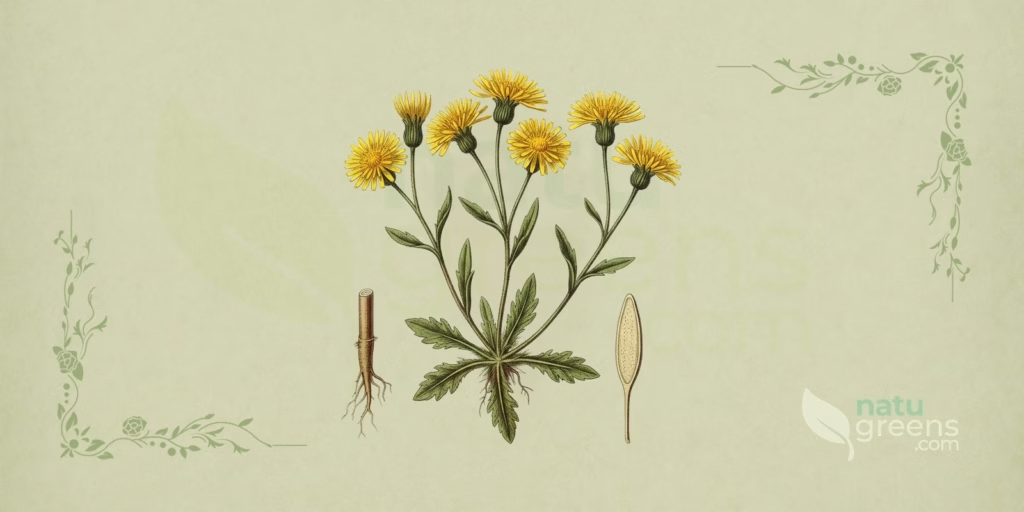
Ficaria verna Huds. / Lesser Celandine, commonly known as lesser celandine or pilewort, is a perennial herbaceous plant of the Ranunculaceae family, described by the English botanist William Hudson in 1762. Native to Europe, North Africa and the Caucasus, the species is recognized by its bright, glossy yellow flowers and heart-shaped leaves, which appear in late winter and early spring, when almost nothing else is flowering on the woodland floor, and for this reason it is seen in many countries as a sign that the season is arriving. European folk medicine has turned to it for centuries, above all in the traditional care of hemorrhoids and, in the past, as a source of vitamin C after winter, although its use calls for caution because the fresh plant contains toxic compounds.
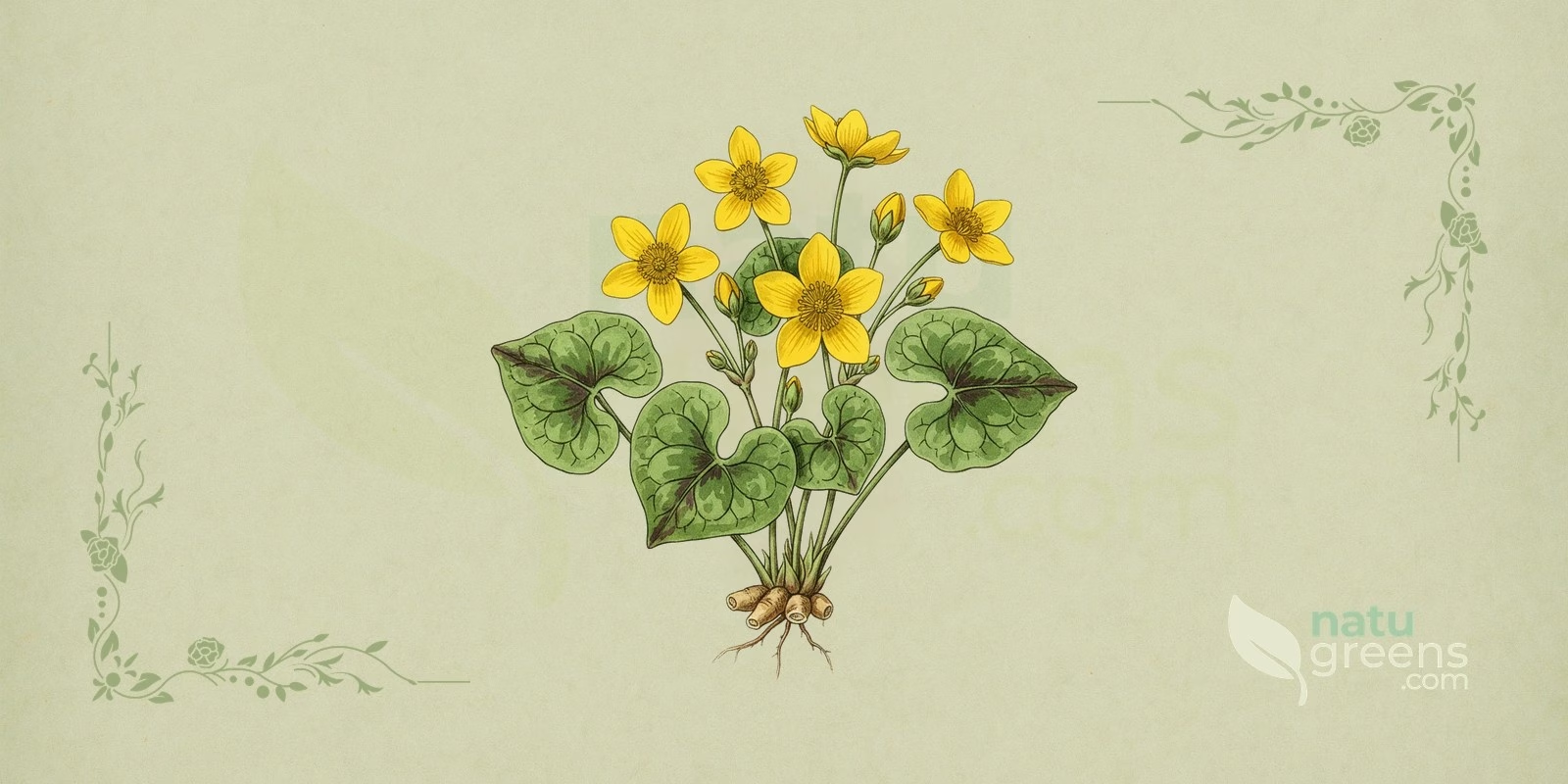
In herbal tradition, lesser celandine is also associated with the relief of skin complaints and circulatory problems. Its composition includes protoanemonin, an irritant substance that turns into non-toxic anemonin once the plant is dried or heated, as well as flavonoids and other phenolic compounds to which laboratory studies attribute antioxidant and antimicrobial activity. Modern research has already described some of these components and has also recorded a case of liver injury linked to the consumption of an extract of the plant, but there are still no clinical trials confirming its traditional uses, which makes correct processing and professional guidance basic conditions for any use of the species.
Popular and International Names of Lesser Celandine
- English: fig buttercup, lesser celandine, pilewort.
- French: ficaire fausse-renoncule, herbe aux hémorroïdes, petite chélidoine.
- German: Feigwurz, Frühlings-Scharbockskraut, Scharbockskraut.
- Italian: celidonia minore, erba da emorroidi, favagello.
- Portuguese: celidônia-menor, erva-das-hemorroidas.
- Spanish: celidonia menor, hierba de las almorranas, ranúnculo ficaria.
Botanical Synonyms of Ficaria verna
The best-known botanical synonym of Ficaria verna Huds. is Ranunculus ficaria L., the name given by Linnaeus and widely used before the species was reclassified in the genus Ficaria, a taxonomic change that reflects the complexity of botanical classification and the evolution of scientific knowledge about buttercups. Since many herbal and homeopathic texts still refer to the plant by its old name, it is worth knowing the synonyms recorded for the species, which are as follows:
- Ficaria nudicaulis A.Kern.
- Ficaria ranunculoides Roth
- Ranunculus ficaria L.
Botanical Family: Ranunculaceae
The Ranunculaceae family, known as the buttercup or crowfoot family, comprises about 2,500 species of flowering plants distributed across roughly 60 genera, found mainly in the temperate and cold regions of the Northern Hemisphere. The group is characterized by the presence of alkaloids and glycosides, many of them toxic, although some are also studied for their medicinal properties.
As a member of this family, lesser celandine shares features such as showy flowers and the presence of protoanemonin, the compound that makes the fresh plant toxic. The family includes other species of medicinal interest, such as monkshood (Aconitum napellus), one of the most toxic plants of the European flora, and goldenseal (Hydrastis canadensis), each with very different uses and levels of toxicity, and this chemical and morphological diversity goes hand in hand with the group’s adaptation to very different ecosystems.
Parts of Lesser Celandine Used
The parts used vary according to purpose, and in every case tradition requires the material to be dried or cooked before use, a step that removes the irritant protoanemonin present in the fresh plant.
- Aerial parts, leaves and flowers (dried or processed, mainly for external use)
- Tuberous roots (cooked, traditional food use)
- Young leaves (cooked, traditional food use)
Ethnobotanical and Traditional Uses
The uses below come from European folk medicine and are not equivalent to proven indications, serving only as a record of the plant’s historical role:
- Bleeding wounds and gums (external use)
- Hemorrhoid relief (external use, with the dried or processed plant)
- Skin problems such as scratches and warts (external use)
- Source of vitamin C (cooked young leaves, at the end of winter)
- Spring fatigue (old record)
Therapeutic Properties of Lesser Celandine
The properties listed summarize what tradition attributes to the plant and what some laboratory studies have observed, and none of them has been confirmed in clinical trials in humans.
- Analgesic (traditionally reported to ease local pain when applied externally)
- Anti-inflammatory (traditional record for external use, still little studied)
- Antimicrobial (activity against microorganisms observed in laboratory studies)
- Antioxidant (activity observed in the laboratory, linked to flavonoids and phenolic compounds)
- Antispasmodic (traditional record, not confirmed by studies)
- Astringent (contracts superficial tissues and vessels; the basis of its traditional external use for hemorrhoids)
- Diuretic (traditional record, without clinical confirmation)
- Expectorant (traditional record, without clinical confirmation)
- Laxative (traditional record, without clinical confirmation)
Detailed Phytochemical Profile of Lesser Celandine
Phytochemical studies on the species focus on the flowers and leaves, in which Polish researchers identified several flavonoids and found higher levels in the flowers than in the leaves, along with fractions of triterpenes and sterols in the lipophilic extracts of the flowers, described in the plant for the first time.
- Anemonin (non-toxic compound formed from protoanemonin through drying or heat)
- Flavonoids (including flavosativaside, nicotiflorin, orientin and vitexin)
- Phenolic compounds
- Protoanemonin (irritant lactone released from ranunculin when the tissues of the fresh plant are damaged)
- Sterols (identified in lipophilic extracts of the flowers)
- Triterpenes (identified in lipophilic extracts of the flowers)
- Vitamin C
In extracts of flowers and leaves collected in Romania, flavonoid content was correlated with the antioxidant activity measured in the laboratory, an interesting result for the development of formulations, but one that does not yet translate into a proven benefit for human health.
Preparation and Administration Forms of Lesser Celandine
One rule governs every form of preparation, which is never to use the fresh plant and to reserve dried or processed material mainly for external applications, leaving any oral use to situations supervised by a health professional.
- Cooking (young leaves and tuberous roots, traditional food use)
- Extract (with the dried or processed plant, external use or under professional guidance)
- Infusion (with the dried plant, oral use only with professional guidance)
- Ointment (with the dried or processed plant, external use)
- Poultice (with the dried or processed plant, external use)
- Tincture (with the dried or processed plant, use under professional guidance)
Synergy with Other Medicinal Plants
Vascular Health and Hemorrhoids
In traditional herbal medicine, lesser celandine is often combined, in preparations for external use, with horse chestnut (Aesculus hippocastanum) and witch hazel (Hamamelis virginiana), two plants also linked to the traditional care of hemorrhoids and varicose veins. Horse chestnut contains escin, a saponin studied for its action on capillary permeability, while witch hazel is rich in tannins with an astringent effect, and the three together are traditionally used to ease local discomfort, although no studies have evaluated this specific combination.
Vitamin C and Antioxidant Protection
Another combination found in traditional records brings together lesser celandine, echinacea (Echinacea purpurea) and dog rose, whose fruits are known as rose hips (Rosa canina), in reference to the old practice of eating the young leaves of lesser celandine as a source of vitamin C. Echinacea is known in tradition for its use in supporting the body’s defenses, and rose hips are a recognized source of vitamin C and other antioxidants, so this combination appears in herbal texts devoted to the end of winter. Because it assumes oral use, and lesser celandine should not be taken internally without professional guidance, the combination should only be considered under the supervision of a health professional.
Recipes and Usage Protocols of Lesser Celandine
Traditional Ointment for Hemorrhoids
Ingredients: 50 g of dried, powdered Ficaria verna, 200 ml of coconut oil or olive oil and 30 g of beeswax.
Preparation: Place the dried plant in the vegetable oil and leave it in a double boiler for 2 hours, then strain and discard the solids. Add the beeswax to the infused oil, heat gently until it melts, pour into a sterilized container and let it cool. According to traditional records, the ointment is applied to the affected external area 2 to 3 times a day to ease the discomfort of hemorrhoids, always prepared with the dried plant, the form in which protoanemonin has already turned into non-toxic anemonin. First do a test on a small area of skin and stop using it if burning, redness or irritation occurs.
Infusion of Dried Leaves (Traditional Use)
Ingredients: dried leaves of Ficaria verna, in the amount indicated by a health professional, and boiling water.
Preparation: In European tradition, the dried leaves were placed in a cup, covered with boiling water and left to steep, with the cup covered, for 5 to 7 minutes before straining, and the drink was associated with an intake of vitamin C and flavonoids at the end of winter. Because there is a report of acute liver injury after consumption of an extract of the plant and safety data for oral use are lacking, the amount, frequency and duration of this infusion should not be decided on your own: consult a health professional before any internal use and never use fresh leaves.
The preparations above follow traditional records and do not replace professional guidance. Before any internal use, check the contraindications and interactions described in this article.
Associated Therapies
Phytotherapy
In phytotherapy, lesser celandine is valued for the astringent, anti-inflammatory and venotonic properties that tradition attributes to it, and it appears mainly in topical preparations traditionally used for hemorrhoids, varicose veins and other inflammatory skin conditions. Contemporary phytotherapy favors extracts of known origin, made with dried or processed material in which the protoanemonin has already been neutralized, but clinical trials confirming the efficacy of these products are still lacking, and research on extraction and application methods remains at an early stage.
Homeopathy
In homeopathy, Ficaria verna, also listed as Ranunculus ficaria, is used in very high dilutions, and homeopathic repertories indicate it for hemorrhoids, anal fissures and other venous complaints, according to the principle of similars. The preparation starts from the fresh plant, but the process of dilution and potentization leaves practically no molecule of the original substance in the final product, which is why it does not carry the toxicity of the plant; on the other hand, there is no scientific evidence that these preparations have any effect beyond placebo. Anyone who chooses homeopathy as a complementary approach, in acute or chronic conditions, should do so with professional supervision and without forgoing medical assessment of persistent symptoms.
Contraindications and Side Effects of Lesser Celandine
General Contraindications
Fresh Ficaria verna is toxic because it contains protoanemonin, an irritant and toxic substance that disappears with drying or cooking and which, if ingested, can cause irritation of the skin and mucous membranes, nausea, vomiting, dizziness, spasms and paralysis. For this reason, never use the fresh (raw) plant, internally or externally, because of the risk of severe irritation of the skin, mucous membranes and digestive tract. Only the dried or properly processed plant is traditionally considered safe for external use, and even this should not be taken orally without professional guidance.
Do not use lesser celandine during pregnancy or breastfeeding, periods for which there are no adequate safety studies, or in children, for whom data are also lacking. People with pre-existing liver disease should avoid any preparation for internal use, as there is a case report of acute liver injury, with causality considered probable, in a woman who had been taking an extract of the plant for about ten days for hemorrhoids, with a rapid fall in liver enzymes after she stopped. Stop use in case of local irritation and seek medical evaluation for persistent, bleeding or very painful hemorrhoids, which may have other causes and require diagnosis.
Common Side Effects
When the plant is used fresh or poorly processed, the most frequently reported adverse effects are gastrointestinal irritation, contact dermatitis and allergic reactions, and applying fresh preparations to the skin can cause blisters and rashes in sensitive people. Drying or cooking converts protoanemonin into non-toxic anemonin, which explains why tradition considers only the dried or processed plant safe for external use; even so, dried preparations can still irritate sensitive skin, and oral use may carry a risk to the liver, as the case report cited above shows.
Drug Interactions
No detailed information on specific drug interactions of Ficaria verna was found in the literature reviewed. Even so, given its phytochemical composition, its potential biological activity and the report of liver toxicity, people taking medications, especially anticoagulants or drugs for liver disease, should consult a health professional before using any preparation of the plant, as should anyone already using ointments or other products for hemorrhoids.
Historical Notes and Interesting Facts
The Doctrine of Signatures
Ficaria verna is a classic example of the Doctrine of Signatures, an old belief according to which plants resembling parts of the human body or signs of disease would serve as remedies for them. The knobbly root tubers of lesser celandine resemble hemorrhoids, and this similarity led to its traditional use for the condition and earned it the English common name “pilewort”, from piles, the popular term for hemorrhoids, and wort, an old word for plant.
A Plant of Early Spring
In Europe, lesser celandine is considered one of the first signs of spring, with bright yellow flowers that appear in late winter and early spring. It is a spring ephemeral, a plant that flowers and completes its cycle before the trees come into leaf, a strategy that lets it make the most of the light still reaching the forest floor. Ecological studies have also shown that the flowers close in low light, on cloudy days or at night, a behavior that protects the pollen from being washed away by rain and preserves its viability.
The German Name and Scurvy
The German name Scharbockskraut comes from Scharbock, an old term for scurvy, and recalls the custom of eating the cooked young leaves as a source of vitamin C after long winters with few fresh greens, one of the oldest food records linked to the plant.
Traces at a Prehistoric Site
Excavations at the Mesolithic site of Staosnaig, on the Scottish island of Colonsay, identified remains of lesser celandine tubers among the plant remains, a sign that the roots of the plant were already being used by human groups thousands of years ago.
Poetic Inspiration
The beauty of lesser celandine inspired several writers, among them William Wordsworth, who devoted three poems to the flower, and it also appears in works by C. S. Lewis and D. H. Lawrence, almost always linked to the arrival of spring and the idea of renewal.
An Invasive Species in North America
Introduced to North America, lesser celandine became invasive in woodlands of the northern United States and southern Canada, where it forms dense carpets in early spring and is considered a threat to native understory flora.
Frequently Asked Questions about Lesser Celandine
Is Lesser Celandine Safe to Consume?
Fresh Ficaria verna is toxic and should be neither eaten nor applied to the skin, because it contains protoanemonin. With drying or cooking, this substance turns into non-toxic anemonin, which is why tradition considers only the dried or properly processed plant safe, mainly for external use. Oral use should not be undertaken without professional guidance, since there is a report of acute liver injury associated with the consumption of an extract of the plant.
Which Parts of the Plant Are Used Medicinally?
In the past, the cooked young leaves were eaten as a source of vitamin C, and the cooked tuberous roots were used as food. For medicinal purposes, tradition mainly uses the aerial parts, leaves and flowers, always after they have been dried or processed to remove the protoanemonin, and almost always in preparations for external use.
Is Lesser Celandine Traditionally Used for Hemorrhoids?
Yes, Ficaria verna has a long history of traditional use for hemorrhoids, which explains the name pilewort, mainly in ointments or external compresses made with the dried or processed plant. Tradition attributes this use to the astringent and anti-inflammatory properties of the plant, but there are no clinical trials confirming the benefit, and persistent, bleeding or very painful hemorrhoids need medical evaluation.
Are There Side Effects or Contraindications?
Yes, the fresh plant is toxic and can cause severe irritation of the skin, mucous membranes and digestive tract, so it should never be used raw, either internally or externally. Lesser celandine should not be used during pregnancy or breastfeeding, use should be stopped in case of local irritation, and anyone taking other medications should consult a health professional before turning to any preparation.
Are Lesser Celandine and Greater Celandine the Same Plant?
No, lesser celandine (Ficaria verna) belongs to the Ranunculaceae family, while greater celandine (Chelidonium majus) belongs to the Papaveraceae, the poppy family. Lesser celandine is low-growing, with bright yellow flowers bearing many petals and heart-shaped leaves, whereas greater celandine is taller, has four-petaled yellow flowers and releases an orange latex when cut. The two have different uses and phytochemical profiles, and both have reports of liver toxicity, which underlines the need for professional guidance.
Can Fresh Lesser Celandine Be Used on the Skin?
No, the fresh (raw) plant should not be used either internally or externally, because protoanemonin can cause severe irritation, blisters and rashes on the skin and mucous membranes. Only the dried or properly processed plant is traditionally considered safe for external use, and even then it is advisable to test it first on a small area and to stop use in case of local irritation.
Notice: this content is for informational purposes and does not replace professional medical advice. Consult a physician or herbal practitioner before using medicinal plants, especially during pregnancy, breastfeeding, or alongside medication.
References and Scientific Studies
View All 13 Cited References
Peer-Reviewed Scientific Studies (7)
- PMC2012 Hădărugă NG. Ficaria verna Huds. extracts and their β-cyclodextrin supramolecular systems. Chem Cent J. 2012.
- PMC2025 Prokop P, et al. Floral Closure in Lesser Celandine (Ficaria verna) Protects Anthers from Pollen Flushing and Preserves Pollen Viability. Plants (Basel). 2025.
- PMC2002 Tomczyk M, et al. Composition of lipophylic extracts from Ficaria verna HUDS. flowers. Rocz Akad Med Bialymst. 2002.
- PMC2002 Tomczyk M, et al. Flavonoids from Ficaria verna Huds.. Z Naturforsch C J Biosci. 2002.
- PMC2003 Tomczyk M, et al. Quantitative analysis of flavonoids in the flowers and leaves of Ficaria verna Huds.. Z Naturforsch C J Biosci. 2003.
- PMC2015 Yilmaz B, et al. Lesser celandine (pilewort) induced acute toxic liver injury: The first case report worldwide. World J Hepatol. 2015.
- PMC2015 Yilmaz B, et al. Lesser celandine (pilewort) induced acute toxic liver injury: The first case report worldwide. World J Hepatol. 2015.
Supplementary Readings (6)
- 2010 Axtell AE, et al. Lesser Celandine (Ranunculus ficaria): A Threat to Woodland Habitats in the Northern United States and Southern Canada. Invasive Plant Science and Management. 2010.
- 1996 Chevallier A. The Encyclopedia of Medicinal Plants. DK. 1996.
- 1971 Grieve M. A Modern Herbal. Dover Publications. 1971.
- 2021 Inci S, et al. Antimicrobial and Antioxidant effect of Ficaria verna Huds.. Yuzuncu Yil University Journal of Agricultural Sciences. 2021.
- 2021 Karpiuk V, et al. Total phenolic and flavonoid content, antioxidant activity of Ficaria verna. Scientific Journal of Polonia University. 2021.
- 2001 Mithen S, et al. Plant use in the Mesolithic: Staosnaig, Isle of Colonsay, Scotland. Journal of Archaeological Science. 2001.