Haematoxylum campechianum L. / Logwood, also known as bloodwood tree or campeche logwood, is a small to medium-sized tree belonging to the Fabaceae family. Native to southern Mexico and northern Central America, above all the Yucatán Peninsula, Belize and Guatemala, the species was carried to the Caribbean and to other tropical regions, where it became naturalized.
Historically, logwood played a crucial role in the global economy, being the main source of dye for textiles from the 17th to the 19th century. Beyond its dyeing value, the plant has a rich history of use in traditional medicine, with recognized, studied therapeutic properties. Its wood is dense and dark, a characteristic that gives it the popular name “bloodwood” due to the reddish color of its heartwood.
Popular and International Names of Logwood
- English: blackwood, bloodwood tree, bluewood, campeachy tree, campeachy wood, campeche logwood, campeche wood, Jamaica wood, logwood.
- Spanish: campeche, palo de campeche, palo de tinte.
- Portuguese: campeche, pau-campeche, pau-de-campeche, pau-de-sangue, pau-de-tinta.
- French: bois de campêche, campêche, hématoxyle campêche.
- Italian: campeggio, legno campeggio.
- German: Blauholzbaum, Campecheholz.
Botanical Synonyms of Logwood
The scientific name Haematoxylum campechianum L. is widely accepted; however, the botanical literature records some synonyms. One of the most notable is Cymbosepalum baronii Baker, which reflects historical taxonomic variations or reclassifications. Understanding these synonyms is fundamental for accurate research and identification of the species in different scientific and historical contexts.
Botanical Family: Fabaceae

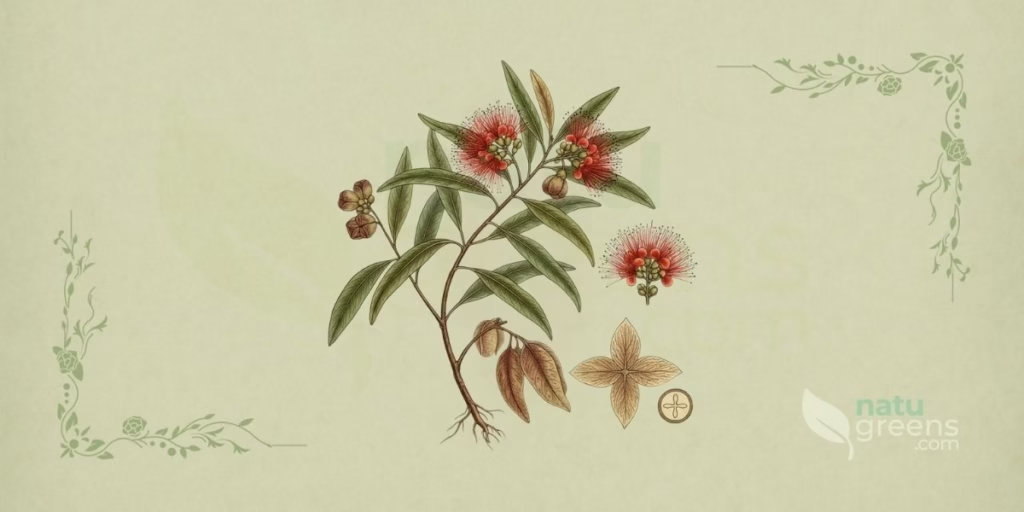
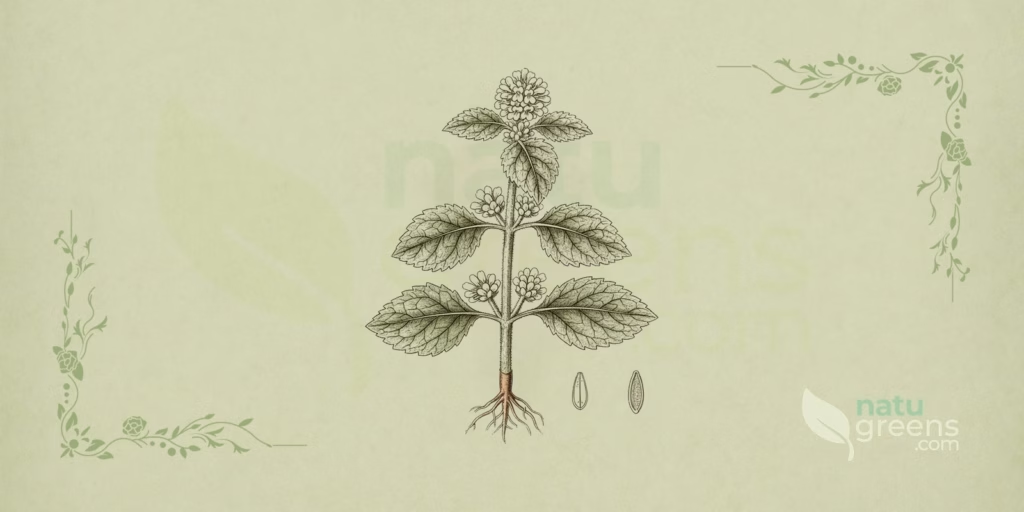
Botanical illustration of Haematoxylum campechianum L. (logwood, bloodwood tree), a small to medium-sized tree of the Fabaceae family, native to southern Mexico, showing the complete plant with alternate leaves, yellowish flowers, and pod-shaped fruits, in 19th-century botanical encyclopedia style on a herbarium paper background.
Logwood belongs to the vast Fabaceae family, also known as Leguminosae, one of the largest families of flowering plants. This family is characterized by the presence of pod-shaped fruits and by the ability of many of its species to fix nitrogen in the soil, enriching it.
Within the Fabaceae, Haematoxylum campechianum is classified in the subfamily Caesalpinioideae, the same group as brazilwood and the flamboyant tree, and not in the subfamily Faboideae, the subfamily that beans, peas and soybeans belong to. The Caesalpinioideae also take in a wide range of ornamental and medicinal species.
Parts of Logwood Used
- Bark
- Flowers
- Heartwood (wood)
- Leaves
Ethnobotanical and Traditional Uses of Logwood
- Amenorrhea and anemia (decoction of stems and/or leaves)
- Astringent and tonic
- Blood purification
- Cancerous and gangrenous ulcers (topical application)
- Colds
- Diarrhea and dysentery
- Dye for textiles and paper
- Dysmenorrhea
- Fever
- Headaches
- Infections
- Leukorrhea (historical record of use as a vaginal irrigation, a practice now discouraged: douching upsets the vaginal flora, and abnormal discharge calls for gynecological assessment)
- Relief of intestinal colic
- Rheumatism
- Stomach problems
- Wounds and skin ulcers (as an astringent disinfectant)
Therapeutic Properties of Logwood
- Analgesic (relieves pain)
- Antibacterial (fights bacteria); traditional use, without established clinical efficacy
- Anti-inflammatory (reduces inflammation)
- Antimycobacterial (fights mycobacteria)
- Antioxidant (fights free radicals)
- Antiproliferative, under study (effect observed on cell lines in the laboratory, with no established application in cancer treatment)
- Antipyretic (reduces fever)
- Antiviral (fights viruses); traditional use, without established clinical efficacy
- Anxiolytic (reduces anxiety); traditional use, without established clinical efficacy
- Astringent (contracts tissues and blood vessels)
- Hypoglycemic (lowers blood sugar); traditional use, without established clinical efficacy
- Neuroprotective (protects the nervous system); traditional use, without established clinical efficacy
- Sedative (induces sleep and relaxation)
- Spasmolytic (relieves muscle spasms)
- Tonic (invigorates and strengthens the body)
Detailed Phytochemical Profile of Logwood
- Alkaloids
- Chalcones
- Flavonoids (including quercetins)
- Gallotannins (including 2,6-bis-O-digalloyl-3-O-galloylglucose and 2-O-trigalloyl-1,3,4,6-tetrakis-O-galloylglucose)
- Glycosides
- Hematoxylin
- Homoisoflavonoids
- Lignans
- Phenolics (including the 5′-O-methyl-7′-ethyl ester of p-dehydrodigallic acid)
- Resins
- Saponins
- Tannins
Preparation and Administration Forms of Logwood
- Decoction
- Extract
- Infusion
Synergy with Other Medicinal Plants
Combinations for Gastrointestinal Disorders
Logwood, with its astringent and antispasmodic properties, can be combined with plants such as chamomile (Matricaria chamomilla) or peppermint (Mentha × piperita) to enhance the relief of intestinal colic, diarrhea, and dysentery. The synergy between the tannins of logwood and the anti-inflammatory compounds of other herbs can offer a more comprehensive treatment for digestive disorders.
Topical Applications for Wounds and Inflammation
For the treatment of wounds and skin ulcers, logwood can be paired with plants with recognized healing and anti-inflammatory properties, such as calendula (Calendula officinalis) or aloe (Aloe vera). The astringent action of logwood aids healing, while the other plants contribute to tissue regeneration and the reduction of local inflammation.
Recipes and Usage Protocols of Logwood
Compresses for Skin Ulcers
Ingredients: 20 grams of heartwood chips or dried logwood bark, 500 ml of water.
Preparation: Prepare a concentrated decoction by boiling the chips or bark in the water for 20 to 25 minutes. Strain and let cool until lukewarm. Soak clean gauze compresses in the decoction and apply to clean superficial scrapes and wounds for 15 to 20 minutes, two to three times a day, for no more than five days. Ulcers that do not heal, wounds with discharge, odor, darkened edges, or worsening pain, and any lesion in a person with diabetes or poor circulation, require immediate medical evaluation and must not be treated at home. The astringent and antibacterial properties of logwood aid the cleaning and healing of mild superficial lesions.
Decoction for Diarrhea and Dysentery
Ingredients: 10 to 15 grams of heartwood chips or dried logwood bark, 500 ml of water.
Preparation: Place the chips or bark in the water and bring to a boil. Boil for 15 to 20 minutes. Remove from the heat, strain, and let cool. Consume 1 cup (approximately 150 ml) up to three times a day, for no more than two days, always alongside oral rehydration. Diarrhea with blood, high fever, persistent vomiting, or signs of dehydration call for immediate medical care, and the preparation must not be given to young children or to older adults. This decoction is traditionally used to fight diarrhea and dysentery due to its astringent properties, which help reduce intestinal inflammation and secretion.
Leaf Infusion for Fever
Ingredients: 5 grams of dried logwood leaves, 250 ml of boiling water.
Preparation: Place the leaves in a cup and add the boiling water. Cover and let steep for 10 minutes. Strain and consume warm. This infusion is employed in traditional medicine to help reduce fever, taking advantage of the plant’s antipyretic and tonic properties. Consumption of one cup, twice a day, is recommended for no more than two days. Fever that lasts beyond 48 hours, rises above 39 °C, or comes with a stiff neck, shortness of breath, confusion, or blotches on the skin calls for immediate medical care.
Associated Therapies
Clinical Phytotherapy
In clinical phytotherapy, logwood has no standardized extracts and no established dosage: the extract manufactured on an industrial scale is intended for use as a histological and food dye. Tradition employs decoctions and infusions of the plant for gastrointestinal conditions such as chronic diarrhea and dysentery (conditions that require medical diagnosis and care), and as an adjuvant in anti-inflammatory therapies. With no validated dosage available, the amount and the form of use should be set by a healthcare professional, taking into account the patient’s specific condition and the possibility of drug interactions. Preclinical research continues to investigate the plant’s compounds in cell lines and animal models, with no established indication in oncology or neurology.
Homeopathy
Logwood is not part of the reference homeopathic materia medica, and no established homeopathic preparation is described from Haematoxylum campechianum. Any uses occasionally attributed to the plant in this context are not backed by clinical studies demonstrating effectiveness. The uses described in this article belong to traditional phytotherapy, not to homeopathic preparations.
Contraindications and Side Effects of Logwood
Common Side Effects
The side effects of logwood are generally rare and mild when it is used at the recommended doses. However, high doses or prolonged use can cause gastrointestinal irritation, manifested as nausea, vomiting, or abdominal discomfort. Topical application on sensitive skin may, in isolated cases, cause irritation or allergic reactions. It is always advisable to start treatment with low doses and observe the individual response.
Drug Interactions
Logwood can interact with anticoagulant medications, such as warfarin, due to the presence of tannins that can reduce the absorption of the drug and destabilize its effect. In addition, the plant’s astringent properties may theoretically reduce the absorption of other orally administered medications. An interval of at least two hours between the ingestion of logwood and other drugs is recommended. Always consult a healthcare professional before combining logwood with any medication.
General Contraindications
The use of Haematoxylum campechianum is contraindicated in individuals with known hypersensitivity to any component of the plant. Pregnant and breastfeeding women should avoid its consumption due to the absence of safety studies proving its harmlessness for the fetus or baby. People taking oral anticoagulants should space out the doses, since the tannins can reduce absorption of the drug and undermine the control of anticoagulation, with a risk of thrombosis. No data indicates that the plant increases bleeding risk.
Interesting Facts about Logwood
Hematoxylin: From Dye to Science
Hematoxylin, a compound extracted from logwood, transcended its use as a textile dye to become an indispensable tool in science. Today, it is widely used in histology to stain tissue samples in laboratories, allowing the visualization of cellular structures and facilitating the diagnosis of diseases. Hematein, the product of its oxidation, combined with a mordant, stains cell nuclei from blue to purple, which is fundamental to the hematoxylin and eosin (H&E) staining technique, a gold standard in pathology.
Historical Importance as a Dye
Logwood was, for centuries, one of the most valuable sources of natural dye in the world. From the 17th to the 19th century, its wood was intensely exploited and exported to Europe, where it was used to dye textiles in colors ranging from brown to red, purple, and black, depending on the extraction process and the mordants employed. This demand drove the economy of regions such as Belize, which developed from timber extraction camps established by the English.
Natural pH Indicator
Beyond its applications as a dye and in histology, logwood extract has an interesting property: it acts as a natural pH indicator. Under neutral conditions, it shows a brownish color. In acidic environments, it turns yellowish-red, while under alkaline conditions it takes on a purple hue. This characteristic demonstrates the chemical versatility of the plant and its potential for various applications, including simple chemistry experiments.
The Fight for the “Black Gold”
The exploitation of logwood generated significant conflicts. Spain claimed control of the lands where the tree grew, while the English, Dutch, and French established illegal camps to cut and collect the wood. These confrontations, often violent, involved buccaneers and pirates, who frequently joined the woodcutters to attack Spanish ships. The “black gold” of logwood was thus a catalyst for territorial and maritime disputes in Central America.
The Scientific Name and Its Roots
The scientific name Haematoxylum campechianum is quite descriptive. The term “Haematoxylum” derives from the Greek “haima” (blood) and “xylon” (wood), referring to the intense reddish color of the tree’s heartwood, which resembles blood. “Campechianum”, in turn, alludes to the Campeche region of Mexico, where the plant is native and where its exploitation was historically prominent. This etymology reflects both the striking visual characteristic of the wood and its geographical origin.
Frequently Asked Questions about Logwood
What Is Logwood and What Is It Used For?
Logwood (Haematoxylum campechianum) is a tree native to southern Mexico and northern Central America, historically famous for being a source of natural dye. However, it is also used in traditional medicine for its astringent, anti-inflammatory, antibacterial, and anxiolytic properties, being employed in the treatment of diarrhea, colic, fever, and skin inflammation.
What Are the Main Active Compounds of Logwood?
The main active compound of logwood is hematoxylin, responsible for its color and its use in histology. In addition, the plant is rich in tannins, flavonoids, gallotannins, homoisoflavonoids, and chalcones, which contribute to its various therapeutic properties, such as antioxidant, anti-inflammatory, and antispasmodic actions.
Does Logwood Have Contraindications or Side Effects?
Yes, logwood is contraindicated for people with hypersensitivity to the plant, and for pregnant and breastfeeding women. It should be used with caution by individuals with coagulation disorders or those taking anticoagulants, due to the risk of interaction. In high doses, it can cause gastrointestinal irritation. It is essential to consult a healthcare professional before starting use.
How Is Logwood Traditionally Prepared?
Traditionally, logwood is prepared mainly by decoction of the wood, bark, or leaves for internal use (teas for diarrhea, colic) or external use (compresses for wounds). It can also be found in the form of extracts and leaf infusions. The form of preparation depends on the desired therapeutic purpose.
Is It Possible to Grow Logwood at Home?
Logwood is a tropical tree that requires specific climate and soil conditions. Although it is possible to grow it in regions with a suitable climate (hot and humid), its growth is slow and it can reach considerable sizes. It is generally cultivated on a large scale for commercial purposes (extraction of dye and hematoxylin) or in reforestation projects in its natural habitat.
Notice: this content is for informational purposes and does not replace professional medical advice. Consult a physician or herbal practitioner before using medicinal plants, especially during pregnancy, breastfeeding, or alongside medication.
References and Scientific Studies
View All 9 Cited References
Peer-Reviewed Scientific Studies (4)
- PEER2024 Chablé-Vega, M. A., et al. (2024). The logwood tree extract serves as a contemporary source of hematoxylin, a key dye in the globally prevalent hematoxylin-eosin staining method. Biotechnic & Histochemistry.
- PEER2022 Escobar-Ramos, A., et al. (2022). Anxiolytic effect of the heartwood of Haematoxylum campechianum L. and sappanchalcone in an in vivo model in mice. Journal of Ethnopharmacology.
- PEER1996 Kandil, F. E., et al. (1996). Gallotannins and flavonoids from Haematoxylon campechianum. Phytochemistry.
- PEER1999 Kandil, F. E., et al. (1999). Phenolics and flavonoids from Haematoxylon campechianum. Phytochemistry.
Supplementary Readings (5)
- 2017 Escobar-Ramos, A., et al. (2017). Homoisoflavonoids and Chalcones Isolated from Haematoxylum campechianum L., with Spasmolytic Activity. Molecules.
- 2021 Euan-Tun, J. L., et al. (2021). Haematoxylum campechianum – en Campeche, México. Redalyc.
- 1999 Facey, P. C., et al. (1999). Investigation of plants used in Jamaican folk medicine for anti-bacterial activity. Journal of Pharmacy and Pharmacology.
- 1977 Hikino, H., et al. (1977). Antiinflammatory principles of Caesalpinia sappan wood and of Haematoxylon campechianum wood. Planta Medica.
- 2020 Sobeh, M., et al. (2020). Haematoxylon campechianum Extract Ameliorates Neuropathic Pain via Inhibition of NF-κB/TNF-α/NOX/iNOS Signalling Pathway in a Rat Model of Chronic Constriction Injury. Biomolecules.