Nymphaea caerulea Savigny / Blue Lotus, popularly known as the blue lily of the Nile or the sacred lotus of Egypt, is a perennial aquatic plant of the Nymphaeaceae family. This species, described by Savigny, is native to much of the eastern half of Africa and some regions of southern Arabia. The blue lotus has been revered since antiquity, especially in Ancient Egypt, where it played a central role in religious rituals and medicinal practices. Its flowers, of an ethereal blue-violet, emerge gracefully above the water, opening during the day and closing at night.
The plant is valued for its therapeutic and psychoactive properties, which have been the object of interest both in ethnobotany and in modern scientific research. Historically, it was used to promote relaxation, relieve anxiety, and induce states of mild euphoria. The rich phytochemical composition of Nymphaea caerulea includes aporphine alkaloids, notably nuciferine and, in low and variable amounts, apomorphine, which are responsible for many of its effects. Contemporary research seeks to validate and better understand the mechanisms of action of these compounds, consolidating the blue lotus as a plant of great medicinal potential.
Popular and International Names of Blue Lotus
- English: blue lotus, blue Egyptian lotus, blue water lily, sacred blue lily.
- Spanish: loto azul, lirio azul del Nilo.
- Portuguese: lótus-azul, lírio-azul-do-Nilo, lótus-sagrado-do-Egito.
- French: lotus bleu, nymphéa bleu.
- Italian: loto blu, ninfea blu.
- German: Blauer Lotus, Ägyptischer Lotus.
Botanical Synonyms of Blue Lotus
The most common botanical synonym for Nymphaea caerulea is Nymphaea nouchali var. caerulea. This taxonomic variation reflects the close relationship with other species of the genus Nymphaea, but maintains the distinction for the specific bluish form. Although the nomenclature may vary across different botanical databases, Nymphaea caerulea is widely recognized and used in scientific and popular literature to describe this aquatic plant.
Botanical Family: Nymphaeaceae
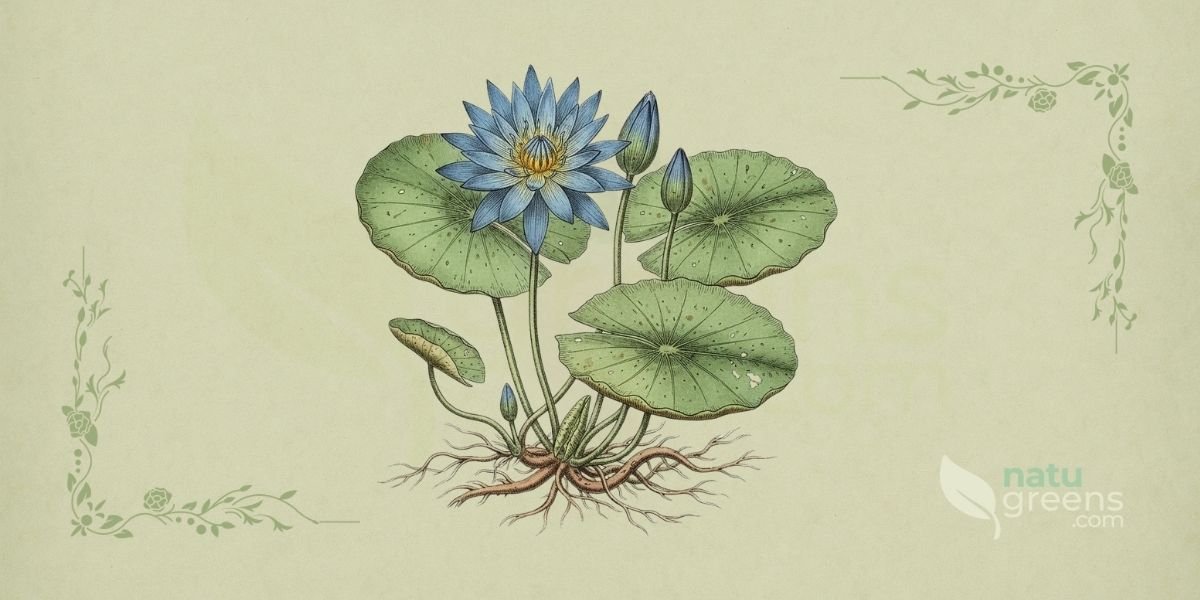
Botanical illustration of Nymphaea caerulea Savigny (blue lotus, blue lily of the Nile), a perennial aquatic plant of the Nymphaeaceae family described by Savigny, native to Africa and Arabia, showing an ethereal blue-violet flower emerging from the water, with delicate petals and a prominent yellow center, rounded floating leaves, and a submerged rhizome, in 19th-century botanical encyclopedia style on a herbarium paper background. The image highlights the beauty and structure of the flower, the central element of its historical and medicinal use.
The Nymphaeaceae family, to which Nymphaea caerulea belongs, is a group of aquatic plants known as water lilies. The popular name blue lotus is well established, but the botanical lotus belongs to the genus Nelumbo, in a different family. This family is characterized by its large, showy flowers that float on or emerge above the water’s surface. The Nymphaeaceae are considered one of the oldest groups of angiosperms, with a global distribution in tropical and temperate regions. They play an important ecological role in aquatic ecosystems, providing habitat and food for various species.
Many species of this family have cultural and religious significance in various civilizations, such as the blue lotus in Ancient Egypt. The floral structure and the adaptation to the aquatic environment are distinctive characteristics of the Nymphaeaceae. The family is studied for its phytochemical properties and for its potential use in various applications, including traditional medicine and the ornamentation of water gardens.
Parts of Blue Lotus Used
- Flowers
- Rhizomes
Ethnobotanical and Traditional Uses of Blue Lotus
- Aphrodisiac effects
- Induction of mild euphoria
- Induction of vivid dreams (a contemporary claim, with no record in the historical Egyptian sources)
- Promotion of relaxation
- Relief of anxiety and nervousness
- Use in religious rituals and ceremonies (Ancient Egypt)
Therapeutic Properties of Blue Lotus
- Anti-inflammatory (reduces inflammation)
- Antioxidant (fights free radicals)
- Anxiolytic (reduces anxiety); traditional use, without established clinical efficacy
- Calming (promotes relaxation)
- Psychoactive (alters the mental state)
Detailed Phytochemical Profile of Blue Lotus
- Alkaloids (nuciferine and, in low and variable amounts, apomorphine)
- Anthocyanins
- Fatty acids
- Flavonoids (quercetin, kaempferol, myricetin)
- Glycosides
- Phenols
- Saponins
Preparation and Administration Forms of Blue Lotus
- Fluid extract
- Infusion (tea)
- Tincture
Synergy with Other Medicinal Plants
Enhancement of Relaxation
Nymphaea caerulea can be combined with plants such as valerian (Valeriana officinalis) or passionflower (Passiflora incarnata) to intensify the relaxing and anxiolytic effects. This synergy can be useful for people seeking deeper relief from stress and insomnia. The combination of the blue lotus alkaloids with the sedative compounds of other plants can create a more pronounced calming effect, which does not amount to an absence of adverse effects: the plant itself can cause drowsiness, dizziness, and nausea.
Mood and Well-Being Improvement
In traditional use, the blue lotus appears alongside adaptogenic herbs such as Rhodiola rosea or ginseng (Panax ginseng) in preparations aimed at general well-being. This combination aims to balance the nervous system and optimize the body’s response to stress. It is important to emphasize that any combination should be made with caution and, preferably, under the guidance of a healthcare professional.
Recipes and Usage Protocols of Blue Lotus
Infusion for Relaxation
Ingredients: 1 to 2 teaspoons of dried Nymphaea caerulea flowers, 200 ml of boiling water.
Preparation: Place the flowers in a cup and add the boiling water. Cover and let steep for 5 to 10 minutes. Strain and drink. This infusion is ideal for promoting relaxation, relieving anxiety, and preparing the body for sleep. It can be consumed 30 minutes before bedtime or in moments of stress during the day. The effects can vary from person to person.
Traditional Flower Tincture
Ingredients: 10 to 20 grams of dried Nymphaea caerulea flowers, 200 ml of grain alcohol (40-60%).
Preparation: Place the flowers in a dark glass jar and cover them with the alcohol. Seal tightly and let macerate for 2 to 4 weeks in a cool, dark place, shaking daily. Strain and store the tincture in a dropper bottle. The recommended dosage is 10 to 30 drops, diluted in water, following traditional use. It is crucial to start with a low dose to assess individual sensitivity and avoid excess.
Associated Therapies
Aromatherapy
Although the essential oil of Nymphaea caerulea is not as common as that of other plants, the aroma of the flowers can be used in aromatherapy practices. Inhaling the perfume of the blue lotus, whether through diffusers or diluted massage oils, can promote a state of calm and meditation. Its aromatic components contribute to stress reduction and to the creation of an environment conducive to deep relaxation. Aromatherapy with blue lotus is a subtle way to integrate its benefits.
Clinical Phytotherapy
In clinical phytotherapy, Nymphaea caerulea can be considered for the treatment of mild anxiety disorders and insomnia, and as an adjuvant to improve mood. There are no standardized extracts of Nymphaea caerulea and no clinical trials establishing an effective dose, and the alkaloid content varies widely between commercial products, which makes the response unpredictable from one batch to another. Prescription should be made by a qualified healthcare professional, who will consider the patient’s condition, possible drug interactions, and the appropriate dosage to avoid adverse effects. Phytotherapy offers a natural, personalized approach.
Contraindications and Side Effects of Blue Lotus
Common Side Effects
The most common side effects include drowsiness, dizziness, and, at high doses, nausea, but there are clinical reports of acute poisoning after ingestion, with mental confusion, agitation, hallucinations, and changes in blood pressure and heart rate that required emergency care. Some users may experience changes in perception or states of euphoria that can be undesirable in certain situations. It is essential not to operate machinery or drive vehicles after consuming blue lotus, especially during the first uses, until the individual reaction to the plant is known. Moderation and attention to the body’s signals are essential for safe use.
General Contraindications
Nymphaea caerulea is contraindicated for pregnant or breastfeeding women due to the lack of conclusive studies on its safety in these groups. Individuals with a history of psychiatric disorders, such as schizophrenia or bipolar disorder, should avoid its use due to its psychoactive effects. People using medications that affect the central nervous system, such as sedatives or antidepressants, should consult a doctor before using blue lotus to avoid adverse interactions. For the same reason, do not combine blue lotus with alcoholic drinks: alcohol adds to the plant’s sedative effect. The plant is also not recommended for children.
Historical Notes and Interesting Facts about Blue Lotus
Divine Symbol in Ancient Egypt
Nymphaea caerulea was a symbol of great religious and cultural importance in Ancient Egypt. Associated with the god Nefertem, deity of beauty, healing, and perfumes, the flower represented creation, rebirth, and life after death. Its ability to open its petals at sunrise and close them at dusk was seen as a cycle of renewal, linking it to the sun and eternal life. Fragments of the flower were found in pharaonic tombs, including that of Tutankhamun, evidencing its use in funerary rituals and its connection to the divine.
Use in Rituals and Festivities
Beyond its religious symbolism, the blue lotus was widely used in festivities and banquets in Ancient Egypt. It is believed that the flowers were macerated in wine to create a beverage with euphoric, relaxing effects, which intensified the participants’ experience. Paintings and hieroglyphs frequently depict people holding or inhaling the aroma of the flowers, suggesting their role in celebrations and as an element of pleasure and spiritual connection. The plant was an essential component of Egyptian social and religious life.
Frequently Asked Questions about Blue Lotus
What Is Blue Lotus Tea?
Blue lotus tea is an infusion prepared from the dried flowers of the Nymphaea caerulea plant. It is known for its relaxing, mildly psychoactive properties, and is traditionally used to relieve stress, promote sleep, and induce a state of calm. The beverage has a mild, floral flavor, and its effects are attributed mainly to the alkaloids present in the flowers, such as nuciferine and, in low and variable amounts, apomorphine. It is a popular way of consuming the plant.
What Are the Effects of Blue Lotus Tea?
The effects of blue lotus tea include deep relaxation, anxiety reduction, mood improvement, and, in some people, a slight euphoria or altered perception. It can also help improve sleep quality and is associated with the induction of vivid dreams, a contemporary claim, with no record in the historical Egyptian sources. The effects vary depending on the dosage and individual sensitivity. It is important to note that, although it is considered mild, it can cause drowsiness and dizziness, especially at higher doses. Caution is recommended.
Is Blue Lotus Tea Legal?
The legality of blue lotus tea varies according to the country and local legislation. In many places, Nymphaea caerulea is legal to buy and consume, but in others, it may be restricted or prohibited due to its psychoactive effects. It is essential to check the laws of your country or region before purchasing or consuming blue lotus products. Misinformation about legality can lead to problems, so prior research is essential to ensure compliance.
How Do I Prepare Blue Lotus Tea?
To prepare blue lotus tea, use 1 to 2 teaspoons of dried flowers for every 200 ml of boiling water. Let the flowers steep for 5 to 10 minutes, strain, and serve. For a more intense flavor, you can slightly increase the steeping time, without going beyond the indicated quantity of flowers. Avoid boiling the flowers directly, as this can degrade the active compounds. The tea can be consumed hot or cold, according to personal preference.
Are There Side Effects to Blue Lotus Tea?
Yes, blue lotus tea can cause side effects, especially at high doses. The most common are drowsiness, dizziness, and nausea. Due to its sedative effects, it is not advisable to consume the tea before driving or operating machinery. Pregnant or breastfeeding women, and people with pre-existing medical conditions or taking other medications, should consult a healthcare professional before use. Moderation is the key to minimizing risks and enjoying the plant’s benefits safely.
Notice: this content is for informational purposes and does not replace professional medical advice. Consult a physician or herbal practitioner before using medicinal plants, especially during pregnancy, breastfeeding, or alongside medication.
References and Scientific Studies
Peer-Reviewed Scientific Studies (3)
- PMC2008 Agnihotri, V. K., Elsohly, H. N., Khan, S. I., Smillie, T. J., Khan, I. A., & Walker, L. A. (2008). Antioxidant constituents of Nymphaea caerulea flowers. Phytochemistry, 69(10), 2061-2066.
- PMC2017 Poklis, J. L., Mulder, H. A., Halquist, M. S., Wolf, C. E., Poklis, A., & Peace, M. R. (2017). The blue lotus flower (Nymphaea caerulea) resin used in a new type of electronic cigarette, the re-buildable dripping atomizer. Journal of Psychoactive Drugs, 49(3), 175-181.
- PEER1999 Fossen, T., Larsen, Å., Kiremire, B. T., & Andersen, Ø. M. (1999). Flavonoids from blue flowers of Nymphaea caerulea. Phytochemistry, 51, 1133-1137.
Institutional Sources (1)
- GOV2025 Berkeley News. (2025). Investigating the psychedelic blue lotus of Egypt, where ancient magic meets modern science. Berkeley News.
Supplementary Readings (2)
- 2024 Nutho, B., & Tungmunnithum, D. (2024). Anti-aging potential of the two major flavonoids occurring in Asian water lily using in vitro and in silico molecular modeling assessments. Antioxidants, 13(5), 601.
- 2023 Schimpf, M., Ekins, S., Page, R., & Gunn, J. K. L. (2023). Toxicity from blue lotus (Nymphaea caerulea) after ingestion. Military Medicine, 188(7-8), e2689.