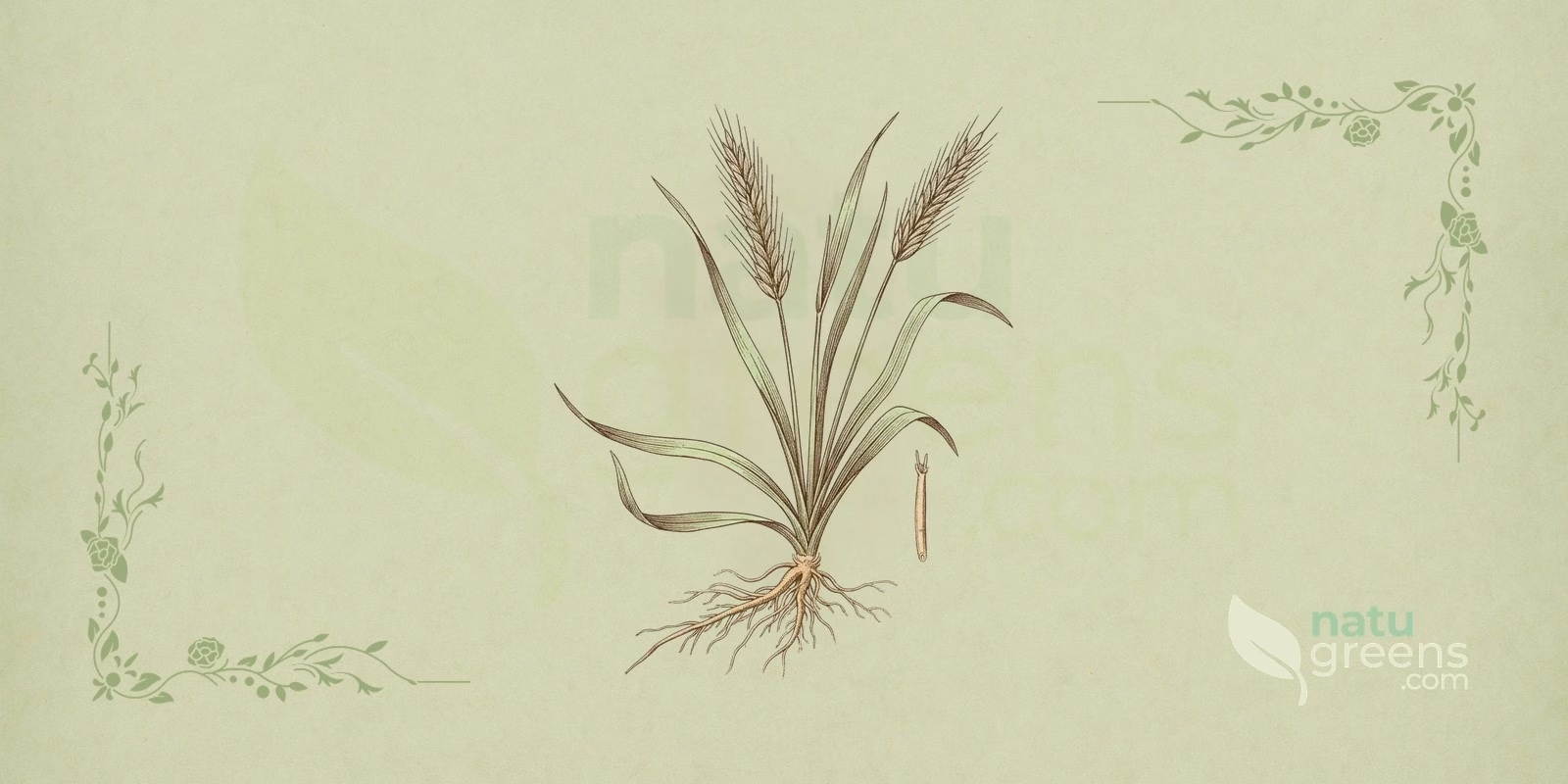
Elymus repens (L.) Gould / Couch Grass, commonly known as couch grass, quackgrass or dog grass, is a very common perennial grass native to much of Europe and Asia, to Arctic regions and to northwest Africa, characterized by creeping rhizomes that account for its rapid growth and the ease with which it spreads. Although it is treated as a weed in many agricultural settings, couch grass has a long history of use in traditional European medicine, which values it above all for its rhizome, employed for centuries in the preparation of teas and decoctions.
In the herbal tradition, the plant is linked mainly to complaints of the urinary system, but the records of its use also extend to digestive discomfort and to mild inflammatory conditions. Its phytochemical composition, which includes triticin, essential oil, mucilages and mineral salts, is associated by tradition with diuretic, anti-inflammatory and demulcent actions, of which the diuretic effect is the best recognized. Modern research has examined some of these uses, mostly in laboratory and animal studies, with results that remain limited and without clinical trials confirming the folk indications, which keeps couch grass within the realm of traditional use and calls for attention to the contraindications described further on.
Popular and International Names of Couch Grass
- English: common couch, couch grass, dog grass, quackgrass, quick grass, quitch grass, scutch grass, twitch grass, witchgrass.
- Spanish: grama, grama canina, grama de trigo, grama rastrera.
- Portuguese: grama, grama-de-cachorro, grama-francesa.
- French: chiendent, chiendent officinal, chiendent rampant.
- Italian: gramigna, gramigna comune.
- German: Ackerquecke, Kriech-Quecke, Quecke.
Botanical Synonyms of Elymus repens
The most common botanical synonyms of Elymus repens are Agropyron repens (L.) P.Beauv., Elytrigia repens (L.) Desv. ex Nevski and Triticum repens L., names that reflect the different taxonomic classifications the species has received over the history of botany, as the genera of the tribe Triticeae were gradually redefined. Although Elymus repens is the name adopted in this article and in a large share of current taxonomic databases, the synonyms remain very present in the scientific and popular literature, especially in older texts, and many pharmacological studies of the plant, including some quite recent ones, still identify it as Agropyron repens.
Botanical Family: Poaceae
Elymus repens belongs to the Poaceae family, formerly called Gramineae, one of the largest and most important families of flowering plants, which includes cereals such as wheat, rice and corn, along with numerous forage and ornamental grasses. Plants in this family generally have stems (culms) that are hollow between the nodes, long and narrow leaves and inflorescences arranged in spikes or panicles, a pattern that couch grass follows with its slender, upright spikes. Many Poaceae species are of great economic importance, and some of them, like couch grass, also carry a long history of use in traditional medicine.
Parts of Couch Grass Used
- Leaves
- Rhizomes (underground stems)
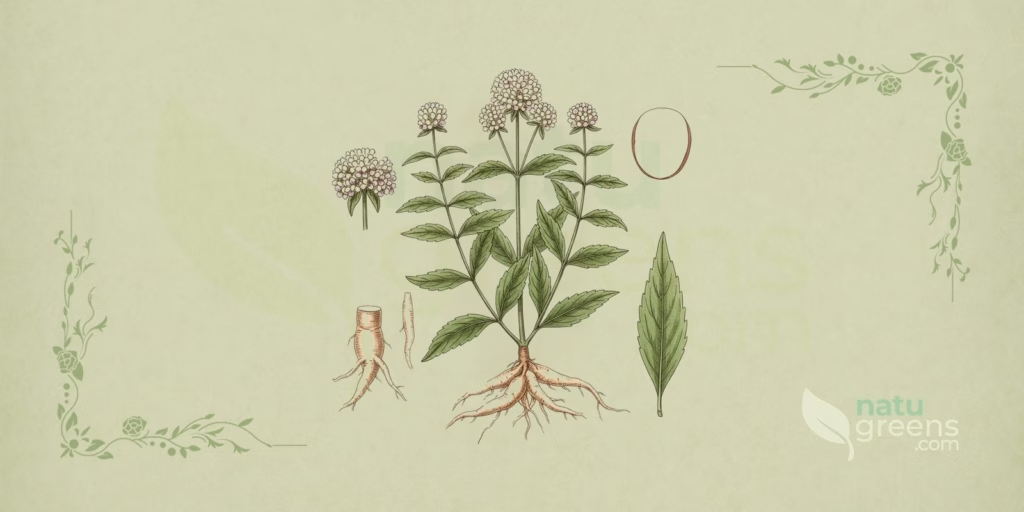
The rhizome is the part with the strongest medicinal tradition and is usually dried and cut into pieces for the preparation of teas and decoctions. It is often called a root, although it is in fact an underground stem that branches beneath the soil and gives rise to new shoots. The leaves also appear among the parts used, but they play a secondary role compared with the rhizome in the records of folk medicine.
Ethnobotanical and Traditional Uses
The items below gather uses recorded in European folk medicine and in traditional herbalism, which document how the plant has been used over time, but they are not equivalent to indications with proven clinical efficacy, nor do they replace medical diagnosis and treatment.
- Bladder inflammation
- Bronchial irritation
- Constipation
- Cough
- Crude herbal drug in Austrian folk medicine
- Cystitis
- Digestive discomfort
- Fever
- Fluid retention
- General-purpose diuretic
- High blood pressure (folk use, which does not replace medical treatment)
- Incense in medieval Europe
- Kidney stones (recorded in tradition as diuretic support, with no clinical proof)
- Prostatitis
- Urethritis
Therapeutic Properties of Couch Grass
- Anti-inflammatory (activity investigated in laboratory assays, without clinical confirmation)
- Antipyretic (traditionally recorded use in feverish states)
- Aperitive (stimulation of appetite and digestion, according to tradition)
- Demulcent (mucilages that, according to tradition, soothe and protect the mucous membranes)
- Depurative (traditional concept of cleansing the body, with no defined clinical counterpart)
- Diuretic (increase in urine volume, an effect recognized in traditional use)
- Emollient (softens and moisturizes the skin in external applications, according to tradition)
- Hypocholesterolemic (effect attributed by tradition, not proven in humans)
- Hypoglycemic (effect attributed by tradition and investigated only in preliminary research, not proven in humans)
- Urinary antiseptic (traditional record; laboratory studies are investigating reduced adhesion of bacteria to bladder cells)
Of the properties listed, the diuretic action is the one with the strongest support in traditional use, while the others rest on folk records or on laboratory and animal studies. In an in vitro assay with human bladder cells, a rhizome extract and a coumaric acid ester isolated from it reduced the adhesion of uropathogenic Escherichia coli, an interesting finding that has not yet been tested in people. A study in rats, on the other hand, found no positive effect of couch grass infusion on the main risk factors for calcium oxalate stones, a result that reinforces the need for caution toward promises related to kidney stones.
Detailed Phytochemical Profile of Couch Grass
- Agropyrene
- Capillene
- Carvacrol
- Essential oil
- Flavonoids
- Mineral salts (iron, potassium, silica)
- Mucilages
- Phenolic acids
- Saponins
- Triticin
Triticin, a fructan similar to inulin, is one of the most characteristic carbohydrates of the rhizome, while agropyrene and capillene are among the components described in the essential oil of the plant. A chemical analysis of rhizome tea identified at least 20 characteristic phenolic compounds, most notably caffeoylquinic and feruloylquinic esters, followed by coumaric, caffeic and ferulic acids and the flavonoid hesperidin, along with sugars, organic acids and amino acids such as tryptophan, which helps explain why the tea remains the most thoroughly studied form of use.
Preparation and Administration Forms of Couch Grass
- Compresses
- Decoction
- Extract
- Poultice
- Syrup
- Tea (infusion)
- Tincture
Tea and decoction made from the dried rhizome are the most traditional preparations, whereas tinctures, extracts and syrups depend on a standardized formulation and should be used under the guidance of a healthcare professional, who will determine the appropriate amount. Poultices and compresses correspond to the external use recorded by tradition, and any form of internal use calls for attention to the contraindications and drug interactions described below.
Synergy with Other Medicinal Plants
Digestive Problems
In the herbal tradition, couch grass is combined with lemon balm (Melissa officinalis) or peppermint (Mentha piperita) in teas traditionally used to ease colic and flatulence, a combination that brings together plants credited with carminative and antispasmodic effects. According to this traditional record, the compounds of each plant would work together to calm the digestive tract and reduce the formation of gas, although no clinical studies have specifically evaluated this blend.
Urinary Problems
Tradition pairs couch grass with bearberry (Arctostaphylos uva-ursi) or field horsetail (Equisetum arvense) in preparations traditionally used as support for mild urinary complaints, adding the diuretic action of the grass to the antiseptic and anti-inflammatory properties attributed to the other plants. Since this is a combination of diuretic plants, the restrictions described under Contraindications, such as heart or kidney failure and the use of diuretics or lithium, apply with even greater weight, and bearberry has limitations of its own, such as use for short periods only, so this combination does not replace medical treatment of a urinary tract infection or of kidney stones.
Cough and Bronchial Irritation
Combined with common mallow (Malva sylvestris) or greater plantain (Plantago major), couch grass is part of preparations traditionally used to soothe coughs and irritation of the throat and bronchi, based on the demulcent and expectorant effect that tradition attributes to the blend. According to this record, the mucilages present in these plants form a protective layer over the mucous membranes and reduce local irritation, but a persistent cough, fever or shortness of breath calls for medical evaluation before any homemade preparation.
Recipes and Usage Protocols of Couch Grass
Traditional Diuretic Rhizome Tea
Ingredients: 1 tablespoon of dried couch grass rhizomes and 500 ml of water.
Preparation: Place the rhizomes in the cold water, bring to the heat and let them boil for 10 minutes; then turn off the heat, cover and leave to steep for another 10 minutes before straining. The traditional record suggests drinking 2 to 3 cups a day, between meals, and the tea can be sweetened with honey. This preparation is traditionally used as diuretic support in mild urinary complaints and does not replace a medical evaluation, since a urinary tract infection with fever, pain on urination or blood in the urine requires a consultation, and anyone with heart or kidney failure should not use it without medical supervision.
Concentrated Rhizome Decoction
Ingredients: 2 tablespoons of dried couch grass rhizomes and 1 liter of water.
Preparation: Boil the rhizomes in the water for 15 to 20 minutes, strain and divide the liquid into small portions to be taken over the course of the day. In folk records, this decoction is traditionally used as diuretic support by people with a history of small kidney stones, but a study in rats found no positive effect of the infusion on the main risk factors for these stones, and any suspected kidney stone should be assessed by a doctor before plants are used.
The preparations above follow traditional records and do not replace professional guidance. Before any internal use, check the contraindications and interactions described in this article.
Associated Therapies
Phytotherapy
Phytotherapy is the main practice associated with couch grass, which appears in it in a range of preparations, with teas, tinctures and extracts being the most common forms of administration, used above all as support for mild urinary, digestive and inflammatory complaints. The traditional phytotherapeutic approach seeks to make use of the bioactive compounds of the plant as a complement to health care, always paying attention to the contraindications and drug interactions described in this article and without replacing medical diagnosis and treatment.
Homeopathy
Although it is not a particularly well-known homeopathic remedy, couch grass appears in some homeopathic formulations under the name Triticum repens, and its application may focus on urinary or inflammatory complaints, depending on the school and practice of the homeopath. Homeopathy works with minimal doses of substances in order, according to its own principles, to stimulate the body’s capacity for self-regulation, but this efficacy has not been proven by scientific studies, and the plant may be included in individualized protocols only as a complement to medical follow-up.
Contraindications and Side Effects of Couch Grass
General Contraindications
Couch grass (Elymus repens) has a recognized diuretic effect and is therefore contraindicated in heart or kidney failure without medical supervision, because of the risk of electrolyte imbalance. People with a grass allergy (Poaceae) should avoid the plant, since allergic reactions can range from contact dermatitis to more serious systemic manifestations. Do not use during pregnancy and lactation without guidance: as there is not enough information on its safety during these stages, the prudent course is to avoid use and consult a doctor before taking any preparation during pregnancy or breastfeeding. For children, there are likewise not enough safety data, and any use depends on pediatric guidance.
Common Side Effects
Side effects of couch grass are usually rare and mild, and in some people its consumption may cause minor gastrointestinal disturbances, such as nausea or abdominal discomfort. Excessive use, precisely because of its diuretic action, can lead to dehydration and electrolyte imbalance, so it is advisable to maintain an adequate fluid intake, respect the traditional amounts and stop use at the first sign of any adverse reaction. If fever, pain on urination, colicky pain or blood in the urine appear during use, seek medical care, because these signs may indicate a condition that requires specific diagnosis and treatment.
Drug Interactions
Because of its diuretic effect, couch grass may add its action to that of diuretic medications, increasing potassium loss and the risk of electrolyte imbalance, which is why caution is needed with diuretics and with lithium, whose excretion may be altered. Some texts mention the presence of coumarins in the plant, in smaller amounts than in other species, which suggests prudence for people taking anticoagulants, given the possibility that the effect of these drugs could be potentiated. Since tradition also attributes a hypoglycemic action to the plant, people taking diabetes medication should monitor their blood glucose closely, and in all these cases the recommendation is to consult a healthcare professional before starting use, especially for anyone already taking other long-term medications.
Historical Notes and Interesting Facts
Couch grass is known as an invasive weed in many parts of the world, yet it has a history of medicinal use that goes back centuries, and the same ability to spread quickly through its rhizomes that makes it such a challenge for farmers and gardeners also makes it a hardy plant that is plentiful at harvest time. In some cultures, the rhizome was even eaten in times of scarcity, ground into a kind of flour, and there are records of its use as incense in medieval Europe.
Several of its common names refer to dogs, such as grama-de-cachorro in Portuguese, dog grass in English and grama canina in Spanish, while the French chiendent combines the words chien (dog) and dent (tooth). In modern agriculture, controlling the plant remains so difficult that researchers have even tested lasers to remove it from crop fields, while geneticists are transferring chromosome segments from the species into wheat in search of resistance to Fusarium head blight, a disease caused by fungi of the genus Fusarium.
Frequently Asked Questions about Couch Grass
Is Couch Grass Safe for Everyone?
No, couch grass is not safe for everyone, because people with a grass allergy (Poaceae) should avoid the plant, and its use is contraindicated in heart or kidney failure without medical supervision, because of the risk of electrolyte imbalance. During pregnancy and breastfeeding, the plant should not be used without guidance, since conclusive studies on its safety during these stages are lacking, and people taking diuretics, lithium, anticoagulants or diabetes medication also need to be cautious and to have professional follow-up because of possible interactions.
Why Should People with Heart or Kidney Problems Be Careful?
Couch grass has a recognized diuretic effect, and the increase in urine volume can alter the balance of electrolytes such as potassium, which is especially risky for people with heart or kidney failure. For this reason, the plant is contraindicated in these cases without medical supervision, and the same caution applies to anyone taking diuretics or lithium, whose excretion may be altered.
Which Parts of Couch Grass Are Used?
The part with the strongest medicinal tradition is the rhizome, an underground stem often mistaken for a root, which is dried and cut into pieces for the preparation of teas and decoctions. The leaves also appear among the parts used, but they play a secondary role compared with the rhizome in the records of folk medicine.
What Is the Best Way to Take Couch Grass?
The most common and traditional form is a tea or decoction prepared with the dried rhizomes, which are precisely the preparations whose chemical composition has been studied the most. Tinctures and extracts are also options, but they should be used under the guidance of a healthcare professional, who will determine the amount and assess safety, while poultices and compresses correspond to the external use that tradition records for some skin conditions.
Does Couch Grass Work for Kidney Stones?
Its use for kidney stones is a folk medicine record linked to the diuretic action of the plant, but it has no clinical proof, and a study in rats found no positive effect of the infusion on the main risk factors for calcium oxalate stones. Anyone who has or suspects they have kidney stones needs a medical evaluation, and the plant does not replace that follow-up.
Can Couch Grass Help with Weight Loss?
Although the diuretic action of couch grass can lead to fluid loss and, as a result, to a temporary reduction in body weight, the plant is not considered a long-term solution for weight loss, and excessive use for this purpose increases the risk of dehydration and electrolyte imbalance. Healthy and sustainable weight loss depends on a balanced diet and physical activity, and any use of medicinal plants for this purpose should be supervised by a healthcare professional.
Notice: this content is for informational purposes and does not replace professional medical advice. Consult a physician or herbal practitioner before using medicinal plants, especially during pregnancy, breastfeeding, or alongside medication.
References and Scientific Studies
- PMC2024 Andreasen C, et al. Laser weeding: opportunities and challenges for couch grass (Elymus repens (L.) Gould) control. Scientific Reports. 2024.
- PMC2017 Beydokthi SS, et al. Traditionally used medicinal plants against uncomplicated urinary tract infections: Hexadecyl coumaric acid ester from the rhizomes of Agropyron repens (L.) P. Beauv. with antiadhesive activity against uropathogenic E. coli. Fitoterapia. 2017.
- PMC2022 Bortolami M, et al. Metabolic Profile of Agropyron repens (L.) P. Beauv. Rhizome Herbal Tea by HPLC-PDA-ESI-MS/MS Analysis. Molecules. 2022.
- PMC1995 Grases F, et al. Effect of Herniaria hirsuta and Agropyron repens on calcium oxalate urolithiasis risk in rats. Journal of Ethnopharmacology. 1995.
- PMC2026 Saparkhanovich ZK, et al. Elymus repens (L.) Gould Phytochemistry Pharmacological Activities and Therapeutic Potential with Future Perspectives. International Journal of Molecular Sciences. 2026.
- PMC2013 Vogl S, et al. Ethnopharmacological in vitro studies on Austria’s folk medicine: an unexplored lore in vitro anti-inflammatory activities of 71 Austrian traditional herbal drugs. Journal of Ethnopharmacology. 2013.
- PMC2013 Zeng J, et al. Molecular cytogenetic analysis of wheat-Elymus repens introgression lines with resistance to Fusarium head blight. Genome. 2013.