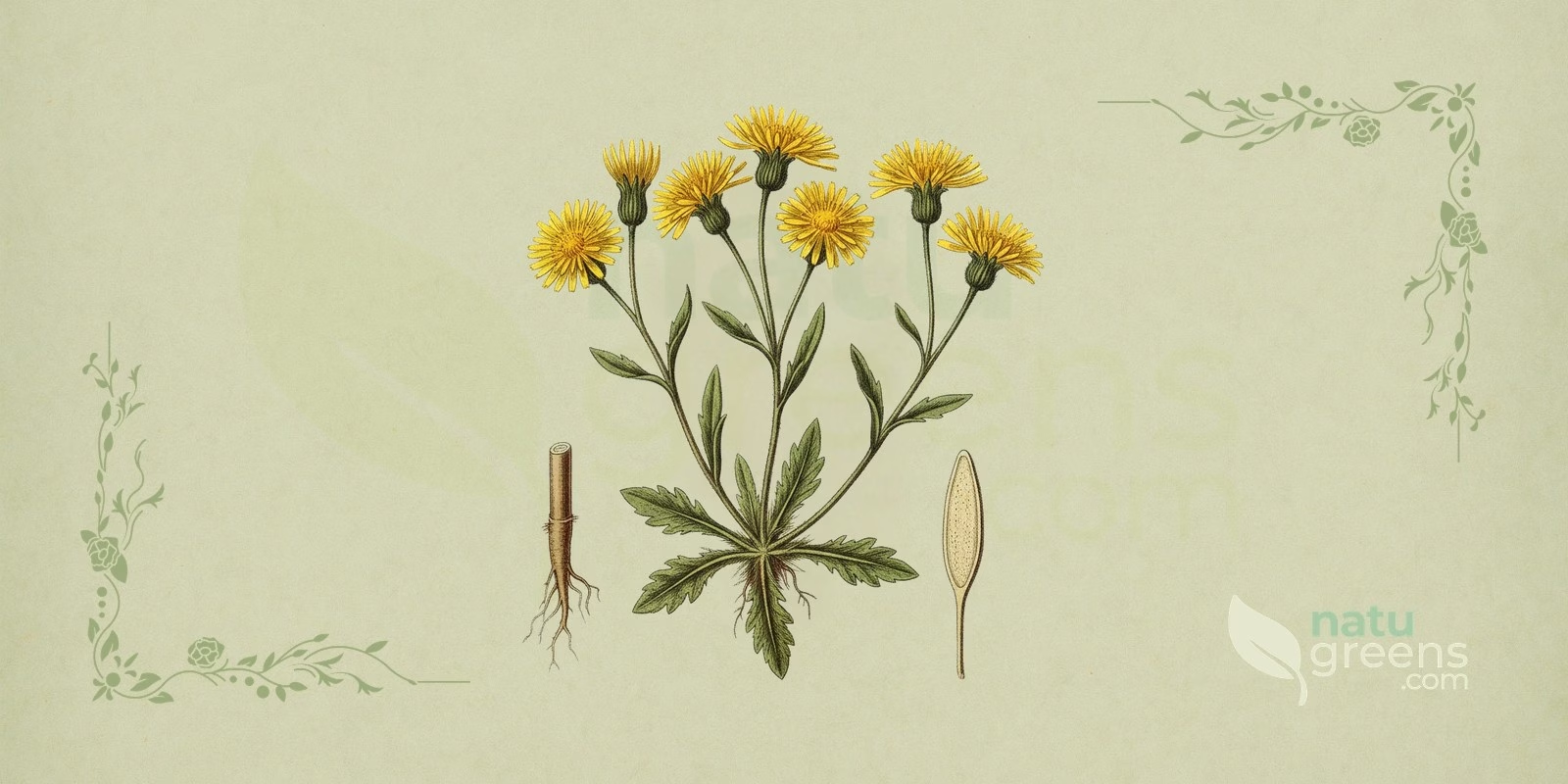
Pilosella officinarum Vaill. / Mouse-Ear Hawkweed, also known simply as hawkweed in some regions, is a perennial herbaceous plant of the Asteraceae family, native to Europe and northern Asia. It is easy to recognize by its yellow flowers and its hairy leaves, which give it a velvety texture. Throughout history, traditional European medicine valued mouse-ear hawkweed above all as a diuretic and mild astringent, and also credited it with an anti-inflammatory action. The plant still appears in a range of herbal preparations today.
Adapted to dry, sunny soils, this distinctive plant has been the subject of phytochemical studies that identified bioactive compounds such as umbelliferone and several triterpenoids. Its use dates back to the Middle Ages, when it was employed to support the body’s eliminative functions, especially those of the kidneys. Despite its hardiness and the ease with which it spreads, mouse-ear hawkweed retains a medicinal profile that places it among the plants of interest for research.
Popular and International Names of Mouse-Ear Hawkweed
- English: hawkweed, mouse ear hawkweed, mouse-ear hawkweed, mouseear hawkweed.
- French: épervière piloselle, herbe à l’épervier, oreille de rat, oreille de souris, piloselle, veluette.
- German: Gewöhnliches Habichtskraut, Kleines Habichtskraut, Langhaariges Habichtskraut, Mausohrhabichtskraut.
- Italian: orecchio di topo, pelosella, pilosella, sparviere pelosetto.
- Portuguese: orelha-de-lebre, orelha-de-rato, pilosela, pilosela-das-boticas.
- Spanish: árnica, cepillo, hierba de la salud, oreja de ratón, pilosela, vellosilla, velosilla.
Botanical Synonyms of Pilosella officinarum
Pilosella officinarum Vaill. has a long list of botanical synonyms, reflecting the taxonomic complexity of the group and the reclassifications the species has undergone over time. The most common and widely recognized synonym is Hieracium pilosella L., still frequent in both scientific and popular literature. Hieracium velutinum Hegetschweiler and Pilosella officinarum subsp. velutina (Hegetschweiler) Fuchs, in turn, designate variants or subspecies. Knowing these names is essential for identifying the plant accurately in different botanical and pharmacological contexts, not least because much of the chemical research on it was published under the name Hieracium pilosella.
The full list covers a number of historical and regional names, such as Hieracium albofloccosum (Nägeli & Peter) Prain, Hieracium kemulariae Üksip, Hieracium leucopsilon Arv.-Touv., Hieracium melanops (Peter) J.Weiss, Hieracium obscurisquamum (Nägeli & Peter) Prain, Hieracium paradoxum Kem.-Nath., Hieracium tricholepium (Nägeli & Peter) Prain, Hieracium trichosoma (Peter) J.Weiss, Pilosella angustella Norrl., Pilosella melanops (Peter) Dostál, Pilosella micradenophora Dostál, Pilosella tricholepia (Nägeli & Peter) Dostál and Pilosella urnigera Norrl. Although rarely used today, these names remain important for historical research and for anyone following the taxonomic history of the species.
Botanical Family: Asteraceae
Pilosella officinarum belongs to the Asteraceae family, formerly called Compositae, one of the largest and most diverse families of flowering plants. The group is characterized by flower heads (capitula), in which many small flowers cluster together to form a structure that resembles a single flower. Within the family, mouse-ear hawkweed belongs to the tribe Cichorieae, the same tribe as the dandelion. The Asteraceae as a whole are distributed worldwide and include many species of great economic, culinary and medicinal importance, such as chamomile, lettuce and sunflower.
The family also stands out for its rich phytochemical makeup, which brings together a wide range of bioactive compounds, such as essential oils, flavonoids and sesquiterpene lactones. These compounds account for the medicinal interest of many of its species in herbal medicine. This chemical and morphological diversity helps explain the group’s adaptability and its ecological success in highly varied habitats around the world.
Parts of Mouse-Ear Hawkweed Used
- Flowering aerial parts
- Leaves
- Roots
The traditional recipes described in this article use the dried aerial parts of the plant, which also form the basis of tinctures and of most commercially available preparations.
Ethnobotanical and Traditional Uses
Pilosella officinarum has a long history in European folk medicine, which used it for a variety of complaints, from respiratory problems to gastrointestinal disorders. Its use as a diuretic was the most valued, with the traditional aim of promoting fluid elimination and supporting kidney and urinary function.
Among the most frequently cited ethnobotanical uses are its application to skin conditions such as inflammation and wounds, its role in gastric and intestinal complaints such as diarrhea, and its use for urinary discomfort such as that caused by cystitis. Tradition also turned to the plant as an expectorant and antitussive in cases of asthma, bronchitis, common cough and whooping cough. There are also reports of its use to curb heavy menstrual bleeding and coughing up blood. These records show the breadth of its historical use, but they do not replace medical care, because asthma, coughing up blood, cystitis, heavy menstrual bleeding and whooping cough are conditions that today require professional diagnosis and follow-up.
Therapeutic Properties of Mouse-Ear Hawkweed
- Anti-inflammatory (traditional record, with an action investigated only in preliminary studies)
- Antioxidant (activity measured in plant extracts, in laboratory studies)
- Antiseptic (antimicrobial activity observed in laboratory studies, without clinical evidence)
- Antispasmodic (traditional record of relief from colic and spasms)
- Antitussive (traditional record of cough relief)
- Astringent (tightens surface tissues, the basis of its traditional use in mild diarrhea and minor wounds)
- Diuretic (increase in urine volume described in tradition and assessed in an animal study)
- Expectorant (traditional record of helping to clear mucus)
- Wound-healing (traditional use on minor wounds, without clinical evidence)
Detailed Phytochemical Profile of Mouse-Ear Hawkweed
The phytochemical profile of Pilosella officinarum is complex and diverse, and part of it helps explain the traditional uses attributed to the plant. Among the most studied compounds is umbelliferone (7-hydroxycoumarin), a coumarin thought to play a part in the diuretic and anti-inflammatory actions, although this link still awaits confirmation. As early as the 1950s, French researchers tested pilosella extract and 7-hydroxycoumarin itself against cultures of bacteria of the genus Brucella, in laboratory experiments on their antibacterial potential. Coumarins form a broad group that includes substances with anti-inflammatory and, in some cases, anticoagulant activity. This may explain some of the traditional uses and warrants caution in people taking anticoagulants.
In addition to umbelliferone, the plant is rich in triterpenoids, with taraxasterol among the main constituents identified by chromatographic methods. Other 4,4-dimethyl phytosterols, such as alpha- and beta-amyrin, taraxerol and fern-7-en-3beta-ol, are also present and are being investigated for possible anti-inflammatory and hepatoprotective effects, still unconfirmed in humans.
The plant also contains flavonoids and phenolic acids, whose total content has been quantified in analytical studies. Another study developed a specific method to measure the caffeoylquinic acid derivatives present in the plant. The antioxidant activity of these extracts has been confirmed in laboratory assays, a promising result that nonetheless does not amount to a proven protective effect in the human body.
Preparation and Administration Forms of Mouse-Ear Hawkweed
- Capsules
- Dried extract
- Fluid extract
- Tea (infusion)
- Tincture
Tinctures and mother tinctures of the plant have already been analyzed for the content and stability of their constituents, a relevant safeguard because the concentration of active compounds can vary considerably between products, batches and preparation methods.
Synergy with Other Medicinal Plants
Urinary Health
Because of its traditional use as a diuretic, Pilosella officinarum is often combined, in folk herbal medicine, with other plants associated with the urinary tract. The most frequently cited combination brings together bearberry (Arctostaphylos uva-ursi), known for its urinary antiseptic action, and field horsetail (Equisetum arvense), traditionally used as a diuretic and remineralizing herb. Tradition uses these formulas as support for mild urinary discomfort and fluid elimination. Cystitis, urethritis and kidney stones, however, require medical diagnosis and care. In addition, each plant in the formula has its own contraindications; bearberry, for example, is not intended for prolonged use.
Respiratory Support
For respiratory complaints, mouse-ear hawkweed appears in blends with expectorant plants and herbs with an anti-inflammatory tradition. Ivy (Hedera helix), whose saponins are associated with thinning mucus, and thyme (Thymus vulgaris), with a long antiseptic and antispasmodic tradition, would complement the antitussive role attributed to mouse-ear hawkweed in preparations used as support for mild coughs and bronchitis. Asthma, shortness of breath and persistent cough call for medical evaluation. As for ivy, it should only be used in products formulated for internal use, since the raw plant can be toxic.
Recipes and Usage Protocols of Mouse-Ear Hawkweed
Traditional Diuretic Infusion
Ingredients: 1 tablespoon of dried aerial parts of Pilosella officinarum and 250 ml of boiling water.
Preparation: Place the herb in a cup, pour in the boiling water, cover and leave to infuse for 10 to 15 minutes; then strain and drink warm, preferably between meals. Before use, consult a healthcare professional to set the daily amount and duration of use, as robust long-term safety studies are lacking. Tradition uses this infusion for fluid retention, but persistent swelling in the legs or face may point to a heart or kidney problem and requires medical evaluation.
Traditional Tincture for the Urinary Tract
Ingredients: 50 g of dried aerial parts of Pilosella officinarum and 250 ml of 70% grain alcohol.
Preparation: Place the herb in a dark glass jar, cover it with the alcohol, seal tightly and leave to macerate for 14 days in a cool, dark place, shaking daily. Once maceration is complete, filter the tincture through a fine cloth or a coffee filter and store it in a dark bottle. Do not decide the dose and frequency on your own: consult a healthcare professional, who will also assess whether the alcohol content is suitable for each person. In European tradition, this tincture is used as support for mild urinary discomfort, but cystitis and urethritis are infections that call for medical diagnosis and treatment, and persistent urinary symptoms require medical evaluation, not herbal medicine alone.
The preparations above follow traditional records and do not replace professional guidance. Before any internal use, check the contraindications and interactions described in this article.
Associated Therapies
Herbal Medicine
In European herbal medicine, Pilosella officinarum is included in formulations aimed at the urinary tract and fluid elimination, and some products use standardized extracts that seek to keep the content of compounds such as umbelliferone consistent. The plant also appears in supplements marketed as depuratives and as support for the urinary tract. Kidney stones and urinary tract infections, however, require medical diagnosis and treatment, with herbal medicine playing, where appropriate, only a complementary and supervised role. Although it has a reputation for gentle action, mouse-ear hawkweed lacks robust long-term safety studies, which is why prolonged internal use should be avoided without professional guidance.
Homeopathy
Although it is less common in homeopathy than other plants, Pilosella officinarum can be used in homeopathic preparations, made from the mother tincture of the fresh plant according to the dilution and potentization principles of this practice. In this context, it might be considered for complaints such as fluid retention, mild urinary discomfort or inflammatory conditions, always based on the totality of the patient’s symptoms and under the guidance of a homeopathic practitioner. Mother tinctures of Hieracium pilosella have been analyzed in the laboratory for the content and stability of their constituents, but there are no clinical studies supporting the homeopathic use of the plant.
Contraindications and Side Effects of Mouse-Ear Hawkweed
General Contraindications
Although tradition regards it as a gentle plant, the safety of Pilosella officinarum has not been established by robust studies, which calls for caution with any internal use. As a member of the Asteraceae family, it should be avoided by people with known hypersensitivity to plants in this group, such as chrysanthemum, daisy and ragweed, since allergic reactions may occur. People with severe heart or kidney disease should only use it under medical supervision, because the diuretic effect can alter electrolyte balance. Use in children should also be guided by a healthcare professional.
Precautions for Use
The following precautions apply to any form of internal use of mouse-ear hawkweed, whether tea, tincture, capsule or extract:
- Avoid prolonged internal use without professional guidance, due to the lack of robust long-term safety studies.
- Caution is needed in people taking prescribed diuretics, due to the possible additive effect.
- Do not use during pregnancy and breastfeeding without medical guidance.
- Persistent urinary symptoms require medical evaluation, not herbal medicine alone.
Potential Side Effects
Side effects associated with mouse-ear hawkweed are rarely reported and generally mild, such as nausea or abdominal discomfort, as well as allergic skin reactions, such as rashes and itching, in sensitive individuals. With prolonged use or at high doses, the diuretic action could, in theory, cause an electrolyte imbalance. For this reason, it is advisable to follow professional advice on dosage and, in the event of any adverse reaction, to stop use and seek medical care.
Drug Interactions
Because of its diuretic action, the plant may add to the effect of conventional diuretics, increasing the risk of dehydration and electrolyte imbalance. People taking medication for blood pressure or heart disease should be cautious, as the plant may influence the excretion of electrolytes such as potassium. Since the plant contains coumarins, people taking anticoagulants should also talk to their doctor before use, as a precaution. Always tell your doctor or pharmacist about any herbal product or supplement you are taking, to avoid unwanted interactions.
Historical Notes and Interesting Facts
Origin of the Name and Ancient Beliefs
The genus name Hieracium, in which Pilosella officinarum was once classified, derives from the Greek hierax, meaning hawk. The name is linked to an ancient belief that these birds ate the plant to sharpen their eyesight, which is also the origin of the English common name hawkweed. The legend reinforces the plant’s historical image as a tonic for the eyes and a symbol of visual acuity, a reputation that has no scientific support today.
Curious Mentions and Other Uses
In some contexts, Pilosella officinarum has been mentioned as a recreational substitute for cannabis, although it does not have the same psychoactive effects and there are no safety data for this kind of use. This mention merely reflects the search for plants reputed to be relaxing or mood-altering. Joseph Pitton de Tournefort, the 17th-century French botanist, also recorded the folk belief that blades smeared with the plant’s juice would cut stone as easily as they cut wood, a portrait of the astringent, and even corrosive, qualities attributed to it at the time.
Frequently Asked Questions about Mouse-Ear Hawkweed
What Is Mouse-Ear Hawkweed?
Mouse-ear hawkweed, whose scientific name is Pilosella officinarum Vaill., is a perennial herbaceous plant of the Asteraceae family, native to Europe and northern Asia and used in traditional medicine for centuries. Tradition employs it mainly as a diuretic and mild astringent and also attributes an anti-inflammatory action to it, which remains little studied in humans.
What Is Mouse-Ear Hawkweed Tea Used For?
Mouse-ear hawkweed tea is traditionally used as a diuretic, to promote fluid elimination. In folk records, it also appears as support for mild urinary discomfort and for coughs and bronchitis. Tradition also uses it for mild diarrhea and inflammation, but these uses have no clinical evidence, and persistent urinary symptoms require medical evaluation, not herbal medicine alone.
Are There Contraindications for Using Mouse-Ear Hawkweed?
Yes, the plant is contraindicated for people allergic to plants of the Asteraceae family. Pregnant and breastfeeding women and people with severe heart or kidney disease should only use it under medical guidance. Those taking prescribed diuretics need to be cautious because of the possible additive effect, and anyone taking anticoagulants or blood pressure medication should consult their doctor before starting.
How Do You Prepare Mouse-Ear Hawkweed Tea?
To prepare the tea, use 1 tablespoon of dried aerial parts of Pilosella officinarum per 250 ml of boiling water. Leave to infuse for 10 to 15 minutes with the container covered, strain and drink warm, preferably between meals. The daily amount and duration of use should be set with a healthcare professional, as robust long-term safety studies are lacking.
What Are the Main Active Components of Mouse-Ear Hawkweed?
The main components of mouse-ear hawkweed include umbelliferone, a coumarin thought to contribute to the diuretic and anti-inflammatory actions. Several triterpenoids also stand out, such as taraxasterol, alpha- and beta-amyrin, taraxerol and fern-7-en-3beta-ol. The plant also contains flavonoids and caffeoylquinic acid derivatives, whose antioxidant activity has been observed in laboratory studies.
Can Mouse-Ear Hawkweed Be Used for Long Periods?
Using mouse-ear hawkweed for long periods without professional guidance is not recommended, because robust long-term safety studies are lacking and prolonged diuretic action can alter the body’s electrolyte balance. If urinary symptoms persist, the right course is to seek medical evaluation rather than simply extending herbal treatment on your own.
Notice: this content is for informational purposes and does not replace professional medical advice. Consult a physician or herbal practitioner before using medicinal plants, especially during pregnancy, breastfeeding, or alongside medication.
References and Scientific Studies
View All 10 Cited References
Peer-Reviewed Scientific Studies (7)
- PMC1999 Beaux D, et al. Effect of extracts of Orthosiphon stamineus Benth, Hieracium pilosella L., Sambucus nigra L. and Arctostaphylos uva-ursi (L.) Spreng. in rats. Phytother Res. 1999.
- PMC2007 Bilia AR, et al. Evaluation of the content and stability of the constituents of mother tinctures and tinctures: the case of Crataegus oxyacantha L. and Hieracium pilosella L.. J Pharm Biomed Anal. 2007.
- PMC2017 Borisova-Jan L, et al. Liquid Chromatographic Method for the Determination of Caffeoylquinic Acid Derivates in Hieracium pilosella L.. Phytochem Anal. 2017.
- PMC2007 Gawrońska-Grzywacz M, Krzaczek T. Identification and determination of triterpenoids in Hieracium pilosella L.. J Sep Sci. 2007.
- PMC1954 Greib E, Duquenois P. Antibiotic action of pilosella extract, 7-hydroxicoumarin and related compounds on cultures of Brucella abortus and of Brucella melitensis. Bull Acad Natl Med. 1954.
- PMC2009 Stanojević L, et al. Antioxidant Activity and Total Phenolic and Flavonoid Contents of Hieracium pilosella L. Extracts. Sensors (Basel). 2009.
- PMC2021 Willer J, et al. Ethnopharmacology, phytochemistry, and bioactivities of Hieracium L. and Pilosella Hill (Cichorieae, Asteraceae) species. J Ethnopharmacol. 2021.
Supplementary Readings (3)
- CABI. Pilosella officinarum (mouse-ear hawkweed). CABI Compendium.
- EPPO. Pilosella officinarum (HIEPI). EPPO Global Database.
- Flora-On. Pilosella officinarum. Flora-On.