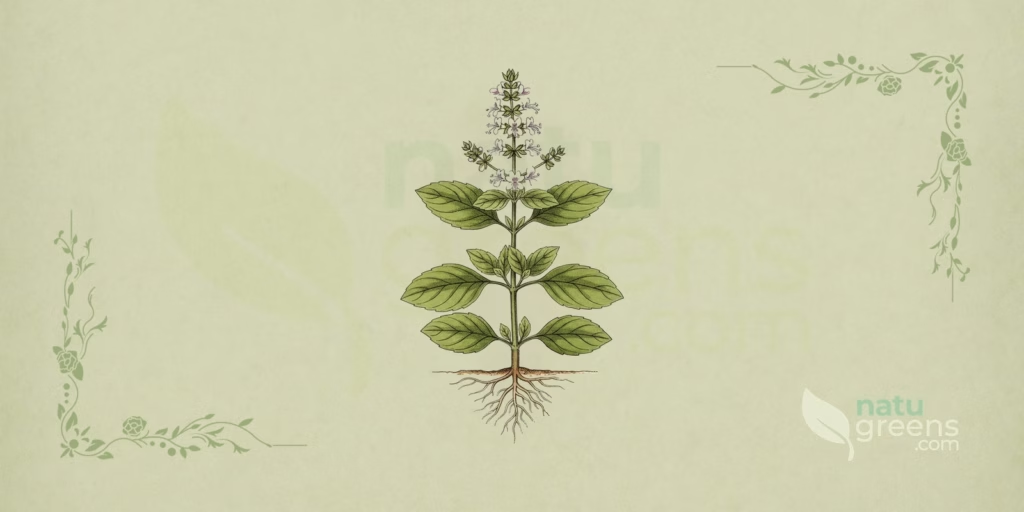
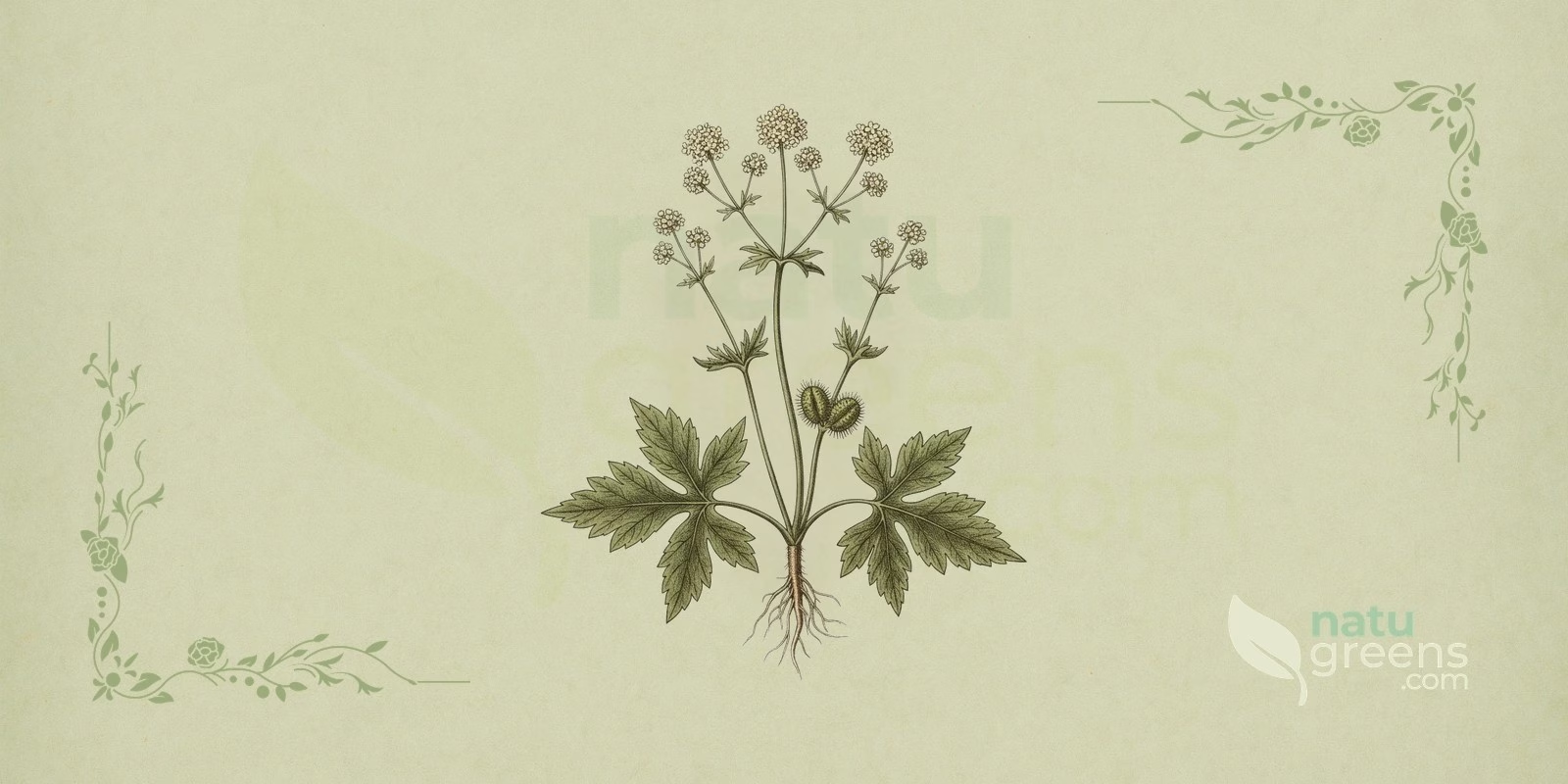
Sanicula europaea L. / Sanicle, commonly known as sanicle, wood sanicle or European sanicle, is a perennial herbaceous plant of the Apiaceae family, native to Europe, southwestern Siberia and northern Iran. The species is widely distributed in the shady woodlands of the entire European continent. Used for centuries in traditional European medicine, with records dating back to ancient times, sanicle became known above all as an astringent and wound-healing plant. Its glossy, dark green lobed basal leaves and its small pinkish or greenish-white flowers, gathered in almost spherical umbels, are the features that most help identify it in the field.
In herbal tradition, sanicle was once regarded as an almost universal remedy, and an old French saying held that anyone who kept sanicle at home had no need to call the doctor. Traditional records range from the care of wounds and bleeding to the relief of skin problems and respiratory complaints, although none of these uses has been confirmed by clinical studies in humans. Modern phytochemical research has identified triterpenoid saponins, flavonoids, phenolic acids and coumarins in the plant. Laboratory assays are investigating anti-inflammatory, antiviral and astringent activities that help explain, without yet proving, some of these traditional uses.
Popular and International Names of Sanicle
- English: European sanicle, sanicle, wood sanicle.
- French: sanicle, sanicle d’Europe.
- German: Echter Sanikel, Wald-Sanikel.
- Italian: erba fragolina, sanicula.
- Portuguese: sanícula, sanícula-vulgar, solda, solda real (names recorded mainly in Portugal).
- Spanish: hierba de San Lorenzo, sanícula, sanícula macho.
Some Portuguese sources also call the plant orelha-de-asno, a name far more widely used for comfrey (Symphytum officinale), and this overlap calls for extra care when identifying the species, especially when buying dried material or gathering the plant in the wild.
Botanical Synonyms of Sanicula europaea
The botanical nomenclature of Sanicula europaea L. has remained stable since Carl Linnaeus described the species in 1753. There are no synonyms in current use likely to cause significant confusion, although some historical or regional names still appear in older literature. The synonyms listed below reflect taxonomic or spelling variants adopted in different periods and botanical contexts, and they may help anyone consulting herbaria and classic works.
- Astrantia diapensia Scop.
- Caucalis capitata Stokes
- Caucalis sanicula Crantz
- Sanicula europaea var. genuina H.Wolff
- Sanicula officinalis Gouan
Botanical Family: Apiaceae
Sanicula europaea belongs to the Apiaceae family, formerly called Umbelliferae, a large group of flowering plants comprising about 3,700 species in roughly 434 genera. The family is characterized by umbel inflorescences, in which small flowers are grouped into structures resembling umbrellas. Its members include species of great culinary and medicinal importance, such as carrot, celery, coriander, fennel and parsley.
The Apiaceae are rich in bioactive compounds, including coumarins, essential oils, flavonoids and furanocoumarins, which explains the pharmacological interest in many of their species. Sanicle shares part of this chemical profile. The family’s diversity of substances has been the subject of extensive research, with potential for the development of new phytopharmaceuticals and supplements, although in the case of this species the available studies are mostly laboratory-based.
Parts of Sanicle Used
- Leaves
- Roots
The leaves are the part most often cited in the records of European herbalism, used fresh in poultices or dried in infusions, while the roots appear mainly in tinctures and decoctions. In Austrian folk medicine, an herbal drug known as Radix Saniculae is traditionally used for wound healing. A study published in 2025 set out to characterize it chemically and to investigate possible adulteration of the material in circulation.
Ethnobotanical and Traditional Uses
- Cough, catarrh and other respiratory complaints
- Diarrhea and dysentery
- Kidney and urinary complaints
- Minor bleeding and nosebleeds (historical record; any hemorrhage requires medical assessment)
- Skin inflammation and chilblains
- Skin rashes
- Swellings and external lumps (in the old sense of tumor as a swelling, unrelated to cancer treatment)
- Wound and skin ulcer healing
All of these uses belong to the traditional and ethnobotanical record, and none of them has been confirmed by clinical trials in humans. The best-documented use is wound healing, which appears both in old herbal texts and in recent surveys of Austrian folk medicine, such as the VOLKSMED database, devoted to wound-healing plants that have fallen into oblivion.
Therapeutic Properties of Sanicle
- Alterative (old herbal term for plants regarded as depurative, without scientific evidence)
- Analgesic (traditional record of relief from local pain, without clinical studies)
- Antibacterial (action attributed by tradition, with laboratory data still scarce)
- Antifungal (activity of saponins from the genus observed in a laboratory study)
- Anti-inflammatory (activity investigated in in vitro assays, without clinical evidence)
- Antiviral (extracts inhibited the multiplication of parainfluenza type 2 and influenza viruses in cell cultures, without studies in humans)
- Astringent (tissue-tightening action attributed by herbal tradition, the basis of its use for wounds and diarrhea)
- Carminative (traditional record of relief from intestinal gas)
- Expectorant (traditional record for coughs with phlegm)
- Tonic (used by tradition as a general restorative, without scientific evidence)
- Vulnerary (traditional use in wound healing, the best documented for the species)
The list above brings together actions attributed by herbal tradition and effects observed in the laboratory, which is not the same as proven efficacy in people. The antiviral studies, for example, were carried out on infected cells kept in culture, and the anti-inflammatory activity comes from in vitro screenings of herbal drugs used in folk medicine, so none of these results justifies replacing medical follow-up.
Detailed Phytochemical Profile of Sanicle
- Coumarins
- Ecdysteroids
- Flavonoids
- Lignans
- Phenolic acids (hydroxycinnamic acid derivatives)
- Phytosterols
- Polyacetylenes
- Triterpenoid saponins (saniculosides, such as saniculoside N and saniculoside R-1)
- Volatile oils (beta-selinene, caryophyllene oxide)
Triterpenoid saponins are the most studied group in the species, since classic work published in the 1960s described these substances in Sanicula europaea and also quantified the sucrose present in the plant. In the 1990s, further research isolated previously unknown saponins, such as saniculoside N and saniculoside R-1. More recently, a phytochemical characterization published in 2025 focused on the traditional Austrian drug Radix Saniculae.
Preparation and Administration Forms of Sanicle
- Decoction
- Infusion
- Ointment
- Poultice
- Tincture
In tradition, poultices and ointments are the forms for external use, applied to small wounds and superficial skin inflammation. Infusion, decoction and tincture, on the other hand, correspond to internal use, which should be brief and supervised by a health professional, since long-term toxicity studies are lacking. As a rule, decoction is the method chosen for tougher parts such as the roots, while infusion is reserved for the dried leaves.
Synergy with Other Medicinal Plants
Wound and Skin Inflammation Care
In European herbalism, sanicle traditionally appears alongside calendula (Calendula officinalis) in external preparations for small wounds and alongside comfrey (Symphytum officinale) in compresses and ointments for skin inflammation. The traditional rationale for these combinations lies in the triterpenes of calendula and the allantoin of comfrey, added to the astringent compounds of sanicle, but no studies have evaluated the mixtures. Because comfrey contains pyrrolizidine alkaloids, it should be limited to external use, on unbroken skin and for a limited time, never on open wounds.
Respiratory Complaints
For coughs and catarrh, sanicle is traditionally paired with demulcent and expectorant plants such as marshmallow (Althaea officinalis) and greater plantain (Plantago major). Tradition uses these teas to soothe irritated airways and ease expectoration in conditions such as bronchitis and catarrh. This is a record of folk use, with no clinical studies on the combination, and a persistent cough, fever or shortness of breath calls for medical assessment.
Mild Digestive Disorders
Because of its traditional use for diarrhea and dysentery, sanicle appears in folk formulas alongside shepherd’s purse (Capsella bursa-pastoris) and stinging nettle (Urtica dioica), plants that herbalism also classes as astringent and hemostatic. This traditional record is limited to mild, short-lived diarrhea, since any bleeding in the gastrointestinal tract, however slight, requires immediate medical care, and shepherd’s purse should not be used during pregnancy.
Recipes and Usage Protocols of Sanicle
Sanicle Leaf Infusion
Ingredients: 1 teaspoon of dried sanicle leaves and 1 cup (200 ml) of boiling water.
Preparation: Place the leaves in a cup, add the boiling water, cover and let steep for 10 to 15 minutes before straining. This infusion is traditionally used for coughs, catarrh and mild digestive complaints such as diarrhea, but internal use should be brief, and the frequency and duration need to be set with a health professional, since long-term toxicity studies are lacking.
Fresh Leaf Poultice for External Use
Ingredients: Fresh sanicle leaves, thoroughly washed, and a little warm water.
Preparation: Crush the fresh leaves, moistened with the warm water, into a paste and apply it to small superficial wounds, scratches or areas of inflamed skin, covering it with a clean cloth and leaving it on for 30 to 60 minutes, up to twice a day. The preparation is traditionally used for the astringent and vulnerary properties attributed to the plant, but it is advisable to test it first on a small area of skin, because phytodermatosis associated with sanicle has been reported, and deep, infected or non-healing wounds should be assessed by a doctor.
Sanicle Leaf and Root Tincture
Ingredients: 50 g of dried sanicle leaves and roots and 250 ml of 70% alcohol.
Preparation: Place the sanicle in a dark glass jar, cover it with the alcohol and leave it to macerate for 2 to 4 weeks in a cool, dark place, shaking daily, then strain and store the tincture. Sanicle tincture is traditionally used, in small amounts diluted in water, as an astringent, including for minor nosebleeds, but the dosage should be set by a health professional, and repeated, heavy or digestive bleeding requires medical care, never self-medication. Because it contains alcohol, the tincture is not suitable for children, pregnant or breastfeeding women, or people who need to avoid alcoholic drinks.
The preparations above follow traditional records and do not replace professional guidance. Before any internal use, check the contraindications and interactions described in this article.
Associated Therapies
Clinical Phytotherapy
In clinical phytotherapy of the European tradition, sanicle is remembered for the astringent, anti-inflammatory and vulnerary actions attributed to it, and it appears in records of use for inflammation and wound healing. Conditions such as gastric ulcers, colitis or hard-to-heal wounds, mentioned in some herbal texts, require medical diagnosis and follow-up, and the plant does not replace conventional treatment. When a phytotherapist includes it in a care plan, the advisable course is to use extracts of controlled quality, which give a clearer picture of their saponin and flavonoid content, and to take them under professional supervision.
Homeopathy
In homeopathy, Sanicula europaea is an uncommon remedy with scant documentation, and it should not be confused with the homeopathic remedy called simply Sanicula, traditionally prepared from the water of a North American mineral spring rather than from this plant. Some texts link sanicle, by analogy with its folk uses, to digestive conditions with diarrhea and to skin problems, but no studies confirm these indications. As throughout homeopathy, the choice of remedy is individualized and based on the totality of the patient’s symptoms.
Contraindications and Side Effects of Sanicle
Essential Safety Recommendations
Sanicle is a plant traditionally used for wound healing and as an astringent, with a relatively benign safety profile, but some precautions are essential: avoid prolonged internal use without professional guidance, given the lack of robust long-term toxicity studies; do not use it during pregnancy and lactation without medical guidance; and remember that deep, infected or non-healing wounds require medical assessment, not just topical use of the plant.
General Contraindications
Because of its saponins, excessive intake of sanicle can cause gastrointestinal irritation, nausea and vomiting, and people with a known sensitivity to plants of the Apiaceae family, such as carrot, celery and parsley, should use it with caution or avoid it. On the skin, the dermatological literature records phytodermatosis associated with contact with Sanicula europaea, which is why any preparation for external use should first be tested on a small area and discontinued in case of redness, itching or blisters. Pregnant and breastfeeding women should avoid the plant, as conclusive studies on its safety during these periods are lacking. Use in young children should also be avoided, as there are insufficient data for this age group.
Drug Interactions
Because it contains coumarins, sanicle could in theory interact with anticoagulant medications and increase the risk of bleeding, although no well-documented interactions exist for the species. As a precaution, people taking anticoagulants or living with clotting disorders should consult a health professional before using the plant. Anyone on long-term medication should tell their doctor about any herbal preparation, including tinctures, which contain alcohol.
Historical Notes and Interesting Facts
Etymology and Meaning
The genus name, Sanicula, derives from the Latin sanus, meaning sound or healthy, in reference to the traditional use of the plant in wound healing and in the care of various ailments. The epithet europaea, in turn, indicates its origin and its predominant distribution in Europe. The reputation of sanicle as a medicinal plant was so strong that in many European cultures it became a popular symbol of health and well-being.
Legends and Folklore
In the Middle Ages, sanicle was seen as a magical plant endowed with protective and healing powers, and it was often associated with Saint Lawrence, the origin of one of its Spanish folk names, hierba de San Lorenzo. People believed it could close any wound, a belief that made the plant a common ingredient in potions and salves and earned it, in rural communities, a reputation as a remedy for everything.
Historical Use
Sanicle has a long history of medicinal use in Europe, where, since ancient times, it was applied to wounds, cuts and ulcers and taken internally for bleeding and digestive problems, according to the records of each period. Medieval and Renaissance herbals frequently mention the plant as a valuable remedy for various conditions, and its decline in modern use is partly due to the rise of synthetic drugs. Even so, it remains present in the folk medicine of countries such as Austria, where recent ethnobotanical surveys list it among the plants used for wound healing.
Frequently Asked Questions about Sanicle
Is Sanicle Safe for Children?
There is not enough information on the safety of sanicle in children, so it is advisable to avoid its use in young children. Before giving any medicinal plant to a child, consult a health professional, bearing in mind that the saponins in sanicle can cause gastrointestinal irritation at high doses and that the tincture contains alcohol.
What Is the Best Way to Take Sanicle?
The most common traditional form is an infusion of the dried leaves, while for external use poultices of fresh leaves or ointments made with extracts of the plant are employed. The tincture is also an option for internal use, but it should be prepared and dosed with caution, and the choice between forms, as well as the duration of use, should be discussed with a health professional.
Can Sanicle Be Used During Pregnancy?
The use of sanicle is not recommended during pregnancy and breastfeeding, as studies proving its safety in these periods are lacking. The advice is not to use the plant during pregnancy and lactation without medical guidance and always to consult a health professional before turning to any medicinal plant at these stages.
Can Deep or Infected Wounds Be Managed with Sanicle Alone?
No, because deep, infected or non-healing wounds require medical assessment, not just topical use of the plant, and may need professional cleaning, stitches or antibiotics. The traditional use of sanicle is limited to small superficial wounds, always with good hygiene and attention to signs of worsening, such as spreading redness, local warmth, pus or fever.
Can Sanicle Cause Allergies or Skin Irritation?
Yes, the dermatological literature records phytodermatosis associated with contact with Sanicula europaea, and people sensitive to plants of the Apiaceae family, such as carrot, celery and parsley, should also be cautious. For this reason, before applying poultices or ointments, it is advisable to test the preparation on a small area of skin and stop using it in case of redness, itching or blisters.
Where Can I Find Sanicle?
Sanicle (Sanicula europaea) is native to Europe and grows in shady, damp woodlands, and it can be cultivated in gardens with suitable shade and soil. Sanicle extracts and preparations are sold in health food stores and specialist herb shops, but it is wise to check the origin and quality of the product, since a study on the traditional Austrian drug Radix Saniculae investigated possible adulteration.
Notice: this content is for informational purposes and does not replace professional medical advice. Consult a physician or herbal practitioner before using medicinal plants, especially during pregnancy, breastfeeding, or alongside medication.
References and Scientific Studies
View All 11 Cited References
- PMC1997 Arda N, et al. Saniculoside N from Sanicula europaea L. Journal of Natural Products. 1997.
- PMC2025 Eichenauer E, et al. “Radix Saniculae”: Phytochemical Characterization and Potential Adulteration of an Austrian Traditional Wound-Healing Agent. Plants (Basel). 2025.
- PMC2024 Eichenauer E, et al. VOLKSMED Database: A Source for Forgotten Wound Healing Plants in Austrian Folk Medicine. Planta Medica. 2024.
- PMC1972 Engel S, Horn K. Phytodermatosis by Dictamnus alba, Sanicula europaea and Phyllodendron consanguineum. Dermatologische Monatsschrift. 1972.
- PMC1966 Hiller K. On the constituents of some Saniculoideae. 3. Occurrence and quantitative distribution of saccharose in Sanicula europaea L. Pharmazie. 1966.
- PMC1966 Hiller K, et al. On the saponins from Sanicula europaea L. Pharmazie. 1966.
- PMC1974 Hiller K, Friedrich E. Antimycotic effect of Astrantia-, Eryngium- and Sanicula saponins. Pharmazie. 1974.
- PMC1999 Karagöz A, et al. Antiviral activity of Sanicula europaea L. extracts on multiplication of human parainfluenza virus type 2. Phytotherapy Research. 1999.
- PMC1998 Schöpke T, et al. Saniculoside R-1: a new triterpenoid saponin from Sanicula europaea. Planta Medica. 1998.
- PMC1996 Turan K, et al. Antiviral effect of Sanicula europaea L. leaves extract on influenza virus-infected cells. Biochemical and Biophysical Research Communications. 1996.
- PMC2013 Vogl S, et al. Ethnopharmacological in vitro studies on Austria’s folk medicine: an unexplored lore in vitro anti-inflammatory activities of 71 Austrian traditional herbal drugs. Journal of Ethnopharmacology. 2013.