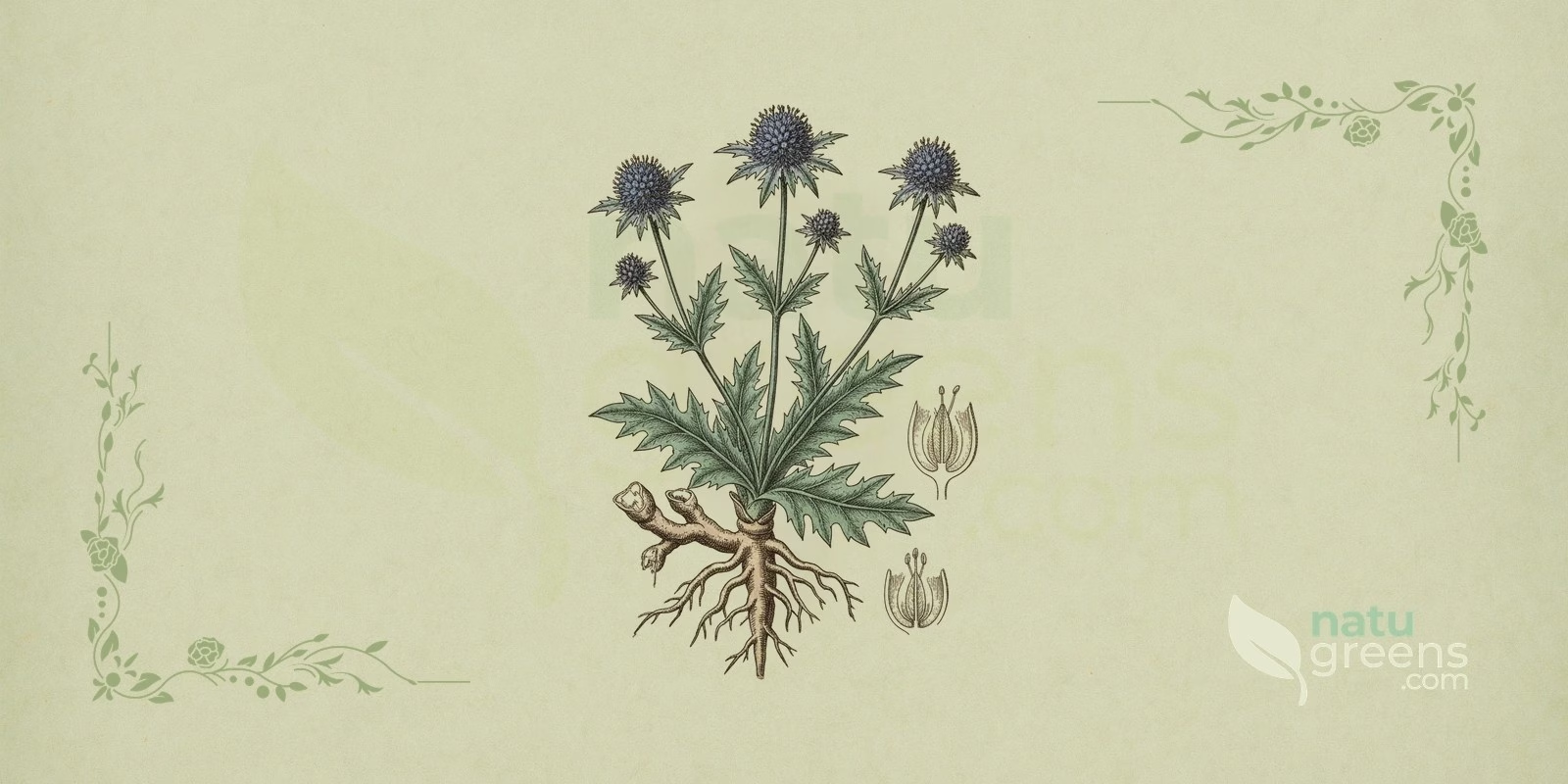
Eryngium maritimum L. / Sea Holly, known in English as sea holly, is a perennial herbaceous plant of the Apiaceae family, described by Carl Linnaeus in 1753. Native to the sandy coasts and dunes of Europe, the species is well adapted to salty, wind-exposed habitats, where it plays an important ecological role by helping to stabilize dune sand. Its spiny, bluish flower heads are a familiar sight in coastal landscapes, and European traditional medicine has drawn on the plant for centuries, valuing mainly the roots and, to a lesser extent, the aerial parts.
In herbal tradition, sea holly is remembered chiefly as a diuretic and an expectorant, and its historical uses include complaints of the urinary and respiratory tracts. The plant contains flavonoids, saponins, essential oil and other phytochemicals that are being investigated as a possible basis for these applications. Recent laboratory studies have explored its antioxidant and anti-inflammatory potential, but clinical data are still limited, so the medicinal use of the species remains mainly traditional.
Popular and International Names of Sea Holly
- English: sea eryngo, sea holly, seaside eryngo.
- Spanish: cardo corredor marino, cardo de mar, cardo marino.
- Portuguese: cardo-bravo, cardo-corredor-marítimo, cardo-marítimo.
- French: chardon des dunes, chardon roulant, houx de mer, panicaut maritime.
- Italian: cardo marino.
- German: Stranddistel.
Botanical Synonyms of Eryngium maritimum
There are no widely accepted botanical synonyms for Eryngium maritimum L. in the current scientific literature, and the taxonomic classification of the species has remained stable since Linnaeus’s original description. In practice, this makes sea holly easier to identify in studies, herbaria and botanical databases, since the same scientific name has been used consistently for more than two and a half centuries.
Botanical Family: Apiaceae
The Apiaceae family, also known as Umbelliferae, is a large family of flowering plants that comprises several hundred genera and more than 3,700 species. It is characterized by umbel inflorescences, clusters of flowers that open out like an umbrella, and it includes plants of great economic and culinary importance, such as carrot, celery, parsley and coriander, alongside medicinal species and also toxic ones. Sea holly, whose flowers are packed into heads that resemble a compact umbel, is an atypical member of this diverse family, and the kinship has a practical consequence, since people who are allergic to other Apiaceae may react to it as well.
Parts of Sea Holly Used
- Aerial parts (used in infusions in herbal tradition)
- Leaves (used in poultices in folk practice)
- Root (the most valued part, prepared as a decoction and, in the past, candied as a sweet)
- Young shoots (eaten cooked in traditional cuisine)
Ethnobotanical and Traditional Uses
The uses below come from records of European folk tradition and have not been confirmed by clinical studies, so they serve as historical documentation rather than as treatment recommendations.
- Aphrodisiac (historical reputation)
- Appetite stimulant
- Cough and catarrhal conditions
- Cystitis and urethritis
- Diuretic
- Expectorant
- Kidney stones (folk use as an adjunct)
- Liver and kidney disorders
- Prostate complaints
Therapeutic Properties of Sea Holly
Most of the properties listed below come from traditional use, while the antioxidant, anti-inflammatory and antimicrobial activities have been observed only in laboratory studies, with no confirmation in human research.
- Anthelmintic (folk use against intestinal worms, no clinical studies)
- Anti-inflammatory (activity observed with a rhizome extract tested on cells in the laboratory)
- Antimicrobial (activity observed in laboratory tests)
- Antioxidant (ability to neutralize free radicals observed in extracts, in the laboratory)
- Aphrodisiac (historical reputation, no scientific evidence)
- Diuretic (traditionally used to increase urine volume)
- Expectorant (traditionally used to make mucus easier to clear)
- Stimulant (described in tradition as invigorating)
Detailed Phytochemical Profile of Sea Holly
- Essential oils (rich in oxygenated sesquiterpenes)
- Flavonoids
- Phenolic compounds (associated with the antioxidant activity observed in the laboratory)
- Tannins
- Triterpenoid saponins
Analyses of sea holly essential oil have identified oxygenated sesquiterpenes with a bicyclo[4.4.0]decane skeleton, and a 2020 study described the composition of the species’ essential oils alongside those of Eryngium alpinum. Researchers in Latvia have also compared the phytochemical profile of leaves and roots from wild and micropropagated plants, looking at how the composition varies between these organs and between plant material of different origins.
Preparation and Administration Forms of Sea Holly
- Candied (roots, a historical preparation eaten as a sweet)
- Cooked (roots and shoots, in traditional cuisine)
- Decoction (root)
- Essential oil (studied mainly in chemical analyses, with no established protocol for home use)
- Infusion (aerial parts)
- Poultice (fresh leaves, only with the precautions described under Contraindications)
Because there are no standardized doses or clinical safety studies for the plant, the frequency and duration of any preparation taken internally should be decided with a healthcare professional.
Synergy with Other Medicinal Plants
Urinary Tract
In European herbal tradition, sea holly appears alongside bearberry (Arctostaphylos uva-ursi) and horsetail (Equisetum arvense) in preparations intended for the urinary tract. In this combination, sea holly is included for its traditional use as a diuretic, bearberry contributes arbutin, a compound studied for its urinary antiseptic action, and horsetail is valued for its silica content, which tradition links to the care of urinary tract tissues. There are no clinical studies of this combination, each plant has its own contraindications and bearberry in particular is not meant for prolonged use or for use during pregnancy, so the blend should only be considered under professional guidance and never as a substitute for medical treatment of cystitis or kidney stones.
Respiratory Tract
Another traditional combination brings together sea holly, thyme (Thymus vulgaris) and marshmallow (Althaea officinalis) in teas for the respiratory tract. Sea holly is included for its traditional use as an expectorant, thyme is described as antiseptic and spasmolytic, and marshmallow, rich in mucilage, is used in tradition to soothe irritation of the throat and airways. The combination is often mentioned for coughs and bronchitis, but its efficacy has not been tested in clinical studies, and a persistent cough, fever or shortness of breath call for medical evaluation.
Recipes and Usage Protocols of Sea Holly
Traditional Root Decoction for the Urinary Tract
Ingredients: 1 tablespoon of dried, chopped sea holly root and 500 ml of water.
Preparation: Boil the root in the water for 10 to 15 minutes and strain. This decoction is traditionally used to promote diuresis and as an adjunct for urinary complaints, but it does not replace medical evaluation of urinary infections or kidney stones. The daily amount and the length of use should be decided with a healthcare professional, since no dose has been established for the plant.
Traditional Infusion of the Aerial Parts for Coughs
Ingredients: 1 teaspoon of dried sea holly aerial parts and 250 ml of boiling water.
Preparation: Pour the boiling water over the plant, cover and let it steep for 10 minutes, then strain. Folk tradition uses this infusion to thin bronchial secretions and ease expectoration in catarrhal conditions and bronchitis, while a persistent cough, fever or shortness of breath call for medical evaluation. Consult a healthcare professional to find out whether the tea is suitable for you and in what daily amount.
Traditional Leaf Poultice for Rheumatic Pain
Ingredients: Fresh sea holly leaves and hot water.
Preparation: In the traditional record, the fresh leaves were crushed, dipped briefly in hot water to soften them and applied over painful joints, covered with a cloth, for 20 to 30 minutes, with the aim of relieving rheumatic pain. Because the plant can irritate the skin when handled fresh and its leaves are spiny, it must be handled with gloves, the application must be made over a thin cloth and never in direct contact with the skin, and the preparation should be avoided by anyone with an Apiaceae allergy or with sensitive or broken skin. Before use, consult a healthcare professional, and stop the application at the first sign of redness, itching or burning.
The preparations above follow traditional records and do not replace professional guidance. Before any internal use, check the contraindications and interactions described in this article.
Associated Therapies
Traditional European Herbal Medicine
In the European herbal tradition, sea holly appears mainly as a diuretic and an expectorant, with root preparations associated with urinary tract support and the aerial parts reserved for respiratory complaints. This use rests on historical records and on the experience of herbalists, not on clinical trials, which is why the plant should not take the place of treatments with proven efficacy for infections, kidney stones or prostate disease.
Laboratory Research
The antioxidant compounds in sea holly have drawn interest in research on oxidative stress. In 2008, a study of halophytic species, plants adapted to saline soils, assessed the antioxidant and antimicrobial capacity of extracts that included sea holly, and in 2023 an aqueous rhizome extract showed antioxidant and anti-inflammatory potential in Jurkat cells, a human lymphocyte line grown in the laboratory. A 2015 review of the genus Eryngium brought together findings of antimicrobial activity in several species, but none of these results has been confirmed in human studies.
Contraindications and Side Effects of Sea Holly
Sea holly (Eryngium maritimum) has limited clinical data, and its medicinal use is mainly traditional. For this reason, the absence of reports of serious side effects should not be read as proof of safety, and the restrictions below apply to every form of use, whether tea, decoction, poultice or essential oil.
- Apiaceae allergy: people allergic to plants in the Apiaceae family (carrot, parsley, fennel) should avoid it because of the risk of cross-reactivity.
- Children: there are no reliable safety data for young children, and the plant should not be given to them.
- Kidney disease and diuretics: because of its traditional use as a diuretic, anyone with kidney disease or taking diuretic medication should consult a healthcare professional before using the plant.
- Pregnancy and breastfeeding: do not use during pregnancy or breastfeeding.
- Skin: the plant can irritate the skin when handled fresh, which calls for gloves during harvesting and preparation and extra caution when it is used in poultices.
- Urinary and prostate symptoms: burning on urination, blood in the urine, lower back pain or difficulty urinating require medical evaluation, and the plant does not replace treatment of infections, stones or prostate disease.
There are no studies on interactions between sea holly and medications, so anyone on long-term treatment should inform their doctor before using any preparation of the plant. If an allergic reaction, persistent skin irritation or any unexpected symptom occurs, use should be stopped immediately.
Historical Notes and Interesting Facts
In the seventeenth and eighteenth centuries, especially in England, sea holly roots were candied in sugar and eaten as a sweet that had a reputation as an aphrodisiac and a restorative. The plant appears in William Shakespeare’s “The Merry Wives of Windsor”, in the scene where Falstaff asks the sky to rain potatoes and snow “eringoes”, an old name for the candied roots of sea holly and a direct allusion to that aphrodisiac reputation.
In 2002, sea holly was chosen as the county flower of the city of Liverpool, in England, which underlines its symbolic value in British coastal landscapes. Today the species is considered rare or threatened in parts of its range, and researchers already grow micropropagated plants in the laboratory to study it, which makes collecting it from natural dunes inadvisable.
Frequently Asked Questions about Sea Holly
Can Sea Holly Tea Be Taken Daily?
There are no clinical data defining a safe dose for daily or long-term use, since the medicinal use of sea holly is mainly traditional. For this reason, how often and for how long to drink it should be agreed with a healthcare professional, and the tea should not be used during pregnancy or breastfeeding or given to young children.
Which Part of the Plant Is Best for Tea?
In tradition, both the root and the aerial parts are used to make teas. The root, prepared as a decoction, is more closely associated with urinary complaints, while the aerial parts, prepared as an infusion, tend to be chosen for coughs and catarrhal conditions.
Does Sea Holly Taste Pleasant?
The flavor is somewhat bitter and aromatic and may not suit every palate. Anyone who wants to soften it can combine the plant with other herbs or sweeten the tea with honey, bearing in mind that the restrictions described under Contraindications still apply.
Who Should Not Use Sea Holly?
Do not use during pregnancy or breastfeeding, and people allergic to plants in the Apiaceae family (carrot, parsley, fennel) should avoid it because of the risk of cross-reactivity. There are also no reliable safety data for young children, and people with kidney disease or taking diuretics need professional guidance before using any preparation.
Can Sea Holly Irritate the Skin?
Yes, the plant can irritate the skin when handled fresh, and its leaves and flower heads are spiny. Handling it therefore calls for gloves, and the traditional poultice should only be applied over a thin cloth, with professional guidance, and removed immediately if redness, itching or burning appears.
Are There Scientific Studies on Sea Holly?
Laboratory studies have observed antioxidant, anti-inflammatory and antimicrobial activity in extracts of the plant, and the composition of its essential oil has also been analyzed. None of these findings has been confirmed in human research, and the medicinal use of sea holly is still based mainly on tradition.
Notice: this content is for informational purposes and does not replace professional medical advice. Consult a physician or herbal practitioner before using medicinal plants, especially during pregnancy, breastfeeding, or alongside medication.
References and Scientific Studies
- PMC2023 Cortés-Fernández I, et al. Antioxidant and anti-inflammatory potential of rhizome aqueous extract of sea holly (Eryngium maritimum L.) on Jurkat cells. J Ethnopharmacol. 2023.
- PMC2012 Darriet F, et al. Bicyclo[4.4.0]decane oxygenated sesquiterpenes from Eryngium maritimum essential oil. Planta Med. 2012.
- PMC2015 Erdem SA, et al. Blessings in disguise: a review of phytochemical composition and antimicrobial activity of plants belonging to the genus Eryngium. Daru. 2015.
- PMC2020 Kikowska M, et al. Chemical Composition of Essential Oils from Rare and Endangered Species-Eryngium maritimum L. and E. alpinum L.. Plants (Basel). 2020.
- PMC2008 Meot-Duros L, et al. Radical scavenging, antioxidant and antimicrobial activities of halophytic species. J Ethnopharmacol. 2008.
- PMC2023 Nakurte I, et al. Phytochemical Diversity Comparison in Leaves and Roots of Wild and Micropropagated Latvian Sea Holly (Eryngium maritimum L.). Molecules. 2023.