Quick summary
Ligusticum striatum DC. / Chuanxiong is a perennial herbaceous plant of the Apiaceae family whose rhizome, known in the Chinese pharmacopoeia as Chuanxiong Rhizoma, holds a prominent place in Traditional Chinese Medicine (TCM) and is often listed among the 50 fundamental herbs of that tradition. The name L. striatum…
Main caution: The rhizome contains phthalides (ligustilide, senkyunolide) and tetramethylpyrazine, which have antiplatelet and vasodilating effects. For this reason, chuanxiong is contraindicated for people taking anticoagulants or…
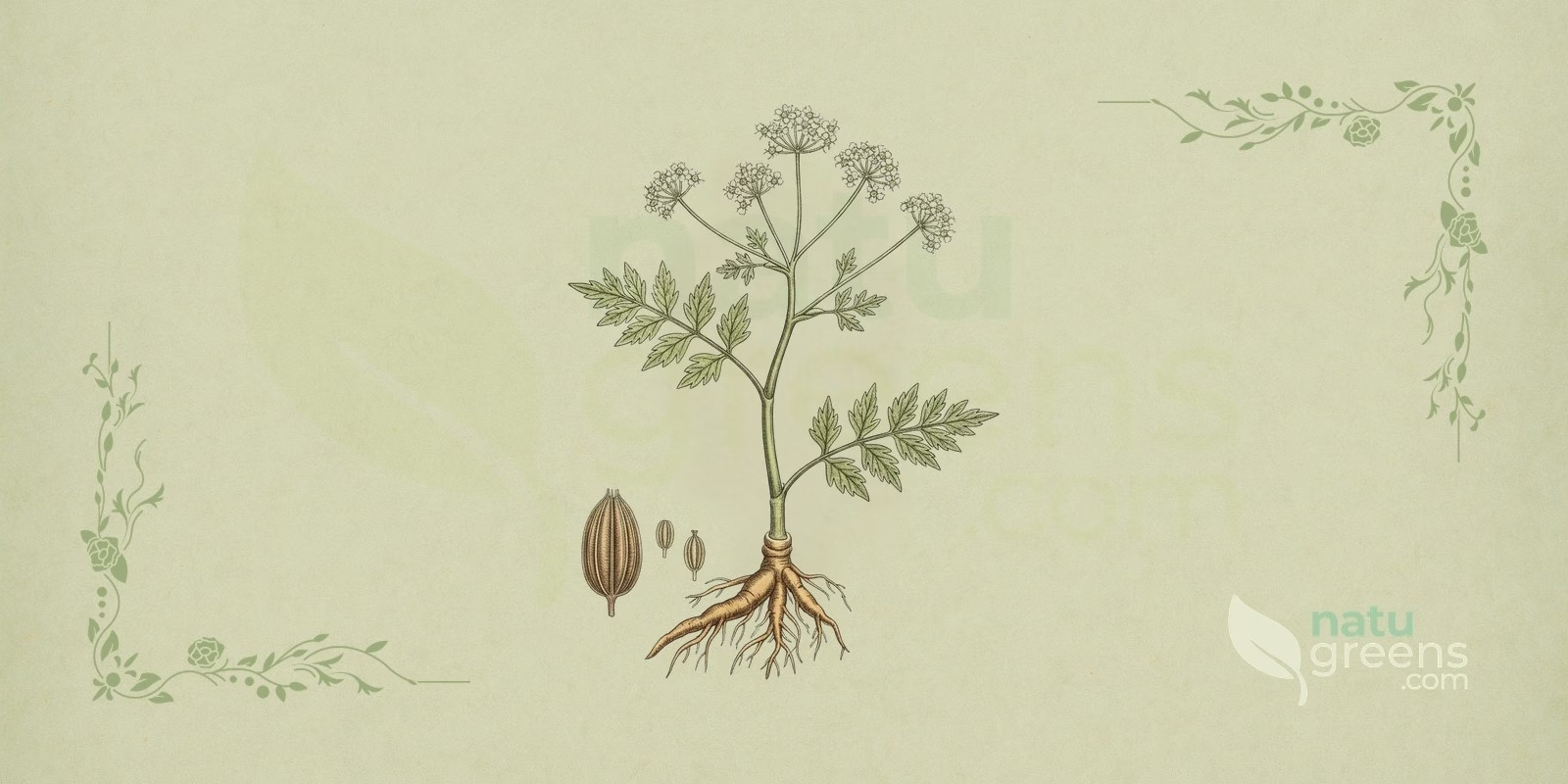
Ligusticum striatum DC. / Chuanxiong is a perennial herbaceous plant of the Apiaceae family whose rhizome, known in the Chinese pharmacopoeia as Chuanxiong Rhizoma, holds a prominent place in Traditional Chinese Medicine (TCM) and is often listed among the 50 fundamental herbs of that tradition. The name L. striatum was described from Himalayan material (India, Kashmir and Nepal), but the crude drug used in Chinese medicine comes from a cultigen grown for centuries in Sichuan province, and the exact botanical identity of that cultigen is still debated: some authors treat it as Conioselinum anthriscoides 'Chuanxiong'.
In traditional practice, the rhizome is used for gynecological complaints such as menstrual cramps and irregular periods, for conditions that TCM links to poor blood circulation, and for headaches. Modern research examines these records through laboratory and animal studies, which do not yet replace clinical evaluation, so scientific interest in the plant goes hand in hand with important safety precautions, described below.
Popular and International Names of Chuanxiong
- English: Chuan Xiong, ligusticum, Sichuan lovage, Szechuan lovage.
- Chinese: chuānxiōng (川芎).
- French: Chuan Xiong, livèche de Sichuan.
- German: Chuan Xiong, Szechuan-Liebstöckel.
- Italian: Chuan Xiong, ligustico di Sichuan.
- Portuguese: Chuan Xiong, Chuanxiong, ligusticum.
- Spanish: Chuan Xiong, ligústico de Sichuan.
Botanical Synonyms of Ligusticum striatum
According to World Flora Online, the currently accepted name for Ligusticum striatum DC. is Oreocome striata (DC.) Pimenov & Kljuykov, the result of a reclassification that moved the species to the genus Oreocome. This article keeps L. striatum as the main name because it is the form used by the Chinese Pharmacopoeia and by most of the scientific literature on chuanxiong. The same synonymy includes Cortia striata (DC.) Leute, Laserpitium striatum Wall. nom. inval., Selinum striatum (DC.) Benth. & Hook. f. and Selinum striatum Benth. ex C.B.Clarke.
Two other names circulate widely in trade and in the pharmacological literature: Ligusticum chuanxiong Hort., a horticultural and pharmacopoeial name without valid botanical publication, and Ligusticum wallichii Franch., an older name that still appears on product labels. Chuanxiong should also not be confused with Ligusticum porteri, or osha, a North American herb with a respiratory tradition that belongs to a different species, nor with Levisticum officinale, lovage, which despite the similar name does not belong to the genus Ligusticum.
Botanical Family: Apiaceae
The Apiaceae family, formerly called Umbelliferae, comprises about 3,700 species worldwide, all with flowers grouped in umbel-type inflorescences, and includes economically important plants such as carrot and parsley. Ligusticum striatum shows the typical morphological traits of the group, including hollow stems and compound leaves, and shares with its relatives the production of bioactive compounds such as coumarins, phthalides and essential oils, to which the medicinal properties of many species in the family are attributed.
Parts of Chuanxiong Used
- Rhizome
Ethnobotanical and Traditional Uses
- Blood stasis, a concept specific to TCM (traditional record, under study)
- Classic Traditional Chinese Medicine formulas (one of the 50 fundamental herbs)
- Headaches and migraine (TCM record, under study)
- Menstrual cramps and irregular periods (traditional TCM record)
- Muscle and joint pain (traditional record)
- Respiratory complaints (traditional record)
Therapeutic Properties of Chuanxiong
- Analgesic (traditional record, with the effect investigated in preclinical studies)
- Antibacterial (activity observed in laboratory studies)
- Antifungal (activity observed in laboratory studies)
- Anti-inflammatory (effect observed in preclinical studies)
- Antiplatelet (activity observed in the laboratory for rhizome alkaloids)
- Antispasmodic (traditional record, under study)
- Immunostimulant (preliminary studies with rhizome polysaccharides)
- Sedative (traditional record, without clinical evidence)
- Vasodilator (effect observed in preclinical studies, associated with blood circulation)
Detailed Phytochemical Profile of Chuanxiong
- Alkaloids (tetramethylpyrazine, also called ligustrazine, and nucleoside alkaloids)
- Ceramides
- Cerebrosides
- Ferulic acid
- Organic acids
- Phthalides (ligustilide, senkyunolide A, senkyunolide I and other butylphthalides)
- Polysaccharides (Ligusticum polysaccharides, LCP)
- Saccharides
- Steroids
- Terpenoids
Preparation and Administration Forms of Chuanxiong
- Decoction
- Extract
- Powder
Synergy with Other Medicinal Plants
Traditional Chinese Medicine Formulas
Chuanxiong is a central component of several classic Traditional Chinese Medicine formulas, in which it is combined with other herbs according to the logic of complementarity that is specific to this tradition. One of the most frequently cited pairings is with Paeonia lactiflora, traditionally used to support blood circulation and ease pain in conditions that TCM describes as blood stasis. These combinations are a traditional record and do not amount to a promise of results, especially since combining herbs that act on circulation can increase the risks described in the contraindications.
Recipes and Usage Protocols of Chuanxiong
Traditional Rhizome Decoction
In traditional Chinese practice, the dried rhizome is sliced and boiled in water for about 20 to 30 minutes, and the strained liquid is drunk afterwards. This preparation is traditionally used for headaches and migraines, especially those that TCM associates with blood stasis. The amount of rhizome and how often it is taken should not be decided on your own: consult a health professional.
Rhizome Powder in Warm Water
Another recorded form consists of grinding the dried rhizome into a fine powder, which is then mixed into warm water. Tradition uses this preparation for menstrual cramps and irregular periods, with the aim of supporting blood flow and easing pain. Because the rhizome interferes with blood clotting, the dose and duration of use require individual guidance, so consult a health professional before using it.
The preparations above follow traditional records and do not replace professional guidance. Before any internal use, check the contraindications and interactions described in this article.
Associated Therapies
Traditional Chinese Medicine (TCM)
In TCM, chuanxiong is classified as an herb that moves Blood and Qi, disperses Wind and relieves pain, which is why it traditionally appears in conditions this medicine describes as blood stasis, particularly those involving the head and the gynecological system. Its use reflects the integrative view of TCM, in which the herb is rarely taken alone and instead enters compound formulas designed to bring the body back into balance, always under the guidance of a qualified practitioner.
Contraindications and Side Effects of Chuanxiong
Contraindications and Interactions
The rhizome contains phthalides (ligustilide, senkyunolide) and tetramethylpyrazine, which have antiplatelet and vasodilating effects. For this reason, chuanxiong is contraindicated for people taking anticoagulants or antiplatelet drugs, for people with bleeding disorders or heavy menstruation, and in the weeks before surgery. Combined with antihypertensives, it can cause additive hypotension, and the sedative effect attributed to it by tradition calls for caution in anyone already taking sedatives.
Its use is contraindicated during pregnancy, since TCM classifies the herb as an activator of blood circulation, and the plant should not be used during breastfeeding or in children. Chinese tradition also contraindicates it in cases of Yin deficiency with signs of heat, such as a reddened tongue.
Side Effects and Warning Signs
The side effects described are usually mild and include gastrointestinal discomfort, with nausea, vomiting and diarrhea. Its use for migraine and for so-called blood stasis is a TCM record under study and does not replace medical diagnosis or treatment. A sudden, severe headache is an emergency that requires immediate care, never self-medication with herbs.
Historical Notes and Interesting Facts
Other Uses and History
Beyond its medicinal role, chuanxiong has been used in Chinese cooking as a seasoning and, historically, as a fragrance in soaps and cosmetics, thanks to the distinctive aroma of the rhizome. Cultivation in Sichuan, which gives the drug its pinyin name, spans centuries and established the region as the source of the medicinal product, while the plant remains one of the most studied herbs in TCM, with research that continues to investigate its compounds and mechanisms of action.
Frequently Asked Questions about Chuanxiong
What Is Chuanxiong?
Chuanxiong is the pinyin name for the rhizome of Ligusticum striatum, a plant of the Apiaceae family cultivated in Sichuan and used for centuries in Traditional Chinese Medicine. In the Chinese pharmacopoeia, the crude drug is called Chuanxiong Rhizoma.
Are Chuanxiong and Osha the Same Plant?
No. Osha is Ligusticum porteri, a North American herb with a respiratory tradition, while chuanxiong is a Chinese cultigen of another species. Lovage (Levisticum officinale) is also different and does not even belong to the genus Ligusticum.
Which Part of Chuanxiong Is Used?
The medicinal part is the rhizome, harvested from cultivated plants and dried before use. It is traditionally prepared as a decoction, as a powder or as an extract.
Is Chuanxiong Used for Migraine?
Its use for headaches and migraine is a TCM record and remains under study, with results obtained mainly in laboratory and animal research. The plant does not replace medical follow-up, and a sudden, severe headache is an emergency that requires immediate care.
Can Pregnant Women Use Chuanxiong?
No. Chuanxiong is contraindicated during pregnancy because TCM classifies it as an activator of blood circulation. It should also not be used during breastfeeding or in children.
Can Chuanxiong Be Used with Anticoagulants?
No. Because it contains phthalides and tetramethylpyrazine, which have antiplatelet and vasodilating effects, chuanxiong is contraindicated with anticoagulants and antiplatelet drugs, in bleeding disorders, in heavy menstruation and before surgery. People taking antihypertensives should also avoid it because of the risk of an additional drop in blood pressure.
Notice: this content is for informational purposes and does not replace professional medical advice. Consult a physician or herbal practitioner before using medicinal plants, especially during pregnancy, breastfeeding, or alongside medication.
How to cite this article
NATUGREENS. Chuanxiong (Ligusticum striatum): Properties and Benefits. Natugreens, 4 Nov. 2026. Disponível em: https://natugreens.com/chuanxiong-ligusticum-striatum-properties/. Accessed: Nov. 5, 2026.
Natugreens. (2026). Chuanxiong (Ligusticum striatum): Properties and Benefits. Natugreens. https://natugreens.com/chuanxiong-ligusticum-striatum-properties/
References and Scientific Studies
- PMC2019 Pu ZH, et al. Alkaloids from the rhizomes of Ligusticum striatum exert antimigraine effects through regulating 5-HT(1B) receptor and c-Jun. J Ethnopharmacol. 2019.
- PMC2019 Pu ZH, et al. Nucleoside alkaloids with anti-platelet aggregation activity from the rhizomes of Ligusticum striatum. Nat Prod Res. 2019.
- PMC2022 Pu ZH, et al. Total alkaloids from the rhizomes of Ligusticum striatum: a review of chemical analysis and pharmacological activities. Nat Prod Res. 2022.
- PMC2024 Xie X, et al. A new butylphthalide from Ligusticum striatum DC. Nat Prod Res. 2024.