Quick summary
Myrtle (Myrtus communis L.), also known as common myrtle or true myrtle, is an aromatic evergreen shrub of the Myrtaceae family, native to southern Europe, North Africa, Western Asia and Macaronesia. Grown for centuries for both its ornamental value and its medicinal use, it became a symbol of love and immortality…
Main caution: For a long time myrtle was a symbol of love, fertility and immortality, sacred to Aphrodite in Ancient Greece and associated with Venus in Rome. Myrtle wreaths adorned weddings and celebrations as a sign of purity and…
Myrtle (Myrtus communis L.), also known as common myrtle or true myrtle, is an aromatic evergreen shrub of the Myrtaceae family, native to southern Europe, North Africa, Western Asia and Macaronesia. Grown for centuries for both its ornamental value and its medicinal use, it became a symbol of love and immortality across the Mediterranean, with a constant presence in gardens, rituals and the local cuisine.
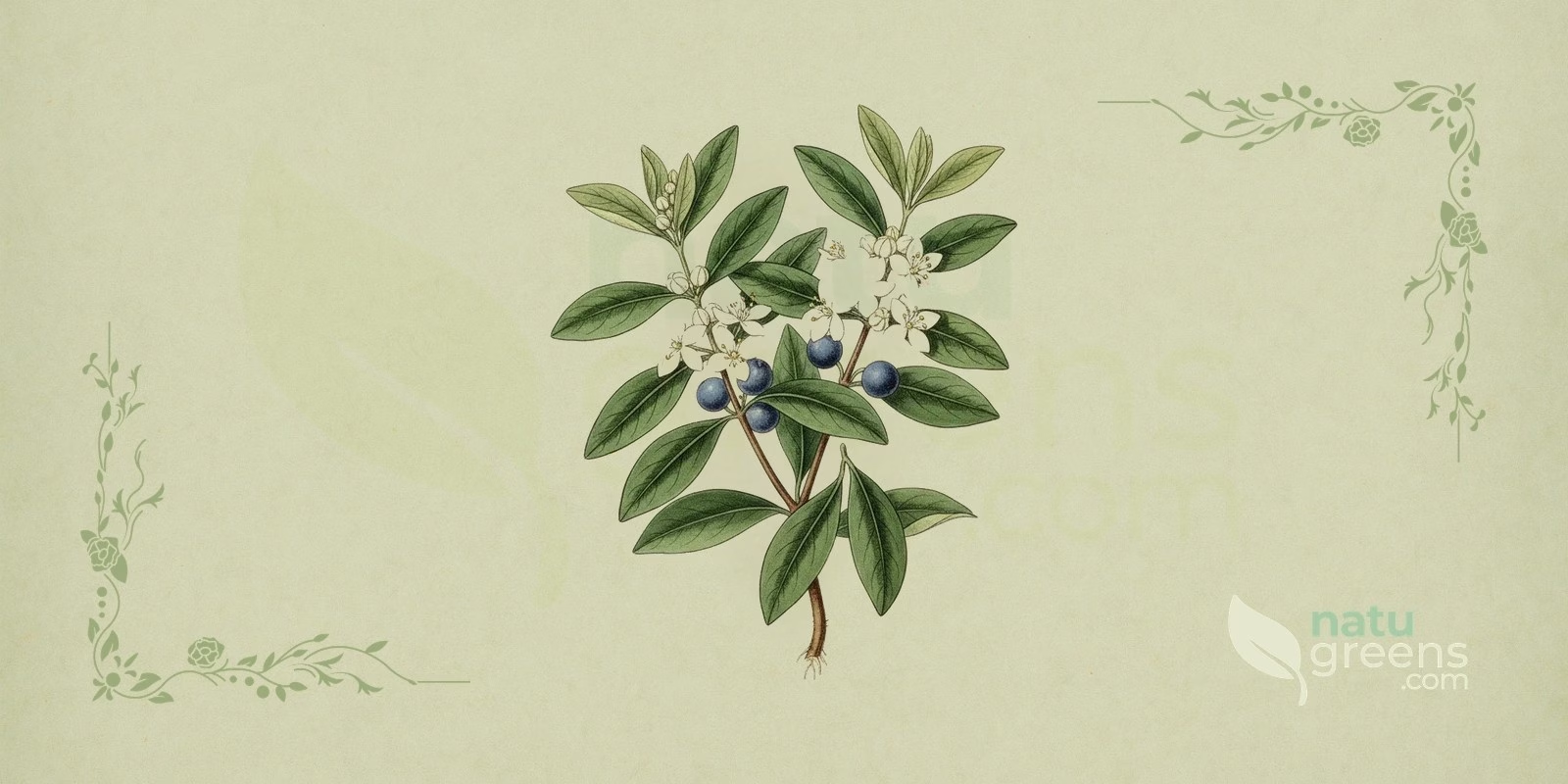
Its leaves, 2 to 5 centimeters long, release a fragrant essential oil when crushed, while the white or faintly pink flowers have five petals and a tuft of long, prominent stamens. The fruit is an edible berry that turns dark blue when ripe, and folk medicine records the use of the plant for inflammation and infections, a use that scientific research is still investigating, mostly in laboratory studies.
Popular and International Names of Myrtle
- English: common myrtle, myrtle, true myrtle.
- French: myrte, myrte commun.
- German: Gemeine Myrte, Myrte.
- Italian: mirto, mirto comune.
- Portuguese: murta, murta-comum, murta-verdadeira.
- Spanish: arrayán, mirto, murta.
Botanical Synonyms of Myrtus communis
Myrtus communis L. is the accepted botanical name, but older literature records a few historical synonyms, among them Myrtus acuta, Myrtus italica and Myrtus romana. Although the taxonomy of myrtle has been the subject of several studies, most botanical sources recognize Myrtus communis as the main species of the genus, and the other names usually appear only in old works.
In Brazil, the common name calls for extra care, because “murta” and “murta-de-cheiro” often refer to Murraya paniculata, an ornamental shrub of the Rutaceae family widely used in hedges, and, in some regions, to native species of Myrciaria and Eugenia. This article deals exclusively with Mediterranean myrtle, Myrtus communis, and none of the information described here should be transferred to those other plants.
Botanical Family: Myrtaceae
Myrtaceae is a large family of flowering plants, with more than a hundred genera and several thousand species spread across temperate, tropical and subtropical regions, including eucalyptus, guava and jabuticaba. The genus Myrtus is small and comprises only myrtle and Myrtus nivellei, a species from the Saharan mountains, and the family as a whole is known for producing essential oils and phenolic compounds.
Parts of Myrtle Used
- Berries (fruits)
- Essential oil (external or inhaled use only, always diluted)
- Flowers
- Leaves
Ethnobotanical and Traditional Uses
Records of Mediterranean and Middle Eastern folk medicine mention myrtle in the following contexts, which do not represent proven efficacy:
- Digestive disorders (diarrhea, dysentery)
- Inflammation (hemorrhoids, prostatitis)
- Menstrual complaints
- Relief of respiratory complaints (bronchitis, sinusitis)
- Rheumatism
- Traditional antiseptic for wounds and skin infections
- Urinary tract infections
Therapeutic Properties of Myrtle
- Antibacterial (activity observed in laboratory studies with extracts and essential oil)
- Anti-inflammatory (effect investigated in experimental studies and in a few preliminary clinical trials)
- Antioxidant (free radical scavenging observed in laboratory assays)
- Antiproliferative (activity observed in laboratory studies, without clinical confirmation)
- Antiviral (activity observed in vitro, without clinical confirmation)
- Cardioprotective (effect described in animal studies)
- Hepatoprotective (effect described in animal studies)
- Hypoglycemic (lower blood glucose observed in studies with the leaf and extract; calls for caution with antidiabetic drugs)
- Neuroprotective (preliminary studies in animal models)
Detailed Phytochemical Profile of Myrtle
- 1,8-Cineole
- Alpha-pinene
- Anthocyanins
- Flavonoids (myricetin, quercetin)
- Limonene
- Linalool
- Linalyl acetate
- Myrtenyl acetate
- Phenolic acids
- Tannins
- Terpineol
- Terpinolene
Preparation and Administration Forms of Myrtle
- Compresses
- Decoction
- Dry extract
- Essential oil (never by mouth; diluted topical use or inhalation, away from the faces of children)
- Fluid extract
- Infusion
- Poultice
- Tincture
Synergy with Other Medicinal Plants
Respiratory Tract
In aromatic tradition, myrtle is paired with eucalyptus (Eucalyptus globulus) and thyme (Thymus vulgaris), a combination that folk records regard as expectorant and antiseptic and that appears in inhalations and diffusers used by adults during colds, bronchitis and nasal congestion. Because the essential oils of these three plants share similar volatile compounds, the blend carries the same restrictions as each of them, including the ban on use near the faces of babies and young children.
Digestive Comfort
For digestive complaints, myrtle is traditionally combined with peppermint (Mentha × piperita) and chamomile (Matricaria chamomilla), a pairing to which folk herbalism attributes antispasmodic and carminative action. This trio of leaves and flowers appears in records of use for diarrhea, dysentery and cramps, always as a tea and never with essential oil taken by mouth.
Skin Care
In topical applications, myrtle is traditionally used alongside calendula (Calendula officinalis) and lavender (Lavandula angustifolia) in compresses and preparations for minor wounds, irritation and skin inflammation. In this tradition, the astringency of myrtle would add to the historical use of calendula and lavender in wound healing and skin comfort, although there are no clinical studies on this specific combination.
Recipes and Usage Protocols of Myrtle
Traditional Infusion for the Respiratory Tract
This leaf infusion is traditionally used during periods of congestion and is no substitute for a medical assessment of conditions such as sinusitis or bronchitis.
Ingredients:
- 1 teaspoon of dried myrtle leaves
- 250 ml of boiling water
Method:
- Place the myrtle leaves in a cup.
- Pour the boiling water over the leaves.
- Cover and let steep for 10 to 15 minutes.
- Strain and drink warm.
Directions for use: intake should be occasional and short-term, since the tannins in the leaves can cause constipation and interfere with iron absorption; to set frequency and duration, consult a healthcare professional.
Traditional Skin Compress
This compress for external use is traditionally applied over minor skin irritation and inflammation.
Ingredients:
- 2 tablespoons of dried myrtle leaves
- 500 ml of water
Method:
- Bring the water to a boil and add the myrtle leaves.
- Let steep for 15 minutes and strain.
- Wait until it cools to lukewarm.
Application: soak a clean cloth in the infusion and apply it to the area for 15 to 20 minutes, up to 2 or 3 times a day, stopping if redness or itching appears; deep or infected wounds call for assessment by a healthcare professional.
The preparations above follow traditional records and do not replace professional guidance. Before any internal use, check the contraindications and interactions described in this article.
Associated Therapies
Aromatherapy
Myrtle essential oil is valued in aromatherapy for a profile considered purifying and invigorating, and steam inhalation or diffusion of the oil are traditionally used by adults for a feeling of clearer airways and well-being. It is often blended with pine or cypress oils, always in a ventilated room, diluted when used on the skin and kept away from the faces of babies and young children.
Western Herbalism
In Western herbalism, myrtle has a traditional record for respiratory, digestive and inflammatory complaints, as well as for relieving the symptoms of colds and flu, and it is prized above all for the antiseptic and astringent qualities attributed to its leaves. The available studies, however, are largely laboratory or animal research, so these indications reflect tradition rather than proven efficacy against infections.
Traditional Persian Medicine
Myrtle holds a prominent place in the classical texts of traditional Persian medicine, which describe it as an astringent plant and use it for digestive complaints, hemorrhoids, mouth ulcers and skin problems. Recent reviews examine this historical body of knowledge and a few small clinical trials with topical preparations, but the results are still preliminary and do not support its use as a treatment.
Contraindications and Side Effects of Myrtle
Contraindications and Interactions
- Allergy: people with a known allergy to plants of the Myrtaceae family should avoid myrtle, which can trigger allergic reactions.
- Diabetes and Antidiabetic Drugs: studies with the leaf and extract show a hypoglycemic effect, so anyone taking oral antidiabetic drugs or insulin should be cautious and talk to their doctor before any use, given the risk of an excessive drop in blood glucose.
- Infants and Young Children: the essential oil (1,8-cineole, alpha-pinene, myrtenyl acetate) is contraindicated in infants and young children because of the risk of laryngospasm and bronchospasm when applied near the face, the same rule that applies to eucalyptus.
- Iron and Medications: the leaves and fruits are rich in tannins, so the tea should be taken 2 hours apart from iron supplements and other medications.
- Liver or Kidney Disease: people with these conditions should use the plant only under professional guidance, since myrtle may interact with medications.
- Oral Use of Essential Oil: myrtle essential oil must never be swallowed; for topical use, apply it only diluted and after a skin patch test.
- Pregnancy and Breastfeeding: avoid the essential oil and extracts during pregnancy and breastfeeding, periods for which there are not enough safety studies.
Side Effects
- Constipation: prolonged use of the tannin-rich leaves and fruits tends to bind the bowels.
- Digestive Disturbances: in high doses, myrtle can cause nausea or vomiting.
- Skin Irritation: the essential oil can irritate sensitive skin, which is why a patch test on a small area is recommended before use.
Historical Notes and Interesting Facts
An Ancient Symbol
For a long time myrtle was a symbol of love, fertility and immortality, sacred to Aphrodite in Ancient Greece and associated with Venus in Rome. Myrtle wreaths adorned weddings and celebrations as a sign of purity and of the continuity of life, and the plant was a common sight in the gardens of antiquity.
Culinary Use
Myrtle berries and leaves appear in Mediterranean cooking, where they lend an aromatic flavor to meat dishes, and the dried leaves can replace bay leaf in stews and roasts, with a slightly spicy, resinous aroma. In Sardinia, the berries are used to make mirto liqueur, a traditional alcoholic drink of interest here only as a gastronomic curiosity, with no medicinal purpose whatsoever.
Ornamental Plant
Thanks to its evergreen foliage and fragrant flowers, myrtle is a popular ornamental plant in gardens and landscaping projects, and it can be trained as a shrub or a small tree. Hardy and adaptable to different climates, it is valued for its beauty and pleasant scent, and it should not be confused with the “murta-de-cheiro” of Brazilian hedges, which is a different species.
Frequently Asked Questions about Myrtle
Is Mediterranean Myrtle the Same as the “Murta” in Brazilian Gardens?
No. In Brazil, “murta” and “murta-de-cheiro” usually refer to Murraya paniculata, an ornamental shrub of the Rutaceae family, and, in some regions, to native species of Myrciaria and Eugenia. This article deals only with Myrtus communis, and no information on uses or safety should be transferred to those other plants.
Is Myrtle Tea Safe for Everyone?
Leaf tea is usually well tolerated by healthy adults when taken occasionally, but pregnant and breastfeeding women and young children should avoid the plant. People with liver or kidney disease, or who take antidiabetic drugs, iron supplements or other medications, need professional guidance, and prolonged use can cause constipation because of the tannins.
What Are the Traditional Uses of Myrtle?
Tradition uses myrtle tea for respiratory complaints such as cough and bronchitis and for digestive discomfort, and it also attributes antiseptic and astringent action to the plant. Laboratory studies observe anti-inflammatory and antioxidant activity, but these findings have not yet been confirmed by robust clinical trials.
How Do You Make Myrtle Tea?
The traditional method uses one teaspoon of dried leaves in 250 ml of boiling water, left to steep covered for 10 to 15 minutes before straining and drinking warm, with honey or lemon to taste. Infusion, rather than boiling the leaves directly, is the method that best preserves the aromatic compounds, and how often to drink it should be decided with a healthcare professional.
Do Studies on Myrtol Apply to Myrtle Tea?
No. The standardized herbal medicine myrtol is a distillate of eucalyptus, sweet orange, myrtle and lemon that has clinical trials in sinusitis and bronchitis, but it is neither myrtle tea nor myrtle essential oil. For this reason, the results obtained with this product cannot be transferred to homemade preparations of the plant.
Can Myrtle Essential Oil Be Used on Children?
In infants and young children the essential oil is contraindicated, because of the risk of laryngospasm and bronchospasm when applied near the face, the same rule as for eucalyptus. At no age should it be swallowed, and in adults it should only be used on the skin diluted and after a patch test.
Notice: this content is for informational purposes and does not replace professional medical advice. Consult a physician or herbal practitioner before using medicinal plants, especially during pregnancy, breastfeeding, or alongside medication.
How to cite this article
NATUGREENS. Myrtle (Myrtus communis): Properties and Benefits. Natugreens, 4 Nov. 2026. Disponível em: https://natugreens.com/myrtle-myrtus-communis/. Accessed: Nov. 4, 2026.
Natugreens. (2026). Myrtle (Myrtus communis): Properties and Benefits. Natugreens. https://natugreens.com/myrtle-myrtus-communis/
References and Scientific Studies
- PMC2024 Al-Snafi AE, et al. The therapeutic value of Myrtus communis L.: an updated review. Naunyn Schmiedebergs Arch Pharmacol. 2024.
- PMC2023 Dabbaghi MM, et al. A review of the biological effects of Myrtus communis. Physiol Rep. 2023.
- PMC2018 Jabri MA, et al. Ethnobotanical, phytochemical and therapeutic effects of Myrtus communis L. berries seeds on gastrointestinal tract diseases: a review. Arch Physiol Biochem. 2018.
- PMC2017 Mahboubi M. Effectiveness of Myrtus communis in the treatment of hemorrhoids. J Integr Med. 2017.
- PMC2026 Tahrali I, et al. Anti-inflammatory effects of Myrtus communis L. (myrtle): experimental and clinical evidence with an immunological perspective. Inflammopharmacology. 2026.