Quick summary
Leptospermum scoparium J.R.Forst. & G.Forst. / Manuka, whose Maori name, manuka, is also the one that took hold in Brazil, where landscaping nurseries sell it as érica-japonesa as well, is a perennial flowering plant in the Myrtaceae family, described by Johann Reinhold Forster and Georg Forster and native to New…
Main caution: Manuka, in its various forms, should be used with caution, and people with known hypersensitivity to plants of the Myrtaceae family may experience allergic reactions. Consulting a health professional is recommended…
Leptospermum scoparium J.R.Forst. & G.Forst. / Manuka, whose Maori name, manuka, is also the one that took hold in Brazil, where landscaping nurseries sell it as érica-japonesa as well, is a perennial flowering plant in the Myrtaceae family, described by Johann Reinhold Forster and Georg Forster and native to New Zealand, including the Chatham Islands, and to southeastern Australia. The species became internationally famous above all for manuka honey, which bees produce from the nectar of its flowers, but the plant itself, with its leaves, bark, gum and essential oil, has a much older and more varied history of use.
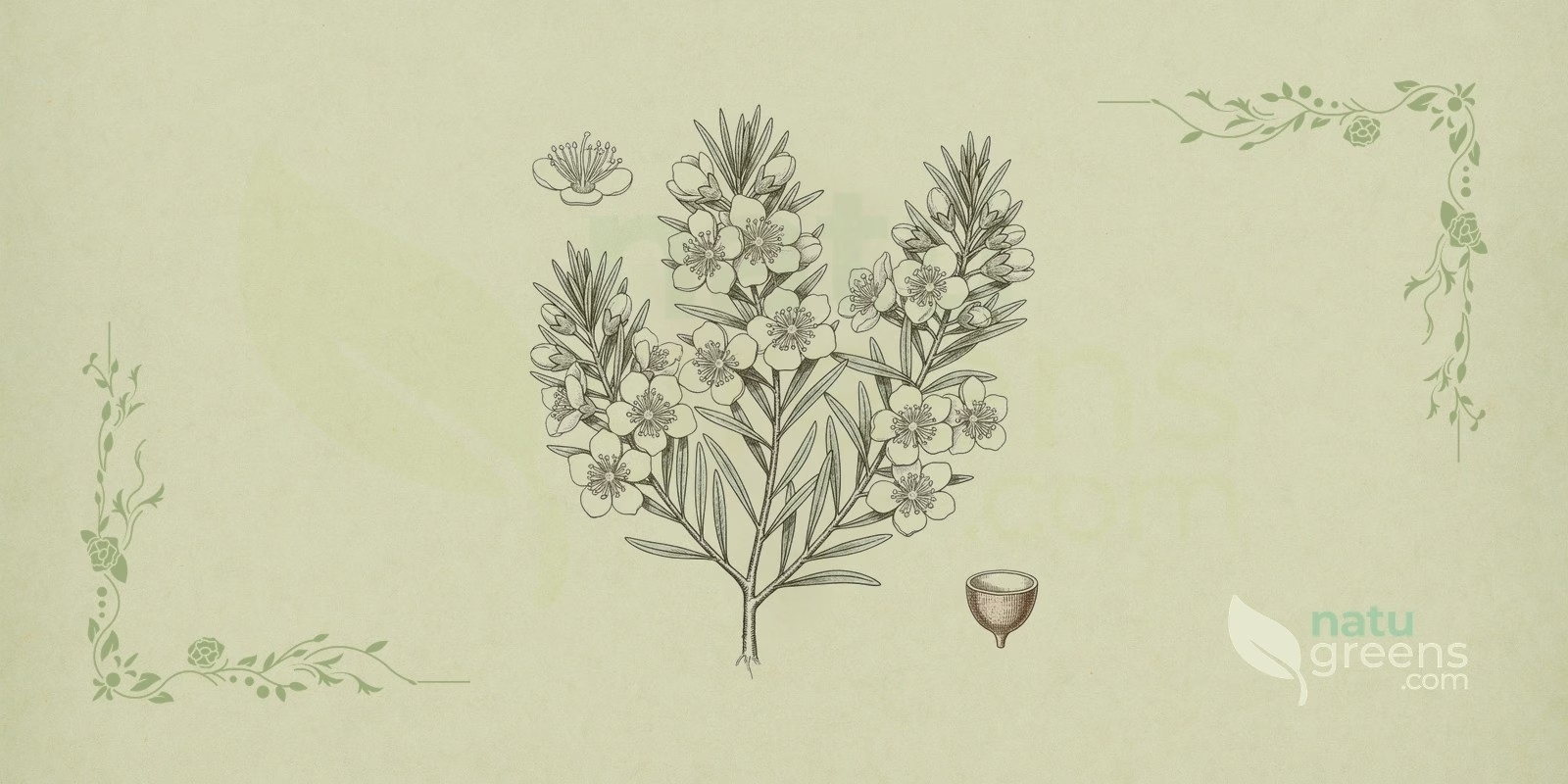
In rongoā, traditional Maori medicine, manuka has been used for centuries for a range of health complaints, and its leaves, bark and flowers concentrate bioactive compounds credited with antibacterial, anti-inflammatory and antioxidant activity. Modern scientific research has been examining many of these traditional uses, with particular attention to the essential oil and to manuka honey, although most of the data still come from laboratory studies. Beyond its medicinal interest, the adaptability and ecological resilience of the species make it an important player in ecosystem regeneration.
Popular and International Names of Manuka
- English: broom tea-tree, manuka, New Zealand teatree, tea tree.
- French: arbre à thé de Nouvelle-Zélande, manuka.
- German: Manuka, Neuseeländischer Teebaum.
- Italian: albero del tè della Nuova Zelanda, manuka.
- Maori: kāhikatoa, mānuka.
- Portuguese: árvore-do-chá-da-nova-zelândia, érica-japonesa, leptospermo, manuka.
- Spanish: árbol del té de Nueva Zelanda, leptospermo, manuka.
In Brazil, manuka is the name that became established through the honey trade, while érica-japonesa is a misleading landscaping nursery name, since the plant is not an Erica and does not belong to the Ericaceae family. Manuka also needs to be kept apart from the tea tree of aromatherapy, because the tea tree sold as an essential oil is Melaleuca alternifolia, a different genus in the same family whose oil is characterized by terpinen-4-ol, whereas manuka oil is rich in beta-triketones such as leptospermone and has a chemical profile of its own. Calling manuka a tea tree is a historical usage that goes back to the voyages of Captain James Cook, a story told in the interesting facts section of this article.
Botanical Synonyms of Leptospermum scoparium
The accepted name, according to World Flora Online, is Leptospermum scoparium J.R.Forst. & G.Forst., and the current nomenclature of the species is well settled, so the alternative names found in older or regional literature are not in current use to a degree that would justify an in-depth discussion. It is more useful for the reader not to mistake for a synonym what is merely a similarity in common names, because Melaleuca alternifolia, the Australian tea tree, belongs to another genus, and kānuka (Kunzea ericoides), a close relative often confused with manuka in New Zealand, is also a distinct plant.
Botanical Family: Myrtaceae
The Myrtaceae family is a diverse group of flowering plants comprising about 130 genera and more than 5,600 species, distributed mainly across tropical and subtropical regions, with centers of diversity in Australia and South America. Many of its species are aromatic, such as eucalyptus and clove, and the family is usually characterized by evergreen leaves, flowers with numerous stamens and fruits that may be capsules, berries or drupes.
Manuka shares the typical features of the family, including the essential oil glands in its leaves, and its kinship with Melaleuca alternifolia helps explain the confusion between the common names of the two plants. Many Myrtaceae species are economically and medicinally important in the food, cosmetic and pharmaceutical industries, and the presence of phenolic compounds and terpenes, common in the group, contributes to their aromatic and medicinal properties.
Parts of Manuka Used
- Bark
- Essential oil
- Flowers
- Gum (pai mānuka)
- Leaves
- Manuka honey (a derivative produced by bees from the nectar of the flowers)
- Wood (construction, tools and sawdust for smoking)
Ethnobotanical and Traditional Uses
The uses below come mainly from rongoā and from historical records in New Zealand, describe the traditional use of the plant and are not equivalent to proven clinical indications.
- Anxiety and insomnia (chewing the bark)
- Burns and scalds (pai mānuka gum)
- Colds (inhaling steam from the leaves)
- Construction (building material, tools, weapons)
- Fevers
- Muscle and joint pain (decoction for topical use)
- Skin conditions (topical applications)
- Urinary problems (leaf decoction)
Therapeutic Properties of Manuka
- Antibacterial (activity of the essential oil and honey observed mainly in laboratory studies)
- Anti-inflammatory (traditional record and preliminary studies)
- Antioxidant (activity observed in laboratory assays)
- Antiviral (activity against HSV-1 and HSV-2 observed in the laboratory, not clinically proven)
- Larvicidal (essential oil active against Aedes aegypti mosquito larvae in the laboratory)
- Sedative (traditional record linked to chewing the bark, not clinically proven)
- Wound-healing (traditional record; for wounds, studies use sterilized medical-grade honey)
Detailed Phytochemical Profile of Manuka
The essential oil concentrates beta-triketones and sesquiterpenes, while markers such as dihydroxyacetone, methylglyoxal and leptosperin relate to the nectar and the honey, which appear here as derivatives of the plant rather than as the focus of this article.
- Alpha-selinene
- Beta-caryophyllene
- Beta-triketones
- Calamenene
- Dihydroxyacetone (DHA, in the nectar)
- Eudesma-4(14),11-diene
- Flavesone
- Isoleptospermone
- Leptosperin (in the honey)
- Leptospermone
- Methyl cinnamate (E isomer)
- Methyl syringate (MSYR, in the honey)
- Methylglyoxal (MGO, in the honey)
- Monoterpenes
Preparation and Administration Forms of Manuka
- Decoction (leaves, bark)
- Essential oil (external use only, always diluted, never ingested)
- Honey (as food; for wound dressings, only sterilized medical-grade honey)
- Infusion (leaves)
- Steam (inhaling vapor from the leaves or the oil)
Synergy with Other Medicinal Plants
Topical Use with Lavender and Tea Tree
In aromatherapy, manuka essential oil is often combined, always diluted in a vegetable oil, with plants traditionally valued for wound-healing and antiseptic qualities, such as lavender (Lavandula angustifolia) and Australian tea tree (Melaleuca alternifolia), in blends traditionally used to care for minor wounds, acne-prone skin and other mild skin conditions. The idea behind the combination is to bring together different aromatic and antimicrobial profiles, since the three oils have distinct chemical compositions, but the efficacy of these blends has not been established in clinical studies and a patch test before use remains essential.
Respiratory Support with Echinacea and Thyme
For immune and respiratory support, herbal tradition pairs inhalation of manuka oil with preparations of echinacea (Echinacea purpurea) and thyme (Thymus vulgaris), plants traditionally used for colds and flu, the first for its reputation as an immune stimulant and the second for the expectorant action attributed to it. In this pairing, manuka is used by inhalation only and never ingested, while echinacea and thyme are usually taken as a tea or tincture, a combination that belongs to the traditional record and is no substitute for a medical assessment of respiratory infections.
Recipes and Usage Protocols of Manuka
Steam Inhalation with Manuka Oil
Ingredients: 5 to 10 drops of manuka essential oil, starting with the smaller amount, and 1 liter of boiling water.
Preparation: Add the essential oil to the boiling water in a large bowl, cover your head with a towel and inhale the steam for 5 to 10 minutes, with your eyes closed and at a safe distance from the hot water. The inhalation is traditionally used to ease the feeling of nasal congestion, headache and other cold symptoms, an effect that tradition attributes to the decongestant and antimicrobial character of the oil, and it is not suitable for children or for pregnant or breastfeeding women.
Leaf Infusion Used for Urinary Complaints
Ingredients: a small amount of dried manuka leaves and one cup of boiling water.
Preparation: Place the leaves in the cup, add the boiling water, cover and let steep for 5 to 7 minutes before straining. This infusion is traditionally used for urinary complaints and as a febrifuge, owing to the diuretic and antipyretic action that tradition attributes to it, but safety data for regular internal use are lacking, so the amount and frequency should be set with professional guidance: consult a health professional before drinking it.
Green Clay Face Mask with Manuka
Ingredients: 2 drops of manuka essential oil, 1 tablespoon of green clay and filtered water.
Preparation: Mix the green clay with enough water to form a paste, add the essential oil and stir well, then apply to clean facial skin while avoiding the eye area, leave on for 10 to 15 minutes and rinse with warm water. The mask is traditionally used to cleanse oily or acne-prone skin, combining the clay with the antibacterial and anti-inflammatory qualities attributed to manuka oil, but its effect on acne is still under study and a patch test on a small area of skin should come before the first application.
Medical-Grade Manuka Honey for Minor Wounds
Ingredients: medical-grade manuka honey, sterilized and sold as a wound-dressing product (UMF 10+ or higher); table honey should never be used on a wound.
Preparation: Gently clean the wound, apply a thin layer of the medical-grade honey directly over the affected area and cover with a sterile dressing, changing it daily. This type of honey is used in dressings for small wounds and burns because of the antibacterial activity associated with methylglyoxal, but wounds that are deep or extensive, that show signs of infection or that occur in people with diabetes require professional assessment, and anyone allergic to bee products should not use it.
Manuka Massage Oil for Muscle Tension
Ingredients: 5 drops of manuka essential oil and 30 ml of a carrier vegetable oil, such as sweet almond or jojoba.
Preparation: Mix the essential oil into the vegetable oil in a dark glass bottle and apply it to sore muscles and joints with a gentle massage, always after a patch test. The blend is traditionally used to ease muscle aches, rheumatic discomfort and tension, an effect that tradition attributes to the anti-inflammatory and analgesic qualities of the oil, without clinical proof, and it should not be applied to broken skin, on children, during pregnancy or while breastfeeding.
The preparations above follow traditional records and do not replace professional guidance. Before any internal use, check the contraindications and interactions described in this article.
Associated Therapies
Aromatherapy
In aromatherapy, manuka essential oil is valued for the purifying and calming qualities attributed to it, and its use in diffusers is traditionally associated with air purification and a relaxing atmosphere. In massage, always diluted in a vegetable oil, it is used to ease muscle tension and promote general well-being, and many users associate inhaling its aroma with a sense of better mood and lower stress, a perception that still lacks controlled studies.
Phytotherapy
In phytotherapy, manuka appears in preparations such as infusions and extracts, with records of use in support of digestive complaints, infections and inflammation that still await clinical confirmation. Modern phytotherapy seeks to standardize extracts to ensure a consistent concentration of active compounds such as beta-triketones, which studies point to as responsible for much of the biological activity of the plant.
Homeopathy
Manuka has no established homeopathic tradition, and the occasional preparations made from the plant are rare and aimed at specific conditions linked to irritation, sensitivity and inflammation. Homeopathy is based on the principle of similars, according to which a substance that causes symptoms in healthy people is used in minimal doses to treat similar symptoms in sick people, and any use in this context should be guided by a qualified homeopathic practitioner.
Contraindications and Side Effects of Manuka
General Contraindications
Manuka, in its various forms, should be used with caution, and people with known hypersensitivity to plants of the Myrtaceae family may experience allergic reactions. Consulting a health professional is recommended before starting any use of manuka-based products, especially for pregnant or breastfeeding women, children, people with pre-existing conditions and anyone already taking other medications. The benefits promoted against acne, gingivitis and Helicobacter pylori are still under study and do not replace the treatment prescribed by a physician or dentist.
Essential Oil Safety
Manuka essential oil must never be ingested, and topical use requires dilution in a vegetable oil and a prior patch test on a small area of skin. The oil should be avoided during pregnancy, while breastfeeding and in children, especially those under 6 years of age, because conclusive studies on its safety in these groups are lacking. It should also not be confused with tea tree oil (Melaleuca alternifolia), which belongs to another genus, is characterized by terpinen-4-ol and has a chemical profile different from that of manuka oil, which is rich in beta-triketones such as leptospermone.
Manuka Honey Safety
Manuka honey must never be given to infants under 1 year of age because of the risk of infant botulism, a rule that applies to any honey. People with diabetes should remember that honey is sugar and counts toward blood glucose like any other sugar, and anyone allergic to bee products should avoid it. Use on wounds refers exclusively to sterilized medical-grade honey, applied under professional guidance, and never to table honey, which should not be put on a wound.
Common Side Effects
Side effects associated with manuka are usually rare and mild, but topical application of the essential oil can cause irritation, redness or dermatitis in sensitive people, which is why a patch test on a small area of skin should precede any broader application. Excessive consumption of infusions or extracts could, in theory, cause mild gastrointestinal discomfort, such as nausea or diarrhea, although such cases are poorly documented.
Drug Interactions
Because of its bioactive compounds, manuka may interact with certain medications, and, although research is limited, using manuka-based products alongside anticoagulants could theoretically increase the risk of bleeding through possible effects on platelet aggregation. People taking hypoglycemic agents or other diabetes medications should monitor their blood glucose, both because some components of the plant may influence glucose metabolism and because honey raises blood sugar. Since tradition attributes a relaxing effect to the bark, anyone taking sedatives or anxiolytics should talk to their doctor before combining these medications with manuka preparations, and the guidance of a physician or pharmacist is recommended whenever there is any doubt about interactions.
Historical Notes and Interesting Facts
The Origin of the Name Tea Tree
The common name tea tree was given to Leptospermum scoparium by Captain James Cook and his crew during their voyages to New Zealand in the 18th century, when they used the leaves of the plant to brew a tea-like drink that served as a substitute and, possibly, as a preventive measure against scurvy. This historical use shows the versatility of the plant and its importance to the explorers of the time, but the same English name also designates the Australian tea tree of aromatherapy, Melaleuca alternifolia, a plant of another genus that should not be confused with manuka.
Ecological Resilience
Manuka is one of the few native New Zealand species adapted to fire, since it can release its seeds after fires and quickly colonize disturbed areas. This trait makes it a crucial pioneer species in ecosystem regeneration, creating favorable conditions for other native plants to establish themselves and contributing significantly to local biodiversity.
Confusion with Kānuka
Manuka is often confused with the related species kānuka (Kunzea ericoides), and the easiest way to tell the two apart is the texture of the leaves, since manuka leaves are pointed and rough to the touch, while kānuka leaves are soft. In addition, manuka seed capsules are larger and stay on the plant longer than those of kānuka, which are smaller and fall sooner.
The Érica-Japonesa Nickname in Brazilian Landscaping
In Brazilian landscaping, manuka circulates in nurseries under the name érica-japonesa, a nickname unrelated both to the origin of the plant, which is native to New Zealand and southeastern Australia, and to the genus Erica of the Ericaceae family, since the species belongs to the Myrtaceae. For anyone looking for information about the plant, its essential oil or its honey, manuka remains the name that works, in Portuguese as well as in other languages.
Frequently Asked Questions about Manuka
Does Manuka Tea Help You Sleep?
There is no clinical evidence that manuka tea helps with sleep, and research specifically on the infusion is limited. What exists is the traditional Maori record that linked chewing the bark to a relaxing effect, along with the calming qualities attributed to the aroma of the essential oil, which should not be ingested. Anyone who wants to try the infusion should first talk to a health professional, especially if they already take sedatives or sleep medications.
Is It Safe to Use Manuka Essential Oil Directly on the Skin?
No, because manuka essential oil, like most essential oils, can cause irritation, redness or allergic reactions when applied undiluted. Before any topical use, it should be diluted in a carrier vegetable oil, such as sweet almond or jojoba, and tested on a small area of skin. The oil must never be ingested and should be avoided during pregnancy, while breastfeeding and in children.
How Is Manuka Honey Different from Regular Honey?
Manuka honey is produced by bees from the nectar of Leptospermum scoparium flowers and contains much higher levels of methylglyoxal (MGO), a compound linked to its antibacterial activity and accompanied by grading marks such as UMF, whereas the antibacterial activity of regular honey, derived from a variety of flowers, comes mainly from hydrogen peroxide. Despite this difference, manuka honey is still sugar, counts toward blood glucose in people with diabetes and should not be given to infants under 1 year of age. On wounds, what is used is sterilized medical-grade honey, never table honey.
Are Manuka and Tea Tree the Same Plant?
No, because the tea tree of aromatherapy, sold as tea tree oil, is Melaleuca alternifolia, an Australian species of another genus whose oil is characterized by terpinen-4-ol. Manuka oil comes from Leptospermum scoparium, is rich in beta-triketones such as leptospermone and has a chemical profile of its own, so the two are not interchangeable, either in recipes or when reading labels.
Can Manuka Honey Be Given to Babies and Children?
Manuka honey must never be given to infants under 1 year of age because of the risk of infant botulism, a precaution that applies to any type of honey. From that age on, it can be part of the diet like ordinary honey, provided the child is not allergic to bee products, and any use for medicinal purposes should be guided by a pediatrician.
Does Manuka Have Culinary Uses?
Besides manuka honey, which is a food and also a raw material for medicinal products, the plant has other uses in the kitchen, such as the sawdust from its wood, used to smoke meat and fish with a characteristic aromatic flavor. The leaves were used by European explorers to brew a tea-like drink and still serve as a flavoring in some craft beverages, such as beers and tonics, to which they add a herbaceous, spicy note.
Notice: this content is for informational purposes and does not replace professional medical advice. Consult a physician or herbal practitioner before using medicinal plants, especially during pregnancy, breastfeeding, or alongside medication.
How to cite this article
NATUGREENS. Manuka (Leptospermum scoparium): Properties and Benefits. Natugreens, 3 Nov. 2026. Disponível em: https://natugreens.com/manuka-leptospermum-scoparium/. Accessed: Nov. 4, 2026.
Natugreens. (2026). Manuka (Leptospermum scoparium): Properties and Benefits. Natugreens. https://natugreens.com/manuka-leptospermum-scoparium/
References and Scientific Studies
- PMC2026 Bučková M, et al. Leptospermum scoparium Essential Oil: Antibacterial Properties, Cyto/Genotoxic Effects, Antioxidant Activity, and Wound-Healing Potential In Vitro. Molecules. 2026.
- PMC2020 Muturi EJ, et al. Leptospermum scoparium essential oil is a promising source of mosquito larvicide and its toxicity is enhanced by a biobased emulsifier. PLoS One. 2020.
- PMC2021 Porter GC, et al. Formulation of a Semisolid Emulsion Containing Leptospermum scoparium Essential Oil and Evaluation of In Vitro Antimicrobial and Antibiofilm Efficacy. Planta Medica. 2021.
Not an exhaustive list. Read the full contraindications section before considering use.
Read full section