Quick summary
Paeonia lactiflora Pall. / White Peony, also called Chinese peony or Chinese herbaceous peony, is a perennial herbaceous plant of the Paeoniaceae family. Native to Central and East Asia, it grows wild across a range that stretches from eastern Tibet and northern China to eastern Siberia. Described by the naturalist…
Main caution: In healthy adults, Paeonia lactiflora root is usually well tolerated in the amounts used by tradition, but mild side effects such as gastrointestinal discomfort, nausea or diarrhea may occur in sensitive people.…
Paeonia lactiflora Pall. / White Peony, also called Chinese peony or Chinese herbaceous peony, is a perennial herbaceous plant of the Paeoniaceae family. Native to Central and East Asia, it grows wild across a range that stretches from eastern Tibet and northern China to eastern Siberia. Described by the naturalist Peter Simon Pallas, the species is valued both for its ornamental flowers and for its medicinal root, and it has been cultivated for centuries in many Asian cultures.
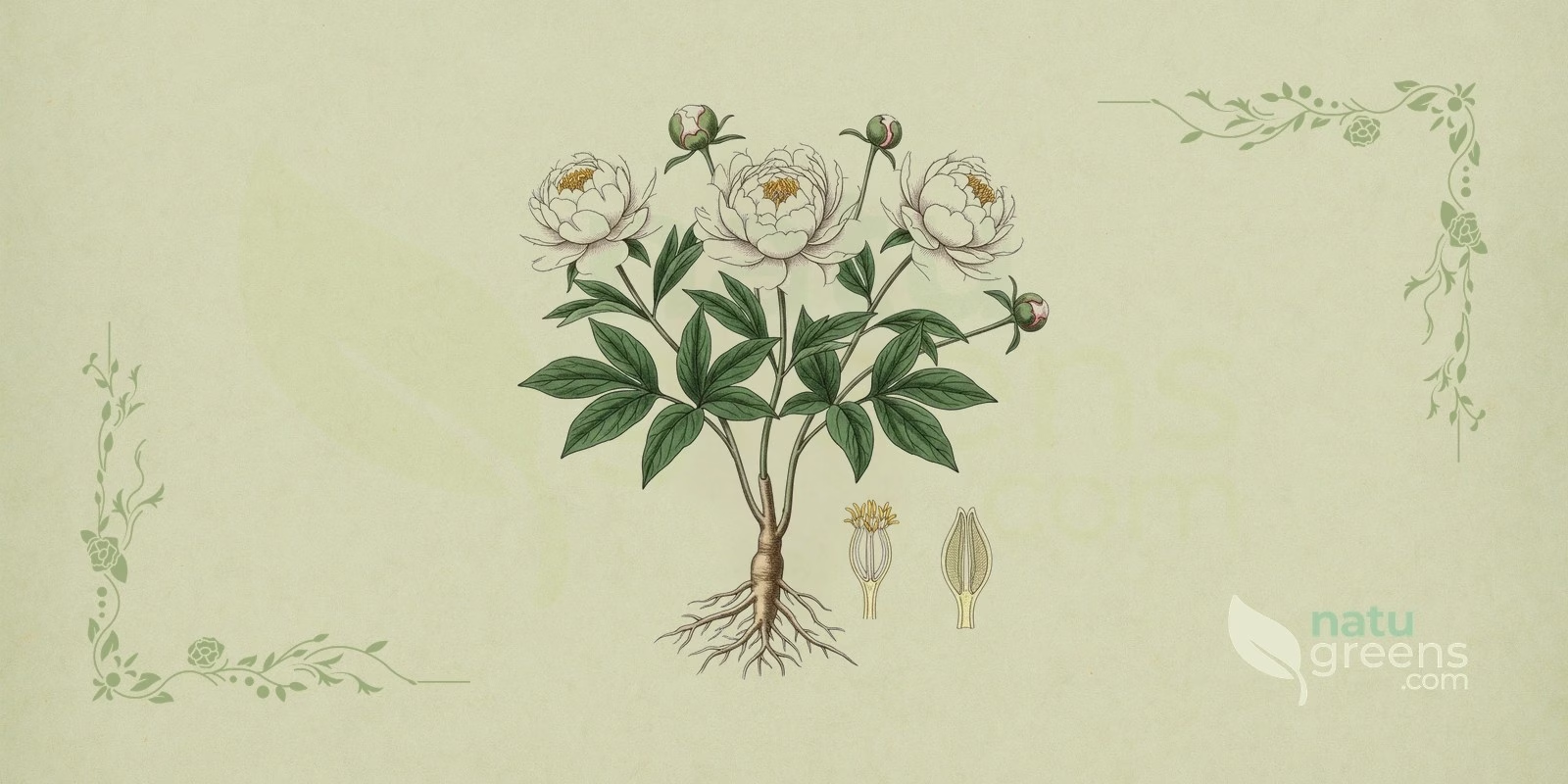
In traditional Chinese medicine, the root of Paeonia lactiflora, known as bai shao (literally “white peony”), has been used for more than a thousand years in the context of pain, inflammation, immune disorders and gynecological complaints. Modern research is investigating these uses in laboratory studies, in animal models and in a few clinical trials conducted in China. This work has already identified bioactive compounds such as paeoniflorin, although most of the effects described still lack broad clinical confirmation.
Popular and International Names of White Peony
Across different languages, the plant goes by names that highlight its Chinese origin, the pale color of its wild flowers or its long history in gardens. The list below gathers the main ones, organized by language.
- English: Chinese herbaceous peony, Chinese peony, common garden peony, white peony.
- Chinese: bai shao (name of the prepared root), shao yao (name of the plant).
- French: pivoine blanche, pivoine de Chine, pivoine herbacée.
- German: Chinesische Pfingstrose, Gartenpfingstrose, Weiße Pfingstrose.
- Italian: peonia bianca, peonia cinese, peonia da giardino.
- Portuguese: peônia-branca, peônia-chinesa, peônia-da-china, peônia-de-jardim.
- Spanish: peonía blanca, peonía china, peonía de jardín.
Botanical Synonyms of Paeonia lactiflora
Over the course of botanical history, the species has received other scientific names that are now treated as synonyms of Paeonia lactiflora Pall., the currently accepted name:
- Paeonia albiflora Pall.
- Paeonia edulis Salisb.
These names circulated in different periods and contexts. Both albiflora and lactiflora refer to the pale color, white or milky, of the flowers of the wild forms. When the plant reached Europe, it became known as the white peony, which shows how common names also shifted over the course of botanical history.
Botanical Family: Paeoniaceae
Paeonia lactiflora belongs to the Paeoniaceae family, which comprises a single genus, Paeonia, with about 33 species of perennial herbaceous plants or shrubs bearing large, showy flowers. Many of these species are grown as ornamentals around the world, and several have a long history of medicinal use, especially in Asia.
The family is known for producing bioactive compounds such as monoterpene glycosides, flavonoids and tannins, to which the literature attributes much of the biological activity observed in these plants. For this reason, the phytochemistry of the genus has been studied intensively, with an eye to developing new phytopharmaceuticals and natural supplements.
Parts of White Peony Used
- Root
The part traditionally used is the root, which in traditional Chinese medicine is called bai shao when it has been peeled, boiled and dried before use. It should not be confused with mu dan pi, the root bark of Paeonia suffruticosa (tree peony), which comes from a different species, with a different part used and a different traditional use profile.
Ethnobotanical and Traditional Uses
Traditional Chinese medicine texts and the ethnopharmacological literature associate the root with the contexts listed below. These entries describe records of traditional use and lines of research, not proven treatment indications.
- Depression and anxiety
- Fever
- Gynecological disorders
- Hepatitis
- Hypertension
- Immune disorders
- Inflammation relief
- Irregular menstrual cycles
- Menstrual cramps (dysmenorrhea)
- Mental health disorders
- Muscle spasms
- Pain relief
- Rheumatoid arthritis
- Stimulation of blood circulation
- Systemic lupus erythematosus
Some of these uses, such as rheumatoid arthritis and lupus, refer to the modern use in China of a standardized extract known as total glucosides of peony (TGP). This extract has been evaluated in local clinical trials whose results have already been pooled in systematic reviews, but which still need larger and more rigorous studies.
Therapeutic Properties of White Peony
The activities below have been described mainly in laboratory studies and animal models, with little clinical data. They should therefore be read as research findings, not as guaranteed effects of using the plant at home.
- Analgesic (pain reduction observed in experimental studies and described in traditional use)
- Antibacterial (activity against bacteria observed in the laboratory)
- Antidepressant (antidepressant-like effect observed in animal models)
- Anti-inflammatory (reduction of inflammatory markers in experimental studies)
- Antioxidant (free radical scavenging in laboratory assays)
- Antiviral (activity against viruses observed in the laboratory)
- Hepatoprotective (liver protection observed in animal studies)
- Immunomodulatory (regulation of the immune response in experimental studies)
- Neuroprotective (protection of nerve cells in preclinical studies)
Detailed Phytochemical Profile of White Peony
The chemical composition of the species varies with the part analyzed. Monoterpene glycosides are concentrated in the root, while anthocyanins occur in the flowers and stilbenes, such as resveratrol and its derivatives, have been described mainly in the seeds.
- Albiflorin
- Anthocyanins (cyanidin, pelargonidin, peonidin)
- Cis-epsilon-viniferin
- Gnetin H
- Monoterpene glycosides
- Paeoniflorin (main component of the total glucosides of peony, known by the acronym TGP)
- Paeoniflorin esters
- Paeonol
- Suffruticosol A and B
- Trans-epsilon-viniferin
- Trans-resveratrol
- Trans-resveratrol-4′-O-beta-D-glucopyranoside
- Triterpenes (oleanolic acid, ursolic acid)
Preparation and Administration Forms of White Peony
- Decoction (of the root)
- Extract
- Tincture
In the Chinese tradition, the root is used mainly in decoctions, often combined with other plants in classical formulas. Standardized extracts and tinctures are more recent forms, and their dose should be set by a qualified health professional.
Synergy with Other Medicinal Plants
Pain and Inflammation Relief
Paeonia lactiflora appears in combinations with other plants of traditional anti-inflammatory use, such as Curcuma longa (turmeric) and Zingiber officinale (ginger), which are traditionally used to ease joint and muscle pain. The idea that peony glycosides add their effects to those of curcuminoids or gingerols is a hypothesis based on mechanisms described in the laboratory, not yet confirmed in clinical trials of these mixtures. People taking anticoagulants should be especially careful with this combination, since turmeric and ginger are also studied for their effects on coagulation.
Immune System Support
The pairing of white peony with Astragalus membranaceus (astragalus) has a traditional record in classical Chinese formulas that bring the two roots together. The combination with Echinacea purpurea (echinacea), on the other hand, is more recent and belongs to Western herbalism. In both cases, the stated purpose is to support a balanced immune response by combining the polysaccharides studied in astragalus and echinacea with the immunomodulatory compounds investigated in peony. No studies have directly evaluated these mixtures, and people with autoimmune disease or taking immunosuppressants should not use them without medical supervision.
Stress and Anxiety Reduction
Valeriana officinalis (valerian) and Passiflora incarnata (passionflower) are traditionally used in moments of nervousness and restless sleep. Combining them with Paeonia lactiflora serves the same purpose and brings together paeoniflorin, investigated in animal models of anxiety, the valepotriates of valerian and the flavonoids of passionflower. Because the three plants may have an additive calming effect, this combination should not be used together with sedatives, anxiolytics or alcohol, or before driving, without guidance from a health professional.
Recipes and Usage Protocols of White Peony
Root Decoction for Pain Relief
This decoction follows the classical preparation of bai shao, traditionally used to ease cramps and muscle pain. It should not be used during pregnancy or breastfeeding, and anyone taking anticoagulants or antiplatelet agents needs professional guidance before using it.
Ingredients:
- 10 to 15 grams of dried Paeonia lactiflora root (bai shao)
- 500 ml of water
Preparation Method:
- Rinse the dried root and place it in a saucepan with the water.
- Bring to a boil, then keep it over low heat for 20 to 30 minutes.
- Strain the decoction and drink it warm.
Dosage: In the traditional record, the decoction is taken once or twice a day for short periods, and the amount and duration of use should be set by a health professional.
Tincture for Immune Support
White peony root tincture is a modern adaptation of the traditional record that links the root to a balanced immune response. Because it contains alcohol and safety data are lacking, it is not intended for pregnant or breastfeeding women or for children, while people with autoimmune disease or taking immunosuppressants should only use it under medical supervision.
Ingredients:
- 50 grams of dried Paeonia lactiflora root
- 250 ml of grain alcohol diluted to 40% to 60%
Preparation Method:
- Chop the dried root into small pieces.
- Place the root in a dark glass jar and add the alcohol until the root is fully covered.
- Seal the jar tightly and leave it to macerate for 2 to 4 weeks in a cool, dark place, shaking it daily.
- Strain the tincture and discard the solids.
Dosage: There is no standardized dose for homemade tincture, so the number of drops, the dilution in water and the duration of use should be set by a health professional.
The preparations above follow traditional records and do not replace professional guidance. Before any internal use, check the contraindications and interactions described in this article.
Associated Therapies
Acupuncture
In traditional Chinese medicine (TCM), Paeonia lactiflora is often prescribed alongside acupuncture sessions in conditions such as chronic pain, dysmenorrhea and emotional imbalances. Within this framework, combining herbal medicine with the stimulation of acupuncture points seeks to bring the body’s energy back into balance, according to TCM’s own concepts, which do not correspond to diagnoses in conventional medicine.
Chinese Herbal Medicine
The root is one of the pillars of Chinese herbal medicine and appears in many classical formulas. In them, it is described as able to nourish the blood, calm the liver and relieve pain, always in the language specific to this tradition. That is why it often appears in patterns that TCM calls blood deficiency and liver Qi stagnation, as well as in painful conditions such as menstrual cramps and muscle spasms. Modern Chinese herbal medicine continues to investigate these uses in experimental and clinical studies.
Homeopathy
In homeopathy, the species used is Paeonia officinalis, a relative of white peony, found in preparations for hemorrhoids, anal fissures and skin ulcers accompanied by intense pain and burning. It is not Paeonia lactiflora, but it shows that the genus also has a place in the homeopathic materia medica, within diluted and individualized approaches whose indications are specific to that practice.
Contraindications and Side Effects of White Peony
In healthy adults, Paeonia lactiflora root is usually well tolerated in the amounts used by tradition, but mild side effects such as gastrointestinal discomfort, nausea or diarrhea may occur in sensitive people. Allergic reactions are rare but possible, especially in people who have already shown sensitivity to plants of the Paeoniaceae family. Since there are no safety data for children, use in this age group should only take place under pediatric guidance.
White peony is contraindicated in pregnancy because of its traditional use as a menstrual cycle regulator (possible emmenagogue effect). It also calls for caution in people taking anticoagulants or antiplatelet agents, because of the possible additive effect on coagulation. In addition, there are no safety data for breastfeeding, so it should be avoided during this phase.
Drug Interactions
People taking anticoagulants such as warfarin, or antiplatelet agents such as acetylsalicylic acid and clopidogrel, should be especially careful because of the possible additive effect on coagulation and the resulting higher risk of bleeding. The plant may also add to the effect of sedatives and anxiolytics, including benzodiazepines, as well as alcohol, because of the calming properties described in experimental studies. People taking antidepressants or immunosuppressants should talk to their doctor before any use, since white peony is studied precisely for its effects on mood and on the immune response.
Pregnancy and Breastfeeding
Use during pregnancy is contraindicated, because tradition employs the root as a menstrual cycle regulator and there is a possible emmenagogue effect, that is, a stimulating effect on menstrual flow. During breastfeeding, the lack of safety data justifies avoiding the plant. Any herbal use during these periods should first be discussed with the health professional who is following the woman’s care.
Not to Be Confused with Tree Peony
Paeonia suffruticosa (tree peony, whose root bark is the mu dan pi of Chinese medicine) is a different species, with a different part used, the root bark rather than the whole root, and a different traditional use profile. For this reason, the two plants should not be confused, nor should the safety data of one be transferred to the other. The same care applies when buying dried roots or extracts labeled simply as “peony”.
Historical Notes and Interesting Facts
The Minister of Flowers
In China, peonies hold a place of honor in culture and art. Tradition usually divides this honor between two species: the tree peony (Paeonia suffruticosa) is called the king of flowers, while Paeonia lactiflora received the title of minister of flowers (花相). Its lush beauty and deep cultural significance made it a symbol of wealth, honor and prosperity. The medicinal use of the root, for its part, already appears in the Shennong Bencao Jing, a classic of Chinese materia medica compiled nearly two thousand years ago.
Artistic Inspiration
Garden peonies, many of them varieties derived from Paeonia lactiflora, inspired countless artists, especially European painters of the second half of the 19th century. Claude Monet, Pierre-Auguste Renoir and Vincent van Gogh included peonies in their canvases, capturing the delicacy and vividness of the flowers. Frédéric Bazille, for his part, painted “Young Woman with Peonies” as a tribute to Édouard Manet, a work that shows the fascination the flower held for the art world.
Longevity and Resilience
Peonies are known for their remarkable longevity, with some clumps living more than 100 years in the same spot. This trait, together with their ability to bloom every year with little maintenance, has made them a symbol of resilience and persistence. The hardiness of Paeonia lactiflora also explains why it has become a popular choice for gardens and landscaping projects in many parts of the world, especially in regions with cold winters.
Frequently Asked Questions about White Peony
Does White Peony Tea Help You Sleep?
No clinical studies confirm this effect, but the root decoction is traditionally used to promote relaxation. Paeoniflorin, in turn, is being investigated in animal models of anxiety and stress. Anyone with persistent insomnia should seek a professional assessment, and those already taking sedatives or anxiolytics should not combine the tea with these medications without medical advice.
What Is the Traditional Use of White Peony in Women’s Health?
Traditional Chinese medicine values the root in women’s health care, with records of use for menstrual cramps (dysmenorrhea), cycle irregularities and premenstrual syndrome (PMS) symptoms. The anti-inflammatory and analgesic activities described in experimental studies help explain this use, but they are no substitute for a gynecological evaluation. The plant is, in fact, contraindicated in pregnancy precisely because of its traditional use as a menstrual cycle regulator.
Who Should Not Use White Peony?
The plant is contraindicated in pregnancy because of its traditional use as a menstrual cycle regulator (possible emmenagogue effect) and should be avoided during breastfeeding, a phase for which there are no safety data. It also calls for caution in people taking anticoagulants or antiplatelet agents, because of the possible additive effect on coagulation. People taking sedatives, antidepressants or immunosuppressants should likewise only use the plant under medical guidance.
How Do You Prepare White Peony Tea?
The traditional tea is actually a decoction of the dried root. The preparation uses 10 to 15 grams of chopped root to 500 ml of water, simmered over low heat for 20 to 30 minutes before being strained and drunk warm. A little honey or lemon can be added to soften the flavor, and the frequency and duration of use should be agreed with a health professional.
Are White Peony and Tree Peony the Same Plant?
No, because white peony is Paeonia lactiflora, whose root is bai shao, while tree peony is Paeonia suffruticosa, from which the root bark, known as mu dan pi, is used. They are species with different parts used and different traditional use profiles, and the safety data of one should not be transferred to the other.
Does White Peony Have Side Effects?
Reported side effects are usually mild, such as gastrointestinal discomfort, nausea or diarrhea in sensitive people, and allergic reactions are rare, though possible. The greater risks lie in interactions with anticoagulants, antiplatelet agents and sedatives, as well as in use during pregnancy and breastfeeding, situations described in detail in the contraindications section.
Notice: this content is for informational purposes and does not replace professional medical advice. Consult a physician or herbal practitioner before using medicinal plants, especially during pregnancy, breastfeeding, or alongside medication.
How to cite this article
NATUGREENS. White Peony (Paeonia lactiflora): Properties and Benefits. Natugreens, 3 Nov. 2026. Disponível em: https://natugreens.com/paeonia-lactiflora-white-peony/. Accessed: Nov. 4, 2026.
Natugreens. (2026). White Peony (Paeonia lactiflora): Properties and Benefits. Natugreens. https://natugreens.com/paeonia-lactiflora-white-peony/
References and Scientific Studies
- PMC2022 Chen Y, et al. Total Glucosides of Paeonia lactiflora for Safely Reducing Disease Activity in Systemic Lupus Erythematosus: A Systematic Review and Meta-Analysis. Front Pharmacol. 2022.
- PMC2011 He DY, Dai SM. Anti-inflammatory and immunomodulatory effects of Paeonia lactiflora Pall., a traditional Chinese herbal medicine. Front Pharmacol. 2011.
- PMC2024 Ma W, et al. A review of the ethnopharmacology, phytochemistry, pharmacology, pharmacokinetics and quality control of Paeonia lactiflora Pall. J Ethnopharmacol. 2024.
- PMC2016 Parker S, et al. A Pharmacological Review of Bioactive Constituents of Paeonia lactiflora Pallas and Paeonia veitchii Lynch. Phytother Res. 2016.
Not an exhaustive list. Read the full contraindications section before considering use.
Read full section