Quick summary
Juglans nigra L. / Black Walnut, also known as American walnut or eastern black walnut, is a deciduous tree of the Juglandaceae family, native to central and eastern North America. The species is prized both for its high-quality timber and for its nutritious nuts, and its long history of traditional use includes…
Main caution: Because it belongs to the tree nut family, black walnut may cause a cross-reactive allergic reaction in people who are already allergic to other nuts (including the common walnut, cashew and almond) and is…
Juglans nigra L. / Black Walnut, also known as American walnut or eastern black walnut, is a deciduous tree of the Juglandaceae family, native to central and eastern North America. The species is prized both for its high-quality timber and for its nutritious nuts, and its long history of traditional use includes medicinal and food uses among several Native North American peoples. It grows frequently in riparian woodlands and lowland forests, which reveals its preference for fertile, well-drained soils, although the tree also adapts to drier conditions.
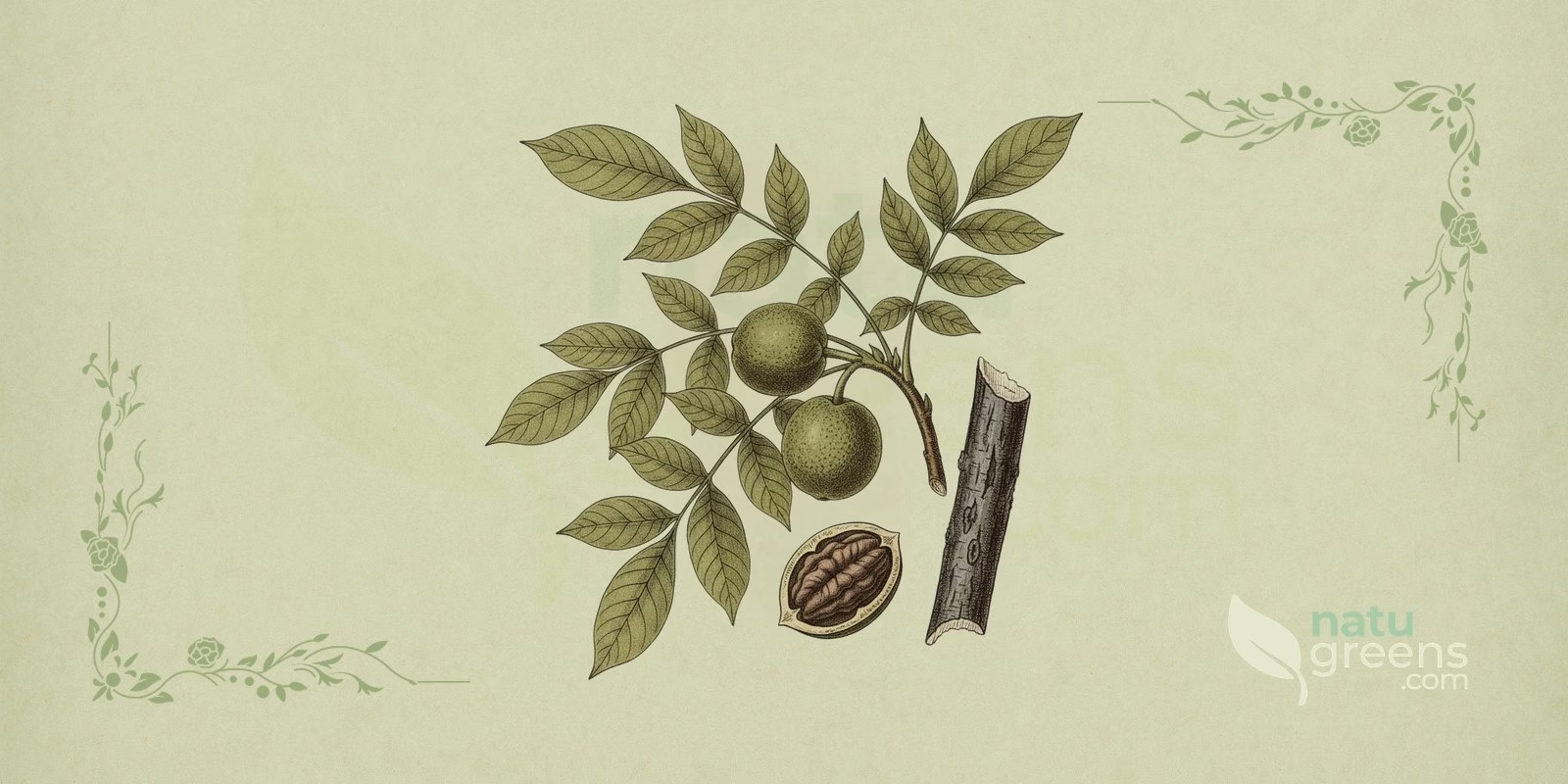
In traditional medicine, black walnut is remembered for antimicrobial, antiparasitic and astringent properties, attributed mainly to compounds such as juglone and tannins. Records of its use range from skin infections and intestinal worms to digestive support. These same bioactive compounds, together with the tree's allelopathic nature, call for attention to contraindications and possible interactions, especially because the species should not be confused with the common walnut, which supplies the table walnut. Current scientific research studies the phytochemical profile of Juglans nigra in the laboratory and investigates some of its traditional uses. Most findings, however, have not yet been confirmed in clinical studies in humans.
Popular and International Names of Black Walnut
- English: American walnut, black walnut, eastern black walnut.
- French: noyer noir, noyer noir d'Amérique.
- German: Amerikanische Walnuss, Schwarznuss.
- Italian: noce nera, noce nera americana.
- Portuguese: nogueira-negra, nogueira-preta, nogueira-preta-americana, noz-negra.
- Spanish: nogal americano, nogal negro.
Botanical Synonyms of Juglans nigra
The accepted botanical name for the species is Juglans nigra L., following the description by Carl Linnaeus, and it is the name that predominates in the botanical and scientific literature. Over the plant's taxonomic history, however, synonyms have emerged that reflect reclassifications or differing interpretations by botanists of different periods. Even so, Juglans nigra L. remains the standard designation for this walnut native to North America.
- Wallia nigra (L.) Alef.
Botanical Family: Juglandaceae
The Juglandaceae family, to which Juglans nigra belongs, comprises predominantly deciduous trees and shrubs found mainly in temperate and subtropical regions of the Northern Hemisphere. The family stands out for producing edible nuts and timber of high commercial value. Its species have pinnately compound leaves, unisexual flowers borne on the same plant (monoecious plants) and fruits that are nuts or drupes. Besides the genus Juglans, the group includes other important genera, such as Carya (hickories and pecans) and Pterocarya (wingnuts).
Many plants in this family are rich in phytochemical compounds such as tannins, flavonoids and naphthoquinones, which explain the medicinal interest in them and also their ability to interact with the environment through phenomena such as allelopathy. The economic and ecological importance of the Juglandaceae is broad, ranging from food and timber production to their role in forest ecosystems and in the traditional medicine of various cultures.
Parts of Black Walnut Used
- Green hull of the fruit
- Leaves
- Nut oil
- Nuts (seeds)
- Roots
- Trunk bark
Ethnobotanical and Traditional Uses
- Anthelmintic (traditional use against intestinal worms and parasites)
- Antimicrobial (traditional use in bacterial and fungal infections)
- Cancer (folk record; antiproliferative activity observed only in the laboratory, with no clinical evidence and no substitute for cancer treatment)
- Constipation and diarrhea (traditional use as an intestinal stimulant and regulator)
- Diabetes (traditional record of the use of leaves and roots, with no clinical evidence)
- Digestive tonic (traditional use)
- Eczema and psoriasis (traditional use of the leaf extract on the skin)
- Fever (traditional record, with roots and leaves)
- Fungal infections (nail infections, ringworm and athlete's foot, in traditional topical use)
- Internal ulcers and inflammation (traditional record of internal use of the leaves)
- Mild laxative (traditional record of bark tea)
- Natural dye (green hull of the fruit)
- Rheumatism (traditional record, with roots and leaves)
- Toothache relief (traditional record of chewing the bark)
- Varicose veins and hemorrhoids (traditional topical application)
- Wounds and skin inflammation (traditional topical application)
Therapeutic Properties of Black Walnut
- Alterative (traditional herbal medicine term for plants believed to help bring the body's functions back to normal)
- Anthelmintic (traditional record against intestinal worms)
- Antibacterial (activity observed in the laboratory against bacteria such as Escherichia coli, Listeria, Salmonella and Staphylococcus aureus)
- Antifungal (traditional use in fungal infections, especially of the skin)
- Anti-inflammatory (reduction of inflammatory mediators observed in cells, in preliminary studies)
- Antimicrobial (action against pathogenic microorganisms observed in the laboratory)
- Antioxidant (neutralization of free radicals in laboratory assays)
- Antiparasitic (traditional record against intestinal parasites)
- Antiproliferative (activity observed in laboratory studies, with no clinical evidence)
- Astringent (contracts tissues and blood vessels, an action attributed to tannins)
- Cardioprotective (hypothesis linked to the fatty acids in the nuts, with no specific clinical studies on the species)
- Cathartic (traditional record of stimulating bowel movements, especially with the bark)
- Depurative (traditional herbal medicine concept linked to the idea of purifying the blood)
- Dermatological (traditional use in skin conditions)
- Hepatoprotective (protective effect observed in an experimental study in rats, with no confirmation in humans)
- Hypoglycemic (traditional record of lowering blood sugar, with no clinical evidence)
- Hypolipidemic (effect attributed mainly to the fatty acid profile of the nuts, still little studied in the species)
- Pancreatic stimulant (attribution from traditional herbal medicine, with no scientific confirmation)
- Tonic (traditional record of general invigoration of the body)
Detailed Phytochemical Profile of Black Walnut
- Alkaloids
- Alpha-Linolenic Acid (ALA)
- Ascorbic Acid (Vitamin C)
- Calcium
- Coumarins
- Ellagic Acid
- Essential Fatty Acids
- Essential Oil
- Flavonoids (Apigenin, Luteolin, Quercetin)
- Gallic Acid
- Gamma-Tocopherol (Vitamin E)
- Glucose
- Juglone (Naphthoquinone)
- Magnesium
- Manganese
- Mucilages
- Phenolic Acids
- Phosphorus
- Polyphenols
- Potassium
- Saponins
- Silica
- Sitosterol
- Sodium
- Sterols
- Tannins
- Tocopherols
- Triterpenes
- Unsaturated Fatty Acids
Preparation and Administration Forms of Black Walnut
- Capsules
- Cream
- Dry extract
- Fluid extract
- Oil (from the nuts)
- Ointment
- Poultice
- Tea (infusion/decoction)
- Tincture
Synergy with Other Medicinal Plants
Parasitic and Fungal Infections
In North American folk herbalism, black walnut often appears alongside other herbs with a traditional antiparasitic and antifungal use. Pairing it with wormwood (Artemisia absinthium) and clove (Syzygium aromaticum) is one of the most frequently cited combinations in traditional deworming protocols. Wormwood contributes bitter sesquiterpene lactones such as absinthin, while clove supplies eugenol, a compound with antimicrobial and antifungal activity observed in the laboratory. The idea behind the blend is to broaden the spectrum of action against intestinal parasites and fungi such as those responsible for candidiasis, but no clinical studies confirm this synergy. Wormwood also contains thujone, a substance that is neurotoxic at high doses, which makes professional supervision essential.
Digestive Health and Intestinal Transit
To support digestion and intestinal transit, tradition pairs black walnut with laxative and carminative herbs. Cascara sagrada (Rhamnus purshiana, now classified as Frangula purshiana) and senna (Senna alexandrina) enter these formulas for their laxative effect, while ginger (Zingiber officinale) and peppermint (Mentha × piperita) are added for their traditional use in relieving gas and cramps. In traditional records, the combination aims both at expelling parasites and at intestinal comfort. Senna and cascara sagrada, however, are stimulant laxatives that should not be used for long periods, and combining them with black walnut bark can intensify cramps and diarrhea.
Antioxidant and Anti-Inflammatory Support
Because of its polyphenol-rich profile, with antioxidant and anti-inflammatory activity observed in the laboratory, black walnut also appears in combinations with plants that share these characteristics, in search of systemic support. Turmeric (Curcuma longa), a source of curcumin, and green tea (Camellia sinensis), rich in catechins, are the most frequently mentioned partners in this type of formula, which tradition associates with a reduction in oxidative stress and chronic inflammation. The hypothesis that compounds from different plants have a broader effect together than in isolation has not yet been tested for these specific combinations. For this reason, they should be seen as a record of use and not as a prevention strategy for degenerative or cardiovascular diseases.
Recipes and Usage Protocols of Black Walnut
Traditional Skin Poultice
Ingredients: 2 tablespoons of dried, ground black walnut green hull and enough warm water to form a paste.
Preparation: Mix the powder with the warm water until a thick paste forms and, before the first use, apply a small amount to a limited area of skin to check for irritation, since juglone can cause contact dermatitis and stains the skin brown. If there is no reaction, apply to the affected area and cover with a clean cloth, leaving it on for 30 minutes to 1 hour, once or twice a day. Tradition uses this poultice for fungal skin infections, athlete's foot and small superficial wounds, based on the antifungal and antibacterial properties attributed to the plant, and deep, infected or non-healing wounds call for medical evaluation.
Traditional Leaf Infusion
Ingredients: A small amount of dried black walnut leaves, determined with professional guidance, and one cup of boiling water.
Preparation: Place the leaves in a cup, add the boiling water, cover and let steep for 10 to 15 minutes before straining and drinking warm. Tradition uses this infusion to aid digestion and, according to folk records, in cases of mild constipation, drawing on the astringent and antimicrobial properties attributed to the leaves, but because the plant contains juglone, internal use should be occasional, never prolonged or in concentrated doses, and the amount and frequency need to be determined individually. Consult a healthcare professional before use and stop at the first sign of discomfort.
Green Hull Infused Oil
Ingredients: Black walnut green hull, fresh or dried and chopped, and a vegetable oil of your choice, such as almond oil, olive oil or jojoba oil.
Preparation: Fill a glass jar with the chopped material, cover it completely with the oil, seal tightly and leave to macerate in a cool, dark place for 4 to 6 weeks, shaking daily. After this period, strain the oil, discard the plant material and store in a dark bottle. Tradition applies this oil topically for eczema, psoriasis, warts and other skin conditions, based on the dermatological and anti-inflammatory properties attributed to the plant, and a prior patch test on a small area of skin is recommended because of the same risk of contact dermatitis.
Green Hull Tincture
Ingredients: 1 part fresh black walnut green hull, chopped, and 2 parts 70% grain alcohol.
Preparation: Place the chopped material in a glass jar, cover with the alcohol, seal airtight and leave to macerate for 2 to 4 weeks in a dark place, shaking daily, before straining and storing the tincture in a dark glass bottle. This tincture is traditionally used in deworming protocols, but because it is a concentrated preparation of a plant that contains juglone, there is no established safe dose for home use, and internal use without supervision should be avoided, never long-term and never during pregnancy, breastfeeding or in children. Consult a healthcare professional, who can assess whether it is appropriate and which form of use is suitable.
The preparations above follow traditional records and do not replace professional guidance. Before any internal use, check the contraindications and interactions described in this article.
Associated Therapies
Clinical Phytotherapy
In clinical phytotherapy, Juglans nigra is noted for its bioactive compounds, such as juglone and tannins, to which antimicrobial, antiparasitic and astringent properties are attributed. Its traditional use focuses on fungal and parasitic infections, both internal and external, and on skin conditions such as eczema and psoriasis, although the scientific basis for these uses is still mostly laboratory-based. When used, standardized extracts serve to make the content of active compounds uniform. In any case, the supervision of a healthcare professional is essential to avoid interactions and adverse effects, especially in people with pre-existing gastrointestinal disorders or those taking anticoagulants.
Homeopathy
Although it is not among the most common homeopathic remedies, Juglans nigra may be considered in homeopathy for conditions that resemble the plant's action at the physical level, such as skin problems with eruptions and itching or digestive disorders with constipation or diarrhea. The preparation follows the principles of dilution and dynamization specific to homeopathy, which sets out to stimulate the body's capacity to react. The choice of remedy and potency is individualized, based on the totality of the patient's symptoms, including mental and emotional aspects, under the guidance of a qualified homeopath.
Flower Essence Therapy
Juglans nigra is not one of the 38 Bach flower remedies, and the Walnut essence of that system is prepared from Juglans regia, the common walnut, which also needs to be distinguished from black walnut in this context. The indications of Walnut, linked to processes of transition and adaptation, protection against unwanted outside influences and the preservation of one's own individuality, therefore belong to the common walnut. A black walnut essence, should other flower systems ever create one, should not inherit these indications merely because of the similar name. In flower therapy, essences are understood as support in the emotional sphere and work as a complement to, never a substitute for, other approaches to care.
Contraindications and Side Effects of Black Walnut
General Contraindications
Because it belongs to the tree nut family, black walnut may cause a cross-reactive allergic reaction in people who are already allergic to other nuts (including the common walnut, cashew and almond) and is contraindicated for anyone with this allergy, since reactions can range from contact dermatitis to anaphylaxis. The term tree nuts designates an allergen group, not a botanical family, which explains why cashew and almond appear on this list. The plant contains juglone, a substance with marked biological activity: avoid prolonged internal use or concentrated doses, and do not use during pregnancy and breastfeeding due to a lack of safety data. The possible emmenagogue effect attributed to the bark reinforces this restriction for pregnant women, and because of the same lack of safety data, use in children should also be avoided. People with chronic gastrointestinal disorders, such as ulcers or irritable bowel syndrome, should use the plant with caution, because tannins can irritate the digestive mucosa. Those with pre-existing liver or kidney disease should also avoid it, given the potential for toxicity at high doses.
Not to Be Confused with Common Walnut
Juglans nigra (black walnut, traditionally used for its bark and the green hull of its fruit) is a different species from Juglans regia (common walnut, also called English or Persian walnut, the table walnut sold as food); do not confuse their uses or transfer safety data between the two. Information about the common walnut, including nutritional and food safety studies, does not automatically apply to the bark, leaves or green hull of black walnut, parts that concentrate juglone and tannins and that form the basis of the traditional uses described in this article.
Common Side Effects
Reported side effects are usually mild and include nausea, vomiting, diarrhea and abdominal discomfort, especially with use of the bark or at high doses. When applied topically, juglone can cause irritation and contact dermatitis in sensitive people. Prolonged or excessive use of the bark has been associated with a theoretical risk of tongue or lip cancer, although the scientific evidence is limited. It is therefore advisable to follow the dosage and duration guidance set by a professional to reduce the risks.
Drug Interactions
Black walnut may, in theory, interact with anticoagulants such as warfarin, since it contains coumarins that could potentiate the anticoagulant effect and increase the risk of bleeding. Its high tannin content may also reduce the absorption of other medications and supplements taken at the same time. People with diabetes who take blood sugar-lowering drugs should monitor their glucose closely, as tradition attributes a mild hypoglycemic effect to the plant that could add to that of the medications. Consult a healthcare professional before starting to use black walnut, especially if you are taking other medications, to avoid adverse interactions.
Historical Notes and Interesting Facts
A Long-Lived Tree with Fine Timber
Black walnut is an imposing tree, able to reach great heights and to live for more than a century, which has made it a symbol of longevity and resilience. Its dark, dense wood is highly valued in fine woodworking and in the making of high-end furniture, ranking among the most prized woods in North America. Historically, it was used to make firearms and musical instruments, thanks to its durability and beauty. Its presence in native forests and its ability to adapt to different soils make it a prominent species in the ecosystems where it occurs.
Allelopathy and the Garden
One of the most curious characteristics of black walnut is allelopathy, that is, the production of chemical substances, such as juglone, that inhibit the growth of other plants nearby. This natural defense mechanism gives the tree a competitive advantage in its habitat but poses a challenge for gardeners and farmers. Juglone-sensitive plants, such as apple trees, blueberries and tomatoes, should not be grown near it. Some species, on the other hand, such as dogwood (Cornus) and sugar maple, tolerate juglone and coexist well with black walnut, forming a balanced planting.
The Distinctive Flavor of the Nuts
Black walnuts have a bold, earthy flavor, quite different from that of the common walnut, produced by Juglans regia. That is a distinct species, which should not be confused with black walnut in either culinary or medicinal uses. This intense flavor is appreciated in many preparations, from desserts and cakes to savory dishes and sauces. Harvesting and processing, on the other hand, are laborious because of the hard shell and the sticky green hull, which stains the hands. The effort is rewarded by the nutritional value and unmistakable flavor of these nuts, which have become a gourmet ingredient in many traditional and modern kitchens.
Frequently Asked Questions about Black Walnut
Is Black Walnut Safe to Consume?
Black walnuts are eaten as food and provide nutrients such as omega-3 fatty acids, protein and minerals, but they are not safe for people with a tree nut allergy. The bark, green hull and concentrated extracts, by contrast, contain juglone and tannins, which can cause side effects at high doses or in sensitive people. For this reason, these parts should only be used with caution and professional guidance. Pregnant and breastfeeding women, children and people taking anticoagulants or diabetes medications need to pay special attention to the contraindications.
What Are the Main Medicinal Uses of Black Walnut?
Tradition uses black walnut for the antiparasitic, antimicrobial, antifungal and astringent properties attributed to it, in intestinal infections caused by parasites and fungi and in skin conditions such as eczema, psoriasis, fungal skin infections and athlete's foot. It also appears in records of digestive support, as a mild laxative and intestinal tonic. Current research is investigating the anti-inflammatory and antiproliferative activity of its polyphenols in the laboratory, but these results have not yet been confirmed in clinical studies in humans.
How Does Black Walnut Interact with Other Plants in the Garden?
Black walnut is known for allelopathy, as it releases juglone into the soil, a substance that can inhibit the growth of many other plants. Sensitive species, such as apple trees, blueberries, pines and tomatoes, should not be grown near it. On the other hand, several plants tolerate juglone and thrive nearby, among them cherry, dogwood, peach, sugar maple and various grasses and flowers. Before planting any species near a black walnut, it is worth researching its compatibility with juglone.
How Can You Tell Black Walnut from Common Walnut?
Black walnut (Juglans nigra) is native to North America and traditionally used for its bark and the green hull of its fruit, whereas the common walnut (Juglans regia) produces the table walnut sold as food. They are different species, so their uses should not be confused, nor should safety data be transferred between the two. In the kitchen, black walnuts also stand out for their more intense flavor and much harder shell.
Can People with Nut Allergies Use Black Walnut?
The plant is contraindicated in this case: because it belongs to the tree nut family, it can cause a cross-reactive allergic reaction in people who are already allergic to other nuts, including the common walnut, cashew and almond. Reactions can range from contact dermatitis to anaphylaxis, and a species-specific allergen, the protein Jug n 4, has already been isolated and characterized in the laboratory.
Can Pregnant and Breastfeeding Women Use Black Walnut?
Pregnant and breastfeeding women should not use black walnut, because the plant contains juglone, a substance with marked biological activity, and safety data for these stages are lacking. The possible emmenagogue effect attributed to the bark reinforces this restriction. For the same reason, anyone should avoid prolonged internal use or concentrated doses, and children should not be given preparations of the plant without medical guidance.
Notice: this content is for informational purposes and does not replace professional medical advice. Consult a physician or herbal practitioner before using medicinal plants, especially during pregnancy, breastfeeding, or alongside medication.
How to cite this article
NATUGREENS. Black Walnut (Juglans nigra): Properties and Benefits. Natugreens, 3 Nov. 2026. Disponível em: https://natugreens.com/juglans-nigra-black-walnut/. Accessed: Nov. 5, 2026.
Natugreens. (2026). Black Walnut (Juglans nigra): Properties and Benefits. Natugreens. https://natugreens.com/juglans-nigra-black-walnut/
References and Scientific Studies
- PMC2022 Antora SA, et al. Quantification of Vitamins, Minerals, and Amino Acids in Black Walnut (Juglans nigra). Front Nutr. 2022.
- PMC2018 Ho KV, et al. Identifying Antibacterial Compounds in Black Walnuts (Juglans nigra) Using a Metabolomics Approach. Metabolites. 2018.
- PMC2019 Ho KV, et al. Black Walnut (Juglans nigra) Extracts Inhibit Proinflammatory Cytokine Production From Lipopolysaccharide-Stimulated Human Promonocytic Cell Line U-937. Front Pharmacol. 2019.
- PMC2024 Osztie R, et al. Comprehensive Characterization of Phytochemical Composition, Membrane Permeability, and Antiproliferative Activity of Juglans nigra Polyphenols. Int J Mol Sci. 2024.
- PMC2017 Zhang YZ, et al. Purification and Characterization of a Black Walnut (Juglans nigra) Allergen, Jug n 4. J Agric Food Chem. 2017.